
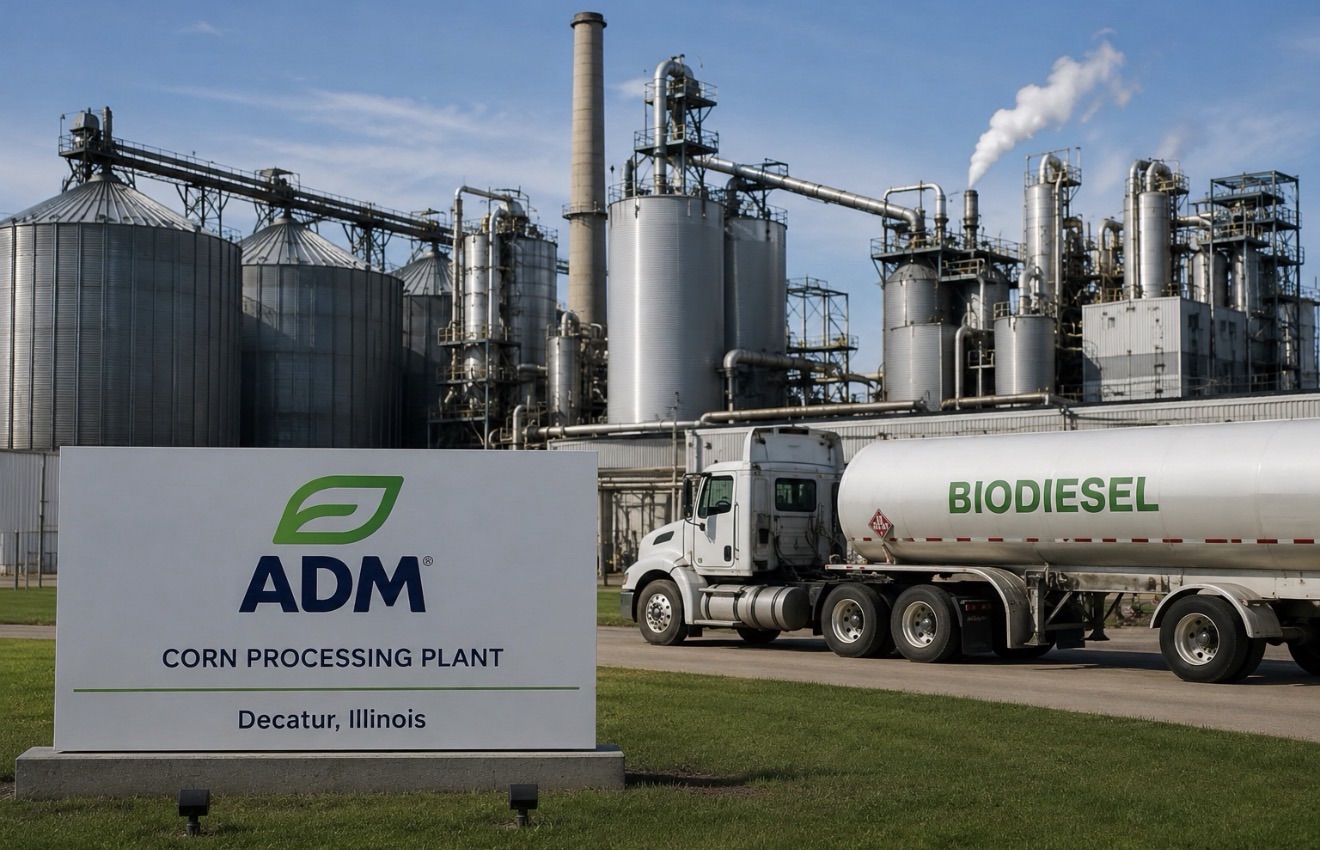

Renewable fuels have stopped costing American refiners money and started making it. Valero Energy’s Renewable Diesel segment delivered $717 million in operating income in the second quarter, reversing a $79 million loss in the same quarter a year earlier, while its Ethanol segment posted $318 million against $54 million. Renewable diesel margin climbed to $879 million from $54 million, and operating income per gallon sold swung to $2.06 from a loss of 32 cents.
That is a complete inversion of the business as it stood two years ago, when the same category was the line item refiners apologized for on earnings calls.
The Mandate Did It
The turn is regulatory, not technological. Federal blending requirements set a volume of renewable fuel that must enter the national fuel supply, and refiners who blend more than their obligation can sell the resulting compliance credits to those who blend less. When the required volumes rise, the credits get scarce and the price rises with them.
D4 credits cover biodiesel and renewable diesel; D6 credits cover corn ethanol. Their prices have climbed more than 80 percent this year to over $2 each. Roughly 2.02 billion credits were generated under the standard in May, up nearly 4 percent year over year, with 9.66 billion generated across the first five months of 2026.
The mechanism cuts both ways for the industry. Refiners with blending capacity earn on the credits. Refiners without it buy them at whatever the market demands. Forty small refinery exemption petitions remain pending at the EPA, and how those are resolved will determine how much obligated volume actually gets enforced.
The Wider Recovery
Valero is not alone. HF Sinclair’s renewable diesel operation posted a $133 million profit in the first quarter after a $17 million loss a year earlier, and Phillips 66 sharply narrowed losses in its renewable fuels division. Phillips 66 reports second-quarter results today, with consensus estimates around $7.68 per share against a far weaker year-ago quarter.
The contrast with 2024 is stark. Chevron idled two Midwest biodiesel plants that year over poor market conditions, and Vertex Energy halted renewable diesel production at its Mobile, Alabama refinery to return to conventional fuels. Capacity built during the expansion of the early 2020s ran into demand that never materialized at the volumes projected, and the writedowns followed.
What changed is not that demand caught up on its own. It is that the government wrote a floor under it.
The War Complicates The Picture
Diesel prices have risen 46 percent since the war with Iran began, and with supplies tight, conventional diesel currently offers stronger short-term returns than expanding renewable output. A refiner with flexible processing capacity has a live choice each month between maximizing conventional diesel at war-inflated prices and running renewable feedstock for credit revenue.
That choice caps how far the renewable recovery can run. The mandate guarantees a minimum, not a ceiling, and if conventional margins stay where the conflict has pushed them, production is likely to sit near the compliance floor rather than climbing well above it.
Feedstock costs are the other constraint. Strong demand for soybean oil combined with reduced soy crushing capacity could push feedstock prices higher, which would discourage biodiesel and renewable diesel production. Renewable diesel economics are essentially a spread between feedstock in and credit-inclusive product value out, and the input side is exposed to an agricultural market with its own weather and trade risks.
What It Means Locally
For tri-state readers, the credit market is not abstract. New York City’s bioheat law steps up the biodiesel content required in heating oil over the coming years, and heating oil distributors serving the five boroughs and surrounding counties buy into blends whose cost tracks the same D4 credit market now trading above $2. Credit prices that have risen more than 80 percent this year flow through to what building owners pay next heating season.
Regional fuel distributors with blending capability sit on the favorable side of that trade. Those buying finished blended product do not.
Valero produced $5.6 billion in operating cash flow for the quarter and returned $2.6 billion to shareholders while holding its roughly $2 billion capital spending plan for 2026. The company guided to about 335 million gallons of renewable diesel sales in the third quarter. That is a business generating cash, not a business being rebuilt — and the difference between those two descriptions is the whole story.
JBizNews Desk | Houston
© JBizNews.com All Rights Reserved. Reproduction or distribution without written permission is prohibited.