
 Matzav
Federal Judge Delivers Major Blow to Gun Registration Rules in 15 States
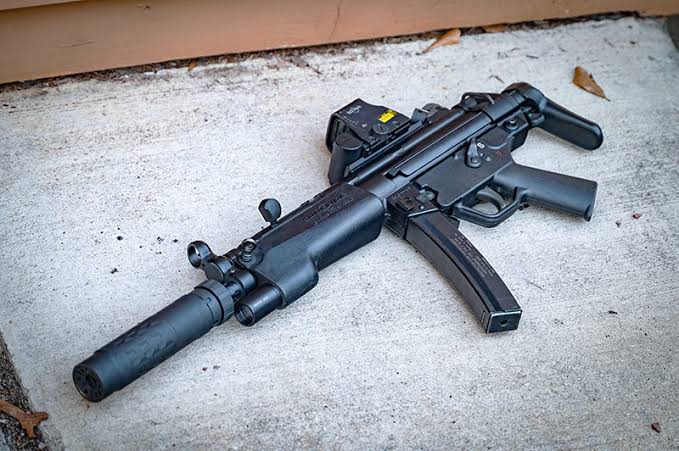
A federal judge in Texas has struck down key federal registration requirements for suppressors, short-barreled rifles, and short-barreled shotguns as they apply to plaintiffs in a lawsuit brought by Kansas and 14 other states, ruling that the regulations are unconstitutional after Congress eliminated the tax that had served as their legal foundation.
In a decision issued Wednesday, U.S. District Judge James Wesley Hendrix of the Northern District of Texas concluded that portions of the National Firearms Act requiring registration, reporting, and recordkeeping for those firearms and accessories go beyond the constitutional powers granted to Congress.
The ruling follows passage of the One Big Beautiful Bill Act, which reduced the National Firearms Act’s transfer and manufacturing taxes on suppressors, short-barreled rifles, short-barreled shotguns, and certain other firearms to $0 beginning Jan. 1, 2026. Despite the tax’s elimination, the federal registration and reporting requirements had remained in effect.
Judge Hendrix permanently prohibited the Bureau of Alcohol, Tobacco, Firearms, and Explosives from enforcing those provisions against the states, organizations, businesses, and individual plaintiffs involved in the lawsuit.
At the same time, Hendrix declined to extend the ruling nationwide, citing the U.S. Supreme Court’s decision in Trump v. CASA, which limits the ability of federal courts to issue universal injunctions affecting parties not involved in the litigation.
“The challenged NFA provisions are unconstitutional,” Hendrix wrote, concluding that once Congress eliminated the transfer and making taxes for the affected firearms, “the regulatory provisions cannot be upheld under the taxing power” because they no longer generate revenue.
The judge also dismissed the Justice Department’s contention that the requirements could be upheld under Congress’ authority to regulate interstate commerce, finding that Congress enacted the National Firearms Act under its taxing authority rather than the Commerce Clause.
Kansas Attorney General Kris Kobach praised the ruling, calling it a significant victory for Second Amendment supporters.
“Today, the state of Kansas and our fellow plaintiffs won a great victory against the U.S. Department of Justice, which had been wrongly defending an unconstitutional law. The federal government has no right to demand that American citizens ask for permission before putting an accessory on their firearm to protect their hearing,” Kobach said.
Kobach said the decision represents an important win for gun owners, arguing that it both reinforces constitutional limits on federal authority and removes what he considers unnecessary restrictions on law-abiding Americans.
“Our Constitution provides for a government of limited powers at the federal level. We must always be vigilant to enforce those constitutional limits, especially when government overreach threatens the right of Americans to keep and bear arms,” he added.
The lawsuit was brought by the attorneys general of Kansas, Texas, Alaska, Georgia, Idaho, Indiana, Louisiana, Montana, North Dakota, Oklahoma, South Carolina, South Dakota, Utah, West Virginia, and Wyoming, along with firearm manufacturers, retailers, advocacy groups, and private gun owners.
The plaintiffs argued that by eliminating the taxes imposed under the National Firearms Act, Congress also removed the constitutional basis for requiring owners of those firearms and accessories to register them with the federal government.
Rather than addressing the plaintiffs’ Second Amendment claims, Hendrix based his decision entirely on Article I of the Constitution, ruling that once the tax was repealed, Congress no longer had constitutional authority under its taxing power to enforce the registration provisions.
The judge explained that resolving the constitutional challenge under Article I made it unnecessary to rule on the Second Amendment arguments because the plaintiffs had already obtained the relief they sought.
The injunction applies only to the parties involved in the lawsuit, including residents of the 15 participating states, and does not automatically invalidate the National Firearms Act’s registration requirements across the rest of the country.
The Justice Department is expected to have the option of appealing the ruling to the U.S. Court of Appeals for the Fifth Circuit.
{Matzav.com}