
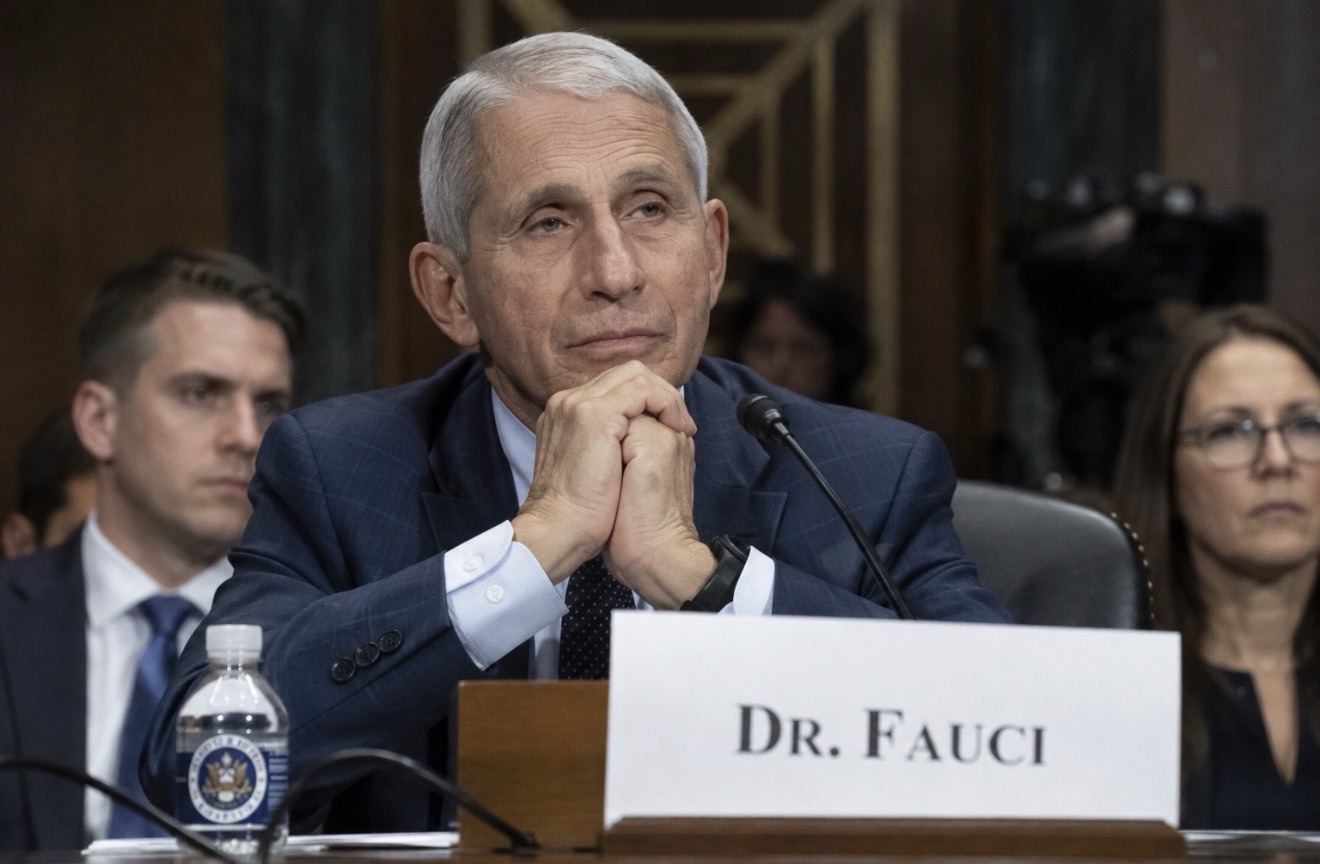

Senate investigators have obtained a copy of the iPhone Dr. Anthony Fauci used while running the government’s Covid-19 response, adding a potentially significant cache of records to a widening congressional inquiry. The Department of Health and Human Services transferred the device to the Senate Homeland Security Permanent Subcommittee on Investigations, chaired by Sen. Ron Johnson, R-Wis. According to Johnson’s spokesperson, the phone was used by Fauci during his tenure as director of the National Institute of Allergy and Infectious Diseases.
The disclosure landed hours before a separate escalation. On Thursday morning, the Senate Homeland Security and Governmental Affairs Committee voted 8-5, with two additional no votes by proxy, to approve a resolution holding Fauci in contempt of Congress. The vote fell along party lines, with all Democrats opposed.
What the Contempt Vote Does
The resolution follows Fauci’s July 29 appearance before the committee under subpoena, where he invoked his Fifth Amendment right against self-incrimination 111 times and declined to answer any question posed to him.
Ordinarily, a committee contempt resolution advances to the full Senate before any referral to prosecutors. Committee Chairman Sen. Rand Paul, R-Ky., told CBS News he intends to bypass that step and send the resolution directly to the Justice Department as a referral. Under the standard route, a floor vote would be subject to the filibuster; if the Senate did vote to hold Fauci in contempt, the Justice Department would decide whether to prosecute. A conviction carries penalties of up to $100,000 in fines and one to 12 months in prison.
Paul framed Thursday’s vote narrowly. He told the panel the question before it was “whether to hold a witness responsible for his contempt toward Congress” — not, he said, Fauci’s pandemic policies or public statements.
The Pardon Is the Legal Crux
The dispute turns on an unusual legal question, and it is worth spelling out because both sides are making a coherent argument.
Fauci received a pardon from President Joe Biden covering any offense from Jan. 1, 2014, through Jan. 19, 2025 — a grant Biden described as preemptive, given Republican scrutiny of Fauci. Republicans argue that immunity removes the risk of self-incrimination, and therefore removes the basis for invoking the Fifth Amendment. If you cannot be prosecuted, the reasoning goes, you cannot incriminate yourself.
Democrats counter that the protection survives the pardon. Ranking member Sen. Gary Peters, D-Mich., wrote to colleagues that a federal pardon does not extinguish Fifth Amendment protection where a witness still faces a “real and appreciable” risk of federal or state prosecution. That argument has practical weight: at least four Republican-led states have opened their own investigations into Fauci, and the 2025 pardon would not shield him from prosecution over anything said in present-day testimony.
Peters also warned of precedent. He argued that punishing a witness for asserting a constitutional protection would give future witnesses grounds to refuse to appear at all, and that they would cite this vote as justification. Democrats attempted repeatedly to table or postpone Thursday’s vote and were blocked by the Republican majority.
Fauci has characterized the inquiry in blunt terms. In his opening statement last week, he said Paul has “an unhinged obsession” with him and suggested the hearing was convened to trap him into lying under oath.
Why the Phone Matters
A device copy is materially different from a document production. Paper records are curated — someone decides what is responsive and what is not. A phone image captures text messages, call logs, app data and deleted-but-recoverable material in one pass, without an intermediary selecting what investigators see.
The phone follows an earlier transfer that reshaped the inquiry. Paul’s committee released more than 1,100 pages of Fauci’s personal journals covering 2019 to 2022. Health and Human Services Secretary Robert F. Kennedy Jr. said he located the files on government servers after an eight-month search and handed them to Paul and Johnson. The entries chronicled Fauci’s media appearances and interactions with journalists and public figures, alongside his concerns about the virus and frustrations with the federal response.
More may be coming. Paul and Johnson have received millions of additional Fauci-related pages from government servers and continue to press for more. Johnson said publicly that he hopes the device will answer questions Fauci declined to address at last week’s hearing.
The Unresolved Question Underneath
The investigation’s central allegation — that U.S.-funded research in Wuhan contributed to the pandemic’s emergence — remains contested rather than settled. A 2025 World Health Organization report, produced over three years by the 27-member Scientific Advisory Group for the Origins of Novel Pathogens, addressed the question directly, and its conclusions have not ended the debate in Washington.
For business readers, the durable takeaway sits slightly to the side of the political fight. This case is becoming a working test of how federal records law applies to personal devices used for official business, and of whether a pardon can be leveraged to compel testimony. Both questions have implications well beyond public health — for any executive, contractor or agency official whose work communications live on a personal phone.
JBizNews Desk | Washington
© JBizNews.com All Rights Reserved. Reproduction or distribution without written permission is prohibited.