
 JBizNews
Colombian Peso Hits Six-Year High Against U.S. Dollar, Pressuring Exports
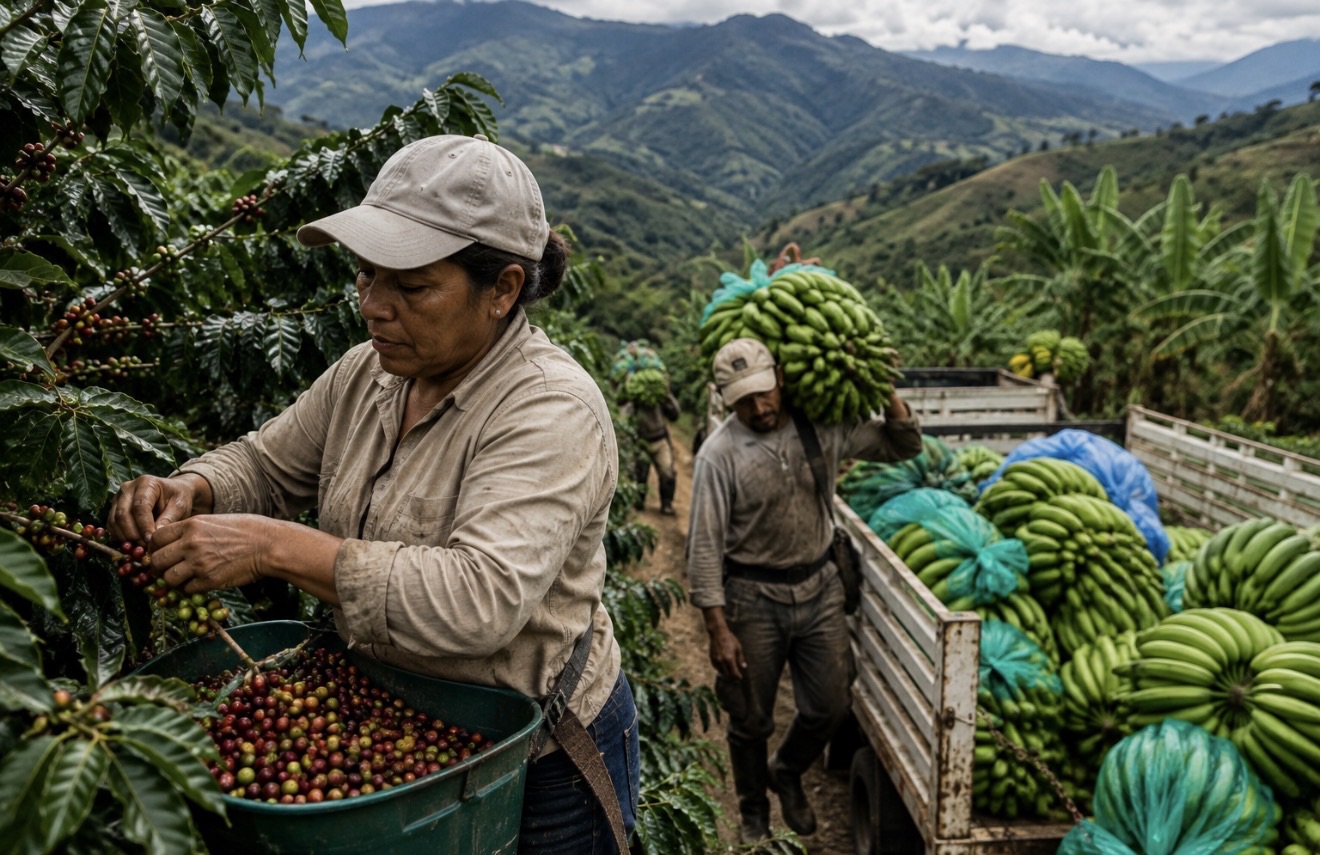
A sustained decline in the U.S. dollar is squeezing Latin America’s food exporters, reducing profits on some of the products American businesses import most heavily—including coffee, bananas, avocados and agricultural ingredients used throughout the packaged food industry.
The financial pressure is straightforward. Most exporters sell their products in U.S. dollars while paying workers, transportation and operating expenses in local currency. As the dollar weakens, every export shipment converts into fewer local-currency earnings, even if sales volumes remain unchanged. In Colombia, industry groups representing coffee, bananas, avocados, flowers, sugar and palm oil argue the currency shift has become structural rather than temporary and are urging the incoming administration of President-elect Abelardo de la Espriella to adopt policies supporting exporters.
The Colombian peso has strengthened roughly 22% against the dollar since early 2025, climbing from about 4,308 pesos per dollar in January 2025 to roughly 3,334 by early July 2026—the strongest level in approximately six years. For exporters whose contracts remain denominated in dollars, that appreciation has sharply reduced local-currency revenue.
Coffee producers have been among the hardest hit. Economic think tank ANIF estimates that every 100-peso change in Colombia’s exchange rate shifts coffee export revenue by approximately 34 billion pesos, or about $10 million, assuming shipment volumes remain constant. Between September 2025 and May 2026, ANIF estimates coffee producers lost between 1.4 trillion and 1.6 trillion pesos in potential revenue compared with 2025 exchange rates.
Unlike many manufacturers, agricultural exporters have little ability to offset currency losses through higher prices. Colombian bananas compete directly with producers across Latin America and other global growing regions, leaving exporters with almost no pricing flexibility. The same pressure is affecting Hass avocado producers, who have invested heavily in expanding exports but now face shrinking margins despite steady international demand.
Operating costs are moving in the opposite direction. Export association Analdex says domestic freight expenses have risen nearly 30% this year while labor and energy costs have continued climbing, creating a double squeeze in which exporters earn less from currency movements while paying more to produce and transport goods.
For American importers, a weaker dollar does not automatically translate into cheaper food. Currency losses reduce growers’ profitability, limiting their ability to invest in replanting, equipment, maintenance and future production. Those decisions typically affect supply several growing seasons later, potentially tightening availability and placing upward pressure on prices long after exchange rates stabilize.
The export volumes involved are significant. Colombia shipped a record $1.309 billion of bananas in 2025, a 21.6% increase from the previous year, exporting approximately 133 million 20-kilogram boxes from nearly 53,000 hectares of farmland. The European Union purchased 65.8% of those exports, while the United States accounted for 17.3% and the United Kingdom 13.6%. Colombia also exports roughly 700,000 metric tons of coffee annually, a smaller volume than bananas but with substantially higher value per shipment.
Weather has compounded the industry’s challenges. Flooding damaged roughly 1,200 hectares of Colombian banana production, affecting about 2.3% of productive acreage before the onset of the dry season. Industry analysts now project banana exports could decline by roughly 5%, with losses potentially reaching 10% if El Niño conditions intensify.
Coffee markets face additional uncertainty from higher freight and energy costs linked to ongoing geopolitical instability, making it more difficult for exporters, traders and roasters to lock in long-term pricing agreements.
The impact reaches directly into the United States. Importers supplying New York’s Hunts Point Produce Market, specialty coffee roasters throughout Brooklyn and northern New Jersey, and supermarket wholesalers handling Latin American produce all face suppliers operating under increasing financial pressure. Exporters with shrinking margins often demand shorter payment terms, negotiate more aggressively and redirect shipments toward markets offering stronger returns. With Europe already purchasing nearly two-thirds of Colombia’s banana exports, growers have viable alternatives when deciding where to ship their products.
For investors and businesses, the broader lesson extends well beyond agriculture. A stronger local currency is often celebrated as evidence of economic confidence, but for export-driven industries it can function as a significant earnings cut. When revenues are earned in dollars while costs continue rising at home, even healthy demand cannot fully protect profitability.
JBizNews Desk | Bogotá
© JBizNews.com All Rights Reserved. Reproduction or distribution without written permission is prohibited.