
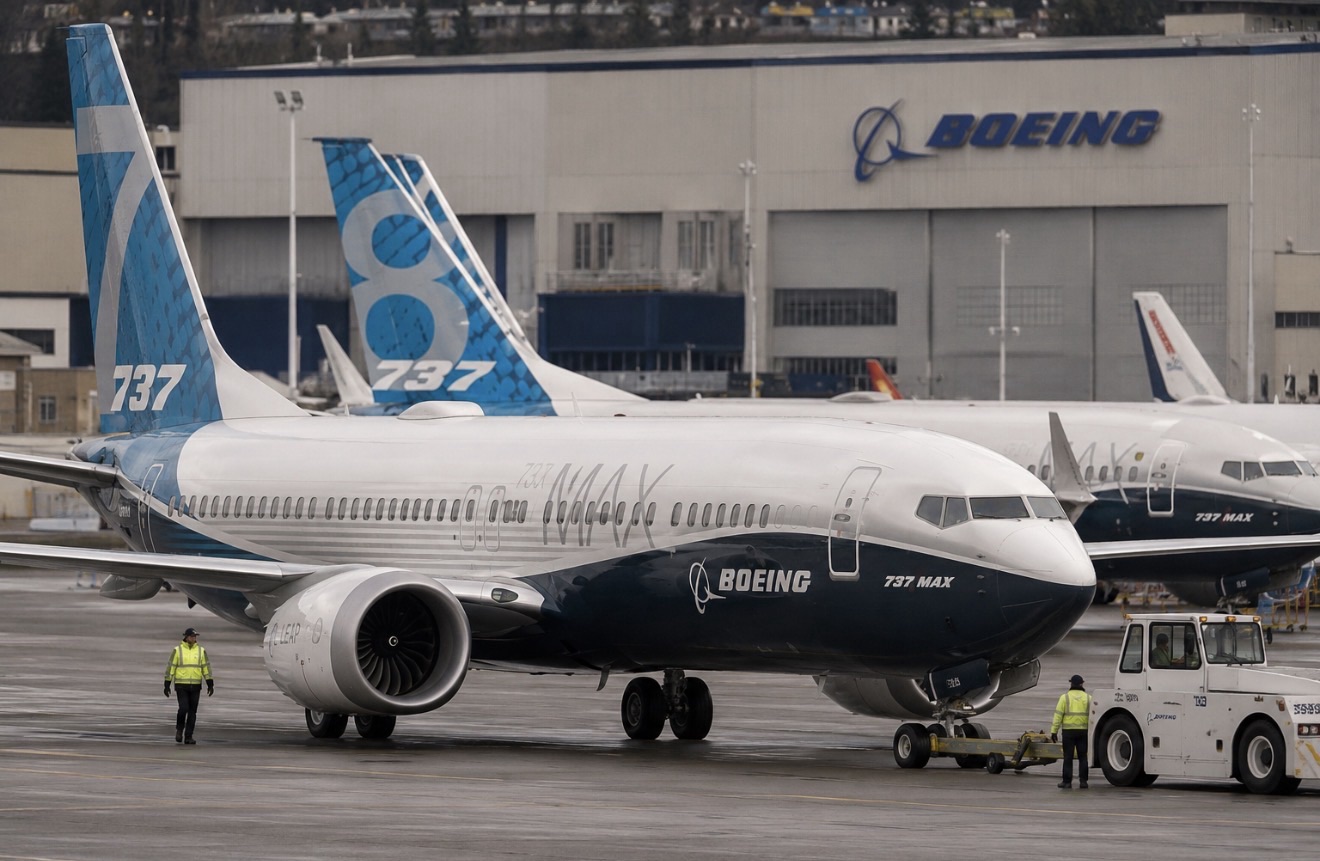

Boeing’s relationship with federal regulators continues to normalize, but the FAA is making clear that routine oversight is back in full force. The agency has proposed mandatory inspections of passenger-seat installations on hundreds of Boeing 737 Max aircraft, a move that highlights the difference between ordinary regulatory scrutiny and the systemic manufacturing failures that once defined the program.
The Federal Aviation Administration published a notice of proposed rulemaking in the Federal Register on July 27 covering the 737-8, 737-9 and 737-8200. If finalized, the proposal would require operators to inspect passenger-seat track fittings throughout affected aircraft and correct any improperly installed assemblies before they create a safety risk.
The Safety Concern
The FAA’s concern is straightforward: passenger seats that are not fully engaged with the aircraft’s floor tracks could detach during severe turbulence, heavy loading or an emergency landing. Beyond the immediate risk of injury, a loose seat could block an aisle during an evacuation, turning a maintenance defect into a potentially life-threatening emergency.
Although the proposal stems from a reported installation issue, the FAA concluded the condition could exist on other aircraft built to the same design standard, prompting it to extend the inspection requirement across the broader fleet.
The Business Impact
The proposal affects 453 aircraft and requires inspections of approximately 69 passenger-seat assemblies per airplane. The FAA estimates the total inspection cost at just over $2.65 million.
Financially, however, the maintenance expense is not the story.
The directive places responsibility on airlines because operators—not manufacturers—are responsible for maintaining aircraft in an airworthy condition. Whether carriers ultimately recover those costs from Boeing becomes a commercial matter rather than a regulatory one. Boeing said it had already issued inspection guidance to airlines in December 2025 and supports making those procedures mandatory.
For airlines, the larger challenge is operational. Scheduling inspections across hundreds of aircraft during periods of heavy travel can temporarily reduce fleet availability even when the repair itself is relatively inexpensive.
Boeing’s Regulatory Recovery Continues
The timing is particularly notable because it comes as Boeing continues rebuilding its standing with federal regulators.
Earlier this month, the FAA restored the company’s authority to issue airworthiness certificates across all 737 Max and 787 Dreamliner aircraft—responsibility the agency reclaimed following the 2019 Max accidents and later production-quality concerns involving the 787.
Rather than immediately returning certification authority, the FAA spent months alternating certification responsibilities with Boeing, comparing inspection results before concluding the company’s manufacturing performance had reached the required standard. The agency has emphasized that audits, factory inspections and oversight of Boeing’s safety culture will continue.
That broader regulatory backdrop changes how investors are likely to interpret the latest proposal.
Stronger Operations Overshadow Routine Oversight
The seat inspection notice arrived just as Boeing reported second-quarter earnings that showed continued operational improvement despite ongoing financial challenges.
Revenue rose to $24.6 billion, commercial aircraft deliveries increased 14 percent from a year earlier, and the company’s order backlog reached a record $715 billion, representing more than 6,200 commercial airplanes. Boeing also generated $631 million in free cash flow, its strongest quarterly delivery performance since 2018.
Investors focused on improving production rates and cash generation, sending shares higher following the earnings report despite another quarterly loss.
What It Means for Business
For airlines, the proposal is primarily a maintenance scheduling issue rather than a major financial burden.
For Boeing, the significance lies in what the FAA’s action does not represent. Unlike the structural, certification and manufacturing failures that dominated headlines in recent years, this proposal reflects routine regulatory oversight of an identified maintenance concern—precisely the type of issue aviation regulators regularly address across the industry.
That distinction matters.
The FAA is no longer responding to a crisis that questions whether the 737 Max should remain in service. Instead, it is carrying out the day-to-day oversight expected of any mature commercial aircraft program. Against the backdrop of restored certification authority, rising production and record backlog, the proposal suggests Boeing has entered a different phase of its recovery—one where ordinary regulatory scrutiny, rather than extraordinary intervention, is becoming the norm.
JBizNews Desk | Washington
© JBizNews.com All Rights Reserved.
Reproduction or distribution without written permission is prohibited.