
 Matzav
Appeals Court Halts Trump’s White House Ballroom Project, Giving Him Two Weeks to Appeal
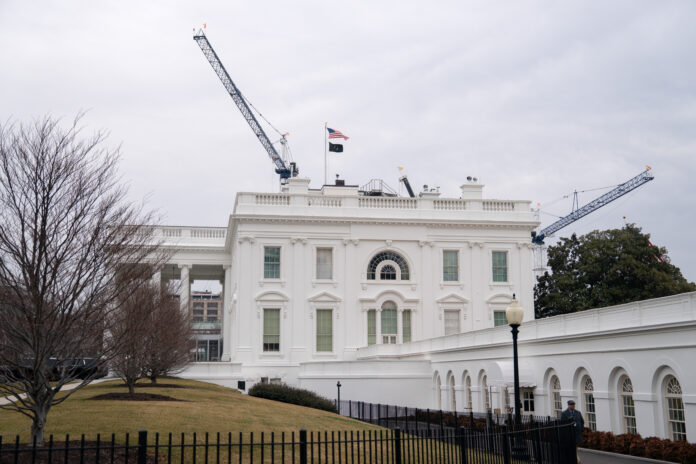
A federal appeals court has upheld an order blocking construction of President Donald Trump’s proposed White House ballroom, while allowing underground work on the project to continue. The court also delayed enforcement of its ruling for 14 days, giving the Trump administration time to seek review from the U.S. Supreme Court.
In a 2-1 decision issued today, the appellate panel agreed with a modified preliminary injunction previously entered by U.S. District Judge Richard Leon. At the same time, the judges stayed their ruling for two weeks to allow the administration to file an appeal with the nation’s highest court.
The majority concluded that decisions involving major structural changes to the White House belong to Congress rather than the executive branch, writing, “Whether or not a massive ballroom should be constructed is for Congress to decide and is not a matter for Executive self-help.”
The court further stated that “the “Constitution assigns Congress — not the Executive — the responsibility to decide whether proposed changes to the physical design of the White House may proceed, even where those changes are said to serve security interests.”
Emphasizing that the White House is government property rather than a president’s personal residence, the ruling added, “Each President is a temporary tenant, not the owner, of the White House and its Executive Residence,” the Ruling said. “The President has no — and claims no — constitutionally assigned authority over that property.”
The majority criticized the administration’s handling of the project, writing, “Over just three days in October 2025, without undertaking promised consultations or obtaining Congress’s permission, President Trump bulldozed the entire East Wing in order to construct a massive, 90,000 square-foot ballroom paid for by private funds with no congressional oversight.”
The opinion continued, “We are aware of no instance in American history in which a President unilaterally and using privately collected funds demolished substantial portions of the White House that Congress authorized to be built and American taxpayers paid for. Until now.”
Judges Patricia Millett and Brad Garcia stressed that their decision was based solely on constitutional procedure rather than the merits of the ballroom itself. “has nothing at all to do with whether the proposed ballroom is desirable, or not, as a matter of policy. This ruling does not even necessarily mean that the Defendants may not ultimately construct the ballroom.”
They added, “What it does mean is that the Defendants may not do so during the district court’s expeditious litigation without securing Congress’s authorization, as the Constitution and laws require.”
The lone dissenter, Judge Neomi Rao, argued that the lower court had overstepped its authority, writing that the ruling “abused its discretion in seizing control of construction at the President’s home and office.”
Earlier in the case, Judge Leon had permitted certain portions of the project to proceed but later concluded that the administration was applying a security-related exemption far too broadly. Rejecting that interpretation, he wrote, “Defendants argue that the entire ballroom construction project, from tip to tail, falls within the safety-and-security exception and therefore may proceed unabated. That is neither a reasonable nor a correct reading of my Order!”
Leon further criticized the administration’s position, adding, “It is, to say the least, incredible, if not disingenuous, that Defendants now argue that my Order does not stop ballroom construction because of the safety-and-security exception!”
{Matzav.com}