
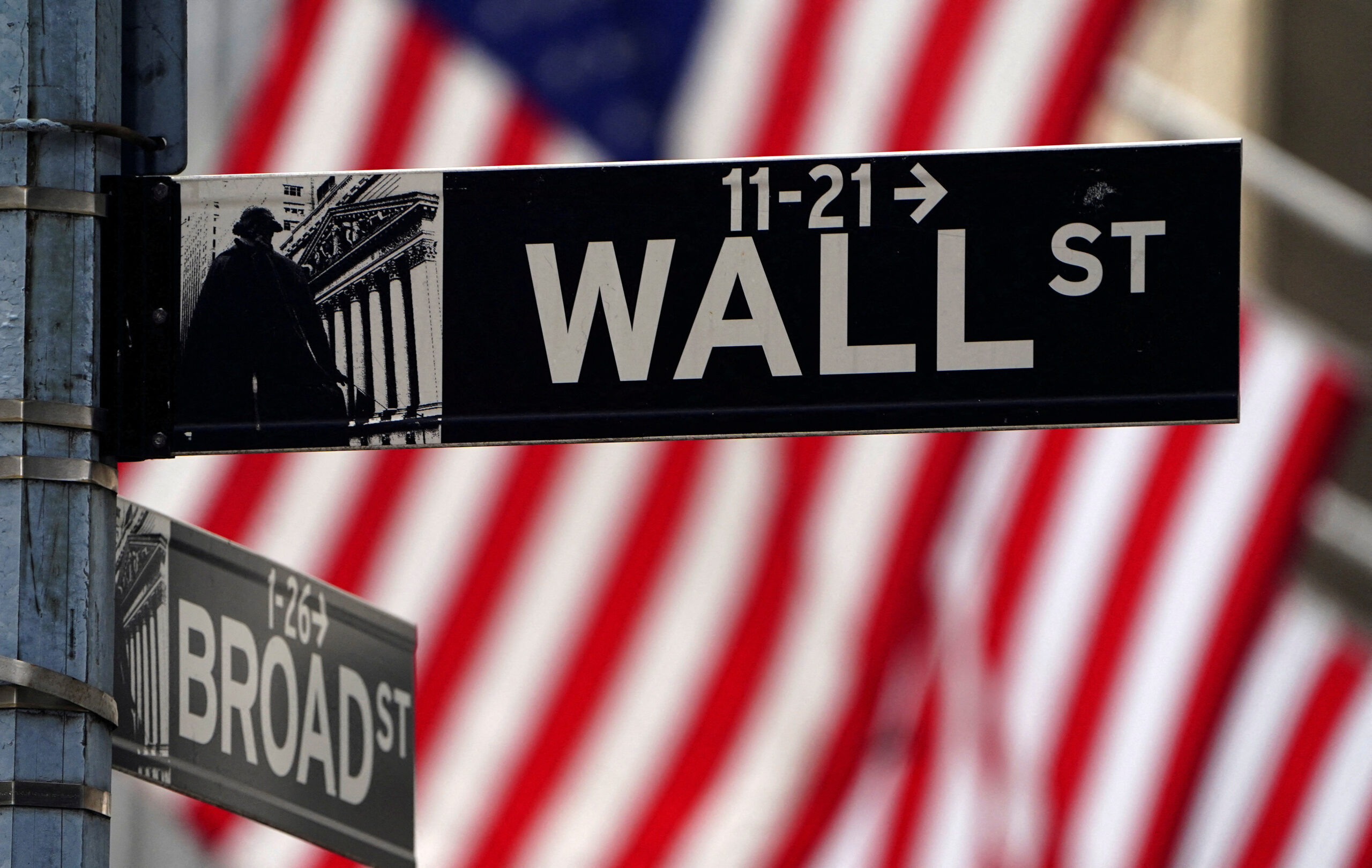

The U.S. economy lost jobs in July, and Wall Street bought stocks on the news. The reason is simpler than it sounds: the Federal Reserve has spent this year debating whether to raise interest rates to finish off inflation, and a shrinking payroll count makes raising them into a slowing economy very hard to justify. Cheaper money for longer is worth more to share prices than a strong jobs number, so buyers moved in — and they moved hardest into the expensive technology names that get hurt most when rates go up.
The S&P 500 finished Friday’s session at a record 7,757.64, up 0.62%. The Nasdaq Composite led the major averages with a 1.3% gain to 26,690.62. The Dow Jones Industrial Average added 151.83 points, or 0.28%, to close at 54,036.93. The small-cap Russell 2000 rose 1.1% to 3,034.49, and the CBOE Volatility Index eased to 14.90.
The Jobs Number Behind the Rally
The Bureau of Labor Statistics reported Friday morning that nonfarm payrolls fell by 23,000 in July. Economists surveyed by Reuters had forecast a gain of about 80,000. Government payrolls dropped 53,000, driven by local government education, while private employers added just 30,000.
The unemployment rate ticked down to 4.1% from 4.2%, but not because more people found work — the labor force shrank by 264,000, and the participation rate slipped to 61.4%, the lowest in more than five years. Revisions did the heavier damage: May and June were marked down by a combined 103,000 jobs, leaving the recent hiring trend materially weaker than markets believed a day earlier. Average hourly earnings rose 3.2% over the year, the slowest wage pace since 2021.
Rates, the Dollar and the Fed Path
The Fed held its benchmark rate in the 3.50%-3.75% range last week on a 9-3 vote, with three members preferring a quarter-point increase. Traders had been pricing a September hike as the likely next move. After Friday’s report, odds of that increase fell to 42% from 58%, according to the CME FedWatch tool.
Treasury yields dropped across the curve, with the 10-year retreating from about 4.68% and the two-year from roughly 4.25% ahead of the release. The dollar index fell about 0.3% to near 99.60, and the euro touched a seven-week high around $1.1567.
For the week, the S&P 500 gained 3.6% and the Nasdaq 5.2%, its strongest showing since May. The Dow added close to 3%. Chip stocks powered the move, with the iShares Semiconductor ETF ending the week more than 7% higher. It was the second straight winning week for all three major averages.
Market Movers
SpaceX (SPCX) jumped about 14% to roughly $131, its best day since listing. Argus Research analyst Steven Silver upgraded the shares to Buy from Hold with a $160 target, citing strong operating performance and a faster-than-expected payback on the company’s artificial intelligence buildout. The move also reflected relief that Thursday’s expiration of 911.5 million insider shares — which more than doubled the public float — produced no wave of selling. The stock remains roughly 50% below its June record of $225.64.
Palantir (PLTR) climbed 9.6% to $170.85, capping a week that included a 29% surge Tuesday on second-quarter revenue of $1.94 billion, up 93% from a year earlier.
Cloudflare (NET) rose about 8% after posting revenue of $696.1 million, up 36%, and raising full-year guidance to $2.86 billion to $2.87 billion.
Coherent (COHR) gained 13% Friday and 43.5% over five sessions on peer results and a JPMorgan target increase.
Rocket Lab (RKLB) added 8% and Intuitive Machines 9% as space names rallied alongside SpaceX.
On the losing side, DaVita (DVA) fell 17% on the week after reaffirming rather than lifting its outlook, and Honeywell Aerospace (HONA) cut full-year organic sales growth guidance to 4%-5% from 7%-9% in its first report as a standalone company.
Commodities
September West Texas Intermediate crude settled at $77.08 a barrel, down 0.27% on the day and 3.44% for the week. Prices climbed more than 1% intraday on renewed tension around the Strait of Hormuz before fading into the close, with a deal to reopen the waterway still under discussion in the sixth month of the U.S.-Iran conflict.
Gold was the week’s standout, rising 2.4% Friday to $4,347.70 an ounce, a seven-week high, for a weekly advance of about 7.5% — its best week in seven months. Silver also gained. Bitcoin traded near $64,963, up 0.89%.
What’s Next
The July consumer price index lands Wednesday, Aug. 12. Economists expect headline inflation to ease to 3.4% from 3.5% and core to slow to 2.5% from 2.6%. A soft print would further drain the case for a September hike; a hot one puts it back on the table, and the assets that led this week — gold, small caps and long-duration technology — have the most to give back. Earnings from Super Micro Computer on Tuesday and Applied Materials on Thursday round out the week.
JBizNews Desk | Wall Street
© JBizNews.com All Rights Reserved. Reproduction or distribution without written permission is prohibited.