
 Matzav
Alito Says He’ll Stay on High Court, Preserving 6-3 Conservative Majority
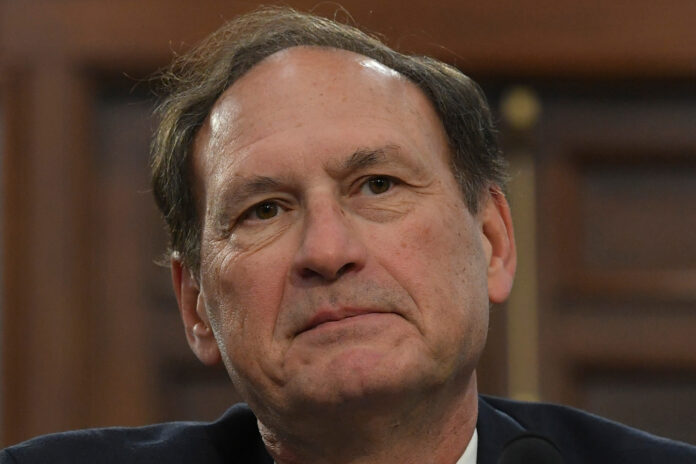
Supreme Court Justice Samuel Alito says he has no plans to step down, confirming that he will remain on the nation’s highest court for another term and ending speculation that President Donald Trump could soon have the opportunity to nominate a fourth justice.
“Obviously I’m here for another term,” Alito told The Wall Street Journal in an interview published Friday.
Alito’s remarks appear to settle months of questions about whether the 76-year-old justice would retire before or during the court’s upcoming term.
Earlier this year, retirement rumors gained traction after National Public Radio mistakenly reported that Alito intended to leave the bench. The report was later withdrawn after the Supreme Court confirmed that the claim was false, according to The Associated Press.
With Alito remaining in place, the Supreme Court will begin its next term with its current 6-3 conservative majority unchanged.
The court’s conservative wing consists of Chief Justice John Roberts and Justices Clarence Thomas, Samuel Alito, Neil Gorsuch, Brett Kavanaugh, and Amy Coney Barrett. The liberal bloc is made up of Justices Sonia Sotomayor, Elena Kagan, and Ketanji Brown Jackson.
Overall, six of the court’s nine members were appointed by Republican presidents, while the remaining three were nominated by Democratic presidents.
During his first term, President Trump appointed Justices Gorsuch, Kavanaugh, and Barrett, appointments that solidified the court’s conservative majority following Barrett’s confirmation in 2020.
Had Alito chosen to retire, Trump would likely have had the opportunity to appoint a fourth justice, potentially replacing one of the court’s most conservative members with a younger jurist who could serve for decades.
Instead, Alito’s decision leaves the ideological makeup of the court unchanged heading into the new term.
The Supreme Court’s composition has become an increasingly contentious political issue, with many Democrats and liberal advocacy groups continuing to push for legislation that would expand the size of the court.
House Democratic leaders have endorsed a proposal to increase the number of justices from nine to 13 by adding four new seats.
Republicans and other critics have characterized the proposal as court-packing, arguing that expanding the court would allow a future Democratic president and Senate to dramatically shift its ideological balance.
Senate Judiciary Committee Chairman Chuck Grassley, R-Iowa, has accused House Democrats of attempting to “rig” the Supreme Court after some lawmakers proposed adding four additional justices.
Grassley argued in June that Democrats support expanding the court because they disagree with many of its recent decisions and hope to fill the new seats with liberal nominees.
Supporters of expansion counter that increasing the number of justices would restore what they view as ideological balance and strengthen public confidence in the judiciary.
One organization advocating the proposal, Supreme 13, contends that a 13-member court would correspond with the nation’s 13 federal judicial circuits and would help address what it describes as decades of Republican-appointed dominance on the bench.
The idea has been debated before. In 2021, Democratic lawmakers introduced legislation to expand the Supreme Court from nine justices to 13, though the measure ultimately failed to become law.
The U.S. Constitution does not specify how many justices must serve on the Supreme Court, leaving Congress with the authority to determine the court’s size.
The court has consisted of nine justices since 1869, following several changes in its membership during the 19th century.
Opponents of expansion argue that enlarging the court for political purposes would threaten judicial independence and encourage an endless cycle of both parties adding seats whenever they control both Congress and the White House.
For now, Alito’s decision ensures that the court’s 6-3 conservative majority remains intact while eliminating, at least for the time being, the prospect of another Trump appointment to the Supreme Court.
It also guarantees that the debate over the future makeup of the nation’s highest court will continue to play out in the political arena, including during the 2026 midterm elections and the 2028 presidential campaign.
{Matzav.com}