
 Matzav
Will Permanent Daylight Saving Time Really Save Energy? Research Paints a Different Picture
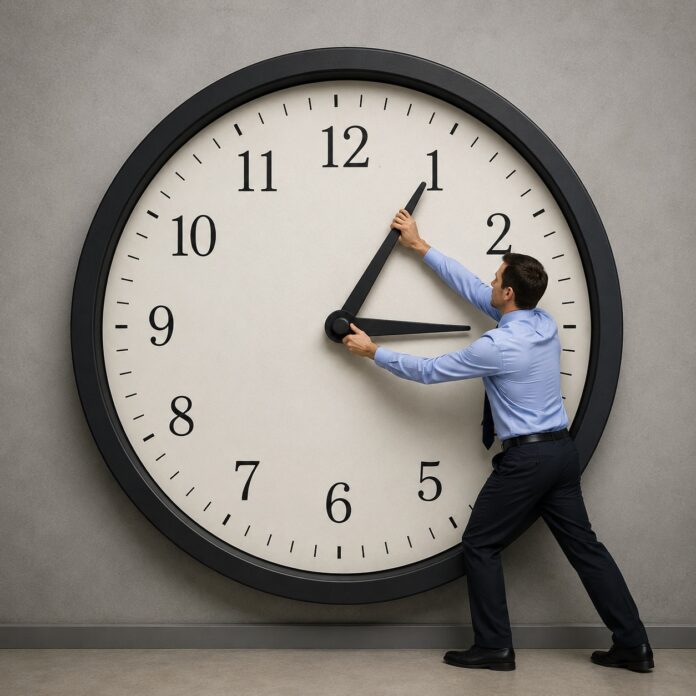
As momentum builds in Washington to make daylight saving time permanent, researchers say the long-held belief that the change would significantly reduce energy use is not strongly supported by decades of studies.
With fewer than three months remaining before Americans turn their clocks back to standard time, supporters of permanent daylight saving time—including President Trump—are intensifying efforts to push legislation across the finish line.
President Trump renewed his call Tuesday for year-round daylight saving time, arguing that the public overwhelmingly favors the idea.
“The vast Majority of Americans have asked to make Daylight Saving Time permanent, but no Administration has been able to get it done, until now,” Trump wrote.
The proposal has gained more traction than it has in years. Last month, the House approved the Sunshine Protection Act, sending the measure to the Senate, where its prospects remain uncertain after previous attempts to fast-track similar legislation failed.
Trump has described ending the twice-yearly clock changes as a rare issue capable of bringing Americans together across party lines, calling the current system “an issue that Republicans, Democrats, and Independents can unite behind,” while also describing the seasonal time changes as “foolish, inconvenient and, in some cases, very costly.”
Ironically, one of the original reasons the United States adopted year-round daylight saving time decades ago was to reduce energy consumption by shifting more daylight into the evening hours, particularly during the winter months.
However, numerous studies conducted over the years have concluded that any resulting energy savings are relatively modest.
Research conducted by the U.S. Department of Transportation during the nation’s experiment with year-round daylight saving time in the 1970s estimated energy savings of only 0.4% to 1.5%. A separate Department of Energy study later found that extending daylight saving time in 2007 reduced energy use by just 0.03%, according to a congressional report. That same report also cited additional research finding little or no measurable reduction in overall energy consumption and noted that one Indiana-based study actually found electricity demand increased after the time change.
The Department of Transportation also concluded in a separate report that there was insufficient evidence to show the extended daylight saving period “had any measurable impact on motor gasoline consumption for passenger vehicles or traffic volume in 2007.”
While energy savings appear limited, other analysts argue that the current practice of changing clocks twice each year carries its own financial burden. Studies released by the Independent Institute in 2008 and the American Enterprise Institute in 2013 estimated the annual economic cost of switching clocks at between $1.7 billion and $2 billion, citing the time Americans spend adjusting clocks and schedules—though far fewer clocks require manual changes today than in previous decades.
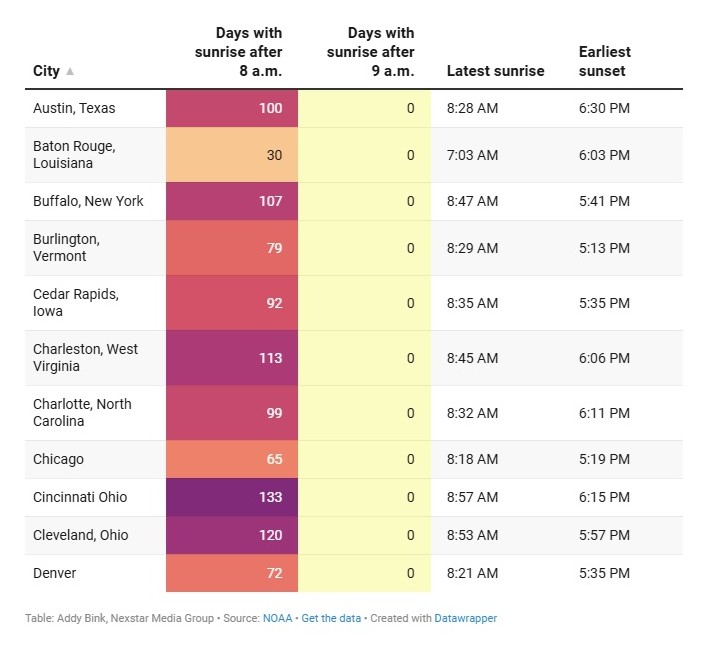
Researchers have also pointed to potential health consequences associated with the seasonal time changes. Experts say moving clocks forward or backward can disrupt sleep patterns for adults, children, and even pets for days afterward. Many sleep specialists have therefore advocated adopting permanent standard time instead of permanent daylight saving time because it provides more morning sunlight.
Any permanent change would also have broader implications beyond sleep and energy use. Experts note that year-round daylight saving time or standard time could affect religious observances for many Americans and temporarily require significant adjustments to airline schedules and other transportation systems.
For now, it remains unclear whether the Senate will take up the Sunshine Protection Act or bring it to a vote.
Meanwhile, lawmakers are also weighing several alternative proposals, including bills that would allow individual states to adopt permanent daylight saving time, establish permanent half-daylight saving time, or make standard time permanent while allowing certain exceptions.