
 JBizNews
Insurance Costs Are Quietly Becoming One of Corporate America’s Fastest-Rising Expenses
For many businesses, the next major cost increase won’t come from wages, tariffs or interest rates. It will arrive when insurance policies come up for renewal.
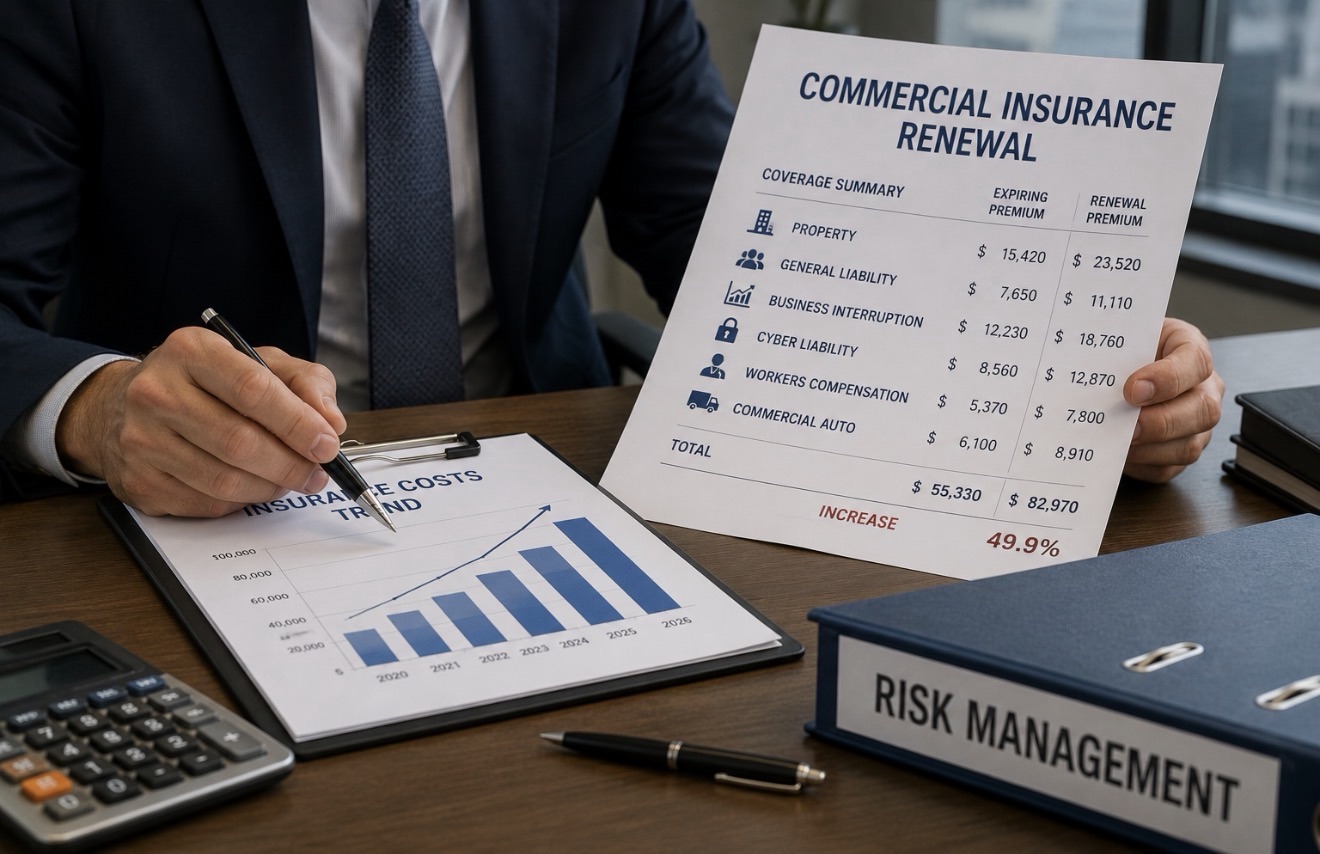
Commercial insurance premiums have risen steadily across multiple lines of coverage as insurers respond to larger catastrophe losses, rising litigation costs, cyber threats and higher rebuilding expenses. What was once viewed as a routine operating expense is increasingly becoming a strategic issue influencing investment decisions, expansion plans and even where companies choose to operate.
The shift is extending well beyond property insurance.
Manufacturers, retailers, healthcare providers, transportation companies, real estate owners and professional service firms are all facing higher premiums for property, liability, directors and officers (D&O), cyber insurance and umbrella coverage. Businesses with clean claims histories are discovering that broader industry risks—not just their own performance—are driving renewal prices.
Climate risk is changing the economics of insurance.
Hurricanes, floods, wildfires, severe storms and other natural disasters have generated record insured losses in recent years, forcing carriers to reassess pricing models and reduce exposure in some regions. In several states, insurers have limited new policies, increased deductibles or withdrawn from high-risk markets altogether, leaving businesses with fewer options and higher costs.
Cybersecurity has become another major driver.
Ransomware attacks, data breaches and business interruption claims continue pushing cyber insurance premiums higher, while insurers increasingly require stronger security controls before issuing or renewing policies. Multifactor authentication, endpoint monitoring, employee training and incident-response planning are rapidly becoming underwriting requirements rather than optional best practices.
The impact is changing boardroom decisions.
Companies planning new facilities, acquisitions or geographic expansion are increasingly evaluating insurance availability alongside labor, taxes and financing. In some industries, higher insurance costs are beginning to influence where projects are built and how much capital businesses are willing to commit.
The consequences extend into lending as well.
Banks and private lenders frequently require borrowers to maintain specified insurance coverage. As premiums increase, debt-service costs effectively rise even when interest rates remain unchanged, placing additional pressure on cash flow for property owners and operating businesses alike.
For insurers, the environment presents both opportunity and risk.
Higher premiums can improve profitability, but only if pricing keeps pace with increasingly expensive claims. Companies that accurately measure emerging risks may strengthen earnings, while those that underestimate catastrophe exposure or cyber losses could face renewed pressure on underwriting results.
The broader business story is that insurance is no longer simply protecting assets after something goes wrong. It is becoming a larger factor in corporate capital allocation, site selection and enterprise risk management. Businesses that actively reduce operational risk, strengthen cybersecurity and improve resilience may increasingly find those investments paying for themselves through lower insurance costs and greater access to coverage.
In the years ahead, insurance may no longer be viewed as just another overhead expense. It is becoming a competitive advantage for companies that can demonstrate they are better risks than everyone else.
JBizNews Desk | New York
© JBizNews.com All Rights Reserved.
Reproduction or distribution without written permission is prohibited.