

Nvidia is teaming up with some of Wall Street’s largest investment firms to assemble as much as $500 billion for artificial-intelligence infrastructure, a financing push that would help fund the data centers, power systems and computing campuses needed to keep the AI buildout moving.
Apollo Global Management, Blackstone, BlackRock, Brookfield Asset Management, Goldman Sachs and KKR are among the firms expected to participate. The capital would be deployed through multiple investment vehicles rather than a single $500 billion fund, with financing aimed at developers and customers building large-scale AI infrastructure.
The structure matters because Nvidia is moving beyond simply selling chips. It is increasingly helping create the financial ecosystem that allows customers to afford the massive projects those chips require.
AI data centers can cost tens of billions of dollars once land, power generation, transmission, cooling, networking and processors are included. That is pushing the industry toward private credit, infrastructure funds, project finance and bond markets on a scale normally associated with energy and transportation megaprojects.
For Nvidia, the logic is straightforward. If customers cannot finance new data centers, they cannot buy more Nvidia systems. Helping Wall Street provide that capital effectively supports future demand for Nvidia’s own products without requiring the company to fund every project from its balance sheet.
The arrangement also deepens the connection between the AI boom and the financial system. Private-equity firms, infrastructure funds and lenders are increasingly financing projects whose economics depend on continued growth in demand for AI computing.
That creates opportunity for Wall Street, which can earn management fees, interest income and investment returns from what is rapidly becoming a new infrastructure asset class.
It also increases the risk of concentration. Nvidia is investing in AI companies, those companies are raising money to build data centers, and many of those facilities are buying Nvidia hardware. The more interconnected those transactions become, the more investors will scrutinize whether underlying AI revenue is growing fast enough to support the financing behind it.
The reported $500 billion target follows a series of increasingly large AI financing arrangements. Nvidia has separately discussed backing major data-center projects and recently moved deeper into power infrastructure through a planned investment in Texas developer Lancium.
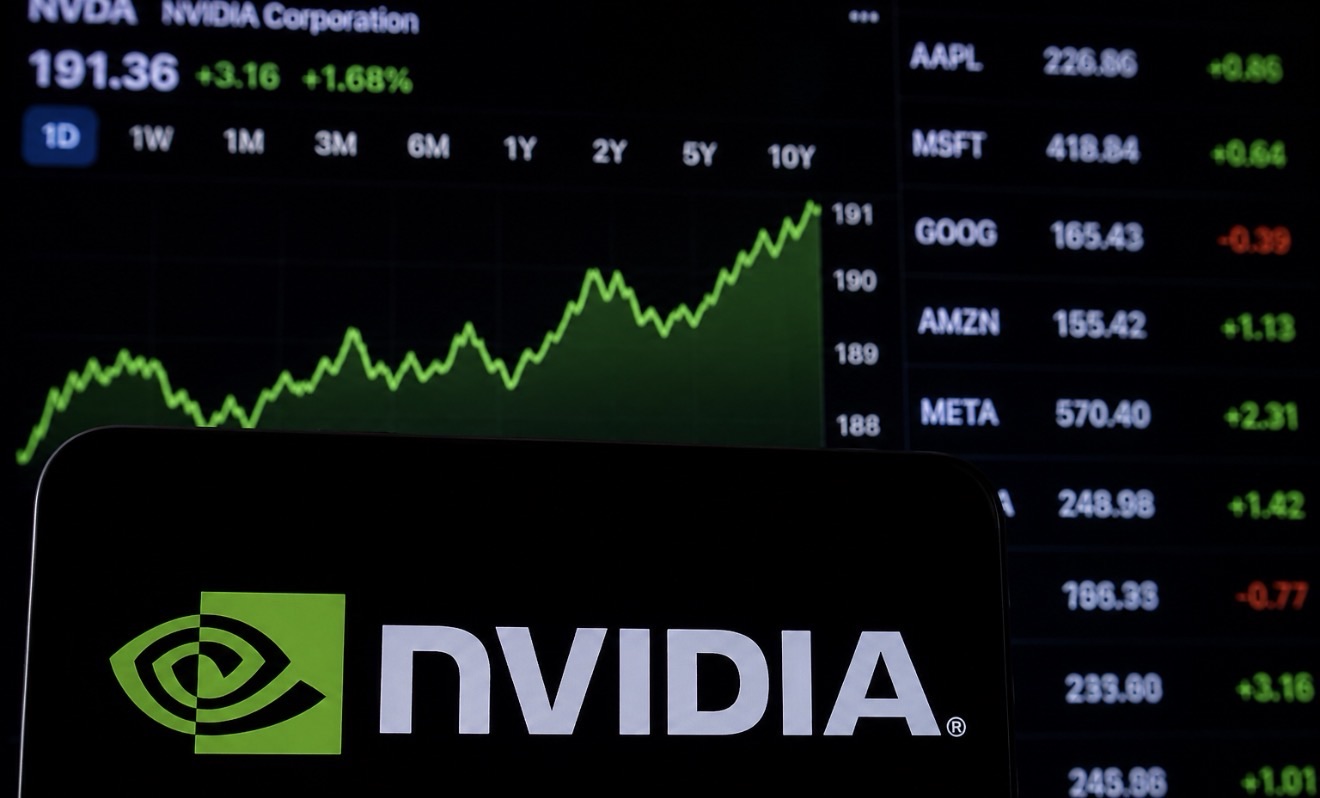
Nvidia shares fell nearly 3% Monday even as shares of several participating alternative-asset managers rose, suggesting investors viewed the announcement as particularly favorable for firms that will earn fees and returns from supplying the capital.
The larger shift is becoming difficult to miss. Artificial intelligence is no longer simply a technology spending cycle. It is becoming one of the largest infrastructure-financing campaigns in the world — and Nvidia increasingly sits at the center of both the computing and the capital behind it.
JBizNews Desk | Wall Street
© JBizNews.com All Rights Reserved.
Reproduction or distribution without written permission is prohibited.