
 JBizNews
Uniqlo, Zara and Levi’s Expand Clothing Repair Services as Shoppers Look to Spend Less
Major clothing retailers are expanding repair, resale and sewing services as more consumers look for ways to keep clothes longer rather than continuously replacing them.
Uniqlo, Zara and Levi Strauss are among the brands pushing clothing repair further into the mainstream, with programs ranging from low-cost in-store fixes to mail-in repairs and sewing workshops aimed especially at younger shoppers.
The shift is partly about sustainability, but it is also increasingly about household economics.
For consumers, the appeal is simple: repairing a shirt, jacket or pair of jeans can cost far less than replacing it.
Uniqlo’s U.S. RE.UNIQLO Studios offer stitching, patching, taping and button replacement on eligible Uniqlo clothing for $5 per repair. The company has been expanding the concept as part of a broader push to keep garments in use longer.
Zara offers repairs through its U.S. Pre-Owned platform. Customers can select an item and the repair needed online, then send it for servicing. Zara says repairs can take as long as 14 days and charges $9.99 for shipping in addition to the cost of the repair itself.
Levi Strauss is taking a somewhat different approach.
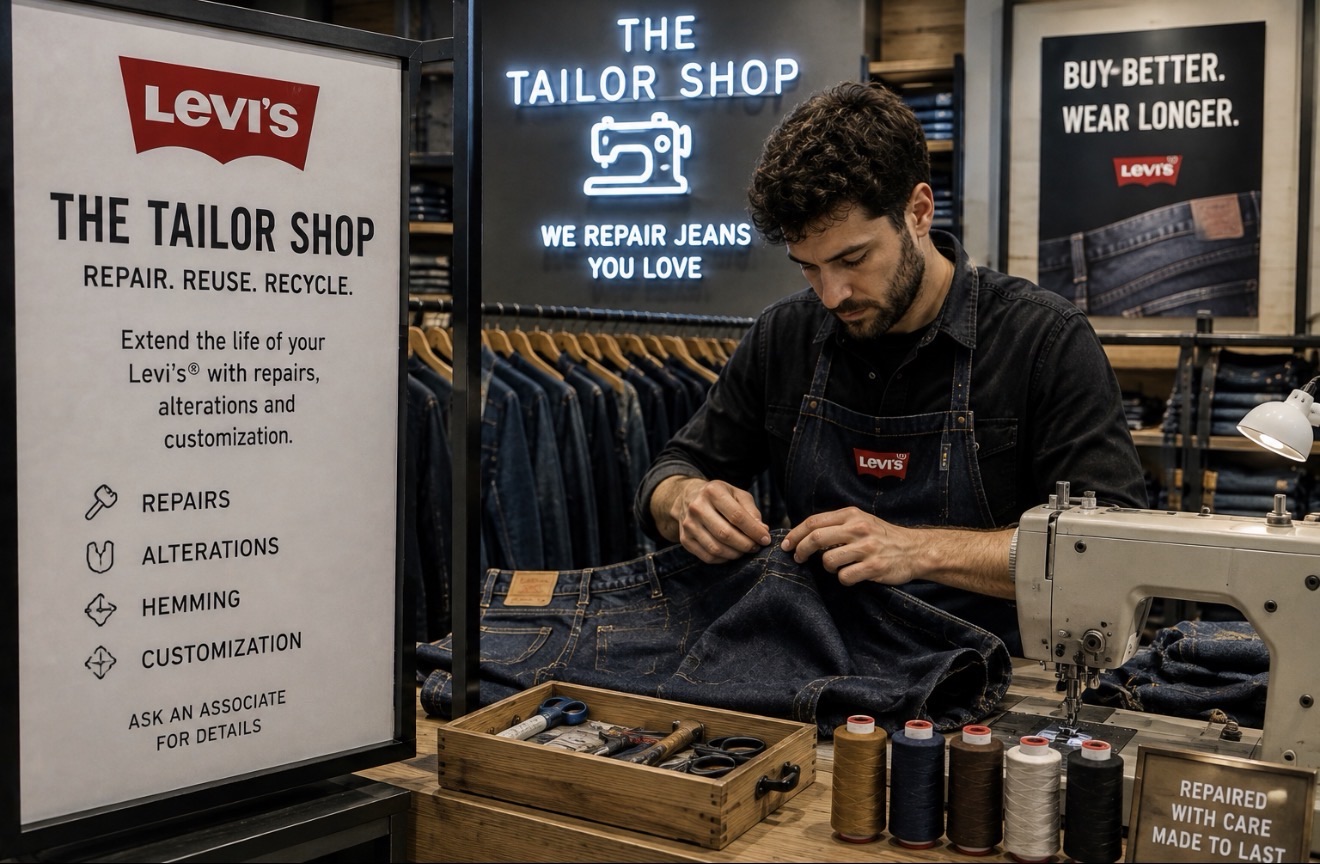
The denim company launched its Wear Longer Project this year, targeting high-school students with workshops that teach basic sewing and clothing-repair skills. Levi’s also operates Tailor Shops in selected stores where customers can repair, customize and alter denim.
Other major retailers including H&M and Primark have been experimenting with repair workshops, resale and clothing-care programs as well.
The trend reflects a change in how retailers are trying to reach younger consumers. For decades, much of the apparel business depended on convincing customers to replace clothing frequently. Repair services essentially encourage the opposite behavior — but they can also keep shoppers connected to a brand for longer.
Retailers are betting that a customer who repairs a favorite pair of jeans or jacket may become more loyal to the company that helped extend its life.
There is also a growing resale business behind the strategy. Zara’s Pre-Owned operation includes repair, resale and donation, while other fashion companies are building their own secondhand marketplaces instead of leaving that business entirely to platforms such as eBay, Depop and Poshmark.
The economics are not easy. Clothing repair requires skilled labor, and repairing a cheap garment can sometimes cost nearly as much as manufacturing another one. That is one reason repair services historically remained concentrated among expensive outdoor, denim and luxury brands.
But retailers now see another benefit: shoppers are increasingly sensitive to price.
If consumers begin viewing a $5 repair as an alternative to another $40 or $60 purchase, clothing companies have an opportunity to remain part of the transaction even when customers are spending less on new merchandise.
For shoppers, that means something relatively unusual is returning to mainstream retail: instead of being told to throw worn clothing away and buy another one, some of the world’s biggest fashion companies are now offering to fix it.
JBizNews Desk | New York
© JBizNews.com All Rights Reserved. Reproduction or distribution without written permission is prohibited.