
 JBizNews
FIFA’s $4.2 Billion World Cup Stake Sale Collapses as Trump Backs Infantino
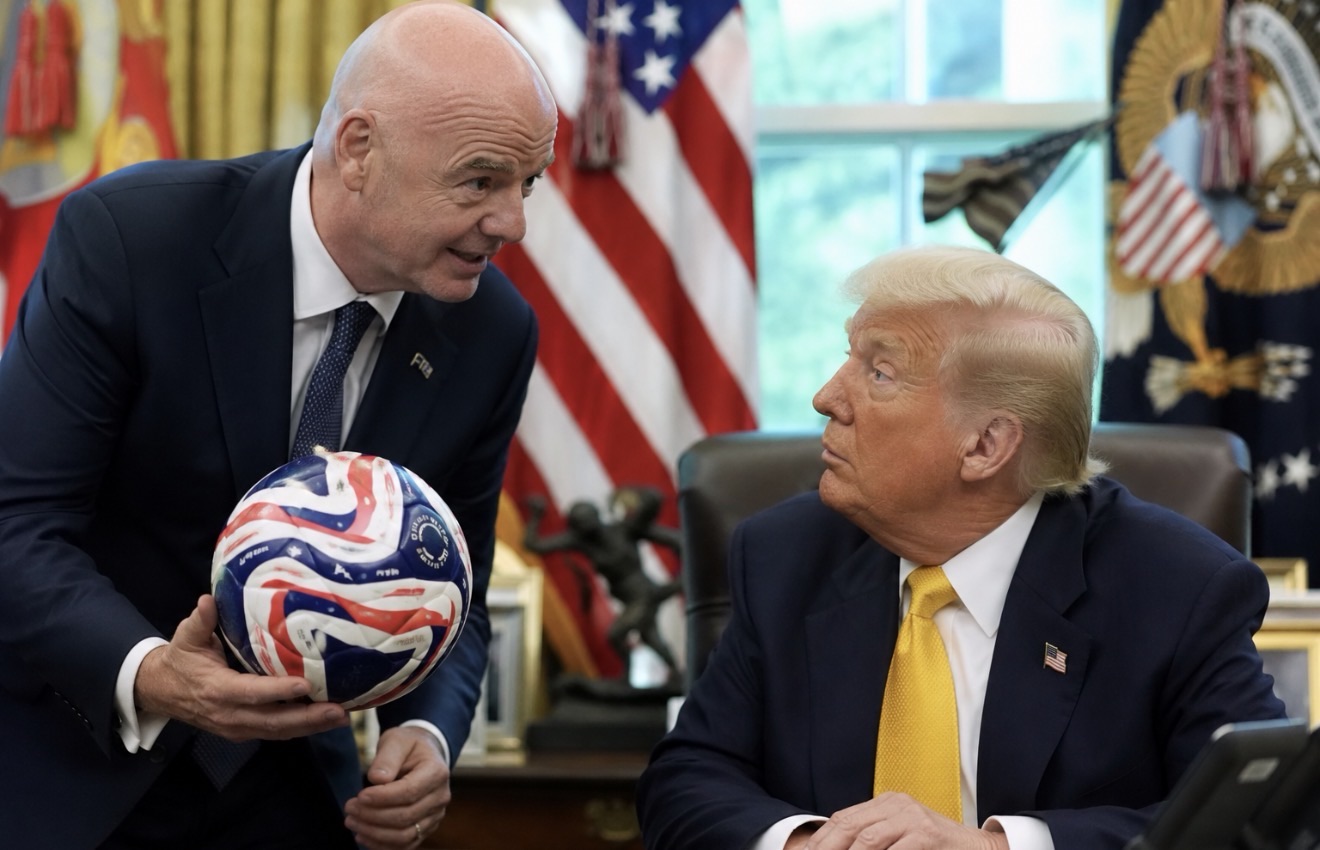
President Donald Trump is publicly defending FIFA President Gianni Infantino after a plan to raise roughly $4.2 billion from private investors by selling part of FIFA’s World Cup commercial business collapsed under pressure from major soccer federations.
Trump said removing Infantino would be a “terrible mistake,” praising him for overseeing what the president described as an extraordinarily successful and profitable World Cup.
The dispute is fundamentally about who should profit from one of the world’s most valuable sporting properties.
Infantino had proposed creating a new commercial entity called FIFA Forward Enterprise, which would control commercial and event operations tied to the World Cup and other FIFA competitions.
Outside investors would have been allowed to purchase a non-controlling stake of as much as 20%.
FIFA valued the new business at about $20 billion, meaning a 20% sale could have raised approximately $4.2 billion.
Private investment firm Thrive Eternal, connected to Joshua Kushner’s Thrive Capital, was expected to be among the leading investors.
The plan immediately triggered resistance from powerful soccer organizations, including UEFA, Concacaf and the Asian Football Confederation.
Their objection was larger than the price.
For generations, FIFA’s biggest tournaments have been controlled by soccer’s governing institutions. Selling part of the commercial operation to private investors would have introduced shareholders whose financial returns could become intertwined with decisions involving television rights, sponsorships, ticketing and future tournaments.
Critics argued that FIFA was effectively putting a piece of the World Cup’s future revenue stream up for sale without adequately consulting the national and regional federations that make up the organization.
The backlash became intense enough that FIFA withdrew the proposal.
FIFA leadership subsequently acknowledged that the process should have been handled differently and promised a review, but the retreat did not end the controversy surrounding Infantino.
Several major federations have questioned his judgment, while some officials have openly called for new leadership.
Trump is now stepping directly into that fight.
The president’s support matters because Infantino has developed an unusually close relationship with the Trump administration, particularly during preparations for the 2026 World Cup hosted across the United States, Canada and Mexico.
The tournament also demonstrated why private investors were interested in FIFA’s commercial rights in the first place.
The World Cup has become a massive global business built around broadcasting, corporate sponsorships, hospitality, ticketing and licensing. Expanding the tournament to 48 teams and 104 matches increased the amount of inventory FIFA could sell to broadcasters and sponsors.
That creates a valuable stream of future revenue.
Private-equity investors routinely seek businesses with predictable cash flows that can be packaged, expanded and eventually sold or refinanced. FIFA’s commercial operation has many of those characteristics — except that it sits inside a nonprofit global governing body whose members do not necessarily view maximizing investor returns as its primary purpose.
That tension ultimately helped kill the transaction.
The failed $4.2 billion raise therefore leaves FIFA with a much larger question than whether Infantino survives the political backlash.
It must decide whether the World Cup should remain entirely controlled by soccer’s governing institutions or whether private capital should eventually receive a seat at the table in exchange for billions of dollars.
For now, the investors are out.
Infantino remains in.
And the president of the United States has made clear which side he is on.
JBizNews Desk | Washington & Zurich
© JBizNews.com All Rights Reserved. Reproduction or distribution without written permission is prohibited.