
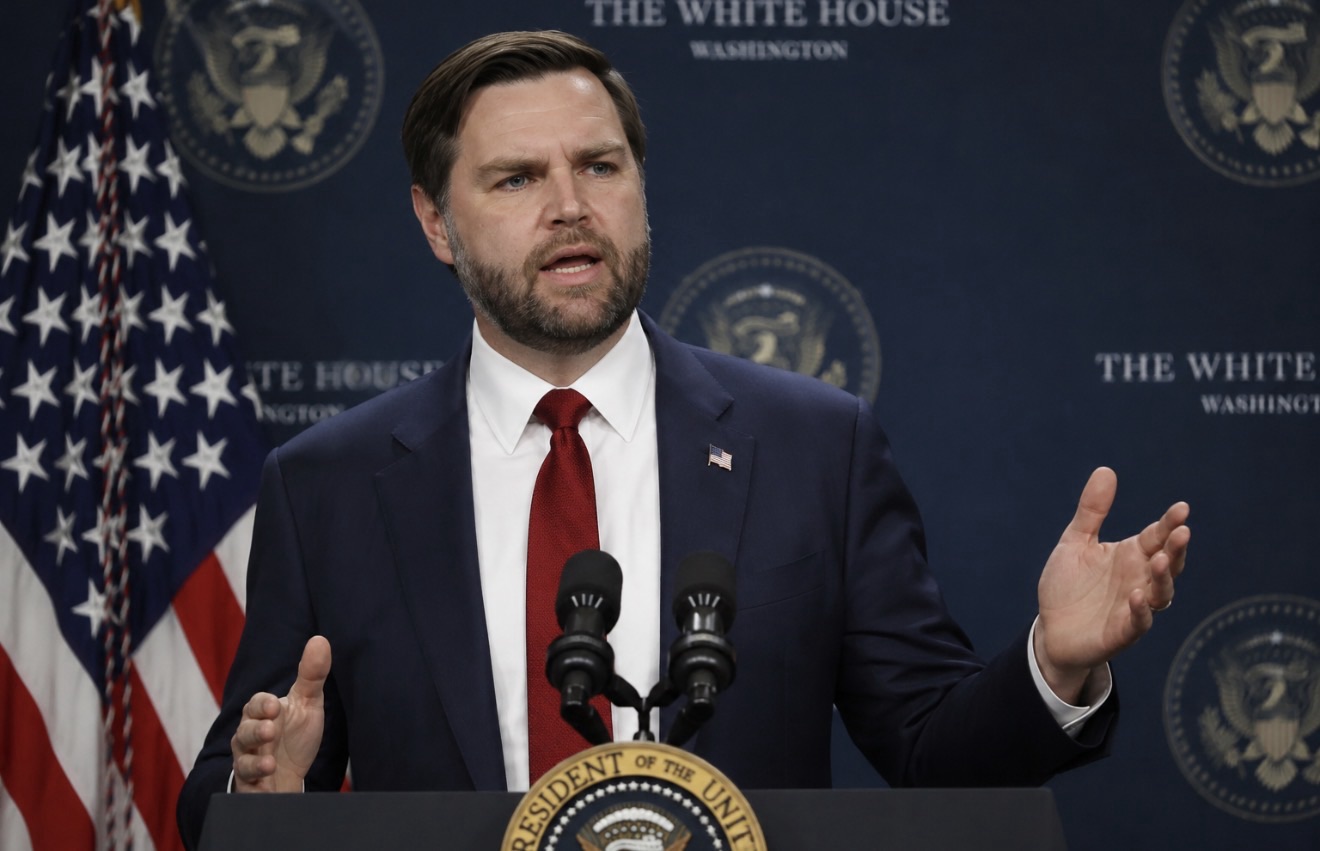

Vice President JD Vance said Thursday that American strategy in the confrontation with Iran comes down to two aims: keeping oil and gas prices stable for Americans, and making certain Tehran never obtains a nuclear weapon. Speaking on Fox News, he said he is confident both are being achieved, while allowing the outcome is unpredictable because Iran has repeatedly failed to honor commitments it made. He described the goal as returning the Strait of Hormuz to a state where energy prices are steady, and said the administration is using diplomatic, military and economic tools selectively toward that end.
Stated plainly, the White House is telling the public it will be judged on the price at the pump as much as on centrifuges.
On price, the claim largely holds. Vance noted oil was down on the day and far below the levels of the conflict’s early weeks. Brent traded above $100 a barrel in March, its highest since 2022, after attacks on the UAE port of Fujairah and strikes on Iran’s Kharg Island export hub. Thursday it sat near $82 for U.S. crude, ending a five-day advance, with Brent around $88. That is roughly a fifth off the peak — and still well above pre-war levels.
Stability is not the same as normal supply. Gulf crude and condensate exports were running about 40% below pre-war levels in July, at roughly 10.7 million barrels a day. Ship-tracking data showed eight to 15 vessels crossing Hormuz on each of the first days of August, against about 130 transits a day before the war — closer to one ship in ten. The International Energy Agency’s latest monthly report puts the world short about 1.8 million barrels a day this quarter. There is real disagreement about how tight things are: one analysis this week argued that oil under $90 is not the price of a genuine shortage, and that counting bypass pipelines, regional flows may be running not far below pre-war levels.
The domestic picture has improved sharply in the past week. U.S. crude imports averaged 7.3 million barrels a day in the week ended Aug. 7, up 1.14 million a day, lifting commercial crude inventories 17.4 million barrels to 424.4 million, the biggest weekly build since January 2023. Imports of Middle Eastern crude are on track for roughly 600,000 barrels a day this month, the most since the war started, helped by Saudi cargoes routed overland to the Red Sea and then through the Suez Canal. Fuel stocks are the weak spot: gasoline inventories are about 6% below their five-year average and distillate about 12% below.
The tension in the two-goal formula is the blockade. Washington imposed a naval blockade on Iranian ports on April 13 and reimposed it in early August after renewed attacks on commercial vessels. The administration has estimated the blockade costs Iran roughly $500 million a day, with the Pentagon putting Iran’s lost oil revenue at about $4.8 billion by the start of May. That is pressure on the nuclear question. It is also barrels kept off the water, which works against the price goal in the short run — the same instrument pulling in two directions at once.
Tehran has made that trade-off explicit. Iran’s foreign ministry spokesman said this week that the United States must lift the blockade before conditions exist to fully reopen Hormuz, and that Iran and Oman are negotiating over shipping routes in the strait. A memorandum signed by the two governments on June 17 to open the waterway to commercial ships collapsed within weeks in disputes over which routes vessels could use. Talks remain deadlocked, and the administration is moving toward broader sanctions alongside continued enforcement.
Vance’s remarks follow comments from President Trump earlier in the week asserting that the United States has total control of the Strait of Hormuz and questioning any Iranian assurance. The waterway normally carries about a fifth of global oil supply.
For businesses, the practical read is narrower than the rhetoric. Crude has settled into the low $80s, American storage tanks are refilling, and refiners are running near capacity. None of that is the same as the strait reopening. Freight rates, marine insurance and delivery times for anything moving through the Gulf still reflect a waterway operating at a fraction of normal traffic, and they will keep doing so until ships can sail it routinely. The price of oil has stabilized. The route has not.
JBizNews Desk | Washington, D.C.
© JBizNews.com All Rights Reserved. Reproduction or distribution without written permission is prohibited.