
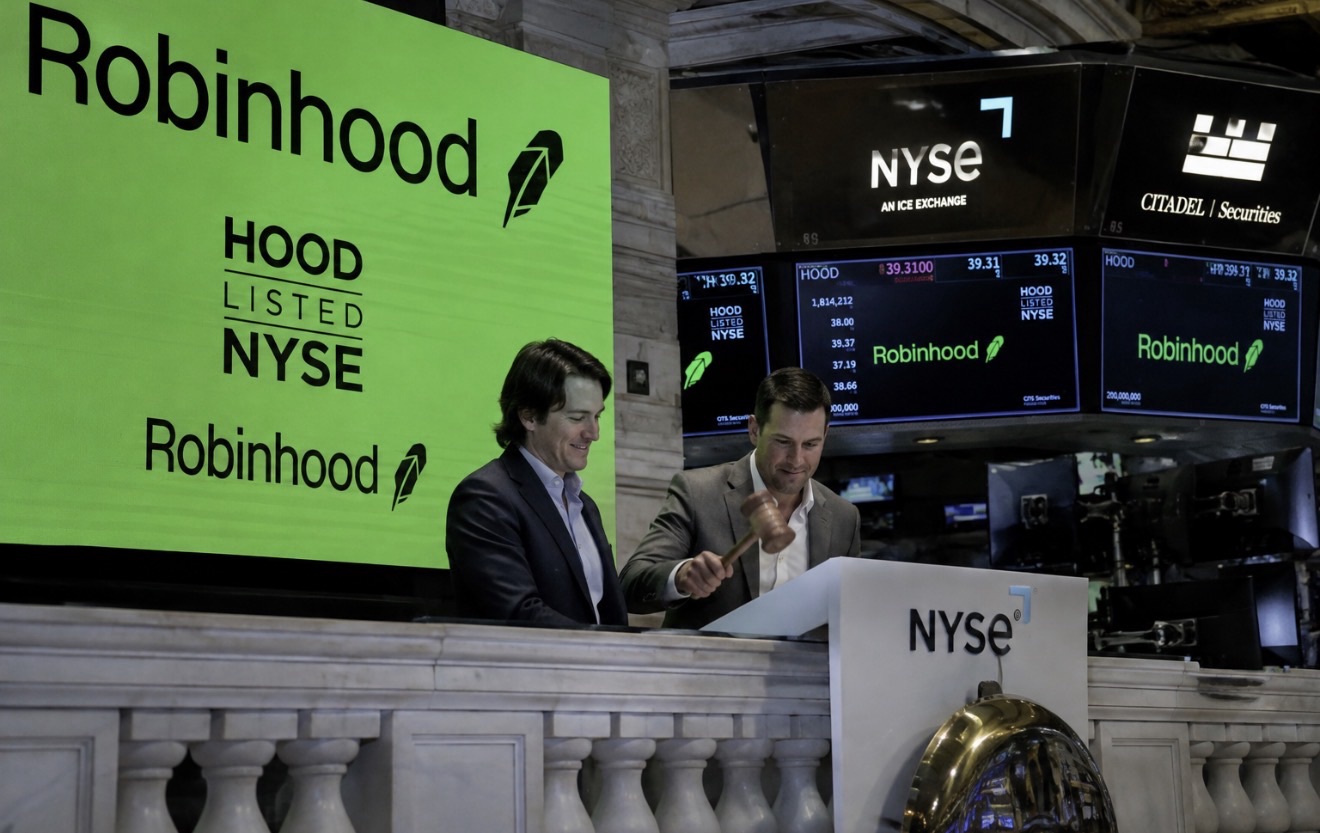

Robinhood is pushing further into private markets, launching a new publicly traded venture fund that gives ordinary investors access to early- and growth-stage startups that historically have been available mainly to venture-capital firms, institutions and wealthy accredited investors.
Robinhood Ventures Fund II began trading on the New York Stock Exchange Thursday after raising about $225.5 million, creating a new vehicle that allows retail investors to buy exposure to a portfolio of private companies through a publicly traded fund.
The strategy is aimed in part at companies connected to Y Combinator and other startup ecosystems where some of the most valuable technology businesses begin years before they ever consider an initial public offering.
That matters because the structure of the American stock market has changed dramatically.
Many high-growth companies now remain private for much longer than they did a generation ago. Instead of going public relatively early and allowing everyday investors to participate in much of their growth, startups can raise billions of dollars privately from venture firms, sovereign wealth funds and institutional investors while delaying an IPO for years.
By the time those companies finally reach the stock market, some of the largest gains may already have gone to private investors.
Robinhood is trying to give its customers a way into that earlier stage.
Rather than requiring investors to qualify as accredited investors or commit large sums directly to venture funds, the new vehicle can be bought and sold through the public market like other listed investments.
That does not make startup investing risk-free.
Early-stage companies fail at much higher rates than established public corporations, private-company valuations can be difficult to determine, and investments may remain illiquid for years. Even when a startup succeeds, there is no guarantee it will eventually go public or be acquired at a higher valuation.
But the launch represents an important shift in who gets access to venture investing.
Robinhood built its original business around making stock and options trading easier for individual investors. It later expanded into retirement accounts, crypto, credit cards and other financial products.
Private-market access is becoming another front in that expansion.
It also puts Robinhood into a much larger competition taking shape across Wall Street.
Asset managers, brokerages and private-equity firms are increasingly looking for ways to package private investments for individual customers as wealthy and institutional investors pour more money into companies outside traditional public exchanges.
The opportunity is large because the number of major private companies has grown alongside their valuations.
Some startups now reach valuations of tens of billions or even more than $100 billion while remaining privately held, creating businesses that are effectively public-company size without public-company access.
For retail investors, that has created an unusual problem: they can easily buy shares of mature companies such as Apple, Microsoft or Amazon, but may have almost no direct access to the next generation of companies competing to become them.
Robinhood’s new venture fund is attempting to bridge that gap.
If the model gains traction, investors may increasingly be able to gain exposure to startups long before a traditional IPO.
And that could gradually change one of the most fundamental divisions in American finance — the line separating Wall Street’s private market from the ordinary investor.
JBizNews Desk | New York
© JBizNews.com All Rights Reserved. Reproduction or distribution without written permission is prohibited.