
 JBizNews
Trump Slaps Up to 100% Tariffs on Imported Drones, Pushing Production Toward U.S.
President Donald Trump has imposed tariffs of as much as 100% on imported drones and key components, a sweeping move aimed at reducing U.S. dependence on foreign — particularly Chinese — drone technology and forcing more production onto American soil.
The new tariffs were announced Thursday night and are already moving U.S. drone stocks Friday morning.
The highest rate, 100%, applies to drones considered especially sensitive for national security, including aircraft with a maximum takeoff weight above 25 kilograms, or about 55 pounds, and drones equipped with thermal-imaging capabilities.
Docking stations and certain critical components for those systems will also face the 100% levy.
Smaller and less-sensitive drones will generally face a 25% tariff.
Imports from several U.S. allies will receive lower rates if substantially all of their hardware, software and technology originate within those countries or the United States. Qualifying drones and components from the European Union, Japan, South Korea, Switzerland, Taiwan and Liechtenstein will face a 15% tariff, while qualifying British products will face 10%.
Most of the tariffs take effect 21 days after the proclamation was signed, while tariffs covering some less-sensitive drone components will begin after 180 days.
The administration says the move follows a Commerce Department investigation that concluded the United States is too dependent on foreign suppliers to meet its drone needs, creating vulnerabilities in defense, cybersecurity and critical supply chains.
The White House is also authorizing an onshoring program designed to give companies investing in U.S. drone and component manufacturing preferential treatment.
That could have major consequences beyond the defense industry.
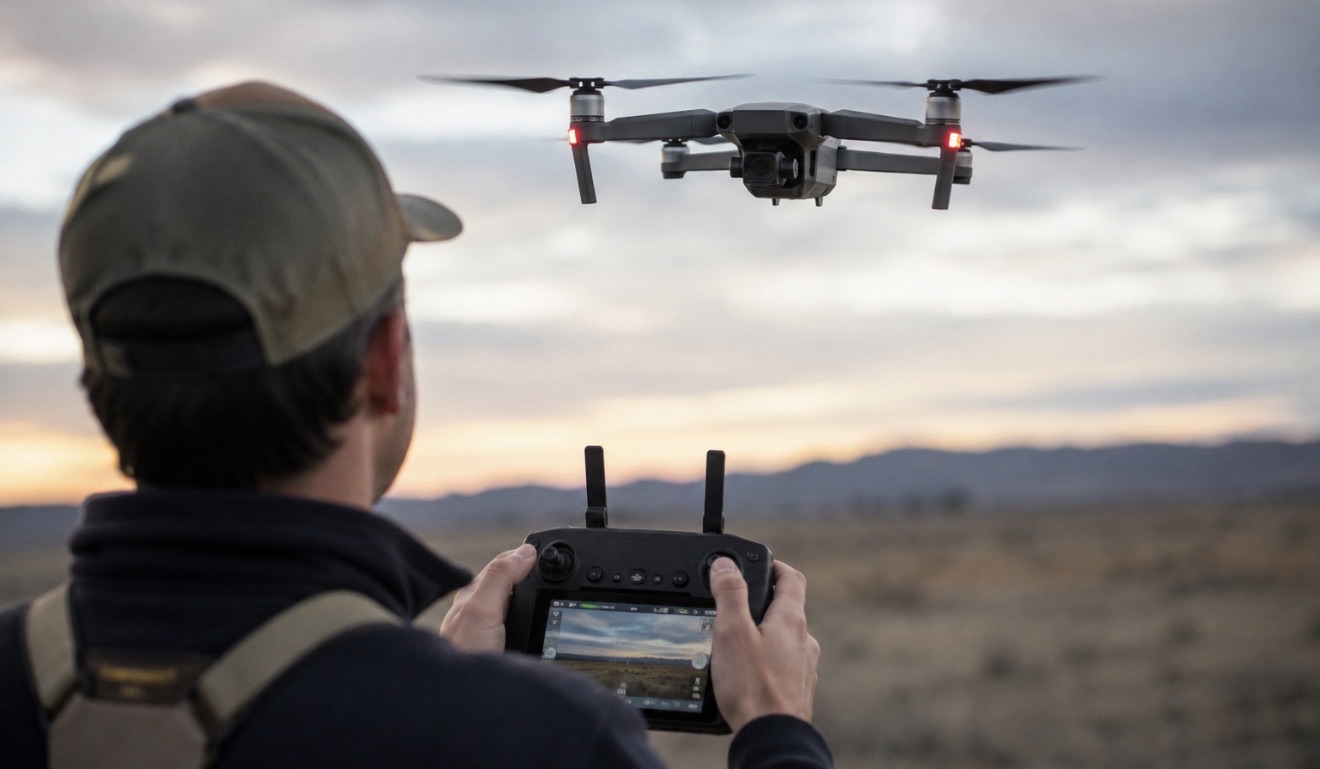
Drones are increasingly used in construction, agriculture, utility inspections, surveying, filmmaking, emergency response, policing, infrastructure maintenance and package delivery.
Companies relying on imported equipment could therefore face significantly higher costs unless suppliers shift production to the United States or qualify for one of the lower tariff rates.
Domestic drone manufacturers immediately benefited.
Shares of Unusual Machines jumped roughly 14% in premarket trading Friday, while Red Cat Holdings rose more than 7% and AeroVironment gained about 3%.
The policy also represents another front in Washington’s effort to reduce Chinese dominance of critical technology supply chains.
China has become the dominant producer of commercial drones and many of the motors, batteries, cameras, communications systems and electronics inside them. Even drones assembled elsewhere can rely heavily on Chinese components.
The new tariffs are designed to attack that dependence at both levels — the finished aircraft and the parts inside them.
For U.S. companies, the calculation now becomes straightforward: continue importing and absorb the tariff, raise prices, change suppliers or manufacture more of the product domestically.
That makes the measure more than another trade dispute.
It is an attempt to rebuild an entire American supply chain around a technology that has rapidly become essential to both modern warfare and everyday business.
JBizNews Desk | Washington
© JBizNews.com All Rights Reserved. Reproduction or distribution without written permission is prohibited.