
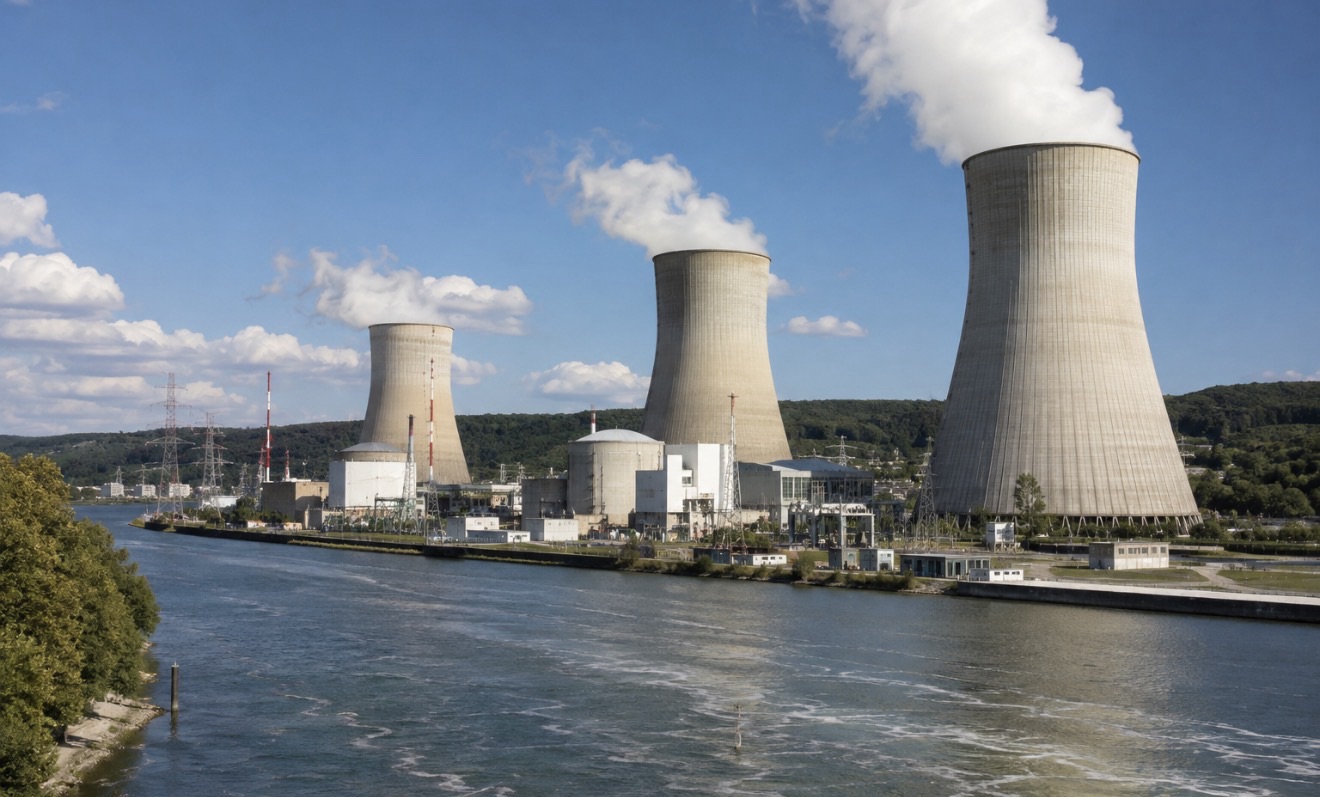

A severe heatwave is forcing France to cut nuclear power output, with six reactors expected to be fully offline Friday and heat-related curtailments reaching about 9.4 gigawatts, roughly 15% of the country’s nuclear generating capacity.
The reductions are being driven by unusually high river temperatures, which limit how much cooling water nuclear plants can safely use and return without violating environmental restrictions.
That is creating an unusual energy-market problem.
The same extreme heat that pushes electricity demand higher for air conditioning is also reducing the amount of power available from France’s nuclear fleet, which normally provides the backbone of the country’s electricity system.
French day-ahead electricity prices have already climbed to their highest summer level since June as traders price in tighter supply.
The impact matters well beyond France.
France is typically one of Europe’s largest electricity exporters, supplying neighboring markets when its nuclear fleet is operating normally. When French output drops sharply, those countries may have to rely more heavily on gas-fired generation, imports from elsewhere or higher-priced wholesale power.
The result can be higher electricity costs across a much wider part of Europe.
Nuclear plants are particularly exposed to prolonged heat because many rely on rivers for cooling. When river temperatures rise too far, operators may have to reduce generation even if the reactors themselves remain fully functional.
That means the constraint is not a shortage of uranium or a mechanical breakdown.
It is the temperature of the water outside the plant.
For businesses, the episode highlights another vulnerability in Europe’s power system: extreme weather can reduce energy supply at the same time it increases demand.
Manufacturers, data centers, retailers and other large electricity users can all feel the impact through higher wholesale prices and increased grid stress.
The issue is especially significant for France because nuclear power supplies the majority of its electricity and has historically given the country an advantage in producing large amounts of relatively low-carbon power.
But hotter summers are making cooling-water restrictions more important.
Utilities can sometimes shift generation between plants or adjust output around the hottest parts of the day, but sustained high temperatures leave fewer options when multiple rivers and nuclear sites are affected simultaneously.
The immediate concern is Friday’s expected reduction.
The longer-term business question is whether European utilities will need to spend more on cooling systems, grid flexibility and backup generation if extreme heat increasingly disrupts plants that were designed around cooler historical conditions.
For now, one of Europe’s most dependable sources of electricity is being constrained by the weather precisely when consumers need power the most.
JBizNews Desk | Paris
© JBizNews.com All Rights Reserved. Reproduction or distribution without written permission is prohibited.