
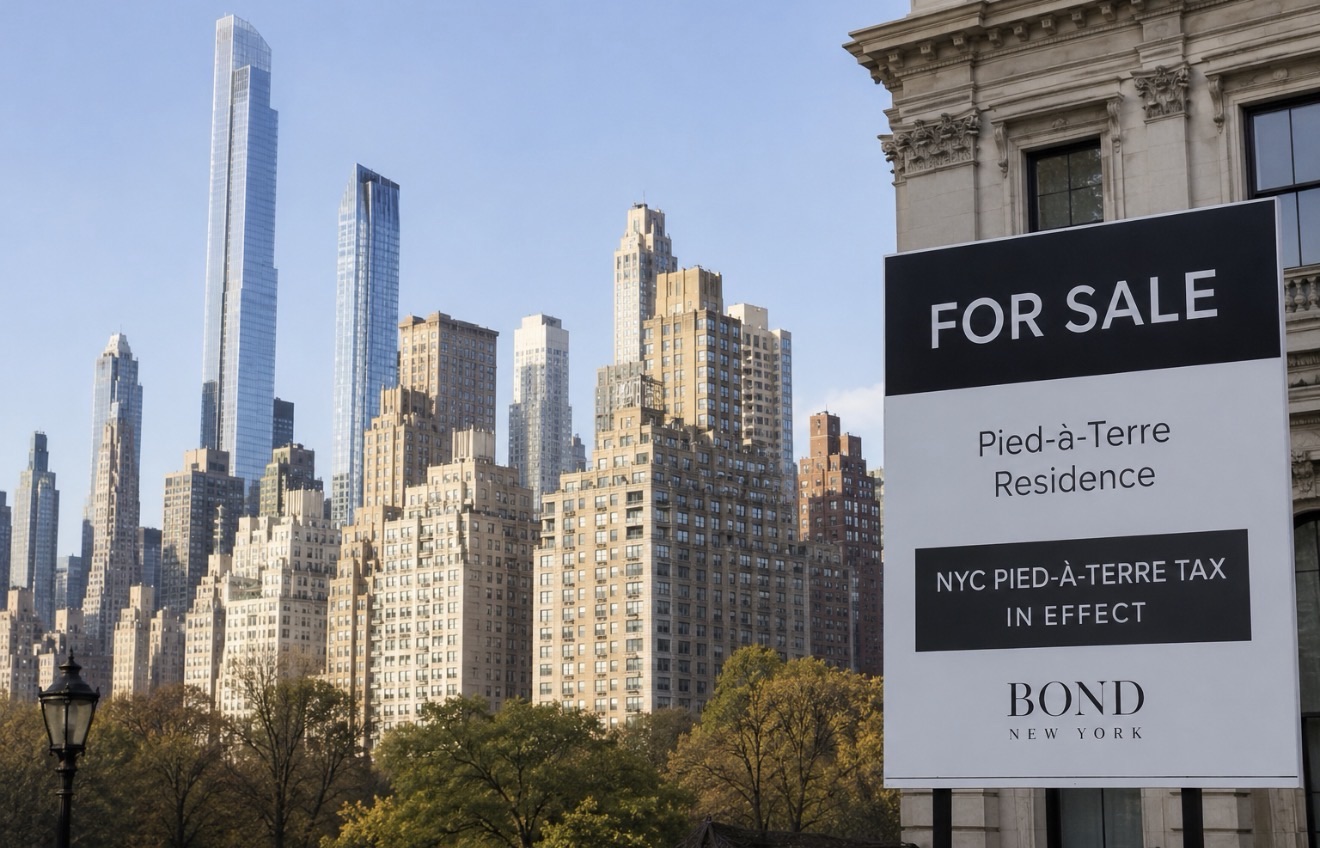

New York City can keep collecting its new surcharge on second homes while a lawsuit over how it was rolled out works its way through the courts. An appellate court in Brooklyn ruled Thursday that implementation may continue, overriding a temporary restraining order a Staten Island judge issued earlier in the week.
The dispute is not over whether the city may tax second homes. It is over how the Department of Finance told people they might owe it.
State lawmakers created the pied-à-terre tax in this year’s state budget as a revenue source for the city. It applies to second homes worth more than $5 million, and to condominium and co-op second homes with market values above $1 million. The surcharge was rolled out as part of Mayor Zohran Mamdani’s fiscal 2027 budget to help close the city’s gap.
To administer it, the Finance Department published a supplemental tax roll online listing more than 900,000 residential properties along with owners’ names, addresses and property values — including properties that owe nothing — and mailed letters to roughly 17,000 owners flagged as potentially subject to the charge. Fewer than one in fifty of the listed properties actually received a notice, which is a large part of why the list caused alarm.
Three homeowners — Simon Hedley, Rachel O’Brien and Carmine Morano — sued in state Supreme Court in Richmond County, arguing the city wrongly identified their primary residences as potentially owing the tax. Their attorney is Randy Mastro, the former first deputy mayor under Eric Adams. His argument has three parts: that the department was required to make an individualized determination for each property before mailing a notice and skipped that step; that it shifted the burden onto roughly 17,000 homeowners to prove they did not owe the tax; and that nothing in the law authorized publishing the database at all.
Judge Wayne M. Ozzi agreed on Monday, ordering the city to take the list down, halt collection based on it, and stop enforcing the deadline to contest a notice. A hearing is set for Aug. 31. From the bench, the judge said the notices caused irreparable harm because they did not explain why recipients had been flagged and warned that those who failed to file for an exemption would owe the surcharge.
The city filed a notice of appeal within hours, which triggered an automatic stay and allowed the department to continue. On Thursday the city asked the appellate court to confirm that automatic pause, arguing the lower-court ruling threatened to derail a time-sensitive implementation. The court agreed.
A spokesperson for the mayor said the city disagreed with Monday’s ruling but remains confident in the surcharge and in its ability to implement it fairly. Mamdani has said the property database was part of the city’s routine publication of its tax roll, which state law requires.
There is a second enforcement angle that has drawn less attention. A spokesperson for Governor Kathy Hochul said the program will also help the state identify people who claim a primary address in New York City to avoid the surcharge while paying income taxes in another state. The same records that flag a second home for the city can flag a residency claim for the state.
For property owners, the practical situation as of Thursday is unchanged from before the restraining order. The exemption deadline is Sept. 18, extended from an original date of Aug. 21. Anyone who received a notice and believes the flagged property is a primary residence needs to file for the exemption by that date rather than wait for the litigation to resolve. The appellate ruling means the city’s clock is still running.
The next courtroom date is Aug. 31, when the restraining order itself is argued. The judge’s order technically remains on paper while the appeal is pending, but has no practical effect during the stay.
For the residential market, the outcome matters beyond the roughly 17,000 flagged owners. A recurring surcharge on high-value second homes changes the carrying cost of Manhattan pieds-à-terre, which is a category disproportionately owned by out-of-state and foreign buyers with the flexibility to sell. Reporting has already noted how underassessed many of the flagged properties turned out to be — meaning the assessment values underpinning the surcharge are themselves likely to be contested as the program matures.
JBizNews Desk | New York
© JBizNews.com All Rights Reserved. Reproduction or distribution without written permission is prohibited.