
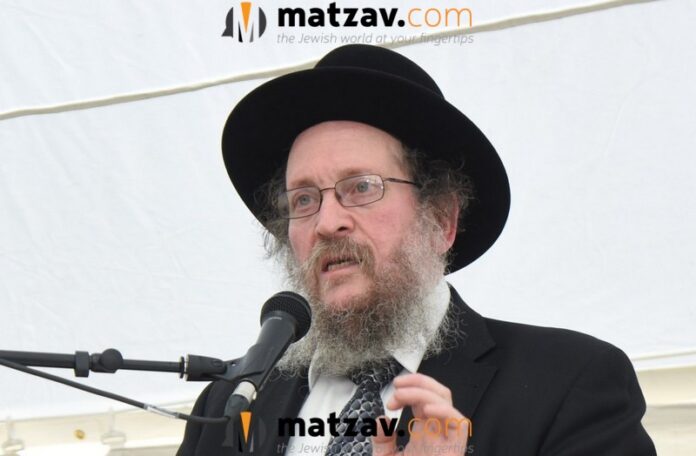

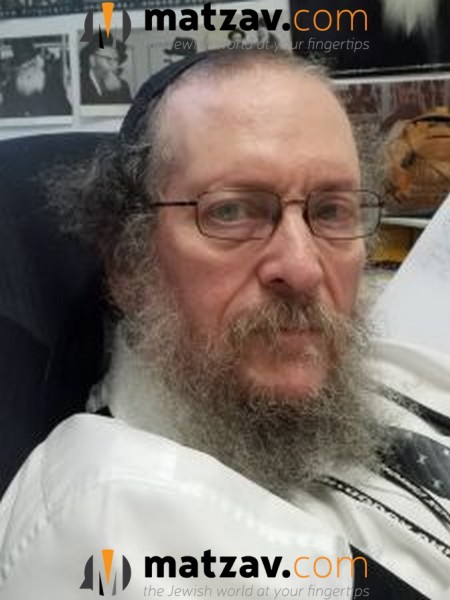
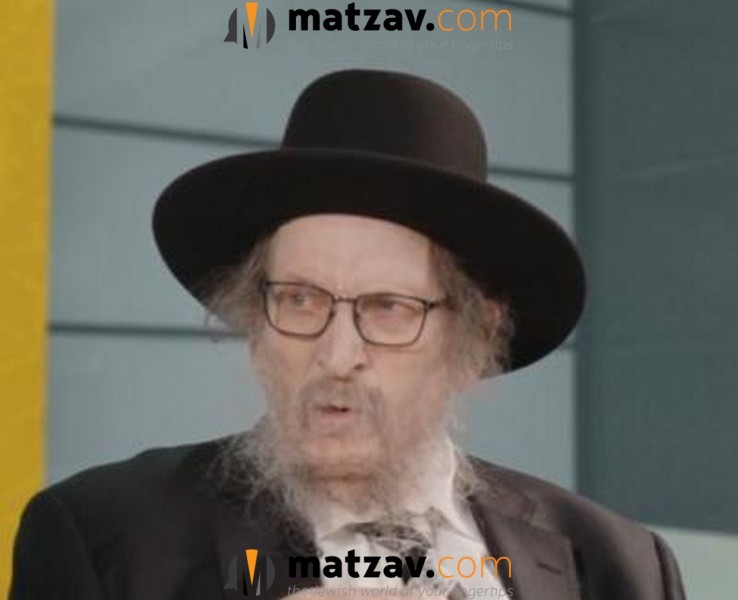
It is with great sadness that Matzav.com reports the petirah of Rav Avrohom Yitzchok “Avry” Juravel zt”l, one of the foremost experts in contemporary kashrus, whose extraordinary command of halacha, coupled with a rare mastery of the technical realities of modern food production, made him a trusted authority in the field for more than four decades.
Rav Juravel, who was a resident of Monsey, NY, had battled illness and medical challenges the last few years with tremendous strength and fortitude.
Rav Juravel was widely known through his longtime work with OU Kosher, where he served as Rabbinic Coordinator for Technical Services. But his influence extended far beyond any title or position. Over the course of a remarkable career, he became a resource for rabbonim, poskim, mashgichim, kashrus professionals, food manufacturers and countless others seeking clarity regarding some of the most complicated questions created by modern food technology.
He possessed a combination that is exceedingly difficult to find: deep yedi’ah in halacha together with an intimate, practical understanding of factories, machinery, ingredients, production systems, piping, industrial cleaning, oils, food chemistry and the countless other technical details upon which contemporary kashrus so often depends.
To those involved in the field, Rav Juravel was regarded as a leading authority. He was a baki in the relevant halachos, but he also understood that determining the kashrus status of a modern food product requires knowing precisely how that product is made. He could walk through an industrial facility, study its equipment and production process, trace its systems, and identify issues that might easily escape someone without his decades of experience.
His expertise was not acquired overnight. Rav Juravel’s connection to kashrus stretched back through generations.
He was a third-generation kashrus expert. His grandfather, Rav Shmuel Zev Juravel, and his father, Rav Yosef Eliezer Juravel, both served as shochtim, devoting themselves to providing for the kashrus needs of the Jewish communities of their respective generations.
Indeed, an intriguing piece of kashrus history was connected to his grandfather. Rav Chaim Brisker famously ruled that turkey could be accepted as a kosher bird, a ruling that helped establish the bird’s place on Jewish tables. Less well known is that the question was originally brought before Rav Chaim by Rav Shmuel Zev Juravel, Rav Avrohom Yitzchok’s grandfather.
Thus, Rav Juravel’s own life’s work represented, in many ways, a continuation of a family legacy: applying the timeless laws of the Torah to the practical realities confronting Jews in changing times.
Rav Juravel’s formal work in kashrus began more than four decades ago, when he served as a mashgiach under Rav Yaakov Posen, dayan of Khal Adas Yeshurun in Washington Heights. He remained in that position for more than a decade.
Those years proved formative. Working in close proximity to an accomplished posek, Rav Juravel was exposed not merely to the rules of kashrus, but to its nuances and complexities. At the same time, his work brought him into the world of commercial food manufacturing, where he began developing the technical knowledge that would eventually make him one of the field’s most respected experts.
Over the years, he also worked for the OK and for the Badatz of the Eidah Hachareidis before becoming a central figure on the kashrus team of the Orthodox Union.
At the OU, Rav Juravel’s expertise ultimately brought him into factories and manufacturing facilities throughout the United States and across the globe. His career took him to places few rabbonim — and perhaps few people altogether — would ever have reason to visit.
One milestone highlighted the extraordinary geographical breadth of his work. When Rav Juravel landed in North Dakota on an OU Kosher assignment, he completed visits to all 50 states in the course of his kashrus work.
Asked at the time how long he had worked in kosher supervision, Rav Juravel responded, “Most of my life, so far. 39 years is a career for anyone in any field, particularly so when your work requires extensive travel.”
North Dakota had remained the final state largely because its agricultural economy did not often require the involvement of someone with his particular level of expertise.
“North Dakota has an extensive farming community, and its agricultural bounty is something the USA would be hard up to live without. In terms of manufacturing facilities supplying kosher food products, the kosher products tend to be simple enough not to warrant a review from a senior rabbi,” he explained.
His travels extended far beyond America’s borders. Rav Juravel estimated that his kashrus responsibilities had brought him to at least 40 foreign countries as well.
The decades of travel gave him an unusual perspective not only on food manufacturing, but on people. Asked what he had learned from meeting factory personnel across so many countries and cultures, Rav Juravel offered an observation characteristic of his thoughtful approach to life.
“What unites us is clearly more significant than the things that divide us. Some take pride in their work, and some don’t put in the effort they could. It is always a privilege to meet master craftsman. And a warm smile is certainly understood in every language and culture.”
His assignments could be extraordinarily complicated.
Asked to identify one of the most memorable projects of his career, Rav Juravel recalled the challenge of kashering an oil refinery that operated separate systems for animal and vegetable products.
“Kosherizing an oil refinery that has separate systems for both animal and vegetable products was a career highlight. Kosher law doesn’t allow for cross-contamination with non-certified animal fat (and for practical purposes, animal fats found in an oil refinery are all non-kosher). Maintaining the integrity of the vegetable system, by following the entire piping system, making sure there was no cross-overs between it and the animal fat refining process, was a Herculean task indeed.”
That assignment illustrated the unique expertise Rav Juravel brought to his work. A kashrus professional could not simply examine an ingredient list and leave. Entire industrial systems had to be understood: where pipes led, what equipment they shared, what had previously passed through them, where two systems might intersect and whether supposedly separate production lines were truly separate from a halachic standpoint.
And when a proposed arrangement did not satisfy the necessary standards, Rav Juravel was prepared to say so unequivocally.
“While OU Kosher communicates the best methods to maintain the highest standards of kosher, there have been times where a plant had dual systems for kosher and non-kosher, and OU Kosher was not satisfied with the divisions proposed by the plant; it was incomplete from our perspective. I handle the situation by stating a firm and resolute, ‘Cannot be done.’”
For all the far-flung places his work took him, Rav Juravel related that he rarely felt threatened because of his identity as a rov. There were, however, adventures along the way.
“In all my years, and in all the odd situations I’ve found myself in for OU Kosher, I cannot remember a time I felt in danger. Once I was lost in China, on a train for 14 hours, without a phone. I was scared then, but it had nothing to do with being a rabbi. It had to do with being incommunicado!”
His long career also gave Rav Juravel a front-row seat to the transformation of the kosher food industry.
When he began, many of the sophisticated quality-control systems that are now standard in food manufacturing did not exist. Over time, developments in the broader food industry — particularly formal quality-control programs, ISO standards, independent audits and allergen protocols — provided additional safeguards that could also assist kashrus agencies.
“The introduction of formal quality systems, ISO systems and various third-party audits (many of which are looking for the same things as a kosher audit) have really helped smooth the way for kosher programs. Allergen cleaning has been a major help for us as well. Years ago, dairy (a primary concern for products labeled OU, which guarantees they are dairy free), was something we had to actively confirm was not being used in our products in any form. Now, due to allergen concerns, the QA staff is aware in advance of our arrival of exactly which items and lines would have contact with dairy.”
Despite the highly technical nature of much of his work, Rav Juravel did not keep his knowledge confined to the professional kashrus world.
Throughout the years, he delivered numerous shiurim on practical kashrus, sharing his accumulated expertise with broader audiences. Those presentations ultimately became the foundation for his sefer, Midi D’Achilah. The publication represented an important contribution to the field. Subjects that were often known primarily to those working inside industrial kashrus were presented to the wider public, giving readers a glimpse into the complicated halachic and technological questions behind foods that consumers encounter every day.
The shiurim that formed the backbone of the sefer were converted into written form, after which Rav Juravel devoted enormous effort to reviewing, editing and refining the material so that the final presentation would accurately convey both the facts and the relevant halachos. The result reflected his characteristic insistence on precision: technical information had to be correct, and the halachic implications had to be stated clearly.
His career also produced some less conventional distinctions.
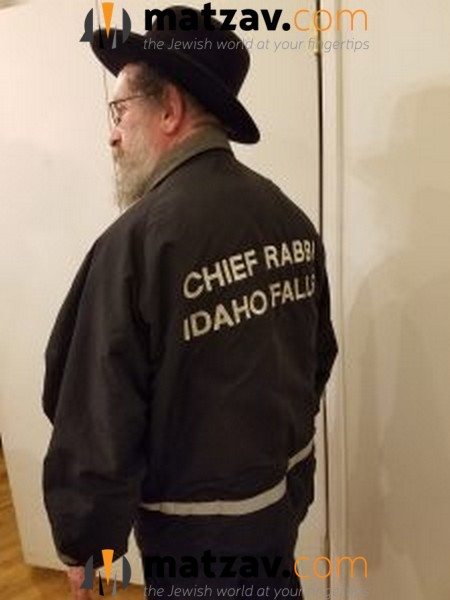
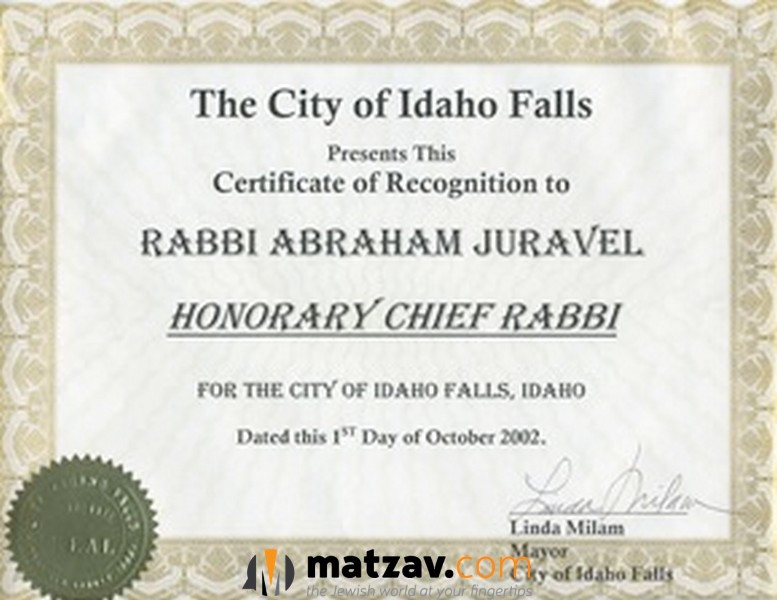
For many years, Rav Juravel traveled to the Idaho Falls area to supervise Pesach productions of dehydrated potato products. His repeated stays eventually made the visibly Jewish visitor a familiar figure in the community.
“I’ve been stationed in the Idaho Falls area for Passover productions of dehydrated potato products for much of my career. It’s a friendly part of the world, and people notice when a rabbi is walking around town. People would say hello, ask if I’m Amish, and tell me about other Jewish people in town. I was sometimes asked to give classes on Jewish topics to the locals. This led to the Mayor appointing me as Chief Rabbi. Frankly, it wasn’t hard to pick me, I was there more often than any other rabbi.”
Thus, alongside his formidable credentials in kashrus, Rav Juravel also claimed the ceremonial distinction of serving as “Chief Rabbi of Idaho Falls.”
Behind the humor of the story was another element of his life’s work. Whether he found himself in a major Jewish population center or a remote American city, Rav Juravel carried himself as a representative of Torah and Yiddishkeit. His work placed him in sustained contact with people of virtually every background, from factory laborers to engineers, plant managers and corporate executives.
The expertise that made Rav Juravel invaluable was not merely the accumulation of facts. He placed enormous value on judgment — on understanding how to look at a situation, ask the right questions and think through the practical consequences of what one was seeing.
When asked what guidance he would give a younger Rabbinic Field Representative hoping to build a successful career, he did not point first to sophisticated technology or specialized equipment. Instead, he emphasized the most basic tool of all.
“We all possess the most valuable piece of equipment – a brain. It has the indispensable ability to produce something called common sense. You would not believe how many catastrophes have been avoided by simply using it, and yet so many neglect this priceless human asset in search for more modern equipment. I say, begin with the most useful tool you’ve been blessed with and you’ll go very far.”
That emphasis on common sense was particularly meaningful in the world in which Rav Juravel operated. Industrial kashrus presents situations that cannot always be anticipated by a textbook. A mashgiach or rov entering a plant must understand not only what he has been told, but what he is actually seeing. He must know which question to ask next, which seemingly insignificant detail may have major consequences, and when something simply does not add up.
Rav Juravel spent decades honing precisely those instincts.
His knowledge encompassed two worlds that must come together for reliable modern kashrus: the beis medrash and the factory floor. The principles were those of the Torah and halacha, unchanged across generations; the realities to which they had to be applied included sophisticated machinery, complicated supply chains and production systems spanning continents.
His life’s work was devoted to bringing the two together.
The sheer scope of that work was remarkable: all 50 states, approximately 40 foreign countries, innumerable manufacturing facilities, countless hours on airplanes and highways and inside factories, decades of shiurim, and the dissemination of his knowledge through Midi D’Achilah.
Yet the numbers tell only part of the story.
For those involved professionally in kashrus, Rav Avrohom Yitzchok Juravel represented something more: accumulated experience that could not easily be replicated. He had seen the evolution of industrial kashrus across decades and had encountered an extraordinary variety of manufacturing systems and challenges. His knowledge was built not only from seforim and shiurim, but from thousands upon thousands of hours spent seeing how food is actually produced.
He carried forward the legacy of his grandfather and father, who had served Klal Yisroel as shochtim, into an era when kashrus had become increasingly global, industrialized and technologically complex.
From Rav Shmuel Zev Juravel bringing the question of the turkey before Rav Chaim Brisker, to Rav Avrohom Yitzchok tracing industrial piping through an oil refinery generations later, the common thread was the same: ensuring that Jews could eat according to the dictates of halacha as new circumstances and new technologies emerged.
Rav Juravel’s petirah leaves a profound void in the world of kashrus. His extraordinary reservoir of technical knowledge, decades of firsthand experience, mastery of the relevant halachos, and ability to combine all three made him a singular resource to the field.
He is survived by his wife, Mrs. Rochel (nee Schmelczer) Juravel, and their wonderful family.
The levayah will take place Sunday morning, at 11 a.m., at Kehillas Zichron Yitzchok, located at 36 Pennington Way in Spring Valley, NY.
Yehi zichro boruch.

{Matzav.com}