 Belaaz6 minutes ago
New York City experienced a large net population loss last year, with more residents leaving than arriving, according to a study released this week by the Citizens’ Budget Commission.
The report found that the city’s total population declined in 2025.
The study attributed the decrease in part to a sharp shift in migration patterns, noting a 70% drop in people relocating into the city alongside changes in international migration.
According to the study, “Across all income levels, more people moved out of New York City than moved in last year.”
In total, the city lost 114,000 more residents to other parts of the United States than it gained over the course of the year.
While that figure marks an increase compared to 2024, it still falls short of the mass departures seen during the pandemic.
The analysis also showed that in 2024, losses were heavier among low- and middle-income residents than among higher earners.
More specifically, individuals in the bottom 40% income bracket made up a larger share of those leaving between 2023 and 2024.
New York City has long faced criticism over its high cost of living. Mayor Zohran Mamdani has vowed to address affordability, but angered New Yorkers with proposed property tax rate increases and increases in the cost of electricity.
The population decline follows concerns raised by New York Gov. Kathy Hochul about the departure of wealthy taxpayers to states like Florida and Texas, which offer lower tax rates.
San Francisco has seen a similar trend, with its population failing to rebound to pre-pandemic levels.
“San Francisco metro area’s population failed to grow again in 2025, despite a swelling boom in AI,” The San Francisco Chronicle reported in March.
“Unlike in almost every other major metro in the country, that’s left the region’s total population well below its 2020 level, according to newly released US census estimates.”
For several years, New York City has struggled with rising living costs, contributing to ongoing concerns about affordability.
In San Francisco, those concerns played a role in the 2024 election of Daniel Lurie, who defeated incumbent London Breed amid criticism of policies related to crime, drugs, and homelessness.

 The Lakewood Scoop9 minutes ago
PrintFast Marketing Solutions, based in Middlesex, has been acquired by BP Print Group of Lakewood, TLS has learned, marking a continued trend of consolidation and expansion within the commercial printing and marketing services industry.
Founded more than 35 years ago, PrintFast Marketing Solutions provides commercial printing alongside data-driven direct marketing programs, including digital services such as search engine optimization and social media engagement. The company serves a national client base, with a strong concentration in the home services sector, including HVAC, plumbing, roofing, and home automation.
BP Print Group, led by owner Ben Heinemann, said the acquisition strengthens its ability to meet evolving customer needs while continuing to grow its footprint in integrated communications.
“The industry continues to change, and we must continue to adapt and grow,” Heinemann said. “PrintFast brings a loyal customer base and a service offering that aligns well with our vision of building a future-focused communications company with print at its core. The process led by Mitch and the Graphic Arts Advisors team was professional, transparent, and thorough.”
Bill McGowan, a third-generation owner, emphasized the strategic fit between the two companies.
“Mitch understood our business and knows the printing industry, which made Graphic Arts Advisors the right partner for us,” McGowan said. “Their team identified the right strategic buyers and supported us through every stage of the process, from initial outreach through due diligence and closing. BP Print Group shares our commitment to customer service, and I am confident the company is well-positioned for the future.”
The deal reflects a broader industry shift, as companies like BP Print Group continue to expand beyond traditional printing into integrated marketing and customer acquisition services, particularly in high-demand sectors such as home services.

 Matzav
Related stories

 Vos Iz Neias2 hours ago
 Yeshiva World News2 hours ago
 Matzav4 hours ago
 Matzav13 hours agoMatzav13 minutes ago
President Trump announced Thursday that he has directed the U.S. Navy to use lethal force against any Iranian vessels attempting to deploy naval mines in the Strait of Hormuz, signaling a sharper military stance even as a fragile cease-fire remains in place.
“I have ordered the United States Navy to shoot and kill any boat — small boats though they may be — that is putting mines in the waters of the Strait of Hormuz,” Trump wrote on Truth Social. “There is to be no hesitation.”
“Additionally, our mine ‘sweepers’ are clearing the Strait right now,” he added. “I am hereby ordering that activity to continue, but at a tripled-up level!”
The announcement followed confirmation earlier in the day from the War Department that U.S. forces had seized a tanker in the Indian Ocean carrying Iranian oil in violation of sanctions, marking the second such interception in recent days.
These developments place additional strain on a cease-fire that has already been extended multiple times in an effort to stop weeks of hostilities between the United States and Iran, including military strikes and disruptions to key shipping routes.
Trump most recently renewed the truce on Tuesday, stating that it would remain in effect while Iran prepares a “unified” proposal ahead of a planned second round of negotiations in Islamabad, Pakistan.
Despite the extension, tensions have remained high.
Vessels linked to Iran and its proxy forces have repeatedly posed threats to commercial shipping in the Strait of Hormuz, a critical corridor for global oil transport, using naval mines and fast attack boats to harass and damage passing tankers.
Separately, a report on Thursday indicated that British military divers are preparing to carry out mine-clearing operations in the strait as part of a possible multinational initiative. According to the United Kingdom’s Ministry of Defense, Royal Navy personnel trained in explosive ordnance disposal are ready to deploy alongside advanced unmanned mine-detection systems.
European nations, including the United Kingdom, have been discussing a broader coalition effort for weeks aimed at securing the waterway and ensuring safe passage for commercial vessels, though those plans have yet to be fully implemented.
In the meantime, the United States has intensified its maritime enforcement operations, targeting vessels suspected of helping Iran evade sanctions as part of a wider effort to cut off financial support for its military activities.
Diplomatic efforts remain uncertain, with negotiations aimed at reducing tensions encountering setbacks, as Iranian officials have at times declined to engage even as U.S. representatives continue to press for renewed talks.
Trump’s latest directive underscores a more aggressive approach at sea, one that could either push Iran toward negotiations or further strain the already delicate cease-fire.
Speaking to The New York Post on Wednesday, the president said that “it’s possible” new developments regarding talks with Iran could emerge as soon as Friday.
{Matzav.com}
Related stories
Vos Iz Neias2 hours agoYeshiva World News2 hours agoMatzav4 hours agoMatzav13 hours ago Belaaz
Related stories
Belaaz21 minutes agoOutrage ensued upon the discovery of disturbing, antisemitic messaging in the Kyrgyzstani city of Osh, showing that the Villa Hotel had posted a sign at its entrance explicitly barring “Jews and animals.”
The sign, displayed in Kyrgyz, Russian, and English, featured images of a Magen David and a dog crossed out with a red line; visuals that recalled the Holocaust era and the Nazi regime’s dehumanization of Jews.
Yoav Bistritsky, Israel’s ambassador to Kazakhstan and Kyrgyzstan, moved quickly, coordinating with local authorities to have the sign taken down and to pursue action against those responsible.
“I welcome the swift action by the authorities to remove the antisemitic sign and launch a criminal investigation against those responsible,” the ambassador said, emphasizing that hatred of this kind has no place in modern society.
Amid mounting public backlash and diplomatic pressure, the sign was removed within 24 hours.
 Vos Iz Neias28 minutes ago
WASHINGTON (AP) — President Donald Trump’s acting attorney general on Thursday signed an order reclassifying state-licensed medical marijuana as a less-dangerous drug, a major policy shift long sought by advocates who said cannabis should never have been treated like heroin by the federal government.
The order signed by Todd Blanche does not legalize marijuana for medical or recreational use under U.S. law. But it does change the way it’s regulated, shifting licensed medical marijuana from Schedule I — reserved for drugs without medical use and with high potential for abuse — to the less strictly regulated Schedule III. It also gives licensed medical marijuana operators a major tax break and eases some barriers to researching cannabis.
Trump told his administration in December to work as quickly as possible to reclassify marijuana. On Saturday, as the Republican president signed an unrelated executive order about psychedelics, he seemed to express frustration that it was taking so long.
Blanche said Thursday that the Department of Justice was “delivering on President Trump’s promise” to expand Americans’ access to medical treatment options. “This rescheduling action allows for research on the safety and efficacy of this substance, ultimately providing patients with better care and doctors with more reliable information,” he said in a statement.
Blanche’s action Iargely legitimizes medical marijuana programs in the 40 states that have adopted them. It sets up an expedited system for state-licensed medical marijuana producers and distributors to register with the U.S. Drug Enforcement Administration.
It makes clear that cannabis researchers won’t be penalized for obtaining state-licensed marijuana or marijuana-derived products for use in their work, and it grants state-licensed medical marijuana companies a windfall by allowing them, for the first time, to deduct business expenses on their federal taxes.
Any marijuana-derived medicine approved by the Food and Drug Administration is similarly listed in Schedule III, it said.
The order represents a major policy shift for the U.S. government, which has continued its longstanding marijuana prohibition — dating to the Marijuana Tax Act of 1937 — even as nearly all the states have approved cannabis use in some form. Two dozen states plus Washington, D.C., have authorized adult recreational use of marijuana, 40 have medical marijuana systems, and eight others allow low-THC cannabis or CBD oil for medical use. Only Idaho and Kansas ban marijuana outright.
The regulation of medical marijuana has come a long way since California became the first state to adopt it in 1996, Blanche wrote.
“Today the vast majority of States maintain comprehensive licensing frameworks governing cultivation, processing, distribution, and dispensing of marijuana for medical purposes,” Blanche wrote. “Taken as a whole, they demonstrate a sustained capacity to achieve the public-interest objectives … including protecting public health and safety and preventing the diversion of controlled substances into illicit channels.”
Marijuana or marijuana-derived products that are not distributed through a state medical marijuana program will continue to be classified in Schedule I. The Trump administration is launching a new administrative hearing process beginning in June to consider the broader rescheduling of marijuana.
Schedule III drugs are defined as having moderate to low potential for physical and psychological dependence. Some critics of the industry have suggested that legalization in the states has led to stronger and stronger cannabis products, which need to be researched rather than categorized less strictly than before.
The Justice Department under President Joe Biden, a Democrat, had proposed to reclassify marijuana, eliciting nearly 43,000 formal public comments. The Drug Enforcement Administration was still in the review process when Trump succeeded Biden in January, and Trump ordered that process to move along as quickly as legally possible.
Blanche’s order sidestepped the review process by relying on a provision of federal law that allows the attorney general to determine the appropriate classification for drugs that the U.S. must regulate pursuant to an international treaty.
It was unclear how the order might affect operations in states where licensed recreational marijuana shops also sell to medical patients. In Washington state, which in 2012 became one of the first states to legalize the adult use of marijuana, 302 of 460 licensed stores have endorsements allowing them to sell tax-free cannabis products to registered patients.
Many Republicans oppose loosening marijuana restrictions. More than 20 Republican senators, several of them staunch Trump allies, signed a letter last year urging the president to keep the current standards.
Trump has made his crusade against other drugs, especially fentanyl, a feature of his second term, ordering U.S. military attacks on Venezuelan and other boats the administration insists are ferrying drugs. He signed another executive order declaring fentanyl a weapon of mass destruction.
 The Lakewood Scoop29 minutes ago
The Port Authority of New York and New Jersey will begin a yearlong test of cargo drone flights across the East River next week, part of a broader effort to explore faster delivery options in one of the nation’s most congested urban corridors.
The bi-state agency said today that it is partnering with U.K.-based Skyports Drone Services to operate small, uncrewed aircraft carrying light cargo between lower Manhattan and the Brooklyn Marine Terminal.
Flights are scheduled to begin Monday and will run on weekdays from 9 a.m. to 5 p.m. along a fixed route over water, away from residential areas. Each flight will be monitored by a certified drone pilot and conducted with approval from the Federal Aviation Administration.
Officials said the pilot program is designed to evaluate whether drone deliveries could reduce truck traffic, cut emissions and improve the speed of so-called “middle-mile” logistics, the movement of goods between distribution hubs.
The trial follows a two-week proof-of-concept test in January conducted with the New York City Economic Development Corporation. During that test, drones completed 135 flights, traveled 151 miles and transported 252 pounds of simulated cargo. Each one-way trip averaged about four minutes, compared with up to 20 minutes by vehicle, according to officials.
The Port Authority said the earlier test suggested the flights could eliminate hundreds of miles of truck travel and reduce fuel consumption, even with weather-related disruptions.
Across the country, drones are rapidly emerging as a viable shipping option, particularly for short-distance and time-sensitive deliveries. Major retailers including Walmart have expanded drone delivery networks, allowing some customers to receive orders in as little as 10 minutes.
During the new trial, drones will carry nonhazardous items such as light pharmaceutical supplies for a New York nonprofit health system.
The flights will operate in a tightly regulated environment that includes some of the country’s busiest waterways and airspace. In addition to federal oversight, the program will coordinate with local agencies including the police and fire departments and the U.S. Coast Guard.
At the end of the 12-month test period, officials will evaluate whether the program should be expanded to additional routes across the region.
 Vos Iz Neias40 minutes ago
JERUSALEM (VINnews) – Israeli Defense Minister Israel Katz declared during a security assessment that Israel is prepared to renew its military campaign against Iran and is awaiting approval from the United States to strike the new supreme leader and key Iranian energy infrastructure.
“Israel is prepared to renew the war against Iran. The IDF is ready in defense and offense, and the targets are marked,” Katz said, according to statements attributed to him.
Katz emphasized that Israel is waiting for a “green light from the United States” to proceed with high-priority targets, including completing the elimination of the Khamenei dynasty — which he described as the initiator of an “extermination plan against Israel” — and successors in the Iranian leadership. He also outlined plans to strike central energy and electricity facilities to “return Iran to the age of darkness and stone” and to cripple the regime’s national economic infrastructure.
The comments come amid ongoing tensions following previous rounds of conflict between Israel and Iran, during which Israeli forces have already targeted Iranian military and economic assets, including major petrochemical facilities.
Katz has previously indicated that Israel sought to eliminate Iran’s Supreme Leader Ayatollah Ali Khamenei during earlier hostilities but lacked an operational opportunity, and that the U.S. has provided a green light for further action if Iran advances its nuclear program or other threats.
Israeli officials have framed the campaign as necessary to neutralize existential threats from the Iranian regime, which they accuse of sponsoring terrorism and pursuing nuclear weapons. Iran has denied seeking nuclear arms and accused Israel and the U.S. of aggression.
No immediate response was available from U.S. officials or the Israeli Prime Minister’s office on the latest assessment.
VINnews will continue to monitor developments in the region.

 Jewish Breaking News
Related stories
Jewish Breaking News42 minutes agoAccording to a new report from the Institute for Jewish Policy Research, 742 Jews from the United Kingdom made aliyah in 2025, the highest annual total since the mid-1980s.
Over the past two decades, aliyah from the UK has remained stable, typically ranging between 400 and 740 people per year, with a long-term average of about 566 annually. In practical terms, that means roughly 2 out of every 1,000 British Jews make aliyah each year, higher than other countries like Canada, but still far below places like France, where migration levels are significantly higher. So this is not, at least yet, a mass exodus.
LONDON, ENGLAND – OCTOBER 5: People wave the Israeli and Union Jack flag as the Jewish community gather to mark the second anniversary of the Hamas attack on Israel in Trafalgar Square on October 5, 2025 in London, England. On October 7, 2023 Hamas conducted a series of attacks on Israelis killing some 1200 people and taking 251 hostage. After two years of war between Palestine and Israel, 48 hostages still in captivity in Gaza but it is though 25 are dead. (Photo by Alishia Abodunde/Getty Images)
But something is changing. Firstly, this marks two consecutive years of growth, rising from 561 olim in 2024 to 742 in 2025. Secondly, since October 7, studies show British Jews are more likely than before to consider aliyah, even if many have not yet acted on it. That change is especially pronounced among younger Jews, Orthodox communities, and those who have personally experienced antisemitism. Many British Jews find that there are many factors to consider regarding aliyah. Economic opportunities, family, and connection to Israel all play a role.
Antisemitism in the UK has surged in recent years, which reshapes how many Jews view their place in British society. As reported on JBN, attacks in London have been nonstop for the last few weeks.
There is also a practical explanation for the 2025 spike. Some of the increase may be due to delayed aliyah plans from previous years, particularly during periods when travel and relocation were disrupted, whether it was due to COVID or war.
 Matzav43 minutes ago
President Donald Trump has privately told associates that Florida Gov. Ron DeSantis is pushing for a position in his administration, including the possibility of serving as attorney general, according to multiple sources familiar with the conversations, Axios reports.
Sources said DeSantis has also shown interest in other high-level roles, including secretary of defense and even a future nomination to the U.S. Supreme Court, based on discussions relayed by several individuals briefed on the matter.
With his second term as governor set to end in January, DeSantis has been exploring his next move, one source said, noting that Trump appears open to assisting the former rival who has since rebuilt ties with him.
The topic of DeSantis’ future reportedly came up during a recent lunch between the two at Trump National Doral Golf Club in Miami.
“Ron was begging me to be AG,” Trump told one confidant, who relayed the remark to Axios.
Another source described the exchange more cautiously, saying, “There was a conversation at that lunch. I don’t think AG is real. But he’s gonna be looking for work and Trump likes him.”
Talks between Trump and DeSantis have intensified in recent weeks following changes within the administration, including the removal of Kristi Noem as homeland security secretary and Pam Bondi as attorney general.
In the interim, Todd Blanche, who previously served as Trump’s personal attorney and held the No. 2 position at the Justice Department under Bondi, has taken over as acting attorney general.
One adviser said Trump is looking for Blanche to pursue charges against several political opponents as part of a case referred to as the “Grand Conspiracy,” which is being handled by the Justice Department’s Southern District of Florida.
“Todd has about 90 days to show what he can do,” that adviser said.
The White House declined to comment on the reports. A spokesperson for DeSantis, Alex Lanfranconi, responded by emphasizing the governor’s relationship with Trump, saying he “enjoys a great relationship with President Trump.”
“Some in the media prefer to focus on fake rumors rather than the many accomplishments of Florida’s partnership with the Trump administration,” he added.
“The governor looks forward to continuing to work with President Trump on enforcing immigration laws, restoring the Everglades, and helping to reform college athletics.”
According to sources, DeSantis first raised the idea of a future appointment with Trump last year after the election.
At that time, Trump was considering naming DeSantis as defense secretary but ultimately selected Pete Hegseth, who had been a commentator on Fox News.
Even so, sources indicated that DeSantis could still be a strong candidate for the role if it becomes vacant, though Hegseth currently remains in good standing with the president.
“DeSantis is 100% not interested in the AG job, but he would be interested in two things: War secretary or Supreme Court, which would be his dream job,” said another source familiar with the discussions.
That same source added that DeSantis has a close relationship with Supreme Court Justice Clarence Thomas, saying the two “almost have a father-son relationship and would be a hell of a legacy for Trump.”
DeSantis previously ran against Trump in the 2024 Republican primary, in a contest that was marked by sharp exchanges, even as many figures in Trump’s orbit remain skeptical of the Florida governor.
“Bygones are bygones,” said one Trump adviser. “But that doesn’t mean people forget.”
Another adviser was more blunt, saying, “There’s a big reason the president wouldn’t pick Ron to be his attorney general: There’s a way-too-high chance he would try to f*ck the president over.”
“Trump needs someone at Justice he absolutely trusts. But the Defense Department or Supreme Court or something else? Sure.”

 Matzav1 hour ago
A federal appeals court ruled Wednesday that California cannot enforce a law requiring federal immigration agents to reveal their identities while on duty, preventing the measure from taking effect.
The Ninth Circuit Court of Appeals determined that a key provision of California’s No Vigilantes Act—mandating visible identification for federal officers, including those with Immigration and Customs Enforcement—conflicts with the Constitution’s Supremacy Clause. The legislation had cleared both houses of the state legislature and was signed into law by Gavin Newsom in September 2025.
In its opinion, the court stated, “We conclude that § 10 of the No Vigilantes Act attempts to directly regulate the United States in its performance of governmental functions,” The court’s opinion, authored by Trump-appointed Judge Mark Bennett, read in part. “The Supremacy Clause forbids the State from enforcing such legislation.”
The disputed section of the law required officers to display identification indicating their agency affiliation along with either their name or badge number. It excluded undercover personnel and those operating under specific conditions, and classified noncompliance as a misdemeanor.
Expanding on its reasoning, the court added, “Section 10 of the No Vigilantes Act attempts to directly regulate the federal government in its performance of law enforcement operations. It expressly applies to federal officers,” the ruling continued. “It seeks to control their conduct in performing law enforcement operations.”
Reacting to the decision, U.S. Attorney Bill Essayli praised the outcome, writing on X, “Huge legal victory this morning in the Ninth Circuit, where the court permanently enjoined California’s unconstitutional mask law targeting federal agents.”
California has been a focal point of efforts to restrict ICE enforcement activity, as well as large-scale protests, including demonstrations that swept Los Angeles last summer. In October 2025, the Department of Justice announced the arrest of ten individuals accused of assaulting law enforcement during a chaotic anti-ICE protest at a marijuana farm in the state.
At the federal level, Democratic lawmakers have also sought broader reforms. In July 2025, legislation was introduced to require federal agents nationwide to operate without masks, led by Sens. Cory Booker and Alex Padilla. Meanwhile, the Department of Homeland Security remains shut down amid ongoing disputes in the Senate over proposed changes to ICE operations, including mandates for body cameras and restrictions on face coverings.
 Belaaz1 hour ago
French authorities opened an investigation this week after suspicious temperature spikes at a weather station near Charles de Gaulle Airport in Paris were allegedly used to manipulate betting markets on Polymarket, a prediction platform where users wager on real-world events. French media reports said the unusual readings helped traders make more than $35,000 in profits.
According to reports, the suspicious incidents occurred on April 6 and April 15, when temperatures recorded at the airport station suddenly jumped by several degrees within minutes despite surrounding weather conditions remaining stable. The abrupt spikes reportedly caused long-shot temperature bets on Polymarket to suddenly become winning positions worth thousands of dollars.
Investigators suspect the readings may have been artificially altered using a portable heat source, possibly a hair dryer, although authorities have not officially confirmed the exact method used. France’s national weather agency, Météo-France, said it detected both unusual sensor data and “physical observations” on one of its instruments before filing a criminal complaint.
The agency said the case involves possible interference with an automated data-processing system. No arrests or suspects have been announced. Meteorologist Ruben Hallali, who said he first flagged the anomalies, stated that the readings appeared inconsistent with nearby stations and broader weather conditions in Paris.
Following the incident, reports said Polymarket changed the weather station used for its Paris temperature markets. The case has drawn wider attention inside both financial and crypto circles over the vulnerability of prediction markets that rely on physical real-world data sources to settle bets.
 Vos Iz Neias
Related stories
Vos Iz Neias1 hour agoNEW YORK (AP) — Will President Donald Trump send troops into Iran? Will he rename the Strait of Hormuz after himself? Will he post again praising Allah?
No one knows the answers, but online betting companies that allow people to wager on Trump policies and statements are profiting — including some backed by his oldest son.
Prediction markets love the president’s unpredictability, his need to keep people guessing about his next move or social media post, leading to more wagers in these betting venues and more fees for them. That includes Polymarket, a company Donald Trump Jr. has a stake in, and Kalshi, a company he advises.
These sites have to come up with new betting lines on current events everyday, and Trump Jr.’s famously fickle father has proven to be a rich source of will-he-or-won’t-he questions.
When a wagering event on Polymarket asked whether Trump was likely to send troops into Iran, nearly 100,000 bets were placed on April 8, leading to the biggest trading day of the year up to then.
And Trump’s policies and social media comments generate bets beyond the war-related ones: Who will Trump back to run Venezuela? Will his insults of Pope Leo XIV continue? Will he seize Greenland?
“Trump is the guy. He makes the market possible,” said Kwok Ping Tsang, a Virginia Tech economist who has studied Polymarket. “He’s so unpredictable.”
Sports wagers make up the largest portion of the volume on prediction markets, but politics runs a close second, according to crypto analysis firm Dune.
People are also betting “Yes” or “No” on all kinds of other things — the price of gold, the winner of “Survivor,” even the weather. The cost of the wager, in cents per dollar, reflects the number of people making the same bet, with a price of 49 cents for “Yes,” for instance, reflecting 49% odds.
The betting has drawn bipartisan criticism for inviting insider trading but the president seems to be a big fan, applying a light regulatory touch and helping the industry expand. His family company, the Trump Organization, is even working on opening its own prediction market, called Truth Predict.
One of the biggest fee generators lately has been Trump’s approach to the Iran war, notably his Truth Social post on April 5 demanding the country “Open the F—- Strait.”
Trading on Polymarket soared with “Yes” or “No” wagers on whether an invasion was imminent, according to Dune, only to be surpassed on April 7 by betting on another question — Will there be a ceasefire? — when Trump posted ominously that a “whole civilization will die tonight.”
In total, 413 million bets on the Iran war were made risking more than $100 million from Sunday, April 5, through Wednesday, April 8, the day after Trump announced a ceasefire, according to Dune.
In a report after the surge, Dune called Trump an “unpredictability machine” and marveled at how his “governing-by-tweet” style sends trading volumes soaring.
Asked whether the president’s son should be profiting from a business benefitting from his father’s actions, a Trump Jr. spokesman called the question “fact-free Democratic propaganda.”
“Don does not interface with the federal government as part of his role with any company that he invests in or advises and has no influence or involvement with administration policies relating to prediction markets,” said the spokesman, Andrew Surabian.
Polymarket didn’t respond to a request for comment.
The betting venues have jumped in popularity since Trump was reelected in November 2024 in part because they correctly predicted, unlike many pundits, that he would win decisively.
Since then the Trump administration has sued states trying to ban prediction markets under no-gambling laws. The head of the industry’s chief regulator, the Commodity Futures Trading Commission, has even promoted the business publicly, calling the online bets in a Wall Street Journal op-ed “exciting products.”
Benefiting particularly has been Polymarket, which was banned from operating anywhere in the U.S. in 2022 after the Biden administration fined it for running an unregistered exchange. It recently got permission to return, and its value has soared.
The company is now worth $9.6 billion, according to research firm PitchBook, a nearly tenfold increase in eight months since a venture capital fund in which Trump Jr. is a partner last invested.
Just how much Trump Jr. is benefiting from the increase in value is unclear because Polymarket is private and doesn’t release ownership stakes. Kalshi, which took on Trump Jr. as an adviser last year, is also private.
As for profiting off turmoil and war, Trump Jr. has other possible ways besides the prediction markets.
Through his venture capital fund he also owns pieces of aerospace, defense and technology companies seeking Pentagon contracts and other federal agency dollars. Separately, he and his brother, Eric, just struck a deal giving them stakes in a military drone maker not just selling to the U.S. forces but also pitching to Gulf countries under Iranian attack and beholden to their father for U.S. military protection in a war he started.
Asked last month about the drone company potentially profiting off his father’s position as president, Eric Trump sent The Associated Press a statement saying, “I am incredibly proud to invest in companies I believe in.”
Critics in Congress, virtually all Democrats, have decried what they believe is blatant profiting off the presidency, and are waiting for the midterms to do something about it, possibly voting for impeachment.
But whether that happens is anyone’s guess — or to be more specific, tens of thousands of guesses.
In Polymarket trading, those betting that Trump would get impeached by the end of his term were putting the chances at 13% at the start of the year. But that has changed dramatically after his “civilization wipe out” threat and calls from Democrats to oust him from office.
By Tuesday, the odds had jumped to 66%.
 Jewish Breaking News1 hour ago
After a few years of high prices and limited availability, some more relief may finally be on the way for travelers flying between New York and Tel Aviv.
For a long stretch, especially during the war, the route was dominated by one carrier, with El Al effectively controlling most of the direct traffic. With fewer competitors in the skies, ticket prices climbed, often reaching levels that frustrated families, business travelers, and anyone needing to move between the U.S. and Israel.
Recently, that dynamic has been changing.
Israeli carrier Israir is preparing to launch direct flights between Israel and the United States, marking a major expansion into long haul service. This comes on the heels of Arkias NY debut. Israir’s entry alone introduces a new layer of competition to one of the most in demand routes in the world.
Israir CEO Uri Sirkis credit: PR
This comes at a time when U.S. airlines like Delta Air Lines, United Airlines, and American Airlines are constantly delaying their return to Israel after suspending operations, while additional Israeli carriers have already begun increasing capacity.
The need for competition has never been greater. Competition makes each carrier accountable for price, service, and loyalty. And for travelers, that’s exactly what you want. More airlines mean more seats.
More seats mean more flexibility. And ultimately, more competitive pricing on what has been some of the most expensive years for this route.
The Israir expansion isn’t stopping with New York. Plans are already in place to extend service to Miami, a move that could crack open another gateway between Israel and the United States. For the growing Jewish and Israeli communities in South Florida, that would be a major development, bringing more direct access that has long been in demand.
 Jewish Breaking News
Related stories
Jewish Breaking News1 hour agoChaos erupted outside Israel’s High Court of Justice Thursday as opposing groups of protesters shouted at each other, and one person attempted to break in during a hearing on establishing a state commission of inquiry into the events of Oct. 7, 2023.
Prime Minister Benjamin Netanyahu has resisted such an investigation out of concern that picks for the commission by the liberal president of the Supreme Court, Isaac Amit, would be biased. He has argued that the Knesset or Cabinet should set up the commission. His supporters stood outside the courtroom and shouted slogans such as “Judge the judges!”
Netanyahu’s opponents accused him of trying to avoid responsibility for the oversight that led to the invasion of Israel on Oct. 7.
The scene turned ugly as both sides, made up of grieving families, shouted at each other, each accusing the other side of responsibility for the horrific massacre of Oct. 7.
A woman attempted to push her way in, making it through the outer door but failing to reach the inner door to the courtroom before being forcibly ejected by a security guard. That’s when protesters gathered at the doors and shouted their slogans, demanding to be let in.
The chaos reached a point at which the hearing had to be temporarily adjourned.
The hearing itself was equally fiery, with each side claiming the other’s extreme and irregular behavior justified the type of action they each wished to take regarding Oct. 7.
Security succeeded in defusing the situation outside the courtroom — but inside, nothing was resolved.
 Matzav1 hour ago
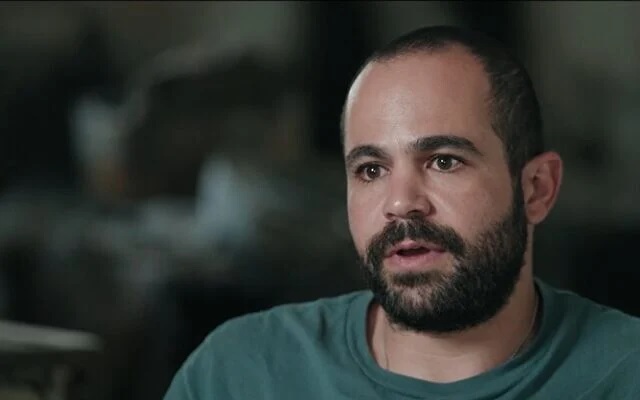
Yarden Bibas, whose wife and two young sons were murdered while in Hamas captivity, published a deeply emotional message on Wednesday night addressed to his family, expressing grief and longing following his return from captivity without them.
In the post, Bibas turned directly to his wife Shiri and their children Ariel and Kfir, who were killed during their time in captivity. The message, shared on social media, reflects the anguish of a father and husband grappling with devastating loss after months of isolation under harsh conditions.
“We moved to the Golan like we wanted… but you are missing every second. I feel so alone without you,” Bibas wrote, describing the painful reality of returning to a life without his family.
He continued with a line that captured the depth of his sorrow: “I also died that day, but only you stopped breathing. The fact that I am here and you are not – that is what hurts me the most.”
Bibas went on to describe how, in his darkest moments, he looks upward in search of connection to his loved ones. “I look to the sky and search for my three stars – Shiri, Ariel and Kfir,” he concluded.
 The Lakewood Scoop2 hours ago
The Annual National Prescription Drug Take Back Day will take place on Saturday, April 26, 2025. The event is an effort to rid homes of potentially dangerous, expired, unused and unwanted prescription medications.
In Lakewood, there will be various drop off sites available including at the Four Seasons Club House, the Lions Head Club House, Leisure Village East, the Harrogate Activities Room, Horizons At Woodlake (Club House) and Fairways At Lake Ridge (in the Annex Building. Those sites will be open from 10am to 12pm.
There will also be a drop-off site located in front of the Ocean County Library, located at 101 Washington St., in Toms River, between the hours of 10:00 a.m. and 2:00 p.m. on Saturday, April 25, 2026. It is an opportunity to dispose of tablets, capsules, patches, and other solid forms of prescription medications. Vaping devices will be accepted provided that the lithium batteries have been removed. Liquids, syringes and illegal drugs will not be accepted.
National Prescription Drug Take Back Day has been held bi-annually since 2010. Since its inception, the Drug Enforcement Administration and its law enforcement partners have collected 19.4 million pounds of medication. On October 25, 2025, the public turned in 571,054 pounds of medication to the Drug Enforcement Administration and its 4,263 community partners, at 4,319 collection sites nationwide.
“It’s important to discard unused and expired meds in a proper fashion – never flush them,” said Lakewood Police Chief Greg Meyer.
 Jewish Breaking News
Related stories
 Yeshiva World News2 hours ago
 Yeshiva World News10 days ago
 Matzav11 days ago
 Yeshiva World News16 days agoJewish Breaking News2 hours ago
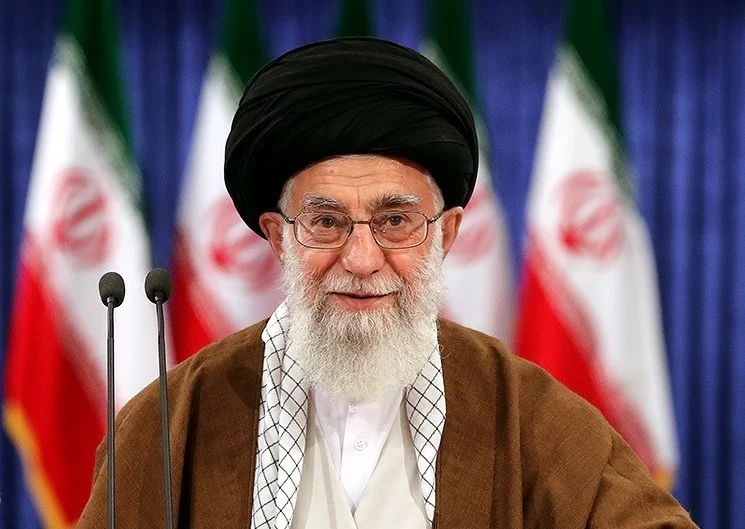
A new report from The New York Times is raising serious questions about the condition and control of Iran’s leadership, alleging that Mojtaba Khamenei is severely injured and increasingly sidelined.
According to the report, Mojtaba has not released any recorded public message due to concerns that he could appear weak or vulnerable. Sources cited say his physical condition, combined with security fears, has led to a significant shift in authority away from him and toward senior military figures.
The report claims that key decisions are now being driven by Iranian military generals, who have taken on a dominant role in leadership. In a notable move, those generals reportedly ordered the cancellation of an Iranian delegation’s planned trip to Pakistan ahead of a second round of talks, signaling tightening internal control.
NEW YORK, NEW YORK – SEPTEMBER 24: President of Iran Masoud Pezeshkian addresses the United Nations (UN) General Assembly during the 80th session of the annual event on September 24, 2025, in New York City. This year’s theme for the annual global meeting is “Better together: 80 years and more for peace, development, and human rights.” (Photo by Spencer Platt/Getty Images)
Meanwhile, Iranian President Masoud Pezeshkian, a trained surgeon, has reportedly been personally involved in treating Mojtaba, further underscoring the severity of the situation.
The report details extensive injuries, stating Mojtaba Khamenei has undergone three surgeries on one leg and may ultimately require a prosthetic. He is also recovering from hand surgery, while severe burns to his face and lips have made speaking difficult. Additional plastic surgery is expected.
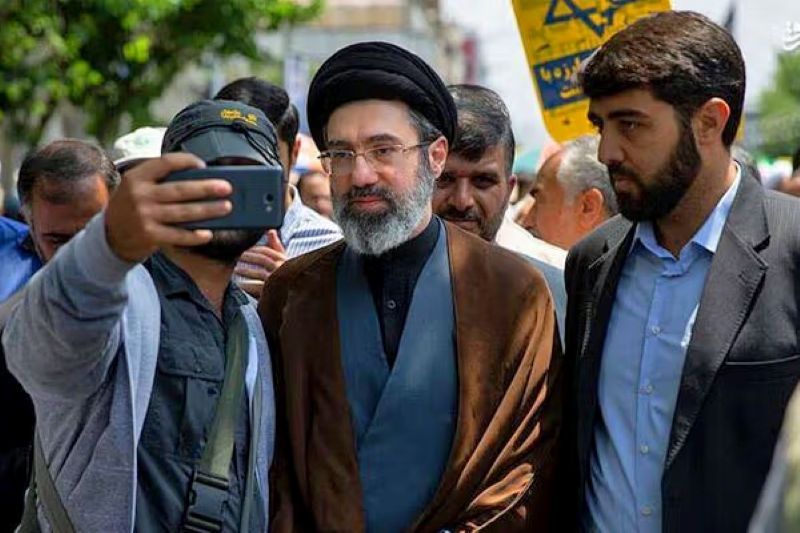
31 May 2019, Iran, Tehran: Mojtaba Khamenei (C), son of Iranian Supreme Leader Ayatollah Ali Khamenei, is pictured during a protest marking the annual al-Quds Day (Jerusalem Day) on the last Friday of the Muslim holy month of Ramadan. Photo: Saeid Zareian/dpa (Photo by Saeid Zareian/picture alliance via Getty Images)
If accurate, the revelations point to a potential power vacuum at the highest levels of Iran’s leadership, with the military stepping in as the central force shaping policy during a period of uncertainty.
Related stories
Yeshiva World News2 hours agoYeshiva World News10 days agoMatzav11 days agoYeshiva World News16 days ago Jewish Breaking News2 hours ago
Are you a British Jew who’s feeling a bit on edge after the spate of attacks over the past week — four in the London area alone? Not to mention the attacks also in the very recent past, like the torching of four Hatzalah ambulances in Golders Green? Don’t worry! That feeling of being unsafe is all in your head.
That’s what Green Party leader Zack Polanski, who is Jewish, appeared to imply in an interview with Haaretz Tuesday.
He didn’t categorically deny that rising antisemitism is a problem and claimed to take it seriously. But he also made this bizarre statement:
“Now, there’s a conversation to be had about whether it’s a perception of unsafety or whether it’s actual unsafety, but neither are acceptable.”
So all these attacks are really happening, but he thinks we need to discuss whether it’s reasonable to feel unsafe.
He said that no one should even have such a perception, but he didn’t explain how to help people deal with their psychological issues.
“As a politician, as a leader of a political party, it’s really important that we do everything we can to make sure people are both physically safe and have a perception of safety,” he explained. “And it’s unacceptable for anyone in this country to be feeling unsafe if they’re just going about their daily business.”
He also accused others of weaponizing antisemitism against members of his party, noting that people suddenly came up with these accusations after their candidacy was announced, although no one would have known who the candidates were until the public announcements. Something is seriously lacking in his ability to think logically.
Worst of all, Polanski subscribed to the blood libel against Israel, accusing it of genocide. He said he is speaking out against “genocide” to ensure that “my Jewish identity is not weaponized by other people in the community who claim that all Jewish people support the Israeli government, or all Jewish people support the genocide, because that’s absolutely not true.”
British Jews who have a “perception of unsafety” should know they’re in good hands: Zack Polanski has their back.
 Matzav
Related stories
Matzav13 hours ago Matzav17 hours ago
 Matzav22 hours ago
 Matzav1 day agoMatzav2 hours ago
White House Press Secretary Karoline Leavitt said Wednesday that Iran’s seizure of two vessels does not constitute a violation of the ceasefire, emphasizing that the ships were neither American nor Israeli.
Speaking during an appearance on The Story on Fox News, Leavitt addressed questions raised by host Martha MacCallum regarding the incident.
MacCallum asked, “I want to ask you about these ships that Iran seized. We’re continuing to get reporting on this. Does the seizure of two ships — as we said, they were Greek and Mediterranean-owned ships with cargo on them, and the reports are that Iran basically seized them and then moved them into Iranian waters. We don’t know what’s going to happen to these crews. We’re not sure where all of this is going. Does the president view that as a violation of the ceasefire?”
Leavitt responded by rejecting that characterization, stating, “No, because these were not U.S. ships. These were not Israeli ships. These were two international vessels. And for the American media, who [are] sort of blowing this out of proportion to discredit the president’s facts that he has completely obliterated Iran’s conventional Navy, these two ships were taken by speedy gunboats. Iran has gone from having the most lethal Navy in the Middle East to now acting like a bunch of pirates. They don’t have control over the strait. This is piracy that we are seeing on display. And the naval blockade that the United States has imposed continues to be incredibly effective. And, to be clear, the blockade is on ships going to and from Iranian ports. And the point of this is the economic leverage that we maintain over Iran now. While there’s a ceasefire with respect to the military and kinetic strikes, Operation Economic Fury continues, and the crux of that is this naval blockade.”
Related stories
Matzav13 hours agoMatzav17 hours agoMatzav22 hours agoMatzav1 day ago Vos Iz Neias
Related stories
 Yeshiva World News7 days ago
 Belaaz9 days ago
 Jewish Breaking News9 days ago
 Yeshiva World News9 days agoVos Iz Neias2 hours ago
WASHINGTON (AP) — President Donald Trump has turned to naval blockades to pressure the governments of Venezuela, Cuba and now Iran to meet his demands, but his preferred tactic is confronting a very different reality in the Middle East than in the Caribbean.
Unlike Cuba or Venezuela, Iran choked off a crucial trade route for energy shipments, meaning the longer the standoff persists the more the global economy will suffer. Tehran also poses a greater military threat — beyond those posed by the adversaries in America’s own hemisphere — and requires a sustained military presence far from U.S. shores.
Iran’s leverage over the Strait of Hormuz gives it power during a shaky ceasefire because the widening economic risks — especially higher U.S. gas prices in an election year — could force Trump’s Republican administration to end its blockade on Iran’s ports and coastline, experts say.
“It’s really a question now of which country, the U.S. or Iran, has a greater pain tolerance,” said Max Boot, a military historian and senior fellow for national security studies at the Council on Foreign Relations.
Iran presents ‘major differences’ from other blockades
The effectiveness of Trump’s pressure tactic — using the world’s most powerful navy to block the trade of Iran’s sanctioned oil and other goods — is still very much up for debate. Some experts say Trump’s success in Venezuela likely had more to do with the U.S. military raid that captured leader Nicolás Maduro than American warships seizing sanctioned oil tankers to enforce U.S. control over the South American country.
A U.S. oil embargo on Cuba, meanwhile, has caused the island’s most severe economic crisis in decades. While U.S. and Cuban officials have met recently on the island for rare talks, the financial strangulation has failed to produce the Trump administration’s stated goal of leadership change.
“I do think that the success of the Maduro mission in Venezuela has probably emboldened the president,” said Todd Huntley, director of Georgetown University’s National Security Law Program.
That doesn’t make the situations in Venezuela and Iran similar — geographically, militarily or politically. “There are some major differences,” said Huntley, a retired Navy captain and judge advocate general.
While the blockade against Iran has delivered a severe blow to its economy, including stopping freighters from importing various supplies, the country has still been able to move some of its sanctioned oil, ship tracking companies say.
And Iran has rejected Trump’s demands to reopen the Strait of Hormuz, where 20% of the world’s oil normally flows, and it has been firing on ships again this week. Stalled shipments through the strait have sent gasoline prices skyrocketing far beyond the region and raised the cost of food and a wide array of other products, creating a political problem for Trump ahead of the midterm elections in November.
“Blockades are usually just one tool of a mechanism used in a conflict,” said Salvatore Mercogliano, a maritime history professor at Campbell University in North Carolina. “They can be important. But it’s only one element. And I don’t think it’s going to be enough to convince the Iranians.”
The effectiveness of the US blockade has been called into question
Adm. Brad Cooper, head of U.S. Central Command, claimed last week that “no ship has evaded U.S. forces.” The command overseeing the Middle East said it has directed 31 ships to turn around or return to port as of Wednesday.
Merchant shipping groups are skeptical. Lloyd’s List Intelligence said “a steady flow of shadow fleet traffic” has passed in and out of the Gulf, including 11 tankers with Iranian cargo that have left the Gulf of Oman outside the strait since April 13.
The maritime intelligence firm Windward said this week that Iranian traffic continues to flow “via deception.”
Iranian ships have several ways to sneak through the blockade, including spoofing their location tracking data or traveling through Pakistani territorial waters, Mercogliano said. He also noted that the sheer volume of shipping traffic the military needs to screen is a challenging task.
Blockades require patience to work
The last time the U.S. mounted a blockade similar to the one focused on Iranian ships was during the Kennedy administration in the early 1960s, when the U.S. imposed a blockade on Cuba, Huntley said.
“And it wasn’t even called a blockade,” he said. “We called it quarantine.”
Some naval blockades over the course of history have had an impact, such as Britain’s blockade on Germany during World War I. “But they tend to be very long-term impacts, whereas Trump is looking for short-term, quick results,” according to Boot, the military historian.
He said Trump probably saw the blockade on sanctioned oil tankers tied to Venezuela as playing a large role in the success of leadership changes in that country. But Boot said it had more to do with the U.S. ousting Maduro and the subsequent cooperation from his vice president and now-acting president, Delcy Rodríguez.
“There is no Delcy Rodríguez in Cuba or Iran,” Boot said. “I think his success in Venezuela led him astray, thinking that this was a template that could be replicated elsewhere. He sees it as a huge success at little cost. And, in fact, it turns out to be a unique set of circumstances.”
Related stories
Yeshiva World News7 days agoBelaaz9 days agoJewish Breaking News9 days agoYeshiva World News9 days ago Jewish Breaking News3 hours ago
Here’s something that would never happen to a Muslim student at a prestigious college — denial of religious accommodations. An Orthodox Jewish student at Williams College in Williamstown, Mass., requested a physical key to his dorm to use on Shabbat. After his request was denied, he has had to wait over an hour in freezing weather for other students to arrive and let him in.
It’s outrageous.
According to the complaint, the private liberal arts college, which was founded nearly 235 years ago, suggested that the student ask someone in the campus office to escort him to the building, but that was even more inconvenient than waiting in the cold.
The student was also allegedly told that if he found the school’s kosher food accommodations not to his liking, he should go elsewhere.
Indeed, the school provided kosher vegan meals that were inferior to the vegan meals other students receive — so much so that the food made him violently ill. The student has had to find his own food at nearby restaurants and take his Shabbat meals at the local Chabad.
Rachel Balaban, senior litigation counsel at the Brandeis Center, discussed the case with JNS.
“This student’s ability to exercise, freely, his religion should not be incompatible with his equally important right to fully participate in residential life at Williams,” the lawyer said, referring to his being frozen out of the dorm.
Balaban also said that the school violated the Fair Housing Act by withholding a working key from the student and not providing adequately nutritious and edible food.
“Being provided these services in connection with housing that are unequal and inferior to those provided to other students because of his religion is a violation of the Fair Housing Act and is a serious concern for the Brandeis Center and the student,” she said.
Colleges bend over backward to accommodate students of minority faiths. They should do no less for Jewish students.
 Matzav3 hours ago
Just two days after chassidim were informed that the Vizhnitzer Rebbe of Bnei Brak Rav Yisroel Hager, had returned to his home, a new update from his household reports that he is suffering from an infection and weakness, leading to the cancellation of scheduled kabbolas kahal for the evening marking his 81st birthday.
Earlier this week, the Vizhnitzer chassidus had shared uplifting news that the Rebbe had returned to his residence in Bnei Brak after an extended period away for rest and medical recovery in Netanya and Moshav Ora.
The announcement at the time noted that in recent days the Rebbe had been spending much of his time at the home of his father, the Yeshuos Moshe, and receiving people at the residence of his grandfather, the Imrei Chaim.
It was also reported that the previous evening, the Rebbe participated in a simcha marking the engagement of his great-granddaughter, a granddaughter of his son-in-law Rav Yitzchok Twersky, son of the Skverer Rebbe. The Rebbe sat at a tish for an extended period, encouraging singing with visible strength.
However, on Wednesday, chassidim received a more troubling update stating that the Rebbe is currently experiencing inflammation and weakness, and that all public receptions planned for the day have been called off.
“Since our master is feeling weak due to an infection, the public reception schedule this evening, as well as Maariv in the main beis medrash, will not take place. An update regarding the coming days will, with Hashem’s help, be issued separately.”
The message also called on anshei shlomeinu and all of Klal Yisroel to use the occasion of the Rebbe’s birthday on the 6th of Iyar to strengthen themselves and offer tefillos on his behalf for renewed strength and complete recovery.
{Matzav.com}
 The Lakewood Scoop3 hours ago
The following was shared today by Living Kiddush Hashem. Rabbi Joey Haber shared the following story a couple of years ago and recently added a meaningful follow-up:
Two top executives of Charles Tyrwhitt, a large clothing company based in London, once discovered something remarkable.
Through their research, they found that they were selling about half a million shirts a year in America, and nearly 100,000 of those shirts, close to a fifth of their total sales, were coming from a single source: a simple home in Lakewood, New Jersey.
Curious and intrigued, they decided they had to see it for themselves. When they arrived, they found an ordinary simple house.
While they were there, a customer came by to pick up several shirts. The family casually told their daughter to bring the shirts from the garage.
The customer then asked, “Where should I leave the money?” and they responded, “Just leave it on the table in the garage.”
The executives were astonished. “You trust people to just leave the money there?” they asked. “And this sells more than Madison Avenue?” The answer was simple:
“That’s how this town works.”
Wanting to understand more, they were taken to the Lakewood yeshiva, BMG.
Standing on the second floor overlooking a large beis medrash filled with hundreds, even thousands, of talmidim, someone pointed and said, “You see them? Most of them are wearing your shirts.” The same style, the same look, worn by bnei Torah immersed in learning.
The executives were deeply impressed and inspired.
Sometime later, Rabbi Haber was on a trip to Poland with a group of students when one girl approached him and introduced herself.
She explained that her family was the one distributing Charles Tyrwhitt shirts in Lakewood.
She shared that some of the shirts were specially tailored to fit the needs and style of the Lakewood community.
Recently, the company’s executives in London had requested one of these unique shirts to be sent to them. Her father shipped it.
Only afterward did they find out that the shirt had been intended as a gift for the King of England.
The family was excited. “Imagine,” she said, “a shirt from our home going to the king. We wish we had realized, we would have treated it differently.”
Rabbi Haber responded gently, “You’re excited about a shirt going to the King of England?
Your shirts are worn every day by bnei Torah, by those who are learning Hashem’s Torah. You’re clothing thousands of kings.”
Perhaps there is a divine message here. The same shirt worn by thousands of bnei Torah was ultimately chosen for a king.
Because we are royalty. We are Hashem’s children. We carry His crown, His name, and His identity.
 Vos Iz Neias3 hours ago
COPENHAGEN, Denmark (AP) — Two trains collided in Denmark early Thursday, leaving five people critically injured in what police called a major incident.
The collision occurred around 6:30 a.m. near Hillerød, about 40 kilometers (25 miles) north of Copenhagen. Roughly a dozen other people have minor injuries, according to the Greater Copenhagen Fire Department.
There were 38 people aboard the two trains, according to a spokesperson for the North Zealand police.
Officials originally said four people were critically injured but revised that figure hours after the crash. It was not immediately clear whether the train’s drivers were among the victims.
Investigators are looking into what caused the collision, which occurred near a level crossing. Photos from the scene show the front ends of the trains smashed, though both remained upright on the tracks.
The mayor of the nearby town of Gribskov, Trine Egetved, in a post on Facebook, said some of the injured were flown to the hospital.
She said the crash occurred on a local rail line that’s used by many Gribskov residents, employees and schoolchildren.
No other details were available.
 Matzav
Related stories
Matzav3 hours agoThe New York Times has published an extensive feature on Rabbi Shalom Landau, portraying the Williamsburg-based speaker as an unlikely online figure whose Torah-based messages have reached far beyond the walls of his beis medrash, even as he himself remains detached from the digital world.
The article opens by contrasting the rabbi’s modest surroundings with the reach of his influence, describing his headquarters as “a humble wood and brick structure in the shadow of Woodhull Medical Center,” where “the facade is cracked and peeling, and the blinds are drawn.” Inside, it notes, “young men spend their days hunched over dense texts,” while “a tiny pool is hidden away in the basement.”
Despite being characterized as a kind of influencer, the piece stresses that Rabbi Landau himself has little connection to technology, writing that he “doesn’t use social media and favors a flip phone — and no phone at all from sundown Friday to sundown Saturday.” The explanation is simple: “On Shabbos, it’s strictly forbidden.”
The Times identifies Rabbi Landau as “a 48-year-old Hasidic rabbi in the Williamsburg section of Brooklyn,” explaining that “the young men are his yeshiva students; the pool a ritual bath called a mikvah.” It adds that “he’s the spiritual leader of Rivnitz,” a group following the teachings of the Ribnitzer Rebbe, who emphasized spreading divine light even in hostile environments.
At the same time, the article highlights the unusual nature of his recent visibility, stating that he is “of late, an unlikely star on Instagram and TikTok for videos offering pearls of Torah-based wisdom.” These clips, it explains, “marry self-help and ‘seichel,’ Yiddish for ‘common sense,’” often beginning with bold statements like “Wealth is in your wiring, not in your wallet” and “A child is not a second chance at your past,” before linking them to traditional sources.
According to the report, “his 250,000 followers on Instagram may not put him in the social media big leagues,” but they “greatly outnumber the several hundred men who come to study and pray at his shul.” The article underscores the contrast, noting that this is “an awful lot for a guy who speaks in Yiddish-inflected English and appears on video in front of bookshelves of Hasidic philosophy.”
The piece describes the rabbi’s online reach as spanning widely different audiences, stating that “from his digital pulpit, Rabbi Landau wields a particular kind of influence,” reaching “a mosaic of overlapping audiences, each of whom interprets him differently.” These include “practicing Jews who share his content earnestly over WhatsApp,” “secular internet addicts who take his videos with a heavy dose of irony,” “curious non-Jews seeking a pure form of religious authenticity,” and “young conservatives attracted to the traditional gender roles he preaches.”
It also notes that some responses are less positive, pointing out that certain commenters “make antisemitic jokes about Jews holding the secret to attaining material wealth,” reflecting the complexities of exposure to a broad online audience.
Tracing how the videos began, the article recounts that a talmid once asked Rabbi Landau, “Why are we keeping your light just closed into this small building?” That suggestion led to the recording and distribution of his talks. Rabbi Landau acknowledged his unfamiliarity with the medium, saying, “I was not so much understanding what social media is.”
The effort has largely been managed by his assistant, Shragi Kalmanowitz, who began uploading clips and later expanded production. Rabbi Landau, however, does not watch the videos, explaining, “I think when you see yourself, you can see too much.”
He also expressed concern that his message is being reduced in the editing process. “When you take all of this, you have to be a Torah-learning Jew to understand,” he said. “A lot of statements they take out, they cut it. So I’m questioning, Why do you take out my point?”
Kalmanowitz responded by explaining the reasoning: “We cut it out. Why do we cut it? Because we have to make applicable to everyone.”
The article reports that the videos have generated unexpected interest from people seeking conversion, with Kalmanowitz stating, “The answer is, Judaism doesn’t encourage conversion,” and adding, “No, Hashem likes it the way you are.”
Rabbi Landau himself appeared uncertain how to frame this level of exposure historically, recalling a recent question posed to him: “Has this ever been in the Jewish history that a Jewish rabbi can speak to so much non-Jewish people?” He responded, “I don’t know, we got to look it up.”
The Times places him within a broader landscape of religious figures gaining traction online, noting that “he seems to be the only rabbinical social media star from the patriarchal ultra-Orthodox world.” It also observes that much of his advice is directed toward men and has found an audience in spaces that emphasize “male authority and initiative.”
Addressing the presence of antisemitic followers, Kalmanowitz described one such idea, saying, “It means, basically, that you created the game, like us Jews rule the world, like you create the system and you’re leaking information about how to cheat the system,” and added, “A lot of our fans are actually big antisemites.”
Despite this, the approach remains unchanged. “Some of them end up turning into big fans of the rabbi,” Kalmanowitz said. “You just shine your light, and eventually they will learn to enjoy it.”
In closing, the profile presents Rabbi Landau as aware of the limitations of the medium he has entered. “The way the world is heading to is, basically, punchlines are taking it over,” he said. “And from the punchline becomes the next punchline.”
 Vos Iz Neias
Related stories
Vos Iz Neias3 hours agoKYIV, Ukraine (AP) — U.S. weapons deliveries to Ukraine haven’t stopped despite the Iran war, and Ukrainian long-range strikes continue to hammer Russian oil production and manufacturing plants, Ukrainian President Volodymyr Zelenskyy said Thursday.
“Of course, we are hitting what is painful for Russia, and it is very painful,” Zelenskyy said in voice messages to reporters. He said that Russian losses in the strikes have reached tens of billions of dollars.
It wasn’t possible to independently verify Zelenskyy’s comments, but Russian officials have reported that attacks have struck infrastructure in regions more than 1,000 kilometers (600 miles) inside Russia.
While Russia presses its all-out invasion, which began on Feb. 24, 2022, Ukraine is using its domestically developed drone and missile technology to strike Russian territory. The Ukrainian military also uses American-made Patriot air defense systems to stop Russian missile attacks on Ukraine’s territory.
“We see that the Russians do not want to stop — they are hitting our energy sector and our people. We will respond,” Zelenskyy said.
Prince Harry praises Ukraine’s resistance
Ukraine’s fight against Russia’s bigger army drew renewed praise from Prince Harry, who arrived in Kyiv on Thursday for his third visit in a year.
Ukrainians have demonstrated “strength not just in bravery and capability, but in unity, in trust,” he said in a speech to a Kyiv security conference
Ukraine “continues to hold together, and hold together you must,” he said.
The Duke of Sussex stepped off a train in Kyiv’s main station after an overnight journey from Poland, which is the only way to travel to the Ukrainian capital.
It wasn’t clear whether Harry would meet with Zelenskyy, who was due to attend a summit of European Union leaders in Cyprus on Thursday evening.
Russian firefighters tackle huge drone strike blaze
Hours before Harry arrived, three people were killed and 10 were wounded in a Russian drone attack on the central Ukrainian city of Dnipro, according to Oleksandr Hanzha, the head of the regional military administration.
A 13-story building and an administrative building were damaged in the strike, Hanzha said on the Telegram messaging app.
Russian air defenses, meanwhile, intercepted 154 Ukrainian drones over Russian regions, the annexed Crimea Peninsula, the Sea of Azov and the Black Sea, the Russian Defense Ministry said.
Authorities in the Krasnodar region on Russia’s Black Sea coast said that 276 firefighters at the Black Sea port of Tuapse were fighting for a third straight day a huge blaze caused by a Ukrainian drone attack earlier this week.
Toxic material from the fire fell with rain, covering several districts of Tuapse with a black layer of dirt, the region’s emergency headquarters reported. The concentration in the air of chemicals from the fire surpassed admissible levels, officials said, and authorities advised residents to stay indoors.
Ukraine targets more Russian oil facilities
For the second consecutive night, Russia’s Samara region also was targeted. In the Samara city of Novokuybyshevsk, about 1,000 kilometers (600 miles) east of the Ukrainian border, a drone attack on an unspecified industrial facility killed one person, regional Gov. Vyacheslav Fedorishchev said.
Drone debris also fell on a roof of a residential building in the city of Samara, wounding a number of people, Fedorishchev said. One person was hospitalized.
Unconfirmed media reports said that a petrochemical plant in Novokuybyshevsk owned by the Rosneft oil and gas company came under attack.
Ukrainian forces also struck Russian oil infrastructure in the Samara region and a pipeline in the Nizhegorodskaya region that transports oil from Western Siberia to Tatarstan, said Andriy Kovalenko, the head of Ukraine’s Center for Countering Disinformation.
An oil refinery in the Samara region and an oil pipeline in the Nizhegorodskaya region were hit, he said. The pipeline transports oil from Western Siberia to Tatarstan. He didn’t offer more details about the strikes.
Also, units of Ukraine’s Security Service struck the Gorky oil pumping station in Russia’s Nizhny Novgorod region east of Moscow, said a senior official from the agency, which goes by the abbreviation SBU.
The nighttime drone attack damaged three oil tanks and caused a large fire, the official said. The official wasn’t authorized to comment publicly and spoke on condition of anonymity.
“The operation of main pipelines is disrupted, the efficiency of processing at refineries decreases, and transportation costs increase. As a result, this directly affects the revenues of the Russian budget, which are used to finance the war against Ukraine,” the official said.
 Jewish Breaking News3 hours ago
A 7-year-old girl was discharged from the hospital earlier this week in good condition after a two-month stay following critical injuries she sustained in a March 21 Iranian missile attack on Dimona.
The strike, which affected Dimona and Arad, wounded 115 people. Of those, 12 suffered serious injuries.
She was evacuated to Soroka Medical Center in Beersheba with major bleeding, along with several severe injuries such as liver damage — shrapnel fragments punctured her abdomen, tore a blood vessel and damaged her bile duct. Once she was stabilized, she was transferred to Schneider Children’s Medical Center, where she underwent several successful surgeries and was sent home earlier in the week, the hospital reported Thursday.
Following her discharge, one of her surgeons poses with the little girl who was injured in the Iranian strike on Dimona. (Credit: Schneider Children’s Medical Center)
The relieved father expressed his gratitude in a statement.
“We went through moments that cannot be described in words,” he said. “We saw our daughter fighting for her life, and the team at Schneider never gave up on her, not even for a moment. Thanks to them, she is with us today. We have no words to thank everyone involved for their professionalism, dedication and compassion.”
Dr. Michael Gurevich, one of the surgeons who treated the child, said that the case was a “complex, multi-system injury with immediate life-threatening risk.”
“An intensive team effort involving multiple surgical disciplines was required to stabilize her condition and repair the damage to the liver and biliary system,” he said. “Fortunately, thanks to rapid intervention and continued care, we were able to save her life.”
Schneider Children’s is a top-tier pediatric hospital and recently made the news for performing four transplants in one day — something very few hospitals in the world are equipped to do.
 Vos Iz Neias
Related stories
Vos Iz Neias3 hours agoJERUSALEM (VINnews) — Journalist Inbar Toizer from Channel 12 News sparked controversy after sharing a video on social media on the eve of Israeli Independence Day. The video shows two young Hasidic men collecting donations for a hachnasat kallah (helping fund a wedding for a bride in need). In the footage, her husband is heard speaking disparagingly toward them, while the two appear visibly uncomfortable. The video was posted without blurring their faces, as the couple appeared to lecture them and urge them to enlist in the IDF.
In the video, the couple question the young men in a condescending and dismissive tone after they arrived at their home seeking charity. What began as a routine request for donations, common practice in Hasidic communities,turned into what critics described as a public shaming incident.
סערה ברשת בעקבות הסרטון🥸
עיתונאית חדשות 12 ענבר טוויזר לעגה לשני חסידים שאספו צדקה והפיצה ללא טשטוש את השניים מבוזים, טוויזר שלחה אותם להתגייס לצבא תוך לעג על מצוות הכנסת כלה.
בהמשך מחקה את הסרטון.ענבר,
לא זו הדרך לחגוג יום חג,
לא זו הדרך להביע את דעתך בנושא גיוס חרדים. pic.twitter.com/5D2fhNVrLg— חרדים10 (@charedim10) April 22, 2026
Toizer is heard asking: “What’s going on? A bride fund? What do you need?” One of the young men replies: “A bride fund. Some money for a wedding.” She then asks sarcastically, “Why bring in the bride?” to which he answers simply: “To the wedding canopy.” She goes on to ask their age, and upon hearing they are 18, responds: “Are you aware that at 18 you’re supposed to enlist in the army in the State of Israel? Today is Independence Day eve. Do you know the law?” One of them attempts to answer: “Yes, among Hasidim it’s a bit different. We went to enlist now, it’s immediate discharge.”
Media figure Yair Levy drew public attention to the video, and many social media users criticized it as a cynical and humiliating use of the platform to mock the young Hasidic men collecting charity. Critics described Toizer’s tone as arrogant, noting the video ends with her husband laughing as he shuts the door in their faces.
Journalist Aryeh Ehrlich sharply criticized Toizer, writing that while Jewish holidays are usually marked by charity, kindness, and unity, this incident reflected “documented public shaming of two minors… who innocently knocked on the couple’s door to request charity.” He condemned the mockery and described the act as humiliating and cynical.
Ehrlich, revealed that the father of the bride is a resident of northern Israel who suffered a severe blow to his livelihood just days ago. The father works as a driver, but his vehicle, his primary source of income, was completely destroyed by a Hezbollah missile strike.
Despite the heavy financial loss, he responded with resilience and even held a “thanksgiving gathering” for having survived, although compensation from the property tax authority is not expected to cover the cost of a new vehicle.
Ehrlich describes him as a man of dedication and hard work: “In addition to his job as a driver, he teaches in the mornings at a Talmud Torah. Despite the institution facing financial difficulties and salaries not being paid regularly, he refuses to leave out of a sense of responsibility for the children’s education.” As an additional source of income, the father also works as a sofer stam (a scribe of sacred Jewish texts) and is currently completing the writing of a Torah scroll in order to receive the remaining payment for it.
Journalist Haim Levinson, a former charedi, also reacted, saying: “This video shocks me. If this is a real story and someone knows this bride, I’d be happy to connect and give her a wedding gift.”
Toizer responded to the backlash the following morning, saying: “On a personal note: my partner is a reserve officer who returned yesterday from memorial ceremonies at Mount Herzl for six of his friends who fell in Lebanon, by the way, all were religious. We had a pleasant conversation with two 18-year-olds who knocked on our door, and we asked them why they don’t enlist. To everyone who wrote that I humiliated them, we agree on one thing: not enlisting in the army at a time like this is indeed something to be ashamed of.”
The response online was swift and critical. One commenter wrote: “You should be ashamed of yourself. I’m religious-Zionist with many family members serving. I would never treat charedi youths this way. If they are 18, they are practically children.” Another added: “A pleasant conversation? You might need to learn how to read a situation and speak respectfully to people. It would have been simple to say ‘no thank you.’ Filming them and pushing the enlistment issue is disrespectful.”
More harsh reactions accused her of spreading hatred and deepening social divisions.
The father of the groom—and of the young man seen in the controversial video—responded on Wednesday night in an interview with Avi Moskov on Kol Barama:
“We had no idea how we would even begin to cover the wedding expenses. Today, we received many thousands in donations. There are miracles, even if they came in a painful way, through embarrassment. It’s not pleasant, but G-d led us in this way. A photographer called me and offered to photograph the entire wedding for free.”
The father went on to describe the family’s situation:“Our car was destroyed last week by a Hezbollah missile, and God arranged things for the best. Today we received dozens of supportive phone calls from across the spectrum, even from secular people and from the left. I thank G-d that I belong to this people. You can feel the warm embrace, and we are grateful to everyone.”
 Vos Iz Neias4 hours ago
SYOSSET, N.Y. (VINnews) – A Syosset father and his 15-year-old son were arrested after a bias crime investigation at Syosset High School led police to discover chemicals combined to create explosive materials inside their home, authorities said.
Nassau County police responded to the home on Patricia Lane shortly after 1:30 p.m. Wednesday following the discovery of a swastika drawn in a boys’ bathroom at the high school, officials said. The 15-year-old boy is accused of drawing the symbol.
Officers evacuated the residence and nearby homes as the Nassau County Fire Marshal, Arson/Bomb Squad, Hazardous Materials Response Team and Emergency Service Unit responded. Video from the scene showed numerous bottles and containers of chemicals lined up on the driveway.
A source told News 12 that police conducted a controlled ignition of one volatile chemical out of an abundance of caution. No injuries were reported.
Investigators determined that the boy’s father, Francisco Sanles, 48, had purchased the chemicals on multiple occasions, police said.
Sanles faces charges including two counts of first-degree criminal possession of a weapon, two counts of fourth-degree criminal facilitation, two counts of endangering the welfare of a child and reckless endangerment. He was expected to be arraigned Thursday in Hempstead.
The teenager faces charges including two counts of first-degree criminal possession of a weapon, fourth-degree criminal mischief, first-degree aggravated harassment and making graffiti. He was to be arraigned in Nassau County Family Court in Mineola.
The investigation remains ongoing.
 Matzav
Related stories
 Matzav6 days ago
 Yeshiva World News7 days ago
 Vos Iz Neias7 days ago
 Vos Iz Neias1 month agoMatzav4 hours ago
Senate Republicans on Wednesday voted to shut down a Democratic proposal aimed at limiting President Donald Trump’s ability to continue military action against Iran, marking the latest failed attempt to force a congressional check on the ongoing conflict.
The measure, introduced under the War Powers framework, sought to prevent further U.S. military involvement, but it was defeated as Republicans again stood together to oppose it. According to The Hill, this is the fifth time GOP lawmakers have rejected similar efforts to halt or restrict the administration’s actions in the weeks-long confrontation.
The chamber voted 46-51 against advancing the resolution from the Senate Foreign Relations Committee. Rand Paul was the only Republican to break with his party and support moving the measure forward, while John Fetterman stood alone among Democrats in opposing it.
Leading the push for the resolution, Tammy Baldwin reiterated Democratic concerns during debate, arguing that Trump had campaigned on avoiding new overseas conflicts. Drawing parallels to past wars, she said, “In both wars, we had zero plans for the days to come and failed to outline our specific goals. In both wars, we had zero strategy to get out. And in both wars, we had servicemembers dying overseas for a cause that Americans did not support,” Baldwin said, comparing the current conflict to the Iraq war.
Lawmakers also pointed to public opinion data discussed during the debate. A Reuters/Ipsos poll cited in the proceedings indicated that just 36 percent of Americans support the strikes on Iran, according to The Hill.
Opposition to the resolution was led by Roger Wicker, chairman of the Senate Armed Services Committee, who argued that repeated votes on the issue have already settled the matter. He told colleagues, “We’ve been through these votes before. We’ve been through these votes recently and nothing has occurred in the makeup of this body or in the situation in Iran or the Middle East to materially change since the last time we voted on this matter,” Wicker said.
He further warned that approving the proposal would be “unwise,” according to The Hill.
The outcome highlights the sharp divide in Washington over the president’s authority to carry out military operations in Iran, with Republicans largely supporting the administration’s approach and Democrats cautioning against a prolonged engagement without explicit approval from Congress.
{Matzav.com}
Related stories
Matzav6 days agoYeshiva World News7 days agoVos Iz Neias7 days agoVos Iz Neias1 month ago The Lakewood Scoop
Related stories
The Lakewood Scoop4 hours agoThe following is an ‘Ask The Chief’ question submitted to TLS, and the Chief’s response. Email your questions for the Chief to [email protected].
Question:
Dear Sir: I am disabled. I have a placard which I am supposed to be able to park in handicapped parking. However many times I find those spots taken by cars without placards. Nothing seems to be done to solve this issue. What can be done to solve this?
Thank you
The Chief’s response:
Call us if you observe a car parked in the wrong place and we will respond and handle it.
————-
Have a question for the Chief? Email it to [email protected]
Have a question for the Mayor? Email it to [email protected]
 Vos Iz Neias4 hours ago
NEW YORK (VINnews) — UCLA’s student government has sparked furious responses after issuing a controversial statement condemning an Israeli hostage speaking on campus, according to a New York Post report.
The Undergraduate Students Association Council claimed in a letter after the event that hosting Hamas torture survivor Omer Shem Tov “obscured the broader reality of ongoing state violence.”
UCLA was quick to slam the group’s comments and one member broke ranks to brand it “blatantly disrespectful” and revealed it was released without everyone present to vote on it. The council president also said he was not present when it was decided.
The college’s Hillel brought in the 23-year-old to discuss his harrowing 505 days in the tunnels under Gaza at the hands of the terrorists after he was abducted by Hamas terrorists during the October 7 massacre. He spoke at an event to mark Holocaust Remembrance Day on April 14 which was attended by chancellor Julio Frenk and was widely celebrated by the university’s Jewish students.
But a week later the Undergraduate Students Association Council decided to respond with the pointed letter to UCLA Hillel and the college administration whining that a “single narrative was elevated.”
The group said: “While we affirm the humanity of all people impacted by violence, we reject the selective platforming of narratives that obscure the broader reality of ongoing state violence.
“Israel is currently continuing to carry out what has been widely identified by human rights advocates as a genocide in Gaza, while also expanding its illegal military campaign into Lebanon.
“In this context, elevating a single narrative, absent of critical political and humanitarian framing, serves to legitimize and normalize these ongoing atrocities.”
Its president Diego Bollo told The Post he was not present at the meeting, and that the councilmember who introduced the letter did so on a day when a councilmember who had promoted Omer’s event was not present to share her perspective and knowledge of the event. Bollo also said the letter was passed by a “bare majority.”
“I acknowledge that this reflects a lapse in oversight on my part as President, and I take responsibility for that institutional shortcoming. To address this issue, I am initiating a review immediately of our internal processes for drafting and releasing public statements,” Bollo told The Post.
“I deeply value free speech and free expression on our campus. I have worked throughout my term to ensure that the university supports all student groups in hosting speakers and a wide range of programming. Free speech is a principle I do not compromise on — regardless of the nature or subject of any given event,” he added.
Talia Davood, who is Jewish and on the council, said: “What left me particularly speechless was the decision to bring this forward on the night of Yom HaShoah, a day dedicated to mourning the six million Jews murdered in the Holocaust.
“Condemning Omer Shem Tov for sharing his lived experience… is not only inappropriate, but blatantly disrespectful.”
She noted that while the decision to condemn the event passed unanimously among those present, not all council members were in attendance.
UCLA’s Hillel was also outraged by the letter, with Director emeritus Rabbi Chaim Seidler-Feller branding it “completely ridiculous.”
He said: “You can’t present the narrative of your experience without it being called ‘one sided. There has to be a counter-story to persecution. Is there a counter-story to killing people?”
The Hillel added in a joint statement with Students Supporting Israel at UCLA: “Members of UCLA student government have once again shown they are anti-dialogue, anti-learning, anti-truth, anti-student, anti-Jewish and antisemitic in condemning our event.”
 Vos Iz Neias4 hours ago
BERLIN (AP) — Iran’s exiled Crown Prince Reza Pahlavi was splattered with red liquid on Thursday as he left a building in Berlin.
Pahlavi had just departed a news briefing, during which he criticized the ceasefire between the United States and Iran, when the incident occurred outside Germany’s federal news conference building.
He appeared unhurt by the liquid coating the back of his blazer and neck, and waved to his supporters before he got into a car that drove away. Police said the liquid appeared to be tomato juice.
The alleged perpetrator, whose name was not released in line with German privacy rules, was immediately detained by police.
Pahlavi, 65, is the son of Iran’s former shah, who was so widely hated that millions took to the streets in 1979 to force him from power. Nevertheless, Pahlavi is trying to position himself as a player in his country’s future, though it’s unclear how much support he has in Iran after he has been in exile for nearly 50 years.
Hundreds of his supporters demonstrated Thursday near Germany’s parliament building, according to German news agency dpa.
Pahlavi, who was not invited to meet with any government representatives during his visit to Berlin, argued Thursday that the ceasefire agreement assumes the Iranian government’s behavior will change and “you’re going to deal with people who all of a sudden have become pragmatists.”
“I don’t see that happening,” he said. “I’m not saying that diplomacy should not be given a chance, but I think diplomacy has been given enough chance.”
AP_04_23_2026_082635
Iran’s Reza Pahlavi, exiled son of Shah Reza Pahlavi, is protected by security after he was attacked with a red fluid, following a news conference in Berlin, Germany, Thursday, April 23, 2026. (AP Photo/Markus Schreiber)
Supporters of Reza Pahlavi, exiled son of Shah Reza Pahlavi, shout slogans outside the building where Pahlavi holds a news conference in Berlin, Germany, Thursday, April 23, 2026. (AP Photo/Markus Schreiber)
Pahlavi is jockeying for a return to power should the Shiite theocracy fall and has supported the U.S.-Israeli military intervention in the Middle East.
Pahlavi in Berlin called on Europeans to do more to support Iranian people fighting for democracy. He claimed 19 political prisoners were executed by Iranian authorities in the past two weeks and another 20 people have been sentenced to death.
“Will the free world do something, or watch the slaughter in silence?” Pahlavi said.
Meanwhile, more than an hour after the incident, German Chancellor Friedrich Merz released a statement saying the government welcomes the extension of the ceasefire.
“This presents an important opportunity to resume diplomatic negotiations in Islamabad with the aim of making peace and averting further escalation of the war,” the statement said. “Tehran should seize this opportunity.”
 Yeshiva World News
Related stories
 Vos Iz Neias2 days ago
 Yeshiva World News3 days ago
 Belaaz4 days ago
 Matzav4 days agoYeshiva World News4 hours ago
The United States is intensifying its pressure campaign against Iran, launching a more aggressive phase of maritime enforcement that now includes disabling and seizing vessels suspected of supporting Tehran’s oil trade and war effort.
The effort marks a significant escalation in the U.S. strategy, shifting from a traditional naval blockade to active interdictions on the high seas, according to reporting from The Wall Street Journal and other outlets.
The campaign began earlier this month with a sweeping blockade of Iranian ports, aimed at halting the regime’s ability to export oil — a key source of revenue. U.S. Central Command has already turned back dozens of vessels attempting to leave Iranian ports, with none successfully breaching the blockade so far.
But in recent days, the operation has expanded both geographically and tactically.
On Sunday, U.S. forces intercepted the Iranian-flagged tanker Touska, which was carrying roughly two million barrels of oil from Kharg Island, according to the report. After repeated warnings were ignored, a U.S. Navy destroyer disabled the vessel before Marines boarded and took control.
The move signals a shift toward more forceful enforcement, including the use of disabling fire against noncompliant ships — a tactic more commonly associated with counter-narcotics operations.
Officials say the crackdown is no longer limited to the Strait of Hormuz. U.S. forces have expanded operations into the Indo-Pacific and beyond, targeting vessels linked to Iranian smuggling networks or providing material support to the regime.
The broader strategy appears modeled on earlier U.S. campaigns against Venezuela’s so-called “dark fleet,” with the potential for seizures across multiple oceans.
The Pentagon, State Department and Treasury Department are coordinating the effort, combining military enforcement with economic sanctions in a bid to cut off Iran’s oil exports and constrain its ability to fund military operations.
At the same time, the pressure campaign is unfolding alongside fragile ceasefire negotiations. The White House has expressed hope that the economic squeeze — paired with visible demonstrations of U.S. naval power — will push Tehran toward a broader agreement.
(YWN World Headquarters – NYC)
Related stories
Vos Iz Neias2 days agoYeshiva World News3 days agoBelaaz4 days agoMatzav4 days ago Yeshiva World News
Related stories
Yeshiva World News4 hours agoFormer Israeli prime minister Naftali Bennett is intensifying the country’s already fraught debate over military conscription, insisting that state funding should be cut off to Chareidi yeshivos whose talmidim do not serve in the military.
“We will not fund a single shekel to those who don’t enlist,” Bennett said in a radio interview Monday.
Speaking on Maariv’s 103FM, Bennett argued that the IDF is short roughly 20,000 troops, a gap he said is straining operations and increasing risk to soldiers. “Draft evasion is costing us the lives of our soldiers,” he said, describing reservists as repeatedly redeployed and “worn down,” with diminished effectiveness over time.
Bennett took direct aim at Finance Minister Bezalel Smotrich, accusing him of enabling continued exemptions through a proposed plan to incentivize Chareidi enlistment. He also criticized coalition figures including Yitzchak Goldknopf and Aryeh Deri, as well as Prime Minister Benjamin Netanyahu, saying political considerations have been prioritized over military readiness.
At the center of Bennett’s proposal is a sweeping funding overhaul. He called for halting “dozens of money channels” that support yeshivos, and for conditioning state support on participation in national service. He also criticized educational frameworks that omit core subjects, saying the current model is incompatible with state priorities.
“There are 100,000 young, healthy Chareidim who could enlist,” Bennett said, arguing that even partial participation would materially close the manpower gap.
The former premier is pairing the policy push with an explicit political strategy. He said he intends to form what he calls a “Zionist government,” claiming he can assemble a 61-seat majority without Netanyahu’s bloc. Asked whether he would join a Netanyahu-led coalition after elections, Bennett dismissed the idea as “absurd.”
(YWN World Headquarters – NYC)
 Vos Iz Neias
Related stories
 Jewish Breaking News1 month ago
 Vos Iz Neias1 month agoVos Iz Neias4 hours ago
JERUSALEM (VINnews) — Forces from the Chashmonaim Brigade operating in South Lebanon identified and arrested a terrorist from Hezbollah’s Radwan Force who was planning an imminent attack against IDF troops. The suspect surrendered and was transferred for interrogation in Unit 504. The arrest took place amid extensive operations to dismantle terrorist infrastructure.
Chashmonaim Brigade fighters continue broad operational activity in southern Lebanon. On Wednesday, the forces successfully identified and captured a terrorist from Hezbollah’s elite Radwan unit, who had been planning an attack against IDF forces in the immediate timeframe.
תיעוד מיום העצמאות: לוחמים חרדים מחטיבת חשמונאים עוצרים מחבל מיחידת “כוח רדואן״ pic.twitter.com/FDFc3gfKYi
— ישי כהן (@ishaycoen) April 23, 2026
According to the IDF, troops are operating routinely south of the forward defense line with the goal of locating weapons and clearing out Hezbollah terrorist infrastructure, while preventing direct threats to northern Israeli communities.
An IDF spokesperson stated: “The IDF will continue to operate to defend the forward defense line and to remove threats against the citizens of Israel and IDF forces.” This statement comes amid continued operational activity by IDF forces in southern Lebanon, as well as repeated violations of the ceasefire by the Hezbollah terrorist organization.
Related stories
Jewish Breaking News1 month agoVos Iz Neias1 month ago Belaaz5 hours ago
A Russian-controlled court in Russia-occupied southern Ukraine sentenced a woman to 14 years in prison Thursday after accusing her of buying Ukrainian war bonds to support Ukraines’s military. Russian authorities identified the woman only as “B,” while human rights group Memorial named her as 66-year-old doctor Larisa Belyayeva from the village of Lyubimovka in the occupied Zaporizhzhia region.
According to the court and Russian state media reports, Belyayeva allegedly used a Ukrainian mobile banking application to purchase 102 Ukrainian war bonds worth about 270,080 rubles, roughly $3,600. Russia’s FSB security service reportedly detained her in August 2025 and charged her with treason under Russian law. Many residents in occupied territories have effectively been forced to take Russian citizenship in order to maintain access to healthcare, pensions, employment, and property rights, despite Ukraine and most of the international community rejecting Russia’s annexation claims.
Memorial, one of Russia’s best-known human rights organizations, said Belyayeva had been held in detention for months before the ruling. The group itself was recently labeled an “extremist” organization by Russian authorities as Moscow continues expanding wartime crackdowns on dissent, treason, and alleged support for Ukraine.
Ukraine began issuing war bonds immediately after Russia’s full-scale invasion in February 2022 to help finance its defense efforts. The bonds were widely promoted as patriotic investments for Ukrainians supporting the war effort.
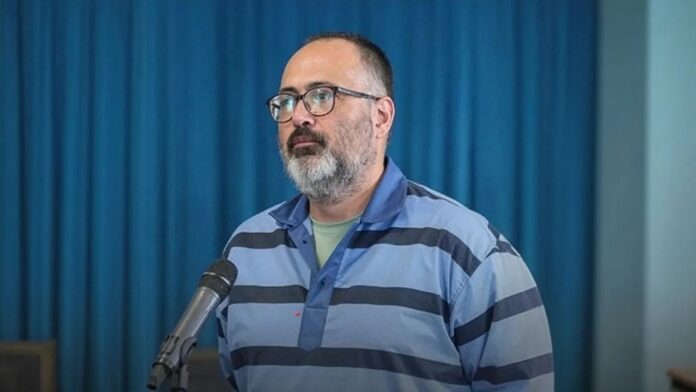 Matzav
Related stories
Matzav5 hours agoIran carried out the execution of a man accused of working with Israel’s Mossad intelligence agency, the country’s judiciary announced Wednesday, as watchdog groups reported that the individual had been employed in Iran’s nuclear sector.
The man, identified as Mehdi Farid, was put to death in what marks the latest in a growing series of executions involving individuals accused of espionage, a pattern that has drawn increasing concern from international rights organizations.
In a statement published by the judiciary’s Mizan Online outlet, officials said, “Mehdi Farid… was hanged this morning for extensive cooperation with the terrorist spy service Mossad after the case was examined and the final verdict was approved,” the judiciary’s Mizan Online website said, adding that he had been convicted of the capital offense of “corruption on earth.”
The Norway-based group Iran Human Rights reported that Farid had been employed by Iran’s Atomic Energy Organization at the time of his arrest on May 31, 2023.
According to the organization, Farid was originally handed a 10-year prison sentence. However, following a retrial in July 2025, the charges were elevated and he was sentenced to death on allegations of spying for Israel.
A separate U.S.-based group, Human Rights Activists News Agency, also stated that Farid, 55, had worked for the atomic energy body and that the retrial was initiated after the prosecutor challenged the initial sentence.
Mizan Online, for its part, described Farid as a manager within Iran’s Passive Defense Organization, a civil defense entity. That organization later issued a denial, stating he held no affiliation, declaring he had “any membership, responsibility or position” there.
The execution comes amid a broader escalation, with Iran carrying out multiple hangings since the outbreak of its conflict with the United States and Israel on February 28. A tenuous ceasefire has been in effect since April 8.
Just days earlier, Mizan reported that two additional individuals accused of collaborating with Mossad were executed. The men, named Mohammad Masoum Shahi and Hamed Validi, were alleged to be part of an espionage network connected to the Israeli agency and were said to have received training abroad, including in Iraq’s Kurdistan region.
Human rights groups have long identified Iran as one of the world’s leading executioners, second only to China, and Iranian officials have signaled that those accused of working with Israel should not expect any leniency.
 Matzav5 hours ago
By Rabbi Pinchos Lipschutz
Following the news these days can leave a person feeling whipsawed.
One day, the United States and Israel are striking Iran, determined to dismantle its nuclear ambitions. The next day, talk of a ceasefire emerges, and Iran signals a willingness, at least outwardly, to step back. One day, Israel is engaged in a full-scale confrontation with Hezbollah, declaring that this time it will not rest until the threat to its northern residents is eliminated. The next day, a ceasefire is imposed.
One day, President Trump announces that a sweeping peace agreement with Iran is within reach. The next day, Iran declares that it will not even attend the talks.
The same events are described in completely different terms depending on who is speaking. Some portray a necessary and even heroic campaign against a dangerous regime that threatens not only Israel, but the stability of the Western world. Others condemn the very same actions as reckless and unjustified, accusing leaders of overreach and irresponsibility.
It is not only the events themselves that are dizzying. It is also the constant shift in how they are understood.
The world feels unsteady, lurching from one crisis to the next. Wars, threats, disasters, rising hatred, senseless violence—each day seems to bring a new upheaval. It can feel as though no one is truly in control, as if there is no steady hand guiding events, no clear path toward stability.
But we know that beneath the surface turbulence, beyond what appears to be happening, nothing is haphazard. Rather, everything is being carefully guided by the Ribbono Shel Olam. There is a plan, even when we cannot see it. There is order, even when everything appears chaotic.
A person who doesn’t appreciate that cannot remove the feeling of instability. Those who live without Torah and are tethered to their phones can feel as if life pulls them in different directions, emotionally and mentally. The constant barrage of information, the shifting realities, and the conflicting voices can leave a person unanchored.
But we live differently. We exist for a higher purpose.
As Hakadosh Boruch Hu prepared to give us the Torah at Har Sinai, He defined who we are meant to be. He told Moshe Rabbeinu to convey to us our mission: “V’atem tihiyu li mamleches kohanim v’goy kadosh, You shall be to Me a kingdom of kohanim and a holy nation” (Shemos 19:6).
What sets us apart, what defines us, is not only what we do, but who we are meant to become—namely, a goy kadosh, a nation of holiness. Kedusha is not an added dimension of Yiddishkeit. It is its very core. Every one of us, no matter who we are and what we do, is charged to live a life of kedusha. That obligation is not just for the few, for the best, for the roshei yeshiva, rebbes, kollel yungeleit, rabbonim, and others who dedicate their lives to Torah study. It is the mandate of us all.
This week’s parsha of Kedoshim opens with that same all-encompassing charge: “Kedoshim tihiyu—You shall be holy.” Moshe Rabbeinu gathered together kol adas Bnei Yisroel, the entire nation, and delivered this message to everyone equally—not only to a spiritual elite, not only to those removed from the mundane world, but also to ordinary people living ordinary lives.
Because for us, holiness is not the domain of the exceptional. It is the responsibility of every Jew.
We are not meant merely to get by, performing mitzvos, learning Torah, and checking the boxes of observance. That is not the entirety of who we are. We are meant to be kedoshim, living differently, thinking differently, and being driven by a higher standard that shapes how we act, how we speak, and how we live.
But what does it mean to be holy?
It means to always be aware that Hashem created the world and created us for a purpose. When we know that He controls the world and everything in it, we live differently and conduct ourselves accordingly.
Many imagine holiness as something distant, reserved for those who withdraw completely from the material world, detaching themselves from its distractions and temptations. Yet, the Torah immediately dismantles that notion. The same parsha that commands kedusha goes on to speak about honesty in business, proper weights and measures, respect for parents, care for the poor, sensitivity in speech, and fairness in judgment.
These are not side topics. They are the definition of kedusha.
The Torah’s vision of holiness is not an escape from life, but an elevation of it.
Rashi famously explains “kedoshim tihiyu” as a call for perishus, restraint. Not merely abstaining from what is forbidden, but exercising discipline within what is permitted. A person can live entirely within the framework of halacha and still be driven by indulgence and a lack of refinement. Kedusha begins where mere permissibility ends. It is the awareness that just because “I can” does not always mean “I should.”
The Ramban sharpens this idea with his powerful description of the “novol birshus haTorah,” a person who follows the mitzvos, yet whose life lacks dignity and inner boundaries. The Torah’s command of holiness comes to close that gap. It calls upon a person to cultivate an inner nobility and live with restraint, proportion, and purpose.
As we count down toward Shavuos and Kabbolas HaTorah, we also have to take stock of our lives as Jews. We are all, no doubt, proud bnei Avrohom, Yitzchok, v’Yaakov, but sometimes we forget what it is all about.
We live in a world of plenty, where so much is available, and much of it has a hechsher or other indications that it is kosher. It becomes difficult to draw the line of where to stop and where to go; what is appropriate for us to bring into our homes and what is not. We forget to think about what will affect us in a good way and what will affect us in a negative way.
When we go shopping in the large, beautiful, fully stocked supermarkets that we are now blessed with, as we try to decide whether to purchase an item, we check the label and examine its ingredients and caloric content. How much sugar does it have? How much sodium? What about trans fats and other elements that can affect our physical health?
Being a member of the am kadosh means that we should also consider how any product we buy will affect our spiritual health. Will the product help us become better Yidden? Will it help us learn Torah? Will it give us an added geshmak in performing mitzvos? Or will it turn us off and cause us to become cynical of people who strive for holiness? Just because something has a glitzy cover and appears appealing does not mean that we should buy it.
I had a dear relative who was not privileged to grow up in a religious home. She lived out of town and did her best to keep kosher. One of the ways she determined whether food was kosher was by looking for Hebrew letters on the packaging. She assumed that any product with Hebrew letters on it was kosher, and where she lived, that assumption usually worked.
I met her shortly after she returned from her first visit to Israel and asked her how the trip had gone. She could not stop speaking about how wonderful it was to be surrounded by Jews wherever she went and how different it felt from her small hometown. Decades later, I distinctly remember one of her comments. She said, “And one of the best parts of being there was that it was so easy to find kosher products, because everything had Hebrew letters on it!”
We can laugh at her naivete, or we can feel compassion for this sincere and well-meaning woman. But in truth, we often do something quite similar. We assume that because something has a Hebrew name, it is proper and kosher enough for us.
Our world has become dumbed down and we often act without giving things sufficient thought. We form opinions based on snippets of information we have picked up, or more often merely skimmed, from dubious people driven by agendas or irresponsibility. In doing so, we lose sight of the truth and of our obligation to be better and holier than those around us.
We become involved in pursuits that take over our lives and fail to remain dedicated to Torah study and behavior.
So many of the mitzvos in Parshas Kedoshim relate to how we treat others, because without them, we can become overly focused on ourselves, our families, and our immediate circles, and grow indifferent to the needs and feelings of others.
There is much more to being a Yid, but being thoughtful, caring, and treating others the way we ourselves would like to be treated is where it begins, and it should become second nature to us.
The Alter of Kelm would say that included in this week’s mitzvah of ve’ohavta lerei’acha kamocha is that we care about another person not merely because we are commanded to do so, but because we genuinely love him. He explained that the mitzvah is to love another as you love yourself, and just as you love yourself naturally—not because anyone instructed you to—we are meant to love others as part of our very nature.
And just as there is no limit to how much people love themselves, it is not as if a person loves himself to a certain degree and then fulfills his obligation, so too, when it comes to loving others, there is no limit. We must be proactive in anticipating the needs of others, caring about them, rejoicing with them, grieving with them, assisting them, and helping them achieve a sense of satisfaction and happiness.
It is something we are all capable of doing or it would not be a mitzvah in the Torah. No one should say, “This is not for me. I am not that type of person. I do not have patience. I am too busy. I cannot be bothered attending other people’s simchos or, lo aleinu, shivahs. I cannot be kind to everyone.”
This is who we are meant to be and what our essence is meant to reflect.
We are all familiar with the story of the prospective ger who asked Hillel to summarize the entire Torah in one sentence. Hillel responded, “Mah de’aloch sonei lechavroch lo sa’avid—What you do not want done to you, do not do to your fellow.”
Apparently, Hillel was explaining the words ve’ohavta lerei’acha kamocha, teaching that this mitzvah is the very foundation of the Torah. Treating others the way we wish to be treated is not just a nice idea. It is not just another one of the 613 mitzvos.
This week, we will be learning the third perek in Pirkei Avos, where the Mishnah (3:17) states, “Im ein derech eretz, ein Torah” – without proper conduct, there can be no Torah. Someone who cannot conduct himself properly cannot properly learn Torah.
Chazal further teach in the third perek of Pirkei Avos that one who finds favor in the eyes of people finds favor in the eyes of Hashem. As members of an am kadosh, what we say and do in our interactions with others must always be aligned with the principles of derech eretz and middos tovos.
The Meshech Chochmah asks a striking question at the end of Parshas Yisro: What did Moshe Rabbeinu personally gain from Kabbolas HaTorah? Moshe had already reached the highest possible levels of spirituality. He was able to ascend to Shomayim even before the Torah was given, which is a clear indication that he had already achieved perfection. So what changed at Mattan Torah?
The Meshech Chochmah’s answer is profound and deeply relevant to us. Until Mattan Torah, he explains, even Moshe Rabbeinu’s avodah, and more broadly man’s avodah, was primarily in the realm of ruchniyus. Holiness was expressed through detachment from the physical, through elevating oneself beyond the material world.
At Mattan Torah, something fundamental changed. From that point on, gashmiyus became a vehicle for kedusha. The physical world was no longer something to escape from, but something to elevate.
In this light, the Meshech Chochmah explains the meaning of Hashem’s words to Moshe at the burning bush: “Shal ne’alecha mei’al raglecha—Remove your shoes from your feet.” On a simple level, Moshe was being told to remove the physical coverings that connected him to the earth. Symbolically, he was being told: “Set aside your physicality as you stand before Me.” At that moment in history, before the Torah was given, holiness meant stepping away from the material and entering a space of pure spirituality, like a malach.
But after Mattan Torah, everything shifted. The “shoes” are no longer removed. They are part of the avodah. The physical life of a Jew is not something to be discarded in order to serve Hashem. It is something to be refined and elevated in the process of serving Him.
Thus, after Mattan Torah, Hashem told Klal Yisroel, “Ve’anshei kodesh tihiyun li—You shall be holy people unto Me” (Shemos 22:30).
Holiness is not achieved by escaping life, but by elevating life as it is lived, and doing so with kedusha.
We are not meant to become malochim. We are meant to remain human beings who bring kedusha into human life.
We do not need to withdraw from the world to be good. We do not need to retreat into isolation to become kedoshim. The Torah wants us to live among people, amidst the complexity of daily life, and to make that life holy.
In a turbulent world, where up can feel like down and down like up, where truth becomes blurred and depth is too often replaced with emptiness, being anchored to Torah gives us stability. It allows us to find clarity and purpose amid the confusion, and to build lives of kedusha through Torah, mitzvos, and avodas Hashem.
May we all merit to fulfill our missions in this world, to live full and meaningful lives, and to bring the world ever closer to the coming of Moshiach, bemeheirah beyomeinu.
 Vos Iz Neias
Related stories
Vos Iz Neias5 hours agoJERUSALEM (VINnews) — In recent days, the Iranians have been leading the Americans into a humiliating pattern. They have absorbed significant blows from the power of the U.S. military and the IDF. Parts of the Iranian regime’s leadership have been eliminated. Most of Iran’s internal security headquarters have been destroyed, from police stations in districts and neighborhoods to central command centers.
The situation has reached a point where junior commanders, due to the elimination of senior officials, are forced to command forces for which they were never trained and in which they lack experience, for example, a platoon commander suddenly becoming a battalion commander within days. The Iranians have suffered severe damage to their air defense systems, missile arrays, nuclear facilities, government buildings, and infrastructure. However, the core of the damage lies in the defense industries and sectors that serve as a backbone of Iran’s economy.
Despite all this, the Iranian regime does not seem to recognize that the stronger side at the moment, at least on paper, is the United States and Israel. And herein lies a more serious and dangerous problem than a thousand ballistic missiles or enriched material in their possession.
Their internal perception that they survived the attack, along with the fact that the regime is still standing, is a highly significant development. After all, sooner or later, the Iranians will rebuild and restore what was destroyed. Iran is rich in natural resources: oil, gas, iron, and other minerals. With money, they can rebuild the damage and even purchase weapons systems from China, North Korea, Russia, and possibly even Europe.
If, after all these powerful actions, Iran still manages to “lead Donald Trump by the nose” and force the United States to “crawl on its belly,” it would be a dramatic blow to America’s global standing vis-à-vis China, Russia, Europe, and the rest of the world. Has the United States reached the limits of its immense power?
If the U.S. backs down here, Iran could become the dominant power in the Persian Gulf and the Middle East. Beyond that, it could influence the global economy by controlling the opening and closing of the vital oil supply artery through the Strait of Hormuz. The issue now is not just nuclear weapons, ballistic missiles, or the stability of the ayatollah regime, it is a battle over the narrative of “the day after.”
Meanwhile, in Lebanon, Hezbollah is also trying to reshape the balance with Israel. The organization violated the ceasefire during the holiday. In Israel, it is assessed that Hezbollah is attempting to reestablish deterrence with the IDF. Northern Command is currently working to avoid being dragged into escalation.
During the time window between Memorial Day and Independence Day, about an hour before the start of the torch-lighting ceremony at Mount Herzl, Hezbollah fired a large number of rockets toward IDF forces operating in the area of Rmeish opposite Misgav Am. At the same time, it launched a drone toward the Galilee, which was intercepted by the Iron Dome. The IDF struck the launcher from which the rockets were fired and destroyed it.
During the afternoon hours yesterday, Hezbollah launched a hostile aerial vehicle toward IDF forces operating south of the forward defense line in southern Lebanon. The aircraft was intercepted by the Air Force and did not cross into Israeli territory.
After the Independence Day celebrations, it is clear to all that the political leadership must make decisions on how to act regarding Iran and Lebanon. A period of waiting in the midst of war does not help shape Israel’s security situation in the region.
 Yeshiva World News
Related stories
Yeshiva World News5 hours agoA Jew who was injured in an attack by an Arab mob on Wednesday later recounted the moments of terror from his hospital bed at Shaare Tzedek.
Nadav, a resident of the Binyamin region, suffered a head injury when dozens of Arab rioters hurled rocks and stones from close range at a group of Jews on a Yom Ha’atzmaut hike.
“Today at noon, a few friends and I were hiking near the yishuv of Ofra,” Nadav began. “Suddenly, Arabs came toward us and started a lynching. I was struck by several stones. I lost consciousness and fell to the ground.”
He said that at first, his friends’ attempts to rescue him failed due to the continued stone-throwing: “My friends who tried to evacuate me were also hit by stones. Finally, they got me out of there, and I was evacuated to the hospital.”
Several of Nadav’s friends suffered light injuries and were treated at the scene.
The Honenu legal aid organization, which is assisting the injured victims, called for the police and IDF to arrest the Arabs and bring them to justice.
(YWN Israel Desk—Jerusalem)
 Vos Iz Neias5 hours ago
NEW YORK (VINNEWS/Rabbi Yair Hoffman) On Monday of this past week, in Room 170 of the Berkeley Law School, a convicted would-be car bomber addressed a classroom of American law students by video call No one protested or heckled nor walk outed.
They applauded. All of them.
The speaker was Israa Jaabis, a Palestinian woman who in October of 2015 drove a car loaded with gas canisters and flammable material toward an Israeli police checkpoint outside Maaleh Adumim. When an officer stopped her for driving alone in a commuter lane, she cried out “Allahu Akbar” and then attempted to ignite the vehicle.
The explosion wounded the officer and burned her own face. The Shin Bet found handwritten notes in her possession praising “martyrs.” She was convicted and sentenced to eleven years. In November of 2023 she was released early. Why? Because Hamas had kidnapped 240 human beings on October 7th, and Israel paid for a handful of those hostages with the release of terrorists. Jaabis was one of those terrorists.
This is the woman whom Berkeley Law Students for Justice in Palestine and UC Berkeley Students for Justice in Palestine chose to present, on “Palestinian Political Prisoners Day,” as a heroine. This is the woman for whom a full classroom of America’s future lawyers rose to applaud.
Shlomo HaMelech wrote long ago, “What has been is what will be, and what has been done is what will be done; there is nothing new under the sun” (Koheles 1:9). It is tempting, watching that video, to feel that we are living through something the world has never seen before. We are not. Educated people cheering for murderers — applauding those who hunt the innocent while dressing it up in noble-sounding words — is one of the oldest stories that Klal Yisroel know.
The question is not whether this is disturbing. It obviously is. The question that needs honest examination is: How did we get here? What, exactly, is going through these students’ heads? How does a bright young person, admitted to one of the most selective law schools in the country, sit in a climate-controlled classroom in Northern California and clap for someone who tried to murder innocents?
The answer is not that these students are stupid. They are not. Many of them have perfect LSAT scores. The real answer is that they have been trained — patiently and thoroughly through a woke filter – from elementary school to high school and through college — to process the entire world through a filter: Are they oppressors or the oppressed?
In this framework, moral questions are not answered by looking at what a person did. They are answered by looking at which identity category a person belongs to. If you are classified as “oppressed,” your actions are, by definition, resistance. If you are classified as “oppressor,” your actions are, by definition, violence — even when you are the one being attacked. Once the categories are assigned, the facts are mere decoration.
Under this wokism, Israa Jaabis is not a woman who tried to murder others with a car bomb. She is a “political prisoner.” The other potential victims and the wounded officer are not victims. They are all an instrument of a state that the framework has pre-classified as colonial.
The entire moral machinery is upside down before the first slide of the PowerPoint goes up. The students, in their minds, they are cheering for the abstraction of liberation. That the abstraction is wearing the face of a woman who wanted to kill a stranger in traffic is, to them, a detail — and inconvenient details do not survive contact with the category.
There is, probably, a second mechanism at work, and it deserves to be named honestly: physical and moral distance. None of these students have ever seen what a burning car does to a human body. None of them know the officer’s name nor have spoken to his children. The victim is an abstraction to them, and abstractions do not bleed.
Jaabis, on the other hand, appeared on a screen — composed, articulate, speaking the correct vocabulary. She was the vivid one. The officer she tried to kill is, to that classroom, a rumor.
Many also clapped because everyone around them was clapping. On today’s elite campus, pro-Palestinian activism is the status position — the one that earns invitations, friendships, faculty warmth, and the quiet approval of the people whose approval a twenty-four-year-old most wants.
To sit silent during that applause would be to mark yourself, socially, as the wrong kind of person. Most people, at twenty-four, do not have the spine to be the wrong kind of person in a room of a hundred peers. And so they clap.
And then, because more shallow human beings cannot tolerate the cognitive dissonance of doing something they know to be wrong, they reconstruct their beliefs to match their behavior. They leave the room more radical than they had entered it.
There is one more element, and it is the most painful to write. What permits the applause is not only the elevation of the perpetrator. It is the prior quiet erasure of the victim. For these students to clap for Jaabis, they did not have to consciously hate Jews. They only had to have spent four years in an intellectual environment in which Jewish suffering — specifically Israeli Jewish suffering — had been steadily drained of any weight or significance.
October 7th itself demonstrated this with chilling clarity. Within hours of the massacre — while bodies were still being counted, before Israel had fired a single shot in response — Students for Justice in Palestine chapters across America were calling the slaughter a “historic win.”
Rachmana litzlan.
The rapes, the burned children, the grandmothers kidnapped from their beds — none of it registered as the horrific atrocity that it was. The real truth is that even animals don’t behave like that. October 7th was the day humanity died.
Diagnosing the sickness is easier than curing it, but a serious response requires action on several fronts. Outrage alone accomplishes nothing. Neither does the default Jewish communal reflex of writing strongly-worded letters that get filed and forgotten.
First, universities must be held to the standards they themselves have published. Every major university in America has a code of conduct that prohibits the glorification of violence and the harassment of students on the basis of national origin or religion. These codes are enforced — aggressively — when the targeted group is favored.
They are ignored when the targeted group is Jewish. The Department of Education is currently investigating universities for Title VI violations. Jewish parents, donors, and alumni should make continued financial support explicitly contingent on enforcement parity.
Second, the hosting of convicted terrorists in university classrooms is not a free-speech question. It is a platforming question. A classroom is not Hyde Park. It is a curated space allocated by the institution. Berkeley Law would not — and should not — host a convicted abortion-clinic bomber, or a convicted Klan arsonist, to present their life story to an admiring audience on “Political Prisoners Day.”
The selective application of the platforming principle to Palestinian perpetrators alone is itself a form of institutional bias that can and should be challenged, including in court.
Third, the K-12 pipeline deserves the attention it has not been receiving. These Berkeley law students did not arrive on campus as blank slates. They arrived already fluent in the oppressor/oppressed vocabulary. They learned it in high school history classes, in ethnic studies curricula, and in the social media ecosystem that filled whatever gaps the classroom left.
Jewish communal organizations have spent decades funding Holocaust education, which is necessary but insufficient. What is missing is engagement with the teaching of the present — the curricula, the textbook adoptions, the teacher-training pipelines — where the categories that produced Monday’s applause were first installed.
Fourth, Jewish students themselves need to be given permission to be visible. One of the quiet tragedies of the past two and a half years has been how many Jewish students have responded to campus hostility by hiding — removing the Yarmulkah, tucking in the Magen David necklace, skipping Shabbos at Hillel.
This is exactly backwards. Historically, invisibility has never protected us; it has only comforted those who wished we weren’t there. A proud, confident, publicly Jewish student body — one that refuses to be relegated to managing its trauma in private — changes the moral temperature of a campus more than any administrator’s statement ever will.
Fifth, and most importantly, we need to make the victim vivid again. The officer Jaabis wounded has a name. He has a family. He went home that night, after the emergency room, to children who were terrified they had almost lost their father. Bring him to campus. Put his face on the screen. Let the students who clapped for the woman who tried to set him on fire look at the man she tried to set on fire. Let them try to clap then. Most of them — most — will not be able to. The ones who can will have told us exactly who they are, and we will know what we are dealing with.
It is tempting, after a week like this one, to conclude that the younger generation is lost. Shaming the clappers is satisfying but nearly useless. Recruiting the silent — that is the hishtadlus that must be done – that and, of course, Torah study and Tefillah.
The author can be reached at [email protected].
 Matzav
Related stories
Matzav5 hours agoA Chilean national living in the United States illegally has been sentenced to three years behind bars for stealing a purse belonging to former Department of Homeland Security Secretary Kristi Noem during an incident last April.
U.S. Attorney Jeanine Pirro announced Wednesday that 50-year-old Mario Bustamante Leiva received the sentence after previously admitting guilt in November to three counts of wire fraud and one count of first-degree theft.
Authorities said that once his prison term is completed, Leiva will be removed from the United States and sent back to Chile.
In a statement, Pirro said, “Bustamante Leiva came to Washington illegally to prey on citizens of the District,” Pirro said in a statement. “He methodically targeted women at restaurants, stealing their purses, and monetizing the stolen cards within minutes. His pattern of theft ends here. He will serve his prison term and be deported.”
Leiva’s alleged accomplice, 52-year-old Cristian Rodrigo Montecino-Sanzana, also a Chilean national in the country illegally, had already been sentenced last month to 13 months in prison.
According to prosecutors, the two men carried out a planned theft on April 20 at Capital Burger, focusing on Noem, whom they were unaware was serving as DHS secretary at the time. Video footage showed Leiva taking Noem’s Gucci purse, which held credit cards and roughly $3,000 in cash.
After the incident, Leiva was later spotted at another restaurant with the same purse, where he used the stolen credit cards to make purchases without authorization.
Investigators said Leiva initially entered the United States through Orlando International Airport in August 2021 under the Visa Waiver Program, which permits nationals from certain countries to travel to the U.S. without obtaining a visa in advance.
He was required to leave the country by November 13, 2021, but remained beyond that date, placing him in the country illegally. At the time of the purse theft, officials said he also had outstanding arrest warrants in Utah and New York tied to allegations including retail theft, credit card fraud, and possession of stolen property.
{Matzav.com}
 Yeshiva World News6 hours ago
Efforts to advance and complete the legislation of the Chareidi conscription law have been halted at the request of the Chareidi parties, despite Prime Minister Binyamin Netanyahu and Foreign Affairs and Defense Committee chairman Boaz Bismuth signaling readiness to conclude the process.
According to a B’Chadrei Chareidim report, HaGaon HaRav Moshe Hillel Hirsch’s position is at the center of the opposition. The Rosh Yeshivah has expressed significant reservations about the emerging framework, mainly due to concerns that Mosdos Torah will not be able to meet the enforcement conditions that will be set in the law.
According to sources familiar with the details, HaRav Hirsch also conveyed his position to HaGaon HaRav Dov Landau.
However, senior Chareidi political figures say that HaRav Hirsch’s position is not final and additional discussions will be held on the matter when the Rosh Yeshivah returns from his fundraising trip abroad.
(YWN Israel Desk—Jerusalem)

 Yeshiva World News6 hours ago
An Arab terrorist threw stones at an Israeli vehicle traveling on Route 60 in the Shomron on Thursday, injuring a five-year-old child.
One of the stones forcefully hit the car windshield and penetrated the car, directly hitting the child’s shoulder.
MDA medical teams that were called to the scene provided the child with initial medical treatment. Fortunately, the child was only lightly injured, sustaining bruises and cuts from glass shards.
IDF forces who arrived at the scene launched a search for the terrorist and imposed a blockade on the nearby village of Madama.
(YWN Israel Desk—Jerusalem)
 Matzav
Related stories
Matzav1 day agoMatzav2 days agoMatzav3 days agoMatzav4 days agoRelated stories
Matzav1 day agoMatzav2 days agoMatzav3 days agoMatzav4 days ago Matzav
Related stories
Matzav4 days agoMatzav7 days agoMatzav11 days agoMatzav23 days agoRelated stories
Matzav4 days agoMatzav7 days agoMatzav11 days agoMatzav23 days ago Jewish Breaking News
Related stories
Jewish Breaking News11 hours agoA major milestone has just been reached in the world of sports and Orthodox Jewish life, as basketball standout Chaim Galbut announced his commitment to play Division I college basketball at Duquesne University.
Galbut, a 6 foot 7 forward from Miami, is aiming to become the first fully observant Orthodox Jew to play four years of Division I men’s college basketball, all while keeping a strict Shabbos.
Unlike most top recruits who rise through elite AAU circuits and national showcases, Galbut had a more interesting story, spending time learning in yeshiva while continuing to develop his game. Despite limited exposure, he caught attention through a viral highlight video, which is a clip of him dunking while wearing a yarmulka, which quickly spread across social media. That ultimately led to his recruitment with Duquesne, who discovered him through that very clip.
On the court, Galbut brings size, athleticism, and versatility. Standing at 6’7”, he has been described as a capable forward who impacts the game on both ends, coming off a strong high school career at Miami Country Day.
His commitment is not just about basketball, it’s about proving that high tier athletics and religious observance can coexist. Of course, it won’t be simple. College basketball schedules often include games on Shabbos, which will raise logistical and competitive challenges. To Chaim, it is clear that there is nothing in the world that can convince him to play on Shabbos.
 Matzav13 hours ago
A planned Shabbos gathering with the Belzer Rebbe for major donors has been postponed due to his current medical condition, according to an update delivered to the chassidus.
Rabbi Pinchas Lerner, a Belzer askan, informed chassidim in a recorded message that the upcoming “Heichala D’Malka” Shabbos, which was scheduled for this weekend, has been delayed. The event was set to take place at the D-City complex in Maale Adumim and was expected to host approximately 200 donors, each of whom had contributed $100,000 to the Belzer institutions.
Explaining the decision-making process, Rabbi Lerner said: “When I arrived in Eretz Yisroel on Sunday, I became aware of the Rebbe’s health condition. At that stage, it was not possible to make decisions, especially since on Monday encouraging reports began to arrive about a significant improvement in his condition. We waited until Tuesday, and with Hashem’s help, the situation indeed improved greatly.”
Leadership of the Belzer institutions convened to deliberate whether to proceed with the event as planned, weighing the Rebbe’s health and need for rest against the extensive preparations already made for the gathering.
The discussion was thorough, with strong considerations on both sides. On the one hand, there was a desire to move forward with the elevated Shabbos experience for the hundreds of chassidim who had already registered and prepared. On the other, the overriding concern was that the Rebbe had not yet fully regained his strength.
To reach a final decision, the matter was brought before the Rebbe himself, together with his son, Rav Aharon Mordechai Rokeach.
During the conversation, the option of canceling the Shabbos was presented. It was understood that if the Rebbe insisted on proceeding, the event would go ahead. However, if he agreed to postpone, it would indicate that he still required additional time to recover.
When the matter was presented, the Rebbe accepted the proposal and asked: “Do you agree to postpone the Shabbos?” The response was affirmative. Those present noted that the decision appeared to bring the Rebbe a sense of relief and that, at this time, it was not appropriate for him to undertake the effort required for such an event.
Rabbi Lerner also addressed the donors who had registered, saying: “We ask for the forgiveness of the public who registered and invested their resources and funds. However, there is no doubt that the Rebbe’s full health stands at the forefront of every chossid’s mind, and it takes precedence over any event.”
He added that an updated announcement regarding a new date for the gathering will be issued in the coming days, concluding: “We thank everyone for their understanding.”
 Matzav14 hours ago
An Israeli airstrike in southern Lebanon has killed Maha Abu Khalil, an 80-year-old operative who was part of a terror cell that attempted to hijack an El Al flight in Athens in 1969, marking what officials describe as the closing of a decades-old account.
According to reports on Wednesday, Abu Khalil was killed in a strike carried out by the Israeli Air Force in the Tyre district in the western sector of southern Lebanon, just minutes before a cease-fire between Israel and Lebanon took effect.
Abu Khalil was a known member of the Popular Front for the Liberation of Palestine and had long been associated with attacks targeting Israeli interests. Her death is being viewed as a significant moment in Israel’s long-standing conflict with figures linked to early-era Palestinian terrorism.
The incident that first brought Abu Khalil to prominence occurred in 1969 at Athens International Airport in Greece. She was part of a three-person cell from the Popular Front that sought to seize control of an El Al aircraft bound for Israel.
The objective of the hijacking attempt was to trigger an international crisis and pressure Israel into releasing Palestinian and Arab prisoners held at the time. The operation was foiled, and Greek authorities arrested the members of the cell and brought them to trial.
Despite her conviction, Abu Khalil did not serve her full prison sentence. In 1970, about a year after the failed hijacking attempt, another aircraft was hijacked by the same terror organization, which issued an ultimatum demanding the release of imprisoned operatives. As part of a prisoner exchange forced on the Greek government with international mediation, Abu Khalil and her associates were released.
Reports indicate that the Israeli strike that killed her targeted several buildings in Tyre believed to be used for terrorist infrastructure, and was carried out in the final moments before the cease-fire went into effect.
Her killing, despite her advanced age, is being described as symbolic, representing a reckoning with members of the earlier generation of Palestinian militants in Lebanon who were involved in hijackings and high-profile attacks against Israel in previous decades.
Separately, the IDF released details of another operation conducted earlier Wednesday deep inside Lebanese territory, shortly before the cease-fire began. Forces from the 769th Brigade under the 91st Division, working in coordination with the Israeli Air Force, carried out a raid on a Hezbollah compound in the village of Debin, approximately 12 kilometers from the border.
According to the military, the operation followed intelligence indicating militant activity at the site and plans to carry out attacks against Israeli forces and civilians. Troops from the Sabra Battalion raided the compound and destroyed extensive terrorist infrastructure.
During the operation, Israeli forces struck more than 70 separate targets, including engaging in close-quarters combat with Hezbollah operatives alongside precision airstrikes. More than 20 militants were reported killed in the assault.
{Matzav.com}
 Matzav14 hours ago
An Israeli court has ordered Sheba Medical Center to pay approximately 3.5 million shekels in compensation to a woman who was left permanently disabled following childbirth, ruling that medical negligence during a prolonged labor directly caused severe and irreversible harm.
The decision concludes an eight-year legal battle stemming from a 2018 delivery that began as a routine hospital admission but ended with lasting neurological damage. The court found that failures by the medical team during critical hours in the delivery room led to the woman’s condition.
According to the ruling, one of the central failures was the staff’s lack of appropriate response to a stalled labor that continued for many hours. The court described this as a clear breach of the duty of care. The patient testified that she remained in the delivery room for an extended period without being examined by a doctor, despite the complexity of her situation.
In her testimony, the woman described a sudden shift in the atmosphere after hours of relative calm. “From a calm room it became a full room and everyone was stressed, and I don’t understand what’s happening,” she said, recounting the moment when multiple doctors rushed in as the situation deteriorated.
The judge determined that the medical team’s failure to intervene in a timely manner left the patient in a dangerous condition for too long, directly resulting in permanent nerve damage. The compensation awarded is intended to cover lost earning capacity, ongoing medical treatment, and the profound impact on the woman’s life.
While cases of medical malpractice are not uncommon, the severity of this ruling and the size of the compensation stand out, underscoring the critical importance of close monitoring and timely intervention during childbirth, particularly when warning signs emerge.
Legal experts have noted that successful malpractice claims require clear proof of a direct causal link between negligence and injury, which the court found to be established in this case.
Sheba Medical Center has not issued a formal response to the ruling. The hospital, widely regarded as one of Israel’s leading medical institutions and recently ranked among the top hospitals globally, now faces renewed scrutiny over patient safety standards.
In a statement, the hospital said: “The Sheba Medical Center is known for a significantly lower-than-average rate of perineal tears worldwide. This is due to a professional approach practiced at Sheba, of exhausting all possible actions to avoid the use of instruments and unnatural means during childbirth, and with the goal of allowing the mother an optimal birth experience — while maintaining uncompromising attention to the safety and well-being of both the mother and the newborn. We will continue to provide the most professional, safe, and optimal care to all our patients.”
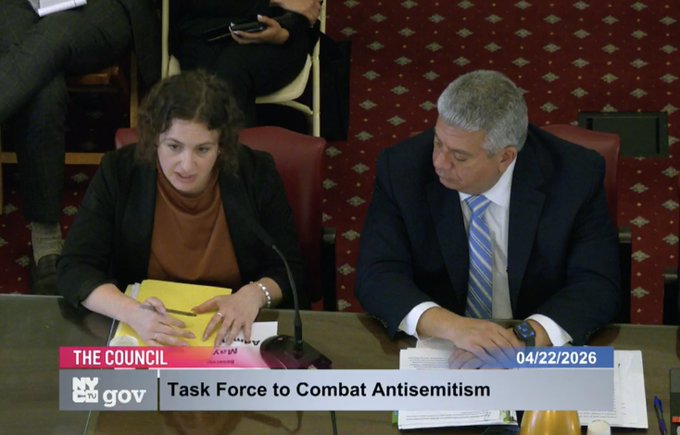 Jewish Breaking News
Related stories
Jewish Breaking News14 hours agoA hearing on antisemitism at the New York City Council Wednesday turned fiery as officials pushed back against the refusal of Mayor Zohran Mamdani’s Office to Combat Antisemitism to define antisemitism and the NYPD’s claim that “kill the Zionists” is not necessarily an antisemitic slogan.
Julie Menin, speaker of the City Council, established a separate task force to fight antisemitism, and Phylisa Wisdom, head of Mamdani’s task force, was called to testify before the City Council.
Democrat Eric Dinowitz of the Bronx and Republican Inna Vernikov of Brooklyn co-chaired the hearing.
When asked about the scrapping of the IHRA definition adopted by executive order in the previous administration, Wisdom said, “We don’t believe there needs to be a codified definition. The policy of this administration is we will continue to not have any codified definition of any form of hate.”
Julie Menin, speaker of the City Council. (From a post on X)
“Bias and hate, it’s really sticky and extremely serious stuff, and it’s case by case,” she added.
Wisdom explained that her task force will perceive antisemitism simply as “prejudice, violence and discrimination against Jews because they are Jewish.”
Simcha Felder, an Orthodox Jewish councilmember, stalked out of the meeting in a fury.
“That’s crazy, unconscionable,” he fumed. “In the history of New York City, there was never a problem figuring out what hate is. We will have to define each time whether an incident was hateful or not?”
What happened next was even more outrageous.
The discussion turned to the distinction between antisemitism and anti-Zionism, and Dinowitz raised a hypothetical question: If a targeted Jewish restaurant is sprayed with the words “Kill the Zionists,” is that a hate crime?
X profile picture of Phylisa Wisdom.
Michael Gerber, the NYPD’s deputy commissioner of legal matters, hedged.
“It’s going to depend,” he said, adding that an investigation would determine the exact motive. “If it wasn’t pure political motivation,” Gerber said, “we have to be able to prove that.”
On the other hand, Gerber said it would be absolutely clear if the graffiti said, “Kill the Jews.”
“That’s a hate crime right there,” he said. “That is clearly because of a perceived Jewish identity.”
Dinowitz pushed back, saying that people use the word “Zionist” when they mean “Jew.”
X profile picture of Simcha Felder.
“We’ve seen time and time again the word ‘Zionist’ is used as a proxy for ‘Jew,’” Dinowitz said. “There should be no question that those would be hate crimes, and I think what you’ve delivered is sort of the ‘out.’ If you just use the word ‘Zionist’ instead of ‘Jew,’ then you might be okay.”
Gerber rejected the argument, out of a belief that Zionism is tied to one’s political beliefs rather than identity.
“We have to follow the law, and the law does distinguish between crimes because of one’s religious identity and ones because of political viewpoints,” Gerber said.
But Dinowitz nailed a crucial point: Jew haters can get away with hate crimes if they’re careful to use the word “Zionist” instead of “Jew.”
 Matzav
Related stories
Matzav15 hours agoA moving image released on Memorial Day morning shows Israeli Prime Minister Binyomin Netanyahu donning the tefillin of Staff Sgt. Nissim Sean Carmeli, a lone soldier who was killed during Operation Protective Edge.
The photograph captures a powerful moment as Netanyahu puts on the tefillin of the Golani fighter, whose story deeply moved the nation. Carmeli, originally from Texas, immigrated to Israel and enlisted in the IDF as a lone soldier. He was killed in combat in Gaza at the age of 21.
Carmeli’s story became a symbol of dedication and love for Israel. After news of his death spread, his friends feared that few would attend his funeral, as most of his family remained in the United States. However, calls spread across social media urging the public to come honor the fallen soldier.
The response was overwhelming. According to police estimates, more than 20,000 people attended his funeral at the military cemetery in Haifa. “Listen, this is really not what we thought,” said Dori, a friend of the fallen soldier. “Despite the call on Facebook, I thought maybe a few dozen would come. When I suddenly saw more and more people arriving, it surprised me.”
During this year’s Memorial Day ceremonies, Netanyahu also addressed the ongoing war, saying: “In the past two and a half years, we have been engaged in a multi-front war unlike anything since the War of Independence.” He added that “25,648 fallen soldiers of Israel’s wars are now joined by Barak Kalfon and Lidor Porat — the most recent casualties from the fighting in Lebanon.”
{Matzav.com}
 Yeshiva World News
Related stories
Yeshiva World News15 hours agoBy M.C. Millman
Nearly two hundred entrepreneurs, business owners, and professionals gathered at the BPJCC Community Center on Sunday, April 19, for the highly anticipated BPJCC Business and Networking Breakfast, for a morning of networking and practical takeaways, presented by the Boro Park Jewish Community Council in partnership with Metropolitan Commercial Bank.
The sold-out event brought together members of Boro Park’s thriving business community for an impactful morning of networking, expert-led panels, practical strategies, and relationship building, all designed to help local businesses expand.
Guests enjoyed a gourmet five-star breakfast brunch and an opportunity to connect with fellow entrepreneurs, vendors, and decision-makers from across the community.
The program included a discussion of one of today’s most relevant topics, AI and its impact on small and mid-sized businesses, along with remarks from Thomas Goldrick, SBA Director of Metropolitan Commercial Bank, and a roundtable conversation featuring well-known local sales coaches.
Metropolitan Commercial Bank was well represented at the event, with Rus Ilishayev, Vice President and Market Sales Manager of the MCB Boro Park Banking Center, Daniel Delahanty, CRA and Fair Banking Director, and Thomas Goldrick, MCB SBA Lender, all of whom spent time connecting with attendees and sharing how the Bank supports local businesses.
“Metropolitan Commercial Bank is proud to partner with BPJCC to bring together such a dynamic group of local business leaders. Events like this highlight the strength and resilience of the Boro Park business community, and we remain committed to supporting their growth through the financial solutions, guidance, and relationships they need to succeed.” Mark R. Defazio, Founder, President & CEO, Metropolitan Commercial Bank
“This event was about creating real opportunities for local business owners to learn, connect, and grow together,” said Avi Greenstein, CEO of BPJCC. “Boro Park is home to an incredible entrepreneurial spirit, and today’s turnout showed how committed this community is to taking their businesses to the next level. I want to thank Metropolitan Commercial Bank for their incredible partnership and continued strong support of the Boro Park community in so many ways.”
Attendees praised the event, coordinated by Yaakov Shapiro from Cube production, for delivering immediate value and meaningful connections.
“This was one of the most practical business events I’ve attended,” said Shimon Gelbart, owner of Product and Food Photography. “I walked away with actionable ideas I can implement immediately and several valuable new contacts. I also appreciate the past BPJCC business workshops I attended, which gave me the push to continue with my business.”
“The energy in the room was incredible,” said Motty Markowitz, owner of Glitz Home of Gifts. “It was inspiring to see so many local business owners committed to growing together and supporting one another.”
The event was emceed by local business promoter Chaim Perlowitz, who kept the program engaging and energized throughout the morning.
With overwhelming attendance and enthusiastic feedback, Greenstein says this summit is just the beginning of expanded business programming for the Boro Park community.
For more information about future business initiatives and upcoming events, visit www.bpjcc.org.
Your browser does not support the video tag.
Your browser does not support the video tag.
(YWN World Headquarters – NYC)
 Vos Iz Neias
Related stories
 Vos Iz Neias4 days ago
 Vos Iz Neias6 days ago
 Vos Iz Neias13 days ago
 Vos Iz Neias1 month agoVos Iz Neias15 hours ago
LAS VEGAS (AP) — The German company that owns Lufthansa Airlines and other European carriers said Tuesday that it would cut 20,000 short-haul flights through October as the Iran war drives up oil prices and deepens worries that some countries may run low on jet fuel.
The Lufthansa Group said the cancellation of less profitable routes, focused largely on its hub airports in the German cities of Frankfurt and Munich, would save the equivalent of approximately 40,000 metric tons of jet fuel.
The company last week shut down one of its regional subsidiaries, CityLine, to cut costs. It said a “planned consolidation” within its European network also would involve Lufthansa Airlines, Austrian Airlines, Brussels Airlines, SWISS and ITA Airways, and hubs in Brussels, Rome, Vienna and Zurich.
The price of jet fuel has more than doubled in some markets since late February, when the war began with U.S. and Israeli strikes on Iran. Airlines are particularly vulnerable to fuel price shocks because jet fuel typically accounts for one of their largest operating expenses.
For travelers, that is already translating into fewer flight options on some routes and higher fees and fares heading into the peak summer season, with many airlines raising checked bag fees or adding fuel surcharges.
Fighting around the Strait of Hormuz, a waterway off Iran’s coast where a fifth of the world’s oil typically passes, has disrupted fuel prices and supplies around the world.
The head of the International Energy Agency estimated on April 16 that Europe had about 6 weeks’ worth of jet fuel remaining and said airlines would start to cut routes from their schedules without more. The European Union’s top energy official is also warning that the energy crisis sparked by the war could impact prices for months “or maybe even years” to come.
“This is not a short-term, small increase in prices,” EU Energy Commissioner Dan Jørgensen said Wednesday.
Jørgensen said the war is costing Europe around 500 million euros ($600 million) each day.
“Even in a best-case scenario,” he said, “it’s still bad.”
Jørgensen also told reporters that EU governments “are very worried” about possible jet fuel shortages. He says the European Commission is doing what it can to help but that Europe is mostly in defensive mode.
Lufthansa, meanwhile, said it has secured enough jet fuel “for the coming weeks” and was “pursuing a range of measures” to keep its fuel supply stable for the summer, “including the physical procurement of jet fuel.”
All but one of the world’s 20 largest airlines have canceled scheduled May flights spanning every major region, according to aviation analytics firm Cirium. Besides Lufthansa, the carriers include Delta Air Lines, United Airlines, American Airlines, Air Canada, Emirates, Qatar Airways, Air China, British Airways and Air France-KLM, Cirium said.
Last week, Switzerland-based carrier Edelweiss Air announced it is dropping service to Denver and Seattle this summer and reducing flights to Las Vegas through the early autumn.
Air New Zealand is consolidating about 4% of its schedule in May and June.
“Like airlines globally, we’re experiencing jet fuel prices that are more than double what they would usually be,” the carrier said.
The global price of jet fuel increased from about $99 per barrel at the end of February to as high as $209 a barrel at the beginning of April.
In addition to cutting flights, some airlines are also slowing their plans to add more seats and routes as a way to keep costs under control. Delta, which kicked off the earnings season for U.S. airlines in early April, said it was scrapping plans to add more flights and seats in June, leaving about 3.5% fewer seats than originally planned.
As U.S. carriers continue to report their first-quarter earnings, the uncertainty around fuel costs is also showing up in their financial outlooks. Several carriers are either slashing their full-year forecasts or holding back on updating them.
Southwest Airlines said Wednesday it expects second-quarter earnings to come in below Wall Street estimates, citing the higher fuel prices, and it left its 2026 outlook unchanged. A day earlier, United Airlines reported it now expects full-year adjusted earnings of $7 to $11 per share, down from a previous forecast of $12 to $14.
Related stories
Vos Iz Neias4 days agoVos Iz Neias6 days agoVos Iz Neias13 days agoVos Iz Neias1 month ago Vos Iz Neias15 hours ago
INSTITUTE, W.Va. (AP) — A chemical leak at a West Virginia silver recovery business on Wednesday killed two people and sent about 30 others to hospitals, including one in serious condition, authorities said.
The leak occurred at the Catalyst Refiners plant in Institute as workers were preparing to shut down at least part of the facility, Kanawha County Commission Emergency Management Director C.W. Sigman said.
A chemical gas reaction occurred at the plant involving nitric acid and another substance, Sigman said at a news briefing. He added that there was “a violent reaction of the chemicals and it instantaneously overreacted.”
“Starting or ending a chemical reaction are the most dangerous times,” Sigman said.
The chemical reaction that was believed to have occurred during a cleaning process produced toxic hydrogen sulfide, Kanawha County Commission President Ben Salango said.
Among the injured were seven ambulance workers responding to the leak, officials said.
“We know that the first responders, they always run to the fire. They put themselves in harm’s way,” Gov. Patrick Morrisey said at an evening news conference. “We’re very grateful to these brave men and women and what they do. And they’re in our prayers, and we’re monitoring the recovery of those transported to our local hospitals.”
Other people were taken to the hospitals in private cars or even in one case a garbage truck, Sigman said.
Morrisey said one person was in serious condition.
Vandalia Health Charleston Area Medical Center, one of several hospitals in the area, was treating multiple patients, some brought by ambulance, while members of the community were arriving Wednesday afternoon asking to be checked, hospital spokesman Dale Witte said.
Witte said patients were experiencing respiratory symptoms including cough, shortness of breath, sore throat and itchy eyes. They were being evaluated in the emergency room.
WVU Medicine Thomas Memorial Hospital in South Charleston said in a statement it has cared for a dozen patients, including eight who arrived by personal vehicle and were not at the scene but were in the area at the time. It said those injuries were not considered life-threatening.
A shelter-in-place order was issued for the surrounding area and lifted more than five hours later. Officials said all the deaths occurred on the plant site.
“You had to get really close to the facility to smell it,” Sigman said.
The leak required a large-scale decontamination operation in which people had to remove their clothes and be sprayed down, authorities said.
Morrisey said it’s believed the local air quality and water supply were unaffected.
Catalyst Refiners works to remove silver from what remains of chemical processes. Ames Goldsmith Corp., the owner of Catalyst Refiners, said it is saddened by the deaths and its thoughts were with all those impacted and their families.
“This is an unfathomably difficult time,” company President Frank Barber said in a statement released at the briefing. “Our thoughts and prayers are with our colleagues and their families.”
Ames Goldsmith promised to work with local, state and federal officials as they investigate the leak. The federal Occupational Safety and Health Administration has opened an investigation into what happened, a spokesperson said, adding that the agency has six months to complete its examination.
Silver is in a number of items ranging from circuit boards and other electronics, photographic and X-Ray films and jewelry. Nitric acid is used to dissolve materials, leaving behind silver nitrate that can be processed to recover pure silver. Recovery businesses can also crush or sandblast items with silver and use magnets or differences in density to sort out the precious metal.
Sigman said Ames Goldsmith recovers silver from the various plants at the Institute complex “and they’ll use it again. When they vacuum their carpets in their office, they recover so many thousands of dollars’ worth of silver out of it just vacuuming their carpets.”
The plant is located near Institute, a community about 10 miles (16 kilometers) west of Charleston, the state capital. The plant is in a region known as West Virginia’s “chemical valley,” although many plants that lined the area along the Kanawha River and produced hazardous materials have closed or changed ownership in the past several decades.
 Matzav15 hours ago
Hodaya Cohen, who was crowned this year’s International Tanach Quiz champion for youth, said she nearly gave the wrong answer to the final, decisive question before securing first place in the competition.
Speaking after her victory, Cohen described the tense moment that determined the outcome, revealing how close she came to an error. The question asked where Yaakov Avinu was born, and after several long seconds that felt like an eternity, she answered “Be’er Lachai Roi,” clinching the title.
In an interview on the program “Yatza Chag” with Liat Regev on Kan News Radio, she reflected on the moment, saying: “At that moment I didn’t process it, it took me time. I almost said a wrong answer, I almost answered Be’er Sheva.”
She went on to describe her thought process under pressure: “I simply ran through the places that were a few chapters earlier, and moved forward to that chapter, and suddenly the posuk about Be’er Lachai Roi popped into my mind, and right after that passage it speaks about the birth of Yaakov.”
Cohen is an 11th-grade student at Ulpanat Rabbi Beharan in Gedera and a resident of Moshav Nir Akiva in southern Israel. This year’s competition featured 16 participants from seven different countries and was held at the Yerushalayim Theater under the theme “To Build and to Plant.”
Akiva (Jack) Schreier, a 10th-grade student from the United States, finished as runner-up, while Yehoshua Applebaum of Israel, a student at the Berman Hebrew Academy, placed third.
{Matzav.com}
 Yeshiva World News
Related stories
 Matzav4 days ago
 Jewish Breaking News4 days ago
 Jewish Breaking News11 days agoYeshiva World News18 days agoYeshiva World News15 hours ago
New intelligence assessments are raising fresh questions about the extent of damage inflicted on Iran’s military, suggesting the Islamic Republic retains far more capability than the White House and Pentagon have publicly acknowledged.
Multiple U.S. officials familiar with classified briefings told CBS News that as much as half of Iran’s ballistic missile stockpile remained intact at the start of the April ceasefire, along with a significant portion of its launch infrastructure. Roughly 60 percent of the naval arm of Iran’s Islamic Revolutionary Guard Corps — including its fleet of fast-attack boats — also survived the U.S. and Israeli campaign, according to those officials.
The findings stand in contrast to the sweeping claims of success from President Donald Trump and Defense Secretary Pete Hegseth, who have repeatedly characterized the operation, dubbed “Operation Epic Fury,” as a decisive blow that effectively neutralized Iran’s military.
“We’ve taken out their navy, we’ve taken out their air force, we’ve taken out their leaders,” Trump said this week, while Hegseth described the campaign as “a historic and overwhelming victory on the battlefield,” adding that it had rendered Iran “combat ineffective for years to come.”
But officials speaking on condition of anonymity painted a more complicated picture. While Iran’s conventional navy appears to have suffered extensive losses, its asymmetric naval forces — particularly those tied to the IRGC — remain capable of disrupting shipping lanes, including in the strategically vital Strait of Hormuz.
That threat was underscored Wednesday, when Iranian gunboats attacked multiple commercial vessels in the waterway shortly after Trump announced he was extending a ceasefire to allow more time for diplomacy.
Iran’s air power has also been degraded but not eliminated, officials said, with roughly two-thirds of its air force still believed to be operational despite thousands of strikes targeting military infrastructure. And while the campaign significantly reduced Iran’s capabilities, intelligence assessments indicate the country retains a large inventory of missiles and unmanned aerial systems.
“Iran retains thousands of missiles and one-way attack UAVs that can threaten U.S. and partner forces throughout the region,” Marine Lt. Gen. James Adams, head of the Defense Intelligence Agency, wrote in prepared testimony to Congress.
Pentagon officials have defended the operation’s success, emphasizing the scale of destruction inflicted. Spokesman Sean Parnell said more than 13,000 Iranian targets were struck in under 40 days, describing the campaign as delivering a “crippling series of blows” to the regime.
Parnell added that 92 percent of Iran’s largest naval vessels had been destroyed, calling it “the largest elimination of a navy over a three week period since World War II.”
(YWN World Headquarters – NYC)
Related stories
Matzav4 days agoJewish Breaking News4 days agoJewish Breaking News11 days agoYeshiva World News18 days ago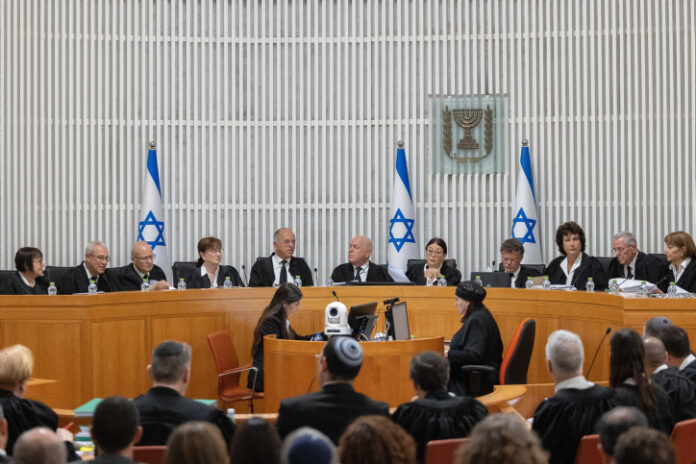 Matzav16 hours ago
Israel’s Supreme Court has ordered limits on public access to a key hearing set for Thursday on petitions demanding the establishment of a state commission of inquiry into the failures surrounding the October 7 attacks, citing concerns over possible disruptions.
The hearing follows a conditional order issued by the High Court of Justice in November, requiring the government to explain why it has not acted to establish a commission under the Commissions of Inquiry Law, which would examine “independently, professionally, and impartially the full scope of events related to the attack.”
In their decision, the justices said there is a substantial risk that the proceedings could be disrupted, justifying restrictions on entry to the courtroom. “There is a well-founded concern that the hearing scheduled in these proceedings may be accompanied by disturbances, unrest, or outbursts of a degree that is expected to significantly hinder its proper conduct,” the ruling stated.
Accordingly, attendance will be limited to attorneys, members of the press, and individuals granted special authorization. At the same time, the court stressed that in order to preserve the principle of open proceedings, the hearing will be broadcast live to the public.
The case will be heard before an expanded panel of seven justices, led by Deputy Supreme Court President Noam Sohlberg.
 Jewish Breaking News16 hours ago
A controversial video going viral shows major streamer Clavicular meeting with Rabbi Yoshiyahu Pinto, the same rabbi who previously met with and offered blessings to Kanye West.
Clavicular AKA Clav, whose real name is Braeden Peters, is an American online streamer and influencer with massive reach, reportedly generating over 2 billion views, rose to prominence in 2025 on TikTok and Kick for his “looksmaxxing” content, widely described by critics as extreme and controversial. His content has included advocacy of practices such as facial “bone smashing,” cosmetic surgery, anabolic steroid use, lipodissolve products, and even methamphetamine use for appetite suppression. He has also been labeled an incel and says many derogatory things about females.
Rabbi Pinto blesses Kanye West
In January, Clavicular was at the center of a major controversy after being filmed in a Miami Beach nightclub alongside such as fellow incel-related figures as Andrew Tate, Tristan Tate, Nick Fuentes, and Sneako, where the group was seen chanting along to a banned antisemitic song associated with Kanye West while giving the heil Hitler salute. The incident sparked widespread backlash online.
Despite that background, the new footage shows Rabbi Pinto offering Clavicular blessings for success. The meeting was reportedly arranged by Clavicular’s Israeli business associate described as a club owner who initiated the connection.
Peters’s mugshot after his arrest in Florida in 2026
Fort Lauderdale Sheriff’s Office or Broward County Sheriff’s Office
Rabbi Pinto is known for meeting with a wide range of public figures, including politicians, celebrities, and business leaders, often providing spiritual guidance regardless of their past controversies. His prior meeting with Kanye West also drew significant attention.
As for why this meeting took place, there is no official explanation. Some believe it may be an attempt at outreach or spiritual influence, while others see it as a calculated move by a rising influencer seeking legitimacy or redemption for his past anti-Semitic behavior.
 Yeshiva World News
Related stories
 Jewish Breaking News23 hours ago
 Belaaz1 day ago
 Yeshiva World News1 day ago
 Yeshiva World News2 days agoYeshiva World News16 hours ago
British police are investigating a suspected hate crime after the door of a Jewish-owned shop in Hertfordshire was set on fire and defaced with graffiti, the latest in a broader spike in attacks targeting Jewish sites across the United Kingdom.
Hertfordshire Constabulary said Tuesday that the fire was deliberately set at a business on the lower high street on Sunday, and confirmed the case is being treated as religiously aggravated. Authorities are now appealing for witnesses and reviewing potential security footage as part of the investigation.
“I would like to make it clear that we do not tolerate hate crime in our communities in Hertfordshire,” Detective Superintendent Mark Clawson said in a statement, adding that police are working to identify those responsible. He said investigators are particularly interested in speaking with a group of young males seen in the area around the time of the incident.
While officials stressed that there is no confirmed link between the Hertfordshire attack and a recent string of arson attempts in London, the episode comes against a backdrop of rising anxiety within the Jewish community.
Advocacy groups say the latest incident fits into a troubling pattern. The Campaign Against Antisemitism said Tuesday that multiple arson-related attacks have been reported in recent days, warning that the frequency of such incidents is becoming untenable.
The recent wave of cases has included attempted firebombings at shuls, vandalism of Jewish-linked buildings, and attacks on community infrastructure, including Hatzolah ambulances. Some of those incidents have been claimed by a group believed to be tied to Iran, though no such claim has been made in connection with the Hertfordshire case.
(YWN World Headquarters – NYC)
Related stories
Jewish Breaking News23 hours agoBelaaz1 day agoYeshiva World News1 day agoYeshiva World News2 days ago Vos Iz Neias16 hours ago
(AP) – Three congressional candidates wagered on the outcome of their own elections on Kalshi, according to the prediction market, which said Wednesday that it fined and suspended the men from their platform for five years.
It is the latest high-profile case of alleged insider trading on prediction markets including Kalshi and Polymarket, which have brought bipartisan scrutiny from Congress and calls for stricter regulations of the websites where people can put money on just about anything.
Kalshi’s disciplinary documents named Mark Moran, who is running as an independent in Virginia’s U.S. Senate race; Ezekiel Enriquez, who ran in a Texas Republican primary for a U.S. House seat; and Matt Klein, a Democratic state senator running for a U.S. House seat in Minnesota.
Klein and Enriquez both placed bets less than $100 related to their “own candidacy,” Kalshi said. Moran said on social media that he “traded $100 on myself.”
These relatively small bets follow mammoth wagers on prediction markets earlier this year that raised eyebrows. In one case, an anonymous Polymarket user made a $400,000 profit in January on a wager that former Venezuelan President Nicolás Maduro would soon be out of office.
In March, after two U.S. senators announced legislation that threatened prediction markets, Kalshi and Polymarket highlighted new rules, including against political candidates trading on their own campaigns.
Moran refused to reach an agreement with Kalshi and was fined the most at more than $6,200, while Klein and Enriquez did reach agreements and face penalties of over $530 and $780, respectively, the company said. All were suspended from Kalshi for five years.
Some politicians have said the punishments didn’t go far enough. U.S. Rep. Mike Levin slammed the repercussions as a “timeout.”
“That’s not a punishment. That’s a parking ticket,” Levin wrote.
The agreements are with the company, and not with the Commodity Futures Trading Commission, which regulates predication markets. The agency is chaired by Michael Selig, who is considered friendly to the burgeoning industry.
Far from denying the allegations, Moran took to social media on Wednesday to say he placed the bets because he wanted to draw attention to the issue.
“We live in a Country destroyed by vice, which Kalshi directly contribute to,” Moran wrote on X, saying the goal of the trade was to “highlight how this company is destroying young men.”
Klein also confirmed Kalshi’s findings in a post on social media on Wednesday. The $50 wager he placed in October was the first time he had used a predictions market, he said in a statement on X, and he was “curious about how it worked.”
“This was a mistake and I apologize,” he wrote, saying that the experience made it clear that the markets need more regulation.
Klein is a cosponsor of a bill working its way through the Minnesota Legislature to ban most wagering on predictive markets, including the outcome of elections. In an interview, he said he didn’t think there was an inconsistency between his betting $50 on himself to win his primary and his sponsorship of legislation.
Klein said he spent the winter learning about predictive markets and signed onto the bill well before he learned that his bet violated Kalshi’s rules.
Enriquez, known as Zeke, lost his House race in the beginning of March with less than two percent of the vote. Contact information for Enriquez was not immediately found to request comment. ___
 Yeshiva World News16 hours ago
A group suspected of ties to Iran is escalating its rhetoric against the United States, issuing direct threats against Ivanka Trump and calling for violence against President Donald Trump in a statement circulated Monday on channels affiliated with the Iranian regime.
Harakat Ashab al-Yamin al-Islamia, or HAYI, has previously claimed responsibility for a string of arson and attempted bombing attacks targeting Jewish, Israeli and Iranian dissident-linked sites across Europe. In its latest message, the group issued a series of incendiary and personal threats aimed at the Trump family.
The statement included explicit threats against Ivanka Trump and urged Americans — including individuals within the U.S. security establishment — to carry out violence against the president. It also invoked individuals tied to the late financier Jeffrey Epstein in an apparent attempt to amplify its call.
U.S. officials have not publicly responded to the statement, and it remains unclear what operational capability, if any, the group has beyond the attacks it has claimed in Europe.
HAYI has been linked in recent weeks to a growing number of incidents, particularly in the United Kingdom, including claiming responsibility for the March 23 arson of four Hatzolah ambulances in London.
Subsequent incidents have included an attempted firebombing at Finchley Reform Synagogue in north London, where accelerants were placed near the building, as well as an attempted arson at the offices of Iran International, a media outlet critical of Tehran. In both cases, the attacks caused limited damage but raised alarm about coordination and intent.
Additional incidents followed, including a failed arson attempt at a building previously used by a Jewish organization and the discovery of suspicious jars near the Israeli embassy, later determined to be non-hazardous. On Sunday, the Kenton United Synagogue, an Orthodox shul, was targeted in a firebombing that caused minor smoke damage but no injuries.
(YWN World Headquarters – NYC)
 Yeshiva World News16 hours ago
CNN anchor Jake Tapper delivered an on-air critique of President Donald Trump on Tuesday, accusing the administration of issuing “a series of false, unproven or confusing comments” as the Iran war continues with no clear end in sight.
Speaking on CNN’s The Lead, Tapper zeroed in on a growing pattern of contradictory statements surrounding U.S. strategy, particularly after Trump announced he would extend a ceasefire with Iran indefinitely just hours before a previous deadline was set to expire.
“In other words, the deadline has been replaced with what sounds a lot like the opposite of a deadline — an indefinite time period,” Tapper said, pointing to the president’s post on Truth Social indicating that U.S. military action would remain paused while awaiting a proposal from Iranian leaders.
White House clarified on Wednesday that Trump’s extension of the deadline was for 3-5 days, not indefinitely. Analysts note that the extension gives the US Navy enough time to get the USS George H.W. Bush aircraft carrier to the region, where it could join in striking Iran if fighting resumes.
Regardless, Tapper argued the shifting timeline is just the latest example of a broader breakdown in messaging that has defined the conflict. He noted that plans for a second round of peace talks appeared to change in real time, with Trump first telling ABC News that Vice President JD Vance would not travel to Pakistan, only to later claim that Vance was already en route.
“They’re heading over now,” Trump was quoted as saying, according to the New York Post. But Tapper noted that “Vance remains in Washington, D.C. He has never left for Pakistan, despite the president saying he was on his way.”
The confusion has extended to key developments in the conflict, including the status of the strategically critical Strait of Hormuz. Last week, Trump declared in a social media post that “the Strait of Hormuz is completely open and ready for business,” before later asserting that Iran had agreed never to close it again.
“But Iran did in fact close the Strait of Hormuz again the very next day,” Tapper said, adding that Tehran cited ongoing U.S. military actions as justification.
In a separate interview on CNBC, Trump appeared to contradict earlier statements, signaling reluctance to reopen the waterway while negotiations remain unresolved. “The blockade has been a tremendous success,” Trump said, adding, “we’re not going to open the strait until we have a final deal.”
Tapper also raised questions about the scope of U.S. military operations after the Pentagon confirmed the interception of another Iranian-linked vessel — this time in the Indian Ocean, far from the Strait of Hormuz. “That prompts the question,” Tapper said, “is the U.S. now extending the blockade… far beyond the strait?”
Further muddying the picture, Trump suggested the intercepted ship may have carried equipment linked to China. “A gift from China, perhaps,” he said, while acknowledging uncertainty about the details.
Tapper noted that the White House has not clarified which vessel the president was referring to, nor has it addressed whether any retaliatory measures — including previously threatened tariffs on China — are being considered.
“Although we don’t know any of the facts behind any of this,” Tapper said, “and this was just in the last week.”
Your browser does not support the video tag.
(YWN World Headquarters – NYC)
 The Lakewood Scoop16 hours ago
Hi – I am sharing my story with you and others with the hope that I can spare parents and children sooo much pain – that they would not see coming.
When I was a year and half my parents got divorced. I have an older brother who is two years older than me.
My mom remarried a few years later and when I found out that he was not my real father – my mom said that they got divorced because my father was not normal and possibly dangerous and she was protecting us.
Fast forward 40 years – I am now almost a grandmother – and have never really thought about my father because my mother did a great job painting him into someone I had no interest in. Succos time my daughter, 17 years old, wanted to know what her grandfather looked like and googled him. She found out that he was buried in a certain cemetery. She called the cemetery and found out that indeed that was my father and he had died three years ago.
I can’t tell you how it hurt me – I can’t explain the emotions. I wanted to call my mother but she had died two months before succos. I wondered if my mom knew. I wondered how my father died. Did he think of me and my brother? Did he die alone? What kind of person was he really? I will never know these answers. But, above all, I wonder if I am somewhat responsible for not having kibbud Av all these years. It was not my fault – my mom said he was sick in the head.
I will never find out any of these answers. But if somehow I can change the future of someone else – I would find comfort.
Please parents – stop alienating your children. You say its for our good but I know now it was for your own good.
My fellow brothers and sisters from divorced homes – you think it won’t bother you 38 years later because you just got used to the no contact. It will bother you and it certainly does bother Hashem.
TLS welcomes your letters by submitting them to us via Whatsapp or via email [email protected]
 Matzav
Related stories
Matzav16 hours agoLakewood has once again topped all municipalities in New Jersey for the number of births, marking the fifth year in a row that the township has held this position.
According to statewide figures, a total of 99,721 babies were born throughout New Jersey last year, with 5,355 of those births occurring in Lakewood. That total not only places the township at the top statewide, but also accounts for over half of all births in Ocean County, where 10,715 babies were born overall.
Despite its size, Lakewood has outpaced significantly larger cities such as Newark and Jersey City, highlighting a continuing demographic trend that shows no signs of slowing.
What stands out most is the disproportion between the township’s geographic footprint and its birth numbers. Lakewood is not typically listed among the state’s largest urban centers, yet its birth totals rival—and exceed—those of cities with far larger populations and more varied demographics.
The sustained growth is largely driven by the expansion of Lakewood’s Orthodox Jewish population, which today makes up the overwhelming majority of residents. With population estimates now surpassing 140,000 and more than 80 percent identified as Orthodox Jewish, Lakewood has become a central hub for one of the fastest-growing communities in New Jersey.
Related stories
 Matzav
Related stories
Matzav17 hours agoA new controversy has erupted in Poland after a series of provocative actions targeting Israeli leadership, intensifying tensions just days after a lawmaker displayed an Israeli flag marked with a swastika inside parliament.
Tomasz Grabarczyk, a member of the far-right “New Hope” party and a former candidate for the European Parliament, ignited outrage with a social media post timed to coincide with Israel’s 78th Independence Day. The post featured an altered image of Prime Minister Bibi Netanyahu, portraying him with Adolf Hitler’s distinctive moustache, along with a caption drawing a direct comparison between the two.
“Today, a state begins to celebrate its independence, which was built on the tragedy of millions of innocent people,” the post read. It went on to accuse Israel of decades of “murder, oppression, persecution and expulsion,” adding: “Israel is a criminal state. Netanyahu is to be considered a modern Hitler until they answer for their crimes.”
The incident is part of a wider uptick in inflammatory rhetoric circulating online in Poland in recent days, much of it aimed at Israel and its government. At the same time, Polish MP Konrad Berkowicz—who previously drew condemnation after waving a defaced Israeli flag bearing a swastika—has continued to accuse Israel of “genocide.” He has also directed criticism toward the U.S. ambassador to Poland and the Israeli embassy in Warsaw, both of which strongly denounced his actions.
The controversy has extended into diplomatic exchanges as well. Polish Foreign Minister Radosław Sikorski recently criticized Israeli military conduct following the circulation of footage showing an IDF soldier damaging a statue of Yoshkah in southern Lebanon, asserting that Israeli troops had “admitted to committing war crimes” and even killing captives.
Israeli Foreign Minister Gideon Sa’ar responded forcefully, rejecting Sikorski’s remarks and pointing instead to the earlier incident in Poland’s parliament. “Your words show ignorance. Instead of preaching morality to others, it would have been better if you had condemned the antisemitic act we saw in the parliament.”
{Matzav.com}
 Jewish Breaking News17 hours ago
In a historic moment, President Donald Trump was the first foreign leader to be awarded the Israel Prize for “special contribution to the Jewish people” Wednesday.
Trump’s approval ratings at home may be underwater with an approval rate of 38 to 40 percent, but he enjoys strong popularity in Israel, with 83 percent of Jewish Israelis expressing confidence in him.
Education Minister Yoav Kisch had informed Trump back in December that he would be awarded the prize in the special contribution category. In a video address Tuesday ahead of the ceremony, Kisch said there wasn’t any “other person who can mark such amazing achievements and a wonderful connection to the Jewish people except for Trump at this time.”
At the ceremony, Kisch lauded Trump as a true friend of Israel who showed unswerving loyalty, “standing uncompromisingly against manifestations of antisemitism.”
Highlight reel from the Israel Prize ceremony. (From Yoav Kisch’s X account)
“His name will be remembered in the annals of our people,” he added.
Kisch referred to Trump’s decision to join Israel in its campaign against Iran.
“In the last two months, we have all received further tangible proof of the president’s courageous and continuous stand by Israel,” he said.
Trump has undoubtedly accomplished an enormous amount of good for the Jewish people and for Israel. In his first term in office, he moved the U.S. Embassy to Jerusalem, something every president was bound to do once the passage of the bipartisan Jerusalem Embassy Act required the U.S. Embassy to move from Tel Aviv to Jerusalem by 1999, but which they all failed to accomplish until the advent of Trump.
Yoav Kisch signs the award. (From his X account)
Another monumental achievement took the form of the Abraham Accords. The United Arab Emirates, Bahrain, Sudan and Morocco normalized ties with Israel, and their prosperity has exploded since, except for Sudan, which can’t figure out how to stop fighting among themselves.
Trump recognized Israeli sovereignty over the Golan Heights, without which Israel is indefensible.
When Trump saw that peace with the intransigent Palestinian Liberation Organization was all but impossible, he closed the PLO mission in Washington, D.C., and cut funding to the United Nations Relief and Works Agency for Palestine Refugees, infamously known as UNRWA. We now know how prescient that was, with recent evidence of UNRWA’s complicity with Hamas. He also signed into law the Counterterrorism Act and the Taylor Force Act, which cut financial aid to the Arab people in the territories.
In his second term, Trump gave Israel strong support from the United States to make significant gains in Gaza. Thanks to these military wins, Hamas became weakened to the point that it was forced into returning all the hostages, a deal that Trump administration officials negotiated, as well as a tenuous ceasefire, that, while fragile, is still holding.
The national anthem is sung at the opening of the Israel Prize ceremony.
Perhaps his greatest contributions by far to the security of the State of Israel were his assistance in the 12-day war with Iran and the most recent joint military campaign against the authoritarian regime.
At the awards ceremony, a video was played highlighting some of Trump’s contributions to Israel. Some of the highlights included the announcement of the Abraham Accords, the president’s Knesset speech last year, and meetings with Prime Minister Benjamin Netanyahu.
Trump is expected to arrive in Israel in the coming months to receive the prize in person.
 Matzav
Related stories
Matzav17 hours agoA Virginia court has barred state officials from finalizing the results of a closely contested congressional redistricting referendum, ruling that both the measure and the legislation that set it in motion violate the constitution, according to an order issued Wednesday.
Attorney General Jay Jones said his office will challenge the ruling, confirming to 7News that an appeal is already underway.
The decision was handed down by the Tazewell Circuit Court, which has previously intervened in the matter, repeatedly finding both the referendum itself and the resolution behind it unconstitutional. The court’s position aligned with arguments made in lawsuits filed by Republican plaintiffs.
Earlier efforts to stop the referendum had been overturned by the Virginia Supreme Court, allowing the vote to proceed.
Voters narrowly approved the measure on Tuesday, advancing a plan to redraw Virginia’s congressional districts. The proposed changes could shift the state’s representation to 10 Democrats and one Republican in the U.S. House, compared to the current split of six Democrats and five Republicans.
State Democrats had backed the mid-cycle redistricting effort in response to President Donald Trump, who had previously encouraged Republican-led states to pursue similar moves ahead of the midterm elections.
Legal challenges to the referendum remain ongoing.
The Republican National Committee, which was among the plaintiffs in the case and prevailed in this ruling, praised the court’s decision and sharply criticized the redistricting push.
“Last night, Democrats only managed to squeak out a narrow 3-point victory despite burning tens of millions in cash and manipulating voters with misleading ballot language,” a spokesperson for the RNC wrote. “Every step of the way, Democrats lied and deceived Virginians to push forward what has always been illegal under state law, and today’s decision once again reaffirms that.”
Jones, however, pushed back against the ruling, emphasizing the legitimacy of the vote.
“As I said last night, Virginia voters have spoken, and an activist judge should not have veto power over the People’s vote. We look forward to defending the outcome of last night’s election in court,” Attorney General Jones said in his statement to 7News.
 Yeshiva World News17 hours ago
A Chanukas Habayis was held at the historic Gerer Beis Medrash in Gur, Poland, marking the return of the site to the ownership of the Gerer Chassidus for the first time since World War II.
The Beis Medrash once served as the spiritual center for thousands of Gerer Chassidim and their Rebbes before the war. Attached to it was the home of the previous Rebbes — a place steeped in generations of kedusha and leadership. After the Holocaust, the property fell under Polish government control and sat neglected for decades.
The Gerer Rebbe shlit”a made reclaiming the site a personal mission, and after years of legal battles, the property has been repurchased and carefully restored to its former dignity.
The effort was made possible by the Fishoff Family, who sponsored the Beis Medrash, and Mr. Shlomo Werdiger, who sponsored the restoration of the Rebbes’ residence.
For the Fishoff family, the moment carried deep personal significance. The Beis Medrash was dedicated l’zecher nishmas their father, Yechiel Benzion (Benny) Fishoff z”l — a Holocaust survivor who davened in the very same Beis Medrash as a child in Poland. Mr. Fishoff z”l went on to become a distinguished baal tzedakah who played a central role in supporting and rebuilding the Gerer Chassidus in the postwar years, a legacy his family continues.
Among those in attendance at the Chanukas Habayis was the Rebbe’s son, Reb Nechemia Alter.
The restoration reconnects the Gur of prewar Europe with the Gur of today — returning a place from which, as those present described it, “great light once came forth,” back into the hands of the Chassidus.
Your browser does not support the video tag.
Your browser does not support the video tag.
(YWN World Headquarters – NYC)
 Vos Iz Neias17 hours ago
WASHINGTON (AP) — More than 17 million people along the U.S. Atlantic and Gulf coasts are at the highest risk of being affected by flooding, with New York and New Orleans standing out, according to one of the most comprehensive studies ever of flood risk.
Researchers at the University of Alabama used 16 different factors including the geographic hazards, the population and infrastructure exposed and the vulnerability of people living there. They then brought in past damages from the Federal Emergency Management Agency’s database and applied three different artificial intelligence tools to figure out flood risks from Texas to Maine, calculating that 17.5 million people were at “very high” risk and an additional 17 million were at “high” risk, the next level.
The authors looked at all sizes of flooding and examined separately what FEMA considers the most extreme, which are the top 1% of events. The study found 4.3 million people along the coasts to be at the highest level of risk of extreme flooding, but 20.5 million to be at high risk, the second highest level.
They found a lot of vulnerability, highlighting eight different cities from Houston, which flooded in 2017’s Hurricane Harvey, to New York, which was inundated in 2012’s Superstorm Sandy.
Wednesday’s study in the journal Science Advances found that New York City has 4.75 million people at the two highest risk levels for all flooding, with more than 200,000 buildings likely to be damaged.
And while the number of people at risk in New Orleans is far lower, about 380,000, it involves 99% of the city’s population. That doesn’t mean 99% of the people will be affected in the next hurricane or nontropical flood, but that they might be depending on the storm’s individual path and rain pattern, said study co-author Wanyun Shao, a climate scientist at the University of Alabama.
“Just look at the magnitude,” Shao said. “Those numbers are shocking, are alarming.”
The elderly and poor are most at risk
“When the next big storm hits New York City, when the next Hurricane Katrina -like hurricane makes landfall in New Orleans, people will get hurt, especially those socially vulnerable populations,” Shao said referring to the poor, the elderly, children and the uneducated.
Shao and outside experts said the numbers stunned them even though they were familiar with the worsening effects of climate change.
“New York is known to be susceptible to floods and it has the largest population. But the fact that New York has nearly an order of magnitude more flood-exposed population than any other city is surprising,” said Alex de Sherbinin, a geographer who directs Columbia University’s Center for Integrated Earth System Information. He wasn’t part of the study.
Flood problems are becoming more frequent in New York and New Orleans because of human-caused climate change, the study said.
Other cities are also threatened
Jacksonville has 679,000 people at high or very high risk of flooding, while Houston is just behind at just under 600,000. Other cities highlighted include Miami, Norfolk, Virginia, Charleston, South Carolina, Mobile, Alabama.
Shao and outside experts said what separates her study from others is the sheer comprehensiveness of all the factors it considers, including sinking land and pavement that doesn’t allow water to seep into the ground, as well as incorporating human social vulnerability such as poverty and age.
“This could be applied to other places in the world, such as Manila,” said University of Virginia engineering professor Venkataraman Lakshmi, who heads the hydrology section of the American Geophysical Union, referring to the capital of the Philippines. He wasn’t part of the study, but said the flooding problems it highlights will get more frequent and intense due to human-caused climate change.
Columbia University’s Marco Tedesco, who wasn’t part of the study, said “it reinforces the crucial concept that future flood disasters are not just about water—they are about where people live, how cities are built, and who is least protected.”
Actions can lessen the risk
De Sherbinin said, “the analysis of the flood risk factors is important for local planners, emergency managers, and even highway crews and utility providers. We all know that low lying areas are more flood prone, but the data they have assembled provide more insights into flood risk, particularly for flash floods.”
Study lead author Hemal Dey, a geospatial scientist, said he hopes local officials look at not just building more dams and levees, but more natural infrastructure such as wetlands, grasslands, rain gardens and estuaries.
“The research is solid confirmation of what emergency managers have been saying for years. Realtors will hate it,” said Craig Fugate, a former FEMA director who wasn’t part of the study. “The harder question is what we’re actually going to do about it.”
 Yeshiva World News
Related stories
 Belaaz17 hours ago
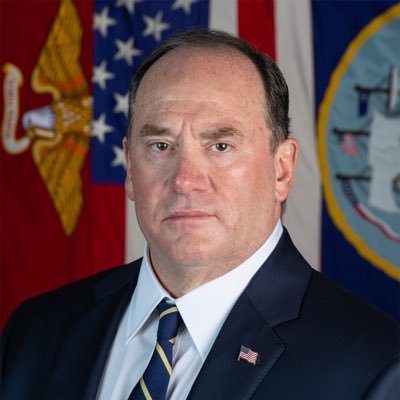 Jewish Breaking News18 hours ago
 Belaaz18 hours ago
 Matzav18 hours agoYeshiva World News17 hours ago
Navy Secretary John Phelan is leaving his job, the Pentagon abruptly announced Wednesday, the first head of a military service to depart during President Donald Trump’s second term but just the latest top defense leader to step down or be ousted.
No reason was given for the unexpected departure of the Navy’s top civilian official, coming as the sea service has imposed a blockade of Iranian ports and is targeting ships linked to Tehran around the world during a tenuous ceasefire in the war.
Phelan’s departure is the latest in a series of shakeups of top leadership at the Pentagon, just weeks after Defense Secretary Pete Hegseth fired the Army’s top uniformed officer, Gen. Randy George. Hegseth also has fired several other top generals, admirals and other defense leaders since taking office last year.
Showing how sudden the latest move was, Phelan the day before had addressed a large crowd of sailors and industry professionals at the Navy’s annual conference in Washington and spoke with reporters about his agenda.
Pentagon spokesman Sean Parnell said in a social media post that Phelan was “departing the administration, effective immediately” and Undersecretary Hung Cao will become acting secretary.
Cao ran a failed U.S. Senate bid in Virginia to try to unseat Democratic Sen. Tim Kaine in 2024. He had Trump’s endorsement in the crowded Republican primary.
Cao is a 25-year Navy veteran who served in combat zones. His biography includes fleeing Vietnam with his family as a child in the 1970s. In a campaign video for his Senate bid, he compared Vietnam’s communist regime during the Cold War to the administration of President Joe Biden.
“We are losing our country,” Cao said in video during the campaign, which blamed Biden for the criminal cases against Trump and showed footage of border crossings and store lootings. “You know it. But you also know that you can’t say it. We’re forced to say that wrong is right. We’re forced to lie.”
Phelan had not served in the military or had a civilian leadership role in the service before President Donald Trump nominated him for secretary in late 2024.
Phelan was a major donor to Trump’s campaign and founded the private investment firm Rugger Management LLC. According to his biography, Phelan’s primary exposure to the military came from an advisory position he held on the Spirit of America, a non-profit that supported the defense of Ukraine and the defense of Taiwan.
(AP)
Related stories
Belaaz17 hours agoJewish Breaking News18 hours agoBelaaz18 hours agoMatzav18 hours ago Matzav18 hours ago
Rep. Ilhan Omar reacted sharply to questions this week about major inconsistencies in her financial disclosure filings, which dramatically revised her reported net worth downward.
According to filings from last year, Omar (D-Minn.) had initially stated that she and her husband, Tim Mynett, possessed assets ranging from $6 million to $30 million. However, a revised disclosure submitted more recently placed their combined wealth at between just $18,004 and $95,000.
Omar attributed the earlier figures to accounting mistakes, saying the original filing contained significant errors.
During an exchange on Tuesday, a reporter from Lindell TV pressed Omar on the discrepancies. “Congresswoman Omar, the last time I spoke to you, you said I was stupid for asking about your financial disclosure, but there’s some discrepancies on there. Would you like to explain that? How did you make such a big mistake?” the reporter asked.
“I think you’re stupid for asking me anything,” Omar responded, appearing irritated while offering a sarcastic smile.
“I don’t want to tell you. How about that? Have a good day.”
Earlier reporting had highlighted the apparent jump in Omar’s wealth, with figures suggesting a dramatic increase in her net worth based on the now-revised disclosure.
Mynett, who previously worked as a political consultant, is connected to multiple business ventures, including the Washington-based investment firm Rose Lake Capital and a winery located in Santa Rosa, California.
In the original 2024 filing, the winery was listed with assets estimated between $1 million and $5 million, while Rose Lake Capital was reported to hold between $5 million and $25 million in assets.
At one point, Rose Lake Capital had also claimed on its website that it managed approximately $60 billion in assets.
Following questions from the Office of Congressional Conduct, Omar submitted an amended disclosure that reflected the businesses as having no net value once liabilities were taken into account.
“The amended disclosure confirms what we’ve said all along: The congresswoman is not a millionaire,” Omar spokeswoman Jacklyn Rogers told the Journal. “The congresswoman amended her disclosures voluntarily as soon as the discrepancy was identified.”
Republican leaders have seized on the issue, calling for further scrutiny. House GOP Whip Tom Emmer told reporters Tuesday, “Ilhan cannot escape accountability much longer. Investigations are ongoing in House committees. The Trump administration has waged war on fraud.”
“If Ilhan Omar is discovered to have been involved in any or to have benefited in any way from any fraud, she must be held accountable,” he added. “By the way, that includes marriage fraud.”
 The Lakewood Scoop18 hours ago
Morris is my neighbor and a good friend. He’s ninety years old—sharp, active, and proud of his independence.
When Morris found out that I was an alternative medicine practitioner, he was excited to tell me a story. About ten years ago, he switched doctors. At his first visit, he brought in a large bag filled with his medications—nearly twenty-five pills he had been taking every day.
The new doctor sat with him, went through the list carefully, and then said something Morris never forgot.
“Throw most of these away,” the doctor told him. “You only need two.”
Morris told me this story with a big smile. He was proud to say that ten years later, he’s still only taking those same two medications.
Over the years, I’ve heard many stories like this.
When Pills Pile Up
To be clear from the start: some medications are absolutely necessary and lifesaving. Insulin, seizure medications, thyroid hormone replacement, transplant medications—these are not optional.
In fact, I once had a patient ask me if I could help her get off her thyroid medication. I told her plainly: “Your body isn’t making thyroid hormone, and that medication is replacing something essential. So please do not stop taking it.”
But many other medications fall into a different category.
What often happens is this: a patient comes to a well-meaning doctor with a complaint—constipation, anxiety, pain, poor sleep, acid reflux, depression. Wanting to help, the doctor prescribes a medication.
Then another symptom appears. Another pill is added.
Before long, the patient may be taking one medication for constipation, one for anxiety, two for pain, one for sleep, one for depression, one for acid reflux—and the list keeps growing.
For many people, the idea of reducing medications can feel scary—even when they suspect they may not need all of them.
This pattern has a name—and it’s more serious than most people realize.
Polypharmacy: When Medications Interact
Polypharmacy means taking multiple medications at the same time, often prescribed by different doctors, without anyone fully tracking how they interact.
This matters because medications are not harmless candies.
Research shows:
Even when each medication is prescribed with good intentions, their combined effects can create new problems—sometimes worse than the original complaint.
Pills Don’t Treat the Root Cause
Another issue is that many medications manage symptoms, but don’t address why the problem developed in the first place.
As many of you know from reading other articles in this series, issues like pain, anxiety, reflux, blood sugar problems, and high blood pressure are often deeply connected to diet, lack of sleep, insufficient movement, and chronic stress.
When these root causes are addressed, symptoms often improve—and the need for medication can sometimes be reduced.
This is especially true for conditions related to metabolic syndrome, which includes high blood pressure, high blood sugar, high cholesterol, and weight gain. I discuss this connection more deeply in other articles in this series.
Why Coordination Matters
Another key point Morris’s story highlights is this: doctors are often not coordinating all your medications.
Primary care doctors, specialists, and urgent care physicians may each prescribe something—without seeing the full picture. That’s why Morris’s new doctor was able to simplify his medication list so dramatically just by reviewing it carefully.
This isn’t negligence. It’s a problem with the system.
A Smarter Approach
If you’re taking multiple medications, here are some practical steps to consider:
For many people, improving diet—especially moving toward a whole-food, plant-based pattern—can support weight loss, improve blood sugar, lower blood pressure, and reduce cardiovascular risk. This alone can sometimes lead to fewer medications over time.
A Very Important Reminder
Never stop a medication on your own.
Always speak with your prescribing physician before making changes. Stopping certain medications abruptly can be dangerous.
Equally important: if you do make positive lifestyle changes—such as changing your diet or starting an exercise program—tell your doctor. Improvements in blood sugar or blood pressure may require medication adjustments to avoid side effects.
The Takeaway
Pills have their place. Many save lives.
But more is not always better.
Being thoughtful about medications—what you take, why you take them, and whether they’re still needed—is an important part of protecting your long-term health.
As Morris’s story shows, sometimes the healthiest move isn’t adding another pill—but carefully taking a few away.
Until next time, stay well—and keep advocating for your own good health. And like Morris, keep smiling.
 Matzav
Related stories
Matzav18 hours agoA major dispute has erupted over preparations for the annual Lag BaOmer gathering in Meron, with police issuing a stark warning that, at this stage, the mass event cannot be approved due to serious safety concerns.
In a formal letter sent by the Northern District Police to the “Committee of Five,” officials expressed deep alarm over ongoing delays in preparing the site. According to the police, the current situation poses a significant risk to public safety and prevents proper authorization of the event.
Police say that professional teams, production companies, and contractors have been unable to access the area to carry out critical infrastructure and safety work. These restrictions, they stress, are preventing the completion of essential preparations ahead of the expected large crowds.
Authorities emphasized that there can be no compromise on key safety measures, including the installation of fencing, the paving of emergency access routes, the arrangement of lighting, the establishment of fire safety infrastructure, and the deployment of technological systems designed to protect attendees. Without these steps, police say, it is impossible to safely conduct a mass gathering.
In a sharply worded message to the committee, police warned that full responsibility for any loss of life resulting from insufficient preparation would fall solely on those overseeing the event. They added that even if individuals attempt to reach the site through alternative routes, the area will not be deemed fit to receive visitors until all required work is completed.
Police are calling on the committee to act immediately to remove all obstacles preventing professionals from entering the site, cautioning that any further delays could jeopardize the event entirely.
In response, the Committee of Five pushed back, sending a letter in which its director, Uri Vizubovsky, rejected the claims and accused the police of providing inaccurate and misleading information.
According to Vizubovsky, the Ministry of Jerusalem and Heritage holds sole responsibility for organizing the Lag BaOmer celebration, and the committee has never been, and is not currently, in charge of the event. He added that the matter has been in the ministry’s hands for some time, despite the committee having submitted all required documentation, yet no response has been received.
Vizubovsky stated that, from the committee’s perspective, there is no barrier to allowing professional teams to enter the site, placing responsibility for the delays squarely on the Ministry of Yerushalayim and Heritage. He concluded by urging the ministry to provide an immediate response.
 Yeshiva World News
Related stories
Yeshiva World News18 hours agoGerman federal prosecutors have charged a teenage suspect in connection with a series of violent attacks in the city of Essen, alleging the incidents were driven by extremist ideology and included plans to target Jewish individuals.
The suspect, identified as Erjon S, faces three counts of attempted murder along with charges including assault, aggravated assault and resisting arrest, according to the German Federal Prosecutor’s Office.
Prosecutors allege the teenager embraced a jihadist ideology and sought to carry out attacks against what he described as “infidels,” with a stated intent to ultimately kill Jewish people.
According to authorities, the suspect first targeted a janitor at a school in September, allegedly punching him and using pepper spray. The victim reportedly resisted, preventing further escalation involving a knife.
The suspect then allegedly attacked a teacher at a vocational school, stabbing her multiple times in the upper body. Both victims survived but suffered serious injuries.
Prosecutors say the teenager later went twice to the Old Synagogue Essen, but did not encounter any Jewish individuals. He then allegedly stabbed a stranger nearby.
Authorities further allege the suspect attempted to provoke a fatal police response by approaching officers while armed with a knife. Police opened fire, wounding him. He survived and was taken into custody.
The case was transferred from local prosecutors in Essen to federal authorities due to its national security implications, a step typically taken in cases involving terrorism-related motives.
All victims are reported to have survived the attacks. The investigation remains ongoing.
(YWN World Headquarters – NYC)
 Yeshiva World News
Related stories
 Belaaz1 day ago
 Matzav25 days ago
 Yeshiva World News27 days ago
 Vos Iz Neias1 month agoYeshiva World News18 hours ago
The U.S. military may face a near-term risk of running low on key missile systems following heavy use during Operation Epic Fury, according to a CNN report citing defense experts and individuals familiar with internal Pentagon assessments.
An analysis by the Center for Strategic and International Studies found that replenishing stockpiles to pre-conflict levels could take between three and five years, even as the Pentagon moves to ramp up missile production through newly signed contracts.
Since the conflict began on Feb. 28, the U.S. has expended roughly half of its inventory of Terminal High Altitude Area Defense (THAAD) interceptors and nearly half of its Patriot air defense missiles, according to the analysis. The report also estimated that at least 45 percent of the military’s Precision Strike Missiles have been used.
Additional systems have also seen significant drawdowns. About 30 percent of Tomahawk cruise missiles have been depleted, along with more than half of certain air-launched standoff missiles and roughly 20 percent of SM-3 and SM-6 interceptors, according to the findings and sources cited by CNN. Individuals familiar with classified Defense Department data told the outlet the figures closely align with internal Pentagon assessments.
While remaining inventories are likely sufficient to sustain operations against Iran, the analysis warned they may be inadequate for a broader conflict involving another major adversary such as China. Mark Cancian, a retired Marine Corps colonel and co-author of the report, said the depletion has “created a window of increased vulnerability in the western Pacific.”
Pentagon officials pushed back on concerns about readiness. Chief spokesman Sean Parnell said in a statement that the U.S. military retains the capabilities needed to carry out operations as directed.
“The U.S. military has everything it needs to execute at the time and place of the president’s choosing,” Parnell said, adding that forces continue to maintain a “deep arsenal of capabilities” to protect U.S. interests.
(YWN World Headquarters – NYC)
Related stories
Belaaz1 day agoMatzav25 days agoYeshiva World News27 days agoVos Iz Neias1 month ago