 MishpachaMishpacha
In Episode six, Rabbi Garfiel and Rabbi Schonfeld unpack their own eighth grade student experiences, discuss if you should parent someone else's kids, and answer the big question: What should parents do if their child's school is not equipped to handle the services they need?
Our guest, Mrs. Devorah Pinkus, can be reached at dpinkusconsulting@gmail.com
The post Eps 6. Let’s Talk Gifted Children first appeared on Mishpacha Magazine.
 MishpachaMishpacha
P
resident Kamala Harris?
No, that’s not a typo; it’s what I’ve heard whispered among Democratic insiders. They’re split between worry and excitement over the prospect of the failed 2024 Democratic nominee reemerging as a viable front-runner in 2028. Harris recently embarked on a book tour, media appearances, and collecting strategic endorsements.
This year will be make-or-break for Harris: It will determine whether she will again be the Democratic nominee in 2028 or be forced into permanent political retirement.
Harris has 74 million reasons to believe she can win the nomination — about the number of votes she received in 2024. She was also elected vice president in 2020 with 81.3 million votes. That gives her instant name recognition, a potent weapon in politics.
 MishpachaMishpacha
I was deeply moved by the story showcasing a woman’s extraordinary maturity and compassion toward her mother, who struggled with mental illness. Despite constant hurt, she chose to maintain a relationship, demonstrating remarkable courage and selflessness.
Her poignant words, “I do not have to regret any of it… The nachas she deserved simply because she was the one who brought me into this world. Ima gave me life,” underscore the profound bond between a parent and child.
This story serves as a powerful reminder to those who’ve distanced themselves from their parents: It’s time for introspection and reconciliation. Causing pain to a parent has far-reaching consequences, and without , there’s no brachah.
 MishpachaMishpacha
Photos: Defense Visual Information Distribution Service
You’ve probably seen one. He was completely unremarkable; you didn’t look at him twice. He could have been the guy browsing electrical supply behind you at Home Depot, wearing a faded baseball cap and a pair of sturdy work boots. But he may have spent last Tuesday night fast-roping onto a moving train or breaching a compound in a place not shown on any maps.
 MishpachaMishpacha
AS
a party planner with decades of experience, I interact with many kinds of baalei simchah, spanning a range of financial brackets and spending habits. Some of my clients are very confident and self-assured. They know what they can and can’t afford, what kind of simchah they are comfortable making and what simchah is just not their style.
 MishpachaMishpacha
**
Sibling rivalry is as old as your second child’s age, and the reactions to it are as wide as the sea. Some mothers manage to run a fighting-free home, which seriously impresses me, as that demands complete consistency and a constant hands-on approach. Then you have the oblivious mother who’s still chatting away on the park bench while her sons pound on each other.
 MishpachaMishpacha
As told to Shoshana Gross
I grew up in the Five Towns, the daughter of a shul rabbi. When faced with a big decision, I’ve always spoken to my father to ask for his advice. His typical response, the catalyst to much of the direction my life’s taken? “That sounds like an interesting experience. You should try it.”
My father’s let-you-take-your-chances approach (and my mother’s willingness to go along with it!), was the rock-solid support that led me, as an aspiring teenager who was “into” politics, to apply for a summer internship in a local politician’s office — not the typical summer plan for most of my friends.
 MishpachaMishpacha
I
once received a phone call from a woman who began by sharing her struggles as someone with ADHD. She described, in detail, her constant sense of overwhelm. She told me about her challenges with daily care tasks such as laundry, dishes, meal planning, and preparing for Shabbos. She shared how she feels like she’s drowning in piles of laundry and overflowing sinks, always running late and struggling to keep up.
As the conversation went on, she told me about her 14-year-old daughter who also has ADHD and is facing similar struggles. She expressed her desire to support her daughter by scheduling therapy appointments and helping her get organized. Finally, she shared her personal goal of starting a cookie-decorating business.
 MishpachaMishpacha
WE
find frequent mention in Chazal and the seforim hakedoshim of the very serious prohibition of speaking ill about Eretz Yisrael. Whether it’s about things that take place in Eretz Yisrael, or even the weather, the climate, the topography, the hills, or the steps… one has to be very careful about speaking lashon hara about Eretz Yisrael_._
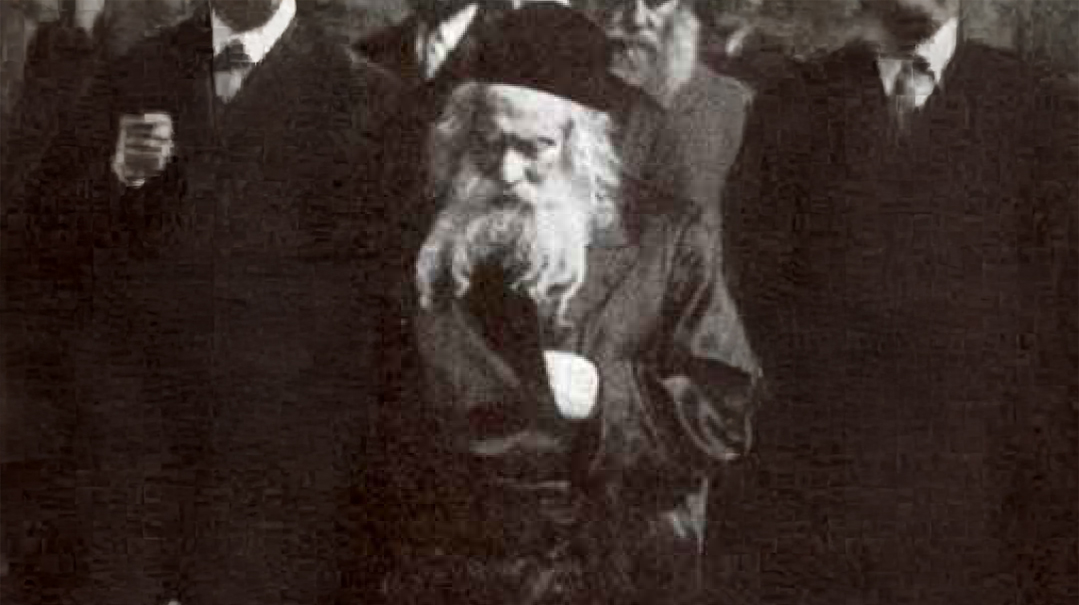
Recently, I heard an incredible story from the great-grandson of one of the main gabbaim of the Gerrer Rebbe, the Imrei Emes, who traveled with him on several of his trips to Eretz Yisrael at the turn of the last century. He shared the following story, which he heard from his father and his grandfather, who heard it from his great-grandfather directly.
The Imrei Emes was planning his third trip to Eretz Yisrael. The political climate in Europe was growing increasingly hostile, and he was hoping to set up an infrastructure in Eretz Yisrael where the chassidim could settle_._ His rebbetzin approached him and said that she’d like to go along to see Eretz Yisrael. The Rebbe tried to dissuade her and told her it wasn’t for her. But she asked several more times, expressing a strong desire to visit Eretz Yisrael, and eventually, the Rebbe acquiesced. A little while later, after they returned back home to Gur, the Rebbetzin passed away.
 MishpachaMishpacha
A
few weeks ago, one of my talmidim mentioned in class that he wouldn’t be going to sleepaway camp this summer. He said it casually: “My parents have a whole shitah against camps, so I’m just doing day trips.”
I know his parents well. I’ve sat with them through several meetings. There is no shitah here — no philosophy, no carefully planned stance. Just strain. They simply can’t afford camp this year, and they didn’t want their son to feel insecure.
And we can all feel the dilemma they’re facing. Do you tell your child the truth — we can’t swing it — and risk making him feel different from his friends? Do you create a “family value” to soften the blow? Or do you stretch, borrow, fundraise, patch together something — just so your child doesn’t feel left out?
 MishpachaMishpacha
This past Motzaei Shabbos, the Cohen family went to sleep after the seudah in their home in Caracas, Venezuela, without imagining that they would wake in the middle of the night to a bombing carried out by more than 150 aircraft from the United States Air Force.
“We started hearing the explosions around two in the morning, and not knowing what to do, we went upstairs to our neighbors’ apartment,” Iosef Cohen told Mishpacha (his name has been changed at his request, for security reasons). “Things calmed down around four in the morning, and only then did we go back down to our place,” he said — unaware that at that very moment, Venezuela’s dictator, Nicolás Maduro, was aboard the amphibious assault ship USS Iwo Jima, en route to US territory, after being captured along with his wife, Cilia Flores, in an operation few could have imagined.
I can prove it to you through this exercise you can play with your family. Ask them if they can name their city council member, their state representative, and their congressperson. Odds are they can’t name all three. But then ask for whom they voted for president and they will tell you immediately. This is political name recognition. Harris has it 155 million times over.
Contrast this with her top competitor Gavin Newsom, who last won re-election as California’s governor with about 6 million votes. Newsom was the most prominent Democratic voice in 2025, but Harris continues to lead him in most national polls. People know who she is. Harris understands this, and her strategy now is to simply keep her name atop the radar of public opinion.
Harris’s book, artfully titled 107 Days, shifted the blame for her failed campaign to the short timeframe she was given and to Biden’s ineptitude. The tour for her book kept her name in the press. In a year when the Democratic Party will notch big wins, it will be easy for Harris to pick rallies and endorsements for “sure thing” candidates that make her look like the party leader.
This strategy of not going away keeps Harris relevant and her name atop the polls. This is her strategy and she’s banking on victories in 2026 to continue to propel her onward.
But an old political story from long, long ago shows why this strategy is flawed.
Once upon a time, there was a 47-year-old man, also from California, who had just lost a presidential election. Like Harris, he too had been vice president and had served in the US Senate. Once he lost his big race, he dived right back into politics and ran for California governor. And he lost.
After his loss, he addressed reporters at a famous press conference: “You won’t have Nixon to kick around anymore, because, gentlemen, this is my last press conference.”
Richard Nixon made a colossal error by jumping too quickly back into day-to-day politics. He should have allowed the public memory of his 1960 loss to John F. Kennedy to fade. That would have given his next candidacy to be given a fresh look. Instead, he ran for California governor in 1962 and suffered an abysmal defeat, which forced him to retire.
Nixon ultimately learned his lesson; he skipped the 1964 campaign altogether and instead ran for president in 1968.
John Kerry knows this story. Hillary Clinton knows this story. Now you know this story. And it makes sense.
Did you know that the last time the Democratic Party nominated a back-to-back loser was way back in 1956, with Adlai Stevenson? Do you even know who that is?
Americans don’t like to back losing candidates, and that’s how Harris is currently perceived. I think the book tour may have kept her name in the headlines, but it also reminded Americans of her failure. Yes, you only got 107 days — but you still lost. Politics is always about the future, not the past. Harris isn’t convincingly charting out a way forward, but instead reminding us of her big failure.
I am very skeptical that 2026 will offer enough time for Harris to separate her from the 2024 loss. Not enough time has passed, and Democratic voters won’t be fooled into thinking that their imminent successes in what will likely be a blue wave will have anything to do with her.
If I were advising Harris, I would tell her to reread the Nixon story and consider her options in 2032.
That’s how many states have already passed laws regulating AI (artificial intelligence), according to the National Conference of State Legislators. The rest have drafted legislation waiting in the wings. This is a mind-boggling considering how slow-moving government usually is. It seems AI will continue to be in the middle of a national policy conversation this coming year.
Imagine scenarios in which AI fakes content, fakes polls, fakes voters excited about candidates or complaining about candidates. We are 11 months away from a big election that will have massive implications, and AI may be at the center of all of it. Can we sit by idly and watch AI play such a disruptive role in American democracy?
Here’s something to consider, though: It’s easy to pass sweeping bills when there is a crisis, and AI feels like a crisis. But what are the enforcement mechanisms? Are the platforms and companies self-regulating? Are there now AI police? This feels eerily similar to government’s attempt to regulate social media, which we are still sorting out.
(Originally featured in Mishpacha, Issue 1094)
The post She’s Back… first appeared on Mishpacha Magazine.
Thank you for sharing this inspiring story, which I hope will spark healing and understanding.
A Reader
Inheritance, Leah Gebber’s fantastic historical fiction serial, is the first thing I turn to nowadays when I open my magazine (yes, even before the Kichels!).
The beautiful depth to each character, the historical facts merged together with a feeling that encompasses Klal Yisrael’s long-standing struggles in galus, the feelings of women who want to be more spiritually connected and yearn for something higher while taking care of each other in sisterhood, the deep and complicated emotions around the intergenerational relationships... it’s all woven together masterfully using language that echoes old times without being too complicated or cumbersome to read.
I’m thoroughly enjoying the thought-provoking and emotionally stimulating story. I can’t wait to see how it all comes together, but I know that the value is in the journey more than in the resolution!
A Grateful Reader
I’m a bochur in shidduchim, and while I was home for Shabbos Chanukah, my mother showed me the article about lab-grown diamonds. I was deeply disturbed by it. It seemed to be denigrating lab diamonds, as if only natural diamonds have value. Of all the jewelers who gave their expertise in this article, I found that only David Stanton was actually giving unbiased information. But then the article continued to give a very negative opinion on lab diamonds, with quotes like,“If your wife is real, buy her real” and “It feels like buying Chanel from AliExpress.”
May all Yidden be showered with simchahs, but there are a lot of expenses involved, and here is a way to save money, starting with the engagement ring. But no, because the diamond in the ring isn’t a “natural,” imperfect stone, then it isn’t special. Personally, I intend to buy a diamond ring for my kallah, b’ezras Hashem, with money that I saved up, and yes, it will be a lab diamond because I’m paying for it, and I’m not depending on my parents’ bank account.
The message of this article seems to say that even young adults should turn up their nose at lab-grown diamonds.
This is my question: Why are we reinforcing this lifestyle of materialism and opulence when most of us are normal people with normal budgets? How could you make the recipient of a lab-grown piece feel any less cherished or special than someone who received a “real” diamond?
Why, when one of the professionals reinforces the concept that lab-grown diamonds are the same and it’s a matter of snobbery to turn them down, is that opinion disregarded? Is our goal to give in to the consumerism and growing debt that people find themselves in?
A Concerned Bochur
I’m responding to the article debating whether or not to give your children an allowance. I worked for noprofit organizations for most of my working life and provided support for the volunteer fundraisers.
Each year, an outside organization held a fundraising day at a local hotel. My organization sent me several times. I don’t remember much about the sessions, with one exception. A young woman, the daughter of a very (non-Jewish) wealthy, old-money family, gave a presentation. There were five children in the family. They each got a weekly allowance and were expected to put aside ten percent for charity.
At the end of the month, their very busy father would sit down with each child. The child was supposed to pick a charity to give their “maaser” money to, and explain why they chose that particular charity. I was blown away.
The children learned by experience, at an early age, to be charitable. At least once a month, they had their father’s undivided attention. Win-win for everyone.
Name Withheld
I’d like to comment on the the piece titled “The Reality Check Résumé.” I understand that these articles are meant to be entertaining, but I found this one insensitive to singles and their parents. While the shidduch crisis is widely acknowledged, using it as comic relief, feels hurtful and unnecessary.
“She’s smart, but not too smart.”
“She’ll live anywhere her future husband would like to live.”
Her siblings are described only in reference to her shidduch plight.
“She’ll drive to Lakewood now if you have a date for her.”
“She can come in WHENEVER — it can even be a one-and-done.”
Shidduchim, or the absence of them, aren’t amusing. For women who are still waiting, and for parents who spend months calling shadchanim hoping someone will remember their daughter and say yes, this is an incredibly vulnerable place to be. Seeing that pain treated lightly in the pages of a publication that strives to uphold higher standards was jarring.
A Concerned Mother of a Woman in Shidduchim
I greatly appreciated the recent article by Lori Holzman Schwartz discussing the challenges to the marital relationship once the husband retires. The author did a masterful job in covering many details.
However, there are other variables that will play a role as we age. One spouse may age at a more rapid pace. One would still like to travel and attend social events and simchahs, while the other has become more sedentary. One would like to host the family regularly, while the other relishes his/her privacy and peace and quiet.
And then we have the health issues that crop up. As has been so eloquently, stated, “Aging is not for the faint of heart!” Dealing with one’s own health issues along with a spouse’s ailments can be challenging.
I echo the conclusion stated so eloquently by the author. We must appreciate our spouses. And of course, they should appreciate us! It’s still super worthwhile to invest effort and energy into our shalom bayis, even at this point! Especially at this point! Remember, we’re always role modeling for our adult children, even at this age. We’re demonstrating for them what a healthy, happy marriage looks like as we venture into the senior years.
Remember how we learned as chassan and kallah: Ish v’ishah, Shechinah shruyah beineihem. When there is shalom in the home, the Shechinah is present. That must still be our major objective.
Miriam Liebermann
I’m a frequent reader, but an infrequent commentator. In the recent Chanukah edition, I read a question from a young woman expressing frustration that she’s repeatedly encouraged to go out with boys who are either significantly shorter than she prefers or who aren’t professionals. She reports that when she does go out, her concerns are confirmed and she feels she has wasted her time.
I’m assuming this questioner isn’t 18 years old. From the tone, it sounds like she’s somewhat older. If that assumption is incorrect, then at least please keep the following perspective in mind for future readers in similar situations.
At a certain point in life, dating must be viewed differently. When people are young, they expect the stars to align. There is an expectation of excitement and emotional intensity. That is natural and appropriate at an earlier stage.
However, as a person matures, those priorities often need to shift. Dating becomes less about sparks and more about seriousness — about the ability to build a future, raise children, and create a stable home. That requires looking past traits that may feel important, but are, in the long run, largely superficial.
This may mean dating someone whose height or profession isn’t ideal and finding that it bothers you. That discomfort is real. But if the conversation is pleasant, values align, and there is genuine compatibility, it may still be wise to proceed — even to marry him. Yes, you may walk down to the chuppah knowing he’s not the “boy of your dreams.” You may feel nervous, subdued, and not emotionally swept away. And that’s okay.
With time — after building a home and raising children together — those earlier concerns often fade into insignificance, sometimes even becoming sources of humor. You may not feel it on the wedding day, but that doesn’t mean you won’t feel it later.
Of course, there are limits. If the issue reflects something extreme — such as a lack of ambition or responsibility, or an attribute so unusual that it genuinely disturbs you — that is a different matter. But if the concern falls within a normal range, and you could envision being friends with this person, enjoying his company, and building a life together, then taking that leap may be the wiser choice.
This isn’t easy advice to follow. It requires courage and a recalibration of expectations. But for many, making that jump ultimately leads to happiness.
Someone Who Made the Jump
Last week’s article, “Are You Strong Enough?”, included a link to bonus material, including a 14-step test to assess your mobility. Some of our readers reported technical difficulties with the link; these have been corrected. You can scan the code, visit mishpacha.com/strengthtest, or email familyfirst@mishpacha.com for the material.
(Originally featured in Family First, Issue 976)
The post Family First Inbox: Issue 976 first appeared on Mishpacha Magazine.
He’s part of an elite group widely known as 1st Special Forces Operational Detachment–Delta (1st SFOD–D), or more commonly, Delta Force. They are the ghosts of American foreign policy, silent operators who take up more space in fiction than reality, members of a unit so secretive that entire books have dissected information as basic as its real name.
There’s a direct line from Washington to its North Carolina office. When a problem is too messy for a diplomat and too delicate for a tank, the president picks up a very specific phone. This is what happened at 10:46 p.m. on Friday night, when President Trump signed off on Operation Absolute Resolve.
Here’s a look behind the heavy curtains shrouding the mysterious unit that blasted into Nicolas Maduro’s Fuerte Tiuna military complex in Caracas, an exploration of how the concept for the force sprang from the brain of a maverick army colonel, and how it became one of the most lethal assets in the US arsenal.
The Delta Force story doesn’t begin in a Joint Chiefs of Staff meeting or a secret Pentagon basement, but in the mud and rain of an English countryside. In the early 1960s, a US Army Green Beret named Charlie Beckwith served as an exchange officer with the British Special Air Service, or the 22 SAS, during an operation known as the Malayan Emergency. He was captivated by what he saw.
The SAS didn’t care about the bluster, fluff, and pageantry that made up so much of military life around the world. Here was an elite anti-terrorism unit: small, agile, independent, and incredibly smart, measuring lethality by results, not shiny boots.
Beckwith returned to the United States with a new mission of his own — to build an American version of the SAS. He told his superiors that the US Army needed a team dedicated to counterterrorism and specialized missions too sensitive for the regular infantry or even classic special forces.
But Army brass was little impressed, and less amused. They saw Beckwith as a troublemaker — and his dream of special operators as a private army of “cowboys.” For years, the resolute Beckwith slammed into bulkhead after bulkhead of institutionalized resistance, government inertia, and military bureaucracy. The Army already had the Green Berets, and there was no room for a new group of mavericks.
In the end, the world made Beckwith’s argument for him. Terrorism became a household word in the 1970s. With the internationally televised murder of 11 Israeli athletes at the Munich Olympics and seven high-profile aircraft hijackings, the United States realized it needed a team of experts who could extract hostages from foreign soil.
Finally, in 1977, Beckwith authored a proposal that Army wags called the “Robert Redford Paper,” in a dig at Beckwith’s youthful appearance. The document was no joke. It laid out the vision for a fighting force so secret that it wouldn’t even have a formal name in public records — but it could move like lightning.
Until today, Delta operators are stricken from Army records when they transfer to the unit. Those killed in the line of duty are not identified as Army casualties but casually mentioned in a sleepy press release as victims of “training accidents.”
The Pentagon was finally convinced, and Delta Force became operational in 1977.
The post Fateful Lightning first appeared on Mishpacha Magazine.
But I’ve also worked with many, many clients who feel pressured by to meet communal standards, and who are concerned “what will the other side think” and “what does the other side expect.” I get it: There is a certain sense of vulnerability when making a simchah; you’re on display and you want to host an event that’s perceived as appropriate and correct, welcoming and generous. That kind of pressure is normal and natural, to a certain degree.
What seems unusual and different is that lately, a lot of the pressure is coming from the kids.
There used to be a certain understanding among our young chassanim and kallahs: Parents would take the chassan’s and kallah’s preferences into account when it was possible and realistic, but the young couple were not the decision makers when it came to the details of the wedding.
These days that understanding has evaporated. Not only do the chassanim and kallahs want a say, they think it’s all about them.
If their parents are not able or willing or comfortable to spend a certain amount on something their children feel they must have, the children’s attitude all too often is “how could you not fulfill my vision of my special day?” For the girls, it might be a specific makeup artist or hairdresser, a high-end gown rental, or a photographer they follow and admire. For boys it might be the alcohol, the limo, the hotel, or the music.
The girls don’t really process how much money their wish list will cost their parents. The boys don’t realize that by insisting on a full band, their in-laws will no longer qualify for a takanah package, and they’ll have to spend double on the wedding.
And as the parents go over the numbers and squeeze more and harder, they keep asking: How can we not give our kids, on their special day, those things that will “make the whole event”?
What I know — from watching these weddings play out night after night, from accompanying the kallah through the entire process, from the pre-wedding photo shoot to the post-chuppah hair change — is that all those “essentials” that will “make the whole wedding” are really not that significant. Having a second hairstyle for the dancing, or having a well-known singer, or a specific band, is not going to make the wedding. True joy doesn’t come from any of that.
But the parents don’t speak up. They don’t set limits. They’re afraid.
They’re afraid of “ruining” their relationship at this last, precious juncture before their child leaves home. They feel it’s their last chance to get it right, and they’re so frightened to mess up.
I find this most often when I’m dealing with parents of a girl. True, they don’t want to spend $2,500 on a makeup artist, or thousands of dollars on a custom gown. But they don’t want to ruin their relationship with their daughter, especially during this fragile time. Sometimes I see parents shelling out $10,000 that they don’t have — all for “the relationship.”
Yes, a wedding is the couple’s special night. And yes, the simchah is all about this new home that they are building. It’s something we want to celebrate. But that doesn’t mean the new couple gets to disregard the financial constraints of their parents — or the feelings, schedules, and hungry stomachs of their guests. How is it that a couple can keep 400 people waiting while they take endless photos in search of the perfect shot — or the kallah does a hairstyle change — without a drop of consideration? All those people have turned their schedules upside down, gotten dressed and made arrangements, expressly to come share in their simchah… and yet the new couple is oblivious.
(As a side note: We have to stop letting photographers run weddings. A new couple tends to follow orders and sometimes their parents do, too; if a photographer tells them, “Stay here,” they will, even if hundreds of guests are waiting. Or even if they’re feeling faint and dizzy.)
The way things are going, I’m pretty sure that soon there will be a new standard at our weddings: not just two hairstyles for the kallah, but two gowns. One for before and one for after the chuppah. Compounding not just the parents’ bill, but the guests’ already-considerable wait time. And parents will say: How can we deprive our daughters of their dream wedding night double gown ensembles?
It’s easy to kvetch and criticize. Practically speaking, what can parents do?
In the past, there was an attempt to enforce takanah weddings with strict limitations. I don’t think a bare-bones approach is realistic for our community today. As a society, we have come to expect certain standards. No one’s making a vort with white plastic plates and disposable tablecloths. Spartan weddings won’t work for our community.
But that doesn’t mean we can’t implement changes. In recent years, askanim have developed wedding packages that are very tasteful and beautiful while allowing parents to keep expenses between $20,000–$30,000 for a wedding. These wedding packages (and there are corresponding vort packages — some offered by halls and similar versions offered by party planners) are, to my mind, realistic and respectful solutions.
They meet a communal standard while not going overboard on decor or music. And they also spare parents from throwing money — quite literally — into the garbage, by limiting the number of guests who are invited to the meal. I’ve been at enough simchahs to know that many, if not most, of the guests show up for a few minutes of dancing and don’t touch the food. Why spend so much money on all those plates that no one will eat?
Parents can also ask their child: What is the one thing that’s nonnegotiable for you? Find one very important thing, and we will try to make it happen. It could be the gown, or maybe the flowers, or something similar. For the rest, we will work within our budget and preferences.
No, a kallah doesn’t have to get every single item she’s dreaming of in order to have a beautiful, magical wedding. Not everything has to be five-star or “top.” Parents can say “yes” to some requests and “no” to others and the wedding can still be magnificent and memorable. I see so much fear from parents, and it is unfounded and wrong. Parents can convey love and caring for their children while also maintaining their value system. And a wedding — an event of kedushah, connection, and continuity — should be conducted in accordance with our values.
IN the short-term, I predict that communal wedding pressures will get worse before they get better. The boys will keep pushing for their custom suits and big bands. The girls will assume that of course they need that gown and that makeup artist and that photographer. And the parents will keep giving in.
But in the long-term, I have a feeling that we’re going to end the insanity and start making weddings that make sense not just for the baalei simchah’s wallets, but also for their guests. To do this, we have to think about both numbers and format. Imagine if we’d invite just the immediate family and closest friends to the chuppah. We’d start the event much earlier, and have a small, intimate crowd for the kabbalas panim, chuppah, and seudah. We’d serve the meal — all in one sitting — to that small gathering. Then we’d welcome friends and neighbors for dancing, without any expectation that they have to sit or we have to pay for a meal they won’t eat anyway.
The new, pared-down simchahs of the future will be enjoyable — and authentically beautiful. Because I can tell you, after all these years working behind the scenes, that what makes a simchah truly beautiful is a quality we call “ambience.” And while a secular party planner might pinpoint the elements of ambience as lighting, flowers, food, I know that it’s something much less tangible but more basic. It’s how people feel when they come into that wedding hall. If they feel appreciated, if they feel valued, if they feel that their presence matters and brings real joy, then they are at a simchah with true ambience.
At our new, improved, less wasteful, and more intentional simchahs, the baalei simchah will feel less tense, less pressured and anxious. And the chassanim and kallahs will feel celebrated and special. They will be surrounded by people who feel — and radiate their feeling — that this simchah truly matters. That they are cheering on the new couple as they begin building their new home. That this event brings them real joy.
And our young couples will also feel that they are part of a community where people are considerate and respectful of one another’s time and resources. What better foundation can there be for a strong and lasting Yiddishe home?
(Originally featured in Mishpacha, Issue 1094)
The post Whose Simchah? first appeared on Mishpacha Magazine.
**
ON this spectrum of motherhood, I’m more in the middle. I abhor the fighting, but accept that it exists and needs constant monitoring. Everyone has their shitah, but we all agree that disciplining siblings takes time and effort.
**
Last week, I witnessed something that shook me clear down to my soul. I pulled up to a busy strip mall and began the frustrating process of finding parking. I turned a corner and there were two cars, nose to nose, with both drivers out of their cars and nose to nose with each other. Apparently, they were fighting over the rights to the single parking space ahead of them. The space was narrow so it was difficult to pass, nor could I make a U-turn, leaving me a forced, unhappy spectator. I watched them fast passing the “my turn” stage of the fight and resorting to name calling. Would they start using fists? Please, no!
I finally managed to squeeze around them and left them to their thing, but I felt so sick inside. We’re surrounded by enemies, all over the globe. What happens when our enemies are within? Why can’t we get along within our famlies, our neighborhoods, our communities, schools, and our political parties? (That last one is a hotbed!)
Who has the power to stand up, declare enough to the fighting and put a stop to all this? If not, what will be? A global Heavenly time-out? Hashem yerachem.
(Originally featured in Family First, Issue 976)
The post Parshas Shemos: 5786 first appeared on Mishpacha Magazine.
So when I saw an ad saying the NYPD was looking for auxiliary police volunteers, I applied. The application process wasn’t rigorous, and it was definitely, as my father agreed, “an interesting experience.” Auxiliary officers are a support force for the regular police, extra manpower available for visibility, crowd control, and at events. We had some classes on the nuances of certain laws, self-defense, and some interesting storytelling sessions with retired officers.
The precinct I worked in was a high-crime area, and because most people can’t tell the difference between a regular officer and an auxiliary, the presence of the distinctive uniform causes would-be criminals to think twice about breaking the law, freeing up real cops to respond to more urgent calls.
Because I only wore skirts, and there’s a safety issue with that, I wasn’t allowed to do regular patrol duties. Instead, I worked with the vice squad as an undercover agent. I’d enter small local stores or restaurants, and try to buy cigarettes or alcohol to see if I’d get carded or not. For that, I could wear anything.
I vividly remember entering a restaurant with a mixture of excitement and nerves, having prepped beforehand with an older detective.
The only problem? I had no idea how ordering alcohol actually worked.
I ordered a beer, and when the waiter asked if I wanted a glass or a bottle, I panicked and said, “A glass.” (Afterward, they told me I should have said “a bottle” because I would then have had the bottle for evidence. I remember thinking, “Well, thanks for telling me. I’ve never ordered a beer before!”)
After I ordered, I pretended I had to make a phone call, and left — and that was when the rest of the force closed in. What was supposed to result in a fine quickly became more serious when they ran the waiter’s ID and saw there was an outstanding arrest warrant for him.
I was whisked into an unmarked car and brought into the precinct through the back entrance so the newly identified criminal wouldn’t see me. They told me I might have to testify in court, though in the end I didn’t. But I was shaken, and that was the last time I did undercover work (although I continued with the crowd control and event parts). I was a little too nervous after that.
The post On the Frontlines first appeared on Mishpacha Magazine.
This woman clearly has big dreams. She wants to learn skills that will help her succeed in her day-to-day life, support her struggling child, and build the foundation for her own business. But her story ended with an exasperated confession: “I have all these plans, but I don’t know where to start — so nothing ever gets done!”
Her experience is deeply relatable to anyone who struggles with executive functioning skills. After inviting her to take a deep breath, I introduced her to the concept of prioritization — an essential executive functioning skill. This skill helps us determine what tasks are most urgent, what can wait, what can be delegated, and what can be deleted altogether.
As I coached her through her overwhelm, I asked: “If you could prioritize supporting your own executive functioning skills or your daughter’s, whose would come first?”
Without hesitation, she replied, “Developing my skills takes priority, because doing that will have a ripple effect and by default, help my daughter as well.”
Next, I asked another question: “If you could prioritize addressing your core executive functioning skills or taking a course to advance your business, what would come first?”
Once again, she answered, “Addressing my executive functioning skills would take priority.” When I asked why, she explained that executive functioning skills are the foundation for everything else. They would ultimately become the catalyst for improvement in managing her home and her business growth. Bottom line: Executive functioning skills are foundational. When we invest time and energy in improving them, all those in our orbit and all the fields we’re involved in will reap the benefits of our investment.
Hadassah Eventsur, MS, OTR/L, is an occupational therapist, certified life coach, and founder of MindfullyYou, a program that supports frum women who struggle with executive functioning.
P
arents often get very caught up in the technicalities. Exactly how many years will he learn? How much support are they offering? What degree does she have? Where do they daven? Who do they know?
All that can be useful, but it’s ignoring what really matters. Here are some questions that can help you get crucial information:
How flexible is this person?
How do they react when they’re upset?
What are their goals in life?
How much do they truly value Torah?
Are they a good listener? Emotionally intuitive?
Would you describe them as superficial or deep?
What are their material expectations? (This one is particularly important because what’s “normal” can be vastly different for different people.)
It may be that not everyone on the reference list can answer these questions, but find the ones who can. Too often, we gloss over what’s really important in terms of the human being and get stuck on which seminary she went to or whether he’s a lawyer or a salesman.
That all may change. I know a couple who got married planning to have the husband in kollel for ten years. A few months in, the wife was expecting twins and needed to be on full bed rest. The husband had to go out to work in shanah rishonah. He’s still working, but now he’s supporting their married kids in kollel.
The technicalities may change, but values and personality traits don’t. Focus on what lasts.
Rachel Burnham is a dating coach and speaker. After marrying at 34, she dedicated herself to helping singles date from their most authentic selves, navigate singlehood with dignity, and make it proudly to the chuppah.
I
was driving with my husband, and we were looking for a place to turn around. We both noticed a little blue traffic sign with a white arrow, but it passed pretty quickly. I was sure the arrow was pointing right, indicating no turns allowed. My husband was sure the arrow was pointing left, offering an opportunity to turn around. We were each equally sure we were correct.
How very human of us. We think that what we see “with our own two eyes” is absolutely, positively factual and not open for interpretation.
But actually, first we humans make a fast, automatic interpretation of what we think something means, and then we see it according to that interpretation. Our perception isn’t only a direct reading of reality; it’s shaped by our assumptions and beliefs.
This is interpretation bias. When things aren’t fully clear, our minds rush to fill in the gaps, usually in a way that fits our expectations, our emotional state, or both. Research on visual perception shows that the brain routinely does this in everyday situations.
When we confuse interpretation with fact, we can end up arguing with a lot more certainty than the situation actually deserves. When we remember that our eyes don’t simply record reality but also shape it, we create a little more room for curiosity, humility, and understanding.
Shoshana Schwartz specializes in overcoming compulsive behaviors, including emotional eating, codependency, and addiction. She’s the founder of The Satisfied Self.
(Originally featured in Family First, Issue 976)
The post Ripple Effect first appeared on Mishpacha Magazine.
When the Imrei Emes was informed of the tragic news, he turned to his gabbai, and the first thing he said was, “I told her it was not for her.” The gabbai assumed that what the Rebbe meant was that he had understood that the arduous journey by boat would be too much for the Rebbetzin, who was of frail health. However, the Rebbe explained that he had meant something else.
“I knew that when the Rebbetzin would come back, she would share with her friends how difficult life is for the women living there_,_” the Rebbe explained. “Their homes have earth floors that are constantly dusty, they’re constantly cleaning, and they have to go down to the river to wash their clothes and to draw water from the well.”
The Imrei Emes continued, “One cannot speak ill of Eretz Yisrael, even without any intention to cause harm, and that’s why I said the trip was not for her.”
While of course the Rebbetzin never intended to convey anything negative when sharing her impressions, the repercussions were very powerful. It’s a sobering reminder how careful one has to be about saying anything that would be considered a slight to the honor of Hashem’s special place in this world.
(Originally featured in Mishpacha, Issue 1094)
The post Harmful Words first appeared on Mishpacha Magazine.
What should guide our financial decisions: our children’s comfort, or the reality of our limits?
And what role does shame play in that choice?
Interestingly, Chazal present us with what seems like a fundamental contradiction at the heart of shame.
On one hand, the Gemara (Yevamos 79a) teaches that bushah — a natural sense of shame — is one of the three core traits that define a Jew. Shame, clearly, is a virtue, an expression of refinement.
On the other hand, the Gemara (Beitzah 25b) praises us for being azim — bold, audacious, strong-willed — and teaches that the Torah was given to us because of that trait.
So which are we meant to be? Baishanim — or azei panim?
The Maharal explains that the contradiction disappears once we recognize that each trait comes in two very different forms.
There is shame that weakens — shame that makes a person afraid to stand apart, afraid to say no, afraid to live differently. That is insecurity, not virtue. And there is shame that strengthens — the inner dignity that refuses to act beneath the stature of a Jew. That is the holy bushah that defines us.
Similarly, there is azus that destroys — brazenness, arrogance, a shameless disregard for limits. And there is azus that elevates — the courage to push back against pressure, to stand firm in one’s principles, to live with integrity even when it’s unpopular.
A Jew needs both: the azus to live differently from the world around us, and the bushah to keep us from slipping below our true spiritual dignity.
And nowhere today is the confusion between these traits more visible — or more damaging — than in the financial decisions families are making. Because so often, the spending we see is not driven by genuine want or real need.
It is driven by the wrong kind of shame. The shame that is insecurity.
Many parents today face enormous pressure to spend money unnecessarily — whether it’s on name-brand clothing, deluxe summer vacations, lavish simchahs, or high-end cars. Too many families feel compelled to spend beyond their means simply to ensure that they — and their children — appear “with-it.”
Without realizing it, they send a dangerous message: that projecting an image is more important than living with stability. And the result? Families are literally going into excruciating debt for the sake of appearance.
Slowly but surely, though, a new movement is rising to reshape the way our community approaches these pressures. And there are two parts to the remedy.
Under the guidance of rabbanim such as Rav Eliezer Gewirtzman and others, there is a conscious effort to make it socially acceptable, even admirable, for a parent to be honest with his family and say, with calm strength: “Right now, making this purchase is too expensive for us — and that’s okay. We have what we need and our value system doesn’t necessitate more.”
When it becomes socially acceptable to acknowledge financial limits, the shame evaporates. What once felt embarrassing becomes normal, responsible, and even dignified. And look at what this shift accomplishes:
You protect your family from drowning in debt. You avoid the misery and pressure that come from spending money you don’t have on purchases you don’t actually need.
You teach your family real values. You send a powerful message that we prioritize meaning, not trivial purchases. The middah we learned for years in Mesillas Yesharim and Chovos Halevavos — histapkus, living with simplicity — finally becomes real, lived chinuch. Instead of succumbing to the negative kind of shame — the insecurity that pushes families to the brink — you neutralize the shame entirely by making honesty normal.
You model financial responsibility for your children. When children grow up in a home where limits are spoken about with dignity, they internalize those limits. They learn to make wise, thoughtful financial decisions for their own futures.
The second part of the remedy to this culture of debt and unhealthy financial decision-making falls on the families who are successful. They have a responsibility, too — to help dismantle the pressure that is crushing so many others. So what are we saying? If a family is blessed with wealth, should they not build a spacious home? Should they avoid buying a reliable car or using their resources to make life easier? Of course not.
As I once heard in the name of Rav Yaakov Kamenetsky ztz”l, there is a world of difference between spending for convenience and spending for show. Convenience means the expense genuinely improves life — more space for a growing family, a dependable vehicle, first-class flights to save time and energy. If a person can afford these things, there is nothing wrong with using the gifts Hashem gave him.
Show, however, is different. Show is when the main purpose of the purchase is not comfort but impression. A lavish exterior on a home, an unnecessary luxury upgrade, a simchah designed to turn heads — these are expenditures meant to broadcast status. Comfortable living is fine; flaunting wealth is not. Wealth entitles a person to comfort. It does not entitle him to create a culture of comparison.
So if a person of means is planning a simchah and pauses to ask himself, Is this expense for true convenience, or is it simply to turn heads? and he realizes the answer is the latter, and he chooses not to spend, he has just made a decision that meaningfully benefits his entire community. In that moment, he has helped relieve the very pressure that is driving this crisis.
And how do we persuade the wealthy to scale back extravagant spending?
Perhaps it is time to make simplicity socially admired — to turn it into a brand. Imagine if those who are well-to-do chose to celebrate simchahs with more simple, basic expenditures. And imagine if the community openly expressed respect and appreciation for that choice. Imagine if that became the “in” style. Very quickly, the paradigm would shift: the simple event would be seen as more admirable than the extravagant one. By collectively honoring and uplifting those who choose simplicity, we can reshape our communal values and restore healthy norms.
Because flaunting wealth is not only unwise — in galus, it can even be dangerous.
The Kli Yakar makes a striking observation on the pasuk “Penu lachem tzafonah — Turn yourselves northward” (Devarim 2:3). The word tzafonah can mean “hidden.” If Hashem blesses a Jew with wealth, the Kli Yakar says, he should keep it discreet.
We live among the descendants of Eisav, in the Exile of Edom. Eisav has never forgotten that Yaakov received the brachos he believed were his. Flaunting wealth not only provokes comparison — it awakens resentment.
Use wealth wisely. Wear it quietly.
Chazal never asked us to be ashamed of simplicity. They asked us to be ashamed of pretending.
We need the azus to live differently from the world around us, and the bushah not to live beneath our own values.
Holy shame doesn’t hold us back. It holds us up.
Rabbi Aryeh Kerzner is the rav of Agudas Yisrael of Montreal and a noted posek and popular speaker. Many of his shiurim and speeches are available online. He is the author of the sefer Halachah at Home, published by ArtScroll/Mesorah.
(Originally featured in Mishpacha, Issue 1094)
The post The Holy Kind of Shame first appeared on Mishpacha Magazine.
On Shabbos morning, there was not a single active minyan in Caracas. All synagogues were closed, and virtually no civilians went out into the streets until Sunday morning, when a few people — including Cohen himself — ventured out to buy basic supplies.
“No one in the community is going out, except to buy whatever they can find,” he said. “It’s more uncertainty than fear — about what might happen next, about how this will continue. People are worried about shortages of food, fuel, basic necessities.”
For years, Venezuela has been slapped with the US’s highest Do Not Travel advisory level, due to severe risks of wrongful detention, torture in detention, terrorism, kidnapping, arbitrary enforcement of local laws, crime, civil unrest, poor health infrastructure, and where US travelers are advised to hire private security and prepare a will.
As for the Jewish community, which dates back as far as the 17th century, the country’s Jewish population swelled dramatically in the wake of World War II, those numbers rising even more as newcomers from the Middle East and Africa began putting down roots in Venezuela. Thirty years ago, there were well over 20,000 Jews in Venezuela, but that number dropped significantly when an economic crisis, safety concerns, and political instability rocked the region, prompting thousands of Jews to pack up and leave Venezuela for good.
Caracas, though, still has a vibrant Jewish community and an active Chabad, although its building is surrounded by thick walls and there are substantial security measures in place.
The Hebraica Jewish Community Center is the hub of Jewish life in Caracas. In addition to housing the offices of several Jewish communal organizations, multiple eateries, a grocery store, a bakery, a swimming pool, and a tennis court, the Hebraica JCC is also home to three out of four of Caracas’s Jewish schools, which cater to the different segments of the local Jewish community. The city even has a kollel kehillah.
As active as the community installations are, the reality is that most of the young people will likely leave once they reach adulthood, ending up in places like Panama, Mexico, Miami, or Israel. Yet even as its Jewish population continues to shrink, Caracas has remained a vibrant community with a strong infrastructure. A decade ago, when lawlessness reigned supreme in Caracas, Jewish residents were often targeted because it was known that if a Jew is kidnapped, the community will come together with a ransom. Things have been relatively quiet over the last few years, but with the current upheaval, no one is taking bets on how the community will endure.
The post Uncertain Tomorrow first appeared on Mishpacha Magazine.