
 Vos Iz Neias
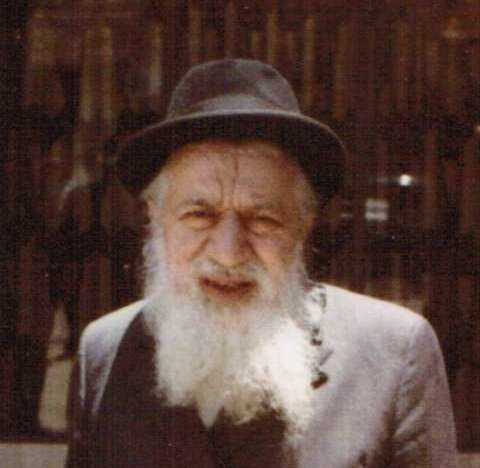
The Living Sefer Torah on his Yahrtzeit Tonight – Rav Pinchas Hirschprung zt”l
By Rabbi Yair Hoffman
The Nazi storm trooper pulled out his revolver and aimed it at the young rabbi’s head.
“Say your last prayers,” he commanded. “Turn your face to the wall.”
It was Succos 1939. Pinchas Hirschprung was twenty-seven years old. Just moments earlier, the Gestapo had delivered devastating news: the Jews of Dukla—his hometown in southeastern Galicia—had exactly sixteen hours to leave. They could take only what they could carry. And he, the young Torah genius who had returned home to help his community, had been chosen to deliver this death sentence to his own people.
In the name of G-d, he had tried to appeal to the Nazis’ sense of justice. His words only made things worse. Now he stood facing execution.
Strangely, the death sentence brought him a moment of relief. At least, he thought, he wouldn’t have to be the one to tell his community the terrible news. Facing the wall, Rav Pinchas recited Shema Yisrael, said Vidui (the confession before death), and whispered quietly: “Let my death be atonement for all my sins.”
Then something extraordinary happened.
In that moment of complete surrender, something shifted deep within him. “During the course of reciting the Shema Yisrael—and I myself do not know how this happened—I was suddenly transformed into a new person,” he later wrote. “I had become hardened. I showed no reaction, no hysteria. I looked objectively at the situation and made peace with my fate—to become the messenger of such ‘glad tidings’—namely, the expulsion of the Jews.”
The Nazi, in a twisted act of cruelty, refused to grant him the “pleasure” of dying before completing his terrible mission. He lowered his weapon and ordered the young rabbi to first deliver the expulsion order—and then return to be killed.
But Rav Pinchas Hirschprung would not die that day. Instead, he would live to become one of the greatest Torah leaders of the twentieth century.
The Boy Genius of Dukla
“When looking at my father’s life,” one of his children reflected, “one has to ask: where does someone come from? And then it helps us better understand the type of person we’re talking about.”
R’ Pinchas was born on July 13, 1912, in Dukla, a peaceful shtetl (small Jewish town) nestled in the Subcarpathian region of Galicia, which was then part of the Austro-Hungarian Empire. He later described his hometown with deep affection:
A peaceful town with three hundred Jewish families and one hundred Christian ones. One and all were faithful and pious—no one desecrated the Shabbos in public. The girls attended the Bais Yaakov school while the boys sported beards, learned until they were married, and wore gartels and attended the mikve.
Dukla was located in a region dominated by Zanzer Chassidim, near Nowy Sacz (Zanz), the hometown of the famous Divrei Chaim. However, young Pinchas’s family were Chortkover Chassidim, followers of Rabbi Israel Friedman, grandson of the Ruzhiner Rebbe. After World War I, the Chortkover Rebbe moved his court from Ukraine to Vienna, like many other rebbes of the former Austro-Hungarian Empire. His son, Rabbi Nachum Mordechai, took over the court in 1934 and moved it to Eretz Yisrael in 1939.
R’ Pinchas’s primary teacher was his grandfather, Rav Dovid Tzvi Sehmann, known as the Minchas Soles after his famous sefer (religious book). The Minchas Soles was himself a student of the great Rav Yitzchak Yehuda Schmelkes, author of the Beis Yitzchak, and was known as one of the Gedolei Galicia. He served as the beloved rav of Dukla.
Years later, one of his children had the privilege of traveling with Rav Hirschprung back to Dukla. “I will never forget how my father pointed to the balcony where Zeide lived,” the child recalled. “And my father said, ‘Here’s where I learned my whole Torah.’”
The bond between grandfather and grandson was extraordinarily deep. Years later, Rav Hirschprung would tell his children that before any major event in his life, his grandfather came to him in his dreams.
From his earliest years, it was clear that Pinchas possessed something extraordinary. He was gifted not only with a brilliant mind but with an almost supernatural memory. His classmates during those formative years would themselves become legendary figures: Rav Yaakov Leizer, who would become the Admor of Pshevorsk, and Rav Yekusiel Yehuda Halberstam, the future Klausenberger Rebbe. But even among such future gedolim (great Torah leaders), Pinchas stood apart.
By his bar mitzvah at age thirteen, he had already published his first sefer, Pri Pinchas, and had begun editing a monthly Torah journal called Ohel Torah. Think about that: at an age when most boys are just becoming responsible for mitzvos, Pinchas was already a published author and editor.
The Crown Jewel of Lublin
Word of the young prodigy from Dukla spread, and eventually Pinchas found his way to Yeshivas Chachmei Lublin—the largest and most magnificent yeshiva in all of Europe.
Chachmei Lublin was the dream of one man: Rav Meir Shapiro, a brilliant rabbi, educator, and leader who was also a Chortkover Chassid—the same chassidus as young Pinchas’s family. After witnessing the destruction and displacement caused by World War I, Rav Shapiro dreamed of building a grand international Torah institution rather than rebuilding small, scattered yeshivos. After six years of extensive fundraising across the Jewish world, ground was broken for the building at 68 Lubartowska Street in Lublin on May 30, 1924. An astounding 50,000 people attended the ceremony, including one hundred rabbis and the Rebbes of Ger and Chortkov.
The yeshiva’s grand opening in 1930 was so impressive that it was filmed and screened in the Regent Theater in Stamford Hill, London, on December 19, 1930. The building boasted modern luxuries like central heating—virtually unknown in other yeshiva dormitories at the time. But what made Chachmei Lublin truly unique was its academic standards: students were required to know 1,000 pages (2,000 leaves) of Talmud by heart just to be admitted.
Rav Shapiro served as Galician delegate to the founding convention of Agudath Israel at Kattowitz in 1912, and ten years later was named national president of the Polish branch. He was also elected to the Sejm (Polish parliament) that same year, serving until 1927. In 1931, he was named Chief Rabbi of Lublin and became known as the Lubliner Rav.
Rav Shapiro is also remembered for another revolutionary idea he introduced at the 1923 World Agudath Israel gathering in Vienna: Daf Yomi (the daily page), a program in which Jews around the world study the same page of Talmud each day, completing the entire Talmud in about seven and a half years. This program continues to unite Jews worldwide to this very day.
When young R’ Pinchas arrived at Chachmei Lublin, he quickly became Rav Shapiro’s prized student. Rav Meir Shapiro spoke of him constantly. As one family member noted, “The biggest maven was Rav Meir Shapiro. He said it was worth building the yeshiva for two talmidim—and one of them was my father.”
The rosh yeshiva would declare: “It would have been worth opening the yeshiva just for Pinchas from Dukla.”
The basis for such extraordinary praise? While still a teenager, Pinchas knew all 2,711 dapim (double-sided pages) of the Talmud Bavli by heart. His knowledge was so vast and reliable that Rav Shapiro appointed him to examine prospective students—a role that required mastery of at least 400 dapim of Gemara with commentaries, since applicants needed to know 200 dapim for admission.
His student, Rav Nachum Eliezer Rabinovitch, later testified that Rav Hirschprung remembered not only the entire Talmud Bavli but also all four sections of the Shulchan Aruch (the Code of Jewish Law) by heart. Those who knew him said that the entire Talmud “lay in his mind like items in a box.”
Rav Hirschprung received semicha (rabbinical ordination) in 1932 from Rav Chanoch Eigesh (author of Marcheshes) and Rav Shmuel Firer. He began teaching at the yeshiva and testing prospective students. Before turning twenty, he had written several seforim and was already exchanging letters with the gedolei hador, including the Gerrer Rebbe. His future seemed bright and secure in the world of Torah scholarship.
Then the Nazis came, and that world was destroyed.
A Birthday Gift for the Rebbi
On those Yom Tov afternoons in Montreal, sitting on his burgundy couch, Rav Hirschprung would speak of a special memory from his yeshiva days—a birthday gift for his beloved rebbi.
Rav Meir Shapiro had no children; the ocean of love in his heart flowed toward his talmidim and the Torah they learned. His students wanted to find a way to honor him on his birthday.
They came up with an extraordinary idea: they divided up the entire Shas, every talmid taking ten blatt to master over the course of a single day. At sunset, they all joined together to make a Siyum HaShas in their rebbi’s honor. It was a gift that could only come from students of Chachmei Lublin—young men who lived and breathed Torah with such intensity that mastering ten pages in a day was within their reach.
In his true Galicianer fashion, speaking in his breathless way, Rav Hirschprung would add flavor to his stories about the yeshiva. He would tell how once, during the early years, his rebbi noticed that one of the bochurim appeared near fainting on a Friday night. It turned out that the family where he was meant to eat had been too busy to feed him, and he had been fasting since the day before.
Immediately, the Lubliner Rav made the decision to open a real yeshiva, with a dormitory and dining room, so that young bnei Torah could thrive. That dream would become Chachmei Lublin.
At this point in his retelling, Rav Hirschprung would stop, smile gently, and share a joke about the old system of essen teg, where local families would feed yeshiva students on different days of the week.
Two bochurim, he said, were talking about the homes where they ate.
“My host family only serves kasha, every single day, again and again, it’s always kasha,” the first bochur complained.
“I wish my family would give me kasha,” said the second. “Instead, I get a teirutz: ‘We just ran out, we forgot you were coming, the food got burnt.’”
This was Rav Hirschprung—master of kol haTorah kulah with the soft touch, blessed with the ability to quote lines of Tosefta and also share a delightful joke.
The World Explodes
On September 1, 1939, Nazi Germany invaded Poland. World War II had begun.
Rav Hirschprung was in Dukla when it fell to the Nazis. Areas further east came under Soviet control on September 17, 1939, according to the secret Molotov-von-Ribbentrop pact between Nazi Germany and the Soviet Union. He found himself trapped in Nazi territory.
While many Jews clung to desperate hopes that Poland could withstand the German army, or that Germany was merely waging a “war of nerves,” the young scholar had no such illusions. His heart broke for those who refused to see the catastrophe unfolding before their eyes.
He watched how quickly civilization could crumble. Even before the Germans physically arrived in Dukla, Ukrainian neighbors felt free to rob Jewish merchants. Daily decrees restricted religious observance. When he saw the Nazi soldiers march into town, he was struck by something chilling: how each one of them, in their “robotic mechanizations and steely rigidity,” physically resembled the others, as if they had been mass-produced in a factory. It was, he felt, a terrifying symbol of how technological power without holiness becomes an instrument of evil.
And then came that terrible day when he was summoned to Gestapo headquarters and told to order his community’s expulsion—leading to his near-execution.
But Rav Hirschprung did not simply accept defeat. After his miraculous reprieve, he returned to the Nazi commander and appealed to whatever humanity might remain within him. Could fifty merchants remain to supply the German barracks with goods? Could wagons be provided for the elderly, women, and children who couldn’t walk? Could people take additional belongings?
Incredibly, the commander agreed to all three requests. When asked to provide a list of fifty people who could stay, Rav Hirschprung deliberately wrote down sixty-three names—refusing to be the one who decided who lived and who was expelled. And he pointedly left his own father’s name off the list, so that no one could question his fairness. The commander, perhaps moved by this display of integrity, allowed all sixty-three to remain.
As the Jews of Dukla prepared to leave their homes forever, a Christian woman stood watching. When the Nazis asked her what she thought of the scene, she gave an answer that Rav Hirschprung would never forget: “The Jews’ G-d is here. He who took revenge on Pharaoh, Haman, Titus, and Sancheriv… will also take revenge on you.”
The Escape
In the chaos of those early war days, Rav Hirschprung received a powerful inner calling: he must escape to Vilna (Vilnius), where the great gaon Rav Chaim Ozer Grodzensky resided. As one family member recounted, “He escaped to Vilna at the beginning of the war. He met Rav Chaim Ozer and a lot of other Gedolim. He was very concerned about the refugees. He did everything possible to help out people.”
This mission became his consuming purpose, the beacon that would guide him through years of unimaginable hardship.
His family—especially his mother—begged him not to go. But after the arrests, beatings, and constant life-threatening persecution, Rav Hirschprung made the agonizing decision to leave. He would never see his parents, sisters, or beloved grandfather again. As one of his children later said with deep pain, “My father came alone. His grandmother and his grandfather and his parents and his sisters were all killed.”
To reach Vilna, he had to smuggle himself from Nazi-occupied Poland through Soviet-occupied territory and then into Lithuania. The journey was harrowing beyond imagination.
He crossed the San River between Nazi and Soviet zones, nearly drowning in waters that were deeper and more turbulent than expected. His shoes fell apart; he bound his swollen, frozen feet in rags. Days passed without food. He had no winter clothes to protect him from the bitter cold.
Yet even in such extremity, his noble character shone through. After waiting more than twelve hours in a bread line, he was approached by an elderly Polish woman who couldn’t stand due to problems with her legs. Without a moment’s hesitation, he cut his precious loaf in half and gave it to her, refusing any payment.
Three times Soviet border police caught him trying to cross into Lithuania. The third time, he was loaded onto a truck with other Jewish refugees. But this apparent disaster turned out to be Divine providence: had he not been arrested, with his feet in such terrible condition, he would have frozen to death in the wilderness.
The truck brought him to a large, dimly lit building that seemed strangely familiar. “Where am I?” he asked himself. “Am I awake or dreaming?”
He was in Radin. He was in the Chofetz Chaim’s yeshiva.
“My entire body began to tremble,” he wrote, “and out of sheer ecstasy, my eyes welled up with tears. I began weeping like someone condemned to death who is unexpectedly pardoned. I felt as if the spirit of the holy tzaddik, the Chofetz Chaim, was hovering over us, caressing his children.”
A mystical rabbi, a watchmaker, had assured him that he would succeed in reaching Vilna because it represented his soul’s desire, which was eternal—while the obstacles holding him back were only temporary. On his fourth attempt, after a grueling nighttime trek over mountains and through forests, Rav Hirschprung finally crossed into Lithuania. He had reached Vilna—the Jerusalem of Lithuania.
Vilna – A Brief Refuge
Vilna in late 1939 and early 1940 was a remarkable place. Occupied by Poland since 1919, it had been recaptured by Lithuania in October 1939 and, for a brief window, became an independent city. During this short-lived independence, Vilna became a refuge for Jews fleeing both Nazi and Soviet oppression.
Among the tens of thousands who sought shelter there were close to two thousand rabbinical students and their teachers from the most renowned yeshivas of Eastern Europe: Mir, Slabodka, Telz, Bialystok, Kamenetz, Kletzk, and Radun. The greatest yeshivas of the Jewish world had gathered in one city.
In Vilna, Rav Hirschprung had the privilege of meeting the legendary Rav Chaim Ozer Grodzensky. He would later tell a remarkable story from that encounter.
Rav Chaim Ozer spoke in learning with the boy from Dukla, quoting a Gemara in Bava Basra 87. The young Pinchas Hirschprung suggested that it was on daf 88. They argued about this, until Rav Hirschprung said he would go find a Gemara so they could see the truth.
Rav Chaim Ozer grabbed hold of his own beard and asked, “Do you want to shame this white beard?”
Rav Hirschprung didn’t get the Gemara. But later, he went to check.
He had been wrong.
Rav Chaim Ozer had been right.
And Rav Chaim Ozer had known that he was right—and he had wanted to protect the dignity and honor of the young talmid chacham.
The story, Rav Hirschprung would say, wasn’t about the great genius of Rav Chaim Ozer, nor about his modesty—but about the way both traits lived together in one person, each complementing the other. The humility is that much more valuable against the genius, the genius so much more impressive against the humility.
Under Rav Chaim Ozer’s guidance, Rav Hirschprung helped reestablish Yeshivas Chachmei Lublin in Vilna. Money was raised, a location was secured, and students began arriving. For a precious moment, it seemed that something of the lost world might be preserved.
But everyone knew Vilna’s independence couldn’t last. On June 15, 1940, according to a secret agreement between Hitler and Stalin, Vilna was annexed by the Soviet Union and religious suppression began. Rav Chaim Ozer, consumed with worry that the Communists would close the yeshivos, became unrecognizable. His petirah (passing) soon after was felt throughout the Jewish world, but nowhere more keenly than among the refugee students who had found in him a father.
The Impossible Escape Route
Even before the Soviet occupation, some far-sighted individuals began planning for further escape. In the early summer of 1940, two Dutch yeshiva students, Nathan Gutwirth and Leo Sternheim, approached Jan Zwartendyk, the Dutch Honorary Consul in Kovno, Lithuania, requesting entry permits to the Dutch colony of Curaçao in the Caribbean.
Zwartendyk’s superior informed the boys that no such visa existed—permission to enter was granted only upon arrival by the governor. But knowing the yeshiva students desperately needed formal documentation to cross Soviet territory, Zwartendyk designed a creative solution: a “false entry permit” for Curaçao that could serve as a final destination on paper.
With a destination document in hand, the next step was getting transit visas. Here another hero emerged: Chiune Sugihara, the Japanese consul in Kovno. Sugihara agreed to provide transit visas allowing refugees to pass through Japan. Finally, for a fee, the Soviets agreed to let refugees travel across the USSR to reach Japan.
Both Sugihara and Zwartendyk understood the mortal danger facing these Jewish refugees. Sugihara gave visas to people who didn’t meet the official requirements, directly against his government’s orders. Legend has it that Sugihara was writing and signing visas from the window of his departing train compartment until the very last moment, throwing them out to whoever might catch one. Both men have been honored as “Righteous Among the Nations” by Yad Vashem.
For weeks, Rav Hirschprung traveled throughout Lithuania and even into Latvia, seeking the funds needed for visas—150 US dollars each, a huge sum at the time. He gathered money not only for himself but for others as well. Eventually, with financial support from Dr. Chaim Nachman Shapiro (son of the Chief Rabbi of Kovno and Lithuania, Rav Dov Ber Shapiro, who had returned from Switzerland to Lithuania at the outbreak of war, arguing that “the captain is the last to leave”—he would die in the Kovno ghetto in 1943), Rav Hirschprung purchased his exit visa.
Across the World
On or about February 10, 1941, documentation in hand, Rav Hirschprung boarded a train to Moscow. He remained in the Soviet capital for only one day—long enough to be impressed. “I did not see even one horse in Moscow,” he noted, marveling at the “beautiful subway.”
The seventeen-day train journey to Vladivostok took him through Birobidzhan, the autonomous Jewish region in Siberia, where he noticed the Yiddish signs in the train station—a strange reminder of Jewish life even in the depths of the Soviet Union.
From Vladivostok, he sailed to Japan, arriving in the port city of Tsuruga on Shabbos afternoon, March 14, 1941. Unable to leave the ship until after Shabbos, he was overcome by the warm reception from the refugee committee representatives when he finally disembarked. He quoted the verse from Chronicles: “Who is like You, Israel, one people all over the earth.”
Rav Hirschprung was taken to Kobe, Japan, where he remained for nine months. During this time, along with other students from Chachmei Lublin, he continued his Torah learning under the guidance of Rav Shimon Shalom Kalish, the Amshinover Rebbe. Even in the chaos of flight and displacement, Torah study never stopped.
In late fall of 1941, the Japanese authorities sent the refugees on to Shanghai, China. This teeming international city would become home to thousands of Jewish refugees during the war. But Rav Hirschprung would not remain there long.
While fleeing through Lithuania, Rav Hirschprung made a solemn promise. As one of his children recounted: “While he was running away, he said, ‘If I survive the war, I’ll dedicate my whole life to Torah.’” From Japan, he went on the last boat before Pearl Harbor to America—and eventually to Canada.
The Canadian Visas
Getting into Canada during World War II was nearly impossible for Jewish refugees. Canadian immigration policies openly favored Americans and Britons, followed by Northern Europeans, then Southern and Eastern Europeans. Jews, Asians, and Blacks were at the very bottom of the list.
Making matters worse was Frederick Charles Blair, Canada’s director of immigration—an outspoken anti-Semite who actively blocked Jewish immigration. He argued that Jews would not work the land but would become an “urban burden.” When asked about admitting eighty rabbinical students, Blair suspiciously claimed this was just a trick to “get the door open” for many more, and wondered why the refugees couldn’t simply return to Vladivostok.
Nevertheless, pressure to admit Polish refugees came from multiple sources: the British and Polish governments, as well as Canadian and American Jewish organizations. A delegation traveled to Ottawa to pressure Thomas Crerar, the Minister of the Department of Mines and Resources, to overturn previous negative rulings. Among those in attendance were Saul Hayes and Michael Garber of the Canadian Jewish Congress, H. Wolofsky of the Federation of Polish Jews, and Peter Bercovitch, Liberal MP from Montreal.
After much negotiation, the Canadian war cabinet overrode Blair’s objections and agreed to issue seventy-nine visas to Jews of Polish citizenship living in the Far East.
The next question was agonizing: who would receive these life-saving documents? In an historic decision, the Canadian Jewish Congress chose to offer all seventy-nine visas to rabbis and rabbinical students. Despite lobbying from Zionist, secular, and Yiddishist groups, the Orthodox leaders made a compelling argument: these Torah scholars represented not just their own lives, but the past and future of traditional Judaism itself.
The most moving appeal came from Rabbi Oscar Fasman of Ottawa in a letter dated May 18, 1941:
Here we are not dealing with only seventy individuals. These seventy embody a wealth of Jewish sacred learning, the like of which can no longer be duplicated, now that the European Yeshivoth are closed. In these people we have that intensive tradition of Torah which buoyed up the spirit of Israel. Thus, we are saving not merely people, but a holy culture which cannot be otherwise preserved. When the US admitted Einstein, and not a million other very honest and good people who asked for admission, the principle was the same. It is certainly horrible to save only a few, but when one is faced with a problem of so ghastly a nature, he must find the courage to rescue what is most irreplaceable.
By August 1941, the visas were ready. Rav Hirschprung was among the seventy-nine recipients. But as Rabbi Fasman presciently warned in his letter, “Strained American-Japanese relations may stop boats from crossing the Pacific at any time.”
The Final Voyage
Finding passage to North America was difficult. Finally, news came that an American ship, the SS President Pierce, would sail from Shanghai to San Francisco on September 30, 1941, with forty-one open spaces. Passage was booked for forty-one refugees, with others hoping for a later sailing.
But a serious halachic (Jewish legal) complication arose. Yom Kippur in 1941 fell on October 1—the day after the ship was to depart. The voyage would cross the International Date Line during the holiest day of the Jewish year.
There are differing rabbinic opinions about how to observe Shabbos and holidays when crossing the dateline. Many authorities rule that the halachic dateline differs from the conventional one, as it must be centered on Jerusalem rather than Greenwich. Some held that travelers should observe Yom Kippur for two full days to be certain of not violating the holy day. This meant potentially fasting for forty-eight hours while at sea.
This halachic question caused a painful split among the refugees. Eleven students from the Mir Yeshiva, known for their strong group loyalty, refused to board the ship. The Mirrer bochurim had developed especially strong fraternal bonds throughout their exile and flight, agreeing to move as a unit. There wasn’t room for all thirty Mirrer students, and they chose to stay together. They also had strong financial support from Rabbi Avraham Kalmanowitz in America, giving them a sense of greater security.
As a result, only twenty-nine of the forty-one spaces were filled, and eleven remained unused.
The twenty-nine who did board included students from Telz, Kletzk, Chachmei Lublin, Lubavitch, and Slabodka. Among them was Rav Pinchas Hirschprung. They “eagerly seized the opportunity to leave,” deciding to observe a two-day Yom Kippur on the ship.
Also aboard were nine Lubavitcher rabbis sent by the Lubavitcher Rebbe (then residing in New York) to establish a Lubavitch yeshiva in Canada. The group included Rav Aharon Poupko-Kagan, the son of the Chofetz Chaim, and Rebbetzin Freida Poupko-Kagan, the Chofetz Chaim’s second wife (who underwent surgery at sea and had to be hospitalized in San Francisco). These precious souls represented the living legacy of European Torah Judaism.
Rav Hirschprung had left Japan on September 20 aboard the Taia Maru to Shanghai, arriving around September 23. The ship manifest notes that the refugees, “in transit under Immigration Guard paid by the aliens,” were denied shore leave as they did not have valid documentation. This meant Rav Hirschprung was not allowed off the ship until he boarded the President Pierce six days later.
The sailing was without incident. The SS President Pierce docked in San Francisco on October 20, 1941. From there, the refugees took the Southern Pacific Railroad to Chicago—a four-and-a-half day trip—accompanied by two US immigration guards to ensure no one slipped away into America. They were provided kosher food: fruit, vegetables, and eggs.
After a warm reception in Chicago, the group transferred to the Canadian National Railway, accompanied by Rabbi Avraham Kalmanowitz of the Va’ad Hatzalah. On Thursday, October 23, 1941, they crossed into Canada at Sarnia, Ontario.
In Montreal, they were met at the train station by hundreds of people, led by Montreal’s Chief Rabbi, Hirsch Cohen. A celebratory breakfast was served in the Talmud Torah School. The refugees had arrived safely—on the very last ship to leave Shanghai before Japan attacked Pearl Harbor just weeks later on December 7, 1941.
Those eleven Mirrer students who stayed behind, along with the fifty other visa holders, would remain trapped in Shanghai for the duration of the war. They would finally arrive in Canada in 1946, after five years of hardship.
Building a New World
Rav Hirschprung arrived in Canada as a refugee who had lost nearly everything: his parents, his sisters, his beloved grandfather, his entire world. The full extent of the tragedy was still unknown—the murder of six million Jews would only be fully revealed after the war’s end.
But he had made a promise during his desperate flight: “If I survive this war, I’ll dedicate my whole life to Torah.” And he kept that promise.
In October 1941, even before the refugees arrived, Hirsch Wolofsky, publisher of the Keneder Adler newspaper, announced the establishment of a new yeshiva: Mercaz Hatorah, which would educate and employ the soon-to-arrive immigrants. The yeshiva was initially housed in the Montefiore Orphan’s Home at 4650 Jeanne Mance Street. Rabbi Elya Chazan, who had studied at Telz, Slabodka, Kaminetz, and most recently Mir, came to head the new institution. By January 1942, the elementary division had been opened.
How Rav Hirschprung came to teach at Mercaz Hatorah is itself a remarkable story. Rav Elya Chazan had been offered a position at Torah Vodaath in New York and needed a temporary replacement. But why would a talmid of the great Lithuanian yeshivas give his job to a Galicianer chassid?
“Rav Chazan said he wasn’t sure if it would work out in New York,” explained Tzudyk Mandelcorn, one of Rav Hirschprung’s closest talmidim, “so he needed someone who would do his job well, but also give it back if necessary. He knew that Rebbi would give it up easily.”
Rav Chazan didn’t come back, and Rav Hirschprung became the maggid shiur at Mercaz Hatorah along with his role on Montreal’s Vaad Harabbanim. As one family member recalled, “My father took a job in the Vaad Ha’ir. He was very young, in his twenties. They gave him semicha.”
He also studied with ten yeshiva students at Congregation Adas Yeshurun (Adath Jeshurun), where he served as spiritual leader. A person close to him recalled the impact he had: “Rabbi Hirschprung came to lead the Agudas Yisroel synagogue on St. Urbain Street. And if he spoke Shabbos afternoon or Monday night, the people were there. He could speak verbatim. It came to him naturally. He could explain it in a way that when you left, you knew everything.”
The yeshiva operated in the spirit of his beloved Chachmei Lublin—keeping alive the tradition of that magnificent institution that the Nazis had so gleefully destroyed.
A New Family
Montreal in those days was, as one family member put it, “a midbar, like a desert. There was no Yiddishkeit.” Yet it was there that Rav Hirschprung would build his future.
He met his future wife in an unusual way. As one of his children recounted, “My mother used to come to my father’s shiur. My father used to always want to know, ‘Who’s that woman with the black hair?’”
In 1947, Rav Hirschprung married Alte Chaya Stern, the Canadian-born daughter of Montreal’s pious shochet (ritual slaughterer). But the shadow of the Holocaust hung over even this joyous occasion.
“My father did not want a big wedding,” one of his children explained, “and he did not want my mother to wear a gown at the wedding because he said, ‘I suffered so much and my parents will not be at the wedding.’ And my mother, to her credit, didn’t even question it and accepted it immediately.”
Together they would raise nine children. The Rebbetzin was remembered with deep love. “What resonates most for me about my mother,” one child reflected, “is how much she cared about other people and about their stories and how she was so concerned for other people. And that made her so endearing, not just to us, but to everyone else.”
Their home on Querbes Street, though small, became a place of extraordinary warmth. “A house is just a house,” observed one of the children. “What made our small 230 Querbes a home was the people in it and the openness it had. Our home was incredibly open for just about everybody. So the size really wasn’t even an issue. It’s the energy and the spirit you have in your home. And the energy and spirit was so big that it really allowed everybody to fit.”
Soon after their marriage, the young couple demonstrated their extraordinary chesed. A Holocaust survivor recounted: “My mother lost her father when she was very young. And she went through the Holocaust, through terrible times. After the war, Reb Hirschprung sponsored my mother. He was a newlywed, maybe married a year. Mrs. Hirschprung, who was a Canadian—my mother didn’t even speak a word of English. And he brought her to the house and made her feel 100% that she belonged there, and she lived with them, and she was so part of the family.”
This spirit of chesed defined how they raised their children. “I think we were raised in a family where chesed was the greatest thing that we were taught,” one child reflected. “Even though being a good student is a very important thing, but the greatest thing was, ‘Are you a mensch? You have to be a mensch.’”
The Talmid
The balebatim of Montreal loved Rav Hirschprung, were as dedicated to him as to a father, and he connected with each one on his own level, offering them individual chances to learn with him b’chavrusa. But none was as close as the talmid who first encountered him in 1945—when the pride of Chachmei Lublin landed in a new world as a bereaved survivor searching for solace within the pages of the Gemara.
Tzudyk Mandelcorn was just a teenage student, a Canadian-born child of immigrants, in Montreal’s Mercaz HaTorah, when the gaon of Poland first walked into the classroom. Back in Lublin, Rav Hirschprung had been the bochen, charged with testing applicants to Rav Meir Shapiro’s elite yeshiva. And now he sat facing a small group of Canadian boys, introducing himself as their new rebbi.
Tzudyk Mandelcorn was just twenty-one years old, an unmarried college graduate working at his father’s fur business, when he got a life-changing call. It was Rebbi: “Tzudyk, they closed the Bais Yaakov.”
Montreal’s Bais Yaakov school had been running at a deficit for too long, and the teachers had walked off the job, leaving students scrambling.
“Ich vil es ibernemmen, I want to take it over,” Rav Hirschprung said.
“I was young,” Mr. Mandelcorn recalled, “and I said, ‘Nu, zohl zein mit mazel.’ I wished him well.”
But the Rebbi wasn’t finished. “Tzudyk, you have good credit. Go to the bank and take out a loan so we can pay the teachers what they’re owed. We’ll get the school running again, and I’ll pay you back.”
Tzudyk Mandelcorn opened an account and formed a new board. Rabbi Pinchas Hirschprung became the school’s president, his twenty-one-year-old talmid its secretary.
One of his children remembered those early days: “They called up my father that they were going under, and my father said this school should remain. And he took it over. My sister said they didn’t even have a desk, and my father took a desk from his house and brought it into the school.”
For close to half a century, they worked hand in hand: the Rebbi’s vision coupled with the talmid’s efficiency to create a world-class school.
A School for All
Rav Hirschprung founded the Bais Yaakov of Montreal in the 1950s, providing Jewish education for girls. The school now carries his name: Bais Yaakov d’Rabbi Hirschprung.
“We were one of the first community schools, attracting students from chassidish homes along with students from homes that were very modern,” Mr. Mandelcorn explained. “Rebbi was very proud of that. He felt that we have to be welcoming, that the school was for all Yidden. The only criterion was that the home had to be shomer Shabbos. That was it.”
A longtime educator at the school recalled Rav Hirschprung’s philosophy: “The first thing that he told me is that it’s from Orach Hachaim, children that come from different backgrounds should be together. He used to tell me, ‘I would like a girl from Outremont and a girl from Côte St. Luc to live b’shalom together and to see each other and to learn from each other.’”
One of his children observed: “Later on in life, it’s a tolerance and accepting of one another, which was one of his proudest things in this school.”
A graduate of the school, whose mother was a Holocaust survivor, recalled: “I went to Beis Yaakov all my life. Of course, to my mother, it was Reb Hirschprung’s school. There was not even a question of where I would go. And my parents didn’t have any money. My mother, fresh immigrants, both of them.” But the school welcomed all.
One family member explained what made Bais Yaakov unique to him: “If a Jew came to him and asked him for help, any sort of help whatsoever from parnassah to shalom bayis to any kind of a problem, he would drop his learning and he would help him. That’s when he was asked. But Bais Yaakov, he wasn’t asked for. Bais Yaakov, he went himself and he stopped his learning to build a school for girls.”
“My father loved everyone,” another child added, “but a Beis Yaakov girl, there was a special place in his heart.”
The graduation and the annual dinner became major events. The educator recalled: “The graduation and the Beis Yaakov dinner was to Rebbetzin Hirschprung very important. Why? Because it was very important to her husband. Her husband enjoyed coming to the graduation and seeing the fruits of his labor.”
One of the children reflected on the partnership between their parents: “Whatever my father was able to do in Bais Yaakov was only because my mother enabled my father to do it.”
The rav worked tirelessly to raise funds for Bais Yaakov. One of his children remembered: “I had to go from one building to another building. Who do I see on the street walking? My father with Mr. Abe Bronfman. There were a lot of people that helped my father along the way.”
Rav Hirschprung’s integrity in financial matters was legendary. Someone close to him passed away and left all his money to tzedakah, naming Rebbi as the executor. Rebbi called in a talmid and divided the money among the city’s various mosdos—leaving out Bais Yaakov.
“Rebbi, how come none of the money goes to Bais Yaakov?” asked the perturbed talmid.
“Because people know I’m partial to the mosad, that it’s close to my heart,” Rav Hirschprung explained. “It’s negius (bias). A rav can’t pasken that way.”
A Leader of Principle and Compassion
In 1965, Rav Hirschprung was named Rosh Yeshiva of Yeshivas Tomchei Temimim Lubavitch in Montreal—the institution founded by the nine Lubavitcher rabbis who had traveled with him on the President Pierce. In 1969, following the passing of Rabbi Yehoshua Hirshhorn, he was appointed Chief Rabbi of Montreal—a position he would hold with distinction until his own petirah in 1998. He served as head of the Beis Din (rabbinical court) and managed the Va’ad HaRabbanim (Council of Rabbis) for the entire Montreal community.
He was offered positions in larger communities—London, Antwerp, and elsewhere—but he refused them all. Montreal was his home, and its Jews were his responsibility.
“It’s interesting,” Tzudyk Mandelcorn reflected, “how Rebbi was nearly always gentle and humble. He would give kavod to other rabbanim in his speeches, treating them with deference. When we had to meet people for community matters, Rebbi would suggest that we go to their homes or offices rather than ask them to come to him. He never stood on ceremony. There was one area, however, in which Rebbi was firm and resolute: in matters of kashrus he didn’t show his softer side.”
A fascinating example emerged in the 1960s when a change in Canadian agricultural law demanded that animals be completely restrained before slaughter. This created a halachic challenge for kosher slaughter.
When the Agudath HaRabbanim in New York prohibited a new restraint method that had been initially approved by Rabbi J.B. Soloveitchik by telephone, Rav Hirschprung disagreed with their ruling but didn’t want to openly challenge them. Instead, he set out to find a better method while stating clearly: “I say again that this method is perfectly acceptable within halacha.”
When rumors spread that Rav Aharon Kotler wanted to send rabbis to Montreal to inspect the new system before approving it, Rav Hirschprung stood his ground with dignity: “We in Montreal have no doubts or questions about the kashrus of the new slaughtering system. We need invite no one to approve our work. But, if someone wishes to come here, we will welcome them with great respect.”
He was a man who could bridge divides. One of his children recalled: “He spoke once in Mizrachi and he said, ‘I’m Agudah, you’re Mizrachi. The Torah doesn’t belong to either one of us. The Torah belongs to Klal Yisroel, so let’s learn.’”
His relationships with the gedolei hador were legendary. He maintained close friendships with Rav Chaim Zimmerman, the Lubavitcher Rebbe, and the Satmar Rebbe. The third essay in the Satmar Rebbe’s Vayoel Moshe—dealing with lashon hakodesh (the Hebrew language)—was written as a response to Rav Hirschprung’s questions about the language of instruction in Bais Yaakov schools.
The Lubavitcher Rebbe held him in such high esteem that he directed his own students to send their she’eilos (halachic questions) to the gaon of Montreal.
When the Pnei Menachem of Gur visited Rav Hirschprung in Eretz Yisrael, he took his leave by walking backward—as one retreats from an Aron Kodesh (Holy Ark). This profound gesture of respect showed how the greatest Torah leaders of the generation viewed this refugee from Dukla.
The Belzer Rebbe once observed: “My chassidim only know about the gaonus (genius) of your rebbi, but they don’t even see his pure yiras Shamayim (fear of Heaven).”
The Heart of Gold
Yet for all his brilliance, for all his encyclopedic knowledge, Rav Hirschprung was known above all for his character. His humility, kindness, and compassion were legendary. “You never have to ask me to do a favor,” he would often say. “Just tell me what to do for you.”
A person close to him remarked: “I’ll tell you, before you even said hello to him, he had an effect on you. His mannerisms, the way he talked, he never pushed. He never tried to be a world speaker. It was all from the heart.”
One of his children put it beautifully: “His heart—cardiologists would have a good time trying to figure out that heart because he was all heart.”
“He loved people,” his daughter Carmella recalls. “He loved life, and he loved you for who you were. Even though he was involved in the klal (community), he never overlooked the yachid (individual) in the klal. He was a visionary, but he never only saw the forest—he saw every tree in the forest.”
A family member elaborated: “Helping people out on a personal level, not only at the tzibbur level—every individual was to him important, and he was so sensitive to people’s concerns.”
Someone who worked closely with him recalled: “He never wanted things for himself. He wanted it for other people. We did a lot of work together, and it was impossible—for me, it was impossible to say no to him.”
One of his children reflected on his remarkable authenticity: “My father was incredibly who he was. He really was who he was, and I think that’s why people loved him, because they saw him as human as anybody else. And he celebrated that in people, and he allowed people to be who they were. And that’s the biggest gift you can give to people. It’s being honest.”
Another family member summed up his philosophy: “The Torah says the whole thing is shalom. I think in a very simplistic level, that was really his thing. He was totally accepting of all different groups.”
Even as the community migrated west and most of his talmidim settled uptown, his residence remained on Querbes Street, in the chassidish community downtown.
“This was on purpose,” Mr. Mandelcorn explained. “Rebbi wanted to learn—sitting by a Gemara was his oxygen—and he knew that if he moved uptown, people would be coming in and out of his house all day. He liked the relative peace of downtown.”
Devoted talmidim, eager to remain connected to Rebbi even though they no longer lived nearby, opened a shul uptown and named it Minchas Soles, in tribute to the sefer written by Rebbi’s beloved grandfather. Rav Hirschprung would come uptown for Shabbos Hagadol and Shabbos Shuvah to give the derashah in that shul.
One child described the atmosphere in their home despite the demands of communal leadership: “You know, being a Chief Rabbi and everything that he took care of had a lot of stress—a yeshiva, a community. There was so much that the phone was always ringing, and my father’s line we were never allowed to use. My mother, likewise, was a very busy person doing everything else. But there was such calmness in the house.”
The longtime Bais Yaakov educator reflected on the Rebbetzin’s role: “To live that kind of a life, you have to have a Rebbetzin to take care of such a gadol b’Yisroel. And she did, and she loved it. She enjoyed it.”
Perhaps the most touching tribute came from the Rebbetzin herself, as one child recalled: “My mother said, ‘Do you want to know what my fifty years with Daddy was like, being married to Daddy?’ My mother said, ‘I could sum it up in one or two minutes.’ And she said, ‘Being married to Daddy was like being a kallah my whole life.’”
Remembering Amalek
The war never left him. He told his wife that not a day passed that he didn’t think about those terrible years. In 1944, just three years after arriving in Montreal—while the memories were still raw and the full extent of the tragedy still unknown—he wrote his memoir in Yiddish: Fun Natsishen Yomertol: Zikhroynes fun a Polit (“From the Nazi Valley of Tears: Memories of a Refugee”).
Some Torah scholars discouraged him from writing such an emotional, personal account, believing it was beneath a talmid chacham (Torah scholar). He disagreed. “I told myself that it was in no way demeaning for a Torah student to fulfill the commandment to ‘remember what Amalek did to you’ by describing at least a bit of what I’d seen with my own eyes.”
Remarkably, most of his own children didn’t know the memoir existed until a close friend brought a copy to the shiva house after their father’s passing. The book confirmed what they already knew: how meaningful tefillah (prayer) was in his life, how he found comfort in learning Torah even surrounded by death and destruction, and that even as a young man he possessed that heart of gold they all recognized.
“Every time I read it,” his daughter Rochel says, “it touches me the same way it did when I first picked it up.”
His daughter Sossy was struck by the loving way he portrayed his community, and by how much the Jews of Dukla loved her great-grandfather. “My father said that before any major event in his life, his grandfather came to him in his dreams.”
His son Reb Yitzchak first read the memoir in the original Yiddish at age fourteen. The words continue to inspire him decades later. “In the worst situations, my father was able to turn to Hashem and feel His comfort in very tangible ways.”
Finding Strength in the Darkness
How does one maintain faith when the world is collapsing? Throughout his life, Rav Hirschprung pointed to the examples he witnessed during the darkest times.
He watched Jews hiding in cellars from German bombs, certain they would die at any moment. Yet even there, in the depths of terror, they “chanted their Shabbos prayers… partook in the third meal… and performed the Havdalah ceremony.” Their faith, he realized, transcended nature itself.
At a crowded train station, he met a simple Jewish woman traveling with her two children. She told him her story: During the Warsaw bombings, she had sought shelter in a cellar filled with Poles. They begged her to leave, convinced that as a Jewess she would bring G-d’s wrath upon them all. When she and her children emerged from the cellar, a bomb struck the shelter, killing everyone inside.
“Where are you going now?” Rav Hirschprung asked her.
She didn’t know. But she knew that Hashem would continue to accompany her wherever she went. This simple woman’s profound faith, he wrote, strengthened his own.
His grandfather’s teachings sustained him: that relief resides within distress itself, that there is purpose in pain and suffering. By immersing himself in prayer and retreating into his “four cubits of halacha,” he mined that purpose. “The melody of learning itself led me to ‘the world of complete good,’” he wrote. “It filled my senses… and freed me from my mental and emotional confusion.”
The Letter
At one point, Rav Hirschprung underwent a serious operation. In the hospital, he gave his talmid Tzudyk Mandelcorn a handwritten letter.
He did not know how the surgery would go, he wrote. In the event that he wouldn’t pull through, he was leaving all decisions regarding his beloved school to his talmid.
Hakoach shehayah li, yihyeh lecha… whatever power I held, you will hold…
A few years later, when Rav Hirschprung was in the throes of his final illness, he turned to the talmid who was never far from his bedside and said, “Remember my letter.”
Reb Tzudyk’s voice cracked when he recalled this moment.
“Think about this,” he said. “This man whose entire vitality came from the Torah itself, who lived in a dimension of pure Torah, a tzaddik—a sensitive, compassionate man—and he’s writing, ‘Maybe I won’t be found worthy of a refuah.’”
Reb Tzudyk said it again, in wonder. “Maybe I won’t be found worthy…”
Then he looked up. “That’s what makes me cry. That sort of greatness with that sort of humility.”
A Legacy That Lives
Rav Pinchas Hirschprung was niftar (passed away) on 27 Teves 5758 (January 25, 1998). All of Montreal mourned. He was a member of the Va’ad HaRabbanim HaKlali (the General Council of Rabbis) of the United States and Canada, recognized as one of the greatest Charedi rabbis in Canadian history.
He left behind numerous published works: Pri Pinchas (his childhood masterpiece), Aish Pinchas (published by his student Rabbi Shlomo Stein), and his profound Holocaust memoir. After his passing, his son Reb Yitzchak transcribed his father’s recorded lectures on Maseches Berachos and published them as another volume of Pri Pinchas, with additional insights from his son-in-law Rabbi Yehoshua Tzvi Yuda.
His memoir has now been translated into English as The Vale of Tears, published by the Azrieli Foundation and translated by Vivian Felsen. A new generation can now hear his voice and draw strength from his faith.
Among his notable students were Rav Professor Nachum Eliezer Rabinovitch, Rav Levi Bistritzky, and Rav Levi Yitzchak HaKohen Cohen—Torah leaders who carried forward his teachings.
The fate of Yeshivas Chachmei Lublin, the institution where Rav Hirschprung had flourished, was tragic. Out of a prewar student population of approximately 500, only forty-two are known to have survived the war. The Nazis made destroying the yeshiva a special priority. As the Frankfurter Zeitung reported on March 28, 1941: “It was a matter of special pride to destroy the Talmudic Academy, which was known as the greatest in Poland… We threw the huge Talmudic library out of the building and carried the books to the marketplace, where we set fire to them. The fire lasted twenty hours. The Lublin Jews were assembled around and wept bitterly, almost silencing us with their cries. We summoned the military band, and with joyful shouts the soldiers drowned out the sounds of the Jewish cries.”
But the Nazis could not destroy what Rav Hirschprung carried within him. In 2003, the original Chachmei Lublin building was returned to the Jewish community and reopened as a synagogue in 2007. The yeshiva itself was reestablished—first in Detroit in 1942 by survivor Rabbi Moshe Rottenberg, then relocated to Bnei Brak in the 1960s under the leadership of Rabbi Shmuel Wosner, where it continues today.
Conclusion: The Living Sefer Torah
What can we learn from Rav Pinchas Hirschprung?
Perhaps it is that even in the darkest valley, the light of Torah can sustain a soul. That complete surrender to Hashem’s will can transform a person, turning a moment of certain death into the birth of a new life. That the greatest Torah genius can also possess the greatest humility, seeing every tree even while surveying the forest. That one person, carrying the sacred learning of a destroyed world within him, can rebuild that world on new shores.
He carried with him to Montreal the Torah he had absorbed directly from the giants of Europe—Rav Meir Shapiro, Rav Chaim Ozer Grodzensky, and countless others. Through his teaching, his leadership, and his living example, he transmitted that Torah to generations who never knew the world that was destroyed.
Rav Pinchas Hirschprung walked through the valley of tears—and emerged a living Sefer Torah. Zecher Tzaddik Livrachah
Rabbi Pinchas Hirschprung
13 Tammuz 5672 – 27 Teves 5758
July 13, 1912 – January 25, 1998
The author can be reached at [email protected]