
 Vos Iz Neias
Agriculture Secretary Brooke Rollins Hails Return of Whole Milk to School Lunches as ‘Common Sense’ Move
WASHINGTON D.C (VINnews)— U.S. Agriculture Secretary Brooke Rollins on Friday praised the recent reinstatement of whole milk in school cafeterias, describing it as a return to practical nutrition policy after more than a decade of restrictions.
“We got so off course 10, 15 years ago on what’s really good and healthy for American kids… but now, we’re getting back to real common sense,” Rollins said in comments widely shared on social media.
The remarks come days after President Donald Trump signed the Whole Milk for Healthy Kids Act into law on Jan. 14, 2026. The bipartisan legislation reverses Obama-era rules under the 2010 Healthy, Hunger-Free Kids Act that limited milk options in the National School Lunch Program to fat-free or low-fat varieties.
Schools participating in the program, which serves nearly 30 million students, can now offer whole and 2% milk — flavored or unflavored, organic or conventional — alongside skim and low-fat options. Non-dairy alternatives that meet nutritional standards, such as fortified soy milk, also remain available.
Supporters, including the dairy industry and some nutrition experts, have long argued that low-fat mandates led to reduced milk consumption among children due to taste preferences, resulting in wasted food and missed nutrients. Some studies suggest whole milk may be associated with lower obesity risk in children, though causation remains debated.
The change aligns with the newly released 2025-2030 Dietary Guidelines for Americans, which emphasize full-fat dairy as part of a healthy diet. It also supports American dairy farmers by expanding market access for higher-fat milk products.

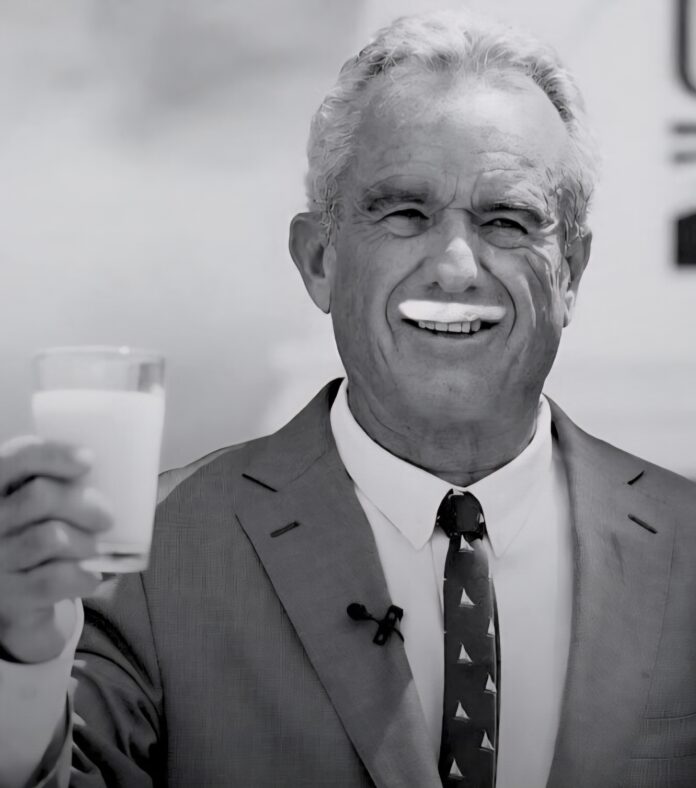
Health and Human Services Secretary Robert F. Kennedy Jr. called the law “a long-overdue correction to school nutrition policy.” The USDA has promoted the shift with a campaign featuring Trump sporting a classic “milk mustache” and the slogan “Drink Whole Milk.”
Implementation could begin as early as the next school year, though some districts may need time to adjust supply chains and assess student demand. Whole milk is generally more expensive than skim, which could pose challenges for budget-constrained schools.
The policy shift marks one of the first legislative actions of 2026 and reflects the administration’s broader “Make America Healthy Again” initiative.