
 Vos Iz Neias
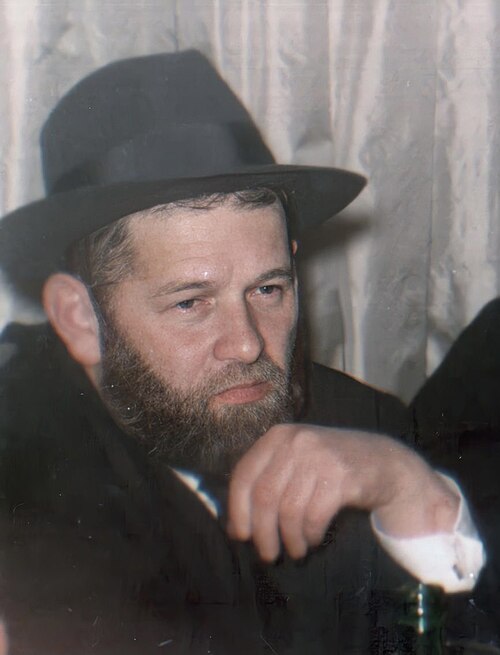
Rav Aryeh Leib Malin zt”l – The Visionary Leader Who Saved the Mirrer Yeshiva on his Yahrtzeit 29 Taives
By Rabbi Yair Hoffman
This Motzaei Shabbos, 29 Taives, markes the 63rd yahrtzeit of Rav Aryeh Leib Malin zt”l, While many know him as the founder of Beis HaTalmud in Brooklyn, fewer appreciate the pivotal role he played in one of the greatest rescue operations of the Holocaust: the escape of the entire Mirrer Yeshiva from Nazi-occupied Europe.
His Rebbetzin, Yaffa a”h, once reflected that attempting to portray his character presents an unusual challenge: “There are no ‘stories.’ A great man without ‘stories’—is it possible? Yet, that is indeed the truth. His was a wondrous character that is difficult to describe because it defies description.” What emerges from examining his life, however, is a portrait of a man who lived and breathed Torah with every fiber of his being—and who, at the most critical moment in Jewish history, rose to save an entire world.
The Making of a Gadol
Rav Leib Malin was born in 1906 in Bialystok, a major industrial city in the Grodno Governorate of the Russian Empire. At the time, this region of northeastern Poland was under Tsarist rule, home to a dense concentration of Jewish life and learning. His father, Rav Avraham Moshe Malin, served as the local dayan and traced his lineage back to Rav Isser Yehuda Malin, a prominent rav in Brisk. The young boy—known affectionately as “Leib Bialystoker”—showed remarkable aptitude for learning from his earliest years.
His first major stop was the Shaar HaTorah Yeshiva in Grodno, situated about fifty miles northwest of his hometown. During the interwar period, Grodno had earned a reputation as a powerhouse of Torah scholarship. The bochurim there used to say that just as a person cannot survive without breathing air, so too in Grodno one could not exist without breathing Torah. Under the tutelage of Rav Shimon Shkop, the young Leib quickly distinguished himself as a talmid of unusual depth.
An incident from those years left an indelible impression on him. Together with his close friend Rav Dovid Lifshitz zt”l (who would later become the Suvalker Rav and a Rosh Yeshiva at RIETS), young Leib once approached Rav Shimon to discuss a personal matter. After an extended conversation, the two bochurim apologized profusely for consuming time that their rebbi could have devoted to his own learning. Rav Shimon’s response surprised them. He invoked the Gemara’s teaching of “aser bishvil she’tis’asher“—give a tenth so that you may become wealthy—and explained that this principle extends beyond monetary matters. When a rebbi invests time in his talmidim, he explained, he doesn’t lose; rather, his own Torah grows richer as a result. This lesson about the reciprocal nature of teaching and learning would profoundly shape Rav Leib’s future approach to chinuch.
Rav Leib subsequently spent time learning under Rav Elchonon Wasserman hy”d in Baranovitch, located in what was then the newly independent Second Polish Republic, and under Rav Baruch Ber Leibowitz zt”l. He also forged a lifelong bond with his Bialystok compatriot Rav Moshe Shmuel Shapiro zt”l, with whom he learned b’chavrusa; Rav Shapiro would eventually lead Yeshivas Be’er Yaakov in Eretz Yisrael.
Yet it was in the Mirrer Yeshiva that Rav Leib Malin discovered his true calling. Mir—a small town surrounded by forests in Belarus, roughly sixty miles southwest of Minsk—had become a magnetic center for the most talented young scholars in the yeshiva world. There, Rav Leib earned his place among an elite cadre of senior talmidim who wielded significant influence over the yeshiva’s direction. They were known informally as the “lions of Mir,” and Rav Leib—whose very name means “lion” in Yiddish—emerged as the leader among them.
A Bond Forged in Fire: Rav Yeruchem’s Influence
The Mir of that era was unusual among Lithuanian yeshivos in the extraordinary role played by its Mashgiach, Rav Yeruchem Levovitz zt”l. While Rosh Yeshiva Rav Leizer Yudel Finkel handled administrative and financial matters with characteristic humility, it was Rav Yeruchem who shaped the spiritual character of the institution and its talmidim. His magnetic personality drew the cream of the yeshiva world to Mir’s doors.
Rav Leib became one of Rav Yeruchem’s closest disciples. The depth of his attachment to his rebbi was legendary. Rav Shmuel Berenbaum, who came to Mir only after Rav Yeruchem’s passing in 1936, testified that even years later the reverence for the Mashgiach remained palpable in the yeshiva’s halls. He recounted that Rav Leib had viewed Rav Yeruchem with such overwhelming awe that he considered himself as mere dust before his rebbi—and that had Rav Yeruchem commanded him to walk into fire, he would have obeyed without hesitation.
For Rav Leib, Rav Yeruchem’s mussar discourses were not merely ethical instruction; they constituted an entire approach to understanding Torah. The precision and analytical rigor that the Mashgiach brought to interpreting the words of Chazal, Rav Leib later explained, served as a template for how one should approach every aspect of Torah study.
One encounter with Rav Yeruchem crystallized a principle that would guide Rav Leib throughout his life. Disturbed by a situation in the yeshiva, the young Leib Malin organized a group of bochurim to stage a walkout in protest. As they rose from their seats and headed toward the door, they suddenly noticed Rav Yeruchem standing in the doorway, his arms folded across his chest, his eyes blazing with an intensity that stopped them in their tracks. Without a word being spoken, the group retreated to their places.
Sometime later, Rav Yeruchem summoned Rav Leib for a private conversation. What he told his talmid was unexpected. “I disagreed with your intended course of action,” the Mashgiach acknowledged. “But clearly you had thought it through and concluded it was correct. So why did you reverse yourself simply because you saw me standing there? Once you determine that something is right, you must have the courage to see it through. A person must take achrayus—responsibility.”
That charge—to shoulder responsibility and stand behind one’s convictions—became the driving force of Rav Leib’s life. It would propel him to lead the rescue of an entire yeshiva when others counseled caution, and later to rebuild a bastion of Torah on foreign shores when easier paths beckoned.
Rav Leib’s command of Rav Yeruchem’s teachings was so comprehensive that he was entrusted with editing the second volume of Da’as Chochmah U’Mussar, the published collection of the Mashgiach’s discourses. When Rav Yeruchem passed away on the 18th of Sivan 5696 (June 1936), his devoted talmidim—led by Rav Leib along with the Mashgiach’s sons—undertook to preserve his teachings for posterity. Rav Leib presided over the first yahrtzeit commemoration and oversaw the initial publication of a volume of maamarim in Vilna in 1940, even as the clouds of war gathered. Remarkably, they continued issuing additional pamphlets of Rav Yeruchem’s teachings throughout their years of exile in Shanghai.
Leadership in Mir and the Brisker Connection
What set the Mir apart from other yeshivos of the era was the remarkable autonomy granted to its senior students. These elite talmidim—each of whom possessed the stature to lead his own yeshiva—exercised genuine authority over the institution’s daily operations. They assigned incoming bochurim to study groups and often served as the primary teachers for these chaburahs. Both the student body and the official hanhalah accorded them the respect due to Torah leaders in their own right.
Rav Sholom Shapiro, a veteran of those years, left a vivid description of the yeshiva’s physical layout and social hierarchy. Contrary to what one might expect, the most distinguished scholars did not occupy the prestigious eastern wall (mizrach). Instead, they sat along the western wall, on benches at the rear of the beis medrash. In the first position sat Rav Yonah Karpilov (known as “Rav Yonah Minsker”), and parallel to him sat Rav Aryeh Leib Malin. Whenever a bochur encountered difficulty in his learning, these were the addresses to which he turned—and he invariably came away with clarity.
The esteem in which younger talmidim held the “lions” bordered on reverence. When Rav Leizer Yudel Finkel selected a group of outstanding students to travel to Brisk for advanced study, one of those chosen was Rav Simcha Sheps. Upon learning that Rav Yonah Karpilov would be part of the same delegation, Rav Simcha withdrew. His explanation: Rav Yonah occupied the status of “mori v’rabi” to him, and it would be inappropriate for a talmid to study alongside his rebbi as equals at the feet of a third party.
An episode involving Rav Meir Shapiro illustrates the intellectual firepower concentrated among the Mir’s senior students. Before establishing Yeshivas Chachmei Lublin, the renowned Polish Torah leader toured several Lithuanian yeshivos to observe their methods. When he visited Mir and delivered a shiur, Rav Leib and his peers engaged him in vigorous debate. The give-and-take grew so spirited that it seemed the walls might shake. When the dust settled, Rav Meir Shapiro—not yet forty years old—smiled wryly at those assembled and remarked: “When I reach your age, perhaps I’ll know as much as you ‘lions of the Mir’ do!”
A pivotal chapter in Rav Leib’s development began in 1929, when Rav Isser Zalman Meltzer traveled from Yerushalayim to Poland for the dedication of a new building at the Kletsk Yeshiva. During that visit, he remarked to Rav Leizer Yudel Finkel that the unique brilliance of Rav Yitzchok Zev Soloveitchik—the Brisker Rav—was not being adequately transmitted to the next generation. Rav Leizer Yudel acted swiftly. Despite the severe financial constraints imposed by the onset of the Great Depression, he arranged for a select group of his finest talmidim to travel to Brisk (Brest-Litovsk, situated on the Bug River near the Soviet border) to study under the Rav.
Among this elite delegation were Rav Leib Malin, Rav Yonah Karpilov Hy”d, Rav Michel Feinstein, Rav Henoch Fishman, Rav Naftali Wasserman, and Rav Ephraim Mordechai Ginsburg. The Brisker Rav developed a particular fondness for Rav Leib, treating him almost as a son. Blessed with a phenomenal memory and an exceptional ability to capture complex ideas in writing, Rav Leib transcribed the Rav’s shiurim on Seder Kodshim; these notes would later circulate in stencil format and become prized possessions in the yeshiva world.
The Brisker Rav’s trust in Rav Leib extended to an extraordinary privilege: permission to borrow and study his personal notebooks containing his own chiddushei Torah, as well as manuscripts of his father, Rav Chaim Brisker. Rav Leib would commit these precious insights to memory, return the notebooks, and receive another set to absorb. The Rav also engaged Rav Leib as a tutor for his son, the future Rav Yosef Dov Soloveitchik of Brisk in Yerushalayim.
So thoroughly did Rav Leib internalize the Brisker approach that it became virtually indistinguishable from his own thinking. Rav Dovid Finkel, another close talmid of the Brisker Rav, related a telling incident. Rav Leib once sent a letter to his rebbi containing original Torah insights. After studying the contents, the Brisker Rav expressed bewilderment: “Who authored these chiddushim—Rav Leib or myself? The letter came from him, yet I feel as though I wrote every word.”
Years later, when the Brisker Rav read Rav Leib’s introduction to HaTevunah—a philosophical treatise on the nature of Torah study—he offered the highest praise imaginable: “Since the time of Rav Chaim Volozhiner, no one has articulated the essence of Torah in this manner.” In that introduction, Rav Leib had written: “If even the greatest man has not been deeply involved in Torah study at every moment, if the finest conduit within him is empty of Torah, he enters a general state of bittul Torah… Torah’s essence is that it has no interruption; there are no difficult circumstances that can interrupt it. By nature, it never stops.”
“Stay With Rav Leib”: A Letter That Saved a Life
The force of Rav Leib’s personality made a profound impression even on those who encountered him briefly. In the mid-1930s, Reb Menashe Karmel—a prosperous businessman and communal leader in Krakow—sought guidance from his Rebbe, the Imrei Emes of Gur, regarding his sons’ education. The Gerrer Rebbe’s advice was unexpected: send them to study under Rav Yeruchem Levovitz in distant Mir. For a family rooted in cosmopolitan Galician chassidus, dispatching their boys to a remote Lithuanian yeshiva town was virtually unheard of. Nevertheless, Reb Menashe complied. His second son, Avraham Yitzchak, arrived in Mir as a sixteen-year-old in 1937.
The Rosh Yeshiva, Rav Leizer Yudel Finkel, assigned the young Galicianer to learn with Rav Leib Malin. A deep bond formed quickly between them. Though Rav Leib was still technically a bochur himself, he became a surrogate father figure to the impressionable teenager.
As the summer of 1939 drew to a close and the threat of war loomed ever larger, Reb Menashe Karmel wrote to his son instructing him to return home to Krakow. The boy shared his father’s request with Rav Leib. The response was characteristically direct: “Azoi vi ich farshtei doss—the way I understand the situation, your place is here with the yeshiva.”
When Reb Menashe learned of Rav Leib’s assessment, he faced an agonizing decision. His fatherly instincts urged him to bring his son home to safety. Yet he had met Rav Leib and experienced firsthand the power of his conviction and the clarity of his judgment. Despite the stakes involved, Reb Menashe deferred to the young talmid chacham’s wisdom.
In a heartrending letter—written with the implicit understanding that father and son might never see each other again in this world—Reb Menashe urged Avraham Yitzchak to remain with the yeshiva no matter what transpired. “Stay with Rav Leib and the yeshiva,” he wrote, “for like a rare flower blooming in a desert, you will always remain a ben Torah no matter what befalls you and no matter where circumstances take you.” That letter proved prophetic. The son who stayed with the yeshiva survived; his father and family who remained in Poland were murdered by the Nazis. Through his survival, Avraham Yitzchak Karmel established generations of bnei Torah.
Rav Malin’s Decisive Leadership
By the eve of World War II, Rav Leib Malin—though only in his thirties, unmarried, and holding no official title—had emerged as one of the most respected figures in the yeshiva world. When the war erupted in September 1939, Rav Avraham Kalmanowitz of the Vaad Hatzalah offered him a personal escape route to America. Rav Leib declined without hesitation. Abandoning his talmidim and colleagues was unthinkable.
Together with his close friend Rav Chaim Visoker (Wysoker), Rav Leib assumed the mantle of responsibility for saving the Mir Yeshiva. What followed ranks among the most extraordinary rescue operations of the Holocaust.
The Maharal writes that there is a distinction between individual holiness and collective holiness—and that certain exceptional souls feel compelled to shoulder responsibility for the entire community. This quality, his Rebbetzin later observed, “could be discerned in Reb Leib throughout his life, both in the old Yeshivas Mir and when he was in Lithuania at the height of the dreadful war.”
The geopolitical situation shifted with terrifying rapidity. On August 23, 1939—just days before the German invasion of Poland—Nazi Germany and the Soviet Union signed the Molotov-Ribbentrop Pact. A secret protocol attached to the agreement divided Poland between the two totalitarian powers. Following Germany’s invasion on September 1st, Soviet forces swept into eastern Poland from the other direction, swallowing up the region that housed many of the great yeshivos.
In an unexpected development, Moscow ceded the city of Vilna and its surrounding territory to Lithuania, which remained nominally independent. The gadol hador, Rav Chaim Ozer Grodzensky zt”l, recognized this as a narrow window of opportunity and urged all yeshivos to relocate to the Vilna region, where they could escape both Nazi and Soviet control without crossing an international border. After Simchas Torah, the Mir Yeshiva made the journey and established itself in Kehdan, a small town in the Lithuanian countryside.
The respite proved brief. By the summer of 1940, the Soviets had absorbed Lithuania into the USSR. Religious life now faced an existential threat—not yet from the Nazis (whose invasion lay a year in the future), but from Communist authorities determined to eradicate Torah observance. For young men whose entire existence revolved around learning and mitzvah observance, remaining under Soviet rule was spiritually untenable.
Reb Moshe Zupnik, who played a crucial operational role in the escape, later offered this assessment: “Many have recounted this story without stating the facts accurately. The person who deserves primary credit for the rescue is Rav Leib Malin. The conventional wisdom at the time—shared even by the greatest Torah authorities—was that attempting to obtain Soviet exit visas was reckless and would likely result in deportation to Siberia. Rav Leib saw the situation differently. He believed that remaining under a regime committed to destroying Torah, Shabbos, and Yiddishkeit was the greater danger. One had to pursue any possible avenue of escape, even if it appeared to be merely a crack in the wall.”
Reb Moshe Zupnik recalled Rav Leib framing the imperative in historical terms: just as the Kohanim in the time of the Chanukah story had been willing to sacrifice their lives fighting the Greeks who sought to sever the Jewish people from their Torah, so too the bnei yeshiva had to take extraordinary risks to escape the godless Communists. Acting on this conviction, Rav Leib orchestrated an effort to secure Polish passports for the hundreds of yeshiva students who were Polish citizens. These documents were obtained through the Polish government-in-exile, which operated out of the British consulate in Kovno. The passports, he hoped, would provide the legal basis for departure.
“A Yeshiva Transcends Even the Gadol Hador”
Word of the escape plans reached Rav Chaim Ozer Grodzensky, the acknowledged leader of world Jewry in that era and the patron of the refugee yeshivos. Rav Chaim Ozer harbored grave reservations. The proposed course of action struck him as dangerously impractical—far more likely to land the young men in Siberian labor camps than to deliver them to freedom. It must be remembered that at this point, no one foresaw the Nazi death machine; the calculus centered entirely on how best to navigate Soviet oppression.
As Rav Chaim Ozer lay in his final illness, Rav Chaim Visoker visited him. The gadol hador inquired about the mood in the Mir: “What is the consensus among the ‘lions’?” When Rav Chaim Visoker reported that Rav Leib Malin and his circle were actively formulating an escape plan, Rav Chaim Ozer’s response was remarkable. Rather than insisting on his own contrary judgment, he declared: “A yeshiva iz gresser vi der gadol hador!” A unified decision by the yeshiva’s senior talmidim, he acknowledged, carried a weight that could override even his own assessment.
This concept—that the yeshiva as a collective entity possessed a sanctity and wisdom exceeding that of any individual, however great—lay at the heart of Rav Leib’s approach. He insisted, against the prevailing tendency of the time, that the Mir must escape as a unified body rather than scattering as individuals seeking their own paths to safety. His conviction was that the yeshiva’s spiritual wholeness would itself generate the divine assistance needed to survive the perilous journey.
Orchestrating the Escape
Beyond the Mir, an escape route was beginning to crystallize. A Dutch student at the Telz Yeshiva named Nathan Gutwirth had discovered that the honorary Dutch consul in Kovno, Jan Zwartendijk, could stamp passports with a notation indicating that no visa was required to enter Curaçao, a Dutch possession in the Caribbean. Zorach Warhaftig, a Mizrachi leader and tireless rescue activist, succeeded in extending this arrangement to Polish citizens. The next critical link was obtaining transit visas from Chiune Sugihara, the Japanese consul in Kovno, permitting passage through Japan en route to the supposed final destination.
The moment Rav Leib Malin grasped the potential of this chain, he sprang into action. “The moment that an avenue of deliverance opened up,” his Rebbetzin later wrote, “he knew no rest and urged the rest of the group to lose no time in nervous dithering from giving in their papers in order to obtain a visa and escape from their place of approaching danger.”
Rav Leib dispatched operatives to handle the practical details. Yaakov Ederman, Eliezer Portnoy, and Moshe Zupnik served as his agents on the ground. Zupnik actually worked inside Sugihara’s office, processing documents and compiling lists of visa recipients. Meanwhile, Rav Avraham Kalmanowitz, who had reached America in early 1940, worked feverishly to raise the substantial funds needed for train tickets across the Soviet Union. So urgent was his mission that he famously traveled on Shabbos to meet with potential donors.
Rav Kalmanowitz later shared the inner drive that fueled his superhuman efforts. He had encountered a Midrash Tanchuma describing how the lion aboard Noach’s Ark attacked Noach for being late with its feeding. How, he wondered, could Noach be punished so severely for a minor delay when he was single-handedly caring for countless animals? The answer struck him with force: this was no ordinary lion—it was the last surviving member of its species. Every moment of its care was infinitely precious. “I suddenly understood,” Rav Kalmanowitz explained. “The Mirrer bochurim are not ordinary yeshiva students. They are the last of the lions—the final remnant of a world. How could I allow myself to be tired?”
To coordinate the escape, Rav Leib and four other senior talmidim—Rav Yonah Karpilov, Rav Chaim Visoker, Rav Michel Feinstein, and Rav Yaakov Brabrovsky—established a formal committee. They maintained ongoing communication with Rav Kalmanowitz in America, providing updates on conditions in Lithuania and the progress of the visa effort.
Not everyone escaped. Rav Yonah Karpilov, one of the greatest of the “lions,” ultimately decided not to leave. He was brutally murdered in Slabodka in June 1941, shortly after the German invasion. His loss represented an incalculable blow to the Torah world.
Throughout the frantic weeks of visa processing, opposition surfaced within the yeshiva itself. Some feared that these activities would provoke Soviet retaliation, bringing catastrophe upon everyone. Rav Leib refused to waver. The survival of Torah was at stake; calculated risk was not merely justified but obligatory.
When about forty bochurim declined to accept their visas, Reb Moshe Zupnik held onto the documents despite the mortal danger this posed—possession of such papers could mean execution or deportation if discovered by the NKVD. Among those forty reluctant recipients were three men who would become towering figures in the postwar Torah world: Rav Shmuel Berenbaum, Rav Shmuel Brudny, and Rav Nachum Partzovitz. The visas Zupnik preserved eventually saved their lives.
Across the Frozen Continent
Then came the most perilous gamble: applying to the Soviet authorities for exit visas. Against all expectations, permission was granted. During the winter of 1940-41, hundreds of refugees—the Mir talmidim among them—embarked on the Trans-Siberian Railroad for the nearly six-thousand-mile journey across the frozen expanse of Russia to Vladivostok on the Pacific coast.
The logistics were Byzantine and dangerous. Payment for the train tickets had to be made in American dollars—currency that was illegal for Soviet citizens to possess. This meant that the very act of purchasing tickets constituted registration with the authorities as someone seeking to flee. Funds from Rav Kalmanowitz, Rav Moshe Feinstein, Reb Shraga Feivel Mendlowitz, and Irving Bunim in America made the journey possible.
From Vladivostok, the refugees crossed by ship to Kobe, Japan, where they found temporary haven for approximately eight months. Rav Leizer Yudel Finkel, the Rosh Yeshiva, had by this time reached Palestine, where he hoped the yeshiva would eventually join him.
Exile in Shanghai
As 1941 progressed, the Japanese military began preparing for the attack on Pearl Harbor that would bring America into the war. To minimize the risk of espionage, they expelled all foreign nationals from the Japanese mainland. Refugees who lacked onward visas—including the majority of the Mir students—found themselves deposited in the international zone of Shanghai, a city under Japanese occupation. There they would remain for the next five years.
Throughout the Shanghai years, Rav Leib remained a pillar of the yeshiva’s existence. His Rebbetzin later testified that he “was one of the pivotal figures in maintaining contact, by letter and telegram, with those who were working to save the yeshiva and deliver it from its exile.” His unwavering faith that their rescue reflected Hashem’s plan to preserve Torah in the world sustained the community through grinding hardship.
Conditions in Shanghai were brutal. The students were confined to a ghetto called Hongkew and required to wear identifying letters on their clothing—”A” for Americans, “B” for British. The Japanese referred to all foreigners as “Naquni.” This author’s mother-in-law, Mrs. Sally Hirsch (née Cohen), who later traveled with the Mir contingent to America, recalled those years vividly. Despite the deprivations, the bochurim maintained their commitment to learning and even reached out to teach Torah to Shanghai’s established Sephardic Jewish community. “They gave classes in the main Sefardic shul,” Mrs. Hirsch remembered. “They were single bochurim and they made us all frummer. Many of them became important Rabbis later in America.” The Mir students conducted their own maariv minyan in the Sephardic synagogue and even held weddings there at night.
The young Shmuel Berenbaum, who later became one of the generation’s leading Roshei Yeshiva, shared quarters with Rav Leib during part of the Shanghai exile. He marveled at how Rav Leib maintained exactly the same standards of conduct and dignity that had characterized him in Mir. While the oppressive heat and humidity—temperatures frequently topped one hundred degrees Fahrenheit—led most students to abandon their jackets when venturing outside, Rav Leib refused to compromise. His sole concession was to drape his jacket over his shoulders rather than wearing it fully. The diet consisted almost entirely of rice, yet Rav Leib sustained fourteen-hour days of intensive study in the sweltering beis medrash. Torah was his sustenance.
Rav Leib’s intensity could be intimidating. When asked whether he had ever approached Rav Leib during those five shared years in Shanghai to discuss a point in learning, Reb Simcha Nadborny replied immediately: “Me? I was young. The younger talmidim were nervous to speak with Rav Leib! We stood in awe of him. The only person our age who conversed with him regularly about Torah was Rav Nachum Partzovitz.” Indeed, disciples of Rav Nachum would later attribute their rebbi’s distinctive methodology—the meticulous reading and analysis of texts to extract every nuance of meaning—to those countless hours of study alongside Rav Leib in Shanghai.
Rav Chatzkel Levenstein, the Mashgiach who accompanied the yeshiva throughout its wanderings, later characterized the Shanghai years as a period of remarkable spiritual achievement. The yeshiva, he said, functioned as a “greenhouse”—insulated from the surrounding chaos. Yet those living through it experienced genuine suffering. For most of the war, the refugees had no reliable information about events in Europe. Word of the horrors in the Warsaw Ghetto reached Shanghai in 1942, and gradually the terrible truth about systematic mass murder became known. The senior bochurim, including Rav Shmuel Charkover, worked constantly to bolster the spirits of those tormented by uncertainty about their families’ fates.
The Dateline Question and an Extraordinary Sacrifice
Before leaving Kobe for Shanghai, the yeshiva received communication from Rav Leizer Yudel Finkel in Palestine relaying the Chazon Ish’s ruling on the international dateline—a halachic question with immediate practical implications. According to the Chazon Ish, Shabbos in Japan should be observed on the day the civil calendar designated as Sunday. This placed Rav Leib at the center of one of the era’s most intriguing halachic controversies.
Two young cousins under Rav Leib’s care, Nechemia and Meir Malin, brought independent corroboration: their father, Rav Isser Yehuda Malin, possessed a tradition from Rav Chaim Brisker himself that aligned with the Chazon Ish’s position. (This Rav Isser Yehuda Malin should not be confused with Rav Leib’s ancestor of the same name.) It bears noting that not all authorities agreed. This author’s rebbi, Rav Dovid Kviat zt”l, followed the alternative “Chassidish” view and observed Shabbos on the civil Saturday throughout his time in Japan and Shanghai.
What Rav Leib did next defies ordinary calculation. He and twenty-one other Mir students had actually obtained American visas that would have allowed them to proceed directly to the United States. They chose not to use them. One obstacle was timing: the ship was scheduled to depart on Erev Yom Kippur, and the dateline complication would have required fasting for two consecutive days—an impractical burden to impose on such a large group.
But the primary reason ran far deeper. In a letter to Rav Kalmanowitz, Rav Leib explained: “For all of us who received the visas, our souls are bound with the souls of all the bnei hayeshivah. Our goals and aspirations are to be constantly in the company of our yeshivah in its entirety… It is difficult for us to separate from the rest of the holy yeshivah. It would be inconceivable for a significant group to depart on Erev Yom Kippur, a time when everyone should be gathering together to bask in the presence of the yeshivah on this holiest day of the year… It is very important to us to travel together. In this way, we will be a joint foundation for the future edifice, and we will strengthen each other in Torah and yirah through our shared efforts. Whereas if we were to disperse, then perhaps some individuals won’t be able to hold their own without the group.”
This decision extended Rav Leib’s exile by five years. He could have reached American shores in relative comfort and safety; instead, he remained with his yeshiva through years of deprivation in Shanghai. The reasoning was perfectly consistent with his lifelong philosophy: the leader does not abandon his flock; the yeshiva survives as a whole or not at all.
To American Shores
On July 18, 1946, a large contingent of Mir talmidim disembarked in San Francisco from the General M.C. Meigs, having crossed the Pacific from Shanghai. Among them were Rav Leib Malin and Rav Chaim Visoker—the two architects of the rescue, arriving together in the land where they would labor to rebuild what had been destroyed.
Mrs. Sally Hirsch, then an eighteen-year-old, traveled with a later group of Mir-connected refugees on the same vessel. Her ship departed Shanghai on January 1, 1949 and arrived January 24th. The accommodations were spartan: third-class passage with no private rooms, just rows of beds in open dormitories, men and women housed separately.
“Almost everyone was sick the entire time,” she recalled. The ship made stops in Guam (for supplies, though passengers remained aboard) and Honolulu, where the local Jewish community received them with extraordinary warmth. “They gathered us in one house. The people were so kind. They loaded us up with sardines and canned goods.”
Keeping kosher during the voyage proved challenging. “The cooks kept trying to convince us to eat, insisting that this or that pot contained no pork and was therefore kosher. But we were all shomer Shabbos and wouldn’t rely on that. We ate what kosher food we had brought.” The question of Shabbos travel had been resolved before departure: since they boarded several days before Shabbos, the journey was deemed permissible.
Remarkably, the American Navy charged nothing for the passage. Upon arrival in San Francisco, HIAS (the Hebrew Immigrant Aid Society), working with various Torah organizations, arranged three days of hotel accommodation before the refugees boarded trains for New York. “The Mir boys went straight to the Yeshiva in Brooklyn,” Mrs. Hirsch remembered. “They were taken into the dormitories. Room was made for them.”
Recreating the Mir in America
The late 1940s witnessed the first stirrings of Torah’s postwar renaissance in America. Yeshivos established footholds and began to grow. The Mir students who had survived Shanghai as a cohesive unit gradually dispersed—some married and entered business, others secured teaching positions in various yeshivos, still others made their way to Eretz Yisrael. A significant number remained with Rav Avraham Kalmanowitz, who reestablished the Mirrer Yeshiva in Brooklyn.
Yet Rav Leib Malin and Rav Chaim Visoker felt that none of the existing options captured the authentic spirit of what they had known in prewar Europe. They yearned to recreate the atmosphere of the Kelm Talmud Torah and the Mir under Rav Yeruchem—an environment of total immersion in Torah and mussar, unsullied by compromise. Armed with little beyond their vision—no significant funding, no wealthy backers—Rav Leib set out to honor his rebbi’s charge.
In the final period before his death, Rav Yeruchem had addressed a gathering of Mir alumni in Lodz. Rav Leib came to regard that address as his rebbi’s ethical will: “Who more than you understands what the authentic form of a yeshivah [tzuras hayeshivah] should be? To dwell in the depths of Torah study… You are all students of our holy yeshivah and I see that beyond the vast Torah knowledge you’ve acquired—an external achievement—you’ve internalized the essence and spirit of what a holy yeshiva truly is… You can influence those who never entered the yeshiva’s walls. Through their connection to you, they too will be considered its talmidim. Through this merit, you will remain talmidim of the holy yeshivah for eternity.”
Meanwhile, a parallel story was unfolding in Eretz Yisrael. In 1947, a young woman named Yaffa Kreiser—daughter of Rav Dovid Dov HaLevi Kreiser zt”l, who had served as a maggid shiur in Rav Aharon Kotler’s yeshiva in Kletsk—received an unexpected package from her brother-in-law, Rav Dovid Povarsky zt”l (who would later lead Yeshivas Ponevezh). It was a newly published sefer titled HaTevunah, Part One. Rav Dovid asked her to read the introduction. She read it once, then again. When she searched for the author’s name, she found none. “Who wrote this?” she asked. Rav Dovid’s reply was simple and direct: “Reb Leib Malin. And you are going to America…”
Two weeks before Rosh Hashanah 5708 (1947), with Tel Aviv under nighttime curfew amid the turbulent final days of the British Mandate, Yaffa Kreiser learned she would be departing for America that Sunday. She boarded a ship and arrived in New York on the second day of Rosh Hashanah. On Asarah B’Teves the couple became engaged; in Adar Sheini they married in Canada.
Upon reaching America, Rav Leib received two distinguished offers: Rav Moshe Feinstein invited him to head Yeshivas Tiferes Yerushalayim; Rav Avraham Kalmanowitz sought him as a Rosh Yeshiva at the newly reconstituted Mirrer Yeshiva in Brooklyn. He declined both. His sense of mission pointed in a different direction.
Shortly after the wedding, a historic gathering convened in the Malins’ modest living room. Present were the luminaries of the Mir’s senior generation, united by a shared determination to resurrect the world that had been destroyed. From that meeting emerged Beis HaTalmud.
The founding cohort read like a roster of the Mir’s greatest: Rav Chaim Visoker, Rav Shmuel Charkover, Rav Leizer Horodzeisky, Rav Levi Krupenia, Rav Leibel Shachar, Rav Simcha Zissel Levovitz (son of the Mashgiach), Rav Betzalel Tannenbaum, Rav Binyomin Paler, Rav Avrohom Levovitz, Rav Sholom Menashe Gottlieb, Rav Yisroel Perkowski, and Rav Binyomin Zeilberger. Initially conceived as an elite kollel for these seasoned scholars, Beis HaTalmud would gradually expand to include younger talmidim. In the early years, they lived in “stanzias”—family-style boarding arrangements—just as they had in the original Mir.
The Rebbetzin’s recollection of that founding generation is poignant: “These men were Torah princes who carried blood-soaked memories of the dreadful war with them. They had lost their families and all that they held dear. It took strength and determination to bear the burden of their pain and grief. However, they did not swerve from their customary conduct and they remained firmly bound together as a group, occupying themselves with Torah and Mussar.”
The Sacred Form: Beis HaTalmud’s Distinctive Character
Rav Yeruchem’s charge to preserve and transmit the “tzuras hayeshivah“—the authentic form and spirit of the yeshiva—became the animating principle of Beis HaTalmud. In his introduction to HaTevunah, Rav Leib had articulated this vision with crystalline clarity, describing how Rav Yeruchem “guarded the tzuras hayeshivah as his most precious possession, ensuring it never deviated in the slightest from the tradition received from our ancestors… Within the yeshivah’s walls, one sensed the presence of Hashem’s sovereignty… The entire atmosphere was saturated with Torah… The Shechinah dwelt there.”
Beis HaTalmud’s physical circumstances were humble. After beginning in East New York, the yeshiva found space in a small beis medrash belonging to Polish chassidim in Crown Heights. The Malins’ tiny apartment served multiple functions; its covered balcony became the yeshiva’s administrative office. Eventually they acquired a modest three-story building at 351 Bradford Street: kitchen on the ground floor, beis medrash on the middle level, dormitory upstairs.
The material poverty was deliberate. Beis HaTalmud was designed as a place of total spiritual immersion, stripped of worldly distraction. One story captures this ethos perfectly. A veteran talmid recounted: “It was Yom Kippur afternoon, during Minchah. Ne’ilah needed to begin before sunset, but the Beis HaTalmud tradition—inherited from Kelm—called for a brief mussar session before Ne’ilah. Time was running short, and the chazzan was about to begin Avinu Malkeinu when Rav Leib brought his hand down on his shtender with a decisive bang: ‘Tzvei minut mussar seder!‘ Two minutes for mussar! Avinu Malkeinu was omitted to preserve the sacred custom.” The talmid concluded: “That was the most powerful mussar experience of my life. Rav Leib’s absolute clarity about priorities—that defined Beis HaTalmud.”
Rav Leib challenged his students to reconceptualize their relationship to the yeshiva’s physical spaces. “You imagine that you learn in the beis medrash, sleep in the dormitory, and eat in the dining room? Wrong. You learn in the beis medrash, you sleep in the beis medrash, and you eat in the beis medrash. The dormitory is simply the beis medrash designated for sleeping; the dining room is the beis medrash designated for eating.”
When attendance at morning davening began to slip, Rav Leib addressed the problem with a single devastating sentence: “If the bochurim won’t come to Shacharis, we will have to close the yeshiva. This is not the tzurah of a yeshiva.” A talmid recalled: “Nothing more needed to be said. Of course we all came to davening after that. We knew Rav Leib meant every word.”
On another occasion, Rav Leib entered the beis medrash to deliver his shiur. He surveyed the room, sat in silence for a long moment, then rose and left without saying a word. When someone asked why he hadn’t taught, his answer cut to the bone: “The talmidim weren’t sufficiently thirsty for my Torah.”
A bochur once approached him with a complaint: “My chavrusa isn’t working out well, and the food here is also lacking.” Rav Leib’s retort was instantaneous: “If your chavrusa and the food appear in the same sentence, you haven’t yet entered the yeshiva’s atmosphere.” He had a term for students who hadn’t fully absorbed the institution’s values: “nisht arein“—not yet inside.
Rav Michel Shurkin, later a prominent maggid shiur at Yeshivas Toras Moshe in Jerusalem, once inquired which tractate the yeshiva would study the following semester. “Menachos,” Rav Leib replied. Rav Michel mentioned that another yeshiva was also learning Menachos that term. Rav Leib fixed him with a penetrating gaze: “S’iz an anderer Menachos“—it’s a different Menachos entirely. The level of immersion possible at Beis HaTalmud, free from all distraction, would produce a qualitatively different mastery of the material.
Glimpses of the Inner Man
Rav Leib’s presence exerted a transformative effect on those around him. Rav Chaim Ozer Gorelick described a Rosh Hashanah meal at the Malin home. Virtually no conversation took place. The eimas hadin—the awesome weight of the Day of Judgment—filled the room. The Rebbetzin served the food; Rav Leib occupied himself with Mishnayos Rosh Hashanah. The day was stifling—air conditioning was rare in 1950s Brooklyn—and Rav Chaim Ozer found himself desperately thirsty. A bottle of soda stood on the table within easy reach. “Yet I couldn’t bring myself to pour a glass,” he recalled. “It was Rosh Hashanah. How could one think about soda? In Rav Leib’s presence, materialism simply ceased to exist. Pure, unalloyed yiras Shamayim was the only reality.”
Reb Chaim Stein of Brooklyn related that as a young bar mitzvah boy, he brought friends from Mesivta Rabbeinu Chaim Berlin to observe davening at Beis HaTalmud. “We watched Rav Leib Malin daven a regular weekday Shemoneh Esrei. He looked like someone davening Ne’ilah on Yom Kippur.”
The Rebbetzin’s intimate recollections reveal further dimensions. Rav Leib was indifferent to money—”and it,” she observed, “seemed equally indifferent to him.” Yet he insisted that every dollar entering the yeshiva come from untainted sources. On multiple occasions, she watched him decline contributions that would have eased their constant financial strain rather than compromise this principle.
His exacting standards regarding schedules and davening times coexisted with deep emotional sensitivity. He shared fully in the joys and sorrows of his colleagues. When Rav Leibel Shachar—his closest partner in the yeshiva—fell gravely ill, Rav Leib’s devotion exceeded all bounds. When Rav Shmuel Charkover was hospitalized, Rav Leib spent hours at his bedside, neglecting meals and rest. It is worth noting that Rav Leib and his Rebbetzin were never blessed with children, yet guests at a bris would never have guessed this from the genuine joy radiating from his face.
The Rebbetzin remembered Shabbos nights when Rav Leib was summoned from the middle of their meal to take a phone call from a hospitalized patient who urgently needed his guidance. “He lived in such close connection with the members of the chaburah, and he always had time for those in distress.”
Sometimes, exhausted from the day’s labors, Rav Leib would find himself unable to return to the yeshiva in the evening. On those nights, he would sit at home and study mussar, chanting in the ancient traditional melody. The Rebbetzin described its effect: “That niggun had the power to transport the listener to a world of beauty, consolation, and peace. It echoes in my ears to this day. I still long to hear it.”
A Light Extinguished
The East New York neighborhood deteriorated rapidly during the 1950s, leaving Beis HaTalmud increasingly isolated as the last Orthodox institution in the area. One day in 1961, as Rav Leib walked from the yeshiva to his home on Pennsylvania Avenue, he was attacked by a local assailant and suffered serious injuries, bleeding from the mouth. A specialist he consulted the following day delivered a sobering assessment: the trauma had come perilously close to affecting his brain. He was fortunate to be alive.
The death of his dear friend Rav Shmuel Charkover had already taken a toll on Rav Leib’s health. He grew weaker and experienced chest pains. Yet he refused to slow down. His great dream was to construct a proper building complex for the yeshiva. Land had been acquired, and the Rebbetzin accompanied him to meetings with an architect to develop plans for the new facility.
On Thursday evening, January 4, 1962 (29 Teves 5722)—just weeks after the assault—a fundraising meeting took place at Congregation Ohab Zedek on Manhattan’s Upper West Side. The shul’s rabbi, Theodore Adams, was related to the Rebbetzin and had long supported the yeshiva. Reb Shabse Frankel attended, as did Rav Chaim Visoker, who arrived late because he had been helping prepare for the yeshiva’s annual dinner scheduled for that Motzaei Shabbos.
In the middle of the meeting, Rav Leib suddenly collapsed. His soul returned to its Maker. He was fifty-six years old.
The American Torah world had never witnessed an outpouring of grief like that which followed. Rav Aharon Kotler was so stricken that he became bedridden. After recovering sufficiently to travel, he accompanied the aron to Eretz Yisrael for burial and delivered a hesped that revealed the magnitude of the loss.
“Iz avek der groise baal achrayus!” Rav Aharon cried. “The great bearer of responsibility has departed!” He then disclosed what he had often told his own talmidim in Lakewood: he had believed that Rav Leib would be the one to assume responsibility for American Torah Jewry in the next generation.
Rav Aharon was mourning not only a towering scholar but a leader who possessed that rarest quality: genuine achrayus. He invoked the blessing bestowed upon Yehudah: “Your brothers will acknowledge you.” Yehudah began as one of the twelve tribes yet rose to kingship through his willingness to lead. So too Rav Leib had started as one member of the Mir chaburah and ascended to become something extraordinary.
Rav Yisroel Gustman, who had known Rav Leib since their Grodno days, offered a different image in his hesped. The Menorah in the Beis HaMikdash, he noted, was adorned with elaborate decorative elements. The Aron HaKodesh, by contrast, was utterly plain. Why? Because the Aron contained the Torah itself, and Torah requires no embellishment—it shines with its own light. “Veil di Aron iz gevein Torah!” Rav Leib needed no external trappings because he embodied Torah in its purest form.
Rav Leib was laid to rest on Har HaMenuchos in Jerusalem, in the section reserved for rabbinic leaders, directly adjacent to the grave of his beloved rebbi, the Brisker Rav. In death as in life, the bond between them remained unbroken.
The architectural rendering of the planned Beis HaTalmud building remained hanging on the wall of the Malin apartment for years afterward—a poignant reminder of the dream left unfulfilled. The yeshiva eventually acquired the building of the Kalever Rebbe in Bensonhurst and relocated there. Rav Chaim Visoker, Rav Leib’s partner from the earliest days of the rescue through the founding of Beis HaTalmud, continued leading the institution for another thirty-seven years until his own passing in 1985. He lived at 2122 82nd Street in Bensonhurst, and his mussar discourses were renowned for their profound depth.
The Rebbetzin, reflecting on her husband’s life, invoked the lamentation of the prophet Yirmiyahu: “How the gold has dimmed, the sacred stones scattered at every street corner.” She explained the metaphor: when a clay vessel shatters, only worthless shards remain. But when a golden crown studded with precious gems is broken, each gem retains its brilliance. “That was how Reb Leib eulogized the Alter of Kelm,” she said. “And it applies equally to him. There are rare individuals who are like precious stones—they continue to sparkle and gleam even after they are gone.”
The author can be reached at [email protected]