
News and community hub serving Chabad-Lubavitch communities in Crown Heights and worldwide.
News and community hub serving Chabad-Lubavitch communities in Crown Heights and worldwide.

 COLlive53 minutes ago
By COLlive reporter
EL AL unveiled a new era of air travel at an exclusive event held Wednesday at Lavan in Manhattan, showcasing a series of upgrades designed to bring greater comfort, luxury and convenience to passengers flying to and from Israel.
The event, held on October 21, was presented as an immersive preview of the airline’s future, allowing invited guests to experience the upcoming enhancements before they are introduced aboard EL AL flights.
Hosted by EL AL controlling shareholder Kenny Rozenberg and CEO Levy Halevy, the gathering featured a presentation of the airline’s new services and amenities, accompanied by wine and sushi appetizers.
Under the theme “This Is How We Fly From Now On,” EL AL introduced a wide-ranging collection of upgrades, including luxury bedding, premium amenity kits, personalized entertainment, expanded dining options, complimentary high-speed internet and new digital services.
Among the highlights was a partnership with Israeli textile brand TAKEANAP, which will provide upgraded blankets and pillows across Economy, Premium and Business classes. Business Class passengers will also receive memory foam pillows with cooling technology, mattress toppers on flights to North America, pajamas, slippers and a soothing fragrance designed to enhance the sleeping experience.
EL AL also announced a collaboration with luxury British fragrance brand Jo Malone London, introducing exclusive amenity kits in approximately 10 colors. The kits will include personal care essentials, socks, eye masks and fragrance products, with additional creams and perfume offered to Business Class passengers on long-haul flights.
The airline is also upgrading its culinary offerings under the direction of renowned Israeli chef Assaf Granit. Passengers in premium cabins will enjoy redesigned menus featuring a greater selection of healthy, protein-rich dishes, nutritional information and an enhanced dessert service.
Economy passengers on short-haul European flights will have the option of choosing between a sandwich and a poke bowl, while travelers on long-haul routes will be welcomed with specially created Israeli chocolates from De Karina Chocolatier in northern Israel.
Another major announcement was the introduction of Starlink high-speed Wi-Fi, scheduled to begin rolling out across EL AL aircraft in 2027. On equipped flights, passengers will be able to enjoy complimentary internet access, subject to terms and conditions, allowing them to stream entertainment, work remotely and stay connected throughout their journey.
EL AL is also introducing a new personalized in-flight entertainment system that will remember passengers’ viewing preferences and allow them to resume watching content from previous flights. The system will integrate with the airline’s Matmid frequent flyer program and include a dedicated children’s interface.
On the digital front, the airline unveiled a new “Travel Mode” feature in its mobile app, which will consolidate essential travel information beginning 48 hours before departure. Real-time flight updates will also appear directly on passengers’ phone screens through Live Activities.
The airline additionally introduced Ella, an AI-powered customer service representative designed to answer questions, retrieve booking information and assist passengers with travel-related requests.
Speaking about the initiative, Nadav Hanin, EL AL’s Vice President of Marketing and Digital, emphasized the airline’s commitment to continually improving its service.
“Two fundamental principles guide us at EL AL: uncompromising safety and security, alongside an ongoing commitment to enhancing the travel experience and tailoring it to our customers’ needs,” Hanin said.
“As Israel’s leading airline, we continue to invest in our aircraft, route network, product and service to provide our passengers with the best possible experience throughout their journey.”
The enhancements will be introduced gradually beginning in November 2026, with availability varying by aircraft, cabin class and destination. Starlink connectivity is scheduled to follow in 2027.
The New York presentation offered guests an advance look at EL AL’s vision for the future, as the airline seeks to redefine the experience of flying to Israel with a combination of Israeli hospitality, international luxury brands and advanced technology.
View this post on Instagram
 COLlive1 hour ago
By COLlive reporter
U.S. Senator Steve Daines and Montana Shliach Rabbi Chaim Bruk traveled together to Poland to visit the Auschwitz-Birkenau Memorial in Oświęcim, the site of the Nazi concentration and extermination camp where 1 million Jews were murdered during the Holocaust.
It was the first visit to Auschwitz for Daines and Rabbi Bruk, along with members of the senator’s staff who accompanied them.
The trip, nearly three years in the making, offered a sobering encounter with one of history’s darkest chapters.
For Rabbi Bruk, the experience was particularly emotional. His maternal grandfather, Rabbi Shimon Goldman, was born in Poland and was the sole survivor of his family. His parents, six siblings, nieces and nephews were all murdered by the Nazis when he was just 15 years old.
“Reading about it, watching documentaries, isn’t the same as walking on the blood-drenched grounds, gazing at the barracks in which my relatives died of starvation and illness, and experiencing the soul-crushing gas chambers,” Rabbi Bruk said.
“The visit will remain etched in my heart forever and serve as a catalyst to teach about love and humanity.”
Daines, who chairs the Senate Foreign Relations Subcommittee on Europe and Regional Security Cooperation, described the visit as a profound experience.
“It was very meaningful to visit Poland with my friend Rabbi Bruk,” Daines said.
“Seeing Auschwitz firsthand was a profound and sobering experience. It was a stark reminder of the evil genocide committed by the Nazis against the Jewish people. 1.1 million innocent men, women, and children were murdered at Auschwitz alone.”
“I thank Rabbi Bruk for his many years of friendship and for accompanying me on this visit,” the senator added.
During his time in Poland, Rabbi Bruk also had the opportunity to visit several locations in the northeastern part of the country connected to his grandfather’s life before the Holocaust.
The journey brought him face to face with the history of his own family and the immense loss suffered by European Jewry.
 COLlive2 hours ago
Philanthropist Rabbi Dovid Fischer visited the Chabad Tzeirei Hashluchim educational institutions in Tzfas on Wednesday, touring the various yeshivos and gaining a firsthand look at their educational programs and activities.
Rabbi Fischer began his visit at the Oholei Menachem Mendel Yeshiva Ketana before continuing to the Tzeirei Hashluchim Yeshiva for English-speaking students.
He then toured the new building, which houses the Beis Menachem Mendel Yeshiva Gedola, the Tzeirei Hashluchim Yeshiva for Hebrew-speaking students, and the Mesivta preparatory program for Yeshiva Ketana.
During the visit, Rabbi Fischer affixed a mezuzah at the new building and engaged in lively Torah discussions with the bochurim, delving into the sugyos currently being studied in the yeshiva.
 COLlive3 hours ago
Rabbi Shamai and Devo Chein, together with their daughter Chana, are preparing to move on shlichus to Santa Fe, Argentina, joining the Rebbe’s army of shluchim in bringing the light of Torah and Chassidus to another corner of the world.
Home to more than 3,000 Yidden, Santa Fe holds tremendous potential for hafatzas haYahadus and hafatzas hamaayanos. The new shluchim will work to establish a warm address for every Yid in the city and surrounding areas.
Plans include minyanim, shiurim for men and women, children’s programs, activities for teens, and Shabbos and Yom Tov meals. They will also work to make kosher food more readily available and advance plans for a kosher mikvah.
To be able to set out on shlichus the Cheins have started a Charidy campaign to raise the necessary funds to help them start off with this Shlichus! You can be a partner in the Rebbes Shlichus!
Please partner with us in our shlichus:
https://charidy.com/jabadsantafe
 COLlive3 hours ago
The Chabad on Campus International student Pegisha will begin shortly, with students from over 160 Universities and 6 countries arriving in Crown Heights.
Throughout the weekend, attendees will visit the Rebbe’s Ohel for prayers and reflection. For many participants, this represents the highlight of the trip and inspires them to return to campus as stronger, empowered Jews.
Organizers issued an advance notice for visitors: If you plan on visiting the Ohel this Sunday, you may experience long lines between 9:00 am -12:00 pm and 3:30 pm – 6:00 pm.
 COLlive4 hours ago
Every Shabbos, the Bochurim of Lubavitcher Yeshiva Mesivta on Ocean Parkway fan out to shuls throughout the neighborhood, Chassidish and Litvish alike, bringing the Rebbe’s Torah with them. Sometimes, though, it isn’t the D’var Torah that leaves the deepest impression.
Learning on Ocean Parkway, away from Crown Heights, the Talmidim are surrounded by a wide range of Frum Kehillos, and the Bochurim have turned that into a Shlichus.
Each Shabbos, between Mincha and Maariv, the Bochurim go out to many different Shuls and share a D’var Torah from the Rebbe.
Rabbi Scharf, Menahel of the Mesivta, shared one encounter that captures what these visits are really about.
At one Chassidishe shul, the Rav, an Einikel of a prominent Chassidic dynasty, received the Bochurim politely but with some reserve. Young Shiur Alef Bochurim from Lubavitcher Yeshiva getting up to speak before his Kehilla was not something he was quite ready for.
At some point he asked them what D’var Torah they had prepared. It was about the Alter Rebbe and his son, they told him.
“Which son?” the Rav asked.
The Mitteler Rebbe, one of the Bochurim answered, to which the Rav excitedly shared that he himself was an Einekel of the Mitteler Rebbe.
“So we’re cousins!” the Bochur exclaimed, he too was a descendent of the Mitteler Rebbe.
The ice had begun to thaw. But he still wasn’t ready to let them address his shul.
Then came Maariv. No D’var Torah, no speech, just the Bochurim davening. And the Rav quietly watched.
When Davening ended, the Rav walked over and told the Bochurim he had been so moved by the way they Davened Maariv that from now on, he wanted them to come every week, and speak.
They have been there every week since. The Rav even invited them back for Yom Tov, and the Bochurim went on Tahalucha to his Shul on Shemini Atzeres and Simchas Torah.
What won the Rav over was seeing Lubavitcher Bochurim Davening and learning like true Chassidim of the Rebbe, real Temimim of Tomchei Temimim. It was a true Kiddush Lubavitch.
It is an Achrayus the Bochurim carry with them wherever they go. In a neighborhood surrounded by so many Chassidishe Kehillos, it is never lost on them that every word they say, the way they walk and the way they act, represents the Rebbe. When people see them, they should be able to say: “Es geit a Chossid, there goes a Chossid.”
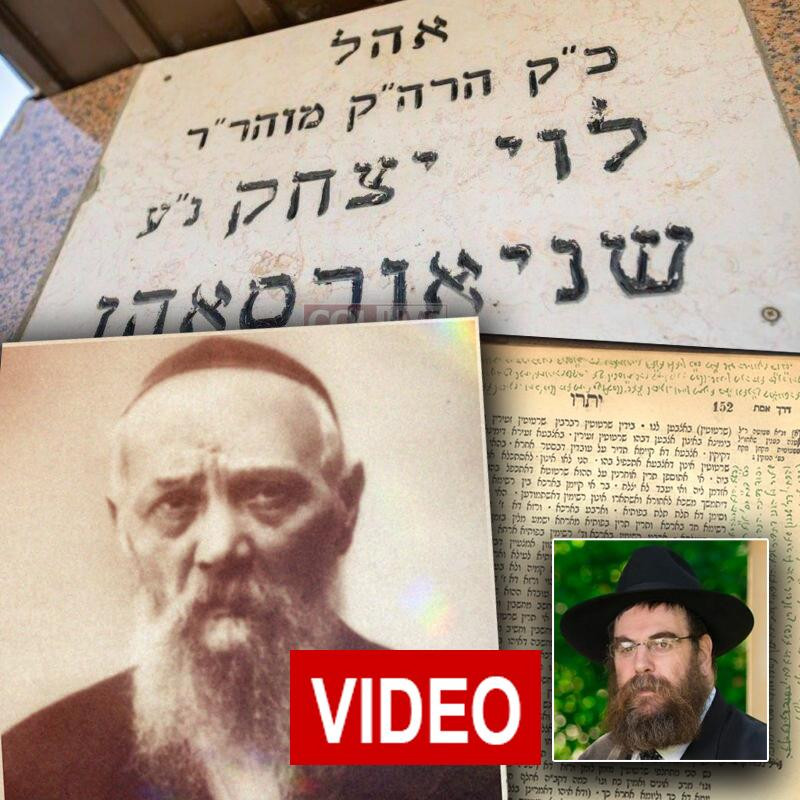 COLlive5 hours ago
Insights from Toras Reb Levi Yitzchok, a weekly class based on the teachings of Harav Levi Yitzchak Schneerson, chief rabbi of the city of Dnipropetrovsk, Ukraine, during the bloody Bolshevik revolution and the subsequent Communist oppression and father of the Rebbe.
The shiur is presented by Rabbi Dovid Dubov, Director of Chabad of Mercer County in Princeton, New Jersey, and author of Yalkut Levi Yitzchok, an anthology of commentaries collected from the works of Harav Levi Yitzchak, of blessed memory.
Organized by Irguntorah.org and aired on community news service COLlive.com.
From the Rebbe’s Father זצ״ל
Lech Lecho
And I will bless those who bless you, and the one who curses you I will curse, and all the families of the earth shall be blessed in you.”
12:3
Question
By Avrohom the Torah starts with blessing and continues with curse
I will bless those who bless you, and the one who curses I will curse
However by Yitzchok (Toldos 27:29) it’s in the reverse
May those who curse you be cursed
and those who bless you be blessed
Why the difference?
לקוטי לוי יצחק שמות דברים ע׳ שעב
ילקוט לוי יצחק לך לך סי׳ פג
Get The Weekly Shiur On Whatsapp: https://chat.whatsapp.com/Gespf7sF2KKK0opfrv3SVO
For more shiurim and podcasts visit: irguntorah.org
 COLlive6 hours ago
Held up on official business on the other side of Los Angeles, LAPD Chief of Police Jim McDonnell took a helicopter to arrive in time to personally present Rabbi Sholom Langsam with the Award for Excellence in Police Chaplaincy.
Joining them at the 31st Annual LAPD Chaplain Banquet were Israel National Police Chief Superintendent Golan Dadon, LAPD command staff, officers, fellow chaplains, family, and friends. The recipient was chosen anonymously by chaplains of different faiths and backgrounds, and for Rabbi Langsam, the recognition came as a surprise.
Behind the honor is a shlichus that places a frum Jew where a rabbi is rarely found, and where a listening ear can make an enormous difference.
Officers witness scenes most people will never encounter: a child suffering abuse, a family shattered by violence, a life suddenly lost. The call ends, but what they have seen can follow them home. A chaplain offers someone to turn to, a place to speak openly and unburden themselves.
In his remarks, Rabbi Langsam drew on a teaching from Tanya about chesed and gevurah. Malach Michael represents chesed, lovingkindness, while Malach Gavriel represents gevurah, strength and discipline. Law enforcement demands tremendous gevurah: courage, restraint, judgment, and the willingness to move toward danger. But behind that strength, he explained, there must also be chesed, the ability to see the humanity and dignity of the person standing in front of you.
“The chaplain stands beside that strength with kindness,” he said, reminding those who carry so much for others that they, too, deserve to be seen, supported, and cared for.
That presence also opens doors to neshamos. A Jewish officer who rarely enters a shul may put on tefillin at work. A conversation with an agent or service member may turn to Yom Tov, Jewish identity, or emunah. Among non-Jewish colleagues, the same daily encounters become opportunities for Kiddush Hashem, as Torah values show through how a frum Jew treats others, keeps his word, and shows up when needed.
Sometimes, Rabbi Langsam says, Kiddush Hashem means saying yes, again and again, to someone who needs support. Sometimes it means a respectful no. In 2020, after being named an LAPD Reserve Officer of the Year, he declined to attend the awards ceremony because it was held on Shabbos. The recognition mattered, but his commitment to Shabbos came first.
Rabbi Langsam serves as a chaplain with the LAPD, United States Secret Service, FBI, and Los Angeles County Probation, and as an ACS chaplain with the United States Coast Guard. As executive director of SoulLinks, he provides Jewish chaplaincy, spiritual care, and outreach to law enforcement personnel, military members, veterans, and their families.
Inscribed on the award were the words “Love your neighbor as yourself” (Vayikra 19:18). For Rabbi Langsam, they describe the work that continues long after the banquet: reaching another neshamah, answering another call, and making time for someone who needs to be heard.
In the words of the SoulLinks mission: “Serving those who serve.”
 COLlive7 hours ago
“Mommy, if I beat cancer once, why did it come back?” 💔
Chaim Rubin is only 7 years old.
A year ago, after more than a year of difficult treatments, his parents finally heard the words they had been praying for: Chaim had beaten cancer.
He went back to school, back to his friends, and back to simply being a child.
But at the beginning of Av, everything changed again.
The seizures returned, and then came the devastating news:
Chaim has already started treatment to help control the disease, but to give him the chance he desperately needs, his family must now get him to the United States for advanced treatment.
The hospital requires a significant deposit upfront, and after already using their savings and everything they had available, the family simply cannot do this alone.
Every donation can bring Chaim one step closer to the treatment he needs and another chance to fight.
🙏 Please open your heart for Chaim ben Yael.
 COLlive8 hours ago
At 402 Eastern Parkway, Oholei Torah is moving forward with plans for the new Oholei Torah Rabbinical Campus, with the goal of opening for the 5789 shnas halimudim.
This past summer, Oholei Torah retained New York Major as the owner’s representative and contractor, and a leading architectural firm, FMA, which has extensive experience designing Yeshivos. NYM assembled a team of engineers, interior designers, and other specialists to bring the vision for the campus to life. Planning and design are expected to continue for approximately four more months.
As the team assessed the existing building, locating its original structural drawings became a crucial part of the planning process. Oholei Torah hired a company to search for the records through the New York City Department of Buildings. To the team’s surprise, the search yielded some documents, but not the original plans.
Since the Department of Education had rented the building for approximately 40 years for use as a public school, Oholei Torah then contacted the School Construction Authority, which manages construction and renovations for city schools. The SCA shared additional records, including plans from past renovations, but the original structural drawings the team needed most remained missing.
Without the original plans, the team faced the prospect of spending weeks piecing together information that had once existed on paper. Engineers would need to conduct extensive measurements, scans, structural probes, and testing before key design work could move forward.
Then, during a meeting, a familiar name came up. Rabbi Mendel Blau, Roish Moissed, mentioned to Rabbi Yehoshua Lustig, Menahel K’lali, that their former Beis Medrash classmate, Shlomo Kleinman, works at Ford Motor Company in Dearborn, Michigan. Since Ford had originally built 402 Eastern Parkway in 1916 as a showroom, perhaps its archives still held the original plans.
Rabbi Lustig reached out to Shlomo, who was more than happy to help.
“I have such great memories of my years in Oholei Torah Beis Medrash,” Shlomo said. “It means a lot to me to play a part in preparing a new Zal for the next generation of Oholei Torah bochurim.”
Shlomo contacted his colleague, Leslie Armbruster of the Ford Motor Company Archives department. She searched Ford’s extensive archives and found what the team had been seeking: the building’s original plans. More than a century later, those drawings are proving invaluable to the team preparing the building for its new use.
“I was delighted to find the drawings of your building, and am happy to have been able to save your organization both time and money. It’s a lovely reminder of the importance of the work that my team and I do in the Ford Motor Company Archives,” said Leslie.
The impact was substantial. According to Yiddi Nussensweig of New York Major, the drawings are saving approximately $200,000 and six to eight weeks of investigative work. While scanning, physical probes, and testing will still be needed, the original plans significantly reduce the extent of that work by giving engineers a clearer understanding of the building’s structure.
The campus is planned to span more than 100,000 square feet, with three large Zals, a state of the art mikvah, classrooms, dedicated rooms for mashpiim, a student lounge, and additional spaces to support the daily learning and needs of the bochurim.
The project comes as enrollment continues to reach record levels. This year, Oholei Torah welcomed 540 Beis Medrash talmidim, an increase of 75 over the previous year. Despite considerable efforts to expand capacity, more than 100 applicants still had to be turned away. The new campus is being planned to meet that growing demand and provide room for the years ahead.
“We are deeply grateful to Ford Motor Company for generously responding to our request and making these historic plans available to us,” said Rabbi Lustig. “We especially appreciate the support of Ford Archives and Leslie Armbruster, along with Shlomo Kleinman for helping connect us with the right team. Ford’s generosity has saved the Yeshiva valuable time and resources and helped move us closer to opening the new campus.”
The plans once used to build a showroom are now helping prepare a home for Torah, making room for Oholei Torah’s future.
 COLlive9 hours ago
Forty years after the Rebbe established the Shluchim Office, its mission of supporting Shluchim and their families continues through programs that strengthen the next generation. One of the most meaningful is the annual Kinus Tzeirei Hashluchim, bringing thousands of children of Shluchim together in Crown Heights for a weekend of connection, inspiration and friendship.
Today, the Shluchim Office has launched a drive to continue and grow this important and vital initiative.
For a young Shliach, the Kinus offers experiences he will remember for years to come. From going to the Rebbe’s Ohel and Davening at 770 to making new friendships that give him chayus, every moment reminds him that he is part of a worldwide community.
“For children who may be the only Shluchim in their towns, these friendships and shared experiences mean so much,” shared Rabbi Mendy Shemtov, Director of Development. “When children of Shluchim passed by the Rebbe, the Rebbe would often point out that they too are Shluchim themselves. The Kinus is what gives the Young Shluchim the ability to gain a stronger Hiskashrus to the Rebbe and renewed pride in their Shlichus.”
A special fundraising drive is underway to make this experience possible for the next generation. Support Young Shluchim with the Kinus they await year round by giving at give.youngshluchim.org.
The Kinus Tzeirei Hashluchim is a project of the Shluchim Office.
 COLlive11 hours ago
By the RaiseThon Staff
Today, Websites Everywhere Are Under Attack
On October 21, 2026, as we were finishing this article, a serious security crisis hit websites around the world. It’s one of the most alarming warnings the internet has had in years, and every mosad with a website should be concerned.
Here’s what happened. Security experts found two hidden weaknesses in PHP, one of the most common building blocks of the web. PHP is the programming language behind a huge share of websites, online stores and donation pages. The flaws had sat there, unnoticed, for about 20 years. Websites everywhere scrambled to install an emergency fix.
What it meant: a stranger with no password and no account could take over the computer running a website. Not just peek at it. Take it over, with everything stored inside.
It didn’t matter how carefully the site was built. Even sites with clean, secure code were exposed. The crack wasn’t in the house. It was in the foundation underneath it.
Then it got worse. Attackers started trying to break in before the emergency repair came out. Government websites across Europe went offline as a precaution. In the Netherlands, the national ID login, the parliament’s website and even the national cybersecurity center’s own site went dark.
And AI was part of the story. The experts who uncovered the flaws used AI tools to do it. The hackers have those same tools.
Small sites are the most exposed. News reports singled out sites run by people or organizations with limited tech resources, often on cheap shared hosting where nobody controls the servers. That’s exactly how most homemade donation sites are run.
What this means for your mosad
– What is your site built on? Most people who build with AI have no idea.
– Who fixed it today? The repair came out, but it only protects sites where someone actually installs it. A site on outdated technology, or one nobody is watching, may still be wide open.
– Would you know if someone got in? A hacked site looks exactly like a safe one, until your donors start getting calls from scammers who know their names.
At RaiseThon, the platform behind more than 1,000,000 donors, over $1 billion raised and thousands of organizations, our team was on it the same day. With a homemade site, nobody’s watching. You find out when your donors do.
And that’s just one day’s news. Here’s what else we hear from mosdos.
The Phone Call
The call came in late. The voice was shaking: “Our processor froze everything. The donations came in, but we can’t touch a dollar.”
The mosad had built its own donation site with AI. It looked professional, the donations came in, and they were proud of the fees they saved.
Then the processor froze the funds. The site broke processor rules nobody on their team knew existed, and the AI never warned them.
That money is still in limbo. Salaries, bills and programs are waiting. All to save a few thousand dollars.
Let’s Be Honest
AI isn’t a fad. It’s extraordinary, and it improves every day. Describe a donation page and it appears in minutes: polished design, working checkout, no fees, no contracts. For a mosad watching every dollar, that’s tempting.
So why use a platform at all?
Because a fundraising campaign isn’t a website. It’s a moment of trust. That trust is tested on campaign night when thousands of donors pour in, at 2 AM by a hacker you’ll never meet, and the day a scammer gets your donor list.
A Pretty Page Isn’t a Campaign
The part of a campaign everyone sees is the front end: the page, the photos, the thermometer climbing. AI can make that part look glamorous in minutes.
But the front end isn’t what makes a campaign work. The backend does. It’s the foundation underneath that processes every card, stores every donor, sends every receipt, counts every dollar and keeps the hackers out.
That’s where homemade sites fall apart. The page looks great, until something breaks underneath. Then you’re stuck, because you have no clue what was actually built.
It’s not about the front end. It’s about a robust backend that works: built over years, tested on real campaigns with real donors, and still tested day in and day out.
Your Donor List Is a Treasure Map
Your site holds the names, addresses, phones, emails and giving history of the most generous people in our community. To a scammer, that’s a treasure map.
When it leaks, donors get calls: “This is the mosad. There’s an emergency.” The caller knows their name and last year’s gift. Your donors get robbed, and your name is on it.
Nobody remembers the AI tool. They remember you. Twenty years of trust can disappear in a week.
AI Writes Code You Think Works
AI code looks like it works. You test it and launch. Then a snag comes up: one bug, buried in thousands of lines, takes the whole site down. And you have no idea where to look, because nobody on your team understands the code. Nobody wrote it, and nobody ever read it.
Even on days it runs, it often isn’t safe. AI-built apps are known to leak data, leave databases open and leave passwords in plain sight. You won’t see it, but hackers will. Automated programs scan thousands of sites an hour for easy targets, and being small makes you an easier one.
Card thieves love unprotected donation forms for testing stolen cards. You wake up to hundreds of tiny “donations,” then chargebacks, fees and a frozen account.
Every Change Can Break Something Else
Not every danger comes from outside. Some of it comes from the building itself.
A homemade site is never really finished. You go back to the AI to add a feature, change a color or fix a bug, and each time it rewrites code. It doesn’t remember why the old code was there, and it doesn’t check what else depended on it.
Add a matching feature, and receipts quietly stop sending. Fix the mobile layout, and the donate button stops working on iPhones. Update the donor form, and monthly donations stop charging.
And you’ll never know it broke. Nobody tests everything every time. You check the one thing you asked for, it works, and you move on. You don’t retest every page, every card type, every receipt and every recurring gift after each change. So the break sits there unnoticed, until donors call or the money doesn’t come in.
And when you do catch it? You ask the AI to fix it. It fixes it, and you discover three more things broke. You ask it to fix those, and something else goes. Each round of fixes creates new problems, and you’re stuck chasing the AI in circles, usually with campaign day getting closer.
Professional teams guard against this. Every change is tested against everything that already works, and nothing goes live until it passes. With a homemade site, every improvement is a gamble, and the more you build, the more fragile it gets.
And it always seems to happen at the worst time: the night before the campaign, someone asks the AI for “one small change.”
The Rules Change Every Month
Card security standards, processor rules, data-breach laws and fraud patterns never sit still. Mass texting needs registration and opt-outs. Get it wrong, and carriers block your campaign-night blast, and texting laws allow lawsuits for every message.
A homemade site learns new rules the hard way: a frozen account, a fine, a breach letter to every donor, or a lawsuit. That can cost far more than one campaign.
It Looks Like It Works. That’s the Problem.
Often AI code simply doesn’t work. When it seems to, that’s worse. It passes every test, but ten office donations aren’t campaign night.
Picture the final hour of your match. Donations pour in, ten in the same second. Nobody knew that when two donors give at once, the site counts one twice and skips another. The thermometer says $480,000. The real number is $410,000. Your matcher celebrates a goal you didn’t hit, receipts are wrong or missing, and by morning your matcher, donors and processor all want answers.
Who do you call? The freelancer moved on. The volunteer is at a wedding. The AI doesn’t answer the phone. Ask it to fix the bug, and it fixes one thing and breaks two.
It’s a beautiful house with no blueprint. Everything works until a pipe bursts in the wall, and the plumber says, “I have no idea how this was built.”
When It Has to Connect to Everything Else
Your site must talk to your processor, CRM, email, texting, accounting and receipts. Each connection runs through an API with its own rules, keys and limits, and they keep changing. AI guesses, and it often guesses wrong: an outdated version, a skipped step, a hidden mistake that surfaces weeks later.
Donations stop syncing. Receipts don’t match. Payments get declined. “Please give” emails go to donors who already gave.
And there’s no one to talk to. The processor says it’s your end. The CRM says the same. Everyone points at code nobody understands.
We Use AI, Too. Here’s the Difference.
We build AI into our systems every day. The difference is who’s holding it. Our developers review the code AI helps write, and outside experts review it too. We track new processor policies, threats, regulations and every change in AI itself.
In expert hands, AI is a powerful tool. In anyone else’s, it’s a risk that doesn’t look like one.
Would You Board That Plane?
One pilot just finished flight school. The other has thousands of hours and can land on the Hudson when both engines fail. AI is the new pilot. On your biggest day, who’s in the cockpit?
Your donors deserve an experienced crew. Don’t risk them, or your chance to reach every one of them, on something you don’t understand, or only think you understand.
You may be sure you know what your mosad needs. But a great platform isn’t built from one mosad’s guess. It’s built by working through these exact problems with thousands of institutions, one campaign at a time. That’s the only way a product becomes stellar.
“But We’re Saving on Fees.” Are You?
A DIY site is held together by paid services, each with its own bill:
– Email: Mailchimp or Constant Contact, every month
– Texting: a separate SMS service, per message
– Donor management: a CRM, or a messy spreadsheet
– Design: a designer or a design subscription
– Hosting and security: keeping it online, patched and safe
– A developer for when it breaks, at the worst possible time
None of them talk to each other. The donor who gave $1,000 an hour ago gets another “please give” email tonight. You pay for five systems and get the results of none.
A Fundraising Company That Builds Its Own Technology
RaiseThon is a team that lives and breathes fundraising. Donor engagement keeps changing. What worked three years ago, for a yeshiva or a chesed organization, on Tuesday morning or in the final hour, isn’t the same.
With over 1,000,000 donors and $1 billion raised, we’ve learned which amounts lift the average gift, which words make donors hesitate, what turns $180 into $1,800, and what brings back a donor who stopped mid-checkout. It’s all built in, and we improve it every day.
One system, built to work together:
– Donor CRM: who lapsed, who’s returning, who to call, with a list for every team member
– Email system: built for fundraising, with real reporting; skips donors who already gave
– Texting system: your own registered number, two-way inbox, automatic opt-outs, spam check
– Milestone automation: emails and texts go out when the match unlocks or a goal is hit
– AI graphics: your photos turned into ready-to-post graphics in every size
– Every campaign style: auctions, Torah dedications, events, matching and more
– Donor app: because donors give from their phones
– Fraud protection: stops card thieves before they freeze your account
– Your funds, your processor: built the way processors require; we never hold your funds
– Your donors, your data: your donor list belongs to you, and you can export it anytime
– Live campaign-night team: at 11 PM, we pick up
Thousands of Organizations Behind You
Build your own, and you get only what you thought to ask for. Join RaiseThon, and you get every feature thousands of organizations asked for: a yeshiva’s auction, a shul’s Torah dedications, a school’s event tickets, a Shliach’s list of donors who haven’t come back. Each one is proven with real donors and real dollars.
A homemade site only knows what one person asked an AI one afternoon.
“But I Only Built What I Need”
How do you know what you need? When your best donor finally reaches your page, the right ask, timing, options and a safe checkout decide the gift. Miss one, and they give less. You’ll never know, because money you didn’t raise never shows up on a report.
You can’t build what you don’t know you’re missing.
The Biggest Backfire a Mosad Can Face
This risk doesn’t just gamble one campaign. You lose the features we develop every day to help each donor give their fullest, and you put every donor’s personal information on the line.
Saving on fees can become the biggest backfire a mosad ever faces: less money raised, a donor list in the wrong hands, and a name built over decades, damaged overnight.
The Real Math
Maybe you save a few thousand dollars in fees. Now weigh that against:
– The email, texting, design and hosting bills you still pay
– One frozen account
– One data breach
– One security hole nobody patched
– One “small change” that quietly broke your checkout
– One texting violation
– One crash in the final hour
– One major donor who gave less
– Every feature you didn’t know you needed
Those savings can cost you many times over, along with your donors’ trust.
Building your own platform is like building your own safe to save on bank fees. The lock clicks shut, but you’ve never met a burglar. Burglars have met plenty of homemade safes.
5 Questions to Ask Whoever Built Your Site
If you already have a homemade donation site, ask these today. If nobody has a clear answer, that is your answer.
1. Did anyone install today’s PHP security fix? Who is responsible for the next one?
2. Where is our donor data stored, and who can access it? Is it encrypted? Is it backed up?
3. Does the site follow our processor’s rules? Has anyone checked the card security requirements?
4. What stops card thieves from testing stolen cards on our form?
5. Who answers the phone at 11 PM on campaign night if donations stop going through?
The Bottom Line
AI is here to stay, and we use it every day. But your campaign isn’t the place to experiment. This week proved it: sites with a real team were fixed the same day, while homemade sites could only hope someone noticed.
Is it worth risking my donors, my reputation and my campaign to save a few dollars?
Your mission is Yiddishkeit, chinuch and chesed. Let the people who build fundraising technology every day protect it.
Talk to Us Before Your Next Campaign
Not sure your site is safe? Our team will walk through those five questions with you, at no cost. Ready to switch? We’ll set up your campaign and bring your donor list over for you.
raisethon.com
RaiseThon is a fundraising platform that has served more than a million donors and helped mosdos raise over $1 billion.
Sources on the October 21, 2026 PHP security crisis: CNBC, “Government websites in Europe and elsewhere go dark as software flaw sparks security scramble”; NL Times, “Dutch parliament website taken offline as cybersecurity warning triggers precautions”; The Jerusalem Post; The Korea Times.
 COLlive11 hours ago
The Merkos Chinuch Office is launching a new four-part pre-Yom Tov professional development series for Preschool Morahs. The series will be led by Mrs. Shterna Rappaport, Educational Director of the Merkos Chinuch Office and an Early Childhood Professional.
The series opens with the Preschool Chanukah-Prep Workshop, a webinar to be held on Wednesday, October 28, י”ז חשון, at 8:30 PM via Zoom. The workshop is designed to give Preschool Morahs a clear direction, outline, and set of practical ideas for teaching Chanukah in a way that leaves a lasting impression on young students, along with tools they can bring into the classroom immediately.
Workshop will include the Chanukah story through the lens of Chassidus, a suggested teaching storyline for young learners, Chanukah-themed ideas for centers and activities, Torah values and Yiddishkeit lessons drawn from the storyline, and social-emotional growth rooted in the Chanukah story. Participants will also receive ready-to-use classroom resources.
Mrs. Rappaport brings many years of experience teaching in and directing preschools. Most recently, she has mentored Preschool Morahs on best practices and strategies for actively engaging young learners.
The workshop is free of charge. Registration is required to receive the Zoom link, and all registrants will receive access to the recording.
Registration is available at chinuchoffice.org/preschoolwebinar.
 COLlive18 hours ago
Israel National News
A Jewish man from Brooklyn’s Crown Heights neighborhood was stabbed in the back in Midtown Manhattan on Wednesday evening in an incident being investigated as a possible antisemitic hate crime.
The attack occurred at approximately 5:45 p.m. near the intersection of Fifth Avenue and West 47th Street, in Manhattan’s Diamond District.
According to initial reports, a woman believed to be in her 30s approached the victim from behind and stabbed him before escaping west toward Sixth Avenue.
Hatzalah emergency medical personnel responded to the scene and provided treatment before evacuating the victim to Bellevue Hospital, where he was reported to be in stable condition.
Manhattan Shomrim confirmed that it was working alongside the NYPD Hate Crimes Task Force to investigate the stabbing.
“We are asking for the public’s assistance,” the organization stated, urging anyone who witnessed the attack or possesses relevant security camera, dashboard camera, or cellphone footage to come forward.
The suspect was described as a white woman, approximately 5 feet 9 inches tall, wearing blue jeans and white sneakers, with a dark sweater around her waist.
Police have not yet released the victim’s identity or additional information about the circumstances of the stabbing. There was no immediate confirmation of an arrest.
The stabbing follows several recent attacks involving Jewish victims in New York City.
 COLlive21 hours ago
By Rabbi Eli Sandhaus – Principal at Mesivta Darchai Menachem
One afternoon in Yeshiva, I met a bochur who was considering joining our Mesivta. We spoke for a bit, and at some point I asked him what he knew about our Yeshiva.
He hesitated. “It’s for the ‘problem kids’.”
I appreciated his honesty and asked him if he knew any of the boys in the Yeshiva. He didn’t. Had he ever been here before?
No.
It was simply the impression he had picked up from what people said.
The contrast struck me.
Here I was, spending my day surrounded by the very boys he was talking about—watching them learn, daven, laugh with their friends, interact with their Rebbeim, struggle with some things and succeed at others.
And sitting across from me was a bochur who had never walked through our doors, already claiming to know exactly what kind of boys were inside.
We spoke for about 45 minutes and discussed some of the reasons he had agreed to come in despite his hesitations. We spoke about some of the things that weren’t working for him in his current yeshiva, and some of his frustrations with school over the past few years.
Afterward, he went to sit in on some classes and stayed for the rest of the day.
Before the day was over, he came back to my office. This time, the conversation was very different. He told me how much he had enjoyed the day. He liked the Rebbeim. He liked the classes. He felt that this might be a place where he could learn and grow.
It wasn’t long before he decided that this was the right place for him.
Sadly, this wasn’t the first bochur to walk into Darchai Menachem with that impression. I’ve had similar conversations more than a few times over the years.
There are quite a few boys who were afraid to walk through our doors, but thankfully managed to get past that fear. Many ultimately spent years succeeding here, growing in their learning and in themselves, and eventually moving on to Zal to finish their bochur years with dignity and pride.
What stands out to me is how easily it could have gone the other way. A boy hears a certain reputation, decides that a yeshiva is “not for someone like me,” and never even considers a place that may actually be a very good fit for him.
And I find myself wondering about the boys who never make it through the door. And I don’t mean only the boys who never make it through our door.
This really isn’t about whether a boy chooses Darchai Menachem. Darchai Menachem is not the right yeshiva for every boy (No Yeshiva is right for every single boy).
I mean every boy who remains in a yeshiva that isn’t working for him because the alternative carries a label he is afraid to wear.
Sometimes we can become so focused on where a bochur is supposed to go that we lose sight of a much more important question: Where will this particular bochur actually grow?
Not every boy thrives in the same environment. Not every talmid needs the same kind of yeshiva. One boy may flourish with a very demanding schedule and large classes. Another may need more personal attention. One may need stronger academic support. Another may need a little more breathing room. Another may need to discover that learning can actually be enjoyable before he can begin pushing himself further.
A boy can spend years sitting in the “right” yeshiva while slowly becoming convinced that learning isn’t for him. That he isn’t successful. That yeshiva is something to endure rather than a place where he can grow.
And those feelings don’t necessarily disappear when he graduates. The relationship a bochur develops during these years with learning, with Rebbeim, with davening, and ultimately with Yiddishkeit can remain with him for many years to come.
To me, helping a boy find the environment in which he can flourish isn’t settling for less.
That is chinuch.
Yet I have seen how difficult it can be for a boy (or his parents) to make that change. A boy may know that he isn’t succeeding where he is. His parents may know it. His teachers may know it.
But changing yeshivas can feel like making a public statement about who he is. What will people say? What will my friends think? What does it mean about me if I go there?
And so sometimes a boy stays in an environment where he is unhappy, unsuccessful, or slowly disengaging – not because there isn’t somewhere else where he could thrive, but because the stigma of going there feels worse than the pain of staying where he is.
That is sad.
Because these years are too important to let other people’s judgments determine where a bochur belongs.
At the end of the day, the name of the yeshiva matters far less than what is happening to the bochur inside it. Is he growing? Is he succeeding? Is he developing a positive connection to learning and Yiddishkeit?
Darchai Menachem is not the right yeshiva for every boy. But I know what I see when I walk through our Zal.
What I see are young bochurim, learning and davening, having fun and building friendships, surrounded by dedicated Rebbeim who know their Talmidim and care deeply about them. I see Bochurim who are really working on themselves and growing every day.
At the same time, there may be another boy right now who needs exactly that environment. A boy who could be happier, more successful, more connected to his learning and more confident in himself, but who will never give himself the opportunity to find out.
Not because he came and didn’t like what he saw.
But because he never came at all.
Because someone told someone, who told someone else, what kind of boys go to a certain yeshiva.
And sometimes, that is enough to keep a boy from ever finding out for himself.
–Rabbi Eli Sandhaus is Principal of Mesivta Darchai Menachem, where for over 20 years he has worked closely with Bochurim through the challenges of adolescence and young adulthood. He can be reached at [email protected]
 COLlive23 hours ago
This month, tens of thousands of Jews worldwide—from Boise, Idaho, to Miami, Florida, to Stockholm, Sweden—will gather at their local Chabad House for the first lesson of JLI’s latest course, Kabbalah and the Hidden Architecture of You.
“This is a course that explores the most fascinating concepts in kabbalah and how they influence your life,” says course author Rabbi Mordechai Dinerman. “It’s no surprise that people are so fascinated by mysterious phenomena like dreams, reincarnation, and soulmates.” The course satisfies that curiosity and shows students how kabbalah directly relates to their lives.
For shluchim and shluchos like Rebbetzin Rivkah Slonim in Binghamton, New York, the course gives students an opportunity to discover Judaism’s spiritual wisdom and its relevance to their daily lives.
“It’s like tearing the facade off the world’s surface and seeing the spiritual forces at work behind the scenes,” Slonim says. “Your soul is spilling out into your body’s life all day, every day. It’s not a Yom Kippur special.”
Across the next six weeks, these tens of thousands of students will explore forty fascinating ideas, from gilgul and ibur, to sleep and dreams, to the power of our words and thoughts, and the course includes a full overview of the ten sefiros and how they are embedded in our personalities, worldviews, and even our bodies. But most of all, they’ll walk away with a profound new respect for the depths of the Torah’s wisdom.
 COLlive1 day ago
The Menachem Education Foundation invites parents, educators and mechanchim to tune in to the Everything Chinuch Podcast.
The series features thoughtful conversations with leading voices in chinuch on the questions families and classrooms face every day.
The podcast offers practical guidance rooted in the Rebbe’s approach to chinuch, giving listeners ideas they can bring into their homes and classrooms right away.
The latest episode features Crown Heights Beis Din Rabbi Yosef Yeshaya Braun on “Instilling Yiras Shemayim in Your Children,” a discussion of how we can nurture a genuine, lasting connection to Hashem in the next generation.
This session took place as a live farbrengen in Crown Heights, and is now available for parents worldwide to enjoy!
Other episodes hone in on mental health with Rabbi Dr. Yosef Shagalow and Dr. Oshra Cohen, school and classroom dynamics with Rabbi Mendel Greenbaum and Mrs. Mushky Zaltzman, and much more.
The Everything Chinuch Podcast is available on Spotify and 24/6.
🎧 [Listen to the latest episode]
Everything Chinuch: Guidance for every child, every home, every classroom.
 COLlive1 day ago
When Rabbi Meir Shlomo Lubecki walked out of his Chabad center, Beth Loubavitch Paris 3, on Saturday night, the streets of central Paris looked like a war zone.
“You’ve never seen anything like this,” said Lubecki, who directs Chabad of the 3rd Arrondissement, a short walk from Place de la République. “Everything on the ground was torched: cars, shops, bicycles.”
France is still reeling after a weekend of anti-government demonstrations devolved into some of the country’s most destructive riots in decades. More than half a million people joined some 110 marches across the country on Saturday, according to the Interior Ministry.
Protests that began weeks ago with high school students swelled to include unions and others angry over the cost of living, before opportunistic rioters vandalized roughly 1,500 shops. The government estimates that at least 3,000 businesses nationwide were pillaged.
Nearly 2,400 people were arrested, and localized curfews are being extended into Tuesday night.
In Paris, much of the violence converged on Place de la République, near which several Chabad emissaries live, pray and serve the local Jewish community.
‘Everyone Had to Leave Immediately’
The Saturday demonstration had been planned for two weeks, and as Shabbat approached, warnings circulated through the Jewish community. Lubecki checked with his contacts, was told things would likely be fine, and kept his schedule, including a women’s class set for 6 p.m.
Shabbat morning began quietly, and the minyan gathered as usual. Then, around noon, during Kiddush, members of the Jewish community’s volunteer security service arrived with news. The march wasn’t scheduled to begin until 2 p.m., but by 12:30, things were already heating up at République.
“He told everyone to leave,” Lubecki recalled. “Everyone had to go straight home immediately.”
Lubecki, his wife Chaya and their children remained and ate their Shabbat meal at the Chabad House. When they stepped outside around 3 p.m., they quickly turned back and locked the doors.
No women came for the class that evening. But eight men made their way in for Minchah services.
Molotov Cocktails and Burning Bicycles
Rabbi Moyche (or Moshe) Cohen, who has directed Beth Loubavitch Paris 11 – Republique in the area with his wife Tzipora since 2010, has grown used to demonstrations on his doorstep.
Since Oct. 7, he said, nearly every protest in Paris gathers at République, often with flags of Hamas and other terror groups. But they typically stay away from harassing or confronting Jews overtly.
This Shabbat, though, the energy was different.
The morning at shul was calm. By the time the Cohens came home at 2 p.m., protesters were everywhere, even their own street. That crowd, Cohen said, was loud but not especially violent. When he headed back to shul at 6, the scene had changed. The afternoon marchers had gone home, and new groups from outside the area had replaced them.
“They organized themselves in groups of 10, with Molotov cocktails,” he said. “Baruch Hashem, they were busy with the police and nothing happened to us.”
Around them, there were fires and smashed storefronts; stolen bicycles were piled up and set ablaze. After Havdalah, Cohen found that the windows of his car had been smashed, and the vehicle had been burned on the inside, totally destroying it. Security footage showed that it had been torched during Shabbat, along with every other car on the street.
As soon as Shabbat ended, the Lubecki family got in and drove toward their home, in a calmer part of the city. Phone calls poured in—“Don’t go out, it’s dangerous!”—but they were already on the road.
“We ran every single red light. Everyone was running red lights because stopping the car was too dangerous,” he said. Masked young men and women surrounded the streets. Once they reached their own neighborhood, “it was like a whole different world. People were walking around, shopping. It was as if we had moved to another country.”
The next morning, Lubecki returned to the Chabad House through streets of charred wreckage. Inside, the minyan met, and children arrived for Talmud Torah.
“A regular Sunday morning,” he said, “as if there had been a war the night before, and we just resumed.”
‘Whatever Our People Need’
On Sunday, Cohen began calling Jewish-owned stores in the area. One owner told him the rioters had broken in and taken everything. Lubecki, too, has been fielding calls from shop owners whose businesses were burned; one sent him photos of the damage, noting that his store had held precious letters and telegrams he had received from the Rebbe.
Both rabbis have been visiting affected business owners, and Cohen is organizing help to cover losses that insurance will not.
Cohen is careful not to overstate the danger to Jews specifically. Some in his community, he said, are frightened by reports that Jews were singled out—something he did not see.
“It wasn’t about the Jews,” he said. “They were chasing what they wanted: shoes, phones, glasses. Jewish and non-Jewish businesses alike were hit.”
Instead, he has been distributing mezuzahs and encouraging community members to have their mezuzahs checked.
“That’s how we have to think,” Cohen said. “Not to be afraid of the protestors or wait for the government to do something. Our mission is to teach people to believe, and to show them G‑d’s hand, even when it’s painful.”
As France braces for possible further demonstrations this coming weekend, the Chabad emissaries of central Paris say they aren’t going anywhere.
“Whatever our people need, we are here,” said Cohen. “It’s hashgachah pratit that we’re here, and we will continue to proudly do the Rebbe’s work.”
To support the Cohens in their work, click here.
 COLlive1 day ago
Colel Chabad is bringing Nafshi back to Kings Theatre in Brooklyn for a special Yud Tes Kislev celebration on Sunday, November 29, 2026.
The much-anticipated annual event will once again bring together music, inspiration, and the spirit of Chassidus for an extraordinary evening in honor of the Rosh Hashanah of Chassidus.
Over the years, Nafshi has established itself as the premier Yud Tes Kislev event, bringing audiences together for a distinctive musical experience honoring the teachings and spirit of Chassidus.
This year’s production promises another spectacular evening, with a specially curated program, powerful musical moments, and an exciting lineup of performers.
While the full details are still under wraps, organizers have confirmed to COL that the event will take place at the iconic Kings Theatre in Brooklyn on Sunday, November 29.
Stay tuned for the official lineup, ticket information, and more exciting announcements coming soon.
 COLlive1 day ago
You can vote early beginning this Sunday, October 25, through Sunday, November 1.
Election Day is Tuesday, November 3. Polls will be open from 6 a.m. to 9 p.m.
There Is Still Time to Register
The voter registration deadline is Saturday, October 24. If you have not yet registered, please do so now, before Shabbos.
Register to vote: https://www.thejfa.org/voter_page
Check your voter registration: https://www.thejfa.org/voter_page
View your sample ballot and find your polling place: https://findmypollsite.vote.nyc/
Every Vote Matters
The Rebbe encouraged voting and participation in the electoral process. Everyone is entitled to support the candidate of their choice. Regardless of whom you support, the most important thing is to vote.
Community Voter Turnout
In the recent Assembly primary, approximately 1,967 Anash voted, accounting for 16.2% of the district’s total turnout. Among Anash voters, 1,437 were under age 55, representing 73.1%, and 128 were first-time voters.
In the last mayoral general election, members of the Jewish community in Crown Heights cast 7,120 votes.
The Jewish Future Alliance will continue to keep the community updated with voting information. Please feel free to reach out if you encounter any issues on Election Day.
 COLlive1 day ago
A family from the Crown Heights community will soon be marrying off the second child in their large family.
B”H many weddings are coming up but for this one family its a fresh set of expenses one after another.
A campaign has been launched to help alleviate these stresses, so that nothing will distract from their simcha.
Let’s reach the goal of $25,000 and complete the simcha for this family.
In the merit of helping another Yiddishe family experience true simcha טוב-עין, הוא יברך כי-נתן מלחמו לדל”.
Click Here To Contribute To The Simcha
Righteous Helping is a non-for-profit 501(c)(3) federally tax-exempt charitable organization. (Tax ID: 92-3827720)
Campaign is Endorsed By Harav Shlomo Segal, Rabbi Mendel Feller, Zalmen Hertz
 COLlive1 day ago
Photos by Dovid Davidsohn
A delegation of international journalists from twenty countries visited Miami’s Lubavitch Educational Center last week as part of a U.S. Department of State-sponsored reporting tour focused on efforts to combat antisemitism.
Hailing from countries like Argentina, Ireland, Romania, Norway, and Malaysia, the journalists took the opportunity to interact with local shluchim, discuss the role media plays in antisemitism and see how Jewish life is thriving in Florida.
The journalists participated in a panel discussion featuring local Chabad rabbis and community leaders, exploring Jewish life in America, the challenges of antisemitism, and the role of education and community engagement in addressing it. The program was moderated by Rabbi Yakov Garfinkel, Principal of LEC’s Boys Middle School, who served as master of ceremonies, introduced the speakers, and facilitated the exchange between the journalists and community leaders.
The delegation heard from Rabbi Yaakov Fellig of Chabad of Coconut Grove, Rabbi Yosef Vogel, Director of the Center for Universal Values at the Jewish Learning Institute, Rabbi Yossie Denburg, dean of Lubavitch Hebrew Academy, Mr. Danny Aqua, Director of Special Projects at Teach FL, and Mr. Zalman Myer-Smith, director of Chabad Security Center of Florida.
“When your government gives you the power to write, you have the obligation and honor to write the truth,” Rabbi Yossie Denburg told the journalists in his remarks. “G-d did not send you here by accident. You are here because you have been given a job to change the narrative, the trajectory of what your readers hear, see, and think.”
Led by Rabbi Yossi Zavdi, LEC’s associate Head of School, the group toured LEC, the largest Jewish school in the Southern US. They interacted with teachers and students in Judaic and general studies classes, heard about their curricula and extracurricular activities, and got to see what an authentic Jewish education looks like for American Jewish children. “They left very impressed with our curricula and education model, and specifically our student-teacher engagement,” said Rabbi Zavdi.
Prior to the event at LEC, the group met with Rabbi Benjy Korf, LEC’s head of school and regional director of Chabad of Florida, and Miami-Dade Sheriff Rosie Cordero-Stutz, for a conversation about how cultural awareness and community partnerships support law enforcement efforts to combat antisemitism and protect the safety and dignity of every community.
“Judaism taught the world the idea of ethics and morals,” Rabbi Korf told the journalists. “It stems from freedom from slavery, teaching the world that each human being was made in the image of G-d. G-d gave the Jews the Ten Commandments at Sinai, which was the basis of morality. We don’t need to be lectured by those who have persecuted, expelled, and murdered Jewish communities en masse throughout history. We continue to spread the light of positivity one good deed at a time to make this world a better place.”
Participating shluchim also included Rabbis Shloimy Denburg of Lubavitch Hebrew Academy, Yisroel Frankforter of French Chabad, Alex Kaller of Chabad of Chabad Russian Center, Menachem Mendel Korf of LEC, Moishy Korf of Chabad of Florida, Sholom Ber Korf of Chabad of Lakeview, Mendy Levy of Chabad Chaplaincy Network, Shmuli Lezak of Chabad of Bayshore, Chaim Lipsker of Chabad of Downtown Miami, Chaim Stern of Chabad of Mid Miami Beach, and Mendel Sossonko of Chabad of South Beach.
 COLlive1 day ago
All summer long, the grounds of CGI United bustled with energy, chassidishkeit, and the unforgettable spirit of camp. But as the summer came to an end, the grounds grew quiet, and the campers returned home to begin a new school year.
Then camp CGI ReUNITED!
For one unforgettable Shabbos, the magic of teen camp came alive once again. Singing, dancing, farbrengening late into the night, filling each other up with the warmth and joy that can only be found back in camp. Somehow, it felt like the summer never truly ended. It was a chance to reconnect with friends from out of town, relive the moments that made summer so special, and feel that unmistakable camp spirit all over again.
“Watching 100+ campers and staff gathered together in the dining room, arms wrapped around each other as we sang and danced to our favorite camp songs, truly felt like a dream come true” shared Mrs. Chana Marasow.
“A huge thank you to Rabbi Shimon and Shira Sabol, our incredible camp rebbetzins and dedicated staff, whose hard work and planning made this Shabbos so meaningful and unforgettable. Thank you for creating an experience that brought everyone back to the spirit of camp and gave our girls a boost of chayus to take with them into the year ahead.”
We’re grateful to be able to give our campers this special Shabbaton experience, ReUNITED in camp, recharged for the year ahead!
 COLlive1 day ago
By COLlive reporter
Congregation Tzemach Tzedek of Monsey has issued a statement denying any involvement in the mysterious booklet that was recently distributed throughout Crown Heights and mailed to homes in other communities.
The booklet, titled “I sent my son to Crown Heights for Shiur Daled,” raised concerns about the spiritual environment in Crown Heights and particularly its effect on young bochurim who come from out of town to learn near 770.
As COLlive reported, the publication did not identify an author or sponsoring organization. The only identifying information was a return address in Monsey associated with Congregation Tzemach Tzedek.
Following the article, a member of the shul’s board contacted COLlive to clarify that the congregation had no connection to the publication.
“This pashkvil did not come from us,” the board member told COLlive. “Somebody used our address without permission.”
Congregation Tzemach Tzedek subsequently provided the following statement:
“Congregation Tzemach Tzedek of Monsey wants to state clearly that we had no involvement in the anonymous booklet recently distributed in Crown Heights and mailed to homes elsewhere, as reported in your article ‘Who Is Behind the Mystery Booklet Decrying Crown Heights?’
“We did not write, fund, authorize, or distribute it, and we did not know our address would appear on it.
“Our shul has deep ties to Crown Heights and the Rebbe’s shechunah, and we do not endorse the booklet or the way it was put out.
The identity of the individual or group behind the booklet remains unknown.
 COLlive1 day ago
Rabbi Yehuda Harris of New Haven, CT, lovingly known as “Flumie,” passed away Wednesday morning, 10 Cheshvan, 5787.
He was 65.
He had been unwell over the past few months, battling an infection.
He lived in New Haven his entire life.
He was born in 1961 to his parents, Aryeh Leib and Uriella Harris. His mother was a Holocaust survivor who lived in hiding during the war. He was an only child and spent his high school years at Mir Yeshivah.
Yehuda had a brilliant mind. He received semicha from Rabbi Piekarsky and Rabbi Hirshprung in both Rabbonus and Dayanus. He was also an accountant and passed the bar exams in three states—New York, New Jersey, and Connecticut—all within two weeks!
He traveled around the country during many summers, eventually visiting all 50 states and meeting and befriending many shluchim.
He loved water flume rides, hence his nickname, “Flumie.”
He was a proud Chosid of the Rebbe, and would write to the ohel several times a week. He was an exceptional Yerei Shomayim. He loved and derived great satisfaction from leading davening, receiving aliyos, and reading the haftorah. He was also very generous in giving tzedakah.
Over the last decade or so, he was a full-fledged talmid in the New Haven Yeshivah Gedolah. There is hardly anyone who has lived in New Haven, even for a short time, or studied in the Yeshivah over the past 50 years who did not know him.
He was a unique character who always had something interesting to say. He was lovingly cared for by the New Haven community, young and old, including the shliach, Rabbi Levitin, and the Rosh Yeshiva, Rabbi Kalmenson A”H.
The levaya will take place tomorrow in New Jersey, near the resting places of his parents.
Baruch Dayan Ha’emes.
 COLlive1 day ago
Something special is happening in Crown Heights.
The N’shei Chabad registration hub, located in the former Gombo’s Bakery has been buzzing with women of all ages and stages stopping by, signing up, enjoying coffee and treats, and connecting with one another.
But it’s more than just a registration hub. It’s an atmosphere of inspiration, excitement, and renewed connection. Women have been sharing how uplifting it feels to be celebrated as Chabad women, to belong to something bigger, and to be part of an organization the Rebbe himself established and so strongly encouraged. The enthusiasm extends beyond the hub, with women already looking forward to the connections, opportunities, and programs still to come.
That excitement is spreading throughout Crown Heights, with hundreds of women already signed up as a N’shei Chabad members. N’shei Chabad membership is for every Jewish woman and girl, as the Rebbe wanted.
Along with the Rebbe’s promised brachos in ruchnius and gashmius, members enjoy exclusive discounts at Crown Heights stores, special offers, and raffles throughout the year.
Haven’t stopped by yet? Now’s the time.
Today’s treat is sushi. Come enjoy the atmosphere, become a member, and take your place in something that’s yours.
The hub is open through Friday, and everyone who joins before 20 Cheshvan (October 31) will be entered into a special raffle for a dollar from the Rebbe.
Be part of it. Belong to it. It’s yours.
Sign up at the hub or online at nsheichabad.org/member.
A heartfelt thank-you to Itzik Benabou for generously opening his doors and making the hub possible, and to our sponsors COLlive, Cravings by Chani, Splendid Cafe, Crisp & Crumb, Chantilly, and Bosmat Flowers for helping bring this experience to life.

 COLlive1 day ago
Friendship Circle International and researchers at Wake Forest University School of Medicine are conducting this research in partnership with Reinvention Foundation. The study examines how volunteering with Friendship Circle affects teenagers’ well-being. The $630,047 project is supported by a grant from Reinvention Foundation to Wake Forest University Health Sciences. The pilot is already underway.
Ariela R. Brafman, President and Executive Director of Reinvention Foundation, said: “What began as a learning journey about the youth well-being crisis led us to this research. If our hypothesis is correct that in-person volunteering can address many of the concerns facing teens today, this study will point to a promising and underinvested approach to teen well-being. We are proud to partner with Friendship Circle, an organization that engages teens in meaningful volunteering at scale and is uniquely positioned for this study. We are also grateful to Dr. Ballard, a leading researcher in the field, and her team at Wake Forest for bringing their expertise to the project.”
The study, “The Impact of Volunteering on Teen Well-being,” includes a pilot designed to involve up to 150 teen volunteers. A randomized controlled trial is planned to follow, with the project scheduled to run through November 2029.
The larger trial will compare teens randomly assigned to start volunteering immediately with teens assigned to start later. That comparison will help researchers test whether changes in well-being are due to volunteering.
The findings could help shluchim and shluchos improve local programs and give schools and other youth organizations evidence to guide their own volunteer programs.
Across Friendship Circle’s local chapters, teen volunteers spend time with kids and teens with disabilities through regular visits and shared activities. The study focuses on these sustained volunteer visits.
Mendel Groner, Executive Director of Friendship Circle International, said: “We know intuitively how much friendship matters to our well-being. We’re excited to work with researchers to better understand that connection and what it means for the teens who show up week after week.”
Researchers will examine changes in well-being, including social connectedness, confidence, and purpose, and explore which aspects of the volunteering experience may matter most for teens.
Dr. Parissa Ballard, a developmental psychologist and associate professor in Wake Forest’s Department of Family and Community Medicine, is leading the project. The research team includes specialists in adolescent development, clinical psychology, and biostatistics.
She said: “It is commonly known that doing good feels good. Through a rigorous research study, we are trying to learn exactly how volunteering supports teens’ well-being and positive development. We believe that volunteering is a key approach to help teens re-connect and contribute to their communities that also helps them thrive.”
Wake Forest leads study design, research ethics approvals, data collection, and analysis. Friendship Circle International coordinates chapter participation and survey logistics. Teens and chapter leaders will help develop research questions and surveys and interpret the findings.
About Friendship Circle International
Friendship Circle International supports a network of local Friendship Circle chapters that bring together people with disabilities, teen volunteers, and families through friendship and inclusive community programs. Learn more at friendshipcircle.com.
 COLlive1 day ago
In honor of the Yahrzeit on Sunday, the 14th of Cheshvan, I will recite the entire Sefer Tehillim at the kever of the Admor of Buffalo (Linitz-Sokaliovka), the holy Rabbi Eliyahu Yosef Rabinowitz, זצ״ל, and place a kvitel on your behalf.
For my fee, please call me.
On Erev Rosh Chodesh Kislev, Yom Kippur Katan, in Krakow, I will recite the entire Sefer Tehillim at the kevarim of the Rema, the Bach, the Megaleh Amukos, Yagid Alav Re’o, the Tosafos Yom Tov, and Yossele der Meizer, and place a kvitel on your behalf.
For all your needs and yeshuos, including shidduchim, health, happiness, parnassah, shalom bayis, and all the blessings you need.
For my fee, please call me.
On Rosh Chodesh Kislev, in Auschwitz
You are invited to join us in this heartfelt zechus, as we remember the kedoshim and honor their holy souls through the eternal words of the entire Sefer Tehillim.
No payment is necessary.
The Tehillim Messenger is a ben achar ben (direct male-line descendant) of Reb Michel of Zlotchov.
The Tehillim Messenger can recite the entire Sefer Tehillim anywhere in the world.
On a side note
I was involved in restoring over 800 kvorim, kivray tzadikim and putting matzeivos for people who didn’t have one separately you may donate to this special Mizvah
When i go to the ohel or other kivray tzadikim i put in pictures of the kvorim projects i am working on and past projects as well and I ask that in this zchus please help the people I pray for.
Levi Piekarski
Phone: 516-474-5846
 COLlive1 day ago
By COLlive reporter
A mysterious booklet has been landing on doorsteps throughout Crown Heights this week, bearing the provocative headline: “I sent my son to Crown Heights for Shiur Daled.”
Its subtitle reads: “A wake-up call I never thought I would have.”
Featuring AI images of Kingston Avenue, Eastern Parkway and 770, the publication raises concerns about the spiritual atmosphere of Crown Heights, particularly for young bochurim arriving from out of town to spend a year learning near the Rebbe’s shul.
But who is behind it?
There is no author’s name, sponsoring organization or signature identifying those responsible. The only identifying detail is a return address in Monsey, New York, associated with the Tzemach Tzedek shul. Whether the shul had any involvement remains unclear.
The text is written from the perspective of an out-of-town Lubavitcher parent who sent his son to Crown Heights for Shiur Daled, expecting a year immersed in learning, Chassidus and the atmosphere of 770.
“I was not prepared for Kingston Avenue,” the anonymous writer declares.
The booklet presents a troubling portrayal of Crown Heights, suggesting that the neighborhood surrounding 770 has become an environment where young bochurim risk losing some of the spiritual sensitivity instilled in them at home.
“Anyone who regularly walks these streets understands what I mean,” the writer states, describing what he calls “the exposure to immodesty, the erosion of standards of tznius long associated with a Chassidishe shechunah.”
He warns of “the ease with which a bochur can encounter, simply walking between yeshivah, 770, his apartment and a store, an atmosphere fundamentally at odds with the one his parents believed they were sending him here to absorb.”
The author also suggests that residents have become resigned to the situation, asking: “When did yiush, giving up, become a Lubavitcher strategy?”
It is a striking characterization of the Rebbe’s shechunah, particularly coming from an unidentified author whose connection to the community remains unknown.
The publication does acknowledge the efforts of local organizations, volunteers and community activists, while calling for greater involvement from Rabbonim, schools, community leaders and residents.
“This is not a call born of despair,” it concludes. “It is a refusal to despair.”
For a publication demanding greater communal responsibility, the refusal to publicly take responsibility for its own message is particularly striking.
 COLlive1 day ago
Before moving out on Shlichus, a Shliach works to secure the support needed to establish a presence and begin serving the community. He then spends the first several years knocking on doors, building relationships, developing programs, and laying the foundation for Chabad’s activities in the city.
As the community begins to take shape, a new challenge often emerges. The Shlichus is established, its activities are growing, and the potential for further development is clear – but the young community may not yet have the resources needed to take the work to the next level.
Operating under Chabad-Lubavitch Headquarters, the Machne Israel Development Fund brings Shluchim and philanthropists together to support and expand Chabad activities worldwide. MIDF has now opened applications for its Frontier Fund to help Shluchim at precisely this stage.
The new grant program will support established Shluchim in smaller, geographically isolated, developing, and underserved Jewish communities as they pursue opportunities that could meaningfully advance their Shlichus.
Funding may be used to move Chabad activities from a private home into a larger facility, secure a new space, renovate an existing facility, expand a successful program, reach a new segment of the community, or pursue another well-defined opportunity that could significantly strengthen local Jewish life.
“The Rebbe wrote in the MIDF’s founding preamble that as Chabad Houses expanded their activities, local resources alone were not sufficient, making it ‘essential and the need of the hour’ to bring together friends who could provide the necessary support,” wrote Rabbi Shmaya Krinsky, Executive Director of the Machne Israel Development Fund, in his email to Shluchim. “The Frontier Fund carries that vision forward by helping established Shluchim pursue real opportunities for growth and bring the work of Chabad to an even greater number of Jews.”
Shluchim will be asked to provide an overview of their community, current activities, proposed opportunity, requested amount, and anticipated impact.
“I have seen the need for this kind of support in my own Shlichus,” said Rabbi Chaim Leib Hilel, a member of the Frontier Fund allocation committee. “Shluchim in smaller communities often build steadily for years before reaching a moment that could change the trajectory of their work. When that moment arrives, timely support can help turn a promising opportunity into lasting growth for the entire community.”
First-year grants will generally be up to $25,000, with flexibility based on the scope and circumstances of each project. Recipients who demonstrate progress and use the funds responsibly will receive priority consideration for an additional grant the following year.
The Frontier Fund allocation committee includes Rabbi Mendel Alperowitz of Sioux Falls, South Dakota; Rabbi Chaim Shaul Bruk of Bozeman, Montana; Rabbi Berl Goldman of Gainesville, Florida; and Rabbi Chaim Leib Hilel of San Luis Obispo, California. Each committee member brings firsthand experience building Chabad in a frontier community and assisting fellow Shluchim through a wide range of circumstances.
Shluchim can review the criteria and submit an application at MIDF.org/shluchim.
To learn more about the Machne Israel Development Fund or become involved, visit MIDF.org or email [email protected].
 COLlive2 days ago
By COLlive reporter
Forty years ago, as young bochurim in the Rebbe’s daled amos, they experienced firsthand the anguish of the court case, the Rebbe’s pain, and the extraordinary joy of Didan Notzach. Those unforgettable experiences became part of their core identity, became engraved in their hearts, and went into their bones—shaping their hiskashrus to the Rebbe and continuing to inspire them today.
Four decades later, the passage of time strengthened and deepened their appreciation of that extraordinary zechus. Now entering their 60th year, they gathered once again—as classmates, as Chassidim, and as family—united in their joy over the Rebbe’s victory and in their determination to share the simcha of Didan Notzach with the young generation.
“We lived through those days together,” the invitation read. “What the Rebbe gave us then became part of our core identity. It gives us, our children, and our grandchildren the tools to feel that the Rebbe is with us today.”
The Shabbos began Friday afternoon when the entire group went to the Ohel together.
Before speeches, farbrengens, or plans, the classmates joined in a single pan, signed by each participant. Rabbi Yisroel Spalter, Shliach of Weston, Florida, read it out loud at the Ohel, asking for the Rebbe’s brocho for the Shabbos and their efforts toward Hei Teves.
At Home at the Ohel, the beautiful, spacious home they had rented near the Ohel, the group watched historic videos of Hei Teves.
Rabbi Kasriel Shemtov of West Bloomfield, Michigan, welcomed the participants and set the tone for the gathering.
“The purpose of our gathering together this Shabbos is to strengthen our hiskashrus as Chaveirim and classmates and to encourage each participant to take an active part in sharing the joy and inspiration of 40 years of Didan Notzach.”
Between Mincha and Kabbalas Shabbos, Rabbi Mendel Cohen of Sacramento, California, recited a maamar in honor of his birthday, and the group learned together an edited sicha of the Rebbe on Hei Teves.
The Friday night Shabbos seudah was chaired by Rabbi Yisroel Spalter of Weston, Florida. Rabbi Shemtov began recounting the story of Didan Notzach through his own firsthand experiences, sharing many remarkable and little-known details of Megillas Hei Teves.
Even among those who had witnessed the events personally, many were hearing details for the first time.
The presentation continued at the Shabbos day seudah, leaving participants with a deeper understanding and renewed appreciation of the magnitude of Hei Teves and its unique place in Dor Hashvi’i.
Each classmate was invited to address three themes in a fifteen minute presentation: a personal reflection on hiskashrus, an aspect of Parshas Didan Notzach, and a Rebbe story.
The Friday night speakers were Rabbis Spalter and Cohen; Ruvi New of Boca Raton, Florida; Itchy Treitel of Montreal, Canada; and Chaim Fogelman of Crown Heights.
The personal presentations soon gave way to a warm class farbrengen that continued until 3:30 a.m.
Shabbos day was chaired by Rabbi New. The speakers were Rabbis Nochum Mangel of Dayton, Ohio; Shia Werner of Stony Point, New York; Mendel Gansburg of Crown Heights; Yossi Levertov of Scottsdale, Arizona; Mendy Liberow of Crown Heights; Yisrolik Mockin of Montreal, Canada; Yisroel Nemenov of Crown Heights; and Avrumi Lipszyc of North Miami, Florida.
One by one, the participants shared their memories, reflections, and personal experiences. The farbrengen continued till an hour after Shabbos had ended.
The Melave Malka on Motzei Shabbos marked a decisive transition—from remembering the past to strengthening the future. The Melave Malka brought additional classmates and friends into the gathering, adding to the warmth and enthusiasm of the evening.
The Melave Malka was chaired by Rabbi Velvl Butman of Westchester County, New York, who opened with an address emphasizing the significance of the classmates entering their 60th year and the responsibility they now carry to the Rebbe and to the younger generation.
They committed to reach family, community, and friends. Their vision is to unite with Chassidim across the globe in celebrating Hei Teves as the Rebbe’s Yom Tov, rejoicing in 40 years of Didan Notzach and living with its monumental meaning in Dor Hashvi’i.
Each participant then shared his personal highlights of the Shabbos and the practical hachlatos he would undertake in preparation for Hei Teves 40.
Some are working on bringing the story of Hei Teves and its personal connection to every person directly into classrooms and even onto school buses, allowing children to hear this extraordinary story on their way to school. Two participants undertook to compose a special song commemorating forty years of Hei Teves.
In a dedicated room, a professional videographer recorded personal interviews with the classmates, preserving their firsthand memories and messages for all, especially for the young generation. A special video will be released in advance of the Yom Tov Hei Teves, enabling audiences far beyond the gathering to experience the joy, spirit and significance of those historic days.
After the Shabbos concluded, the inspiration continued. Messages began arriving from participants, each reflecting the profound personal impact of the gathering.
“I was deeply moved by the pure love which all of our friends have for the Rebbe,” wrote one participant. “Each one spoke from the depths of his neshamah. It was a very uplifting Shabbos.”
Another shared: “Thanks to this Shabbos, I feel a special renewal standing in front of 770, before the Kodesh HaKodashim, and seeing the Rebbe’s windows.”
A third described the experience simply: “A Shabbos to remember, and a perfect hachana for Hei Teves, Arba’im Shonah.”
Perhaps one of the most moving reflections came from a classmate who spoke of gaining a new understanding of the Rebbe’s agmas nefesh during the court case. “This Shabbos opened our eyes to the agmas nefesh the Rebbe was going through.”
“I am sorry, Rebbe. I didn’t know the pain the Rebbe was going through.”
“Now begins the work of being the Rebbe’s hands and feet, to bring Hei Teves 40 to all of the Rebbe’s children.”
These were not merely expressions of emotion. They were declarations of renewed commitment.
The momentum did not end with Shabbos. Immediately, plans began taking shape. Members of the class began arranging pre-Hei Teves farbrengens in Anash shuls throughout their respective communities, with the first gatherings scheduled to begin this week. Reports and updates are already being shared among the participants as preparations move forward.
In Florida, a major effort is underway to bring together Lubavitch communities and organize visits to local classrooms.
A large, historic Ohel trip for Anash is being organized for the Sunday before Hei Teves.
The sense of urgency was captured in a message from one participant: “We blink, and it’s already Hei Teves. There is a huge world to reach.”
On Shabbos Bereishis, the Rebbe would emphasize that this Shabbos serves as a tzinor, a channel, a vessel, for brochos for the entire year.
For these classmates, Shabbos Bereishis became a powerful beginning—a renewed opportunity to strengthen their hiskashrus to the Rebbe and to carry the message of Hei Teves far beyond the walls of their gathering.
What began as a shared memory has become a shared responsibility to carry the light, joy, and enduring victory of Didan Notzach to all the Rebbe’s children.
With a heartfelt prayer that we should speedily merit the ultimate victory—the coming of Moshiach Now!
Participants
• Rabbi Velvl Butman — Westchester County, New York
• Rabbi Mendel Cohen — Sacramento, California
• Rabbi Chaim Fogelman — Crown Heights
• Rabbi Mendel Gansburg — Crown Heights
• Rabbi Yossi Levertov — Scottsdale, Arizona
• Rabbi Mendy Liberow — Crown Heights
• Rabbi Avrumi Lipszyc — North Miami, Florida
• Rabbi Nochum Mangel — Dayton, Ohio
• Rabbi Yisrolik Mockin — Montreal, Canada
• Rabbi Yisroel Nemenov — Crown Heights
• Rabbi Ruvi New — Boca Raton, Florida
• Rabbi Kasriel Shemtov — West Bloomfield, Michigan
• Rabbi Yisroel Spalter — Weston, Florida
• Rabbi Itchy Treitel — Montreal, Canada
• Rabbi Shia Werner — Stony Point, New York
Joined for the Melave Malka
• Rabbi Kasriel Sudak — Crown Heights
• Rabbi Sholom Ber Liberow — Rockland County, New York
• Rabbi Eliyohu Malachovsky — Crown Heights
• Rabbi Tzvi Teitelbaum — Crown Heights
• Rabbi Aharon Levi Konikov — Roslyn, New York
Many more classmates wanted to participate and are eager to help make Hei Teves 40 a grand global celebration.
 COLlive2 days ago
The former Gombo’s Bakery has been transformed into a bustling registration hub, with ladies coming in full force to sign up for N’shei Chabad membership!
The excitement is palpable as women join in reviving the initiative the Rebbe himself started and so strongly encouraged, bringing with it the promise of abundant brachos in both ruchnius and gashmius.
A heartfelt thank-you to Itzik Benabou for graciously opening his doors and making this hub possible!
The registration hub will remain open through Friday, with different stores treating visitors to special goodies each day. So far, ladies have enjoyed cheesecake from Cravings and delicious delights from Splendid Cafe!
Today’s treat: Stop by and get a free latte coupon from Crisp & Crumb while signing up for N’shei Chabad.
Come be part of the movement, reconnect with the Rebbe’s vision, and bring home the brachos!
https://www.nsheichabad.org/membership
Thank you to our sponsors:
Itzik Benabou
COLlive
Cravings by Chani
Splendid Cafe
Crisp & Crumb
Chantilly
Bosmat Flowers
Partner with us as we embark into ‘The next chapter’ https://www.nsheichabad.org/donate
FAQs
1. What is N’shei Chabad?
Nshei U’Bnos Chabad was the first organization to be established by the Rebbe in America. N’shei Chabad brings Jewish women and girls together to strengthen Yiddishkeit and Chassidishkeit.
2. Who is N’shei Chabad membership for?
You. Every Jewish woman and girl, at every age and stage.
3. What happens at the Hub?
Sign up to be a member at the hub, grab a coffee, enjoy the atmosphere, and some special giveaway treats throughout the week.
4. Why be a member?
The Rebbe wants every single woman to be a member, and says that every member of Nshei Chabad receives very special brachos, both materially and spiritually.
Members also enjoy exclusive discounts at Crown Heights stores, additional perks, and entry into exclusive raffles throughout the year.
5. When can I sign up?
Sign up before 20 Cheshvan/October 31 to be entered into a raffle for a dollar of the Rebbe
6. What does the next chapter look like?
We’re expanding from the one-hour Yud Tes Kislev farbrengen event to throughout the year programming and events. Stay tuned for more details! https://www.nsheichabad.org/programs
6. How do I become a member?
Sign up at nsheichabad.org/member.
7. Where is the Hub?
At Kingston and President in Crown Heights. Stop by, grab a treat and enjoy the space.
 COLlive2 days ago
Forty Chabad bochurim who were detained Tuesday morning at Ben Gurion Airport upon returning to Israel from their year of learning at the Central Chabad Yeshiva at 770 Eastern Parkway in Crown Heights have been released and returned to their families, according to an update received later in the day.
The development follows a day of uncertainty after Israeli military police detained 42 bochurim, approximately 20 years old, over their unresolved military draft status.
Earlier, the IDF announced that 27 of the detained students had expressed willingness to enlist and were found eligible for military service. They received suspended sentences and were released, with plans to begin the formal enlistment process in the coming weeks.
According to the IDF, another 13 students who declined to cooperate with the enlistment process were sent to military prison. Two additional students were also ordered imprisoned after authorities determined that their draft evasion period exceeded 540 days.
The arrests occurred as approximately 80 Chabad bochurim arrived in Israel following their year of Kevutza at 770. Military police detained 42 of them and confiscated their passports over their military status.
In a statement issued earlier Tuesday, the IDF said the arrests were part of its ongoing enforcement of Israel’s military service law.
“The IDF will continue to work toward equal enforcement of the Security Service Law and fulfillment of the obligation to serve,” the military stated.
However, in a significant update later Tuesday, it was reported that 40 of the 42 detained students had been released and returned home.
The circumstances surrounding the additional releases were not immediately clarified, nor was the status of the two remaining students.
 COLlive2 days ago
I look at my tiny baby sleeping peacefully in the ICU.
But my heart knows the truth this is only the beginning of our battle.
A battle for his life and for my strength to keep going.
My name is Miriam.
He is only two months old.
He should be sleeping peacefully in my arms.
He should be growing, smiling, and filling our home with joy.
He should be wrapped in blankets, not surrounded by doctors, tests, medicine, and pain.
His tiny kidneys are not working the way they should.
The doctors are still trying to understand exactly what is happening inside his little body.
We still do not have all the answers.
But one thing is already painfully clear:
My baby is in terrible pain.
And this is not something that will end tomorrow.
I look at my tiny baby sleeping peacefully in the ICU.
But my heart knows the truth: this is only the beginning of our battle.
A battle for his life — and for my strength to keep going.
Since Baruch became sick, our whole life has changed.
There are appointments.
There are tests.
There are medicines.
There are long days of fear and long nights with almost no sleep.
I hold him in my arms and try to stay calm.
I whisper to him that Mommy is here.
That everything will be okay.
But inside, I am falling apart.
 COLlive2 days ago
_
By Kasriel Shemtov/ CHYE_
People are sometimes surprised when I tell them that one of the best preparations for starting a business is working for someone else first.
After years of mentoring entrepreneurs through CHYE, I’ve seen how valuable that experience can be. I’ve worked with people who had little more than an idea and with owners running multimillion-dollar companies. A good idea matters, but knowing how a business actually operates can make an enormous difference.
When you work inside a business, you get to learn before every mistake comes out of your own pocket. You see how customers are served, how sales happen, how teams communicate, and how managers handle problems. You begin to understand the work behind the finished product.
You also discover what you enjoy—and what you don’t.
Someone may love designing products but dislike managing people. Another person may be excellent at sales but struggle with the daily details of running an operation. Employment gives you an opportunity to discover those strengths and limitations before taking on the responsibilities of ownership.
Make Your Job a Place to Learn
If you hope to own a business one day, approach your current job with curiosity.
Pay attention to how the company attracts customers. Notice which problems come up repeatedly. Ask why certain decisions are made. Learn how your work affects other parts of the business.
Become someone your employer can rely on. Solve problems, follow through on commitments, and develop skills beyond your immediate responsibilities.
Those habits help you advance as an employee. They also prepare you to lead a business of your own. A future entrepreneur who understands what it means to be a dependable employee has already learned something important about leadership.
Working first can also give you time to build savings and professional relationships. Both can make the transition to business ownership more manageable.
Business Ownership Is a Choice
There is another possibility worth considering: you may discover that you prefer building a career.
One of the myths surrounding entrepreneurship is that owning a business is the highest form of professional success. It isn’t.
Some people enjoy making decisions under uncertainty and carrying responsibility for an entire company. Others do their best work within an organization, where they can contribute their talents without being responsible for payroll, taxes, and every financial setback.
A meaningful career that supports your family and allows you to use your strengths is an achievement. There is no reason to dismiss it because someone else has “founder” in their title.
Before deciding which path to pursue, ask yourself what you want your working life to provide. Consider your temperament, family responsibilities, financial situation, and willingness to live with uncertainty.
You don’t need to rush into entrepreneurship to prove your ambition.
If you are working today and thinking about starting something tomorrow, make the most of where you are. Learn the business. Build useful skills. Develop a reputation for reliability.
Those years can become the foundation for whatever you choose to build next.
Unsure whether to pursue a career or start a business? CHYE’s career counseling and business mentorship can help you think through your options and plan your next steps. Visit chye.info to sign up.
 COLlive2 days ago
Teens wrapped up the first-ever CTeen Asia Shabbaton with personal hachlatos and a renewed pride in being Jewish, ready to share it with their families back home.
“I met a lot of new people, and I’m definitely going to hold on to these connections,” said Ori, a teen from Hong Kong, who hosted the historic summit. He was one of 100 teen leaders from across Asia at the first-ever CTeen Asia Shabbaton in Hong Kong. After four days together, they’re heading home with new friends and new goals.
“My favorite part was definitely Shabbat,” Ori said. “The atmosphere was great, and I got to connect with so many Jewish teens. It means a lot that they all came here to Hong Kong for Shabbat.” Nathaniel, who came from Mumbai, India, pointed to something else. “My favorite part was reconnecting with my Jewish roots,” he said. “And the praying.”
The final day, Sunday, started with davening and a farewell breakfast. The boys played soccer, and the girls went to a trampoline park and arcade. Everyone met back at Chabad of Hong Kong for an outdoor lunch. At the closing ceremony that followed, Shluchim and organizers thanked everyone and celebrated what the teens had accomplished over the weekend.
The most serious moment came at the end of the ceremony. Each teen took a few quiet minutes to write down a hachlata to take home with them. For some of the girls, it was lighting Shabbos candles every Erev Shabbos. Some of the boys took on putting on tefillin more often. These hachlatos have already been brought to the Rebbe’s Ohel in New York.
“For many of these teens, being Jewish means being the only one in their class,” said Rabbi Mendy Kotlarsky, Chairman of CTeen International. “They’re going home with more knowledge and a deeper pride in who they are, and they’ll share that with their families and communities. The new ideas and initiatives they’ve resolved to bring home will reverborate across the region.”
As groups began leaving for their flights, those who remained gathered for one last goodbye. There were slow songs, hugs and a few tears. One final dance brought the Shabbaton to a close, with everyone singing together until it was time to say goodbye.
The Shabbaton was organized by the CTeen International Team at Merkos 302. It was hosted by CTeen Hong Kong, led by Rabbi Mendy and Mushka Rabinowitz, together with Rabbi Mordechai and Goldie Avtzon, the first Shluchim to South-East Asia. The weekend also marked 40 years of Chabad in Asia.

 COLlive2 days ago
Rabbi Uri and Yehudis Libersohn, together with their son Mendel, will be moving to Fishers-Noblesville, Indiana, to establish a new Chabad Center, joining the Rebbe’s army of shluchim under the leadership of Head Shliach Rabbi Avi Grossbaum.
As more Jewish families make Fishers their home, the Libersohns look forward to building a warm, welcoming community where every Jew feels comfortable and connected. Their work will focus on young families and the local Israeli population, while welcoming Jews of all ages and backgrounds.
Through Shabbos meals, Yom Tov programs, Torah classes and children’s activities, they hope to bring people together and create meaningful opportunities for Jewish life. At the heart of their shlichus will be personal relationships—getting to know each family and building a community together, one connection at a time.
To partner with Chabad of Fishers, visit:
https://www.charidy.com/chabadfishers
 COLlive2 days ago
Mrs. Shterna Sarah Kalmanson obm was a pioneer Shlucha in Cincinnati, Ohio for over forty years. She passed away seven years ago on 11 Nissan. One year later a small library with a few hundred English Sefarim was established in her memory. An old shaimos room in the back of the Chabad Shul was converted into a cozy reading nook and dubbed Shterna’s Library.
From year to year the library grew. Hundreds of Sefarim and books were added, and two years later the library spilled over to the next room. The wall between the two rooms was demolished and the rooms combined into a large rectangular space lined by walls of bookcases. New categories were added: Biographies, Jewish thought, Fiction. That was when the library really took off.
The news spread, by word of mouth, that Shterna’s Library was the place to go on Friday afternoon to stock up on reading material for Shabbos. All segments of the Frum community, Chabad, Yeshivish, and Modern Orthodox began to make Shterna’s Library a regular part of their Erev Shabbos routine.
It quickly became obvious that a proper library system needed to be obtained in order to manage the growing membership. Girls from the local frum High School volunteered to assist during library hours. Membership soon topped 100 families.
Cincinnati is a growing frum community with two elementary schools, separate girls and boys high schools, and a Chabad preschool, a pilot Cheder, Mesivta and Zal. Families are constantly moving into town, and a year later the library again outgrew its space. A successful fundraiser enabled the expansion of Shterna’s library into a THIRD room – a dedicated Children’s Space. Here you can find children’s books, books for young readers, and a huge selection of kosher comic books.
Today Shterna’s LIbrary boasts over 3500 English books and Sefarim, and a membership of over 200 families. Shterna’s is a household name in the Jewish community of CIncinnati. Its shelves are again bursting at the ends, and yes, the time has come for ANOTHER expansion. Shterna’s Library is currently running a fundraiser. Every dollar raised will go towards providing Kosher, thoughtful reading for another Jewish child. In the current social climate the necessity of quality Jewish reading material is relevant more than ever before.
If you are thinking of opening a library in your community, feel free to email [email protected]. We will be happy to share our experience and guide you in this most significant endeavor.
COLlive2 days agoBy COLlive reporter
A group of Chabad yeshiva bochurim returning to Israel after spending a year learning at the Central Chabad Yeshiva at 770 Eastern Parkway in Crown Heights were detained by Israeli authorities at Ben Gurion Airport on Tuesday morning, sparking widespread concern throughout the Chabad community and drawing reactions from Prime Minister Benjamin Netanyahu, Knesset members, and Chabad rabbonim.
The bochurim, members of the 5786 Kvutza, were among approximately 80 students aboard a flight that landed in Israel Tuesday morning.
Upon arriving at passport control, the students were stopped by border authorities and military police because their military draft status had not been resolved with the Israel Defense Forces.
The students, many approximately 19 years old, had their passports confiscated and were separated from other passengers as authorities began processing their cases.
Families who had gathered at the airport to welcome their sons home after a year abroad were left waiting anxiously, uncertain when they would be reunited.
Israeli military authorities had reportedly been aware of the group’s expected arrival and deployed additional personnel to Ben Gurion Airport in anticipation of possible detentions.
The unusually large number of students arriving together created logistical difficulties for military police. Although authorities initially considered releasing the bochurim because of the challenges involved in processing so many detainees simultaneously, they ultimately proceeded with enforcement measures.
Some students were subsequently placed aboard a minibus for transfer to a military induction facility, where they could face disciplinary proceedings.
The detentions come amid Israel’s ongoing controversy over the military draft status of yeshiva students, following changes to the legal arrangements that previously allowed many full-time Torah students to defer military service.
For years, Chabad bochurim followed an established educational path that included a year of learning at 770 in New York, followed by continued Torah study, with military service arrangements handled under longstanding understandings with Israeli authorities.
The changing legal framework has complicated those arrangements, leaving some bochurim without properly resolved military status upon their return to Israel.
Chabad Rabbonim Working to Secure Release
The Chabad Rabbinical Court in Israel confirmed that it had been working with the relevant authorities even before the flight arrived.
In an official statement issued by Chabad spokesman R’ Shimi Segal, the organization confirmed the detentions and outlined efforts underway to assist the students.
“Following the letters regarding the draft decree published by the Chabad Rabbinical Court, the members of the Beis Din are in direct contact with the various parties through a special representative appointed for this purpose. Preparations were also made ahead of the flight’s arrival this morning, both through direct contact with the families and with all relevant authorities.”
Segal emphasized that efforts were continuing to secure the students’ release and ensure their well-being.
“The members of the Chabad Rabbinical Court have been working in recent days, and continue to work at this very hour, to ensure that the students receive humane treatment and, after their status with the military authorities is resolved, are released as quickly as possible to their homes and families.”
Netanyahu Condemns Detentions
Prime Minister Benjamin Netanyahu addressed the controversy Tuesday morning during an interview with Kol Barama radio, expressing opposition to the arrests of yeshiva students.
“This is unacceptable,” Netanyahu said.
“We must preserve the world of Torah, because it is what preserved us,” the prime minister added.
Netanyahu argued that the arrests were undermining efforts to encourage military enlistment among Charedim without coercion.
“These arrests are a deliberate attempt to undermine the process of recruiting Charedim without coercion,” he said.
At the same time, Netanyahu distinguished between full-time yeshiva students and those who are not engaged in Torah study.
“I have great respect for the world of Torah, but someone who is not learning should go and enlist,” he said.
Knesset Members Demand Intervention
Knesset member Meir Porush, who has previously worked to address the military status of Chabad yeshiva students, sharply criticized the detentions.
“The sight of Chabad bochurim from Kvutza being detained at Ben Gurion Airport is contrary to the Law of Return and exposes the ugly face of the state’s judicial and incarceration authorities, all because of the ‘offense’ of studying Torah,” Porush said.
“I have worked in the past, and also over the past year, to arrange the status of Chabad yeshiva bochurim. I am currently in contact with officials in the IDF and the Defense Ministry in order to assist the Temimim who were arrested this morning at Ben Gurion Airport.”
MK Yaakov Asher, chairman of United Torah Judaism, also weighed in, raising concerns about the broader political implications.
“There is concern that this is a deliberate attempt to create chaos and disrupt the elections,” Asher said. “I call on Justice Solberg to intervene immediately and stop the disruption of the elections.”
The detentions prompted strong reactions from members of the Chabad community, with some questioning why communal representatives and political figures had not done more to prevent the situation.
In an impassioned appeal circulated Tuesday, a member of Anash expressed frustration over what he described as a lack of visible intervention on behalf of the detained students.
“Where are all the Chabad activists who boast about their connections in the Defense Ministry and the Prime Minister’s Office?” he asked. “Where are all the Knesset members who, during election season, know very well how to pose for photographs with every Chabadnik they encounter, smile for the camera, and make promises?”
“Now is not the time for pictures. Now is not the time for statements. Now is the time for action!”
He called on Chabad yeshivos, community leaders, and public officials to use their influence to help the students and their families.
“If you have connections, now is the time to activate them. If you have influence, now is the time to use it. If you know how to open doors, open them now, not when the next elections arrive.”
IDF Defends Enforcement
The IDF defended the actions of military police, saying the students were subject to the country’s military service requirements and would be dealt with according to the law.
“The individuals subject to military service who passed through the border crossing at Ben Gurion Airport are required to enlist and will face legal proceedings in accordance with the law,” the IDF said.
The military added that its police routinely enforce the Defense Service Law, including at border crossings, in coordination with the Population and Immigration Authority and other relevant agencies.
“The IDF will continue to enforce the Defense Service Law equally and ensure fulfillment of the duty to serve,” the military said.
As the Chabad Rabbinical Court continues discussions with military officials and political representatives seek to intervene, families are anxiously awaiting word on when the detained bochurim will be permitted to return home.
The incident has brought Israel’s ongoing draft controversy directly into the Chabad community, raising serious concerns about the future of the longstanding arrangements governing bochurim who travel to New York to spend a year learning at 770.
 COLlive2 days ago
Your Next Trip to Israel Could Be a Trip Home.
Imagine waking up in Yerushalayim to Jerusalem stone and a bright blue sky. You stroll the Shuk on a Friday afternoon, then walk to the Kosel. This time you’re not a visitor. You hold the key to your own apartment.
The Dream Raffle is back for its 9th year.
What You Could Win
A $1.3 million apartment in the heart of Yerushalayim
Enter today at TheDreamRaffle.com.
Use code: COL for $10 off
Plus: Enter by Wednesday November 11th and get entered into the
Early Bird Special — 2-for-1 tickets + FREE entry to win $15,000 cash!
How to Enter
Click here or visit TheDreamRaffle.com
for your chance to make Yerushalayim home.
What Your Ticket Makes Possible
Every ticket supports Am Yisrael Chai’s work in Eretz Yisrael: building yeshivos, learning programs for soldiers, and help for widows, orphans and teens at risk.
Make the city we call home, home.
 COLlive2 days ago
In honor of Parshas Noach, the younger elementary talmidim of Yeshiva Darchai Menachem in Crown Heights enjoyed an exciting trip to the Queens Zoo, bringing their learning to life beyond the classroom.
The boys had the opportunity to see a variety of animals up close, making the story of Noach and the Teivah more meaningful through a fun, hands-on experience. The trip was a wonderful opportunity to combine learning with excitement, creating lasting memories for the Talmidim.
 COLlive2 days ago
Rabbi Levi Cunin, Shliach of Chabad of Malibu, California and Kevin Bright, the Emmy-winning television producer and director, will be jointly honored at the 3rd annual Jewish Media Awards for their close friendship.
The two will receive the 2026 Chaverim Award Celebrating Jewish Unity at a ceremony on November 5 at Alice Tully Hall at Lincoln Center in New York City.
The award recognizes Bright and Rabbi Cunin as examples of how Jews from different communities and levels of religious observance can develop deep friendships despite their differences.
“Even though our perspectives and backgrounds were very, very different when Levi and I met, we just hit it off immediately,” said Bright, who is best known for his work on NBC’s sitcom Friends. “Many people would think, ‘how can you have a relationship with an Orthodox rabbi? What do you have in common?’ And my answer would be: ‘everything.’”
Reflecting on the significance of their friendship, the honorees emphasized the importance of looking beyond external differences.
“The Jewish Media Awards celebrate great Jewish storytelling. Too often Jews are guilty of judging a book by its cover when it comes to Jews who practice differently than they do. Authentic storytelling can’t happen when judgement is in the way. I’m honored for us to be recognized by JITC so that we can encourage fellow Jews to get past the external differences that often keep us apart and get to see the humanity in one another. In a time of rising antisemitism, this is more important than ever.”
Also being honored at the ceremony is Donny Deutsch, the prominent advertising executive, television personality, and regular MSNBC Morning Joe commentator. Deutsch will receive the Lion of Israel Award in recognition of his steadfast public support for Israel.
Organized by the Jewish Institute for Television & Cinema (JITC) Hollywood Bureau, the Jewish Media Awards recognize entertainment industry leaders and productions that portray Jewish identity, culture, and values with authenticity and pride.
This year’s Keter Shem Tov Awards for Outstanding Jewish Representation in Media will recognize several television and film productions. Among them is Guns & Moses, whose main character is inspired by a Chabad Shliach.
The ceremony will also present All Star Awards recognizing observant Jews who have achieved success in entertainment and other public-facing fields. Honorees include Jordan Gorfinkel, former DC Comics editor and Batman franchise manager; jewelry designer and entrepreneur Freida Rothman; and Jacob Steinmetz, the first Orthodox Jew selected in the Major League Baseball draft.
“Stories shape how communities are understood,” said Allison Josephs, Founder and Executive Director of the JITC Hollywood Bureau, a division of Jew in the City. “The Jewish Media Awards celebrate creators and decision-makers who approach Jewish storytelling with authenticity and care, while encouraging the industry to continue investing in narratives that reflect the pride, richness, and diversity of Jewish life.”
Launched in 2022, the Jewish Media Awards seek to encourage more accurate and meaningful portrayals of Jewish life in film and television. The initiative follows research conducted by the JITC Hollywood Bureau in partnership with USC’s Norman Lear Center, which found that Jewish characters in contemporary television frequently conceal their Jewish identity or are portrayed through stereotypes.
The November 5 ceremony will bring together entertainment executives, producers, writers, performers, journalists, and community leaders to celebrate positive Jewish representation in media.
For event tickets and sponsorship inquiries, contact [email protected]. jitchollywoodbureau.org
 COLlive2 days ago
Four young Lubavitch bochurim were honored Thursday evening at the ninth annual Jag Hasmije, held at Colel Ohel Yosef Moshe in Buenos Aires, marking the successful completion of their studies in practical Halacha and the awarding of their Smicha certificates.
The event brought together Rabbanim, family members, friends, and supporters to celebrate the graduates’ accomplishments and the continued success of the program. The program is directed by Rabbi Mendel Raijer, who also served as master of ceremonies for the evening, guiding the celebration and its various presentations. A distinctive feature of the program is that all shiurim throughout the year are delivered in Spanish, making in-depth Halachic study more accessible to the participants and enabling them to develop a clear understanding of the material in their own language.
Among the Rabbanim in attendance were Rabbi Efraim Halperin, Rabbi Dovid Plotka and Rabbi Isroel Kapelushnik who shared words of encouragement, urging the graduates to continue advancing in their Torah studies and striving for new achievements.
Two special guests joined this year’s celebration. Rabbi Shlomo Tawil, Chabad Shliach to Rosario, Argentina, traveled especially to attend the event and witness his son receive his Smicha. Rabbi Shmuel Tzabaj, director of the Kashrus Institute serving Toronto and Montreal, also participated, delivering Divrei Torah and expressing his admiration for the high level of achievement attained by such young bochurim.
Rabbi Tzabaj remarked on the distinction of the Lubavitch approach, in which young bochurim reach significant milestones in Halachic study at an age when, in many other settings, those pursuing similar qualifications are generally older avreichim.
A central highlight of the evening was the participation of the graduates themselves. Each presented a Halachic topic in Kashrus that he had studied during the year, illustrating its practical application in daily life and drawing a lesson in avodas Hashem for every Yid.
The evening also provided an opportunity to recognize those whose continued generosity and commitment help sustain the program year after year. Special thanks were extended to Reb Chaim Lapidus and Rabbi Mendel Gorowitz for their ongoing support and sponsorship.
The four graduates honored were Isroel Tawil, Daniel Cohenca, David Cohenca, and Sholem Kapelushnik.
 COLlive2 days ago
By COLlive reporter
What does Torah have to say about the issues dividing America today, and what role can the Seven Noahide Laws play in shaping the country’s future?
Those questions are at the heart of One Nation Under G-d: A Jewish Guide to Politics and Patriotism, the new book by Florida Shliach Rabbi Pinchas Taylor, a bestselling author and lecturer, and Director of the American Faith Coalition.
As America celebrates its 250th year and elections approach in November, this 600-page book examines some of the most debated issues in American life through the lens of Torah. Among them are abortion, racism, income inequality, capitalism and communism, gun control, immigration, marriage and gender identity issues, environmental responsibility, and free speech.
Despite the subject matter, Rabbi Taylor emphasizes that this is not a political book in the partisan sense. It does not endorse a party or candidate. Instead, it asks a more fundamental question: What does Torah teach about how a moral society should be built?
The book begins by exploring the remarkable influence that Torah literature and rabbinic ideas had on the founding of the United States.
Rabbi Taylor, fascinated by American history and collecting historical relics and memorabilia since his teenage years, was particularly struck by how extensively Biblical literature, and specifically Jewish wisdom, influenced early American history and thought.
The book also examines the political history of American Jewry before turning to contemporary issues, drawing on the full spectrum of Torah literature.
Renowned lecturer Rabbi Yitzchak Breitowitz of Jerusalem writes: “Rabbi Taylor translates the Torah into the language of contemporary political discourse without sacrificing the integrity and authenticity of the sacred message.”
Rabbi Taylor says the book builds toward what he sees as its central message: the Seven Noahide Laws and the Rebbe’s vision for a world governed by Torah’s universal principles.
The final section explores the philosophy and mysticism behind the Seven Noahide Laws in depth, particularly through the Rebbe’s teachings, showing they are far more than seven prohibitions. Together, they provide a Divine framework for civilization, establishing belief in G-d, respect for life and property, the sanctity of the family, justice, and the human being’s moral responsibility.
This is also the idea at the core of Taylor’s work with the American Faith Coalition, which seeks to strengthen faith in America and bring the Torah’s universal teachings to non-Jews.
One Nation Under G-d offers both a detailed examination of Torah’s relevance to contemporary American life and a practical exploration of an aspect of the Rebbe’s shlichus that has enormous implications for the world beyond the Jewish community.
Mosaica Press published the book, and Feldheim Publishers is distributing it worldwide. Ultimately, it asks not simply what Torah says about American politics, but a much larger question: How can we help build the kind of society the Torah wants the world to become?
The book is available in Jewish bookstores and online at https://pinchastaylor.com/one-nation-under-god
 COLlive3 days ago
Yeshivas Dor Shvi’i (YDS) Miami is enjoying an exciting start to the 5787 school year, with 45 bochurim, 10 shluchim, and an expanded team of dedicated staff. With growing enrollment, a strong learning program, and an incredible atmosphere among the bochurim, the yeshiva continues to build on its success.
Under the leadership of Dean Lonnie Richardson and Menahel Rabbi Ben Bursk, YDS continues to focus on providing a strong educational experience while ensuring that every bochur receives the individual attention and support he needs.
“Seeing the growth of YDS is extremely rewarding,” shared Dean Lonnie Richardson. “We’ve worked hard to build a yeshiva that combines a strong, mainstream learning program with dedicated staff and genuine individual attention. We want every bochur to have the opportunity to succeed, and it’s exciting to see how far we’ve come.”
The bochurim follow a structured daily schedule of Iyun, Girsa, Chassidus, and Halacha, alongside regular farbrengens, learning incentives, and individual support.
“There’s a real enthusiasm for learning this year,” shared Rabbi Mottel Zirkind, Head of Iyun. “The boys are engaged, asking questions, and pushing themselves to improve. We’re already seeing encouraging progress.”
The addition of Rabbi Shneur Pevzner as Mashpia has further strengthened the yeshiva’s staff. “What stands out at YDS is the connection between the staff and the bochurim. There’s a very positive atmosphere, and when a bochur feels supported and enjoys being in yeshiva, it makes a tremendous difference.”
Beyond the classroom, the 10 shluchim play an important role in daily yeshiva life, organizing activities, farbrengens, and programs that bring the bochurim together. With Shabbatons, trips, special incentives, and the annual New York trip ahead, there’s plenty for the bochurim to look forward to.
“What makes this year so special isn’t just the growth in numbers, but the atmosphere among the boys,” shared Menahel Rabbi Ben Bursk. “There’s a real sense of friendship, excitement, and pride in being part of YDS. We want our bochurim to enjoy their years in yeshiva, build meaningful relationships, and grow in their learning and as individuals. It’s been a fantastic start, and we’re excited for what’s ahead.”
With enrollment continuing to grow, Shiur Aleph and Shiur Gimmel are currently full, while a limited number of openings remain in Shiur Beis for the 5787 school year.
For more information or enrollment inquiries, visit www.ydsmiami.com or contact the yeshiva office at 361-463-8586, or Menahel Rabbi Ben Bursk at 201-486-3005.
 COLlive3 days ago
Crown Heights United is pleased to announce its endorsements for the upcoming election:
Governor Kathy Hochul for reelection. Her decision to opt New York into the federal scholarship tax credit program will benefit our schools and families and help lower yeshiva tuition costs. We hope it will encourage other states to follow her lead. She has also remained an outspoken supporter of Israel since October 7 and was among the first governors to visit Israel following the attacks, demonstrating solidarity in an increasingly hostile political climate.
Assemblymember Brian Cunningham for reelection. A longtime friend of our community, he has consistently been accessible and responsive to our needs.
State Senator Zellnor Myrie for reelection.
Attorney General Letitia James for reelection. A Crown Heights native, a lifelong friend and ally of the Crown Heights Jewish community and a leader in the fight against antisemitism
State Comptroller Thomas DiNapoli for reelection. He has stood firmly behind investments in Israel at a time when others are pulling back. The New York Post reported that DiNapoli pledged to continue investing in Israel Bonds and is looking to make additional investments.
Crown Heights United brings together several community askonim, including veteran advocates. The group has been endorsing candidates since 2013.
Rabbis Chanina Sperlin, Yaacov Behrman, and Avi Lesches
 COLlive3 days ago
Over 40 Jewish students from SUNY Downstate Health Sciences University gathered in Crown Heights for an inspiring Shabbaton filled with warmth, Chassidus, and Jewish pride.
The Shabbaton, held over Shabbos Parshas Noach, was organized by Chabad of SUNY Downstate under the leadership of Rabbi Yosef Yitzchok and Rebbetzin Tamar Holzman.
The gathering brought together students from a wide range of Jewish backgrounds, many of whom do not ordinarily observe Shabbos, for a weekend of inspiration, friendship, and the warmth of a traditional Chassidic Shabbos.
The weekend began with a beautiful Friday night Seudas Shabbos at the home of Rabbi and Rebbetzin Holzman. Over a lavish Shabbos meal, the students enjoyed a warm and welcoming atmosphere.
The featured speaker was Rabbi Efraim Mintz, Executive Director of the Rohr Jewish Learning Institute (JLI), whose inspiring and engaging words deeply resonated with the students. The meaningful discussions and genuine warmth kept many of the participants at the table until 1:30 AM.
On Shabbos morning, a number of students joined the davening at the Sephardic shul led by Rabbi Lazer Avtzon, experiencing the familiar Sephardic nusach and atmosphere.
Shabbos lunch was graciously hosted by Rabbi Dovy and Naomi Andrusier at their Crown Heights home. The Andrusier family, known for their generosity and chesed, prepared an exceptionally elegant and beautiful Seudas Shabbos for the large gathering.
The family shares a special connection with SUNY Downstate through their daughter, Dr. Miriam Andrusier, a graduate of Downstate’s College of Medicine who was actively involved in Rabbi Holzman’s Jewish campus activities during her medical school years.
The featured speaker at the afternoon meal was renowned lecturer and author Rabbi Manis Friedman, whose insightful and captivating presentation inspired the students and generated tremendous enthusiasm. The uplifting atmosphere continued throughout the afternoon, with the meal concluding at approximately 4:00 PM.
Following Mincha, the students reconvened at the Holzman home for Seudah Shlishis, where Rabbi Michoel Golomb, a respected Mashpia at 770 and author of Maamorim Explanatory, shared inspiring Chassidic stories and insights into the deeper meaning of Shabbos and Mitzvos.
The Shabbaton concluded with Maariv and a spirited musical Havdalah featuring Aviro – Avrohom Rosenfeld. The music and joyous dancing brought the memorable Shabbos to an especially uplifting conclusion.
For many students, the experience was particularly meaningful. Several participants had never before attended a traditional Shabbos meal, while others committed to observing the entire Shabbos, including refraining from using their phones.
The warmth, inspiration, and sense of belonging left a deep impression, with several students describing the Shabbaton as an experience they would never forget.
The Shabbaton was dedicated L’ilui Nishmas Rabbi Shmuel Menachem Mendel Butman OB”M, who pioneered Shabbatons in Crown Heights beginning in 1963, together with Rabbi Manis Friedman. Rabbi Friedman’s participation in this Shabbaton added a particularly meaningful connection to that longstanding tradition of inspiring Jewish souls through the warmth of a Chassidic Shabbos.
The event was made possible through the efforts of Rabbi and Rebbetzin Holzman, with the dedicated assistance of second-year medical student Talia Soleymani, who was instrumental in initiating and coordinating the Shabbaton, together with fellow medical student Mordecai Lis.
More than simply a weekend away from the demanding schedules of medical school, the Shabbaton offered these future physicians an opportunity to connect with their Jewish heritage, experience the beauty of Shabbos, and form lasting friendships within a warm and welcoming Jewish community.
To learn more about or support the ongoing activities of Chabad of SUNY Downstate, visit ChabadSUNY.org, and follow @chabadsunydownstate on Instagram for updates and highlights.
 COLlive3 days ago
Following over an hour of the weekly Moshiach Shiur at Oholei Torah Zal with Rabbi Simon Jacobson, the bochurim sat down for an engaging Q&A session, exploring a wide range of topics in Chassidus, Moshiach, his work on the Hachanos of the sichos, and much more. The discussion continued well into the early morning hours.
Please consider supporting our work: Zelle / CashApp: 585-524-6325.
Check out our channel on 24Six, Spotify, YouTube @ OT Zal Moshiach Shiur
24/six
 COLlive3 days ago
We’re pleased to share a new episode of “Lemaan Yishmeu,” the weekly halacha podcast with Rabbi Yosef Yeshaya Braun, Mara D’asra, and member of the Crown Heights Beis Din, brought to you by AskTheRav.com in partnership with the Lemaan Yilmedu Halacha Institute.
Each week, Rabbi Braun explores fascinating halachic questions across a wide range of practical topics — real inquiries that have reached his desk, along with his clear and insightful responses.
You can listen to the podcast on all major platforms, including Spotify, Apple Podcasts, 24Six Amazon Music and Pocket Casts
The podcast is also available at https://asktherav.com/podcast/#ep21, where you can see extensive marei mekomos for the answers.
In this week’s episode, the topics discussed by Rabbi Braun include:
Hakafos on Simchas Torah without a minyan
 COLlive3 days ago
Over 100 high school girls living in Crown Heights received a special “Piece of Home” delivery to their dorms to welcome them after Tishrei from the Young Shluchim department of the Shluchim Office.
The Piece of Home initiative makes it possible for Shluchim around the world to send care packages to their daughters throughout the year, offering reassurance and support from afar. From hot chicken soup when they’re feeling under the weather to having access to private space in the Shluchim Office, the program aims to reach beyond packages and support Young Shluchos in all ways.
“We wanted to do something special for the Young Shluchos in Crown Heights as they settle back in after Tishrei,” said program coordinator Rochel Goldman. “For these girls, it’s so much more than a care package. It’s a hug from home, even when they’re miles away.”
Each package included a homemade challah, a personal letter from the girls’ parents, and a card introducing a new service, free use of a private space in the Shluchim Office for daughters of Shluchim learning in Crown Heights.
For more information, visit YoungShluchim.org/YearRound or email [email protected].
Piece of Home is a project of The Shluchim Office.
 COLlive3 days ago
A few years ago, she came to Eretz Yisrael hoping to build a new life and a better future for her children. She worked hard to provide her family with a stable and dignified home.
Then, her life changed!
She was diagnosed with a serious illness, beginning a painful period of medical treatments and uncertainty. As the pressures surrounding her illness and the family’s circumstances became increasingly difficult, her husband was unable to cope and ultimately left, leaving her alone to care for their children.
Suddenly, this mother found herself facing a serious illness while also carrying the responsibility for her children on her own, without family in Israel to fall back on.
And the struggle did not affect her alone. Her children have been deeply affected by everything the family has endured and now require emotional and medical care of their own.
As her medical condition affected her ability to support the family, their financial situation deteriorated. Over time, debts accumulated to hundreds of thousands of shekels.
Now, the family faces its most frightening challenge yet:
An eviction order has already been issued, putting this mother and her children at risk of losing their home!
“I never imagined that I would have to ask strangers for help,” she says. “I worked hard my entire life and always tried to take care of my children. But today, I simply cannot do this alone anymore.”
She has no family nearby who can take them in and no safety net to fall back on. Her greatest fear is not for herself, but for her children.
“After everything they have already been through, I cannot bear the thought of them losing the one place where they can still feel safe.”
She is now turning to Klal Yisrael with a heartfelt plea: “Please help me keep a roof over my children’s heads and give them hope for a better future.”
Every contribution can help this mother preserve her family’s stability, provide her children with the care they need, and fight to keep a roof over their heads. For those who cannot contribute, sharing the campaign can help her story reach someone who can.
In the zechus of this tremendous mitzvah and act of chesed, may Hashem bentch all those who help with health, parnassah, nachas, and abundant brachos.
 COLlive3 days ago
Caroline Shinkle, Republican nominee for NY-12 congressional district, visited the Rebbe’s Ohel Sunday night.
She was joined by Shmuly Rosenstein of the Crown Heights Jewish Community Council, Rabbi Yossi Farro, and campaign adviser Cheyna Volkov.
After the visit, Caroline expressed how inspired she was by the visit and expressed her commitment to help the Jewish community.
View this post on Instagram
 COLlive3 days ago
Cantor Aryeh Leib Hurwitz brings the beloved melody of the Kaliver Rebbe, Rabbi Menachem Mendel Taub, to life in a powerful performance of “Atah Chonen,” recorded at Yuval’s 2024 “Chassidic Treasury” concert in Israel.
Blending Chassidic soul, expressive chazanut, and orchestral grandeur, the performance features Cantor Moshe Stern’s cantorial interpretation, arranged by legendary pianist Dr. Chanan Winternitz and expanded for symphony orchestra by conductor Ofir Sobol.
This week also marks the 31st yahrzeit of Dr. Winternitz, honoring his lasting contribution to Jewish music.
 COLlive3 days ago
Rabbi Shmuel Yitzchak Malov, a beloved educator and longtime member of the Chabad community in Nachlas Har Chabad, Kiryat Malachi, passed away suddenly on Monday, 8 Cheshvan, 5787.
He was 51.
Rabbi Malov suffered a sudden cardiac arrest shortly after waking up and washing Negel Vasser. Emergency responders were called to his home but were unable to revive him.
His sudden passing has shocked the Chabad community in Nachlas Har Chabad and his many friends and acquaintances throughout Israel and around the world.
Rabbi Malov served as the Rebbe’s Shliach in Kfar HaRif and dedicated much of his life to Jewish education. For many years, he directed the neighborhood’s evening yeshiva program, where hundreds of children gathered nightly in the local shul to study Torah.
Friends described him as a devoted educator and accomplished Torah scholar, knowledgeable in both Nigleh and Chassidus, who worked tirelessly to spread Torah learning.
He also organized annual Kinusei Torah in the neighborhood around Yom Tov, in accordance with the Rebbe’s directive to hold Torah gatherings during the holidays.
Rabbi Malov was the son-in-law of Rabbi Yitzchak Yehuda Yeruslavsky, Rov of Nachlas Har Chabad and a leading Chabad Rov.
He was born in Bnei Brak to Rabbi Tzvi Eliyahu Malov, OBM, a longtime Chabad communal activist in Yerushalayim who passed away approximately six years ago, and Mrs. Chana Chaya Malov, daughter of R’ Yaakov Moshe Hakohen Halperin, who passed away in Tishrei 5751 at the age of 40.
He is survived by his wife, Mrs. Nechama Dina Malov, and their children: Menachem Mendel, Shterna Sarah Kramer, Devorah Leah, and Mushka.
The levaya will depart from his home in Nachlas Har Chabad at 12:30 PM, passing the local Talmud Torah and central shul before proceeding to Shamgar in Yerushalayim.
The levaya will depart Shamgar at 3:00 PM for burial at Har Hamenuchos in Yerushalayim.
Baruch Dayan Ha’emes.
 COLlive3 days ago
It’s that time of year again. Pegisha is back, and Crown Heights is about to fill up.
This weekend, Chabad on Campus International is hosting the Pegisha, bringing Jewish college students to Crown Heights for one of the most anticipated weekends on the Chabad on Campus calendar. They are coming from over 160 universities across six countries.
In a sicha about Pegisha, delivered at a farbrengen connected to the program on Shabbos Parshas Bamidbar 5741, the Rebbe spoke about the weekend’s real purpose. He said the point of such an encounter is to bring together Jews of every kind and make them one. At the start there is a host and a guest. That holds for only a moment, because they quickly become one. He tied it to Shabbos itself, the day that draws unity out of a week of otherwise separate days.
In Crown Heights, this is not abstract. Organizers, on behalf of the many Shluchim and Shluchos attending, thank the Crown Heights community for stepping up again, right after a packed Tishrei, with its signature Ahavas Yisroel. Homes and hearts are opening. Shabbos tables are filling up with guests. Families are making room for students they have never met. The host-and-guest line the Rebbe spoke about is gone by the first meal.
Pegisha began in the winter of 5721 with one yeshiva student, Dr. Yaakov Hanoka, and a simple idea. Rabbi Hodakov asked him to arrange something for students over winter break. Hanoka figured a full vacation was too much to ask, so he proposed a weekend instead. They needed a name, and since “encounter” was the popular word of the era, they called it “An Encounter with Chabad,” which became “Pegisha” in Hebrew. The budget for the whole thing was $25 for flyers, and seventeen students showed up. That first small weekend has since become one of the most iconic programs in Chabad. (A Chassidisher Derher, “Shlichus on Campus”)
From seventeen students, the encounter keeps growing. And this week, carried by its signature Hachnasas Orchim, Crown Heights hosts it again.
 COLlive3 days ago
Mrs. Rivka Kravitsky, matriarch of a Chabad family who was a woman of legendary mesiras nefesh, quiet courage, and deep chesed, passed away on Monday, 8 Cheshvan, 5787.
She was 90.
Born on Chof Elul, 5696 (1936) in Leningrad (St. Petersburg) to her esteemed parents, Reb Avraham Mendel Rubashkin and Mrs. Nechama (née Beznikov)—whose father was the eldest son-in-law of Reb Meir Simcha Chein—she was raised in a home steeped in Chassidishe warmth and steadfast loyalty to Torah and mitzvos.
During World War II, as the siege tightened around Leningrad, her family managed to escape on one of the very last outbound trains just before the devastating blockade closed. Traveling across war-torn regions, the family arrived in Samarkand, Uzbekistan, which had become a sanctuary for thousands of Lubavitcher Chassidim who preserved authentic Yiddishkeit beneath the shadow of war.
Following the war, her family relocated to Moscow, where they became an integral part of the Lubavitch underground, preserving Yiddishkeit behind the Iron Curtain.
In 5721 (1961), she married Reb Naftali Kravitsky, a”h, a brilliant scientist and deeply devoted Chassid of the Rebbe. Together, despite the suffocating atmosphere of Soviet surveillance and communist oppression, they built a home grounded in uncompromising Chassidishkeit and the highest standards of Torah values.
With rare wisdom, inner steel, and great bravery, Mrs. Kravitsky took the extraordinary risk of keeping her children out of the Soviet public school system—defying communist law at immense personal peril.
Her fierce determination shielded her children from anti-religious indoctrination, ensuring they received a pure, authentic Jewish upbringing in the heart of Soviet Moscow.
In 5731 (1971), the Kravitsky family was finally granted permission to leave the Soviet Union. Following the direct instructions of the Rebbe, they settled in the nascent Chassidic enclave of Nachalas Har Chabad in Kiryat Malachi, Israel, where she resided for the next 55 years.
Known for her boundless kindness, she dedicated herself for many years to the community’s elderly and lonely, lovingly cooking and personally serving them hot, nutritious daily lunches. Her quiet acts of kindness brought dignity, warmth, and sustenance to countless souls.
She is remembered as a pillar of steadfast faith, a heroine of the Soviet underground, and a woman whose life was devoted to the Rebbe, her family, and acts of Chesed.
She is survived by her children: Rabbi Shmulik Kravitsky – Crown Heights, Mrs. Sarah Reichman – Rehovot, Rabbi Avremi Kravitsky – Nachalas Har Chabad and Mrs. Shifra Cohen – Bnei Brak, and many grandchildren and great-grandchildren following in the path of Torah and Chassidus.
She was predeceased by her husband, Reb Naftali Kravitsky, a”h.
The Levaya will take place today, at Bais Eliyahu Shul in Kiryat Malachi, 5:30 PM
Shiva in Nachlas Har Chabad, Kiryat Malachi.
Shiva by phone will be updated.
Baruch Dayan Ha’Emes.
 COLlive3 days ago
This Sukkos Mivtzoim Sydney built a beautiful Sukkah Mobile to bring the Mitzvos of Sukkos to Yidden across Sydney.
This year’s Sydney Sukkah Mobile was dedicated in memory of Rabbi Eli Schlanger HY”D and all the Kedoshim HY”D of the Bondi Beach terror attack. It was deeply moving to hear from so many people who came on board that in previous years, it was Rabbi Eli Schlanger himself who would visit them to help them shake Lulav and Esrog.
Boruch Hashem, every day of Chol Hamoed from morning till night bochurim were out on the streets of Sydney bringing the joy of Sukkos to Yidden and helping people fulfill the mitzvos of Sukkos by shaking the Lulav and making a Leishev B’Sukkah in the Sukkah mobile. Over the course of the week, the Bochurim helped an astonishing 428 Yidden shake the Lulav!
The organizers extend a huge thank you to all the supporters who made this happen and to the following Bochurim who helped arrange it and participated in Mivtzoim: Zevi Litzman, Dovi Litzman, Jared Lake, Alon Eldar, Michi Abrahams, Eli Abrahams, Tzvi Moss, Mendy Zaitz, Aron Sufrin, and Benjy Shwartz.
 COLlive3 days ago
Nearly 3,000 people attended an emotional Hachnosas Sefer Torah for Heaton Park Shul on Sunday 11th October.
The new Sefer Torah, named the Unity Sefer Torah, was dedicated in memory of the two Kedoshim, Melvyn Kravitz HY”D and Adrian Daulby HY”D, who were killed on Yom Kippur last year during an attack on the Shul.
The very site of the attack became a place of simcha and achdus as members of the Shul, members of Anash, Shluchim and Yidden from across the wider Manchester community gathered to dance and celebrate the arrival of the new Sefer Torah.
The Unity Sefer Torah was commissioned through donations from the Shul community, with members given the opportunity to sponsor a letter, a Posuk or a Parsha. Others donated the silver crown, Yad, Atzei Chaim and breastplate. Everyone had the opportunity to take part, creating a Sefer Torah that belongs to the whole Shul.
The celebrations began at Rabbi Daniel Walker’s home, where invited guests joined Sofer Yehoshua Macmull in completing the final letters of the Sefer Torah.
The procession, nearly 3,000 people strong, then made its way towards Heaton Park Shul, accompanied by the lively music of Buchi Glick and The Sameach Choir. Greater Manchester Police and CST worked together to keep everyone safe throughout the event.
On arrival at the Shul car park, the dancing continued and pekelach were handed out to the children. The celebrations then moved inside, with singing and dancing around the Bimah, bringing together the new Sefer Torah and the Shul’s existing Sifrei Torah.
A gala dinner followed later that evening, where over 250 guests heard from Rabbi Walker and former Israeli government spokesperson Eylon Levy. Also in attendance were Bernard Agyemang, Yoni Finlay and Andrew Franks, who were injured during the attack.
A special thank you goes to AY Halter and Meir Bolel, who, together with Rabbi Walker, Chairman of Trustees Alan Levy and President Hilary Foxler, organised the Sefer Torah and the day’s events.
 COLlive3 days ago
Republican attorney general candidate Saritha Komatireddy has narrowed the gap with Democratic incumbent Letitia James to 6 percentage points following their Oct. 8 debate, according to an internal Republican campaign poll obtained by the New York Post.
The survey, conducted Oct. 12-14 by OnMessage Inc. among 1,000 likely voters, found James leading Komatireddy 50.7% to 44.7%, with about 4% undecided. The poll has a margin of error of 2.8 percentage points, the New York Post reported Sunday.
Among voters who watched the debate, Komatireddy led 81% to 19%, while James led 59% to 36% among those who did not watch it. About one in five respondents said they watched the debate, according to the survey.
Komatireddy also led among independent voters, 49% to 43%, while James maintained a substantial advantage in New York City. The Republican led on Long Island and in other suburban and upstate regions, the Post reported.
Komatireddy, a former federal prosecutor who handled cases involving terrorism, cybercrime and public corruption, has focused her campaign on crime and government accountability.
James has pursued numerous lawsuits against the Trump administration and gained national attention for her civil fraud case against President Donald Trump and his company.
A James campaign spokeswoman accused Komatireddy of being aligned with Trump, saying she would not protect New Yorkers from fraud or the federal government. Komatireddy’s campaign said the debate had generated increased interest in her candidacy and emphasized her focus on crime, homelessness and fraud.
The poll was commissioned by the Republican campaign and has not been independently verified. Its findings may differ from independent surveys of the race.
VIDEO:
 COLlive3 days ago
By COLlive reporter
A most impactful and prestigious event of American Friends of Lubavitch – Chabad was held at the Andrew W. Mellon Auditorium in Washington, DC.
The Lamplighter Awards Dinner, one of the national capital’s most exclusive gatherings of the year, honored Jeff Miller, Chairman of the US Holocaust Memorial Council and Founder and CEO of Miller Strategies. The Leadership Award was bestowed upon Ted Cruz (R-TX), Chairman of the US Senate Commerce Committee. Jewish Country-Western performer Troy Breslow provided a unique musical introduction for him.
Hundreds of guests, including numerous business and communal leaders, members of the cabinet and senior Administration officals, members of Congress from both chambers and parties and the Washington diplomatic corps, were part of the evening held in support of American Friends of Lubavitch – Chabad.
The program kicked off with a gracious welcome by Mrs. Nechama Shemtov, Director of Education and Women’s Issues, American Friends of Lubavitch – Chabad.
Rabbi Levi Shemtov, Executive Vice President of American Friends of Lubavitch-Chabad and senior Shliach to Washington, DC, presided over the dinner, which was co-chaired by Norm Brownstein, Kevin McCarthy and Eli Miller.
Rabbi Mendy Cohen, Shliach of the Rebbe to Sacramento, CA, and a longtime friend of the honoree, delivered the Motzie blessing.
US Secretary of Commerce Howard Lutnick spoke movingly of his visit to the Ohel with President Donald Trump and then introduced a special video greeting from the President.
Other dignitaries present and participating included White House Counsel Will Scharf, US Secretary of Labor Keith Sonderling, Martin Marks, White House Liaison to the Jewish community and former California Governor Arnold Schwarzenegger.
The now famous reception and unparalleled elegant Kosher cuisine was presented by Table One.
Grace after Meals was led by Rabbi Yitzi Ceitlin, Director of Chabad – East DC and the Georgetown University National Law Center.
 COLlive4 days ago
What Happened on Zayin Cheshvan and What Are Its Lessons? How Can Lech Lecha Free Us From Our Internal Obstacles? Why Is “Making a Name for Yourself” Such a Terrible Thing? What Lessons Does the Tower of Babel Offer Us Regarding Building AI Today? What Is the Purpose of Other Religions? What Is the Torah View on the US Military Planning to Execute a Former Army Major? Would the Rebbe Discourage Us From Using AI to Help Write Torah Thoughts?
MyLife: Chassidus Applied Episode 609 with Rabbi Simon Jacobson
Sunday, October 18, 2026 / 7 Cheshvan 5786 – 8:00-9:00PM ET
Podcast YouTube Chassidusapplied.com
The topics in this week’s 609th episode of the highly acclaimed MyLife: Chassidus Applied series, with Rabbi Simon Jacobson, will include:
Zayin Cheshvan
· What happened on this day and what lessons do we learn from it?
· What should our focus be during this time of the year?
· What are ways we can express in today’s day and age a similar level of Ahavas Yisroel as was manifest on Zayin Cheshvan?
Lech Lecha
· What lessons do we learn from living with the times, with this week’s Torah parsha?
· Why does the story of Abraham begin with Lech Lecha?
· What was the bris bein ha’besarim?
· Why is this type of covenant not practiced today?
· What is the significance of the letter Hei added to Abraham and Sarah’s names?
· Is there a connection between Abraham and Sarah not having a child until after Abraham was circumcised?
· Why don’t we find G-d discussing with Abraham the coming of Moshiach or the World to Come?
Noach
· Why did Noah get drunk and uncover himself?
· Why was it considered inappropriate behavior?
· Why did Cham disgrace his father?
· What was the sin of building the Tower of Babel?
· Why is “making a name for yourself” such a terrible thing?
· Why doesn’t G-d intervene when other transgressions are done as he did by the Tower of Babel?
· Is there anything positive about the creation of different languages by different nations?
· What lessons does the Tower of Babel offer us regarding building AI today?
· What is the purpose of other religions? And if they ‘serve’ with sincerity, is there any truth to them?
Miracle of Flight 1073
· Should we use airlines that employ jihadist pilots and terrorist flight attendants who wear Hamas flags and other anti-Israel symbols?
What is the Torah view on the US military planning to execute a former Army major?
Would the Rebbe discourage us from using AI to help write Torah thoughts or watch AI generated videos?
MyLife: Chassidus Applied is a weekly video webcast candidly answering questions from the public about all life matters and challenges, covering the entire spectrum of human experience. This hour-long dose of insights, broadcast live every Sunday night 8-9PM ET, is meant to provide people with inspired guidance and direction, empowering them to deal with any issue they may face.
In what has become a staple in so many people’s lives_, MyLife: Chassidus Applied_ has provoked a significant reaction from the community, with thousands of people viewing each live broadcast and hundreds of questions pouring in week after week. At the root of every question and personal challenge tackled by the series is the overarching question: Does Judaism have the answers to my personal dilemmas?
MyLife demonstrates how Chassidus provides us with a comprehensive blueprint of the human psyche as a microcosm of the cosmos, and offers us all the guidance we need to live the healthiest possible life and build nurturing homes and families, bringing up the healthiest possible children, emotionally, psychologically and spiritually. MyLife is brought to you by the Meaningful Life Center as a public service, free of charge.
Questions may be submitted anonymously at chassidusapplied.com/ask.
Live Video
Also at: chassidusapplied.com/mlc-tv
 COLlive4 days ago
Chabad Girls High School of Baltimore opened the new school year with a 50% increase in enrollment and full classrooms.
An affiliate of Chabad Lubavitch of Maryland, CGHS is reaching a new level of maturity as a school. For a relatively young institution, the increase in enrollment is a major milestone. It also brings a challenge that cannot be solved simply by adding more desks: how to welcome more students without losing the warmth, individual attention, and strong sense of identity that helped attract families in the first place.
“Even as we welcome more students, we want every girl to feel known, challenged, supported, and confident in the strengths Hashem has given her,” said Principal Mrs. Miri Levin. “Our goal is that each student should understand that she has something unique to contribute, while developing a real sense of ownership and pnimiyus in her Yiddishkeit and Chassidishkeit.”
That combination of high expectations and personal connection is already being felt by students and parents.
“We are working hard in school, and we love the atmosphere of acceptance and how students from all grades hang out together,” one student shared.
The school places a strong emphasis on rigorous academics in both Kodesh and general studies, with students learning from accomplished educators in their respective fields. But for parents, the academic strength is only part of what stands out.
Following the school’s back-to-school night, parent Estie C. reflected on that balance.
“I was already impressed by the professionalism of the school and the robust academics,” Estie shared. “But tonight I experienced the warmth and care that the leadership and teachers bring to their approach to every individual student.”
That philosophy extends well beyond the formal school day.
Although the year has only recently begun, Bnos Chabad programming is already in full swing. Students have participated in hachanos for the Yomim Tovim, farbrengens marking Chassidishe Yomim Tovim, the school’s Achos incentive program, and a growing schedule of extracurricular and out-of-school activities.
The programming is designed to create a school culture in which Chassidishkeit, friendship, personal development, and fun are woven naturally into daily student life.
With classrooms full, CGHS is entering an important new chapter. But its leadership remains focused on a commitment that cannot be measured by enrollment numbers alone: that every student should feel she has a place, a purpose, and the confidence to bring her individual strengths into the world.
To learn more about Chabad Girls High School of Baltimore, visit cghsbaltimore.com or email [email protected].
 COLlive4 days ago
She is survived by her husband Yosef Laine and children Chana Leeba, Sholom, Yaakov and Zev.
She is also survived by her mother, Mrs. Leah Sapochkinsky and siblings Chani Capland, Rachelle Even-Sapir and Rabbi Yitzchok Sapochkinsky.
Shiva will take place at 1566 Carroll St
Shacharis: 8:00 am, 9:00 am
Mincha: 5:45 pm, 6:00 pm
Maariv: 6:45 pm
Visiting times:
Men: 8:00 AM – 12:00 PM, 3:00 PM – 9:00 PM
Women: 12:00 PM – 4:00 PM, 7:00 PM – 8:00 PM
 COLlive4 days ago
David Nesenoff, the author of the best selling book, I Never Met the Rebbe Many Times, has released a new book Little Book of Big Faith. The first words of his new book are, “I’m a fake, I’m a phony.” It is a very personal story about his fight to find Bitachon, what he calls “Big Faith,” while confronting the possibility of an incurable disease.
Although he has spoken globally in hundreds of communities about embracing the detours in life and accepting that G-d is in charge, David felt like a spiritual hypocrite while facing a devastating diagnosis.
In an excerpt from his new book, Little Book of Big Faith, David Nesenoff writes: “Bitachon comes from the word ‘tach’ which means ‘plaster.’ It is the kind of faith that sticks to you without any separation. It is plastered to you so tightly that there is no room for doubt in between you and faith. I want it to stick. But it is gushing off me like a waterfall.”
Nesenoff who is known for his humorous and captivating speeches worldwide presents in Big Faith his most personal and revealing story he has ever told. It is a true recent story; and it is filled with raw and honest emotion.
Rabbi Alex Carlebach of Johannesburg, South Africa commented on Big Faith: “Amazing story! I was sitting on the edge of my chair, living through David’s emotions as he took me on a nerve-wracking journey. David Nesenoff’s honesty is an inspiration to us all.”
The noted psychiatrist and spiritual speaker, Dr. John Yaakov Guterson noted: “If you are living with excess anxiety, Big Faith is an absolute must! Written with spiritual depth, humor and love, this unique book can impact your life profoundly.”
Dr. Robert Gluck, a former surgeon and now Associate Professor at Hofstra-Northwell School of Nursing, reviewed: “Compelling! A tense and dramatic journey through a valley of darkness, with uncompromising honesty and humility.”
The Editor-in-Chief for the N’shei Chabad Newsletter, Rishe Deitsch, raved: “David’s book!!!!!!!!!!!!!!!!!!!!!!!!!!!!!!!!!!!!!!!!!!!!!!!!!!!!!!!!!!!!!!!!!!!!! I mean every single one of those exclamation points! David is an insanely talented writer and a chossid. Brilliant way to write a book.”
Robert Phillips, PhD., the founder and director of Center for Coping wrote:
“Most impressive was that the book is not just about the scary situation itself; it’s about the way David responded to it, found meaning in it, and used it as an opportunity for reflection and personal growth. That, to me, is a powerful coping tool and a wonderful lesson in resilience, motivation and hope.”
Yael Trusch, of the award winning podcast, Jewish Money Matters, commented on her advanced copy of the book: “Brilliant! Raw, real, and relatable! David Nesenoff takes us on a journey—messy, human, and above all, entirely possible.”
“There is an amazing correspondence with the Rebbe,” Nesenoff explains. “Also, the appearance of a natural miracle before my eyes.” The Little Book of Big Faith author concludes: “The diagnosis doesn’t matter, I will continue to speak and write about the detours in life, as I hug the very road I am on.”
David Nesenoff explains that the unique way the book was written is made for a very quick read and for those who do not have the patience to consume a huge volume while they themselves might be struggling and challenged.
Nesenoff will be in Crown Heights for the Chabad on Campus Pegisha Oct. 22-25. He will be presenting a Shabbat Welcome to the students who will be arriving from all over the world. And he will be also speaking twice on Shabbos day as well.
David Nesenoff’s new release, Little Book of Big Faith, can be purchased in bookstores and on Amazon; and he can be reached via his website: DavidINSPIRES.com
 COLlive4 days ago
Mrs. Rivkah Laine, a beloved mother, grandmother and great-grandmother from Crown Heights, passed away on Sunday, 7 Cheshvan, 5787.
She was 72.
Mrs. Laine (nee Sapochkinsky) was the wife of R’ Yossi Laine, founder of the Printhouse, the longtime print shop which printed many Chabad and other publications and printed materials. Mrs. Laine worked alongside her husband for many years, and the couple were generous philanthropists, donating to many Chabad and Jewish mosdos and causes.
She is survived by her husband Yosef Laine and children Chana Leeba, Sholom, Yaakov and Zev.
She is also survived by her mother, Mrs. Leah Sapochkinsky and siblings Chani Capland, Rachelle Even-Sapir and Rabbi Yitzchok Sapochkinsky.
The Levaya will take place today, passing by 770 at 3:00 PM, burial at Old Montefiore Cemetery at 4:00 PM.
Shiva will take place at 1566 Carroll St
Shacharis: 8:00 am, 9:00 am
Mincha: 5:45 pm, 6:00 pm
Maariv: 6:45 pm
Visiting times:
Men: 8:00 AM – 12:00 PM, 3:00 PM – 9:00 PM
Women: 12:00 PM – 4:00 PM, 7:00 PM – 8:00 PM
Baruch Dayan Ha’emes: Rivka Neomi bas R’ Moshe Chaim.
 COLlive4 days ago
The Rohr Jewish Learning Institute (JLI) has launched a new course on Taharas Hamishpacha dedicated to the memory of Rebbetzin Rochele Fogelman, a”h, the pioneering Shlucha who built Jewish life in Worcester, Massachusetts, for 78 years.
JLI announced the project on the occasion of her first yahrzeit, 7 Cheshvan, generously sponsored by Rabbi Shmuel and Shterna Fogelman from Los Angeles.
A ready-to-teach course for every Shliach and Shlucha
The course comes from JLI’s Rosh Chodesh Society and the lessons build from the foundations of marriage to the mitzvah of Taharas Hamishpacha. The first lesson explores the Jewish definition of a soulmate. The next lesson challenges the common idea that holiness requires rejecting the physical, and presents intimacy between husband and wife as one of the holiest human endeavors. And the final lesson offers a primer on the what, how, and why of Taharas Hamishpacha, the benefits it brings to a marriage, and the deeper meaning of immersion in the mikvah.
JLI designed the course to fit the many settings where Shluchim and Shluchos teach. Instructors can lead large formal classes, gather a few people around their Shabbos table, learn one-on-one, or prepare chassanim, kallahs, and couples. The final lesson can pair with a tour of the local mikvah.
Each lesson runs about an hour. The teacher’s manual includes timed outlines, key questions, section breakdowns, and additional features, and JLI supplements it with videos, PowerPoint slides, and lesson recordings.
“Shluchos tell us again and again that these lessons change how their students see marriage, and many begin keeping Taharas Hamishpacha after the course,” said Mrs. Shaindy Jacobson, director of the Rosh Chodesh Society. “Rebbetzin Fogelman spent her life bringing this mitzvah into Jewish homes. We are grateful to her family for helping us carry that work forward.”
A legacy of Shlichus in Worcester
In 1947, the Frierdiker Rebbe sent Rebbetzin Fogelman and her husband, Rabbi Hershel Fogelman, a”h, to Worcester. Together they kindled Jewish life in the city for nearly eight decades. They built a yeshiva and a day school and founded Bais Chana, a girls’ high school the Rebbe named for his mother, Rebbetzin Chana.
Rebbetzin Fogelman organized and taught classes for the women of Worcester and became a sought-after speaker across the United States, Europe, and Australia. With wisdom and warmth, and a rare gift for making Torah accessible and meaningful, she educated and inspired generations of women and families.
The new course continues a thread that ran through her Shlichus. At the Rebbe’s direction, she spoke to women about Taharas Hamishpacha and mikvah, and her women’s discussion groups helped lead Worcester to build a new mikvah.
“Her life of devoted Shlichus, Jewish education, and community building remains an enduring source of inspiration to Shluchos throughout the world,” said Rabbi Efraim Mintz, executive director of JLI, in the course announcement.
“Through this initiative,” Rabbi Mintz continued, “Rebbetzin Fogelman’s lifelong commitment to bringing the beauty and wisdom of Torah into Jewish homes will continue to illuminate and inspire future generations.”
Shluchim and Shluchos can learn more by contacting the Rosh Chodesh Society via email at [email protected] or by phone at 718-221-6900.
 COLlive4 days ago
From Rosh Hashana until Sukkos, three groups of Yeka staff traveled from city to city, bringing the spirit and excitement of Yom Tov to Jewish children in many corners of Ukraine.
In 27 cities across the east, west, center, and north of the country, the counselors ran interactive programs and handed out special presents for Yom Tov. They also gave out 150 sets of arbah minim, taught the kids about the mitzvah, and helped them put their sets together so they could fulfill it throughout Sukkos.
For most of the boys, this was the first time they had their own set. For many, it was the first time they had ever shaken a lulav and esrog!
Over Sukkos, the boys shook together with their parents and siblings. Boruch Hashem, 196 people shook lulav and esrog over Yom Tov, totaling more than 550 shakes!
We want to thank Cazenove Judaica for supplying fun crafts and gifts.
Thank you to all the communities and Shluchim who coordinated these visits!
This program is dedicated lilui nishmas פעשא הענא ע”ה בת יבדלחט”א שאול מיכל שיחי’ מארקעל
 COLlive4 days ago
The CTeen Asia Shabbaton reached its high point this Shabbos, as 100 teen leaders from 17 chapters across Asia came together in Hong Kong for a Shabbos full of singing, learning and new friendships.
Friday night, the teens welcomed Shabbos together with a meal in a beautifully set hall, filled with singing and dancing. The evening continued with icebreakers that brought teens from different countries together, an “Ask Me Anything” session and a farbrengen that went deep into the night. “The teens were so welcoming and warm,” said Yehudah, a volunteer on the trip. “They instantly bonded.”
Shabbos morning opened with breakfast and a morning program, followed by davening at Chabad, where the aliyos were auctioned off for mitzvah commitments. After lunch, the teens took the floor for Teen Talks, with several sharing their own stories. Yehudah described one such story as “very moving, I think it really uplifted everyone who listened.” In the afternoon, the group set out on a 90-minute hike up to Victoria Peak, with beautiful views of the city the whole way up.
“The Rebbe taught us to recognize the power of young people’s idealism to change the world,” said Rabbi Mendy Kotlarsky, chairman of CTeen International. “This Shabbos, we put the teens center stage to lead and inspire their peers. It’s one thing to hear a message from a rabbi. But when someone your own age, facing the same challenges you face, shares their story, it empowers you so much more.”
At the summit, as Shabbos ended and night settled over the city, the teens gathered for Havdalah. When asked about his favorite part of the Shabbaton so far, Jacob, a teen from Singapore, pointed to that moment. “It was really beautiful,” he said. “There was a guitar, everyone was singing and dancing, and the atmosphere was amazing.”
For many of these teens, moments like this meant something more. Most come from communities where they may be one of only a handful of Jewish kids in their city. On the peak, they stood among 100 Jewish peers from across the continent. “My favorite part of the Shabbaton so far was meeting so many other Jewish teens my age,” said Aidan, an Israeli teen whose family now lives in Shanghai. “Our Jewish community in Shanghai is small, so it meant a lot to be with so many others who share my experiences.”
The celebration continued after Havdalah. The group rode the Hong Kong Observation Wheel, then crossed Victoria Harbour on the Star Ferry to the Tsim Sha Tsui waterfront, where they gathered for a group photo with the skyline behind them. “It was really an incredible sight,” said Yehudah. “Jewish teens from all across Asia, standing together as one.” The evening culminated at Chabad of Kowloon with a festive Melave Malka, filled with music and dancing late into the night.
The Shabbaton, organized by the CTeen International Team at Merkos 302, was hosted by the CTeen Hong Kong chapter led by Rabbi Mendy and Mushka Rabinowitz, together with Rabbi Mordechai and Goldie Avtzon, the first Shluchim to South-East Asia, and marks 40 years of Chabad in Asia and the incredible growth of CTeen Asia. It wraps up Sunday, as the teens head home to Mumbai, Shanghai, Bangkok, Singapore and beyond, ready to bring what they gained back to their families and fellow teens.
 COLlive4 days ago
Bris Avrohom in New Jersey is proud to present its Community Service Award to Ms. Jean Roehrenbeck, Deputy Executive Director of the Port Authority of New York and New Jersey, at its upcoming Annual Dinner on November 15.
For decades, Bris Avrohom has been bringing the light and joy of Chanukah throughout New York and New Jersey by erecting 150 public menorahs each year. Of these, 50 are located on Port Authority property, reaching millions of travelers and spreading the message of Chanukah.
In recognition of the Port Authority’s longstanding commitment to Bris Avrohom and its collaboration in enhancing the Chanukah holiday for millions of travelers, the Rabbis and Borad of Directors of Bris Avrohom have chosen to bestow this year’s Community Service Award upon Ms. Roehrenbeck.
Photo: Prior to the High Holidays, Bris Avrohom administration met with the Port Authority Administration to wish them a happy, healthy and sweet New Year.
 COLlive4 days ago
75 years after the Rebbe established N’shei U’Bnos Chabad, a new chapter is beginning in Crown Heights. This Sunday marks the official relaunch of N’shei Chabad membership, inviting every woman to take her place in a mosad personally established by the Rebbe.
Beginning Sunday, ז׳ חשון (October 18), the former Gombo’s Bakery space at 328 Kingston Avenue will be transformed into “The Next Chapter” Hub — a weeklong experience celebrating 75 years of N’shei Chabad, with daily giveaways, special items to take home, and an opportunity to discover the Rebbe’s vision for its future.
75 Years Ago, the Rebbe Made a Call
On Simchas Torah 5713, the Rebbe called for the establishment of N’shei U’Bnos Chabad to unite and strengthen Jewish women and, through them, their families and communities, in an ever growing manner.
Just weeks after its establishment, the Rebbe wrote:
“I hope that just as every living thing grows, so too will this grow—both in quantity, meaning the number of women who will participate in the Nshei U’Bnos Chabad Association, and also in quality.”
— Igros Kodesh, Vol. 7, 24 Marcheshvan 5713
But membership is about more than supporting an organization. In another letter, the Rebbe described involvement in N’shei Chabad as:
“This is a channel and vessel for receiving Hashem’s blessings for everything each one of you needs, both materially and spiritually.”
— Igros Kodesh, Vol. 27, 11 Shevat 5732
Membership is an opportunity to connect to a mosad the Rebbe personally established, take part in something that is deeply important to the Rebbe, and become a partner in strengthening the women of our community.
The Next Chapter Begins Now
This Sunday marks the official relaunch of N’shei U’Bnos Chabad membership in Crown Heights.
The renewed membership initiative is part of a larger effort to bring fresh life and energy to N’shei Chabad, expanding its activities throughout the year and creating more opportunities for women to come together, learn, connect, and draw chayus from Chassidus and the Rebbe’s teachings.
Through shiurim, farbrengens, meaningful programs, and community initiatives, N’shei Chabad aims to strengthen each individual woman and, through her, her family and the wider community.
Membership will also include special benefits, offers, and opportunities throughout the year, with an additional supporting membership option for those who wish to contribute further toward strengthening and expanding N’shei Chabad.
Beginning Sunday, every woman is invited to become a member at nsheichabad.org/member.
Come Discover What It’s All About
What is the Rebbe’s vision for N’shei Chabad? Why is membership so important to the Rebbe? What brachos does the Rebbe connect with being involved?
Come explore these questions at The Next Chapter Hub, discover the Rebbe’s vision, and become part of its future.
The Hub opens Sunday, October 18, at 12:00 PM at 328 Kingston Avenue, and will be open throughout the week from 8:00 AM to 9:00 PM.
N’shei Chabad extends a heartfelt thank you to the community members, local businesses, and daily sponsors whose generous support is making this initiative possible. Those wishing to contribute toward the continued growth and expansion of N’shei Chabad are invited to get involved.
75 years ago, the Rebbe established N’shei U’Bnos Chabad.
Now, it’s our turn to take our place in it.
Join us at 328 Kingston Avenue and become part of The Next Chapter.
 COLlive5 days ago
Rabbi Sholom Ber Schapiro, Director of the Nissan Mindel Publications (NMP), presents “Historic Treasures.”
Each program shares ‘treasures’ from the archives of Rabbi Schapiro’s father-in-law, Rabbi Dr. Nissan Mindel OBM, a prolific writer who served as a personal secretary of the 6th and 7th Chabad Rebbes.
The program uncovers fascinating stories, rare artifacts and precious documents from the Chabad-Lubavitch movement.
VIDEO:
 COLlive5 days ago
By COLlive reporter
Photos: Kaykov Media
A new Jewish school campus spanning an entire block was inaugurated in the Five Towns on Thursday, marking a major expansion of the Ohr Avner educational network in the United States.
Lev Jewish Academy, located in Lawrence, New York, is expected to serve hundreds of Jewish students, with a focus on Torah education, academic excellence and strengthening Jewish identity. The Leviev Foundation and philanthropist Lev Leviev formed the school through a partnership.
Leviev and his wife, Olga, led the dedication ceremony, joined by their daughter Chagit and son-in-law Gabriel Sofiev-Leviev; members of the extended Leviev family who traveled from around the world; and Ohr Avner USA directors Rabbi Zalman Zvulunov, Rabbi Levi Yitzchok Volowik, and Rabbi Shmuel Kogan.
Also participating was Rabbi Zalman Wolowik, Head Shliach of the Five Towns, who recited the Rebbe’s Kapitel Tehillim during the ceremony. He was joined by area Shluchim Rabbi Anchelle Perl, Rabbi Meir Geisinsky, Rabbi Nochum Tennenbaum, and Rabbi Mendel Gordon.
Other guests included Rabbi Yehuda Blau, director of Ohr Avner in Israel; Rabbi Asher Vaknin, Ohr Avner Shliach to students in Queens; Rabbi Mendy Zvulunov; and numerous other Shluchim from the region.
Rabbi Shmaya Krinsky, Executive Director of Machne Israel, and son of the Rebbe’s secretary Rabbi Yehuda Krinsky, addressed the gathering and praised the continued growth of the institutions.
Leviev met with Rabbi Yehuda Krinsky this past summer, when he pledged, in connection with his birthday, to significantly increase the Jewish educational and outreach activities he supports across the United States.
Republican candidate for New York governor Bruce Blakeman also attended the dedication. Blakeman put on Tefillin during his visit and toured the new institution.
A delegation representing veteran Crown Heights educational institutions traveled to the Five Towns to show support for the new school. They included Rabbi Yossi Langsam of the Lubavitcher Yeshiva, Rabbi Sholom Goldstein and R’ Mendy Gansburg of Bais Rivkah, and Rabbi Beri Spetizki of Keren Menachem.
Supporters of the institutions who attended included R’ Pini Althaus, R’ Dudi Farkash and R’ Sholom Feldman.
The new school joins the growing Ohr Avner USA network, which operates Jewish educational institutions serving Bukharian Jewish families and other Jewish communities across the region.
 COLlive5 days ago
The MASK After School Program, in collaboration with the Interborough Developmental and Consultation Center (IDCC), brought the story of Noach and the teivah to life with a special Traveling Ark exhibit on Montgomery Street, between Albany and Troy.
The interactive, walk-through experience gave children an opportunity to explore a life-sized Ark setting and encounter animals up close, turning the familiar story of Parshas Noach into a memorable, hands-on experience. A costumed Noach, animal displays, and activities outside the Ark added to the excitement.
The event attracted a lively crowd of children and parents, with families lining the street and strollers filling the area as visitors waited to board. The gathering reflected the community’s enthusiasm for creative programming that combines Jewish learning, tradition, and family fun.
Presented in collaboration with IDCC, the program highlighted a shared commitment to enriching experiences for children and families. The event was held l’zeicher nishmas Ita bas Chanoch Aron.
The After School Program is one part of MASK’s broader work supporting emotional wellness. MASK, Mothers and Fathers Aligned Saving Kids, provides mental health referrals and support for individuals and families of all ages and at all stages of life. Its services include a confidential helpline, referrals to mental health professionals and treatment programs, and professionally facilitated support groups for parents. MASK is not for at risk behaviors only.
MASK helps families find resources suited to their needs and offers parents a place to share their experiences and receive guidance, through its after-school programs, community education, and confidential, culturally sensitive services.
For support or mental health referrals, call MASK’s confidential helpline at 718-758-0400 or visit maskparents.org. Or call Interboro Developmental & Consultation Services @ 718-778-0485.
A special Thank you to the volunteers, Oholei Torah 8th grade Bochurim & Rabbi Yossi Bryski.
 COLlive5 days ago
The completion of the 12th Sefer Torah Hakloli, written in accordance with the Rebbe’s directive to unite the Jewish people, will be celebrated on Sunday, October 25, at La Rural in Buenos Aires, Argentina.
The event, under the theme “B’rov Am Hadras Melech,” will be held at La Rural, beginning at 5:30 PM local time (4:30 PM New York time).
Among the distinguished guests will be Rabbi Kalman Bar, Chief Rabbi of Israel and President of the Chief Rabbinate Council, and Rabbi Tzvi Yechiel Greenblatt, Head Shliach and Chairman of Chabad Institutions in Argentina.
The celebration will also feature internationally renowned singer Yedidya Chait of Bal Harbour, Florida.
The event will mark both the completion of the 12th Sefer Torah Hakloli and the beginning of the writing of the 13th, continuing the Rebbe’s initiative to unite Yidden through the purchase of letters in a general Sefer Torah.
Rabbi Moshe Shmuel Oirechman, Chairman of the Committee for the Writing of the Sefer Torah Hakloli, invited Anash and Temimim worldwide to participate in the celebration and take part in fulfilling the Rebbe’s directive.
The event will be broadcast live allowing participants around the world to join the celebration.
 COLlive5 days ago
By Dovid Zaklikowski for Hasidic Archives
One of the supporters of the newly founded Tomchei Tmimim in the town of Lubavitch had a fiery Chassidic soul. But when he arrived in the small town, he expected the townspeople and guests to show him respect.
The seat he chose in the study hall was his. He expected the leading Chassidic figures to treat him with respect and to meet his demands for accommodations. He would even enter the office of Rabbi Yosef Yitzchok Schneersohn, the yeshivah’s administrator and future Lubavitcher Rebbe, without knocking, whether or not a meeting was taking place.
The man was tolerated, but in many ways, he was pitied. The unstable economy meant his wealth could be wiped away at any moment. Would he be able to survive a serious financial challenge?
When his son reached the age to enroll in the yeshivah, the intelligent teenager easily passed the entrance exam. Like his father, he felt superior to his fellow students. He believed that his wealth deserved everyone’s respect and that his intelligence entitled him to have his opinions accepted as though they had come directly from Sinai.
One day, Rabbi Yosef Yitzchok told him to return his study volume, effectively expelling him from the yeshivah. The young man believed that if he left, he would never be allowed to return to his studies. Although he could no longer attend the study sessions, he decided he could still stand at the entrance and listen.
Ashamed to ask his father for money to buy food, and unable to eat with the other students, he rationed what he had, buying just enough to survive and continue studying.
It was difficult and embarrassing for the young man, but over the months, he came to understand what mattered in life. The students at the yeshivah soon noticed a great change in his personality. They found him pleasant to talk with and to debate Talmudic topics.
When his father arrived some three months later, he was shocked to see how much weight his son had lost. He barged into Rabbi Yosef Yitzchok’s office and demanded to know why there was not enough food for all the students. Rabbi Yosef Yitzchok chose not to respond to the father. Instead, he called in the student and gave him a note allowing him to return to his regular studies at the yeshivah.
A few days later, Rabbi Yosef Yitzchok explained to the father what had happened: his son had withstood the challenge through personal self-sacrifice and had become a different person. “He is now not only enrolled in the yeshivah,” he said, “but has also become integrated into the life of a Lubavitch chassid. He will lead a productive life that will give you much nachas.”
Find Hasidic Archive’s, latest book Yards of Kindness here.
 COLlive6 days ago
Photos: Tzvi Levenhartz/COLlive
This week is Parshas Noach
Candle Lighting in Crown Heights: 5:56 PM
Shabbos ends: 6:53 PM
Good Shabbos from the staff of COLlive.com!
This week’s Shalom Zachors:
Velvel and Mrs. Tiefenbrun – 1442 Carroll St (Between Kingston and Albany Aves)
Zalmy and Mrs. Liberow – 885 Montgomery St (Between Troy and Schenectady Aves)
Levi and Mrs. Hershkowitz
Eli and Mrs. Hecht – 1568 Carroll St (Between Troy and Schenectady Aves)
Yaakov and Mrs. Caytak -338 Crown St (Between New York and Nostrand Aves)
Zalman and Mrs. Friedman – 860 Eastern Parkway Second Fl [Between Kingston and Albany Aves]
Nosson and Mrs. Stolik – 1247 President St [Between New York and Nostrand Ave]
Yisroel and Mrs. Taub – 600 Crown St Apt 307 [Between Albany and Troy Aves]
 COLlive6 days ago
Mrs. Lora Finkelman, who served as an expert and beloved Case Manager specializing in older adults from Russian backgrounds for the Jewish Community Council of Coney Island in Brooklyn for many years, passed away on Friday, 5 Cheshvan, 5787.
She was 73 and passed away after valiantly fighting a lengthy, terrible illness.
Born and raised in Soviet Ukraine, where Jewish identity and religious observance were suppressed, Lora courageously sought to discover her Jewish heritage. From clandestine Hebrew classes in Kiev, she embarked upon a remarkable spiritual journey that ultimately brought her to a life of Torah and mitzvos. But Lora was never content to keep that discovery to herself. She devoted herself to sharing the precious gift of Yiddishkeit with others.
From Eretz Yisrael to Italy, from Ukraine to New York, Lora touched countless lives, inspiring Jewish men, women, and children to rediscover their heritage. Generations of students affectionately knew her as “Morah Lora,” a teacher whose sincerity, warmth, and boundless love for every Jew left an indelible impression.
In 2013, Hamodia published an extensive profile of Lora entitled “An Unlikely Lamplighter,” describing how she had devoted her life to kindling the light of Yiddishkeit in countless Jewish souls throughout the world.
Lora most recently was dedicated to her service at the Jewish Community Council of Greater Coney Island. As a compassionate and exceptionally devoted professional serving older adults, particularly Russian-speaking immigrants and Holocaust survivors, Lora understood that her responsibilities extended far beyond addressing material needs. She cared about the whole person—their dignity, their loneliness, their memories, their spiritual well-being, and their connection to their Jewish heritage.
She brought together chesed and kiruv, concern for gashmiyus and ruchniyus, in a manner that was both natural and profoundly inspiring.
What made Lora so exceptional was that she never forgot what it felt like to be a young Jewish woman searching for answers, longing for a sense of belonging. That personal experience enabled her to reach others with extraordinary sensitivity, understanding, and love.
In a 2013 article, I described Lora as “a spiritual inspiration to all who meet her,” said Rabbi Moshe Wiener, Executive Director of the JCCGCI. “Those words reflected the admiration I felt for her then, and they remain an appropriate tribute to the remarkable legacy she leaves behind.”
Lora dedicated her life to lighting those candles, awakening Jewish souls, and bringing warmth, meaning, and holiness into the lives of others.
She is survived by her husband Israel Edelson (Crown Heights) and children – Daniel (NYC), Eli (Miami), Shaindy Gottlieb (NJ), Shuli Varenberg (Staten Island) and many grandchildren.
The Levaya will take place on Sunday, October 18, 2026, at 9:30 AM, at:
Shomrei Hadas Chapels
3803 14th Avenue
Brooklyn, NY 11218
Followed by burial at:
Floral Park Cemetery
104 Deans Rhode Hall Road
Monmouth Junction, NJ 08852
Shiva will take place at 246 Crafton Ave, Staten Island, NY 10314
Monday – Thursday, October 19–22
Visiting Hours:
9:00 AM – 12:00 PM
1:00 PM – 5:00 PM
6:00 PM – 9:00 PM
Davening Times:
Shacharis: 9:00 AM
Mincha: 6:00 PM
Breaks (No Visitors):
12:00 PM – 1:00 PM
5:00 PM – 6:00 PM
Friday, October 23:
9:00 AM – 1:00 PM
Baruch Dayan Ha’emes.
 COLliveCOLlive6 days ago
By Jonathan Goldberg, Esq.
To all Anash and Shluchim of the Rebbe throughout the world, in Crown Heights and all of New York, in Florida, California, Texas and every state, in France, across Europe, in Eretz Yisrael and in every place the Rebbe has sent you,
Shalom u’vracha.
I am writing to you as one Yid to another, as one Chassid to another, with a plea that comes from the depths of my heart. The time has come for one Kinus HaShluchim, with all of the Rebbe’s shluchim united together, in the Rebbe’s shechunah, as the Rebbe wants. The Rebbe asked for achdus, achdus, achdus. Nearly every member of Anash I have spoken with agrees. Now we must make it happen.
What has been done until now
Over the past months I have written to and spoken with the organizers of the Kinus HaShluchim, and with leading shluchim in America and in Eretz Yisrael. I have also written to Rabbi Bentzion Korf and given him letters about this, including the letter sent out around Shabbos Bereishis. For their sake I will mention the organizers only by first name, so they are not flooded with thousands of pniyos. They are Lipa, the elder among them; Shmuel, of the next generation; Mendel and Mendy, who oversee the programming of the Kinus; Yosef Yitzchok, whom everyone in Kfar Chabad knows; and several others. Some of them have been receptive, and I am grateful for that. Many of my letters, however, have not yet been opened. So I ask them respectfully, here in public: please open the letters.
I have asked to be invited to meetings of the Vaad HaKinus and of the board of Merkos, and I am still waiting. I have been patient until now. But I cannot stay silent while another year, and perhaps another twenty years, go by in division.
What one Kinus requires
The way forward is simple and practical. Rabbi Mendy Hendel is ready, willing and able to speak with Shmuel, who oversees the American bodies and their branches. They have discussed this for several years. One five minute conversation between them can settle the manganon, the agreed mechanism through Merkos for designating and accepting shluchim. Once that is in place, Mendel and Mendy, our M and M, can invite all the Rebbe’s shluchim, choose the best speakers, and arrange for every shliach to attend.
I have proposed that we invite Rabbi Shlomo Farhi as a featured speaker. He is an outstanding speaker, and in his talks he constantly brings the inyanim of the Rebbe’s sichos. Inviting him would build achdus with the Syrian community and many other communities as well.
The Kinus should be held where it belongs, on Eastern Parkway, in the Rebbe’s shechunah, with the street closed to traffic for three hours. Instead it appears that plans are moving toward renting a hall in Edison, New Jersey, at enormous cost, money generously given by a very fine philanthropist. A united Kinus in the Rebbe’s shechunah can be done simply and at a fraction of that cost. I, Jonathan יהונתן Goldberg, am personally willing to cover the cost.
The lesson of Parshas Noach
In Torah Or on Parshas Noach, the Alter Rebbe explains the possuk מים רבים לא יוכלו לכבות את האהבה. The many waters are the worries and distractions of this world, and they cannot extinguish a Yid’s love for Hashem. The waters of the Mabul lasted forty days and forty nights, like the forty se’ah of a mikvah, and they came not only to destroy but לטהר, to purify the world. The years of division around the Kinus have been our mayim rabim. Now is the time to purify them and to come out of the teivah into a world renewed by achdus.
The lesson of Avraham Avinu and Lot
Avraham Avinu went to war to rescue his nephew Lot. From Lot came Ammon and Moav, the nation of Balak. The Torah says they may never enter the kahal of Hashem, because they did not greet us with לחם ומים במדבר, bread and water in the wilderness. Ingratitude, being a kafui tova, is the opposite of what a Yid is meant to be. The Rebbe gave each of us everything we have. A united Kinus is our chance to show hakaras hatov and say thank you to the Rebbe.
Who I am and why I write
I share a little about myself only so you know where this comes from. For about thirty years I practiced law in Eretz Yisrael. With the Rebbe’s bracha, I represented victims of Arab terrorism and challenged the Oslo agreements before the Supreme Court. I argued before Justice Aharon Barak that the State of Israel could not lawfully sign an agreement with a terrorist organization led by Arafat, which is not a state. I also argued before Justice Cheshin against arming the Palestinian police. I asked him whether anyone would consider it reasonable for the Jewish people to hand rifles to the Nazis in exchange for a promise of peace. The court ruled as it wished, but the truth was said. I did these things, and many others, because I care about Klal Yisrael.
I also did shlichus in Ginot Shomron and Beit Shemesh according to the Rebbe’s guidance, and I opened law offices in Migdal Moshe Aviv and in the BSR towers. Rabbi Moshe Kotlarsky personally invited me to the Kinus HaShluchim, even though I was not an official shliach. I know what the Kinus means, and I know what it could mean if every shliach stood together.
A call to action
My dear Anash and Shluchim, here is what I ask of you.
Daven. Your tefillos are the most powerful thing you can give, far more than anything gashmi. Ask the רבונו של עולם to open the hearts of the organizers.
Reach out. Call, email or write respectfully to the organizers you know. Tell them how much one united Kinus means to you, and ask them simply to hold that five minute conversation and get this done.
Show up, with derech eretz. Those in Crown Heights can visit the Kinus office in 770 in person and express their support with respect. Those in Maryland can do the same with the head shliach there. When many Chassidim come together, calmly and with ahavas Yisrael, it makes an impression.
Teshuvah is always possible. Whatever has happened in the past, the authority the Rebbe entrusted to the organizers is a holy trust, and if they carry it out according to the Rebbe’s will, every one of us will stand behind them. But one way or another, a Kinus HaShluchim in the Rebbe’s shechunah will take place, because that is the Rebbe’s רצון. It is far better that we all build it together.
Looking ahead
There is more to come, which I will write about separately. This includes the revitalization blueprint for our community, which can be a blessing if Anash are truly involved, and the coming elections, through the bylaws and the Vaad HaKahal and its nitzigim, for a Beis Din in Crown Heights, as the Rebbe always insisted, in the tradition of Rabbi Marlow, Rabbi Heller and Rabbi Osdoba.
As the Rebbe teaches in Hayom Yom, Chassidim should be together: זיצן צוזאמען, לעבן צוזאמען. And I add: טרינקען לחיים צוזאמען, טאנצן צוזאמען. Let us sit together, live together, say l’chaim together and dance together, all of us, in the Rebbe’s shechunah.
The Rebbe has done so much for us. Let us do this one thing for him.
With love for every Yid and with hope for the true and complete Geulah,
Jonathan יהונתן Goldberg, Esq.
JR Gold Law Firm & Asset Management Inc
 COLlive6 days ago
Following the sudden passing of their classmate, Shliach to South Korea Menachem Litzman obm, his friends sought a meaningful way to honor his precious neshama.
Now, for the second time, Menachem’s classmates from Mesivta Oholei Yosef Yitzchak Detroit 5782–5784 are continuing the “Letters for Menachem” campaign, encouraging people to take part in the Sefer Torah initiative and help spread awareness of Ois B’Sefer Torah, an opportunity to strengthen Jewish unity through Torah.
Drawing from special sichos of the Rebbe, the campaign invites people to join by reaching out to their mekuravim, family, and friends, encouraging them to purchase letters in the Sefer Torah for themselves and others.
Participants are also encouraged to take a photo holding a “Letters for Menachem” selfie card, helping inspire others to get involved and sharing the campaign’s impact with Menachem’s family.
All information about participating in the campaign is available at LettersforMenachem.com.
Yeshivos interested in joining the campaign and receiving cards or promotional materials can contact [email protected].
With the bracha that we merit the coming of Moshiach teikef umiyad mamash.
 COLlive6 days ago
Message from the Eshel:
With feelings of great respect and gratitude, we extend our heartfelt appreciation to all the devoted Temimim and dedicated volunteers of the Eshel Hachnosas Orchim English-speaking Division for Tishrei 5787. Thanks to your incredible dedication, thousands of guests experienced an uplifting and well-cared-for Tishrei.
We would like to personally recognize and thank everyone who made this monumental effort possible:
General Management: Mendel Lagziel, Avremale Frishman, Yossel Spritzer
Farbrengens: Yisroel Eliav, Davidi Ben-Yoav
Moshiach Shiurim: Mendel Backman, Menachem Mendel Cohen
Publishing Department: Shneur Zalman Blosovsky, Leibel Notik, Tzemach HaCohen Hendel, Tzvi Spielman, Shloime Kanofsky
Design & Printing: Chaim Yisroel Sharf, Yossel Backman
Rabbanim and Mashpiim: Rabbi Gershon Avtzon, Rabbi Mendel Blau, Rabbi Levi Gorelik, Rabbi Yisroel Greenberg, Rabbi Nissim Lagziel, Rabbi Levi Liberow, Rabbi Yossi Paltiel, Rabbi Chaim Eliyahu Shochat, Rabbi Noam Wagner, Rabbi Shimi Winbaum
Official Photographer: Sholom Chaskind
Special Thanks to:
Rabbi Reuven Overlander, Rabbi Mendy Hendel, Rabbi Yossi Cohen, Rabbi Shlomi Frishman, and Rabbi Avraham Reinitz
The Gabbaim of 770
Hanhalas Hayeshivus
Talmidim Hashluchim
May the merit of their outstanding work stand by them for abundant brachos and success, and may we merit immediately the complete Hisgalus of the Rebbe Melech HaMoshiach Shlita!
—
Yechi Adoneinu Moreinu V’Rabbeinu Melech HaMoshiach L’olam Va’ed!
Eshel Hachnosas Orchim – English speaking division
 COLlive6 days ago
With just two weeks remaining until Bais Rivkah celebrates its 85th anniversary, the school is preparing to mark a milestone that represents generations of chinuch and growth.
Over the past 85 years, Bais Rivkah became a place where generations of girls have learned, grown, and built the foundations of their lives as Chabad chassidim. What began decades ago has continued to grow, reaching thousands of students and families across generations.
With more than 2,500 students and over 900 teachers, Bais Rivkah continues to make a lasting impact on generations of girls.
As the anniversary approaches, the milestone is not only an opportunity to look back at the school’s history, but also to recognize the living legacy that continues every day. The students walking through its doors today are carrying forward a tradition that began long before them.
Over the next two weeks, Bais Rivkah will be sharing glimpses of its 85-year journey, celebrating the people, memories, and everyday moments that have made the school what it is today.
85 years of the Rebbe’s vision. Generations carrying it forward.
The countdown is on.
Calling all Bais Rivkah Alumnae! Have photos from your years of Bais Rivkah? Share them here and become a part of the story.
 COLlive6 days ago
From Mumbai to Shanghai and Bangkok to Singapore, Jewish teens across Asia are on their way to Hong Kong this week for the CTeen Asia Shabbaton, held October 15–18.
The city will be transformed into the nerve center for Jewish teen life across Asia, as 100 teen leaders representing 17 CTeen chapters in the CTeen Asia network, are taking part in this historic weekend, including new chapters Hong Kong, Singapore, Mumbai, Shanghai, Phuket, Koh Samui, Bangkok and Nichada Thani.
Many of the teens come from small, far-flung Jewish communities where the local Chabad House is the sole infrastructure of Jewish life, and where a teen may be one of only a handful of Jewish kids in their city and the only ones in their class. Facing tremendous misinformation, they are the sole representatives of Judaism to their peers. This weekend they’ll spend Shabbos with peers from across the continent, knowing they aren’t alone. Gaining knowledge and skills to bring back home to their communities and CTeen clubs they lead.
“This weekend is a milestone in the growth of Jewish life across the region,” said Rabbi Mendy Kotlarsky, Executive Director of Merkos 302. “We hope the friendships and initiatives these teens create here will have a ripple effect. They will return to their communities as proud ambassadors, bringing Jewish life and vibrancy wherever they go.”
Hosted by the CTeen Hong Kong Chapter led by Rabbi Mendy and Mushka Rabinowitz, as well as the first Shluchim to South-East Asia, Rabbi Mordechai and Goldie Avtzon, the summit marks 40 years of Chabad in Asia.
The Shabbaton opened Thursday night with a welcome dinner. Over these four days, the teens will learn about the history of Hong Kong’s Jewish community, study with Shluchim, hear from local community members, and lead talks and roundtable discussions on what it means to be a Jew. The goal is to give each teen the knowledge, skills and inspiration to go home and take a bigger role in Jewish life in their own community.
After Shabbos, the group will climb Victoria Peak for a Havdalah ceremony overlooking the Hong Kong skyline. They will then cross the harbor to Chabad of Kowloon for a Motzei Shabbos gathering.
 COLlive6 days ago
Twenty-five years ago the Berlin Wall fell, along with the Soviet empire. How did the Rebbe predict the end of a powerful enemy? And encourage the renewal of Torah? The Avner Institute presents two anecdotes – one from distinguished scientist Herman (Yirmiyahu) Branover; the other by Rabbi Leibel Posner, one of the first Lubavitcher Yeshiva students in 1940s America – highlighting the critical years of Chabad during Russian terror, the Rebbe’s triumph over evil, and his early role, as editor-in-chief, in disseminating Chassidism on American soil.
In loving memory of Hadassah Lebovic A”h
Beyond Belief
Professor Branover relates:
If anyone had told me back in 1989 that the Soviet Union was about to collapse, without warning, I would have thought him or her insane.
This system, which for seven decades had imposed fear into hundreds of millions, seemed firmly locked in place. The Western world had no idea just how powerful was the impact of the October 1917 revolution and how vast the apparatus it created, governing every aspect of Soviet life.
However, as one who grew up in the Soviet Union at that time, I remember the days when thousands of Jews were harassed because they kept Torah and mitzvoth, or identified themselves as Lubavitcher Chassidim. Whatever the Soviet “man on the street” suffered was nothing compared to the lot of Soviet Jewry, particularly Chabad. In fact one released secret police file revealed a report, concluding with the following: “In light of all the aforementioned, the accused is undoubtedly one of Schneersohn’s people.” A mere association with the Rebbe was enough to send that person to the firing squad.
Therefore, when the Berlin Wall fell, and one by one the nations of Eastern Europe renounced an evil regime, the whole scene seemed unbelievable to everyone.
Except the Rebbe.
As with many other matters, the Rebbe was the only one who promised – even as far back as the 1960s – that while Communism appeared omnipotent, it was only a façade, a falsehood built on empty, heathen promise. The time would come when that façade would topple and pass from the earth.
Big & Little Letters
Rabbi Posner relates:
It was sixty years ago, right before Purim. I was learning Chassidus in the small, private room.
At about eight p.m. the door suddenly opened, and the Rebbe’s secretary, Rabbi Chadakov, entered.
“I need a word with you,” he said.
Nervously I followed him to the nearby office of Merkos L’Inyonei Chinuch, the publishing and educational division of Chabad-Lubavitch. Seated there was Rabbi Menachem Mendel Schneerson.
He wasn’t then Rebbe – instead the Previous Rebbe’s son-in-law. But as head of Merkos, he was already displaying future leadership talents
“I need you to run an errand for me,” the Rebbe began right away. Although he seemed relaxed, I still trembled in awe before such a Torah giant.
He pointed to some sefarim, holy books, on the table. “On behalf of Merkos you must take these with you,” he continued. “New Jersey, Delaware, Pennsylvania – they must be advertised. People must know about our publications.”
Bear in mind, back then Chabad-Lubavitch was not as big as it is now. Basically, this pile of sefarim, which could easily fit into one bag, comprised our entire catalog.
The Rebbe continued his instructions. I was to travel for a week, then take the train to Pittsburgh, where my family lived at the time. I nodded, and scooped up the pile of books.
“Just one moment,” the Rebbe said.
He stared at me intently. “When looking at others, see their good qualities. When looking at yourself, see your deficiencies. Chassidim say that the Torah was given in different-sized letters – large and small.”
I blinked uncomprehendingly. Then, I nervously asked the Rebbe to clarify his remark.
“Big letters and little letters,” he said, “Asvon ravrevin and asvon z’erin.”
Then I understood. The Rebbe was saying that the other person’s good qualities had to be seen with “big letters,” while their flaws had to be seen with the “small.”
The Rebbe smiled, then concluded with a blessing for a good trip.
To receive to your inbox email: [email protected]
 COLlive6 days ago
By COLlive reporter
Following a successful Tishrei season, the new owners of Biarritz Pizza and Wine Bar in Crown Heights gathered with local rabbonim and community leaders for a mezuzah hanging ceremony, marking the restaurant’s recent change in ownership.
The gathering took place at the upscale dairy restaurant at 268 Kingston Avenue, which recently welcomed new partners and returned to the kashrus supervision of the Crown Heights Beis Din (CHK).
In attendance were Rabbi Berel Levertov, Senior Rabbinical Coordinator for the Vaad Hakashrus of Crown Heights (CHK); Rabbi Menachem Mendel Yusewitz, Rov of Anshei Moshe shul and Menahel of Cheder Ohr Menachem in Crown Heights; and Shmuly Rosenstein, Acting Chairman of the Crown Heights Jewish Community Council (CHJCC).
The ceremony followed the September announcement that Yossi and Mica Soffer, co-owners of COLlive Media Group, along with Shmulik and Aidy Soffer, had joined longtime owner and manager Clara Perez as partners in the restaurant.
The new partnership also coincided with Biarritz’s return to CHK certification, making the restaurant accessible to residents and visitors who rely on the local hechsher.
Following the mezuzah hanging, those gathered said l’chaim and offered their best wishes to the new owners for continued success.
The occasion followed a busy, successful Tishrei season, as Biarritz looks ahead to its next chapter under the new partnership.
 COLlive6 days ago
Beautiful fall colors are seen at CGI Chayolei, where work on next summer is already underway.
Staff were back in camp planning the next steps: continued expansion, new activities, and fresh ideas, building on the summer’s success to give every camper an even better Chassidishe experience.
The drive continues: never standing still, breaking barriers, and always raising the bar. Through every improvement, the commitment remains clear: Working together with the Yeshivos to insure the highest standards of chasidishkeit and keeping camp affordable so every child can participate without placing an overwhelming financial burden on parents.
Enjoy these beautiful scenes from camp as preparations continue for another summer B”eh!
 COLlive7 days ago
On Monday, the Columbus Day holiday, philanthropist Robert Kraft drove to Chestnut Hill, Mass., to see for himself the building rising at the corner of Bellingham Road and Grove Street.
He had attended the building’s groundbreaking the year before, and had been following the project’s progress closely since. The next day, on Oct. 14, he and Chabad-Lubavitch at Chestnut Hill announced that the new center would carry his family’s name.
Kraft, owner of the New England Patriots, together with the Kraft family, has given $5 million toward the three-story Jewish center, which will be known as the Kraft Family Chabad Center of Chestnut Hill. The center is scheduled to open for the High Holidays in 2027, and will include a beautiful sanctuary, social hall seating 300, classrooms, teen center and a preschool.
Rabbi Mendy and Grunie Uminer established Chabad of Chestnut Hill in 2001, which over the past two decades has grown into a vibrant center of Jewish life in the area.
“Spirituality and ruach are in such short supply in today’s world, and you all provide so much of it through your work, inspiration, warmth, and commitment to Jewish life,” Kraft explained in a video statement announcing the gift. “We are making this gift because we believe deeply in what you have built over the past 25 years and the positive impact you and Chabad have had on so many people’s lives.
“Chestnut Hill is my home. It is where I raised my family, and having a vibrant Chabad center right here in my hometown means a great deal to me and the Kraft family. “Knowing it will serve Jewish families for generations to come makes it even more meaningful.”
The friendship between the Kraft family and the Uminers has grown over many years. Rabbi Uminer officiated at the wedding of Kraft’s granddaughter, led the bris of his two great-grandsons and a baby naming for great granddaughter at the center.
Kraft grew up nearby in Brookline, in a home where Torah values were taught at the table; his father studied Pirkei Avot, Ethics of the Fathers, with him.
“We didn’t have a car. We lived in a rental apartment,” Kraft recalled in a video tribute last year, when he was honored with the L’Dor V’Dor award at Chabad of Chestnut Hill’s 25th Year Gala Dinner. “But I was very rich, because I had amazing parents.” He has often emphasized that his Judaism, instilled during his formative years, is central to who he is.
On his 83rd birthday in 2025, Kraft celebrated a second bar mitzvah at the Chabad center, chanting the haftarah of the Torah portion of Behaalotecha. He has put tefillin there, and has joined the community for Simchat Torah and other Jewish holidays.
“Much more than the dollar amount, seeing the Kraft family’s Jewish pride and public backing of Chabad and the work of the Rebbe is very gratifying,” says Rabbi Uminer. “Mr. Kraft is one of the most visible Jews in the country. A lot of people look up to him. His active investment in a vibrant Jewish future, both on a financial and personal level, is a powerful statement of who he is.”
The Uminers arrived in the Boston area in 2001 with their newborn baby, Mushkie, starting their Chabad center in their home with a handful of local Jewish families.
The community rapidly grew, with services and events being held in various homes. For High Holiday services, when Chabad would draw some 500 people, they would rent space at a nearby public school. Despite the struggle for space, the Uminers kept adding programs, including opening a small Gan Israel day camp; this past summer, 350 children attended Gan Israel of Chestnut Hill, the largest enrollment in its history.
Chabad’s search for a permanent home took a decade, and Eitan and Debra Milgram made the first substantial pledge towards the building at the 13 Year Anniversary dinner which paved the way.
When a suitable property finally came up, it was David and Tracey Frankel who provided the seed gift that made the purchase possible, and have led the Building Committee since. The plans then faced nearly a year of opposition from neighbors and a town board before the courts cleared construction to proceed.
The Frankels, who first encountered Chabad in South Africa, where they both grew up, received Chabad’s Visionary Award at the 25th anniversary gala. True to form, they turned the tribute toward the community.
“I remember coming to Chabad of Chestnut Hill, this little shtiebel,” David Frankel said that night, “and it felt very comfortable.”
“Coming to Chabad, and Mendy and Grunie, was something that felt much more familiar,” explained Tracey Frankel. “It felt like home.”
“They came with nothing and seeded this beautiful community,” David continued, “which we in some ways inherited and have been lucky enough to play a small, tiny role in strengthening.”
Several individuals have made seven-figure gifts to Chabad at Chestnut Hill’s current building campaign, and many more have given $18. The Kraft family’s gift brings the total raised to $20 million, leaving about $5 million to go.
“You have built an extraordinary community filled with wonderful people and families that are deeply passionate about their Yiddishkei, their love of Israel, and where Jewish pride is so alive,” Kraft said, addressing the Uminers and their family. “We look forward to seeing the Kraft Center continue to be a place of Jewish life, learning, community, and spirituality for many, many more years.”
For his part, Rabbi Uminer traces the community’s remarkable growth to the guidance and inspiration of the Rebbe.
In particular he remembers the time when, as a boy of 9 or 10, he was sitting on the floor next to the Rebbe’s seat during a farbrengen gathering at 770 Eastern Parkway. Moments earlier, he had wished l’chaim to the Rebbe and was now toying with his empty cup. All of a sudden, the Rebbe turned to him and asked him to say l’chaim again. The boy showed the Rebbe his empty cup. At that, the Rebbe poured the boy a little wine from his own kiddush cup and, with a broad smile, wished him l’chaim.
“I feel that blessing was for the entire Jewish community of Chestnut Hill,” says the rabbi. “The Rebbe’s wine of blessing has never stopped filling our cup.”
 COLlive7 days ago
Halikut, the flagship program for Bochurim worldwide learning the Rebbe’s Torah, launched its ninth year this past Sunday. Organized by the Vaad Talmidei Hatmimim, the program has made mastering an entire Chelek of Likkutei Sichos a shared goal for Bochurim across the globe.
Last year, more than 1,000 Bochurim from over 25 Yeshivos participated, bringing an enthusiasm for Sichos that was felt throughout their Yeshivos.
This year, participants will work toward mastering Chelek Lamed. A structured schedule, regular tests and plenty of Chazara help them understand the Sichos thoroughly and retain what they have learned. The annual Halikut Siyum brings Bochurim together to celebrate the achievement earned through months of effort.
Behind the program is a substantial investment by the Vaad, from developing the learning materials and coordinating with Yeshivos to arranging the Siyum and providing generous prizes that Bochurim earn through their learning and test results. Across the participating Yeshivos, those rewards represent a major commitment to making serious learning something Bochurim are excited to take on and motivated to sustain.
Publications, questions encouraging deeper analysis, and opportunities to submit and discuss Ha’aros add to that excitement. A question raised during Seder becomes a discussion in the hallway, and Bochurim in different Yeshivos find themselves occupied with the same Sicha.
Reflecting on last year’s program, Rabbi Amram Farkash, Menahel of Yeshiva Ohr Elchonon Chabad in Los Angeles, said Halikut had “changed the entire atmosphere of the Yeshiva.” Rabbi Levi Najar of Baltimore Zal described it as “what Bochurim are breathing these days.”
For a Bochur who may never have imagined himself knowing an entire Chelek, reaching that goal can change his approach to learning. With each test and round of Chazara, he sees what he can accomplish and gains the confidence to take his learning further.
The specially produced video shown at Sunday’s launch offered a taste of this year’s learning through the opening Sicha of Chelek Lamed. Rabbi Sender Lustig, Rabbi Chaim Schapiro, Rabbi Yossi Klein and Rabbi Moshe Gourarie explored how the Rebbe uncovers a remarkable message in the Mishnah of Asarah Maamaros: the power of a Yid, through Teshuvah, to reach beyond the limitations of the world and transform darkness into light.
Rabbi Gourarie brought the Sicha’s message home: just as Torah is the blueprint of creation, the Rebbe’s Torah should guide our own lives. Rabbi Leima Wilhelm spoke about how learning Sichos shapes the way we understand a Rashi or a Rambam, look at the world around us and approach our Avodas Hashem.
That learning is already reaching beyond the walls of Yeshiva. In an account shared by the Vaad, a Bochur began calling his father to review a Sicha. Before long, his father was opening Likkutei Sichos to learn along, and his younger siblings were taking notice of their brother’s excitement.
Through the Bochurim, the Sichos become part of conversations at home, discussions among friends and the Torah shared with others. The enthusiasm in one Yeshiva reaches families and communities, bringing more of Lubavitch into the learning.
For a Bochur ready to commit, Halikut offers an opportunity to finish the coming months with an entire Chelek he knows, a stronger connection to the Rebbe’s Torah and the satisfaction of having worked for both. The Vaad has put the support, resources and rewards in place. Now is the time to take part.
Registration closes this coming Tuesday, Tes Cheshvan, October 20. Bochurim can register through the new Vaad Hatmimim portal, or parents can sign up on their behalf.
Join Halikut at portal.vaadhatmimim.org
 COLlive7 days ago
The countdown has begun.
On October 19, over 100 women from 19 communities across the entire country and beyond—from Hawaii to Massachusetts, Florida to New Hampshire, Arizona to Tennessee, and New York to California, as well as many places in between, including Germany—will come together for JLI’s inaugural Land & Spirit Women’s Israel Journey.
For seven days, they will travel through Eretz Yisrael together. But this will be about so much more than seeing the sights.
It will be about coming home.
Created specifically for women, the journey is an invitation to experience Israel not simply as a destination, but as something deeply personal: to walk the Land of our ancestors, hear the stories of its people, and discover the connection between Eretz Yisrael, the Jewish people, and each woman’s own life.
Some will be experiencing Israel for the first time. Others have been there before. But surrounded by women from their own communities and new friends from across the country, everyone will have the chance to see the Land through fresh eyes—and discover a new part of themselves along the way.
Leading this extraordinary journey are the Rebbe’s Shluchos, the remarkable women who spend their lives inspiring and connecting Jewish women in communities around the world. Hailing from communities both large and small, and spanning generations and stages of life, they share a common purpose: helping every Jewish woman feel that she belongs. Over the past months, they have worked tirelessly, making the trip come alive for their women.
Throughout the week, they will pray, learn, laugh, experience, and celebrate together. What begins as a journey between Shluchos and their women will become a shared experience filled with friendship, connection, and memories that will last long after the plane lands back home.
And this year, being in Israel carries an even deeper meaning.
As we mark three years since October 7, the women will visit communities in the South touched by that dark day. They will hear directly from people whose lives have been forever changed and witness communities that continue to rebuild with extraordinary courage, faith, and determination.
These will be moments that stay with you. Forever.
As Mrs. Shaindy Jacobson, director of the Rosh Chodesh Society (women’s division of JLI) who is directing this trip, says:
“An itinerary can show you where you’re going, but not the feeling of walking in our ancestors’ footsteps, the tears of a prayer at a holy site, or the friendships formed between strangers who become so much more.”
And it certainly cannot explain what it feels like to stand in Israel, together with 100 Jewish women, and realize:
We are here.
In less than two weeks, these women will touch down in Eretz Yisrael as travelers.
They will return carrying something far more precious than photographs or souvenirs—new friendships, unforgettable memories, stories of courage, and a connection to Israel that will continue to grow long after they return home.
Sometimes a journey doesn’t just take you somewhere.
Sometimes, it brings you home.
This is that time.
 COLlive7 days ago
U.S. Secretary of Education Linda McMahon held a press conference at Miami’s Lubavitch Educational Center (LEC) to outline the details of the upcoming Federal Scholarship Tax Credit recently signed into law by President Donald Trump. It was her second visit to the school, the first being just two weeks after she took office.
“Education and values begin at home with parents who are teaching their children,” said Ms. McMahon. “Schools like LEC help preserve Jewish faith and traditions for the next generation…A parent’s income should never be the reason a child misses out on an education where he or she could thrive.”
Speaking to school staff, families, and community advocates, McMahon highlighted how the federal policy, the first nation-wide school choice program, will expand educational access for K–12 families when it takes effect this January.
Under the new policy taking effect in January, individual taxpayers can contribute up to $1,700—and married couples filing jointly up to $3,400—to approved non-profit Scholarship Granting Organizations (SGOs) and receive a dollar-for-dollar tax credit in return. SGOs then allocate these private contributions directly to qualifying families to cover tuition, tutoring, and related K–12 educational costs. Florida was one of the first states to officially opt in to the federal program, integrating the federal incentive directly into its existing school choice network.
Florida’s largest SGO, Step Up for Students, already provides scholarships averaging approximately $8,000 per student to over 200,000 Florida families each year. Under this new program, local SGOs like Step Up for Students can tap into a broader stream of private-sector donations and deliver additional scholarship funding to faith-based and independent institutions like LEC.
Former Boca Raton Mayor Scott Singer, congressional candidate for Florida’s 25th District in Congress, said at the event that this legislation comes at a critical time when Jewish organizations are tirelessly working to address the costs of Jewish education. “We need to raise strong proud students who never have to hide or be afraid of their identity,” he said.
“We have a responsibility to address the conditions that shape a child’s life long before a crisis begins,” said Rabbi Benjy Korf, LEC’s Head of School and Regional Director of Chabad of Florida, at the press conference. “That means starting with the child, family, and values that guide them. It means bringing G-d back into education and raising children to be morally productive—to know that there is a Supreme Being Who cares about what we do and we must act accordingly. Education must be rooted in faith and strong academic standards—and it should be within reach for any family who seeks it.”
SGOs like Step Up for Students help partially cover tuition for thousands of LEC students and is one reason the school can deliver a high-quality Jewish education without turning any child away due to financial inability.
“We want our graduates to be knowledgeable, compassionate, and responsible,” said Rabbi Korf. “We want them to be proud of who they are and prepared to contribute to our country, which has been kind to the Jewish people and people of all faiths. Thank you for allowing us to be who we are and practice what we believe in.”
 COLlive7 days ago
Fifty years ago today, on 4 Cheshvan 5737, the Rebbe held an unexpected weekday farbrengen. The Rebbe explained that recent advances in technology had broken down barriers that once seemed permanent: a voice in one place could be heard around the world at the very same moment. These developments had a purpose—to bring Torah, and especially Chassidus, to every person, in preparation for Moshiach.
Today, marking that anniversary, the leading Chabad publishers are launching Chabad.AI, a platform that brings together a vast treasury of Chassidus with new tools for learning and research. Where earlier technologies overcame distance, artificial intelligence offers new ways to navigate the seforim themselves: to find sources, understand difficult passages and discover connections across the teachings of the Rebbeim.
The platform’s library contains a vast collection of seforim in their original Hebrew, alongside many English translations and adaptations. At its heart is Daiah, an AI chat built to discuss and elucidate topics in Chassidus and offer Torah perspectives on questions of everyday life. Its responses are accurate and drawn from the authentic teachings of the Rebbeim, with clear explanations and citations that allow learners to consult the original sources. The platform also offers AI features for study and research, helping users locate sources, explore ideas and trace connections across seforim.
Chabad.AI is a joint initiative of the leading Chabad publishing houses: Kehot Publication Society, Vaad Hanachos B’Lahak, Chabad.org, and Sichos In English (SIE), with SIE serving as the managing operator. Behind the platform is a dedicated content, technical and AI team working to make the authentic teachings of the Rebbeim accessible through advanced technology.
Rabbi Yosef B. Friedman, director of Kehot Publication Society, sees the initiative as the next chapter in Kehot’s work.
“Kehot’s mission is to publish the teachings of Chassidus and make them accessible to an ever-wider circle of learners,” he says. “Chabad.AI marks a quantum leap forward in that work, opening new ways for people to explore and deepen their understanding of these teachings.
“There is also something astonishing in the medium itself. Behind all this wonder are silicon chips and electrical circuits—physical matter belonging to what Chassidus calls domem, the inanimate level of creation. The human being, endowed with intellect, can now receive through the inanimate something that deepens his own understanding of Torah. The lowest level of creation becomes a means of reaching higher.”
For Rabbi Chaim Shaul Brook, director of Vaad Hanachos B’Lahak, the platform takes the use of technology in learning a step further.
“Earlier technologies enabled us to hear and see teachings transmitted from afar, as the Rebbe describes in the sicha,” he says. “This technology adds a deeper dimension of understanding: the learner can ask questions, seek clarification and explore connections. It offers another way to help a person understand what he is learning.”
How, then, does the Rebbe’s sicha about the technology of that time speak to the possibilities of AI today?
Rabbi Shmuly Avtzon, director of Sichos In English, who initiated the project, explains: “The Rebbe describes the revelation of Chassidus and the growth of technology as an ongoing, dynamic process. Each generation brings new depths of Chassidus and new discoveries in technology. That means we must always be at the forefront, using every new breakthrough for hafatzas hamaayanos. Fifty years ago, that meant radio and television. Today it includes artificial intelligence, and with Chabad.AI, the wellsprings of Chassidus can reach further than ever before.”
Rabbi Hertzel Pewzner, mashpia at YTTL Morristown and team lead of Chabad.AI, describes what this will mean for learners. “Some initiatives move us forward incrementally, but this is a turning point in hafatzas hamaayanos,” he says. “Thanks to our exceptional team and an extraordinary collaboration of mosdos, the wellsprings of Chassidus are now available in an unprecedented way. So often people have questions, yet lack the opportunity to have them answered. Here, anyone can ask, learn and grow through a personal exchange grounded in the original sources. Even scholars can locate sources in seconds and trace connections that once took hours.”
“Just as the Rebbe foretold and catalyzed all those years ago, the ‘explosion’ of science and technology is becoming ever more symbiotic with the revolutionary ‘explosion’ of Torah’s deepest secrets and the world’s thirst for them,” said Rabbi Zalman Shmotkin, executive director of Chabad.org. “For decades, Chabad.org has been privileged to collaborate closely with our extraordinary partners to share the teachings of Chassidus with the world, and to apply the Rebbe’s unique, holistic, and visionary lens of integrated Divine living on earth. This leap forward for hafotzas ha’maayanos is a natural and powerful expansion of that partnership.”
Rabbi Meir Simcha Kogan, Chabad.org’s director, summed up: “We look forward to enriching the learning and living experiences of our tens of millions of users across the globe, as they are empowered to engage with the wellsprings of Chassidus in ever more personal, interactive, and accessible ways.”
This project has been made possible by the vision and generosity of Reb Eliyahu and Inna Kholodenko and family. For Reb Eliyahu, Chabad.AI grew out of a lesson he learned in business, now applied on a far greater scale:
“The greatest opportunities come from recognizing a fundamental shift before the world fully appreciates its significance. Building a technology-driven business that challenged an established industry taught me that the goal isn’t simply to improve what already exists — it’s about seeing an entirely new future and having the determination to make it a reality.
“Chabad.AI represents precisely such a moment, but on a far greater scale. From the outset, we recognized the extraordinary potential of artificial intelligence to transform how Torah and Chassidus are learned and shared — opening the vast treasures of Torah and the Rebbe’s teachings to every Jew, everywhere, in every language. This is not simply another technological innovation. It is a historic breakthrough in hafatzas hamaayanos.
“The Rebbe taught us that technological advances are part of the Divine preparation for the Geulah. I believe that we are standing at a monumental inflection point in that process. Helping bring Chabad.AI to life is an opportunity to prepare the world for complete spiritual and physical harmony, culminating in a state of Divine awareness and universal peace.”
The launch is in honor of the wedding of Rebecca Kholodenko to Raphael Igelman, taking place today.
Many features are live today, with more to come in the weeks and months ahead. Fifty years after the Rebbe spoke, the invitation is simple: go and see for yourself at Chabad.AI.
Try Chabad.AI
____
Join the Chabad.AI WhatsApp Broadcasts for exclusive content and updates: https://Chabad.AI/Community
COLlive7 days agoInsights from Toras Reb Levi Yitzchok, a weekly class based on the teachings of Harav Levi Yitzchak Schneerson, chief rabbi of the city of Dnipropetrovsk, Ukraine, during the bloody Bolshevik revolution and the subsequent Communist oppression and father of the Rebbe.
The shiur is presented by Rabbi Dovid Dubov, Director of Chabad of Mercer County in Princeton, New Jersey, and author of Yalkut Levi Yitzchok, an anthology of commentaries collected from the works of Harav Levi Yitzchak, of blessed memory.
Organized by Irguntorah.org and aired on community news service COLlive.com.
From the Rebbe’s Father זצ״ל
Noach
This is how you are to make it: the length of the ark 300 cubits, its breadth 50 cubits, and its height 30 cubits
6:15
Question
Everything in Torah is exact, why these specific Number’s & Measurement’s for the Ark of Noach
300 Lenth
50 Width
30 Height?
These Numbers bring out the Theme of Noach
תורת לוי יצחק ע׳ שלה
ילקוט לוי יצחק על התורה נח סי׳ סד
Get The Weekly Shiur On Whatsapp: https://chat.whatsapp.com/Gespf7sF2KKK0opfrv3SVO
For more shiurim and podcasts visit: irguntorah.org
 COLlive7 days ago
By COLlive reporter
A waiter was arrested after allegedly stealing credit cards and phones from wedding guests at Oholei Torah in Crown Heights, taking advantage of the lively atmosphere as guests were distracted by the music and dancing.
The incident came to light when a woman noticed one of the waiters slipping what appeared to be someone’s personal credit card into his pocket. She confronted him, and when he became hostile and attempted to flee, she called over friends to help.
As they intervened, they discovered that the waiter allegedly had additional items in his possession, including credit cards and phones belonging to guests. The group realized that he had apparently been taking valuables from tables and guests while everyone was occupied with the wedding festivities.
Shomrim and police were called to the scene and confirmed that the waiter had multiple credit cards and electronic devices believed to have been stolen. He was taken into custody.
 COLlive7 days ago
More than 150 women attended the start of a new round of Tanya study with Rabbi Shais Taub this week at the Levi Yitzchak Library in Cedarhurst.
Rabbi Taub, scholar-in-residence at Chabad of the Five Towns, has taught the weekly women’s class for many years, completing Tanya from beginning to end several times.
The new round brings together first-time participants and returning students, some of whom have already completed two or more rounds with Rabbi Taub.
While recordings of earlier rounds remain available on YouTube and SoulWords.org, this round will not be available online. Rabbi Taub explained that the decision is intended to create a more personal experience for the women attending in person.
The class meets Mondays at 11:00 AM at the Levi Yitzchak Library, 564 Central Avenue, Cedarhurst.
Named in memory of Levi Wolowik a”h, the Levi Yitzchak Library serves as a center of Jewish learning and activity in the Five Towns. The Tanya class is among the many classes and programs offered by Chabad of the Five Towns under the leadership of Rabbi Zalman and Chanie Wolowik.
This week’s class covered the title page and the Compiler’s Preface. Next week, b’ezras Hashem, will begin Chapter 1.
 COLlive7 days ago
Rabbi Heschel Greenberg has launched a new series of classes on the Rambam’s Mishneh Torah in response to the Rebbe’s call to learn at least one halacha in depth.
The Rebbe initiated a major effort to unite all Jews with the study of the entire encyclopedic work, Mishneh Torah, by learning three chapters a day and completing the entire work in less than a year. Alternatively, one can learn one chapter and complete the entire Mishneh Torah in close to three years. The Rebbe also gave a third option to study Maimonides’ companion work, Sefer Hamitzvos that parallel the Mishneh Torah.
In addition, the Rebbe requested that we learn one halacha in depth.
We recently began the 46nd cycle of Mishneh Torah which inspired Rabbi Greenberg to record brief classes on selected passages of the Mishneh Torah.
Rabbi Heschel Greenberg is a shliach of the Rebbe in Buffalo NY and the Director of the Jewish Discovery Center, and, for over 50 years, has taught thousands of classes on all aspects of Jewish knowledge.
Rabbi Greenberg has also authored dozens of works on diverse subjects including several volumes of commentary on the Mishneh Torah.
Many of Rabbi Greenberg’s classes can be accessed on his website rabbigreenberg.com.
Why do you need a special pasuk to be liable when your ox does damage, but not when you do the damage yourself? That one distinction explains how the Rambam counts, and groups, the laws of damages.
The Rambam opens Hilchos Chovel uMazik by stating that it contains a single positive mitzvah: the law of one who injures his fellow or damages his property (din chovel bachaveiro o mazik mamono). Two questions jump out.