
 Israel National News
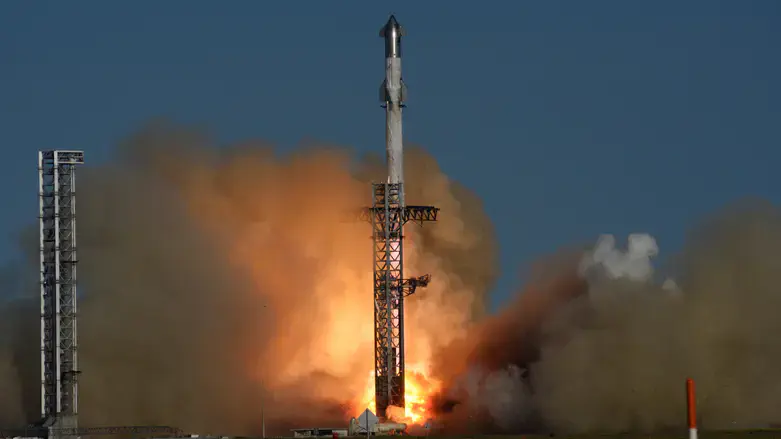
Engine glitch aborts SpaceX Starship test, Musk promises quick turnaround
Jul 17, 2026·2 min read
An automated engine failure forced SpaceX to scrub the scheduled flight of its massive Starship rocket on Thursday, prompting chief executive Elon Musk to state that team members hope to attempt the launch again “hopefully in a few days", CNBC reported.
The private aerospace manufacturer opened a 90-minute countdown window at 6:45 p.m. ET from its Starbase installation along the South Texas coast. However, countdown controllers called off the liftoff shortly after the window opened.
Addressing the sudden hold, Musk posted on his X social media site that “Some of the engines didn’t start, triggering an automatic launch abort."
A company commentator explained on the official webcast that sensors detected a booster anomaly that “shut down the engines right as they were starting to ignite," halting the countdown.
Market reaction was immediate. Shares of SpaceX dropped over 3% during extended trading hours, extending a five-day decline and dipping further below the $135 price fixed during its record-breaking initial public offering last month, which brought in $85.7 billion including underwriter options. On Thursday, the stock closed regular trading at $131.11.
The mission was slated as the debut flight for Starship V3, an upgraded iteration of the 400-foot-tall rocket, following the company's public listing.
The preceding V3 test flight in May experienced technical hurdles when several bottom-stage engines failed to reignite during descent, causing the Super Heavy booster to crash into the Gulf of Mexico. Following an investigation overseen by federal regulators, the Federal Aviation Administration granted flight clearance on Monday.
For Thursday's trial - the 13th overall test flight for the Starship program - the vehicle was configured to deliver 20 upgraded Starlink communication satellites into orbit. The payload was meant to unfold solar panels and antennas to integrate with the broader orbital network before undergoing planned destruction, with SpaceX stating the hardware would “demise upon reentry approximately 20 minutes after deployment."
The launch holds major strategic value for investors and defense partners alike. The Starship system remains essential to expanding SpaceX’s commercial satellite array and serves as a core lander component for NASA’s upcoming crewed lunar missions under the Artemis program.