
Israeli news site with a religious-Zionist perspective covering Israel and the Jewish world.
Israeli news site with a religious-Zionist perspective covering Israel and the Jewish world.

 Israel National News18 minutes ago
From Noah to Abraham: God's Search for Man
So much of Torah knowledge beckons to be uncovered "between the lines." In Hashem's Divine wisdom and plan, the Written Torah was bequeathed by God to Israel together with a "living" Oral Torah, given to Moshe at Sinai and handed down faithfully by the wise men across the generations.
Around this vast body of knowledge grows the Midrashic literature, the Divinely inspired, wisdom-imbued commentary and insights of the Sages.
In this week's episode of the Jerusalem Lights podcast, Jim Long and Rabbi Chaim Richman discuss and explore the world of the Oral Torah and Midrash, and their illumination of the book of Genesis.
 Israel National News1 hour ago
Donald TrumpWhite House Photo by Abe McNatt
US President Donald Trump is weighing a new military offensive against Iran that could begin shortly after the November 3 midterm elections, as frustration grows within his administration over Tehran's refusal to return to negotiations, The Atlantic reported Thursday.
According to officials familiar with the discussions, the proposed operation would involve several days of strikes against Iranian nuclear facilities, missile and drone capabilities, and energy infrastructure.
The potential escalation comes as Washington continues its campaign of economic pressure against the Islamic Republic, with some advisers arguing that additional military action could force Tehran to make concessions.
One outside adviser told The Atlantic that “the economic pressure is working, and we believe Iran is getting close to the edge."
Another round of attacks, the adviser suggested, “would push them over."
However, the report indicated that some officials believe renewed military action could prove counterproductive, even as Trump becomes increasingly impatient with the pace of his administration's economic strategy.
According to an administration official and another person familiar with the discussions, Trump had initially hoped that mounting economic pressure would bring Iran back to the negotiating table before the congressional elections.
That objective has not materialized, while persistently high energy prices have created additional political difficulties for Republicans heading into the midterms.
The Atlantic reported that the President had also considered launching another round of strikes before Election Day, an option supported by some officials in Washington who believe a military success could provide a last-minute political boost.
Prime Minister Benjamin Netanyahu has similarly urged Trump to authorize additional strikes before Israel's election next week, according to a White House official who spoke to the publication.
Nevertheless, Trump has so far declined to approve another operation before the American midterms.
Earlier this month, he wrote on Truth Social that the United States would not launch additional attacks before the election.
American officials emphasized that no final decision has been made regarding military action after November 3.
Some officials reportedly believe that maintaining uncertainty about Washington's intentions and the timing of any potential operation could itself increase pressure on Tehran.
At the same time, several recent developments have pointed to preparations for a possible escalation.
Earlier this week, Secretary of War Pete Hegseth visited Israel and met with Netanyahu for discussions focused on Iran.
On Wednesday, the State Department announced the evacuation of nonessential American personnel and their families from Saudi Arabia, citing an increase in attacks by the Iran-backed Houthi rebels in Yemen.
The White House did not immediately respond to The Atlantic's request for comment, while US Central Command, which oversees American military operations against Iran, declined to comment.
The report follows a separate account published Wednesday by The New York Times, which indicated that American and Israeli military planners had prepared detailed proposals for another round of strikes against the Islamic Republic.
According to that report, a renewed campaign could begin after the November 3 elections, although Trump has not yet authorized such an operation.
Trump himself raised the possibility of further military action Thursday while speaking to reporters outside the White House.
Defending his administration's decision to confront Iran militarily, the President acknowledged that the war had prompted mixed reactions but insisted that preventing Tehran from obtaining nuclear weapons remained a fundamental American objective.
"But we can't let Iran have a nuclear weapon. I mean, in one way, people probably don't love it. But many people, many great patriots really love it."
Trump also criticized previous administrations for failing to take decisive action against Iran and suggested that the American military campaign might not be finished.
"This should have been done a long time ago by other presidents, the Iran war. And we've knocked the hell out of them. And we may do it a little bit further."
 Israel National News2 hours ago
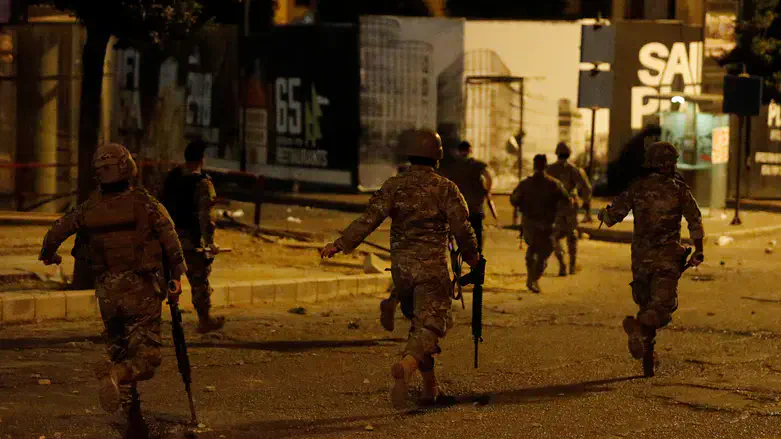
Lebanese soldiers on the streets of BeirutReuters
Concerns are growing in Lebanon over the possibility of internal security unrest, particularly amid fears of renewed hostilities between Israel and the United States on one side and Iran on the other.
Kan 11 News reported that political factions opposed to Hezbollah fear the terrorist organization could exploit rising regional tensions to undermine the Lebanese government, potentially through assassinations and security incidents that could destabilize the country.
According to the report, officials in Beirut are preparing for the possibility that Hezbollah could join another military confrontation if fighting resumes between Israel and the United States and Iran, similar to its involvement during Operation Roaring Lion.
A source from the anti-Hezbollah political camp said recent statements by senior Hezbollah officials have raised particular concern.
According to the source, public threats made by Hezbollah members against the Lebanese government in recent days, along with warnings of potential action against it, may indicate that the organization is preparing a significant move on Lebanon's domestic front.
Tensions have been further heightened by the seizure of a truck carrying explosives belonging to Hezbollah.
According to the report, the incident has further strained the already tense relationship between the terrorist organization and Lebanon's leadership in Beirut, increasing fears of a serious internal security crisis.
 Israel National News3 hours ago
תיעוד: בקבוק תבערה נזרק לעבר שיירת ראש הממשלהערוץ 7
The Prime Minister's convoy passed through Mahane Yehuda Market in Jerusalem shortly before midnight on Thursday evening, when a bottle was thrown toward the vehicles, according to footage from the scene.
Police officers and security personnel in the area immediately began searching for the person responsible.
National Security Minister Itamar Ben Gvir responded to the incident, saying: "This is a very serious incident. The incitement against the Prime Minister has effects and consequences. I say to those on the left: Be responsible. Words can kill."
 Israel National NewsIsrael National News3 hours ago
US President Donald Trump suggested Thursday that the United States could carry out additional military strikes against Iran, reiterating his determination to prevent the Islamic Republic from obtaining nuclear weapons.
Speaking to reporters outside the White House before departing for a campaign rally in Iowa ahead of the November 3 midterm elections, Trump defended his administration's military campaign against Tehran and argued that previous presidents should have confronted the Iranian nuclear threat.
He said he is "doing what should have been done by other presidents. There's a price to pay, which I knew immediately when I did it."
Trump acknowledged that his decision to launch the war had generated differing reactions but maintained that preventing Iran from acquiring nuclear weapons remained essential.
"But we can't let Iran have a nuclear weapon. I mean, in one way, people probably don't love it. But many people, many great patriots really love it."
The President then indicated that further military action remained a possibility.
"This should have been done a long time ago by other presidents, the Iran war. And we've knocked the hell out of them. And we may do it a little bit further."
Thursday's remarks followed Trump's statements at a campaign rally in South Carolina on Wednesday, where he expressed confidence that the conflict with Iran was nearing its conclusion.
However, the President suggested that Washington wanted to ensure that the results of its military operations would be lasting before bringing the campaign to an end.
The war, he stated, will "end very soon. We could leave now, but we want to make sure it lasts for a long time. Now, if you look at that, it's amazing what we did. Our military is unbelievable."
Trump's latest comments come amid continuing discussions within his administration over whether another round of military strikes would be necessary to achieve American objectives in Iran.
On Wednesday, The New York Times reported that American and Israeli military officials had developed detailed plans for renewed attacks against Iran.
According to the report, a new military campaign could begin after the November 3 congressional midterm elections, although Trump has not authorized an operation.
The preparations are reportedly part of the administration's broader deliberations over how to conclude the war while ensuring that Tehran cannot develop nuclear weapons.
Asked about the newspaper's findings, a White House official declined to confirm whether additional strikes were under consideration, saying the administration does not comment on military plans “that may or may not exist."
The official added that Trump continues to keep all options available as Washington seeks to prevent Iran from acquiring nuclear weapons.
 Israel National News3 hours ago
Mike HuckabeeChaim Goldberg/Flash 90
US Ambassador to Israel Mike Huckabee has raised concerns that President Donald Trump's Gaza peace initiative may lack the personnel, funding, and logistical support necessary for its implementation, according to a diplomatic cable obtained by Politico.
The cable, sent Thursday from the US Embassy in Jerusalem to senior State Department officials and signed by Huckabee, questions whether the Board of Peace and American diplomatic personnel are adequately prepared to oversee plans for disarming Hamas and rebuilding the Gaza Strip.
According to the report, Huckabee's principal concern involves the International Gaza Support Center (IGSC), the American-led coordination hub based in Israel that is responsible for coordinating efforts among Washington, Jerusalem, and international partners.
The Pentagon intends to gradually reduce its staffing at the center over the coming year, with civilian personnel expected to assume responsibilities currently handled by military officials.
However, Huckabee warned that neither the embassy nor the Board of Peace currently has sufficient personnel to guarantee a successful transition.
“Embassy Jerusalem is not currently staffed to assume these roles, but can be if it has an idea of the human, financial and logistical resources that will be needed," Huckabee wrote.
“The BoP is working to increase staff but its ability to cover all functions at the IGSC remains unclear."
The Board of Peace was established by Trump and formally launched in February to oversee aspects of his Gaza peace initiative.
Operating under a United Nations mandate, the organization is responsible for coordinating reconstruction funding and supporting efforts to establish security and governance arrangements in the Gaza Strip.
Several European countries that declined to join the organization have nevertheless agreed to coordinate their activities with it.
The IGSC is expected to play a central role in supporting the International Stabilization Force that the Board of Peace intends to deploy in Gaza.
The coordination center was originally established last year by US Central Command under the name Civil-Military Coordination Center before being renamed.
According to Huckabee's cable, which was classified as “sensitive but unclassified," the center is currently undergoing organizational changes following the Board of Peace's assumption of financial responsibility on October 11.
The ambassador expressed particular concern that replacing military personnel with civilians “could complicate the coordination dynamic" with the IDF, “especially on the intelligence-sharing front."
He requested clarification from Washington regarding the division of responsibilities once the Pentagon begins withdrawing personnel.
“How will roles and responsibilities shift to State and the BoP as DoW reduces its presence?" Huckabee asked.
“How will we keep critical IGSC workstreams running and what conditions should be met before this transition begins?"
The Board of Peace did not confirm the reported reorganization.
Responding to Politico, the Board of Peace said it was unfamiliar with the diplomatic cable but maintained that preparations for implementing the Gaza initiative were well advanced.
The organization said it was “confident in the highly detailed plans that have been developed for improved humanitarian assistance, security, governance, the rule of law, infrastructure development, and reconstruction in Gaza. Our capacities and systems in place are strong and ready for implementation."
The Pentagon directed questions about the report to the State Department, which declined to comment.
 Israel National News4 hours ago
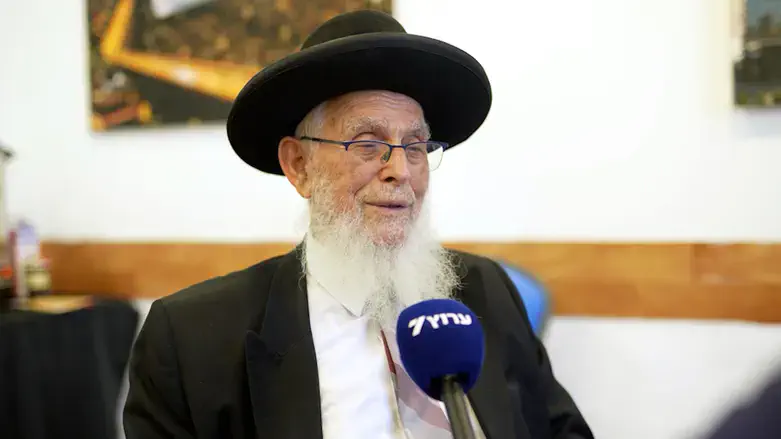
Rabbi Yaakov ArielArutz Sheva
Approximately 150 Religious Zionist rabbis, including municipal chief rabbis, yeshiva heads, and community rabbis, have signed an emergency letter published just days before the Knesset elections, calling on the public to refrain from voting for parties that are not certain to cross the electoral threshold.
In the letter, published on behalf of the Torat Haaretz Hatova rabbinical association, the signatories warn against the loss of votes within the right-wing camp and portray the decision at the ballot box as having decisive consequences for the future of the State of Israel.
At the heart of the letter is an explicit call not to vote for electoral lists whose ability to enter the Knesset is in doubt. The rabbis present their position as an obligation arising from the importance of the elections, rather than merely a political recommendation.
"It is clear that one must vote only for parties that will, without any doubt, cross the electoral threshold," the document states.
The letter is signed by several of the most senior figures in the Religious Zionist rabbinical leadership, including the presidents of the Torat Haaretz Hatova association, Rabbi Yaakov Ariel, Rabbi Isser Klonsky, and Rabbi David Hai Hacohen.
Other signatories include Rabbi Zalman Baruch Melamed, Rabbi Shmuel Eliyahu, Rabbi Eliezer Igra, and Rabbi Yaakov Shapira, along with dozens of additional rabbis representing various streams and communities within the Religious Zionist public.
The joint appeal seeks to establish a unified position on voting for smaller parties, amid concerns that votes cast for lists that fail to cross the electoral threshold will not translate into seats in the Knesset.
The letter does not name any specific parties, but it addresses the issue of right-wing electoral lists whose prospects of crossing the electoral threshold remain uncertain.
According to the rabbis, the country faces a "fateful decision" that will influence its future direction and character. The letter states that the election results will determine "whether the State of Israel's loyalty to the people, the Torah, and the Land will continue, or whether, God forbid, it may be severely harmed."
Based on this view, the rabbis urge the public to consider not only the identity of their preferred party, but also the possibility that their votes may fail to secure that party representation in the Knesset.
Toward the end of the letter, the rabbis once again emphasize the seriousness of the issue in their eyes. They go beyond warning about wasted votes, describing the decision at the ballot box as one of profound national significance.
"This is a matter of life and death for the entire nation."
 Israel National News4 hours ago
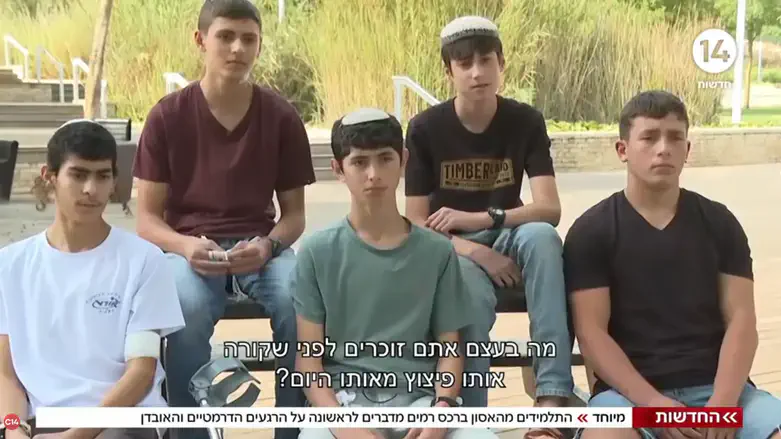
The students from the hikeChannel 14
Fifteen-year-old students who witnessed a deadly explosion during a school trip in northern Israel have spoken publicly for the first time about the terrifying moments they treated wounded classmates and tried to save lives.
What was supposed to be a routine annual outing for ninth-grade students from ORT Ma’alot Yeshiva turned into a tragedy when a powerful explosion struck the Ramim Ridge area. Their classmate, Elazar Yair Vilensky, was killed, and 25 people were injured. In a report broadcast by Channel 14, the students recounted the events leading up to the blast, their desperate efforts to help the wounded, and the difficult days that followed their friend's death.
The students said that earlier in the hike, Elazar had found and picked up an object. They did not initially consider it dangerous, explaining that they were accustomed to finding missile debris in the Ma’alot area following the war. “We’re used to it in Ma’alot. We’ve been collecting all kinds of fragments since the war," one student recalled.
According to the students, Elazar continued handling the object as they walked. They did not connect it with any potential danger at the time, only revisiting the incident in their minds after the explosion. The blast occurred as the group was preparing to pray the afternoon service. The students described an explosion unlike anything they had heard before, followed by chaos as some people ran while others collapsed to the ground.
“I’ve never heard explosions like that in my life," one student said. Another initially believed that a terrorist attack had taken place, without realizing that the object Elazar had picked up earlier might have been connected to the explosion.
One student who was standing particularly close to the blast's epicenter recalled that his ears rang for approximately two minutes afterward. Around him, injured students lay on the ground as others tried to flee. Those who remained standing struggled to understand what had happened and how they could help their wounded friends. The students estimated that approximately 15 minutes passed before emergency responders arrived. During that time, they attempted to treat the injured with whatever supplies they could find.
One student called his father, a combat medic, described the situation and received instructions to focus on stopping the bleeding. He then began moving between the casualties, including a teacher who had been seriously wounded and was struggling to speak. To determine whether the teacher was conscious and able to respond, the student asked him to signal with his hand.
“Rabbi, give me a like," he told the teacher. When the teacher managed to respond, the student asked him to squeeze his hand as well, confirming that he was conscious before continuing to help others.
In another case, the student needed to stop a classmate's bleeding but lacked the necessary medical equipment. He used a belt to improvise a tourniquet, while other students also removed their belts to help treat the wounded.
Several of the teenagers had themselves been injured in the explosion. One described shrapnel striking him near his neck and shoulder. Another suffered two shrapnel wounds to his leg and an additional injury to his hand. A third was wounded in the chest and head, with blood running from his head. Despite their own injuries and the shock of the incident, the students worked together to help their classmates.
“Everyone was a hero," one of them said, describing how the teenagers kept their composure and took on whatever tasks were needed, despite having no experience dealing with a disaster of that scale.
Yet alongside their accounts of courage and quick thinking, the students also spoke about the loss of Elazar, the friend who never returned from the trip.
“He was a very happy boy, very funny, very curious," one classmate recalled. “Whenever we wanted to do things with friends, whenever we wanted to have fun, we knew we had to call him."
 Israel National News4 hours ago
Police officers in FranceiStock
France is in chaos and the government imposed a curfew in certain areas, after Interior Minister Laurent Nuñez resigned: “In some cities we have lost control".
Pascal Bruckner speaks of a “silent coup d’état" in Le Figaro:
“What is striking is the good humor of the participants who shout ‘Wallah, Wallah!’. They are cheerful, they are the masters. Everywhere the same slogan on the walls and shop windows: ‘Bismillah the darkness’: the promise of a dark period of looting and violence, the consequence of a long series of abandonments that some of us have been denouncing for twenty years, from the tolerance of internal rot to the eruptions of violence in the banlieues explained by ‘racism.’ A silent coup d’état."
To understand the intensity and scale of what is happening one must not look at Paris, but at Marseille.
The population of Marseille is 886,040 inhabitants.
According to the authorities, about 30,000 residents of Marseille took part in the lootings on 17 October.
30,000 people are 3.4 percent of the total population of Marseille. Three inhabitants out of a hundred who took part in the devastation of their own city.
This is why Pierre-Henri Tavoillot, president of the Collège de philosophie at the Sorbonne, no longer hesitates to evoke the term “civil war."
And yet Emmanuel Macron, in his ridiculous address to the nation, blamed the “French."
The last time I was in Marseille two years ago, after a few hours I already felt the physical need to leave.
A city is not an aggregate of inhabitants. It is an order, fragile and continuously renegotiated, in which the majority recognizes certain rules as its own and enforces them. When a significant portion of the population-3 percent according to the authorities themselves-participates in organized looting, when the addresses of shops belonging to a specific community are known in advance, and when the damage is concentrated on those targets while others remain intact, we are not facing “disturbances," but an act of war that distinguishes between “us" and “them."
Let’s start then with this article from Algérie Matin. A little dialogue between friends, reported by the journalist. “How many Algerians are there in Marseille? 200,000. Marseille has 800,000 inhabitants; that means one inhabitant out of four is Algerian." No, there are not 200,000 but 300,000, says the journalist, before getting excited about the fact that one inhabitant out of three is “DZ" (the name given to Algeria on license plates).
And the rest of the Maghreb, Moroccans and Tunisians? The latter number 60,000. Who says so? Radio France. For Moroccans, the figure is 40,000. The total reaches 400,000, a figure that does not take into account the proliferation of illegals. But there are also the Comorians, right? From 50,000 to 80,000, not counting the Senegalese, Malians, etc.
Therefore, over 50 percent of the Marseille population is African.
The president of the Jewish community of Marseille, Zvi Ammar, has asked his co-religionists not to wear Jewish symbols. Too dangerous. The Jews of Marseille go to synagogue in groups of ten, for security. Many mothers, when they go to kosher shops, leave their children in the car with someone else. Parents have organized patrols around the schools. One synagogue has been bought by Muslims to turn it into a mosque.
In some neighborhoods of Marseille the insecurity is such that (from Le Figaro) postal services have been interrupted. Journalist Philippe Pujol writes that “there are more Kalashnikovs in Marseille than in Kabul."
Marseille illustrates what happens when a society stops defending the material and symbolic conditions of its own continuity. The city empties of meaning, street by street, and those who have lived there for generations no longer recognize it.
A group of tourists taking a boat trip on the Seine found themselves filming images of fires and devastations.
We are not even noticing that the European Titanic is sinking.
 Israel National News5 hours ago
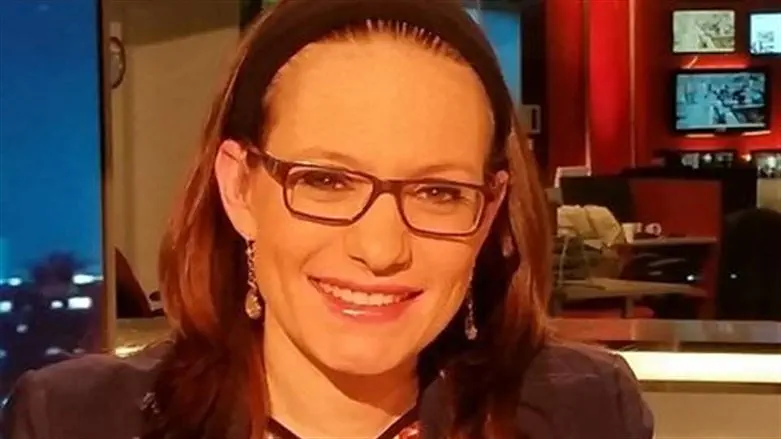
Sivan Rahav-Meirצילום: PR
* Translated by Janine Muller Sherr
The mother of an entire nation. Today, the 11thof Cheshvan, we mark the yahrzeit of our matriarch Rachel. Although she was the biological mother of only Yosef and Binyamin, for generations she has been lovingly referred to as “Rachel Imeinu," our mother Rachel, who worries about her children when they are facing anychallenge or hardship.
A love that transformed years into days. Yaakov worked seven years to win the hand of Rachel in marriage. Regarding this love story, the Torah uses a famous but unusual phrase, a tribute to the power of love: “…but they (the seven years) appeared to him like a few days because of his love for her."
Protected her sister’s honor. When Rachel saw that her father was going to give her sister Leah to Yaakov-in her place-she didn’t shame her, butagreed to give him up. Precisely at the moment when her dreams were shattered, she decided to protect her sister’s honor. For this reason, Rachel has come to symbolize caring for others, and the willingness to sacrifice something precious to you for another person.
How do we commemorate this day? Today many people will visit her grave, Kever Rachel, near the town of Beit Lechem. But wherever you are in the world, you can light a candle in her memory, learn about her, connect with her special personality, and pray.
The tears that will end soon, with God’s help. The prophet Yirmiyahu describes Rachel as weeping for her exiled children and records God’s moving response to her tears:
“Refrain your voice from weeping and your eyes from tears, for there is reward for your work...there is hope for the future…and the children shall return to their own border."
For thousands of years, our mother Rachel has accompanied us through our trials and suffering, but ultimately, there is hope that the weeping will come to an end. God promises that her children will return home, the Jewish people will achieve its mission, and the redemption will come. May we merit the fulfillment of this prophecy speedily in our day, and may the memory of Rachel Imeinu be for a blessing.
 Israel National News5 hours ago
scene of the incident in YitzharMDA
Ruth Teller, a 12-year-old girl from Yitzhar, was critically injured Thursday afternoon while riding an electric bicycle in the community of Yitzhar in Samaria and later succumbed to her injuries.
Magen David Adom (MDA) EMTs and paramedics, together with an IDF medical team, arrived at the scene and found her unconscious, with no pulse and not breathing.
Medical teams immediately began advanced resuscitation efforts, including chest compressions, assisted ventilation, and the administration of medications. She was subsequently evacuated by helicopter to Beilinson Hospital, with resuscitation efforts continuing throughout the evacuation. At the hospital, doctors fought to save her life but were ultimately forced to pronounce her dead.
According to police, the incident was a single-vehicle accident. Officers from the Ariel Police Station and traffic accident investigators from the Judea and Samaria District are at the scene, working to determine the circumstances as part of an investigation.
MDA emergency medical technicians Chaim Shlomo Meir and Chen Amia Binyamin described what they encountered at the scene:
"When we arrived, we saw the girl lying on the ground after being injured while riding. She was unconscious, had no pulse, was not breathing, and had suffered a severe head injury."
They added: "We immediately began resuscitation efforts, including chest compressions, assisted ventilation, and administering medications. We evacuated her by helicopter to the hospital in critical condition, while continuing resuscitation efforts."
 Israel National News6 hours ago
During the visitNachala
The mayor of Sderot, Alon Davidi, paid a solidarity visit to the temporary encampment "Halutzei Aza" (Pioneers of Gaza), established near the northern perimeter under the leadership of the Nachala Movement.
During the gathering, Lital Slonim, of the Nachala movement management, emphasized the stance of the families settled at the site: "Many families left everything behind and moved here with a clear demand from the government: let us be the pioneers who restore settlement in Gaza. This is the only way to ensure the country's security, and it is the true answer to what we endured on October 7."
Davidi voiced support for the pioneers and the movement's leadership, headed by Daniella Weiss, calling them "the heroes of this story."
Referring to the IDF's operations and the future of Gaza, he added: "We must keep going, crush, and destroy Hamas, but beyond that, we must return to the place from which we departed. From this vantage point, you can see the destruction in Beit Lahia and Beit Hanoun. I told the Prime Minister when he visited us in Sderot: "Give me the approval to build a new neighborhood of Sderot there."
 Israel National News6 hours ago
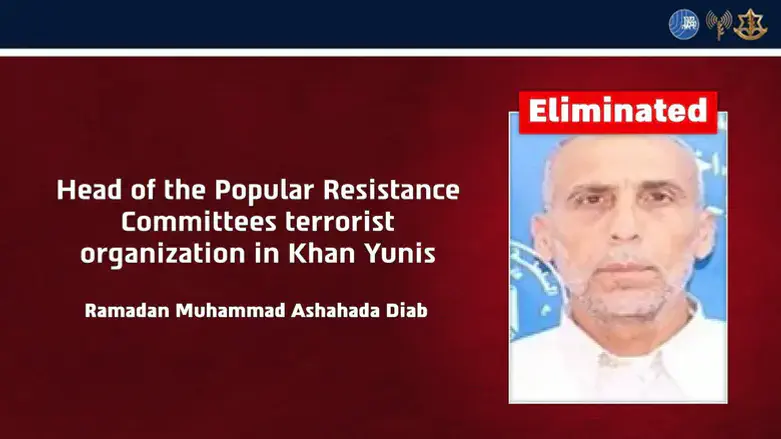
Ramadan Muhammad Ashahada DiabIDF Spokesperson
The IDF and Israel Security Agency (Shin Bet) announced Thursday that they eliminated Ramadan Muhammad Ashahada Diab, the head of the Popular Resistance Committees terrorist organization in the Khan Yunis area of the Gaza Strip.
According to a joint statement, Diab was killed in an airstrike carried out Wednesday in the Khan Yunis area.
The Popular Resistance Committees, established in 2000, was previously affiliated with Fatah but is now linked to the Hamas and Hezbollah terrorist organizations, as well as Iran's Islamic Revolutionary Guard Corps (IRGC).
Members of the organization participated in the October 7, 2023, massacre, infiltrating Israeli territory, murdering civilians and soldiers, and abducting Israelis into the Gaza Strip.
Throughout the war, the organization carried out numerous terrorist attacks against IDF troops in cooperation with Hamas.
According to the IDF and Shin Bet, Diab was involved in advancing terrorist attacks against Israeli soldiers and civilians throughout the war, including in recent months.
He also worked to rebuild Hamas' military capabilities, in what the security agencies described as a systematic violation of the ceasefire agreement.
The IDF said the airstrike was carried out to eliminate the threat posed by Diab.
Prior to the strike, the military took measures to minimize the risk of civilian casualties, including the use of precision munitions and aerial surveillance.
The IDF added that Israeli forces under the Southern Command remain deployed in the area in accordance with the existing agreement.
The military emphasized that its forces will continue operating to eliminate threats to Israeli troops and civilians.
 Israel National News7 hours ago
קבר רחלצילום: Yossi Zamir/Flash90
Cheshvan 11, which falls on Octobr 22 this year, is the yahrzeit of Rachel Imenu, Rachel the Matriarch, or as she is called in Yiddish, Mameh Rochel. One that day, many thousands visit her tomb in Bethlehem while shiurim and musical events for women take place in her memory.
Why do so many people, especially women, find comfort in visitng Rachel Imenu's tomb?
Why does Rachel Imenu have such a unique place in the Jewish People’s collective consciousness?
Why do so many women come to pray, weep, and perform the mitzva of 'taking' challah at her grave?
Why was the wedding gown of Nava Applebaum HY"D, murdered by terrorists the night before her wedding, hung there?
Perhaps it is because women feel that Rachel Imenu mirrors the essence of a woman's life. Rachel's life was filled with the sacrifices and sorrows that women understand: Jacob fell in love with her, yet she gave up her beloved for her sister Leah's sake and made sure that Leah was not humiliated, she was chiildless and then died in childbirth so that she did not raise the two sons for whose birth she prayed and begged. She was buried at the wayside and not in Hebron as the other Matriarchs were.
And that is why the midrash says that G-d listened only to her when she prayed to Him at the time of the Temple's destruction. Mameh Rachel, the Midrash says, reminded Him of her sacrifices.
…רָחֵל מְבַכָּה עַל בָּנֶיהָ מֵאֲנָה לְהִנָּחֵם עַל בָּנֶיהָ כִּי אֵינֶנּוּ
"…Rachel weeps for her children. She refuses to be comforted over her children, who are gone." (Jeremiah 19)
Her suffering, her willingness to sacrifice, her selfless love are the reasons she alone among the Matriarchs and Patriarchs succeeds in pleading with God to restore the Jewish People to the Land of Israel and have her prayers responded to.
וְיֵשׁ תִּקְוָה לְאַחֲרִיתֵךְ נְאֻם ה’ וְשָׁבוּ בָנִים לִגְבוּלָם
"And there is hope for your future -declares Hashem:
And your children shall return to their country."
Those who long to visit Mame Rochel's tomb but cannot, can light a candle in her memory on the night of her yahrzeit and pray for their children, families, the wellbeing and success of our soldiers and of the Jewish people wherever they may be.
Mameh Rochel was promised that her sons would return.
May that promise, fulfilled when the Jews returned to build the Second Temple and once again, when they returned to establish a state, be fulfilled once more when we see our soldiers return from battle safe and sound, and watch Diaspora Jewry make aliyah to the Eretz Yisrael, with G-d's help.
Light a candle for Mameh Rochel's yahrzeit and pray for her children.
---------------
Many songs have been written about Rachel, her weeping for her people, and the promise she was given. One of them, written after the Six Day War when Bethlehem returned to the Jewish people, tells her that we have returned, and will never leave her again.
It was written in Hebrew by Shmuel Rosen and is translated here.
We Will Not Leave Again
See the road dust rising from the City of Shalem
And the iron chariots charging in front of your city
And the whole nation, looking at you as if dreaming
Steel wings circling, circling above your tomb.
Behold Rachel, behold,
Behold, Ruler of the World,
Behold Rachel, behold,
They have returned to their borders.
See the winds of Iyar bearing columns of steel,
Benjamin is with us here, and Joseph as well,
The star over Beth Lekhem tremblingly gleams,
Both the vanguard is with us and the rear.
Restrain your voice, Rachel, hold back your voice from crying,
All of us are here, Rachel, with our backpack on our shoulders.
We won’t leave you again, Rachel, and you will not leave us again,
We won’t leave again, Rachel, from the fields of Beth Lekhem
Arik Lavie's rendering of the song is the classic one here. (There is an English recording,but it is not him singing)
 Israel National News7 hours ago
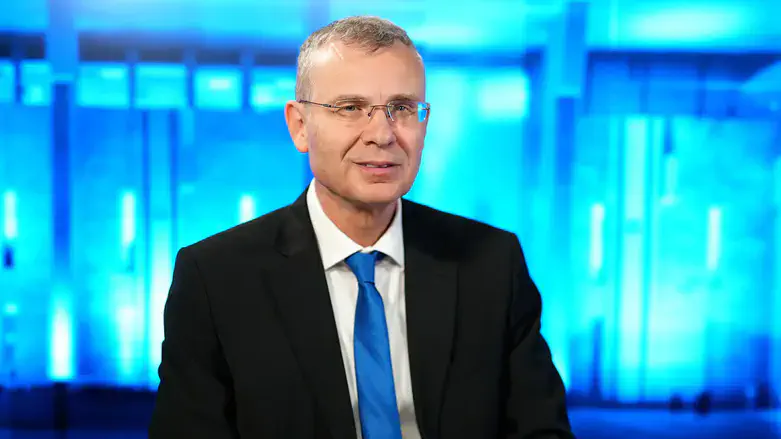
Yariv LevinArutz Sheva
Justice Minister Yariv Levin says Israel has a historic opportunity to advance judicial reform and extend sovereignty over parts of Judea and Samaria, arguing that the next government must take advantage of the remaining two years of US President Donald Trump's term.
In an interview with Arutz Sheva - Israel National News ahead of the upcoming Knesset elections, Levin discussed his efforts to reshape Israel's judicial system, his contentious relationship with Supreme Court justices, the divisions within the right-wing political camp and the future of Israeli communities in Judea and Samaria.
Levin insisted that years of protests and political pressure had not weakened his determination to complete the judicial reforms he initiated. Asked whether demonstrations outside his home in Modi'in, protests during the traditional mourning period following his father's death or demonstrations against him at Bloomfield Stadium had ever made him consider giving up, he answered emphatically.
“Absolutely not," Levin said. “Anyone who wants to hold leadership positions and has to deal with very difficult events and very difficult decisions needs resilience, and must not break or fall apart over everything. It's mainly difficult for the family, which didn't choose this. I, at least, made the choice I made."
Levin said attacks from political opponents had not deterred him, but criticism from within his own political camp had been more painful.
“I have no expectations from the other side," he said. “They won't deter me in any way from doing what I believe in."
He accused some of his critics of creating unrealistic expectations about how quickly the judicial system could be transformed. According to Levin, commentators and politicians had presented seemingly simple solutions to complex legal problems, then attacked him when the promised results did not materialize immediately.
He also revisited the government's decision to suspend judicial reform legislation in March 2023, a move he said he had opposed. Levin maintained that he had warned coalition leaders that halting the process would not bring about an agreement with opponents of the reform but would instead be interpreted as weakness and invite further pressure.
“I did not receive the necessary backing, not from some of the party leaders, and certainly not from some members of Knesset from various coalition factions," he said.
Levin described the suspension of the legislation as “a demonstration of weakness that cost us dearly." He argued that a government elected to implement a particular policy should not abandon it because of protests and public pressure.
Nevertheless, he rejected the claim that judicial reform had failed. He listed several measures he presented as achievements of his tenure, including changes to the Judicial Selection Committee that are due to take effect in the next Knesset, the appointment of numerous lower-court judges, the appointment of a commissioner for complaints against judges and changes to contract interpretation law.
Levin also cited a requirement for defense counsel to be present during interrogations of minors and people with disabilities. He claimed that more than 150 judges appointed or promoted during his tenure would not previously have advanced through the judicial system, adding that approximately one-third of Israel's judges had been appointed or promoted during his time in office.
His principal unfinished objective, however, remains changing the composition of the Supreme Court.
Levin said he expects 10 positions on the Supreme Court to become vacant during the next Knesset's term, creating what he described as an exceptional opportunity to reshape the court. He argued that the justices would eventually find it more difficult to block his preferred candidates as the number of serving judges declines.
In discussing the dispute over judicial appointments, Levin revealed what he said were messages conveyed to him by Supreme Court justices during negotiations over candidates.
According to Levin, the justices indicated that they would accept appointments that could be presented publicly as conservative victories, provided the candidates were acceptable to them. He claimed they were unwilling to approve the appointments of legal scholars such as Dr. Aviad Bakshi and Dr. Biton.
Levin described the arrangement he said had been proposed: the justices would initially oppose certain candidates and later agree to appointments that would allow him to claim a political achievement, without fundamentally changing the court's character.
“You take the political credit, and we will protect our Supreme Court," Levin said, recounting the message he said he received.
He added that when he insisted on appointing candidates the justices opposed, they made clear that they were prepared to exercise their veto power and wait for a different justice minister to take office.
“We are on the verge of completing this enormous undertaking," Levin said.
The justice minister also warned that divisions among right-wing parties could undermine the chances of forming a government capable of continuing his judicial reforms. He criticized smaller parties running independently of Likud and other coalition factions, arguing that they risked wasting votes by failing to cross the electoral threshold.
“I don't know of any trick like that, where you strengthen someone by voting for somebody else," Levin said in response to arguments that voting for smaller parties could help Prime Minister Benjamin Netanyahu. “If you want to strengthen Netanyahu, vote for Likud." He also criticized the approach of new political contenders who present themselves as capable of replacing existing leadership and solving longstanding problems on their own.
Levin contrasted that approach with the political alliance between Religious Zionist Party chairman Bezalel Smotrich and Moshe Feiglin, which he praised as an example of politicians overcoming differences to prevent votes from being lost.
Turning to the broader political agenda, Levin said the next government would need to engage in significant diplomatic discussions with Trump. He argued that Netanyahu's political strength would affect his ability to advance Israel's objectives in Washington.
Levin identified three issues that he believes make the upcoming elections particularly consequential: the Iranian threat, the future of Israeli communities in Judea and Samaria, and the composition of the Supreme Court.
On Iran, he said cooperation between Netanyahu and Trump could help Israel confront the Iranian nuclear threat. He also raised the possibility of a strategic shift in relations with Iran if its regime were to change, presenting this as a potential future development rather than an accomplished fact.
Regarding Judea and Samaria, Levin cited what he described as substantial achievements in expanding Israeli communities, including the establishment of 104 new communities, alongside infrastructure development and the strengthening of existing towns.
He said the remaining two years of Trump's presidency presented an opportunity to advance further measures, including extending Israeli sovereignty over at least some parts of Judea and Samaria.
“I think there is definitely a possibility that toward the end of President Trump's term, we will be able to advance the application of sovereignty," Levin said.
He warned that losing this opportunity because of a change of government in Israel would be a serious mistake. Levin also criticized the previous government's policies toward construction in Judea and Samaria, warning against a return to restrictions on building and community expansion.
Levin also launched a sharp attack on law enforcement authorities over the ongoing criminal trial of Netanyahu. He called for the proceedings to be canceled and for a government-appointed commission of inquiry to investigate the conduct of investigators, prosecutors and other officials involved in the cases.
“This trial must end. It must be canceled," Levin said.
He claimed that testimony presented in court had revealed serious misconduct by law enforcement officials and criticized the judges overseeing the proceedings for what he described as their failure to respond adequately to the allegations. Levin argued that a commission of inquiry would provide a way to examine the conduct of those involved in the investigations and indictments.
He maintained that the extensive powers held by law enforcement authorities required transparency, restraint and integrity, warning that their improper use undermines democratic institutions.
Despite the political and personal pressures he described, Levin said he continued to receive encouragement from members of the public who supported his efforts. He said that support reinforced his determination to return to the Justice Ministry and complete the changes he had begun.
“I am very determined to complete this mission," he said.
Levin concluded by urging voters to participate in the elections and support parties that would continue the policies he advocates.
“This is the time for responsibility. This is the time to go out and vote," he said.
 Israel National News7 hours ago
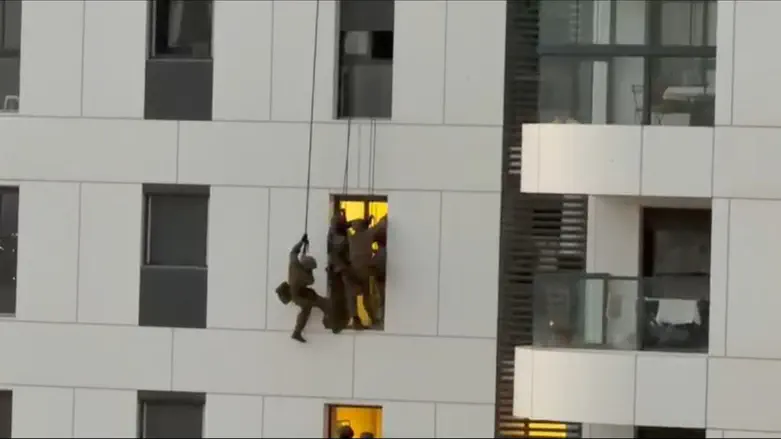
לוחמי הימ"מ בגלישה מהגגדוברות המשטרה
A dramatic rescue operation by officers of the Yamam counterterrorism unit ended successfully after a woman who had barricaded herself inside her 11th-floor apartment in a residential building and threatened to jump from her window was rescued by officers who rappelled down from the building's roof.
According to a police statement, Yamam officers from Israel's national counterterrorism unit were dispatched to the scene following the report, alongside members of the police negotiation unit and additional police forces.
Upon arrival, members of Yamam's specialized "Monkeys" team prepared to carry out a complex rescue operation aimed at preventing danger to the woman's life and bringing her to safety.
During the operation, the officers rappelled from the building's roof to the 11th-floor apartment window, swiftly took control of the situation, and safely rescued the woman.
Police noted that the incident ended without injuries and that the circumstances are under investigation. Footage released by police shows the rescue operation carried out by the officers.
 Israel National News7 hours ago
Rabbi Shalom WasserteilRabbi Shalom Wasserteil
“And the Lord said to Abram, ‘Go forth from your land, from your birthplace, and from your father’s house, to the land that I will show you. And I will make you into a great nation, and I will bless you, and make your name great, and you shall be a blessing. I will bless those who bless you, and those who curse you I will curse, and all the families of the earth shall be blessed through you.’"
At first glance, these three verses describe God appearing to Abram in a dream and commanding him to leave his present home and travel to an unknown destination, promising that he will be blessed by becoming the father of a great and blessed nation.
Although Abram had previously been saved miraculously when he was cast into a fiery furnace, upon awakening from this dream - the first revelation of the Creator to him - he must first convince himself that it was not merely a dream or an illusion, and that this was indeed the will of the Creator. After all, he was already a respected spiritual leader, heading a great yeshiva in Haran, while his wife Sarai headed a large women’s study center, together educating all the people they had gathered there.
Abram must become convinced of the dream’s authenticity and, no less importantly, persuade his wife Sarai, his family, and all their male and female students that it is genuine. He must then lead them all on a journey into the unknown, “to the land that I will show you."
Indeed, the Torah tells us: “And Abram took Sarai his wife, and Lot his brother’s son … and all the souls they had made in Haran." The expression “took" implies that he won them over through his words.
First, he persuades his wife Sarai to accompany him, even though ten years have passed without their having children, meaning that, from a halachic standpoint, he could have left her behind in Haran. Abram then persuades his relative, his nephew Lot, to join him rather than remain among idol worshippers. Only afterward does he approach his own students and Sarai’s female students.
He must persuade them not only that God has truly spoken to him, but also that they are being asked to join him in this adventure and set out immediately. In addition, he packs and takes all their possessions, making it clear to everyone that this is a one-way journey, with no return - for him or for those accompanying him.
Yet a deeper look reveals that these three verses embody and illuminate the foundations and destiny of the Jewish nation, whose story begins here with the father of the nation.
Unlike the angels, who are described as standing, Abraham, the chosen of the patriarchs, is commanded at the age of 75 to leave behind his established life and accomplishments in Haran and move on to the next stage. As the prophet Zechariah says, “I will grant you passage among these who stand here." The angels are those who “stand," whereas human beings - and Abraham in particular - are called upon to be those who move forward. “Go forth." Abraham, My beloved, you must not remain where you are, continuing to preside over your spiritual kingdom in Haran. You must rise and proceed toward the great destiny for which humanity has been refined over twenty generations, from Adam to Noah and from Noah to Abraham.
He must journey toward the great purpose that will culminate in the realization of the Creator’s most distinguished creation: “This people I formed for Myself; they shall declare My praise." The destiny of the Jewish people is to proclaim God’s praises throughout the world.
The famous words of American astronaut Neil Armstrong, commander of Apollo 11, when he became the first human being to walk on the moon on the 5th of Av, 5729 (July 21, 1969), are well known: “That’s one small step for man, one giant leap for mankind."
In my opinion, Abraham’s first steps toward the Land of Israel, and toward the birth of the Jewish nation as it embarked on the fulfillment of its exalted mission, deserve at least as much - and far greater - significance.
It is fitting that the Children of Israel proclaim God’s praise from the Land of Israel, and specifically from there to all humanity. The Land of Israel is the land of which God told Abram: “Lift up your eyes and look from the place where you are, northward and southward, eastward and westward" (Genesis 13:14).
The Holy Land is where the world was created, and from which the earth’s boundaries were established. As the Talmud states in Yoma 54b regarding the Foundation Stone, from which the world was established: “The world was created from Zion."
This is why the Meshech Chochmah explains that Abraham was given “the center of creation and the purpose of all that was created."
The Land of Israel is holier than all other lands and is under the direct providence of the Almighty. Even when it falls into the hands of foreigners, its sanctity is never nullified. Indeed, not only does its holiness endure, but the land itself seems to withhold its produce until its children return.
This principle is reflected in our parasha. God gives the land to Abram even though “the Canaanite was then in the land." Later, Abraham must purchase the field containing the Cave of Machpelah, despite the fact that the land has already been promised to him and is imbued with God’s holiness.
The Ramban explains that we should not be surprised that the Canaanites continue to possess and conquer the land; their hold on it is temporary. Had the land been in the hands of the descendants of Shem, Abraham’s descendants, who also belong to Shem’s lineage, would not have been entitled to take it from them. But since it was in the hands of the descendants of the cursed Canaan, Abraham’s descendants would justly take possession of it. As the Torah states: “Blessed be the Lord, the God of Shem; and may Canaan be a slave to them" (Genesis 9:26).
The Meshech Chochmah explains that God was telling Abram: Although, on the earthly level, you see no evidence that the land belongs to you - since the Canaanite is still there, clinging to it like a dog and drawing sustenance from it - you must nevertheless lift your eyes heavenward and contemplate the spiritual dimension of divine providence and governance. “See, I have given you the whole land." The land is yours as well, sanctified with the holiness befitting you and your descendants. He develops this idea on the basis of the holy Zohar.
The world was founded upon the Foundation Stone. Adam, the first man, was created here, and from this place the Jewish people would become a light unto the nations.
Abraham’s journey is therefore not merely geographical. It is an ascent in spiritual stature: “to the land that I will show you."
In this land, our father Abraham would rise to a new level - not merely through his belief in one God, nor merely through a dream in which he encountered the Creator, but through a level of vision.
Indeed, when he arrived in Canaan, the Land of Israel, and received the promises concerning both his descendants and the land, the Torah tells us: “He built an altar there to the Lord, who had appeared to him" (Genesis 12:7). This is the spiritual dimension of the verse, “From my flesh I behold God" (Job 19:26).
At the beginning of Abraham’s journey, the Torah uses the language of speech: “And the Lord said to Abram." But upon his arrival in Canaan, he attained the level of vision.
The Meshech Chochmah continues by explaining that Abraham rejoiced greatly over both promises - the promise of descendants and the promise of the Land of Israel, as Rashi and Bereishit Rabbah (39:16) note. Yet he rejoiced even more over having attained the level of vision in his relationship with the Almighty. That is why he built an altar: “He built an altar there to the Lord, who had appeared to him."
In the words of the Ramban, Abraham “gave thanks to the exalted Lord and offered Him a thanksgiving sacrifice because He had appeared to him. Until then, He had not appeared to him, either in a vision or in a prophetic revelation. For ‘Go forth from your land’ had been spoken in a dream at night."
The Ramban concludes that the discerning reader will understand that “the Lord appeared to Abram" describes a higher level of prophecy than any of the earlier instances in which the Torah says, “The Lord said to Abram." The expression “appeared" denotes full prophetic revelation.
The holy Or HaChaim expresses a similar idea. He writes that the verse reveals “the extraordinary love Abraham had for his Creator." Although God had indeed appeared to him and blessed him with descendants and the gift of the land, Abraham did not consider either of these great blessings worthy of comparison with the joy he felt at the revelation of the Divine Presence.
The Torah, the Or HaChaim explains, tells us the reason for Abraham’s joy, which led him to build the altar: God Himself had appeared to him.
The Kli Yakar adds that God did not appear to Abraham immediately when He commanded him, “Go forth," because Abraham was still outside the Land of Israel, following the view of Ibn Ezra that the Divine Presence does not reveal itself in the same way outside the Land. He cites the prophet Jonah as evidence, based on the Mekhilta (Bo 12:4).
Consequently, God did not appear to Abraham in a vision at that stage. Abraham heard words alone, and for this reason he did not build an altar there, in a place where the Divine Presence does not dwell in the same manner.
What, then, is this level of vision?
Rabbi Meir Simcha of Dvinsk offers a profound explanation. Attaining an awareness of the existence and glory of the Almighty is difficult because the soul is concealed within the coarse materiality of the human body, which separates it from our Father in Heaven.
We therefore need the Torah, which serves as an instrument of vision - in his metaphor, a microscope - to refine our material nature and remove its impure coverings until we return to the state in which we existed before birth, resembling Adam before the sin.
When the Temple was destroyed, an iron barrier arose between Israel and their Father in Heaven: the barrier of materiality, which obstructs the radiance of divine providence as it might otherwise be perceived by Israel through a clear and luminous lens.
The Torah is therefore an instrument of vision, a kind of microscope that magnifies our capacity to perceive the Divine a thousandfold beyond our present condition. The perfect, divine power can refine physical existence until it becomes clear and polished enough to serve as a lens through which the Divine can be perceived.
This is the meaning of the verse, “From my flesh I behold God." Through the flesh-the coarse material of the body, with its physical eyes-I can perceive an enlarged vision of the Divine.
Adam, who was created on Mount Moriah-the name Moriah being associated with both vision and instruction-originally stood on this exalted spiritual level. It was there, on the Temple Mount, that he offered his sacrifice.
Before his sin, Adam’s physical nature was pure, clear and refined. Nothing obstructed his perception of the glory of God, which is why he walked naked. As the Meshech Chochmah explains, a spiritually discerning person has no need to cover his nakedness; it is no more significant to him than the place where the tefillin are worn.
But when Adam ate from the Tree of Knowledge, his nature became coarse and material, abruptly separating him from a true apprehension of God and from closeness to Him.
The material dimension of his being, together with the negative forces within it, gave rise to desire, destructive character traits such as anger and vengeance, and false imaginings. Adam and Eve therefore became aware that they were naked and felt ashamed.
As a result, Adam and Eve could only hear God's voice in the Garden. They heard, but did not see, His glory. “I heard Your voice," Adam tells the Almighty, but he did not see His glory. What, then, did he see? “I was afraid because I was naked." He recognized that a barrier had arisen between himself and his Father in Heaven.
Indeed, from the time of Adam’s sin onward, the Torah records only the expression “the Lord said"-speech alone. Only when Abraham arrived in the Land of Israel was his material nature sufficiently refined for him to attain the spiritual level of Adam before the sin.
This is the meaning of the verse: “The Lord appeared to Abram and said…" Abraham had attained a level of perception unimpeded by materiality. That is why he “built an altar there to the Lord, who had appeared to him."
The Almighty uses similar language when speaking of the holy patriarchs: “I appeared to Abraham, to Isaac, and to Jacob." He revealed Himself to them at the height of their spiritual attainment.
A similar spiritual dimension is present in Moses’ vision of the Land of Israel, even though he was not permitted to enter it. His was a spiritual vision.
We learn, then, that through the two powerful words “Lech Lecha"-“Go forth"-and the three opening verses of our parasha, the Creator reveals to our father Abraham, whom He calls “Abraham, My beloved," the exalted role he is to play in laying the foundations of the Jewish nation in the Land of Israel.
For this purpose, Abraham receives five promises and revelations.
First, he is promised descendants: the continuity through which God’s creation of the Jewish nation will come into being.
Second, the Land of Israel is given to him and his descendants forever.
Third, the Land of Israel is the home of Abraham and of his descendants after him-Isaac, Jacob and the Children of Israel-from which they will proclaim the glory and wonders of God’s name to the world.
Fourth, specifically in the Land of Israel, where the Divine Presence dwells, Abraham-and those who follow him, Isaac and Jacob-will merit the removal of the material barrier separating humanity from God. They will thereby attain the highest level of closeness to the Almighty, comparable to that enjoyed by Adam before the sin. As the Psalmist declares: “But as for me, the nearness of God is my good" (Psalms 73:28).
And fifth, the good of Israel is the good of the entire world. On the one hand, God promises, “I will bless those who bless you"; on the other, “those who curse you I will curse." Through the recognition of this divine providence, “all the families of the earth shall be blessed through you."
 Israel National News8 hours ago
Ohad TalArutz Sheva
Religious Zionist Party MK Ohad Tal says Israel has a historic opportunity to extend sovereignty over Judea and Samaria and establish Jewish communities in Gaza, arguing that the country must complete its military objectives and ensure that the October 7 massacre comes at a price for Hamas. In an interview with Arutz Sheva - Israel National News, Tal described the upcoming elections as critical for Israel's future, saying they would determine whether the country remains a Jewish state and whether it pursues what he called decisive victory on all fronts.
“Every election, they're saying that this is the most critical election in the history of this country. But I think that this time it's actually true," Tal said. “It is really critical for the future of this country. We haven't finished the job, not in Lebanon, not in Gaza, definitely not in Iran, and we have to complete the mission."
Asked how he responds to voters who question why Israel has not achieved victory after nearly three years of war, Tal argued that dismantling the regional network of threats built up around Israel over decades takes time.
“Breaking this ring of fire that surrounded us and was built in decades, with so much investment and money, doesn't take a short time to solve," he said. “Thank God, I think we have massive achievements."
Tal pointed to what he described as significant military gains, including Israel's control of more than 60% of the Gaza Strip, approximately 600 square kilometers in Lebanon and 400 square kilometers in Syria. He also highlighted the Israeli Air Force's ability to strike targets thousands of kilometers away.
“We are seeing so many countries from this area, from the Middle East and from other places in the world, who are coming to us and begging us to support them, to help them with intelligence," he said. “I think Israel is becoming a global superpower, and we still have missions to accomplish."
Tal also expressed optimism about the possibility of extending Israeli sovereignty over Judea and Samaria, describing the next two years as a historic opportunity to advance the move. “There's definitely a huge historic opportunity that awaits us in these two years," he said.
Tal said he believed the Trump administration could play a significant role in advancing sovereignty, citing his understanding of discussions involving people close to the US president.
“I know it from the people who are the closest people to President Trump, that he tells them that he wants to leave behind something significant that he will do. After these two years of President Trump, we should expect a president who will be much less friendly to Israel," he said. “He'll push Israel for concessions and, if it will be a Democratic president, for sure he'll push us to go for negotiations with the Palestinians for a two-state solution."
Asked about the possibility of an Iranian attack or other developments that could disrupt the elections, Tal said he hoped such a scenario would not materialize. However, as a member of the Knesset's Foreign Affairs and Defense Committee, he said he had participated in discussions about Iranian efforts to interfere with the vote.
“We had long discussions only in the last week, the last couple of days, about Iran's attempts to destroy or interfere with our elections," he said. "We are not just waiting for that to happen to respond to that. We are working behind the scenes to try and ruin their plans."
On the war in Gaza, Tal said Israel's first priority must be the complete eradication of Hamas, arguing that Israel cannot rely on an international force to accomplish the mission on its behalf. “First of all, we have to eradicate Hamas. That's number one," he said. “We promised our people that after what happened on October 7, we have to eradicate Hamas. After October 7, this war has to come up with some kind of a price."
He cited Egypt's military buildup as an example of why Israel must consider the long-term implications of its decisions. “If they understand the message that you can initiate a war, and if you won, you won, and if you lost, nothing happened because Israelis will always withdraw back and you pay no price, then there has to be a price," he said. “These 60% that we are now holding in Gaza should be kept in our hands," he said. “We should apply sovereignty over that area, and we should establish Jewish communities there. That's the only solution that will secure our future in that region."
Tal also discussed the importance of reaching English-speaking voters during the campaign. He said the increase in immigration to Israel in recent years had brought many newcomers who were familiar with Netanyahu but less knowledgeable about the country's other political leaders and its multiparty system. “Thank God, a lot of people came back home, and they don't know so much about what is happening here in the political sphere. They know Netanyahu. They don't know many of the other leaders of the parties. Those coming from America know only two parties. They don't understand why you need all these small parties."
Nevertheless, he said he sees considerable interest among English-speaking voters, many of whom come from religious or traditional backgrounds and identify strongly with Zionism. “I think there's a lot of curiosity," Tal said. “Many of the new immigrants are religious in background or traditional, and also very Zionist."
 Israel National News8 hours ago
President Donald Trumpvia REUTERS
US President Donald Trump accused Iran of attempting to drive up global oil prices ahead of the upcoming US midterm elections, claiming that the Islamic Republic is spreading false reports of attacks and naval mines in the Strait of Hormuz.
In a post on his Truth Social platform, Trump argued that Iran is attempting to create the impression of disruptions to international oil shipments despite what he described as an increase in the volume of oil passing through the strategic waterway.
"Iran is doing everything they can to drive up the price of Oil prior to the U.S. Midterm Election," Trump wrote.
"They are even making up fake hits, mines, and everything else, because more Oil is coming through the Hormuz Strait now than it did even prior to the beginning of the Conflict."
Trump went on to sharply condemn the Iranian regime over its treatment of protesters, accusing Tehran of continuing to kill its own citizens.
"They continue to kill protestors, and anyone else that happens to be in their way. It is truly an Evil Regime, and I can only hope the American Public, and the World, understands how EVIL they are!" he wrote.
The President claimed that 75,000 protesters have been killed in Iran in less than seven months. He did not provide evidence for the figure in his post.
"75,000 protestors lie dead in less than seven months," Trump stated.
Trump also criticized the international community and the Democratic Party, accusing them of indifference to the reported deaths.
"It is shocking how the World, and the Dumocrat Party, seem not to care," he wrote.
Concluding his post, Trump reiterated his determination to prevent Iran from acquiring nuclear weapons.
"IRAN CAN NEVER HAVE A NUCLEAR WEAPON, AND THEY WILL NEVER A NUCLEAR WEAPON!" the President declared.
 Israel National News9 hours ago
Ben-Gvir overseeing a demoliton, archivePress Release
National Security Minister Itamar Ben Gvir has informed Attorney General Gali Baharav-Miara that he will continue attending demolitions of illegal structures in the Negev, defying her directive that he refrain from participating in or being present during the enforcement operations. In a strongly worded letter sent to Baharav-Miara on Thursday, Ben Gvir argued that the directive was unlawful and that she had no authority to prevent him from overseeing enforcement activities carried out under his ministry.
“Your directive is unlawful and lacks authority," Ben Gvir wrote. He argued that ministers have the right to supervise, inspect and attend events conducted under their authority, adding that such involvement is desirable. “This does not involve replacing the operational personnel or carrying out operational activities, but rather the presence of a political representative of the government and the public during operations conducted by state or public employees."
“I will therefore continue leading the governance reform and the return of state land to state control, continue taking an active part on the ground, closely monitor the demolition project and provide backing to the dedicated police officers and state employees implementing my policy. After years in which you and your predecessors allowed lawlessness and forgot that there is such a thing as law enforcement in the Negev, you would have been better off welcoming every demolition carried out during my tenure."
“In my term, we have demolished more than 19,000 illegal structures in the Negev, despite your attempts to obstruct and prevent this," he wrote.
 Israel National NewsIsrael National News9 hours ago
Yehudit Katsover and Nadia Matar of The Sovereignty MovementArutz Sheva
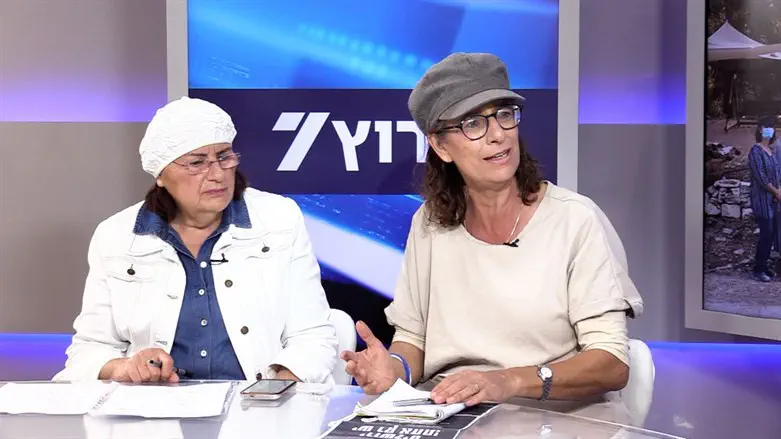
Yehudit Katsover and Nadia Matar are Co-Chairs of the Sovereignty Movement
Sovereignty Because This Is Ours
Sovereignty is a political decision: the decision to apply the sovereignty of the State of Israel to the regions of its homeland, out of a profound recognition that this is our land, the land of our forefathers, the land promised to the people of Israel by the Almighty. This is where our roots lie, this is where our history is, and this is where we will build our future.
Our right to this land does not begin with a United Nations decision, nor does it depend on the world's approval. It stems from the deep historical and national connection between the people of Israel and their land. To realize this right in the political and legal spheres as well, vision, sovereign consciousness, and the courage to make a decisive choice are required.
For far too many years, we have lived in a state of indecision and continued to abide by the Oslo Accords. We build, settle, pave roads, develop communities, and strengthen our hold on the land, but we avoid the necessary step: repealing the Oslo Accords and clearly declaring that Judea, Samaria, and the Gaza Strip are an inseparable part of our homeland.
We hesitate to formalize our political and legal status. We invest in settlement, but leave open the question of whether this territory will remain part of the State of Israel in the future.
This hesitation is not merely political. It is also a matter of consciousness. As long as Israel does not make a decisive choice, it sends the message that it is itself uncertain of the justice of its path and of its right to formalize its hold on the land through a binding political decision. If Israel does not apply sovereignty, what do we expect from the world?
The World Opposed Us Then-and Opposes Us Now
It is worth returning for a moment to the year 1948. Did the entire world stand by our side when we declared the establishment of the State of Israel? Certainly not. Although the partition plan received a majority in the UN General Assembly, it did not guarantee the borders of the Jewish state, its security, or its establishment without war. The Arab states opposed the very establishment of a Jewish state, and the leadership of the Jewish community knew that declaring independence would lead to a difficult war.
Even then, warnings were heard about the political and security costs. Even then, reality was complex and full of dangers. And Ben-Gurion made the decision.
He did not declare the state because all the conditions were ripe, because the world agreed to every detail, or because all the difficulties had been resolved. He understood that there are moments in history when leadership is required to make a decision and shape reality, rather than wait until reality grants it permission.
This is the lesson of 1948: do not wait for perfect circumstances, but define a national goal and act to achieve it. This is also the courage required today-to make a political decision.
The Golan as Another Example
In 1981, Israel applied its laws, jurisdiction, and administration to the Golan Heights. The world opposed the move, and the UN Security Council declared in Resolution 497 that it had no validity under international law. Nevertheless, Israel did not revoke its decision. In 2019, the United States recognized Israeli sovereignty over the Golan Heights.
This does not mean that international opposition disappeared, or that the reality in Judea and Samaria is identical to that of the Golan Heights. However, this case once again demonstrates that a political decision does not have to wait for prior international agreement.
A sovereign decision does not guarantee that the world will immediately accept Israel's position. It does make clear that Israel knows its goal and will not leave its future indefinitely open.
The Status of the Arabs Is No Excuse
One of the main arguments against applying sovereignty in Judea and Samaria concerns the status of the Arab population. This is indeed a serious question that requires serious answers. But it cannot become an excuse for avoiding a decision forever.
When Zionist settlement in the Land of Israel resumed, Jews were a minority in the population of the land (in 1882, there were approximately 24,000 Jews, compared with approximately 440,000 Arabs). Even on the eve of the establishment of the state, the Zionist movement faced a complex demographic, national, and security reality (650,000 Jews compared with 1.3 million Arabs). And yet, it did not abandon the vision of a Jewish state.
The Jewish people worked to promote immigration, establish communities, purchase land, create national institutions, and build the foundations of a state. The Jewish people did not wait for the day when all the challenges would disappear on their own.
Today, there is a Jewish majority between the Jordan River and the Mediterranean Sea. According to Yoram Ettinger, Israel and Judea and Samaria are home to approximately 8 million Jews and 3.5 million Arabs, making Jews approximately 69% of the population, excluding Gaza. This Jewish majority benefits from the tailwinds of fertility and net migration. (Source: Yoram Ettinger, The Ettinger Report, 2026.)
The question of the status and rights of the Arabs requires an orderly, responsible, and feasible plan that addresses security concerns and is based on President Trump's proposal for the emigration of Gaza's Arab population. But there is an enormous difference between recognizing complexity and surrendering to it. Zionism did not wait for difficulties to disappear before realizing its vision. It acted to confront them.
The Race Is On-Sovereignty or Palestine?
Since the Six-Day War, we have been living in a prolonged interim situation. Israel controls extensive parts of Judea and Samaria but has not applied its sovereignty to them. For decades, we have grown accustomed to speaking of a future arrangement, future negotiations, and conditions that will ripen in the future.
Meanwhile, time does not stand still. The Palestinian Authority is creating facts on the ground through massive construction, land registration and regularization, and efforts in the international arena to advance recognition of a Palestinian state (157 out of 193 UN member states have recognized it as a "state"). Israel continues to strengthen its hold on the land but refrains from giving it full sovereign expression.
This creates an intolerable situation: we build and take action on the ground, yet leave the question of our future open, while our enemies work to advance their own political decision. Avoiding a decision does not convey neutrality. It conveys weakness and hesitation.
Sovereignty Is the Bulletproof Vest of the Settlement Enterprise
The settlement enterprise is an extraordinary Zionist undertaking. Every home, community, farm, and road deepens our hold on the land. But settlement alone does not guarantee its future.
In Sinai, Gush Katif, and northern Samaria, we saw how communities built through hard work, dedication, and faith were uprooted as a result of political decisions. Thousands of homes and an entire life's work did not prevent the evacuation once the decision to uproot them had been made.
This is not merely a warning from the past. As long as sovereignty has not been applied, even the most magnificent settlement enterprise remains vulnerable to changes in policy. A future government may make decisions that reverse the achievements of settlement. What has been built over decades could once again become a bargaining chip in negotiations or be subject to evacuation. For this reason, our hold on the land must be anchored within Israel's political and legal framework, making the uprooting of communities and the surrender of territory far more difficult, legally and politically.
The Basic Law: Referendum stipulates that a decision to withdraw territory from the application of Israeli law, jurisdiction, and administration requires approval in a referendum, unless it is approved by a majority of 80 Knesset members. In Judea and Samaria, by contrast, as long as sovereignty has not been applied, this special constitutional protection does not apply under this Basic Law. Thus, as we learned painfully from Gush Katif and northern Samaria, a political decision supported by a regular majority in the Knesset (59!) led to the uprooting of entire communities.
This is one of the main reasons why sovereignty is the bulletproof vest of the settlement enterprise. Therefore, the question is not whether settlement is important. It is more important than ever. The question is whether we are prepared to settle for an achievement that can be reversed, or to move on to the next stage of Zionism: applying sovereignty.
Sovereignty Will Bring the Million
The argument that we must wait to apply sovereignty until one million Jews live in Judea and Samaria reverses the order of things. Applying sovereignty will help advance national planning for the construction of cities and communities, investment in infrastructure, roads, transportation, industrial zones, educational institutions, and security for investors. These will enable the expansion of settlement and the population of the region by millions of Jews.
There is no need to wait until one million Jews live there to apply sovereignty. Sovereignty itself will bring them.
Bureaucracy Must Not Be Allowed to Block a National Decision
Nearly sixty years have passed since the Six-Day War, and Judea and Samaria are still not fully included in the national planning framework of the State of Israel. Anyone looking at the map of National Outline Plan 35 can see that Judea and Samaria and the Gaza Strip are not included in Israel's planning framework. We cannot continue planning the future of the State of Israel as though these regions of our homeland were not part of it. Judea and Samaria and the Gaza Strip must be integrated into overall national planning, and the Israeli planning system must be applied to them as an inseparable part of the sovereign decision.
Some fear that such a move would bring bureaucracy, delays, and lengthy approval processes, as happens in other parts of the country. However, if applying the Israeli planning system creates bureaucratic difficulties, they must be addressed through appropriate reforms, streamlined procedures, and the removal of obstacles. There is no logic in leaving Judea and Samaria and Gaza outside the national planning framework, or in avoiding a political decision simply because the planning system needs improvement. We do not leave regions of our homeland outside national planning because of bureaucracy. We reform the bureaucracy and move toward a decisive decision.
Sovereignty-The Next Stage of Zionism
Zionism knew how to move from dream to action, from exile to return, and from settlement to the establishment of the state.
Now the next transition is required: from holding the land to declaring sovereignty.
Statements of support are not enough. Opposing a Palestinian state is not enough. Symbolic decisions are not enough, nor is declaring that Judea and Samaria are the heart of our homeland if we are not prepared to give that statement binding political expression. We need leadership that will say: we are no longer satisfied with managing the situation. We seek to shape the future.
The Sovereignty Movement has succeeded in bringing the idea of sovereignty from the margins to the center of public discourse. Now the transition from consciousness to declaration is required.
A New Reality Has Been Emerging in Israel Since October 7
To bring about this transformation, a Knesset law alone is not enough. A deeper movement is needed-a movement of the spirit and of national consciousness. We must free ourselves from a defensive mindset, from the constant need to explain why we are entitled to be here, and from the habit of seeking the world's approval for every step concerning our future.
This does not mean ignoring the world, security challenges, or possible costs. Responsible leadership must take all of them into account. But there is a difference between weighing the cost and allowing fear of the cost to become policy.
A sovereign mindset begins with a clear understanding of the national goal. It rests on faith in the justice of our cause and on recognition of our responsibility for the future of the land.
Since October 7, a new spirit has been growing among the people-a profound awakening, a yearning for a strong Jewish and national identity, for genuine independence, and for the realization of our sovereignty in our land. This spirit can be felt in the air, and on its wings we must dare to declare sovereignty.
In the upcoming elections, the question is not who talks about sovereignty, but who is prepared to make the decision and implement it.
 Israel National News9 hours ago
Hezbollah flagsiStock
Israel's Ministry of Defense announced that its National Bureau for Counter Terror Financing (NBCTF) has imposed sanctions on Coral Oil, a Lebanese-owned energy company registered in the United Kingdom, for supplying approximately 130,000 liters of diesel and gasoline to a company owned by the Hezbollah terrorist organization.
The sanctions, signed by Defense Minister Israel Katz, follow findings that Coral Oil transferred the fuel to Al-Amana, a Hezbollah-owned fuel company designated as a terrorist organization by Israel's Defense Minister in 2020.
According to the Defense Ministry, the transaction exposes another link in Hezbollah's economic supply chain, demonstrating how commercial businesses can provide essential resources that support the terrorist organization's military and logistical operations.
The ministry emphasized that fuel supplies play a critical role in Hezbollah's activities, extending far beyond ordinary commercial use.
Hezbollah uses diesel and gasoline to transport weapons and military equipment, operate generators and other infrastructure, and maintain its underground facilities.
The IDF stated that by supplying fuel to a Hezbollah-owned company, Coral Oil made resources available that could help sustain the organization's operational capabilities and support terrorist activities against Israel, the ministry said.
Although Coral Oil is registered in the United Kingdom, Israeli authorities found that it is owned by A. Yamin Group S.A.L. (Holding), a Lebanese company, and conducts its business through its Lebanese branch.
According to corporate documents cited by the Defense Ministry, Coral Oil is part of a business network associated with the Yamin family.
Three brothers - Oscar, Antonio, and Edgar Yamin - have served as directors of Coral Oil since January 2017.
The documents identify Oscar Yamin as the group's chairman and CEO, Antonio Yamin as responsible for financial strategy, and Edgar Yamin as overseeing operations and supplier relations.
The ministry also detailed changes in the company's ownership structure.
Until November 2025, Coral Oil was directly owned by Fortuna, a company registered in the Isle of Man, while Lebanon's A. Yamin Group served as its ultimate parent company.
In November 2025, direct ownership was transferred to A. Yamin Group S.A.L. (Holding), a Lebanese entity.
According to the Defense Ministry, the corporate documents indicate that Coral Oil belongs to a broader network of companies operating in the fuel and international trade sectors, with business ties worth hundreds of millions of dollars.
The Yamin family occupies a central position in that network, the ministry said.
Targeting Hezbollah's Economic Supply Chains
The Defense Ministry described the sanctions as part of a broader campaign by the NBCTF and Israeli security agencies to disrupt Hezbollah's financial, commercial, and logistical infrastructure.
Rather than focusing exclusively on companies directly controlled by Hezbollah, Israeli authorities are also targeting commercial suppliers whose activities provide the organization with resources needed to sustain its operations.
In Coral Oil's case, the ministry noted that diesel and gasoline are legitimate commercial products, but their transfer to a Hezbollah-owned company placed essential supplies at the disposal of a designated terrorist organization.
The ministry said the case also highlights the international corporate structures and commercial relationships that can connect businesses operating across multiple countries to Hezbollah's supply networks.
According to the Defense Ministry, the sanctions are intended to sever the connections between legitimate commercial activity and the logistical infrastructure that enables Hezbollah to maintain its terrorist operations against Israel.
 Israel National News10 hours ago
Trump and Netanyahu 2025White House
Rachel Avraham is the CEO of the Dona Gracia Center for Diplomacy and an Israel-based journalist. She is the author of “Women and Jihad: Debating Palestinian Female Suicide Bombings in the American, Israeli and Arab media."
Nine days before Israel’s election, Donald Trump made Benjamin Netanyahu’s political future part of his confrontation with Iran. His October 18 endorsement praised Netanyahu as a “Great Warrior Prime Minister," but its most revealing passage concerned what America might have to do without him.
“If Israel has the wrong Leader, which would be anyone other than Bibi," Trump wrote, “America will have to do this work ourselves, and I am not inclined to do so."
The statement put an unusual proposition before Israeli voters: retaining Netanyahu might help keep the burden of confronting Iran on Israel rather than American forces. It was also an unmistakable intervention in an ally’s election. Yet Trump's preference for Netanyahu does not establish that Washington has ordered an Israeli strike, or even decided that another strike should occur.
The timing gives his words particular weight. Israelis vote on October 27, followed by American midterm elections on November 3. Trump said on October 8 that U.S. forces would not attack Iran before the midterms. Meanwhile, American and Israeli officials have discussed the possibility of renewed military action, and the Pentagon has instructed Central Command to prepare options without announcing a date or final decision.
There is a useful precedent in political theory. In The Tragedy of Great Power Politics, John Mearsheimer describes “buck-passing," whereby a powerful state seeks to have another country shoulder the immediate burden of containing a rival. His framework helps explain the appeal of Trump’s formulation. America wants Iran constrained; Israel has both the capability and its own reasons to act. The analogy becomes misleading, however, if it suggests Israel is merely following orders. Tehran’s nuclear activities and military network are Israeli security concerns regardless of who occupies the White House.
Reporting on the conversations between Trump and Netanyahu points to a less settled picture than the idea of an American assignment. Axios reported that the leaders discussed a possible major operation before the elections, including the prospect of joint U.S.-Israeli action. A White House official disputed that account, while another U.S. official described Trump as encouraging preparations without making a commitment. The reporting establishes serious discussion, not agreement over who would attack or when.
That uncertainty matters to both leaders. Israeli military officials have warned that renewed fighting could provoke Iranian missile attacks and potentially disrupt Israel’s vote. An operation before November 3 could also unsettle oil markets and put Trump’s own party under pressure. Even if Israel acted without American bombers, Washington could face demands for intelligence, air defense and other support, along with responsibility for managing a regional escalation.
Claims about American tankers over Iraq and Israeli preparations for penetrating Iranian air defenses deserve the same caution. Aircraft activity can indicate readiness, but it cannot by itself prove that a particular attack has been approved or that American crews have been assigned to refuel Israeli fighters during one. Preparation and authorization are different stages of military decision-making.
The surrounding region further complicates the calculation. A confrontation with Iran could draw in armed groups in Iraq or Hezbollah in Lebanon, exposing countries that have no desire to become battlefields. Washington’s efforts to discourage Lebanese involvement, and Israel’s warnings about the consequences of Hezbollah entering a war, show how quickly a limited operation could acquire a wider political cost.
Turkey is another constraint on Israeli freedom of action. Ankara’s growing presence in Syria worries Israeli security planners, while Washington sees a NATO ally whose cooperation remains valuable. Earlier analysis by Dor Moriah argued that Israel’s strike on the Abu al-Duhur air base reflected concern about the operational reach of Turkish radar and air-defense systems, potentially affecting routes toward Iran. That is an analytical interpretation of the strike, not an established account of the Israeli command’s intentions.
Netanyahu has lately spoken more cautiously about Turkey. On October 18, he acknowledged differences with Trump over Ankara while expressing hope of avoiding a direct confrontation. Such restraint need not mean Israel has revised its assessment of Turkish ambitions. It may simply reflect the difficulty of confronting Iran while opening another dispute with a country important to Washington.
Public opinion offers some context. A Dor Moriah survey conducted in May and June among 1,007 respondents found that 34.4% viewed Turkey as a serious strategic threat and 28.5% considered it unfriendly but not a direct security threat. The research also found substantial support for restraint and managed competition rather than escalation. Those findings cannot tell us why Netanyahu chose his words, but they challenge the assumption that concern about Turkey necessarily creates a demand for confrontation.
The immediate decision, however, remains focused on Iran. One possible window falls after Israel’s election but before the American vote; another opens after November 3. Both are speculative. A third outcome is continued pressure without another strike, using military readiness to strengthen Washington’s negotiating position. Trump’s public commitment not to attack before the midterms is a statement of intent, not a guarantee about every possible contingency or about Israeli decisions.
Netanyahu thanked Trump for their joint work and promised to complete their mission together. The language was warmer than Trump’s warning about having to do the work himself. That contrast captures a genuine difference in emphasis: Netanyahu wants to present the confrontation with Iran as a partnership, while Trump has made his preference for a particular Israeli leader part of the question of who carries the burden.
Israel is not America’s contractor, and its prime minister cannot simply outsource responsibility for a war to Washington. Nor can Trump assume that Israeli action would leave the United States untouched. His endorsement has made those competing expectations visible, but it has not resolved them. Israeli voters will choose their government; any decision to strike Iran will still require political leaders on both sides to confront the costs that follow.
 Israel National News10 hours ago
MDA ambulanceiStock
A girl approximately 12 years old was critically injured Thursday afternoon while riding a bicycle in the community of Yitzhar in Samaria.
Magen David Adom (MDA) EMTs and paramedics were dispatched to the scene and began providing medical treatment in cooperation with an IDF medical team.
According to an MDA statement, the girl is in critical condition, and medical teams are performing resuscitation efforts.
 Israel National News10 hours ago
TOSFOS IN ENGLISHCourtesy
Pre-Order & join the 2nd print!
Thanks to a generous donor, order a hardcover set of 26 volumes of Tosfos in English for only $190! $750
That’s over $550 off!
Only $7 per volume!
FREE shipping in the U.S. Only $48 to ship to Israel!
Offer is valid until November 5
Included: Tosfos translated & explained, covering the chapters most frequently learned in the talmud.
To learn more & order your set of 26 volumes, click here: https://tosfosinenglish.shop/home?am_id=plakescoop1562
To receive a FREE Tosfos in English mini e-book, click here:https://tosfosinenglish.shop/free-sample?am_id=flakescoop2491
 Israel National NewsIsrael National News10 hours ago
Aryeh DeriYonatan Sindel/Flash90
Journalist Amichai Attali published a scathing criticism Thursday of the "Tefillin for Every Child" program presented by Shas chairman Aryeh Deri, under which Deri pledged that, in the next government, his party would work to provide every boy in Israel reaching bar mitzvah age with a set of tefillin and a tallit at state expense.
Attali argued that tefillin are already widely accessible in Israel to anyone who wishes to wear them, and that the new promise could lead to the creation of an unnecessary government bureaucracy that would, he claimed, enable the distribution of jobs and resources to political associates.
"Every child knows that Israel has an abundance of sets of tefillin. Every day, hundreds of people die and leave behind perfectly kosher tefillin," he wrote.
Attali pointed to tefillin stations set up in businesses and volunteer initiatives to purchase tefillin for soldiers, teenagers, and new immigrants.
According to him, "There is almost no one in Israel who wants tefillin and doesn't have them."
Later in his post, Attali described a scenario in which the program would lead to the establishment of a new government bureaucracy, complete with offices, officials, vehicles, and budgets.
"So why is Deri a genius? Because he's bringing in hundreds of soferim (scribes who write tefillin, mezuzot, and Torah scrolls) through the back door, who will make a living from his new bureaucracy. Because he's putting cash into the pockets of hundreds of thousands of haredim - they're already buying tefillin for their sons' bar mitzvahs anyway, so why not shift a substantial portion of the expense onto those who actually work and pay taxes?"
Attali continued with a sarcastic description of what he called the "National Tefillin Administration," arguing that it would become a source of political appointments.
"Another 20 Shas members will get jobs in the National Tefillin Administration. They'll rent spacious offices in a new building in Givat Shaul. There will be an exemption from the requirement to hold tenders, so the property owner will surely be a relative of some senior Shas official."
In his satirical description, he wrote that the administration would have leased cars, advisers, and various officials. He even suggested dividing responsibilities between an "adviser on Rashi tefillin" and an adviser on Rabbeinu Tam tefillin.
Attali continued his criticism by raising the possibility of a future split between a Sephardic Tefillin Administration and an Ashkenazi Tefillin Administration because of differences in the customs of the respective communities.
He mockingly described a situation in which positions in the administrations would be passed among family members and associates while public funds were exploited.
Toward the end of his post, Attali argued that Deri, as someone deeply familiar with the religious world, knows that there is no significant shortage of tefillin for those who wish to wear them.
"I'm telling you that Aryeh Deri lives within the religious world no less than I do, and he cannot even imagine that there is a Jew who wants tefillin but cannot obtain them."
Attali concluded his criticism with a harsh accusation:
"His announcement today is actually about creating yet another unnecessary bureaucracy whose entire purpose is to provide a livelihood for associates while exploiting the public treasury for the benefit of voters. And this is just one more piece of proof that Aryeh Deri is a genius."
 Israel National News11 hours ago
cloudFREEPIK
Modelyo announced on Thursday, October 22, 2026, that it has raised approximately $17 million, primarily from U.S. investors, to accelerate the development of its Sovereign Confidential Cloud platform and expand its international operations.
Modelyo’s technology enables organizations to use cloud infrastructure, managed services and AI agents while keeping their data encrypted, including during processing, without sharing encryption keys with the cloud provider. The company operates in Israel and international markets and will use the funding to expand its development and commercial operations.
The company aims to address a central challenge for governments, banks, defense companies, healthcare organizations and large enterprises: using the vast computing resources of the cloud and advanced AI systems while retaining control over their data, intellectual property and encryption keys.
With even the largest technology platforms vulnerable to breaches and cyberattacks, and organizations facing risks from their reliance on external infrastructure providers, Modelyo offers a new approach to cloud security based on cryptographic verification. Its technology enables organizations to verify that their data is protected, including during processing, rather than relying solely on assurances from their providers.
The technology combines confidential computing, hardware-based encryption, continuous verification of the computing environment and a zero trust architecture. It allows organizations to run advanced cloud services on third-party infrastructure while retaining control of their encryption keys, without requiring the infrastructure provider to access the contents of their data.
The funding was led by U.S.-based OlivTree, with participation from Seth Merrin, David Phelps and other investors. The proceeds will be used to accelerate research and development of the confidential cloud platform and expand the company’s international go-to-market activities.
The company plans to expand its encrypted managed services, enhance support for AI systems and autonomous agents, extend support for GPU infrastructure and make the platform easier to use.
“The world is moving at a pace we have never seen before. AI no longer just generates content. It is beginning to make decisions and operate systems, and will soon be part of almost every aspect of our lives, from banking to the cars we drive," said Benny Meir, co-founder and CEO of Modelyo. “But as technology advances, security must advance with it. We cannot build tomorrow’s world on yesterday’s approaches to security. We founded Modelyo with the understanding that the world cannot afford to choose between innovation and security. There is no reason a company should have to surrender its secrets, its intellectual property or control over its systems simply to benefit from the power of cloud computing and AI."
Meir added: “We want to change the relationship between organizations and their technology providers. Instead of asking customers to trust that their data is protected, we give them the tools to prove it cryptographically, even while the data is being processed, even when it is in someone else’s cloud, and even when AI systems are working with it."
 Israel National News11 hours ago
Sarai Givatiחלי פרידמן
Israeli actress and model Sarai Givaty has filed a defamation lawsuit seeking half a million shekels in damages against Francesca Albanese, the UN Human Rights Council’s Special Rapporteur on the Palestinian Territories. The lawsuit was filed through the organization Shurat HaDin and attorney Nitsana Darshan-Leitner following a tweet by Albanese. Givaty alleges that the post portrayed her as someone who justifies the killing of children and linked her remarks to arguments used by high-ranking Nazi officials to justify the murder of children during the Holocaust.
According to the statement of claim, the post stems from a video interview Givaty gave in September 2025. In the interview, Givaty discussed the shift in her worldview following the October 7 massacre. She addressed the rise of extremism on both sides-the far-right and radical Islam-and the need to take action against both. She concluded her remarks by saying: "It saddens me when any child in the world cries-it truly saddens me-but I also understand that if we do not act, that child will grow up to be a terrorist."
The lawsuit emphasizes that these comments were made in the context of addressing the indoctrination of children toward hatred and to the point of extremism. Givaty did not call for the killing of children or for harming them, nor did she justify such harm.
According to Givaty, about a year after the interview, a 23-second clip-lacking the full context and accompanied by a partial English translation-began circulating online. On September 19, 2026, Albanese shared the clip on her account, adding an outrageous comparison, "The children will grow up." “This was also the argument presented by senior Nazi officials during the Nuremberg trials to justify the killing of children during the Holocaust."
According to the lawsuit, the post garnered over two million views, tens of thousands of shares, and approximately 93,000 likes. Following this, the content was disseminated across media outlets and social media networks worldwide. Givaty states that she subsequently received dozens of hateful messages and direct threats.
Givaty asserts that the post harmed her dignity and good name, jeopardized her personal safety, and damaged her professional reputation and employment prospects both in Israel and abroad. The statement of claim emphasizes that for an actress and model working in the international market, associating her name with the justification of killing children-and with Nazi-era rationales-could deter producers, agencies, and brands, leading to the loss of professional opportunities.
Sarai Givaty said, "As a mother, I am appalled by this false comparison. One may disagree with my opinions, but one cannot attribute statements to me that I never made, nor portray me to millions of people as someone who justifies the killing of children. I will not remain silent in the face of those who seek to harm the State of Israel and defame it globally."
Attorney Nitsana Darshan-Leitner said, "We are fighting back against this international campaign of lies. Albanese is waging a vitriolic, antisemitic campaign against Israel and is responsible for spreading yet another libelous fabrication regarding its citizens. For the first time, it is possible to sue this detractor of Israel for her hate speech and hold her accountable for her actions. She cannot be allowed to hide behind her immunity."
 Israel National News11 hours ago
Isaac HerzogYonatan Sindel/Flash90
President Isaac Herzog declared Thursday that he is unequivocally opposed to granting a pardon or any reduction in the sentence of Yigal Amir, the assassin of Prime Minister Yitzhak Rabin.
He made the remarks at the state memorial ceremony for Yitzhak and Leah Rabin at Mount Herzl, five days before the Knesset elections.
Herzog addressed Rabin's assassination and its significance for Israeli society, emphasizing that the shock over the murder should not depend on political affiliation or agreement with the late Prime Minister's policies.
"A person does not have to agree with the decisions of a prime minister or any political leader to be horrified by his murder. He does not have to join that leader's political camp to recognize the disaster inflicted upon the entire country," he said.
"On this day, the memorial day for Rabin's assassination, there is no political entrance exam. It belongs to everyone! There must be only personal and national responsibility, intertwined with one another."
Later in his speech, the President addressed Yigal Amir's punishment, making clear that, in his view, there is no room to consider a pardon, commutation, or any other form of leniency.
"The vile murderer must spend the rest of his life in prison. Period. Without any reduction, pardon, or commutation whatsoever. This is a red line that we, as a society, must uphold."
The President then turned to the approaching elections, warning against the deterioration of public discourse into political violence.
"In five days, we will go to the polls. This period can and should be the finest expression of our democracy. But in such tense days, God forbid, it could turn out differently."
Herzog appealed to candidates, leaders, and members of the media to demonstrate responsibility and refrain from inflammatory statements.
"I stand here and warn: Words kill! Therefore, candidates, leaders, opinion makers, and commentators - all of you - be careful with your words," he said.
He added: "I appeal to all candidates from every party, camp, and political position, and to all citizens: Keep Rabin's final words before you! Words that constitute a testament: 'Violence is an erosion of the foundations of Israeli democracy.' Debate must be respected. Violence must be rejected."
Herzog continued: "We must not allow room for violence from any side or of any kind. The red lines must be clear and unmistakable. Remember: Elections are not a civil war.
"Just before Election Day, we must remember: My right to win an election rests on my willingness to recognize your right to win it. This applies to every side. We will defend that right before the vote, on Election Day, and on the morning after."
He went on to say: "Of course we are allowed to disagree, and we even have a duty to argue - and we have plenty to argue about. But we must remember: Today's political opponent is tomorrow's neighbor, brother, fellow soldier in battle, and partner."
Toward the conclusion of his remarks, the President addressed the Rabin family.
"Dear and beloved Rabin family, we will always remember Yitzhak as a towering figure, a man of extraordinary accomplishments, a hero of Israel and one of its great military commanders - among the commanders of the Palmach, Chief of Staff during the Six-Day War, Ambassador to the United States, Member of Knesset, Defense Minister, the Prime Minister who bore responsibility for Israel's security and sought to bring it peace. A man whose deep, measured voice carried decisions of immense consequence."
Herzog recalled Rabin's words in his final speech. "In that final speech, just minutes before he was murdered by the vile assassin, Rabin said: 'In a democracy, there can be disagreements, but the decision will be made through democratic elections.' That is what he said. A kind of final testament.
"We cannot turn back time, but we can shoulder the responsibility that his testament places upon us. That responsibility will be tested in the coming weeks - in the words we speak, the boundaries we establish, and the way we accept a decision reached lawfully."
In closing, Herzog said: "A commitment to Yitzhak's legacy, a commitment to his memory, a commitment to the lessons of the criminal, despicable, and horrific assassination, and a commitment to remembering and fully understanding the responsibility we bear for the country we inherited from the founding generation. The country we inherited from Rabin.
"Before these graves, we stand in humility, but we promise: We will do everything to protect it for the sake of future generations."
 Israel National News12 hours ago
עשרות משאיות חסומותצו 9
Protesters on Thursday blocked dozens of aid trucks headed towards Gaza, demanding the demilitarization of Gaza Strip and an end to humanitarian aid shipments that serve to strengthen the Hamas terrorist organization.
The protest, held near the Kerem Shalom Crossing, was attended by activists from the Tzav 9 movement, residents of Gaza border communities, and representatives of various political parties.
Among the participants were MK Yulia Malinovsky of the Yisrael Beytenu party, and Sigal Kraunik, a candidate for Ofer Winter's Amcha Yisrael party.
The protest began in the morning, when dozens of activists arrived near the crossing and held a rally attended by elected officials and representatives of both the coalition and opposition, stressing: "No matter whom you vote for, Israel's security must never be compromised."
As a result of the blockade, aid truck traffic was disrupted, leaving approximately 50 trucks unable to continue their journey.
Israel Police officers dispatched to the scene worked to remove the protesters and reopen the road. During the operation, police forcibly removed activists who were blocking the trucks.
The protesters emphasized that aid entering Gaza provides Hamas with financial support and enables the terrorist organization to maintain its power. According to them, further aid shipments must be conditioned on Gaza's demilitarization.
At the protest, held days before the Knesset elections, participants emphasized that the demand for Gaza's demilitarization and Israel's security is shared by activists from different political parties.
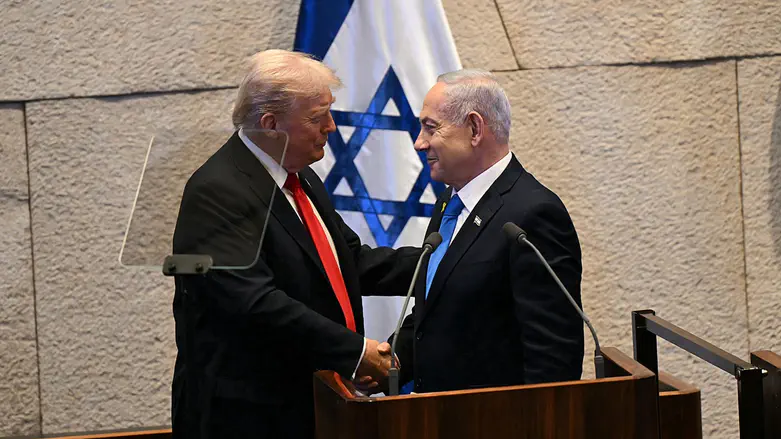 Israel National News12 hours ago
Netanyahu to Arutz Sheva: Trump's endorsement came as a complete surprise
Prime Minister Benjamin Netanyahu reveals in an exclusive interview with Arutz Sheva-Israel National News that US President Donald Trump's recent endorsement of his candidacy caught him completely by surprise, denying reports that he had worked to secure the American President's public support.
Speaking less than a week before Israel's Knesset elections on October 27, Netanyahu was asked about reports that he had made considerable efforts to obtain Trump's endorsement.
The Prime Minister rejected the reports, insisting that he never requested the endorsement.
"Not once," Netanyahu says, dismissing the reports in the Israeli media and its American counterparts.
Asked directly whether Trump's announcement surprised him, Netanyahu responds: "Completely. I didn't know."
The Prime Minister also recounts a conversation with Trump following the endorsement, during which the American President told him that he personally wrote the statement.
"And when I talked to him, he said, 'You know, I wrote it myself.' And you could see that. It was very Trumpian, very cuts to the chase."
Netanyahu contrasts the American President's endorsement with what he describes as support for his political rival, Gadi Eisenkot, from Arab party leaders Mansour Abbas and Ahmed Tibi.
"So he's supporting me. And Mansour Abbas and Ahmed Tibi, the radical Muslims, support Gadi Eisenkot. So choose," Netanyahu states.
Later in the interview, Netanyahu again refers to his relationship with Trump, arguing that the American President considers him a trusted partner in confronting Iran.
He says Trump has expressed willingness to "finish the job" against Iran and views Netanyahu as the Israeli leader with whom he can work toward that goal.
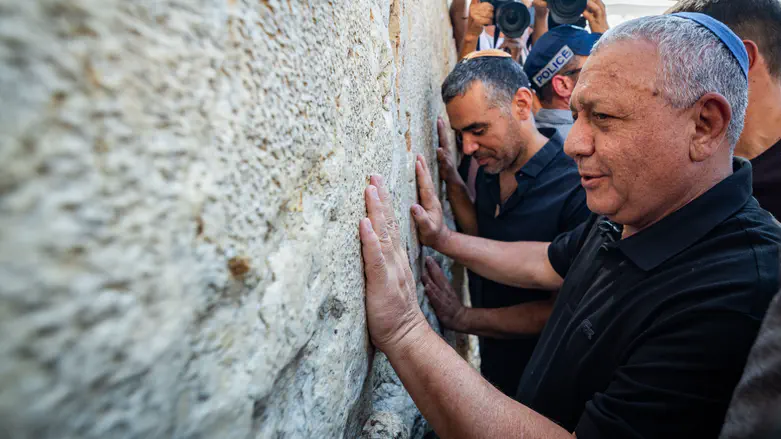 Israel National News12 hours ago
גדי איזנקוט בכותלללא קרדיט
Yashar Party Chairman and former IDF Chief of Staff Gadi Eisenkot visited the Western Wall in Jerusalem on Thursday ahead of the upcoming Knesset elections.
Eisenkot arrived at the holy site surrounded by heavy security and was greeted with mixed shouts and cheers by those present at the Western Wall Plaza.
Some visitors at the site cheered for Eisenkot, who is considered Prime Minister Benjamin Netanyahu's main opponent in next week's contest. They were heard shouting: "The next prime minister," "Save us," and "Eisenkot, redeem us, we are waiting for you."
Others, meanwhile, shouted pro-Netanyahu chants, including "Bibi, King of Israel."
 Israel National News13 hours ago
Elad (illustrative)Flash 90
An unusually violent clash erupted late Wednesday night in the central city of Elad following the arrest of a student from the Torah B'Tifarta yeshiva, who was handed over to the Military Police.
The incident began when a third-year student at the yeshiva reported to a police station in Kfar Saba in connection with a traffic violation.
During a check of his personal details, police discovered that he was classified as a military draft evader. He was immediately transferred to the Military Police and sentenced to ten days in military detention.
The arrest sparked protests in the Sharon region, which quickly spread to the city of Elad.
Beginning on Wednesday evening, dozens of yeshiva students gathered for a spontaneous demonstration at the entrance to the city, blocking Highway 444 for several hours. Police forces called to the scene secured the area and later began dispersing the protesters.
Tensions escalated after midnight when large numbers of police officers, including Yassam forces, and Border Police troops, arrived near the yeshiva compounds close to the city's entrance.
According to students who were present, the forces entered the grounds of several yeshivas, including Torah B'Tifarta, "Rabbi Ettinger's Yeshiva," and Beit HaTalmud, and threw stun grenades into courtyards and residential areas, allegedly affecting individuals who had not actively participated in the demonstration.
 Israel National News13 hours ago
one familyPR
It begins with a phone call no family should ever receive.
A bus. A café. A checkpoint. A Shabbat table. In a single moment, a life is shattered, and the people left behind have to keep breathing somehow.
Twenty-five years ago, OneFamily made them a promise: you will never face this alone.
They have kept that promise every day since.
When terror strikes, OneFamily is already on the way. They sit at the hospital bedside through the longest nights. They walk into the shiva house, and they stay. And when the cameras leave, and the world moves on, OneFamily is still there... for the first holiday with an empty chair, the wedding without a brother, the surgery that comes years later, the anniversary that never gets easier.
They bring financial help when a paycheck disappears overnight. Trauma care that meets grief exactly where it lives. Retreats where a mother can finally exhale. Programs where bereaved siblings and children find friends who simply understand, because they have walked the very same road. Not for a week. Not for a year. For as long as it takes.
That is why it is called OneFamily. Not an organization. A family.
Silver marks 25 years. Steel is what that family has become: the quiet, unbreakable strength of survivors who lived through the worst day of their lives and, with OneFamily holding their hand, found the courage to keep going.
For 25 years, this work has never paused. Sadly, neither has the need.
On Wednesday, October 28, the OneFamily community comes together for A Night of Heroes to honor a generation of healing and to make sure no family facing tomorrow's phone call ever stands alone. Join philanthropists, community leaders, and survivor families from around the world for an evening of remembrance, resilience, and hope.
Wednesday, October 28, 2026 | Cipriani Wall Street, NYC | Dinner 6 PM
 Israel National News13 hours ago
Rabbi Dov LandoShlomi Cohen/Flash90
An unusual meeting was held Wednesday evening at the home of Lithuanian-haredi leader Rabbi Dov Lando, attended by dozens of businessmen and prominent figures from the Lithuanian-haredi community.
The meeting followed appeals from representatives of working members of the Lithuanian-haredi community, who presented the senior rabbi with a series of complaints and frustrations regarding the party's representatives in the Knesset and local government.
According to the participants, their elected representatives have failed to adequately address the challenges facing families that are not part of the traditional full-time yeshiva framework.
During the gathering, Rabbi Lando read a letter he had prepared in advance, in which he expressed pain over the concerns raised by members of the community.
In the letter, published by Kikar HaShabbat, Rabbi Lando alleged that "there is no way to guarantee that one's children will be educated according to the path of the Torah other than by voting for United Torah Judaism."
The letter also warned against voting for newly established parties or abstaining from the elections, claiming that any departure from the traditional voting patterns would be "a very great loss" for future generations.
Alongside his unequivocal call to vote for United Torah Judaism, Rabbi Lando sought to address the participants' frustrations, promising to personally approach the party's leadership and Knesset members to demand improvements in how they address the educational and communal needs of working haredi families, including the establishment of dedicated Torah-based educational institutions.
The issue is mostly relevant within the Lithuanian-haredi community, as employment rates are relatively high among hasidic communities.
 Israel National News14 hours ago
IAI plane conversionsIAI
Israel Aerospace Industries (IAI), Ascent Aviation Services and World Star Aviation on Thursday announced the commencement of Boeing 777-300ERSF passenger-to-freighter (P2F) conversions in North America.
The first Boeing 777-300ER passenger aircraft, from World Star Aviation’s portfolio, has arrived for conversion at Ascent’s newly expanded Pinal Air Park campus in Marana, Arizona.
Ascent’s Marana facility will serve as the North American conversion site for IAI’s 777-300ERSF program, forming part of IAI’s global conversion network. As cargo operators seek to maximize fleet value and meet growing long-haul freight demand, P2F conversions have become one of the fastest-growing segments in the commercial aviation aftermarket.
Guy Bar Lev, IAI's President and CEO, said: "Our vision is to shape the future of aviation by turning engineering innovation into lasting value for our customers. Passenger-to-freighter conversions are a key part of that vision, extending the productive life of aircraft and helping airlines adapt to changing market needs. Establishing a conversion presence in North America advances our long-term strategy to strengthen IAI’s position in the global commercial aviation market."
As part of a long-term agreement with IAI, Ascent Aviation Services will operate two parallel Boeing 777-300ERSF conversion lines. The expansion is expected to create hundreds of highly skilled aviation jobs in Southern Arizona while reinforcing Marana's position as one of North America's fastest-growing aerospace and aviation hubs. By combining IAI's certified conversion technology with Ascent's extensive MRO infrastructure and widebody aircraft expertise, the facility expands global conversion capacity while providing customers with greater flexibility and support in the North American market.
Mr. Yaacov Berkovitz, EVP and GM of IAI Aviation Group, explained: "The launch of Boeing 777-300ERSF conversions in North America marks an important milestone for IAI’s global conversion program. Together with Ascent Aviation Services, we are expanding production capacity and bringing our conversion capabilities closer to customers in the region. World Star Aviation has played a key role in making this milestone possible, and we deeply appreciate their commitment, the work they have invested in bringing the first aircraft to Marana, and their confidence in IAI’s technology. This collaboration brings together the expertise and dedication of all three companies to support cargo operators worldwide."
IAI's Boeing 777-300ERSF is the world's first and only certified Boeing 777-300ER passenger-to-freighter conversion program. The arrival of the first World Star Aviation aircraft demonstrates continued market confidence in the program while expanding IAI’s ability to support customers as demand for widebody freighter conversions continues to grow.
David Querio, CEO of Ascent Aviation Services, added: "The arrival of our first Boeing 777-300ER conversion aircraft marks an exciting new chapter for Ascent Aviation Services. This aircraft represents far more than the start of a single project - it marks the beginning of a long-term partnership with IAI and the first of many Boeing 777-300ERSF passenger-to-freighter conversions that will take place here in Marana. As the demand for cargo conversions continues to grow across the aviation industry, Ascent is proud to be at the forefront of this expanding market with world-class facilities, exceptional talent, and a commitment to operational excellence."
The launch follows the completion of two new cutting-edge, 90,000-square-foot widebody hangars purpose-built to support IAI's global Boeing 777-300ERSF conversion program. The $70 million investment triples hangar capacity at Ascent's Marana facility, significantly expanding the company's heavy maintenance and widebody aircraft modification capabilities, further positioning Southern Arizona as a premier destination for next-generation freighter conversions.
Yoyo Allalouf, a partner at World Star Aviation, said: "We chose IAI’s 777-300ERSF P2F program because we believe it is the strongest 777 P2F program available at this most critical of times for 777 passenger to freight conversion production. Ascent’s Marana facility gives us the capacity and quality standards we look for as we grow our freighter portfolio. Decisions like this one are how we manage value for our investors across the cycle - backing the right platform, the right technology and the right execution partner. We’re glad to see this aircraft lead the way for the program in North America."
Garreth Slevin, also a partner at World Star Aviation, noted: "WSA’s history with IAI in widebody P2F programs dates back to the 1990s and the Boeing 747-200 P2F program. IAI’s dominance in the widebody P2F space, demonstrated by its Boeing 747 and 767 programs, together with our long-standing relationship, underpinned our decision to choose IAI for the 777-300ERSF. We’re proud to continue that partnership with Ascent as the program launches in North America."
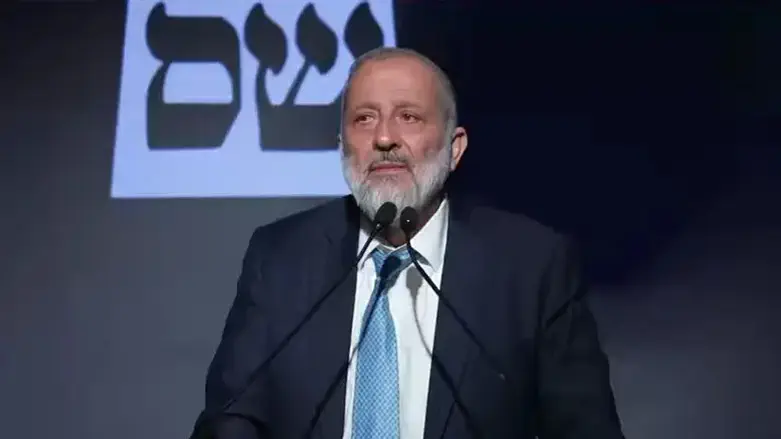 Israel National News14 hours ago
Aryeh Derispokesperson
Shas chairman Rabbi Aryeh Deri has announced a new initiative under which every boy in Israel who reaches bar mitzvah age will receive a free set of tefillin (phylacteries) and a prayer shawl through the education system.
Shas has committed to working to advance the program, called "Tefillin for Every Boy," as well as to work to require the establishment of designated prayer spaces in schools for boys who wish to put on tefillin and pray.
Earlier this year, the Education Ministry issued an official director-general's circular establishing a nationwide guideline for prayer spaces and the laying of tefillin (phylacteries) in state schools, but it is not anchored in law.
Deri presented the initiative in a statement placing Jewish identity at the center of Shas' election promises. According to Deri, the program is intended to strengthen young people's connection to Jewish tradition and ensure that every boy reaching bar mitzvah age has access to the religious items needed to fulfill the mitzvah of wearing tefillin.
Under the proposed program, the education system would be responsible for providing a Bar Mitzvah package to every boy turning 13. The package would include a pair of tefillin and a prayer shawl, regardless of whether his family can purchase them.
Deri linked his announcement to the public debate over religion's place in the public sphere, saying, "Lately, we have been hearing harsh statements that threaten the Jewish identity of the State of Israel."
"They want to turn it into a country like all other nations. That will never happen."
He also presented the commitment as a political response to Yair Golan, following Golan's call to "remove religion from the public sphere."
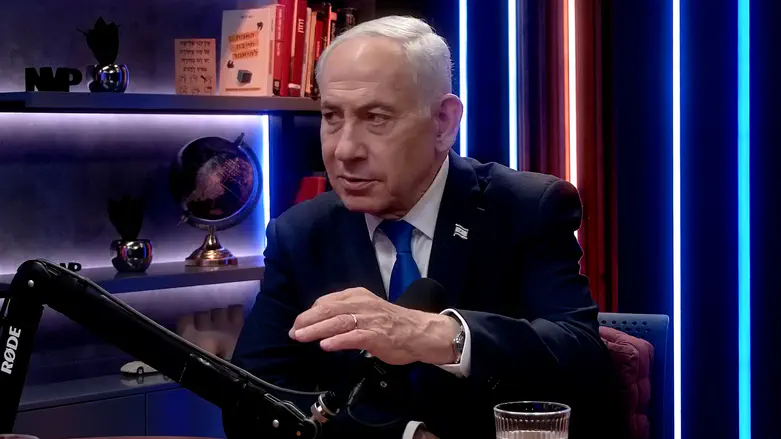 Israel National News15 hours ago
Netanyahu denies report about Iran
Prime Minister Benjamin Netanyahu denied a report that US President Donald Trump prevented Israel from launching a large-scale military offensive against Iran earlier this month, telling Arutz Sheva-Israel National News in an exclusive interview that the account is incorrect.
Asked about the report, according to which Israel had prepared to strike Iran but was stopped by the American President, Netanyahu responds: "It's an incorrect report. One day, the truth will come out."
He adds: "But the truth comes out all the time. You know, all these fake reports, they burn out, they fizzle out fairly quickly. Because eventually, the facts come out."
The Prime Minister's remarks come after the Financial Times reported Wednesday, citing three sources familiar with the plans, that Netanyahu had instructed the IDF to prepare a major attack against Iran for the weekend of October 10, but that the operation was called off following opposition from Trump.
According to the newspaper, the IDF had begun preparations for a bombing campaign expected to last several days, targeting Iranian nuclear facilities, power plants, other civilian infrastructure, and sites associated with the regime. The proposed offensive was reportedly intended to be more extensive than the joint Israeli-American military operation conducted in February.
The three sources cited by the Financial Times claimed that Trump's opposition was the primary reason the attack did not take place. According to the report, the President was concerned about the economic consequences of renewed hostilities, particularly rising energy prices, ahead of the US midterm elections on November 3.
Despite the reported cancellation, the newspaper cited a source who said that additional military action against Iran remained possible in the coming weeks.
"Either there will be a deal, or there will be an attack," the source told the Financial Times, explaining that Washington was seeking an agreement with Tehran regarding its nuclear program and the Strait of Hormuz.
The report also followed an unannounced visit to Israel by US Defense Secretary Pete Hegseth on Monday, during which he met with Netanyahu and senior Israeli defense officials. According to one of the newspaper's sources, Israeli officials presented the Americans with an updated list of potential targets in Iran based on intelligence collected in recent months.
The Financial Times noted that it remained unclear whether the United States was expected to participate in the proposed October operation or whether Israel had planned to act independently.
Last week, Axios similarly reported that Netanyahu and Trump had discussed the possibility of renewing military strikes against Iran ahead of the upcoming elections in both countries. An American official subsequently denied that such a conversation had taken place, while the Prime Minister's Office denied that Netanyahu was seeking to launch a war before the elections.
On Monday, Netanyahu released footage from an Israeli Air Force base showing a conversation with Trump in which the two leaders discussed completing their campaign against Iran.
"Donald, you said we have a job to finish, and we're going to finish it together," Netanyahu tells the American President.
Trump replies: "You're a great fighter, and we're going to prove that very soon. You're the man I want by my side."
 Israel National News15 hours ago
The Roman Shukhevych sculpture, in August 2023, Edmonton, Alberta.Artur Widak/NurPhoto
Duncan Kinney, a former journalist with the left-wing website Progress Report, pleaded guilty to criminal mischief on Monday, four years after he was arrested for vandalizing monuments to Ukrainian Nazi collaborators in Edmonton, Alberta.
Monday’s guilty plea was an anticlimactic not-quite-end to a case that appeared to be run-of-the-mill vandalism but was so culturally charged that it drew the attention of everyone from the Premier of Alberta to Friends of the Simon Wiesenthal Center in Toronto.
In 2021, Kinney broke the news story that someone had spray-painted "Actual Nazi" on a bust erected to honor WWII military commander and Nazi collaborator Roman Shukhevych and then painted "Nazi Monument" and "14th Waffen SS" on a memorial to the SS Galizien, a Ukrainian military unit that was part of the Nazi Party’s military wing.
According to court documents, Kinney was caught on a security camera spray-painting the Shukhevych monument shortly after midnight on Aug. 10, 2021, and caught again eight hours later photographing his handiwork. He then sent an email to the staff of the Ukrainian Youth Unity Complex, where the monument was located, explaining that Progress Report had received photos of the defaced monument. The brief email concluded with "Do you have any statement or information on this matter? Was Roman Shukhevych a Nazi or Nazi collaborator? Our deadline is 3:15 pm. Thank you."
Kinney initially pleaded not guilty to one count each of criminal mischief and mischief relating to a war memorial. He suggested he’d been targeted because he was critical of the Edmonton Police Service and alleged that they were trying to silence him.
He is due to be sentenced Jan. 25, 2027, at which time the crown prosecutor is expected to drop the more serious charge of defacing a war memorial, which carries a sentence of up to 10 years in prison.
Neither Kinney nor his defense attorney, Tom Engel, would comment after the court appearance. However, the board of Progress Report issued a statement decrying its former employee’s actions, calling committing a crime and reporting that somebody else did it "a cardinal breach of journalistic ethics and not acceptable behavior within any media organization. Mr. Kinney has always maintained his innocence in this matter and we trusted him; today’s news was an unpleasant surprise for us."
Ultimately, the case exposed deep divisions in the Ukrainian diaspora about the role that Ukraine played in the Holocaust.
Shukhevych was a leader in both the Organization of Ukrainian Nationalists (OUN) and its armed force, the Ukrainian Insurgent Army (UPA). He was also an officer in a Third Reich auxiliary battalion. During World War II, he commanded troops that murdered Jews, Polish civilians, other national minorities, communists and his countrymen from Ukraine. And he helped marshal the fight for Ukrainian independence from the Soviets.
The monument to the SS Galizien is located at St. Michael’s Cemetery, less than two miles from the complex housing the Shukhevych bust. Among the unit’s members was Yaroslav Hunka, who, at age 98, received two standing ovations for his service in WWII and fighting for Ukrainian independence when he appeared in the House of Commons alongside visiting Ukrainian President Volodymyr Zelensky in September 2023.
Nobody in Parliament, it seemed, was aware of Hunka’s Nazi past. When the news became public, the incident became a national embarrassment. At least temporarily, the country was forced to examine how it dealt with WWII war criminals.
In Edmonton, however, the blunder appeared to have no impact on Kinney’s case. For his alleged vandalism to the SS Galizien monument, he had been charged not with simple mischief, but with vandalizing a war monument.
"We do not consider a statue honoring a Nazi to be a war monument," says Jaime Kirzner-Roberts, senior director of policy and advocacy at the Friends of Simon Wiesenthal Center in Toronto. "When we talk about veterans’ monuments, we are talking about Canada’s veterans. We are not talking about Nazi veterans."
Kirzner-Roberts’ organization, B’nai Brith Canada and the Jewish Federation of Edmonton, as well as local politicians and academics, have been asking for years for the monuments to be removed.
"I think that in the case of the Shukhevych monument, you shouldn’t put up monuments to people responsible for mass murder," says John-Paul Himka, a University of Alberta professor emeritus of history, whose 2021 book "Ukrainian Nationalists and the Holocaust" examines the role that the OUN and UPA had in destroying Ukraine’s Jewish population during WWII.
"As for the Waffen-SS memorial, Austria has also been trying to get rid of their Waffen-SS memorials and it’s an issue around the world, really, how much you want to put up memorials to SS men or to people who collaborated with the Nazi state."
Less than six months after the Hunka debacle in Parliament, the monument to the SS Galizien at the St. Volodymyr Ukrainian Cemetery in Oakville, Ontario, was permanently removed. Himka doesn’t see anything like that happening in Edmonton, a city with the largest population of people with Ukrainian descent in a country with one of the largest populations of people with Ukrainian descent outside of Ukraine.
"The diaspora community doesn’t want to hear about this," he says. "They don’t want to confront the history, and nobody is telling them otherwise really."
The courtroom, though, did host one such confrontation. At the conclusion of Kinney’s appearance, two women who appeared to be in their 40s and who had spent the half-hour proceedings knitting, engaged in a conversation with two men who appeared to be at least twice their age and were sitting across the aisle.
The discussion started innocently enough, with inquiries as to what brought each of them to the courtroom. When the women said that Shukhevych was a Nazi who had killed thousands of innocent people, the temperature heated up.
When the women insisted, the men all but rolled their eyes. "That’s Russian propaganda," they scoffed, then got up and marched together out of the courtroom.
 Israel National News16 hours ago
Flag of BritainiStock
Daniel Winston is an American-Israeli marriage and family therapist, lecturer, and author who studied with Dr. David Schnarch, creator of the differentiation-based Crucible Approach, from 1998 until Schnarch's death in 2020. He runs twelve-hour intensives for couples and has trained more than 150 senior therapists worldwide in the Crucible Approach. He also serves in the IDF reserves and volunteers as a Magen David Adom medic, with ZAKA, and on the Israel Police Search and Rescue Team. His website is DanielWinston.com.
Every few months, a British foreign secretary steps to a podium and pompously lectures Israel on international law. In September 2025, London recognized a "State of Palestine" with no agreed borders and no leadership that has renounced terror, and its diplomats routinely brand every Jewish home beyond the 1949 armistice lines illegal despite the Fourth Geneva Convention stating no such thing.
The tempting response is to say that Britain, with its long colonial record, is no better than anyone else. This is, after all, a massively colonialistic country that still holds the Malvinas, still keeps Gibraltar, and still clings to the Chagos Islands, whose native population it forcibly expelled. The International Court of Justice told Britain in 2019 to end its administration there, and this April London shelved the treaty that would have handed the islands back.
But even that uniquely truthful response about their hypocrisy concedes too much. Britain flagrantly violated its obligations under actual international law to the Jewish people when those obligations meant the difference between life and death, while Israel has always stood on the firmest legal, historical, and moral ground of any party to this dispute.
There is no comparison and Britain’s perennially preening posing truly deserves top billing in the theatre of the criminally absurd. Now to their criminality.
The Mandate for Palestine, confirmed by the League of Nations in 1922, recognized the historical connection of the Jewish people to the land and obligated Britain, in Article 6, to facilitate Jewish immigration and encourage close settlement by Jews on the land. That was the condition of Britain's authority. Britain promptly invoked a clause it had slyly inserted into the Mandate to close roughly three quarters of the territory to Jewish settlement and hand it to Emir Abdullah as Transjordan. The Jewish national home was cut by more than 75 percent before it had a chance to exist, thus making “Jordan is Palestine" a truly accurate historical description.
Then came the White Paper of May 1939, which capped Jewish immigration at 75,000 over five years and astonishingly made all further entry subject to Arab consent. The League's Permanent Mandates Commission found the policy inconsistent with the Mandate, and Winston Churchill denounced it as a repudiation of the Balfour pledge. Britain enforced it anyway for nine years.
The timing is what makes it eternally unforgivable. In 1939, the Nazi regime had not yet turned to systematic murder. Its policy was to drive the Jews out and rob them on the way. Through the Reich Flight Tax and punitive currency rules, Jews leaving Germany by 1938 were losing on average more than 90 percent of everything they owned, and after Kristallnacht the regime fined its victims a billion Reichsmarks for the destruction the mobs had inflicted on them. By the outbreak of war, roughly 400,000 Jews had escaped Germany and Austria. The exit from the Reich was open. What the Jews needed was a door on the other side.
Most of the democracies brutally denied them that door. The United States strangled its own quotas, filling the German quota to just 5 percent in 1933, and during the war it left 90 percent of the quota for places from Axis-controlled countries unused. That perfidious record is morally shameful and worthy of harsh condemnation but, technically speaking, America had no legal duty to admit Europe's Jews. Britain did.
When Britain shut that gate, it did not merely decline to help. It broke international law at the precise moment the gate mattered most.
On October 23, 1941, Heinrich Himmler banned Jewish emigration. That same month the first deportation trains left Berlin for the East, and within weeks German Jews were being shot in the pits outside Kaunas and Riga. While Britain may not have put the gas in the chambers, it certainly did its part to put the Jews there. It bolted the only lawful exit while that exit still mattered, and kept it bolted.
In March 1943, with the extermination already known to Allied governments, Secretary of State Cordell Hull pressed Foreign Secretary Anthony Eden to rescue Jews threatened in Bulgaria. Eden warned that such an offer would bring demands to do the same for Poland and Germany, and that "Hitler might well take us up on any such offer." The fear was not that rescue would fail. It was that rescue might succeed.
n that same spirit, Britain refused entry to the Struma until nearly 800 refugees died in the Black Sea, interned more than 50,000 Holocaust survivors behind barbed wire on Cyprus, and shipped the passengers of the Exodus back to Germany.
Israel's position, by contrast, rests on its own merits. Article 80 of the United Nations Charter preserves the rights established under the mandates. Under the principle of uti possidetis juris, a new state inherits the boundaries of the administrative unit that preceded it, and that unit was Mandatory Palestine. Jordan's 1950 annexation of Judea and Samaria was recognized by almost no one except Britain (and perhaps Pakistan and Iraq but that’s another story). But of course they did. In 1967, Israel took these areas in a war of self defense against the Arabs’ genocidal intent, displacing no lawful sovereign because there was none.
Beyond history and legality, the moral contrast is starker still. In 1951, Iraq froze the assets of every Jew who had registered to leave, repeating the formula of expulsion and plunder, and much of the Arab world followed suit. Britain closed the gates when Jews were desperate to flee, and Israel threw them open.
The Law of Return is the precise inverse of the White Paper. Israel absorbed the survivors Britain had imprisoned on Cyprus, more than 800,000 Jews ethnically cleansed from Arab and Muslim lands, the Jews of Ethiopia, and a million from the former Soviet Union, all while fighting for its life against multiple genocidal enemies.
Which brings us to the still outstanding debt. West Germany, the nation that built the death camps, accepted its obligation in the 1952 Luxembourg Agreement. Britain has never acknowledged its part, never apologized, and never paid a penny, even though in 2013 it compensated more than 5,000 Kenyans abused during the Mau Mau uprising, conceding that a colonial power can owe a debt for the way it governed.
Reparations should begin with a formal acknowledgment that the White Paper violated the Mandate and cost Jewish lives. They should continue with compensation to Holocaust victims who could not escape to Mandatory Palestine, and to the State of Israel, which bore nearly the entire exorbitant cost of absorbing, defending, and rehabilitating the very survivors Britain tried to keep out.
I live in Samaria, a short drive from Shiloh, where the Tabernacle stood for centuries, and from Shechem, where Joseph is buried. Our claim to this land was not issued by a colonial office or granted at a conference. It is written by the Creator in our scripture, buried in its soil, and carried in three thousand years of prayer facing toward it. The Mandate did not create that claim; it recognized and codified it into international law.
Britain was handed a sacred trust and betrayed it when betrayal meant death for countless Jews. Israel was handed a broken, partitioned remnant of what was promised under International Law and built a nation of refuge, law, and faith upon it. We do not need to measure ourselves against Britain, and we certainly must not accept its factually faulty and morally bankrupt judgment. Save your hypocrisy and faux morality for your inexcusably bloody tea time and pay your bloody moral - and financial - debt.
 Israel National News16 hours ago
הרב שמואל אליהו, רב העיר צפתצילום: ערוץ 7
Rav Shmuel Eliyahu is the Chief Rabbi of Tzfat.
In Europe today, the Religion of Chaos reigns. Left-wing thinkers came to the conclusion that what caused the two terrible World Wars in Europe was the separation between the different nations living there. The wise men of Europe said: Let us mix everyone together, abolish national distinctions, abolish the borders, and turn Europe into one people without borders and without wars. A vision of the End of Days.
They also removed the boundaries between men and women, and this also seemed enlightened: complete equality of rights for women, but it went much farther than that. Afterwards, they also removed the boundaries between good and evil. Who has the right to judge what is good and what is evil? Everyone has their own truth, their own narrative. And so they could not oppose the entry of tens of millions of Muslims into Europe.
The rest is already history.
The Spiritual Fathers of the Religion of Chaos
The Europeans did not invent the Religion of Chaos. The Bolsheviks in Russia preceded them. They thought they could create one people and one world, without wars, without classes, without rich and poor. Everyone would be friends with everyone, and thus redemption would come.
In the name of this ideal, they murdered tens of millions. They oppressed and sent to Siberia anyone who was not as progressive as they were. Thus, the Soviet Union became a great dictatorship, all in the name of defending equality. We all know how it collapsed economically and how it became the greatest threat to world peace.
Brutality
When Europe adopted the values of false equality and false unity, it also adopted brutality against anyone who thinks differently. They forcibly mix men and women together even in areas in which all the studies say that this is dangerous. They "marry" men to men and women to women, while witnessing an enormous decline in the continent's birthrate.
They perform gender operations on children and throw parents who try to oppose them into prison. When there are no children, they expand the opportunities for illegal immigrants to enter Europe. And woe to anyone who dares to say a single word against it.
Muslims Are Destroying Europe
These Muslims brought the values of their countries of origin into Europe. The same values that destroyed their countries are now being imported into Europe.
The defenders of democracy said: Who says that their values are bad and ours are good? We must not be judgmental. Thus, they systematically turned a blind eye to the mass rape and exploitation of tens of thousands of young girls. They turned a blind eye to theft, looting, and robbery. They turned a blind eye to questions of values, because everything was considered relative. This is the essence of progressivism.
The Strange Death of Europe
The Left and the Muslims are joining forces, and Europe is gradually going up in flames. It is paying the terrible price of the perverted religion it adopted.
Thus France is burning, just as Spain burned last year. The fire continues to spread, threatening to burn Italy and Belgium.
This verse is being fulfilled through them:
“And the House of Jacob shall be a fire, and the House of Joseph a flame, and the House of Esau for stubble; and they shall ignite them and consume them, and there shall be no survivor of the House of Esau, for Hashem has spoken" (Ovadiah 1:18).
The United States
The same struggle is taking place in the United States, the greatest superpower in the world.
During his first term, President Trump fought to build a strong border wall between the United States and Mexico to prevent illegal immigration. When President Biden and his Vice President Kamala Harris came to power, the southern borders of the United States were opened. Millions of immigrants flooded the country.
Now, the elected administration is trying to stop uncontrolled immigration and restore to each country the definition of its identity and borders.
The Religion of Chaos also exists in academic discourse concerning good and evil. We all remember how the presidents of America's leading universities were unable to define antisemitism and hatred of Israel as absolute evil. They cannot define what a man is and what a woman is. And above all, how can they expect to be the educators and leaders of Western culture?
The Sages of Israel Were Greater Than Prophets
I heard from Rabbi Uri Sherki that the Sages of Israel recognized this Religion of Chaos long ago. It is already described in the Gemara, Tractate Avodah Zarah (2a), which describes how the Holy One, Blessed Be He, will judge the nations of the world in the days of the Mashiach:
“Rabbi Hanina bar Pappa taught, and some say Rabbi Simlai: In the future, the Holy One, Blessed Be He, will bring a Torah scroll, place it in His lap, and say: 'Whoever occupied himself with it, let him come and receive his reward.' Immediately, the nations of the world gather and come in chaos, as it is said: 'All the nations have gathered together,' etc."
The Torah - The Tikun and Order of Creation
God says to the nations that come in chaos:
“Do not enter before Me in chaos. Rather, let each nation enter separately with its scholars."
The “scholars of the nation" are its sages, leaders, and those who express its original spirit.
The Gemara asks: Is there chaos before the Creator? After all, Hashem sees every person and every nation separately, even if they are standing among millions of others!
The Gemara explains that the separation is necessary:
“So that they will not become confused with one another, and so that they will hear what He says to them!"
Every nation must preserve its identity and boundaries so that it can hear and internalize the particular tikun (correction) intended for it.
The tikun that Europe must undergo is not the same as the tikun required of America. The correction required of Christians is not the same as that required of the Ishmaelites, nor is it the same as the correction required of Russia, China, and the other nations of the world.
Today's demonstrators in France are marching with Palestinian Arab flags. They are raising these flags on the Eiffel Tower and on all of France's national symbols. They are burning city halls and important historic public buildings that symbolize French rule. In contrast, they have not burned a single mosque. They have not damaged Palestinian Arab owned stores.
The French government is unable to stop them. It has instructed the police not to confront the demonstrators, and the riots are intensifying. French President Macron gave a speech in which he said that he understands the demonstrators. He tells himself that they are protesting the rise in fuel prices caused by the war in Iran. He has found the Jews to blame. He does not understand that they are going to take over his country.
The French are fighting against the Jewish People's connection to the Land of Israel, contrary to the word of God in the Bible, in which they, as Christians, believe.
Hashem dwells in the Land, and He will not forgive anyone who tries to manage His palace as though He were not there. The punishment is fire, “for Hashem has spoken."
The riots have intensified and are spreading to Belgium and Italy as well. Muslim demonstrators and progressive leftists see that the demonstrators in France are succeeding in defeating the government, and they are imitating them.
In Portugal, there are already protest camps. In Albania, hundreds have been arrested. In Spain, there are demonstrations surrounding the housing crisis. In Germany and Austria, there are signs of organization and protest.
It is all only a matter of time.
 Israel National News16 hours ago
Cyberattack (illustrative)iStock
The Shin Bet (Israel Security Agency) announced Thursday morning that numerous social media accounts identified as being used for foreign influence operations ahead of Israel's elections have been detected and removed in a joint operation with the State Prosecutor's Office Cyber Department and the Central Elections Committee.
According to the Shin Bet, the accounts were used to spread foreign influence online, and action against them was taken as part of efforts to prevent improper interference in Israel's electoral process.
As part of the joint operation, the three agencies worked to identify profiles that, according to their findings, were being used in attempts to influence the upcoming elections. Following their identification, measures were taken that resulted in the accounts being removed from social media platforms.
The Shin Bet emphasized that the operation was intended to protect the integrity of the elections and thwart attempts by foreign actors to influence Israel's democratic process.
The statement did not identify those responsible for the accounts, the countries from which the influence operations originated, the platforms on which the profiles operated, or the messages they disseminated.
The exact number of accounts removed was also not disclosed.
Efforts to counter foreign influence operations would continue in cooperation with the relevant authorities, the Shin Bet stressed.
 Israel National News17 hours ago
Rav AvinerFlash 90
Rav Shlomo Aviner heads the Ateret Yerushalayim Yeshiva.
Lech Lecha begins with Hashem commanding Avraham to leave his home and move to the Land of Israel. That in itself is enough to distinguish Eretz Yisrael from all other places in the world. More than once I have been asked, “Why is Eretz Yisrael the only thing which interests Religious Zionists? You people are fixated on it! Certainly it’s important, but there are other important things such as Torah study and mitzvah observance, education and our country’s social problems.
There are two answers to this mistaken claim.
First, why be inaccurate? Why mislead and confuse people? The claim isn’t true. We are involved in the settlement of Eretz Yisrael, but also in Torah learning and mitzvah observance and public education and social issues. “Everything G-d said, we will do and obey" (Shemot 24:27). And precisely because the battleground is so broad, we have to work on ourselves in every one of these spheres, all of us, and G-d will come to our aid.
Second of all, are we properly devoted to Eretz Yisrael? It should only be so! Surely you can’t suspect Moshe of not being devoted to Torah and mitzvot, education and society, yet he still begged to enter Eretz Yisrael: “I beseeched G-d at that time saying, ‘Let me pass through and see the good land…’" (Devarim 3:23-25). G-d finally said to him, “You’ve said enough!" (verse 26). Don’t ask anymore. “Let people not say, ‘How unfair the Master! How stubborn and incalcitrant the disciple!" (Rashi).
This shows how vociferously Moshe begged to enter the Land of Israel. “Here is one of three places where Moshe told G-d, ‘I won’t relent until You tell me if You’re going to fulfill my request or not" (Rashi, verse 23).
Yet surely Moshe had a reason for being so persistent. Eretz Yisrael has profound importance, perhaps the most profound importance of all. For it is only in Eretz Yisrael that the Jewish People can live as a sovereign nation with a land of their own. And it is the only place where the Torah can be observed in all of its fullness. And it is the only place on Earth where the Presence of Hashem (the Shechinah) can appear in its upmost glory sending blessing to the entire world. It was for these profound matters that Moshe begged G-d with such fervor.
In addition, Eretz Yisrael involves not only these exalted qualities, but 252 vital foundations for the Children of Israel. HaRav Natan Shapiro, the Chief Rabbi of Cracow, born in 1591, was one of the greatest mekubalim [mystics] of Poland in his day. His entire book “Megaleh Amukot" is devoted to the same 252 arguments used by Moshe to explain why he craved to enter the Land. Rabbi Shapiro did not invent them all. Rather, they are taken from the works of Rabbi Menachem Racanati, the “Rokeach," and from the Arizal, and from Rabbi Menachem Azariah of Pano, from Rabbi Moshe Cordovero, and from Rambam’s Guide to the Perplexed. (see the work, “Kol HaNevu’a" by Rabbi David HaKohen, “the Nazir", page 269).
For example, foundation number four is: “If someone possesses the merit from Eretz Yisrael, he can rid the world of its craving for idolatry." Also, Eretz Yisrael is a key to “attaining the secret of wisdom… because the air of Eretz Yisrael makes one wise." Certainly Moshe was full of Divine Wisdom, yet he still craved to enter Eretz Yisrael to increase his understanding even more.
Principle 170 is: Eretz Yisrael is the key to fulfilling “The humble shall inherit the Land" (Tehillim 37:11), for the culmination of all character traits is humility. Certainly Moshe was the most humble man on earth. Even so, he longed to enter the Land to become more so, for the Divine Exaltedness of the Land endows those who love it with a sense of great humility.
Principle 187: “Eretz Yisrael is the key to bringing all nations under the wings of the Divine Presence. That’s why Moshe beseeched Hashem to permit him to enter. He was acting for the sake of Heaven, with the intent of helping all mankind to serve G-d."
Indeed, Eretz Yisrael is a very profound matter. May we merit to become more closely attached to it and to delve more deeply into the secrets of its wisdom and life-given blessing to the individual and to our nation as a whole.
 Israel National News17 hours ago
Rabbi Nachman KahanaCourtesy
Once while walking in the Jewish Quarter of the Old City, I happened upon a handsomely dressed young couple with a young son standing between them and a photographer doing his bar mitzva thing. I stopped for a moment to ask the parents if I could tell them something? Their reaction was cold because they were probably expecting me to ask for money, but they hesitantly agreed. I asked the boy that since you are now bar mitzva and obligated to observe the mitzvot; how many mitzvot are in the Torah?
There was no chance in the world that he would know, so in order to minimize the pain, I immediately said 613. However, herein lies a problem. In Hebrew the word mitzva is in the singular meaning that you as a bar mitzva young man are obligated with only one mitzva, when the Torah contains 613 commandments?
I noticed that the parents were now a little more comfortable when realizing that I was not asking for money. I went on to explain that there are indeed 613 mitzvot, however, at this stage in your life there is one mitzva which is the most meaningful, which if you keep it seriously all the rest will fall into place. And what is that mitzva? Honor your father and your mother.
Then we parted with a big smile. As I was walking away, I overheard daddy say to mommy, “If only for this one experience, it was worthwhile to have come to Israel for the bar mitzva."
Now just as a bar mitzva boy and bat mitzva girl are committed to observe all 613 mitzvot but one mitzva is the most meaningful at that time of life, this principle applies to every individual Jew who is obligated to uphold all the available mitzvot in his time, he has a particular mitzvot for which he has to specialize and for which he was brought down to this world.
Moreover, this applies not only to individuals but also to generations. What was incumbent on the nation at the time of Moshe in the wilderness was not what was incumbent on the generation of Yehoshua bin Nun when entering the promised land.
Now, what is the particular mitzva driving the Jewish nation for the last hundred years or so?
It is resurrection - t’chiyat hamaytim - restoring life that was interrupted by death.
Mark Twain visited Ottoman-ruled Palestine in 1867 and recorded his observations in a series of newspaper letters that later formed his famous 1869 travel book, The Innocents Abroad.
Following are some key quotes and descriptions on the landscape:
"A desolate country whose soil is rich enough but is given over wholly to weeds. A silent mournful expanse... a desolation is here that not even imagination can grace with the pomp of life and action... We never saw a human being on the whole route."
“Of all the lands there are for dismal scenery, I think Palestine must be the prince. The hills are barren, they are dull of color, they are unpicturesque in shape... Palestine is desolate and unlovely."
On Jerusalem:
"Renowned Jerusalem itself, the stateliest name in history, has lost all its ancient grandeur, and is become a pauper village; the riches of Solomon are no longer there... mourned, and dreary, and lifeless; I would not desire to live here."
In a sentence he was describing a dead land.
Ivrit, the mother tongue of the TaNaCH. But from the perspective of the overall Jewish nation, it was a dead language used only by rabbis in their correspondences and halachic writings.
In linguistics, a language is considered "dead" when there are no native speakers left who use it as their primary, daily medium of conversation. Hebrew ceased to be a spoken mother tongue around the 2nd to 4th century CE following the Roman exile.
2000 years of galut dulled the sharp edge of the Jewish national character.
Sources state that the Jewish personality contains two qualities: the book and the sword.
The soldiers of King David’s army were examples of this. The Gemara (Kiddushim 76b) states that King David would go to war only with the best of the best - Torah scholars and men of the sword.
Because of this tradition, King David and his soldiers became the historical paradigm for the "Soldier-Scholar" (Sifra v'Sayfa). Rather than seeing military force and religious devotion as mutually exclusive, classical Rabbinic thought viewed spiritual righteousness as the source of army strength. In modern times, this exact archetype of David’s men is frequently invoked in Israeli society and religious-Zionist ideology (such as the Hesder program) as proof that a devout scholar can and should also hold the sword.
These three areas: The land of Eretz Yisrael, the Hebrew language of the Torah, and the classic character of the Jewish people, which were for all intents and purposes more dead than alive, have risen from the graves of history as shining suns in a blackened night in Eretz Yisrael through the millions of Jews who have come and those who were born here. This is t’chiyat hamaytim in our time.
The particular mitzva that is driving the Jewish nation in the last hundred years or so, is to resurrect - restore life - to the three areas mentioned above: land, language and Jewish national character.
My recommendation is to give the reins of leadership to those people who have done the most in these three areas.
Rabbi Nachman Kahana is _a Torah scholar, author, teacher and lecturer, Founder and Director of the Center for Kohanim, Co-founder of the Temple Institute, Co-founder of Atara Leyoshna - Ateret Kohanim, was rabbi of Chazon Yechezkel Synagogue - Young Israel of the Old City of Jerusalem for 32 years, and is the author of the 15-volume “Mei Menuchot" series on Tosefot, and 3-volume “With All Your Might: The Torah of Eretz Yisrael in the Weekly Parashah" (2009-2011), and “Reflections from Yerushalayim: Thoughts on the Torah, the Land and the Nation of Israel" (2019) as well as weekly parasha commentary available where he blogs a_t https://NachmanKahana.com
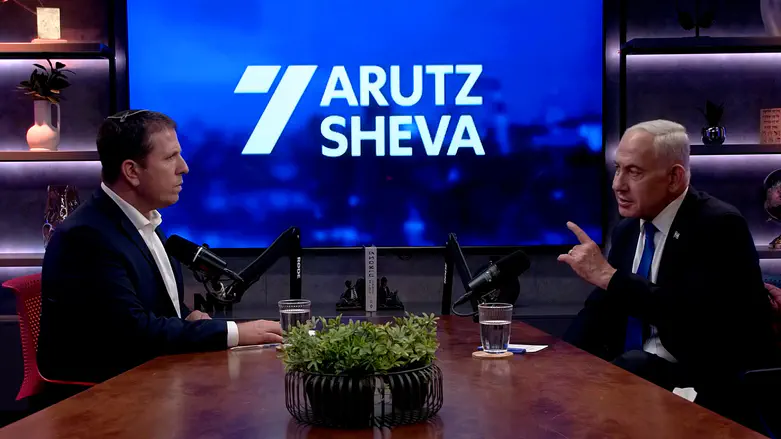 Israel National News17 hours ago
Special Interview | Prime Minister Benjamin Netanyahu
With less than a week remaining before Israel's Knesset elections, Prime Minister Benjamin Netanyahu sat down for an exclusive interview with Arutz Sheva-Israel National News to discuss the upcoming vote, his concerns about the future of the right-wing government, President Donald Trump's endorsement, the Iranian threat, and Israel's next steps in Gaza, Lebanon, and Judea and Samaria.
Speaking five days before Israelis head to the polls on October 27, Netanyahu acknowledges that he is concerned about the possibility of losing power, warning that low turnout among right-wing voters and support for smaller parties could allow the left to form the next government with the backing of Arab parties.
"I'm concerned because we're almost in an even deadlock," Netanyahu says.
The Prime Minister argues that while the left-wing parties hold approximately 40 seats in current projections, the addition of the Arab parties could provide them with sufficient support to form a government, comparing such a situation to the alliance between the far-left and Islamists in Europe. "The red-green alliance is destroying Europe. Bigger countries than Israel. Look at France. Look at Paris. Look at Britain."
"If that alliance here, the extreme left and radical Islam, the Muslim Brotherhood of Mansour Abbas and the other Arab parties, no less extreme, led by Ahmed Tibi, if they win the day and they control the government, then we're going to have the Oslo disaster on steroids," he warns.
Netanyahu identifies three major threats to the right-wing bloc's electoral prospects: complacency among voters, support for small parties that may not cross the electoral threshold, and parties that present themselves as right-wing but have not committed to supporting him as prime minister.
Addressing the possibility that right-wing voters may feel confident enough to stay home, Netanyahu warns: "If you don't show up, and the left and the Arab parties show up in much greater percentages, we lose seats."
He compares the potential loss of votes to smaller parties with the circumstances surrounding the election that brought the Oslo government to power, arguing that right-wing parties failing to cross the electoral threshold handed power to the left despite a larger number of right-wing voters.
Winter, Eisenkot, and Zelekha
Netanyahu is particularly critical of Amcha Yisrael chairman Ofer Winter, who he says has declined to commit to supporting him as prime minister.
The Prime Minister cites Winter's recent remarks that he had not decided whether to support Netanyahu or Gadi Eisenkot, as well as his subsequent statement questioning whether endorsing Netanyahu had been a mistake.
"I'm not saying what his predisposition is. I'm saying, where is he going to go? He's actually telling you, I'm not giving you a guarantee that I'll go with Netanyahu," Netanyahu says.
He warns that votes for Winter could be lost if his party fails to cross the electoral threshold, or could benefit the opposing bloc if Winter chooses to support another candidate.
"If he does pass, and he goes with his friend Liberman, for example, then he takes your vote and moves it to the left. How can you take that chance?"
Netanyahu also attacks Eisenkot, accusing him of presenting himself as a right-wing candidate despite what the Prime Minister describes as left-wing political positions.
He directs similar criticism at Yaron Zelekha, questioning his economic positions and accusing him of previously supporting the far-left Meretz party and participating in anti-government demonstrations.
Netanyahu specifically criticizes Zelekha's opposition to offshore natural gas development, which the Prime Minister credits with generating substantial revenues for Israel and lowering electricity costs.
Turning to voters considering these parties, Netanyahu states: "Don't waste your vote. Vote for Likud. Vote for MACHAL. If you want me as prime minister."
'Completely' surprised by Trump's endorsement
The Prime Minister also discusses US President Donald Trump's endorsement of his candidacy, denying reports that he had worked to secure the American President's public support.
Asked whether he had requested the endorsement, Netanyahu responds: "Never asked for it. Not once."
When asked whether he was surprised, he answers: "Completely. I didn't know."
Netanyahu recalls speaking to Trump following the endorsement.
"And when I talked to him, he said, 'You know, I wrote it myself.' And you could see that. It was very Trumpian, very cuts to the chase."
He contrasts Trump's support for his candidacy with what he describes as the support Arab political leaders are giving Eisenkot.
Iran: 'Either we destroy them, or they destroy us'
Discussing the Iranian nuclear threat, Netanyahu reiterates his position that the Iranian regime must be removed from power to eliminate the danger posed to Israel permanently.
The Prime Minister compares Iran's nuclear program to cancer, explaining that despite Israeli operations against its facilities and scientific personnel, the regime continues attempting to rebuild its capabilities.
"They're crippled. They're on their knees. But as long as this regime survives, it'll make its way back," he warns.
Asked whether Iran is currently capable of producing nuclear weapons, Netanyahu says that significant obstacles remain.
"They still have problems with weaponization, with things I won't get into."
The Prime Minister also reiterates the directive he has previously discussed publicly, instructing the Mossad and IDF to work toward the overthrow of the Iranian regime.
"There's only one way to guarantee that it's over. And that is to bring down this regime. That's the directive that I gave the Mossad and the IDF. We're going to bring them down."
When asked how Israel could accomplish such a mission, Netanyahu responds: "Well, we can. They're very weak."
"I think we can, and I know we will," he adds.
The Prime Minister also cites Trump's statements about his willingness to complete the campaign against Iran, arguing that the American President views him as the partner necessary to accomplish that objective.
Addressing a separate report that Trump had recently prevented Israel from carrying out a planned military strike against Iran, Netanyahu denies the account.
"It's an incorrect report. One day, the truth will come out," he states.
Netanyahu presents the Iranian threat as a central consideration in the upcoming elections.
"If we don't do it, you know, it's either us or this thugocracy in Tehran. Either we destroy them, or they destroy us. That's what the voters have to decide on now."
Gaza and Lebanon: 'The IDF to come in and finish it'
Turning to the Gaza Strip, Netanyahu discusses the prospects for disarming Hamas and the possibility of renewed Israeli military operations.
He says that after Israel took control of more than 60% of Gaza, he offered the United States an opportunity to assemble an international force to dismantle what remained of Hamas.
"Everybody agrees, Hamas has to be disarmed. So I said to American friends, I said, OK, you can bring some foreign power that will take Hamas apart. What's left of it, fine with me."
According to Netanyahu, Israel waited several months for such an arrangement to materialize, but no international force was assembled.
"So I think there won't be any alternative. But for the IDF to come in and finish it, just as there won't be any alternative in Lebanon, for the IDF to come and finish Hezbollah."
The Prime Minister argues that the removal of the Iranian regime would also undermine the terrorist organizations it supports.
"But imagine what happens after we finish the Iranian regime and the whole scaffolding of Hezbollah collapses. The Iranian scaffolding of Hamas collapses. We'll finish them all."
Judea and Samaria: 'There won't be a Palestinian state'
Addressing the future of Judea and Samaria, Netanyahu emphasizes his government's record of expanding Jewish communities despite opposition from previous American administrations.
"Building at a record rate," he declares.
Netanyahu recalls the pressure exerted by former US President Barack Obama against construction in Judea and Samaria, claiming that the Jewish population nevertheless nearly doubled during Obama's eight years in office.
He also points to the expansion of communities under his government in recent years, saying that 104 communities have been established, regulated, or developed.
Asked whether applying Israeli sovereignty to Judea and Samaria would be the next stage, Netanyahu confirms that the issue has been discussed with Trump but declines to announce a specific plan.
"Well, it was discussed with the president. Again, I think that you have to navigate the shoals and the whirlwinds of diplomacy carefully."
"So I'd rather do rather than announce, as opposed to some of my opponents on the right who would announce rather than do."
The Prime Minister also reiterates his opposition to the establishment of a Palestinian state.
"As long as I'm prime minister of Israel, there won't be a Palestinian state. That's a formula for our destruction. So that won't happen."
'The greatest support I have right now is in certain Arab capitals'
Netanyahu also discusses the prospect of additional peace agreements with Arab countries, arguing that the removal of the Iranian regime would create new diplomatic opportunities for Israel.
"The greatest support I have right now is in certain Arab capitals," he says.
The Prime Minister explains that this support is motivated not by affection for Israel, but by the shared threat posed by Tehran.
Addressing Arutz Sheva's American audience, Netanyahu argues that Israel's security situation demands a leader with substantial international experience.
"We're in the eye of the hurricane. And we have to be very strong and very smart and very experienced," he says.
He again criticizes Eisenkot, questioning his diplomatic and leadership experience, and cites Trump's endorsement as evidence of his own relationship with the American President.
Netanyahu concludes by returning to the elections and urging right-wing voters to consider whether their preferred candidates would ultimately support him as prime minister.
"Don't waste it on small right-wing parties that will never cross the threshold. You'll burn your vote," he warns.
"But if you don't want them, and you want me as Prime Minister, then vote for me. Because otherwise your vote will be taken and given to the left bloc."
 Israel National News17 hours ago
Tucker Carlson, Nick FuentesDominic Gwinn/ZUMA Press Wire via Reuters, Reuters
Duvi Honig is Founder and Chief Executive Officer of the Orthodox Jewish Chamber Of Commerce
Really. You really can't make this stuff up.
Nick Fuentes, a Holocaust denier who has spent years promoting antisemitism, is now accusing Tucker Carlson of being a Jew-hater. Yes, you read that correctly.
In a video circulating online, Fuentes calls Carlson a “true Jew hater," accuses him of “rabid antisemitism," and urges Vice President JD Vance to condemn him.
Is this Purim? Halloween? Some political comedy show? Are we supposed to believe that Fuentes, who has praised Hitler, suddenly discovered that antisemitism is wrong? Gimme a break.
To me, this smells less like ideology and more like money. Follow the money.
Outrage is now a business. Antisemitism attracts clicks, viewers, donors, subscribers and influence. A Washington Post investigation found that Fuentes collected nearly $900,000 in online donations over 15 months. That's real money flowing into an operation notorious for hateful rhetoric.
So here's my question: Did Carlson tap into Fuentes' financial lifeline? Did he attract donors or audiences that Fuentes once counted on? Did he cut into the very business that keeps Fuentes relevant? I have not seen evidence proving that it happened. But I would investigate the financial competition before accepting this sudden display of moral outrage at face value.
Whether Fuentes genuinely objects to Carlson’s antisemitism is beside the point. The spectacle of a Holocaust denier suddenly presenting himself as a defender of Jews and against antisemitism is almost laughable. To me, the real question is whether Carlson has begun cutting into Fuentes’ income. Is this about ideology, or is it about money?
But the third figure in this story makes it far more serious: JD Vance.
I keep looking at Vance's relationship with Carlson from every angle. Every time another controversy erupts, I wonder whether this will finally be the moment the vice president draws a line.
Carlson gives Holocaust denier Fuentes a platform. Perhaps now? Carlson faces accusations of amplifying antisemitic conspiracies. Perhaps now? Carlson attacks President Trump's military decisions involving Iran. Surely now?
On February 28, after American and Israeli strikes against Iran, Carlson called the decision “absolutely disgusting and evil," according to ABC News. His opposition to war is his right. Americans can oppose military action without supporting Iran's regime. But his words also fit a narrative useful to Tehran: that American action against Iran is illegitimate and driven by Israel.
Iranian media have carried Carlson's interviews and commentary. That does not prove he works for Iran or endorses its government. It does mean an American media personality's message can be amplified by a regime hostile to the United States.
And where is Vance? The vice president represents the United States of America. His obligation is to speak for American interests, not to protect a friendship with a powerful commentator. When the rhetoric of a close ally is useful to a hostile regime, the American people deserve a clear accounting of where their vice president stands.
At an August gathering of the Republican Jewish Coalition, Vance condemned Fuentes but declined to directly denounce Carlson. On September 3, he again defended the friendship. He said he would not throw friends under the bus because of political disagreements.
Friendship matters. Loyalty matters. But public office carries responsibilities greater than either.
Vance has condemned antisemitism and defended the American alliance with Israel. Those statements matter too. What troubles me is his repeated unwillingness to confront Carlson by name when asked about the controversies surrounding him.
What would it take? Another antisemitism controversy? Another attack on the president's foreign policy? Another occasion when Carlson's arguments are useful to America's adversaries? Is there any line he would not cross to preserve this friendship?
That persistence makes me wonder whether Carlson's influence over Vance is political, financial, or perhaps something the public doesn't know. Could Vance fear the political repercussions if Carlson turns on him? Could Carlson know something personally damaging? I have no evidence of compromising information, threats or blackmail, and questions cannot substitute for proof. But the strength of this alliance demands a better public explanation than simply “we're friends."
This isn't a demand that elected officials abandon every friend who disagrees with them. It is a demand for independent leadership. The vice president must be able to say clearly when a friend is wrong, especially on antisemitism, national security and America's interests.
The Fuentes-Carlson spectacle raises a question about money and influence. Investigate the donors and the incentives. But Vance’s decision to continue standing beside Carlson raises a separate, consequential question: who is the vice president serving when friendship collides with public duty?
The answer must be the American people. Not Tucker Carlson. Not an online audience. Not anyone's financial lifeline.
 Israel National News17 hours ago
JVPYoni Kempinski
Ron Jager grew up in the South Bronx of New York, making Aliyah in 1980 and serving for 25 years in the IDF as a Mental Health Field Officer in operational units. Prior to retiring was Commander of the Central Psychiatric Clinic for Reserve Solders at Tel-Hashomer. Since retiring has been involved in strategic consultancy to NGO’s and communities in the Gaza Envelope on resiliency projects to assist first responders and communities. Ron has written numerous articles for outlets in Israel and abroad focusing on Israel and the Jewish world.
With Israel’s national elections just around the corner, the political discourse has reached an unprecedented low, exemplified by political toxicity alongside the demonization of Israel’s Prime Minister Benjamin Netanyahu and his many supporters who are portrayed by the mainstream progressive media as mindless baboons; intellectually deficient, primitive, and unable to understand and appreciate the complexities of the progressive agenda.
Many of the political campaign messages on social media against Netanyahu and his supporters reek from a stench of racism. However, there is a silver lining to the October 27th election day. There is a marked change, one can feel it in the air; the progressive delusion of peace with the Palestinian Arabs and the two state solution are no longer believed to be attainable by the majority of the Jewish public in Israel. The majority of the Jewish public have overcome withdrawal symptoms and detoxified from the delusion and false hopes of surrendering sovereign territory to Palestinian control.
There is a translucent quality to how the barbaric Oct 7 invasion of Israel by the Palestinian Arab terror organization Hamas, revealed a clarity concealed for years by the left wing and progressive political parties. Since the heyday of the Oslo Agreement, the deadly intentions of the Palestinian Arabs to commit genocide against the State of Israel had been belittled or denied, aided and abetted by the progressive media, the judicial system, academia, and the state’s attorney general’s office. No more.
Jews in Israel who identify themselves as conservatives, as religious, as Sephardim, and as Mizrachim will no longer accept the progressive agenda replete with half-truths and outright lies. Israel’s Jewish identity will no longer be subservient to politicians who pander away the very foundations of the Israeli republic as the homeland of the Jewish nation.
To understand the depths of depravation that progressive politicians have reached during the current election cycle, one need only look at General (ret.) Yair Golan and former deputy Chief of Staff in the IDF, and the head of one of Israel’s leftist progressive parties. In a series of harsh and shocking remarks, he has publicly declared his intention if elected to "remove religion from the public sphere," and prior to that, called for civil disobedience among active reserve soldiers as a legitimate response to the judicial reform legislation proposed by the governing coalition.
Add to that his outrageous lie and malicious statement reaching millions of social media followers throughout the world that “IDF soldiers kill Palestinian babies as a hobby". This at a time when the State of Israel is dealing with a an existential military campaign against no less than seven military fronts with Iran at the head of the list, and with an international campaign promoting political, economic and military boycotts of Israel by falsely accusing Israel of starving civilians in the Gaza Strip and murdering innocent civilians.
The progressive calls for insubordination, and for sanctions against Israel, and deliberately harming the wellbeing of IDF soldiers during wartime are no longer just internal political rhetoric. These words and false accusations have become a threat to Israel’s state security, not unnoticed by a majority of the voting public in Israel, nor the mobs yelling for the destruction of Israel throughout the world.
Israel’s progressive politicians, such as Yair Golan, would be unable to survive the current election cycle without the financial and organizational assistance of progressive American Jews and organizations that actively support anti-Jewish, anti-Semitic, and anti-Israel political agendas, primarily among representatives of the Democratic Party in the United States and progressive politicians in Europe. Not surprising, Jews are behind progressive organizations spreading blood libels against the Jews and the State of Israel and fueling the anti-Jew and anti-Israel campaign taking over the streets of America and Europe.
J Street is an organization that describes itself as “pro-Israel" and proclaims itself “devoted and committed to Israel’s future." Yet J Street misses no opportunities to blacken Israel’s reputation and places itself on the side of international campaigns to delegitimize the State of Israel. J Street has actively endorsed Brad Lander, a Democrat who is running for New York’s 10th Congressional District. Lander, who is Jewish and an outspoken critic of the Israeli government and believes that Israel cannot be a true democracy while it continues to "occupy" Judea and Samaria, supports the restriction of US military aid to Israel, and believes that Israel’s military campaign in Gaza after the October 7th invasion and massacre by Hamas against Israeli civilians, amounts to genocide. Lander has been endorsed by and is an ally of NYC mayor Zohran Mamdani, an anti-Semite who threatened to arrest Benjamin Netanyahu during his recent visit to UN headquarters in NYC.
J Street is not alone. Similar Jewish organizations have been proliferating in recent years both here and abroad. In the United States, they include, among others, Jews for Justice for Palestinians, Jewish Voice for Peace, Jews against the Occupation, Jews for Free Palestine, Jews for Justice in the Middle East.
Much the same thing has now taken place in the UK’s Green Party, led by Zack Polanski, who is gay and of Jewish descent, and who had copied Bernie Sanders by basing his identity on bashing Israel. On October 4, 2026, Green Party members passed a motion defining Zionism as support for an ethnonationalist Jewish state and endorsed a single democratic Palestinian Arab state across historic Palestine. When a Somali Muslim man stabbed two Jewish people in an attack that Iran claimed responsibility for, Zack Polanski condemned the police officers for using force to stop the terrorist. Green Party candidates actively support Hamas and have argued that “ramming a synagogue isn’t antisemitism. A Green Party resolution was introduced and calls for ‘Zionists’ to be “hunted" worldwide demanding the destruction of Israel and threatening to ban Jews attending synagogues considered to be ‘Zionist.’
Have Jews always caused the greatest damage to themselves? Over the centuries, there has been ample evidence discovered between Jewish collaborators and the world’s anti-Semites, making for a distinctive Jewish contribution to the politics and proliferation of antisemitism.
-At the time of the Maccabees and the Destruction of the Second Temple, Jews suffered greatly because of internal hatred and their undermining one another.
-During the middle Ages the apostate Pablo Christiani prevailed upon King Louis IX to compel his former brethren, per papal edict, to wear an identifying badge.
-At the dawn of the 15th century, another apostate, Johannes Pfefferkorn, came to prominence preaching the message that “Who afflicts the Jews is doing the will of God, and who seeks their benefit will incur damnation."
-During the modern era, progressives have inverted their message to describe Jews who proclaim their love of Israel even as they slander it.
-Peter Beinart, dubbed as the “the soul of J Street" claims that Israel’s worst (and sole) enemy is itself.
-Marc Ellis, an avid and publicly visible supporter of the Boycott, Divestment, and Sanctions (BDS) movement, an academician, and formerly the director of Jewish studies at Baylor University, proudly spent a Yom Kippur repenting not his own transgressions in the sanctity of a synagogue but “publicly confessing the sins of (other) Jews against Palestinian Arabs" in front of a Christian audience.
Our enemies succeed only because we weaken ourselves and offer ourselves for slaughter on a silver platter. The coming elections in Israel have evolved into a defining moment not only for Israel’s historical role but for Jews everywhere. Will the progressive forces succeed in destroying our national unity by promoting hatred of those that have learned the lessons of Oct 7th?
In trying to prove themselves enlighted and above others, the progressive forces with all their cohorts will only create more suffering and bring existential danger on Israel and Jews throughout the world.
 Israel National News17 hours ago
Scene of the minibus accidentIsrael Fire and Rescue Service
Firefighters from the Beit Shemesh station were dispatched Thursday morning to the scene of a single-vehicle accident on Highway 353, near the community of Srigim, after a minibus veered off the road and onto the embankment.
Nine young passengers were trapped inside the minibus and were unable to exit the vehicle on their own.
Firefighters worked to extricate the passengers, successfully rescuing all nine and transferring them to medical teams. Eight sustained minor injuries, while one was seriously injured.
Incident Commander Zacharia Rafael stated: "Upon arriving at the scene, we identified a minibus that had veered off the road with nine people trapped inside. We acted quickly and professionally to rescue all the passengers and transfer them to the care of medical personnel."
 Israel National News18 hours ago
14 בספטמבר 2026
“Mommy, if I beat cancer once, why did it come back?"
Chaim Rubin is only 7 years old.
A year ago, after more than a year of difficult treatments, his parents finally heard the words they had been praying for: Chaim had beaten cancer.
He went back to school, back to his friends, and back to simply being a child.
But at the beginning of Av, everything changed again.
The seizures returned, and then came the devastating news:
Chaim has already started treatment to help control the disease, but to give him the chance he desperately needs, his family must now get him to the United States for advanced treatment.
The hospital requires a significant deposit upfront, and after already using their savings and everything they had available, the family simply cannot do this alone.
Every donation can bring Chaim one step closer to the treatment he needs and another chance to fight.
Please open your heart for Chaim ben Yael.
14 בספטמבר 2026
 Israel National News18 hours ago
Israel KatzTomer Neuberg/Flash90
Israeli Defense Minister Israel Katz on Thursday morning criticized "Together" party chairmen Naftali Bennett and MK Yair Lapid, Democrats chair MK Yair Golan, and their colleagues in the opposition.
In his statement, Katz said that any future attack against Israel or terrorist attack, should one occur, "will be on the hands of Yair Lapid, Naftali Bennett, Yair Golan, and their colleagues in the opposition."
According to Katz, the opposition's criticism and dismissal of the threats by Israel's enemies to carry out attacks and terror attacks around the elections has harmed deterrence and encouraged Israel's enemies to act.
Katz emphasized that the warnings are based on information available to the political leadership and that the IDF is prepared, both in terms of intelligence and operational capabilities, to carry out preventive and defensive operations against Iran and its proxies on all fronts.
Katz also warned that the IDF would act immediately when necessary or in accordance with instructions from the political leadership, regardless of the electoral process.
 Israel National News18 hours ago
Anti-Israel protesters in New YorkREUTERS/David Dee Delgado
The anti-Israel organization Pal-Awda has called for a protest against an Israeli real estate event in Riverdale, the Bronx, days after celebrating its role in forcing a Nefesh B'Nefesh event to relocate from Queens following threats against its original venue.
The group announced plans to demonstrate on Saturday night against an event sponsored by My Israel Home, an Israeli real estate agency offering information about purchasing homes in Israel. The protest's precise location has not yet been announced.
In its announcement, Pal-Awda accused the agency of promoting properties in eastern Jerusalem and Judea and Samaria and urged supporters to mobilize against the event.
"Following last week's victory of pushing Nefesh B'Nefesh's settler recruitment fair out of NYC, we're back to taking the streets to protest the sale of stolen Palestinian land," the organization declared.
The latest campaign follows the relocation of a Nefesh B'Nefesh event originally scheduled for Queens on October 11. The event's initial venue canceled at the last minute following threats, forcing organizers to move the gathering to a synagogue on Long Island.
Pal-Awda subsequently celebrated the change of venue, canceled its planned protest, and claimed that sustained pressure had succeeded in driving the gathering out of New York City.
The organization also directed criticism at New York City Mayor Zohran Mamdani, despite his anti-Israel positions, demanding stronger action against events promoting immigration to Israel.
"Our demands to Mayor Mamdani remain clear," the group stated, warning that it would continue its campaign against similar events throughout the city.
Pal-Awda has previously promoted demonstrations featuring Hamas symbolism, including a rally advertised for October 7.
The latest call for protests drew condemnation from local politicians.
In a joint statement, Congressman Ritchie Torres, New York State Assemblyman Jeffrey Dinowitz, Bronx Borough President Vanessa L. Gibson, and New York City Council Member Eric Dinowitz wrote: "Earlier this month, Pal-Awda boasted about forcing a Jewish community event out of Queens. Now the group has set its sights on Riverdale, targeting Jewish families in our borough simply for gathering together."
"Riverdale is home to one of the most vibrant Jewish communities in New York, and its families deserve to come together without fear."
The officials condemned the effort to prevent Jewish residents from attending community events.
"Organizing a campaign to hunt down these gatherings and drive them out of our neighborhoods is an attack on Jewish New Yorkers. Pushing anyone out of public life in our city because of their faith is nothing to celebrate, and the Bronx will not tolerate it."
 Israel National News19 hours ago
A Jewish man from Brooklyn's Crown Heights neighborhood was stabbed in the back in Midtown Manhattan on Wednesday evening in an incident being investigated as a possible antisemitic hate crime.
The attack occurred at approximately 5:45 p.m. near the intersection of Fifth Avenue and West 47th Street, in Manhattan's Diamond District.
According to initial reports, a woman believed to be in her 30s approached the victim from behind and stabbed him before escaping west toward Sixth Avenue.
Hatzalah emergency medical personnel responded to the scene and provided treatment before evacuating the victim to Bellevue Hospital, where he was reported to be in stable condition.
Manhattan Shomrim confirmed that it was working alongside the NYPD Hate Crimes Task Force to investigate the stabbing.
"We are asking for the public's assistance," the organization stated, urging anyone who witnessed the attack or possesses relevant security camera, dashboard camera, or cellphone footage to come forward.
The suspect was described as a white woman, approximately 5 feet 9 inches tall, wearing blue jeans and white sneakers, with a dark sweater around her waist.
Police have not yet released the victim's identity or additional information about the circumstances of the stabbing. There was no immediate confirmation of an arrest.
The stabbing follows several recent attacks involving Jewish victims in New York City.
In September, a 48-year-old man was arrested and charged with a hate crime after allegedly pursuing a 24-year-old Jewish man in Brooklyn with a knife while shouting Nazi slogans. The victim managed to escape into his residence as the suspect continued threatening him.
Earlier that month, a 14-year-old Jewish boy was stabbed in the hand during an altercation inside a synagogue in Borough Park. A 22-year-old suspect was taken into custody.
In August, a man disrupted Shabbat services at Manhattan's Central Synagogue, injuring a worshipper and attacking a security officer. The suspect was subsequently charged with hate crimes.
The incidents come amid persistently high levels of antisemitic crime in New York City.
According to NYPD statistics released earlier this month, Jewish New Yorkers were the victims of 245 of the 463 confirmed hate crimes recorded during the first nine months of 2026, accounting for approximately 53% of the city's total.
The figures showed that anti-Jewish hate crimes increased from 242 during the corresponding period in 2025, despite Jews representing approximately 10% of the city's population.
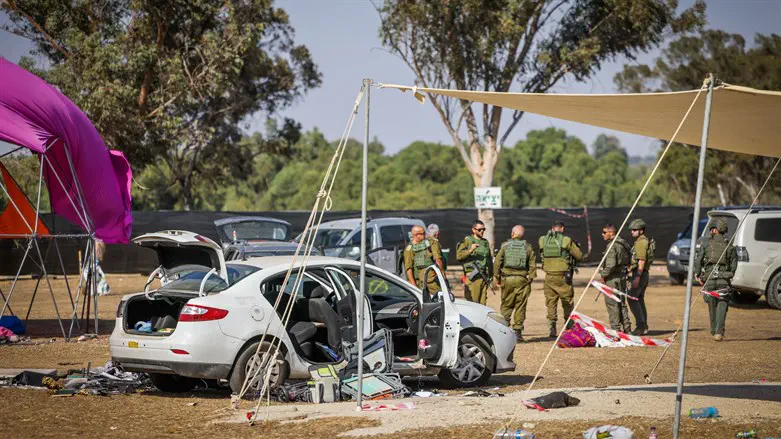 Israel National News19 hours ago
Scene of the massacre at the Nova music festivalChaim Goldberg/Flash90
Hamas has warned Israel that it is prepared to carry out another attack similar to the October 7, 2023, massacre, with potential targets inside Israel, in Judea and Samaria, and overseas, Ynet reported Thursday.
According to the report, the threat was delivered to Israeli officials through UN humanitarian coordinator Dr. Ramiz Alakbarov, who met with senior Hamas representatives at his office in Gaza last week.
During the meeting, the Hamas officials reportedly expressed growing frustration over developments that they said were weakening the terrorist organization's control over the Gaza Strip. These included continued Israeli military operations and changes to the "yellow line" marking IDF positions.
Hamas officials also cited Palestinian Authority chief Mahmoud Abbas' cancellation of elections scheduled for November 28 as another development undermining their position.
The officials reportedly made clear that Hamas was unwilling to accept the continuation of the current situation and asked Alakbarov to convey its warning to Israel.
On Wednesday, the UN official met with Maj. Gen. Yoram Halevy, Coordinator of Government Activities in the Territories (COGAT), and passed along the message.
Ynet reported that Israeli officials considered the warning unprecedented in its directness. A document detailing the threats was urgently forwarded to Israel's political and security leadership.
The warning comes as Israeli forces continue targeting Hamas operatives in Gaza, including members of the organization's elite Nukhba force and senior terrorists.
Meanwhile, the Board of Peace and international mediators have demanded that Hamas surrender its weapons. Israeli officials believe the terrorist organization will refuse to disarm and instead seek to prolong the process.
Israel has also refused to allow the proposed technocratic governing committee or Palestinian police force to enter the Gaza Strip.
Beyond the military and political developments, Hamas is reportedly struggling with a severe financial crisis.
According to Israeli security assessments cited by Ynet, Hamas requires approximately NIS 90 million ($29 million) each month to pay its personnel.
Israeli officials estimate that the organization has approximately 30,000 personnel across Gaza, ranging from administrative employees and lower-ranking operatives to members of its military wing. Each reportedly receives approximately NIS 3,000 ($970) per month.
Hamas, for its part, blames Israel for its financial difficulties.
 Israel National News20 hours ago
WazeiStock
Malaysia announced Wednesday that government employees will no longer be permitted to use the Waze navigation application, citing concerns that its connections to Israel could pose risks to national security and personal data, The Associated Press reported.
In a statement issued by Prime Minister Anwar Ibrahim's office, the government explained that the restriction was based on Waze Mobile Limited's incorporation in Israel and its status as a data controller operating under Israeli law.
“Sensitive government information and the personal data of citizens must be protected from being exploited by the Israeli regime in a manner that could compromise national security and sovereignty," the statement said.
Anwar also encouraged Malaysians outside the public sector to stop using Waze and adopt locally developed navigation services instead.
The government specifically recommended TuJu, a Malaysian navigation application that it said provides strong safeguards for users' personal information and data security.
The Prime Minister's Office emphasized that the restriction reflects the country's broader approach toward Israel.
The “government maintains a firm stance; we will close any avenues that the Israeli regime could exploit to threaten the security of the nation and its people," the statement added.
Waze, which was founded by Israelis Ehud Shabtai, Amir Shinar and Uri Levine, was purchased by Google in 2013 for $966 million.
Malaysia, a predominantly Muslim country, does not maintain diplomatic relations or direct economic ties with Israel.
Its government has consistently supported the establishment of a Palestinian state and criticized Israeli policies in Judea and Samaria and Gaza.
The absence of diplomatic relations has also been reflected in Malaysia's treatment of individuals advocating closer ties with Israel.
In December 2023, Malaysian authorities arrested a citizen after he published a social media video calling for peace with Israel.
Later that month, Kuala Lumpur prohibited Israeli-flagged cargo vessels from entering Malaysian ports in response to Israel's military actions in Gaza.
At the time, Malaysian authorities accused Israel of disregarding "basic humanitarian principles".
The country has also previously reported alleged Israeli intelligence activity on its territory.
In 2022, Malaysian authorities announced the arrest of individuals suspected of working for the Mossad in connection with an attempted kidnapping in Kuala Lumpur.
According to Malaysian officials, the intended target was a Palestinian Arab who had been operating on behalf of Hamas.
 Israel National NewsIsrael National News21 hours ago
Education Secretary Lucy PowellSpokesperson
The British government announced Wednesday that it will introduce stronger Holocaust education and require schools in England to treat antisemitism as a specific threat to students' safety, following an extensive review that uncovered widespread anti-Jewish harassment in the education system.
Education Secretary Lucy Powell said, according to the BBC, the government would "update and strengthen" Holocaust education after the investigation revealed the "shocking scale" of antisemitism across British society.
Under the new approach, schools and colleges will be expected to identify antisemitism as a distinct form of harm requiring specific preventive measures, rather than addressing it solely through general policies against racism and bullying.
The government has accepted all 27 recommendations contained in the independent review, including specialized teacher training, improved procedures for documenting antisemitic incidents, and clearer guidance for educational institutions.
The investigation was led by Sir David Bell, a former chief inspector of Ofsted, Britain's education watchdog, and its findings were presented to Parliament on Wednesday.
Speaking to the BBC, Powell described the findings as evidence of an increasingly serious problem, particularly among younger generations.
"It's definitely a crisis and I think it's actually got worse since Sir David began this review. This has become a real challenge for Jewish people in our country, but also Jewish students and Jewish teachers working in our schools and colleges."
"I do really feel it is a generational moment to educate this generation and the next - that is the job of education - to understand what antisemitism is in the modern world."
Powell said the revised Holocaust curriculum would "challenge" some of the assumptions held by young people and help students recognize contemporary manifestations of antisemitism.
The review also recommends strengthening guidance on political neutrality in the classroom.
Addressing the House of Commons, Powell emphasized that "teachers should not bring their own political views into the classroom", while making clear that educators should continue discussing significant and sometimes controversial issues.
The investigation was commissioned following several prominent antisemitic incidents, including the October 2025 terrorist attack at Manchester's Heaton Park synagogue during Yom Kippur services, in which two men were murdered.
The government also commissioned separate investigations into antisemitism in healthcare and the effectiveness of public order and hate crime legislation.
As part of its response, the government will encourage educational institutions to adopt the International Holocaust Remembrance Alliance (IHRA) working definition of antisemitism.
However, ministers cannot require schools to implement the definition.
The IHRA framework has been adopted by 47 countries, including the United Kingdom, and by most British universities. It is supported by major Jewish organizations, although some of its examples of antisemitic conduct have generated controversy.
The Board of Deputies of British Jews welcomed the government's approach, arguing that the IHRA definition would help schools "to deepen understanding of contemporary antisemitism".
A spokesperson for the organization told the BBC that treating antisemitism as a safeguarding concern would strengthen schools' responsibility to protect Jewish students.
"Treating antisemitism in schools as a safeguarding issue will have the benefit of creating an explicit duty on all schools to address this as they would any other threat to children's safety, and will strengthen accountability."
The government's announcement follows new figures indicating a sharp increase in antisemitic incidents involving educational institutions.
According to the Community Security Trust (CST), a British organization that provides security assistance and advice to Jewish communities, antisemitism in schools reached a record level during the first six months of 2026.
The organization reported that the number of incidents recorded between January and June was higher than in the corresponding period of any previous year.
 Israel National News21 hours ago
Neot Harim inauguratedMichal Giladi
14 families have moved into the newly established community of Neot Harim, located between Neve Tzuf and Nahliel in the Binyamin region. The community was officially inaugurated at a ceremony attended by government ministers, Knesset members, community leaders, and residents.
The inauguration took place exactly 30 days after Netanel Shakron was murdered in a terrorist attack at the nearby Ein Raya spring.
Binyamin Regional Council head and Yesha Council chairman Israel Ganz dedicated part of his remarks to Shakron's memory, linking the establishment of the new community to the continued development of Jewish communities in the region.
"Today, on the thirtieth day since the murder of Netanel Shakron, may God avenge his blood, as his family gathers at his graveside, our hearts are with them in their pain and longing," Ganz said.
"Precisely on this day, not far from the spring where Netanel was murdered, we are inaugurating the new community of Neot Harim and declaring loud and clear: 'By your blood, live.'"
Neot Harim is the third community established in Binyamin over the past six months and the second within just a few weeks.
According to the regional council, it is the first new community to be established in decades in the area between Neve Tzuf and Nahliel.
Council officials explained that the community is intended to strengthen the connection between Neve Tzuf and Ateret and the Dolev-Talmonim bloc, while expanding the continuity of Jewish communities between eastern and western Binyamin.
It is the second community established in western Binyamin under a broader regional development plan, which is part of the implementation of a Security Cabinet decision to establish 13 new communities in Binyamin.
The arrival of the first families was made possible by infrastructure work carried out in the area, including the construction of an approximately 3.5-kilometer access road.
The work was conducted across challenging terrain and included the preparation of essential infrastructure to enable the first families to establish their homes at the site.
The establishment of Neot Harim was preceded by the activities of two farms in the area, operated by Tzvi Bar Yosef and Tzvi Laks.
The Binyamin Regional Council noted that the farms had worked for years to maintain an Israeli presence in the area and that the new community was established as a continuation of those efforts.
During his speech, Ganz addressed the terrorists responsible for the attack and those who, in his words, seek to force Jewish residents out of the region. He declared that the establishment of Neot Harim demonstrated Israel's determination to maintain its presence there.
"To the terrorists and everyone trying to uproot us from this region, we say: You tried to murder us and make us leave, and today families are moving here to live in a new community. We are here, we have won, and we will continue to win."
"From Neot Harim, we send a clear message to anyone dreaming of dangerous expulsions and a Palestinian state overlooking the Tel Aviv metropolitan area: We will continue to deepen our roots and strengthen Israel's security," Ganz added.
Yesha Settlement Division chairman Yishai Merling also attended the ceremony, emphasizing the strategic importance of the new community's location and the work needed to support its development.
"On the map, it's a small dot, but on the ground, it's the connection that transforms the Talmonim bloc and northern Binyamin into one continuous area of Jewish communities," Merling said.
He explained that beyond infrastructure and access roads, the immediate priority is helping the families who have moved to the site establish a permanent community.
"Beyond the maps and roads, there are young families here who have chosen to build their homes on an exposed hilltop. Our mission is to pave the way for them, providing infrastructure, access roads, and buildings, so that their choice becomes a home," he said.
"The group that moved here today is the beginning of an entire community. We will accompany them every step of the way until this hilltop becomes a thriving community," Merling concluded.
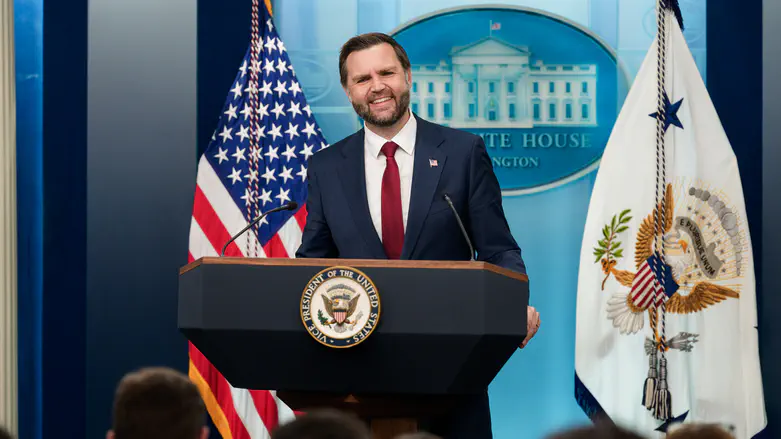 Israel National News22 hours ago
US Vice President JD Vance announced Wednesday that he would no longer endorse candidates in foreign elections, reaffirming his decision not to support Prime Minister Benjamin Netanyahu in Israel's upcoming Knesset election despite President Donald Trump's endorsement.
Speaking to reporters during an event in Ohio, Vance pointed to his previous endorsement of former Hungarian Prime Minister Viktor Orban, who lost his reelection bid to Peter Magyar in April.
“I’ve endorsed one foreign candidate for election in my entire life. First of all, it didn’t go particularly well. As much as I’m very much an admirer of [former] prime minister Orban… That was in April 2026," Vance quipped.
Both Trump and Vance had endorsed Orbán ahead of the Hungarian election.
The Vice President explained that his immediate political priority was helping Republican candidates in the United States ahead of the November 3 congressional midterm elections.
“We’re in the middle of an American election cycle where I’m very focused on getting candidates elected in the United States of America," he said.
Vance also stressed that his refusal to endorse Netanyahu should not be interpreted as criticism of the Israeli Prime Minister.
“I’m not attacking Bibi Netanyahu. I’m not endorsing Bibi Netanyahu. I think the president’s endorsement is ultimately what matters, and the president is going to make the decision about how he doles out that endorsement according to his preferences," he stated.
The Vice President then made clear that his decision extended beyond Israel's election.
“I’m not endorsing any more foreign candidates now or in the future," Vance asserted.
Wednesday's remarks followed an interview Vance gave Monday to journalist Mark Halperin, during which he declined to follow Trump's lead in endorsing Netanyahu ahead of Israel's October 27 election.
In that interview, Vance emphasized the influence of Trump's endorsements while explaining that he intended to concentrate on domestic political contests.
"The President has the most effective endorsement in American or international political history. I endorse American candidates, and that's what I'm focused on is the midterm. So I'm not getting involved in the Israeli election," he said.
When Halperin pressed him on whether his decision reflected opposition to Netanyahu, Vance rejected that interpretation.
"I'm not anti-endorsing him. I'm not pro-endorsing him. I'm not getting involved in Israeli elections."
Vance's comments follow reported disagreements between him and Netanyahu over American policy toward Iran.
During an appearance on Joe Rogan's podcast this past summer, Vance alleged that certain factions within the Israeli government had financed efforts to undermine diplomatic negotiations and a possible ceasefire agreement with Tehran.
Axios subsequently reported that Netanyahu had confronted Vance about those remarks during the Prime Minister's visit to Blair House in Washington, DC.
Vance rejected suggestions that the discussion had become heated.
“He didn't confront me. We had a nice and frank conversation," he said in August.
The Vice President acknowledged that Washington and Jerusalem do not always agree, while stressing the importance of their alliance.
“As I've said repeatedly, Israel has been a great partner. They're an ally of the United States of America. But like France or Britain or any other ally of the United States of America, we sometimes have differences of opinion," Vance explained.
Vance characterized the meeting with Netanyahu as “a pleasant but direct conversation. I didn't feel confronted."
 Israel National News22 hours ago
Pope Leo XIVReuters/DPA/Picture Alliance
Pope Leo XIV will not require additional treatment for lung cancer after medical examinations confirmed that the disease had not spread beyond the affected area, the Vatican announced Wednesday.
The announcement follows surgery last week in which the 71-year-old pontiff underwent the removal of the lower lobe of his right lung. The procedure was the first major health challenge of his 17-month papacy.
Doctors determined that Leo had adenocarcinoma, the most common form of lung cancer, but subsequent laboratory examinations found that the disease remained localized.
The pope's personal physician, Dr. Luigi Carbone, and his surgeon, Dr. Stefano Margaritora, confirmed the findings in a joint statement issued by the Vatican and quoted by The Associated Press.
"A subsequent oncology assessment confirmed that no further treatment is necessary," the doctors said.
Leo underwent surgery at Rome's Gemelli Polyclinic and was released Saturday, four days after the operation. He subsequently announced that he would gradually return to his regular schedule.
In cases involving early-stage lung cancer, surgery can be sufficient when the disease is confined to a small area and has not reached nearby lymph nodes or developed other characteristics associated with more aggressive tumors.
Additional treatment is generally considered when post-operative examinations reveal evidence of cancer spreading or other concerning findings.
Despite undergoing major surgery, Leo continued carrying out some of his responsibilities while hospitalized, including a telephone conversation with Russian President Vladimir Putin.
Since returning to the Vatican, he has made two public appearances.
On Sunday, the pope delivered his traditional blessing from a window overlooking St. Peter's Square. His next major scheduled engagement is a November 6-17 visit to Uruguay, Argentina, and Peru.
 Israel National News23 hours ago
US President Donald Trump predicted Wednesday that the war with Iran would conclude "very soon," while praising American military operations against the Islamic Republic and reaffirming his commitment to preventing Tehran from obtaining nuclear weapons.
Addressing supporters at a campaign rally in South Carolina ahead of the November midterm elections, Trump highlighted his administration's actions against Iran, beginning with his decision to withdraw the United States from the nuclear agreement negotiated under former President Barack Obama.
Trump described the agreement as "a road to a nuclear weapon for Iran. I terminated it. That was a road to a nuclear weapon."
He then pointed to the American military campaigns against Iran, claiming that they had severely damaged the country's nuclear capabilities and weakened it on several fronts.
"We obliterated Iran's nuclear enrichment capacity with Operation Midnight Hammer, a beautiful operation, and Operation Epic Fury. And we defeated them militarily, financially, and otherwise," Trump declared.
"And now we're ensuring that, and as you know, Iran will never have a nuclear weapon. Should have been done years ago," the President added.
He stated that if Iran had acquired a nuclear weapon, “we would be a tinderbox. Our lives would be very different, because they (the Iranians -ed.) are nuts. [But] they don't play games with me."
Trump also expressed confidence that the conflict was approaching its conclusion, although he suggested that Washington wanted to ensure its achievements would endure before ending military operations.
The war, he stated, will "end very soon. We could leave now, but we want to make sure it lasts for a long time. Now, if you look at that, it's amazing what we did. Our military is unbelievable."
Earlier Wednesday, Trump defended his administration's decision to launch the war against Iran, describing the campaign as one of his presidency's most important accomplishments.
Speaking to reporters outside the White House, he credited the military operations with preventing Iran from acquiring nuclear weapons.
"I think it's one of the greatest things we've done. We've stopped Iran from having a nuclear weapon. It's one of the best things that we've done," Trump said.
The President argued that his predecessors had been unwilling to take comparable action and claimed that Iran would already have deployed nuclear weapons had he not intervened.
"It took a lot of courage to do it because no other president was willing to do it. And if we didn't do it, Iran would right now have already used massive nuclear weapons."
His remarks followed comments Tuesday indicating that the administration was approaching a decision on whether additional military strikes would be necessary to bring the confrontation to a successful conclusion.
Speaking in the Oval Office, Trump suggested that Washington had several options for achieving its objectives.
“We just have to make a final decision. Which way do we want to win? Do we want to win the nice way or the not nice way?" he said.
Trump's statements came as The New York Times reported Wednesday that American and Israeli military officials had developed detailed plans for another round of attacks against Iran.
According to the report, a renewed operation could begin after the November 3 US midterm elections, although Trump has not approved such a campaign.
The planning reportedly reflects ongoing discussions within the administration about how to conclude the conflict while ensuring that Iran cannot develop nuclear weapons.
Asked about the report, a White House official declined to confirm whether additional military action was being prepared, saying the administration does not comment on military plans “that may or may not exist."
The official emphasized that Trump continues to keep all options available as Washington seeks to prevent Iran from obtaining nuclear weapons.
 Israel National NewsIsrael National News23 hours ago
IndiaiStock
India's Jewish community, which numbers approximately 4,000 to 5,000 people and is not among the country's six officially recognized minority groups, celebrated a historic legal victory this week.
The High Court of Madhya Pradesh dismissed an appeal and upheld the designation of the historic Ranital Jewish Cemetery in the city of Jabalpur as a protected national heritage site.
News of the ruling was conveyed to Israel through restaurateur Rina Pushkarna, who has served for decades as an unofficial liaison between the two countries.
The final decision concludes a lengthy legal battle waged by representatives of the local Bene Israel Jewish community, with the dedicated assistance of attorney Manish Verma.
The cemetery, believed to be more than a century old, was established during British colonial rule to serve the local Jewish population. At the time, approximately 200 Jewish families lived in Jabalpur, and the colonial authorities allocated land specifically for their burial needs.
Around 100 people are buried at the site, including prominent members of the Jewish community and Jewish soldiers who served in the British Army.
In recent years, however, the cemetery became the target of alleged criminal activity. According to family representatives and local preservation activists, real estate interests described in the Indian media as the "land mafia" attempted to seize the property by falsely claiming that it was privately owned.
During these attempts, several historic gravestones were damaged or destroyed, allegedly in an effort to erase evidence of the site's Jewish history.
The legal victory is particularly significant given that only three or four members of the Bene Israel community remain in Jabalpur today.
Despite the community's small size, its campaign received substantial support from the local municipality, architectural preservation activists, and numerous Indian citizens who opposed the attempted takeover and regarded the cemetery as an integral part of the city's cultural heritage.
Following the official recognition, the community will now be able to fence off the cemetery, restore damaged gravestones, and repair its gates to prevent further destruction.
Community leaders believe the ruling will establish an important legal precedent, making it easier to protect and preserve other Jewish heritage sites across India that face similar threats.
Meanwhile, efforts to restore the cemetery are already beginning to take shape.
Israel's Consul General in Mumbai, Yaniv Revach, has offered his full assistance in advancing the restoration project. Chabad emissaries working throughout India are also expected to participate in efforts to document and preserve the history of the local Jewish community.
 Israel National News1 day ago
Netanyahu and TrumpMa'ayan Toaf/GPO
The United States and Israel have drawn up detailed plans for another round of military strikes against Iran, potentially beginning after the November 3 American midterm elections, The New York Times reported Wednesday, citing US officials and individuals familiar with the preparations.
According to the report, military planners are considering a brief but intensive campaign targeting Iranian nuclear facilities, energy infrastructure, and missile and drone capabilities.
American and Israeli forces have also increased their joint preparations, conducting aerial exercises over Iraq to rehearse maneuvers that could be used in an operation against Iran.
US Secretary of War Pete Hegseth discussed the possibility of renewed attacks during a meeting with Prime Minister Benjamin Netanyahu in Israel earlier this week, American officials told the newspaper. While Hegseth confirmed the previously unannounced meeting on Tuesday, he declined to elaborate on what the two discussed.
Some officials believe that another concentrated military campaign could inflict sufficient economic damage on Iran to compel Tehran to make concessions in negotiations with Washington, following nearly eight months of conflict.
However, Trump has not authorized a new operation, and the report emphasized that a decision to resume major combat operations remains uncertain.
According to The New York Times, some American military planners believe that a three-day offensive targeting key Iranian assets could place enough pressure on the country's economy to change Tehran's negotiating position.
The Pentagon is continuing to assemble forces in the region, with the deployment expected to be completed in early November.
The planned military presence includes three aircraft carriers, thousands of Marines, fighter aircraft, and Special Operations forces.
The timing could also provide operational advantages, as American forces generally prefer conducting strikes at night, and the hours of darkness over Iran will increase in early November.
Although officials have not entirely ruled out the possibility of military action before the end of October, political considerations make an operation after the midterms more likely.
Earlier this month, Trump publicly pledged not to attack Iran before the November 3 elections.
The President has also repeatedly rejected proposals to resume large-scale military operations during the year, according to the newspaper.
The New York Times report follows a separate account published Wednesday morning by the Financial Times, which said Netanyahu had instructed the IDF to prepare for a major strike against Iran during the weekend of October 10.
According to that report, the planned operation was canceled after Trump opposed proceeding with it.
Both American and Israeli military planners are reportedly developing options for attacks against Iran's nuclear program.
One potential target is Pickaxe Mountain, a heavily fortified underground nuclear facility.
Trump said last week that he was considering the use of the GBU-43/B Massive Ordnance Air Blast bomb, commonly known as the Mother of All Bombs (MOAB), against the site.
The weapon weighs approximately 22,000 pounds and is designed to generate an exceptionally powerful explosion over a wide area.
According to officials cited by The New York Times, Trump has shown particular interest in the bomb, partly because of its nickname.
However, weapons experts have questioned whether it would be effective against a deeply buried facility such as Pickaxe Mountain.
The MOAB is designed to detonate above ground, producing a broad blast rather than penetrating deep underground. Experts therefore believe it would be unlikely to destroy a facility protected by granite.
Despite the preparations for renewed strikes, Washington has continued pursuing negotiations with Tehran.
American negotiators are reportedly using the possibility of another military campaign to increase pressure on Iran over its nuclear activities and control of the Strait of Hormuz.
However, Iranian representatives have so far refused to make concessions regarding the nuclear program, insisting that the issue be postponed until a later stage of negotiations.
Some American officials believe that further military pressure could change that position, particularly if strikes severely damage Iran's energy sector.
Others have questioned whether another offensive would achieve results that previous operations failed to secure.
Asked about the reports Wednesday, a White House official declined to confirm whether the administration was preparing another operation, saying it does not comment on military plans “that may or may not exist."
The official added that Trump continues to consider all available options to prevent Iran from acquiring nuclear weapons.
 Israel National News1 day ago
US President Donald Trump said Wednesday that he has no regrets about launching the war against Iran, describing the military campaign as one of the most significant achievements of his administration.
Speaking to reporters outside the White House, Trump defended his decision to confront the Islamic Republic militarily, arguing that the operation had prevented Tehran from acquiring nuclear weapons.
"I think it's one of the greatest things we've done. We've stopped Iran from having a nuclear weapon. It's one of the best things that we've done," Trump said.
He also claimed that previous American presidents had lacked the willingness to take similar action against Iran.
"It took a lot of courage to do it because no other president was willing to do it. And if we didn't do it, Iran would right now have already used massive nuclear weapons."
Trump's comments come as his administration weighs the possibility of renewed large-scale military strikes against Iran, following weeks of discussions about how to bring the ongoing confrontation to a conclusion.
On Tuesday, the President indicated that Washington was making progress but had not yet determined whether additional military action would be necessary to achieve its objectives.
During an exchange with reporters in the Oval Office, Trump suggested that the administration was nearing a decision on how to proceed.
“We just have to make a final decision. Which way do we want to win? Do we want to win the nice way or the not nice way?" he said.
Meanwhile, senior Iranian security official Mohsen Rezaei reiterated Tehran's refusal to transfer its stockpile of enriched uranium abroad, rejecting a key American demand in negotiations over a potential agreement.
Rezaei's statement came as a Pakistani delegation arrived in Tehran for meetings with senior Iranian officials.
Pakistan has been attempting to mediate between the United States and Iran, seeking to advance diplomatic discussions amid concerns that the conflict could intensify and lead to another round of military operations involving Washington, Israel, and Tehran.
 Israel National News1 day ago
US ArmyCENTCOM
The United States has begun reducing its military presence at several bases across the Middle East while ordering additional diplomatic personnel to leave posts in the region, as President Donald Trump considers launching another major military operation against Iran, NBC News reported on Wednesday.
According to two American officials and two people familiar with the developments, the Pentagon has quietly relocated troops in recent days in response to continuing regional security threats, including those posed by Iran.
The State Department is simultaneously implementing further staffing reductions at American diplomatic facilities, reflecting preparations similar to those undertaken before the war with Iran began in February.
American personnel stationed at military bases in Jordan are among those being relocated, according to the sources cited by NBC News. Troops at installations in Qatar and Kuwait have also been included in the drawdown.
The movements come as senior military commanders present Trump with options for renewed strikes against Iranian targets.
On Wednesday, senior American diplomats at several missions across the Middle East were informed that their facilities would begin operating with fewer personnel.
The State Department also announced that the US Embassy in Saudi Arabia had been placed under “ordered departure" status, requiring the mission to operate with emergency personnel only.
State Department spokesperson Tommy Pigott attributed the heightened security concerns in Saudi Arabia to attacks by the Iranian-backed Houthis.
“Iranian-supported Houthis have increasingly engaged in hostilities against Saudi Arabia, including attacks on civilian airports and other critical infrastructure resulting in civilian casualties and severe travel disruptions," Pigott wrote on social media.
He emphasized that protecting American diplomatic personnel and their families remains a central priority.
“The safety and security of Department personnel and their families remain our highest priority, and we will continue to take all necessary steps to protect and support them," he stated.
Many American diplomatic missions in the region have already been operating with reduced personnel since the beginning of the war.
As the conflict continued, the State Department introduced a new designation, “restricted operations," allowing diplomatic facilities to function with somewhat greater staffing flexibility than under more stringent emergency restrictions.
According to NBC News, that arrangement has gradually become standard practice at several regional missions.
US Central Command declined to provide details about the troop movements, citing operational security considerations.
“We regularly move US service members and assets to optimize mission readiness," CENTCOM spokesperson Timothy Hawkins said.
“We do not discuss related movements for operational security reasons," Hawkins added. “US forces remain vigilant and ready to protect American personnel and interests across the region."
The Pentagon referred questions about the military redeployments to CENTCOM, while the White House did not respond directly to a request for comment.
The troop movements are taking place as the Trump administration evaluates whether to resume major combat operations against Iran, potentially before or after the November 3 congressional midterm elections.
Trump has been seeking a way to conclude the conflict, now entering its eighth month, either through negotiations or additional military pressure.
Sources familiar with the administration's deliberations said no final decision had been reached.
The President previously ruled out new American attacks before the midterms.
In an October 8 post on Truth Social, Trump declared that “we will not be attacking Iran at any time prior to the Midterm Elections to be held in the United States on November 3rd."
He also described Iran as being in “very bad condition, both Economically and Militarily," while saying Washington was engaged in “productive discussions" with Tehran.
Nevertheless, military officials have continued developing potential strike plans.
The possibility of another military campaign has reportedly prompted differing views among Trump's senior advisers.
According to an American official and a former official cited by NBC News, Secretary of War Pete Hegseth is among those privately advocating a resumption of military operations against Iran.
Other administration officials have expressed reservations about launching another major campaign without a clearly defined objective for ending the fighting.
Hegseth visited Israel on Monday and met with Prime Minister Benjamin Netanyahu. Neither side disclosed the substance of their discussions.
Asked about Hegseth's private conversations with Trump, a senior Defense Department official said, according to NBC News, “The department does not comment on the secretary’s private discussions with the president."
One approach under consideration involves combining additional military pressure with the economic damage already inflicted on Iran in an effort to persuade Tehran to negotiate an end to the conflict and reopen the Strait of Hormuz.
Administration discussions have examined whether further strikes could intensify Iran's economic difficulties sufficiently to bring its leadership back to negotiations.
According to one American official, a renewed operation could be relatively brief, resembling Operation Midnight Hammer, the US military campaign conducted against Iran in June 2025.
Trump has also declined to rule out the use of particularly powerful conventional weapons against Iranian infrastructure.
During an interview with Newsmax last week, the President was asked about the possibility of deploying the GBU-43/B Massive Ordnance Air Blast bomb, commonly known as the Mother of All Bombs, or MOAB.
Trump emphasized that the weapon is conventional rather than nuclear, while reiterating that he did not consider nuclear weapons necessary for confronting Iran.
“This is just an extremely large bomb. It’s like a tiny nuclear bomb, and -- but the mother of all bombs is one big bomb," Trump said.
“But it’s not nuclear. No, I wouldn’t use nuclear. We don’t have to. We’re the greatest nuclear power in the world."
 Israel National News1 day ago
AIPACFlash 90
The American Israel Public Affairs Committee (AIPAC) announced Wednesday that it will discontinue its practice of endorsing political candidates and directing contributions through its political action committee, marking a significant change in its approach to American elections.
According to Jewish Insider, the decision follows a months-long strategic review by AIPAC's board and comes after three election cycles in which the organization directly endorsed candidates and helped raise money for their campaigns.
Despite the change, AIPAC intends to remain active in American politics through other fundraising and organizing efforts. Its affiliated super PAC, the United Democracy Project (UDP), will continue operating.
Since its creation, UDP has spent tens of millions of dollars in congressional races and played a significant role in several primary elections.
In a letter to members quoted by Jewish Insider, AIPAC's leadership explained that the organization intends to place greater emphasis on contributions made directly by individual Americans rather than endorsements and donations distributed through its PAC.
“To win the fight for the future of the country and the US-Israel alliance, we must build a more strategic, consequential, and nimble political operation. We will prioritize increasing direct, organized contributions from individual Americans to candidates - expanding upon our current efforts - and maximizing the emerging political fundraising tools," the letter stated.
“Endorsements, direct PAC contributions, and earmarking will no longer be part of our approach so we can expand individual giving and utilize new tools to help our friends win."
Under the previous system, supporters could contribute to candidates through AIPAC's online portal, with the donations recorded in campaign finance reports as individual contributions made through the organization.
That arrangement will now be discontinued.
However, AIPAC said its staff and local leaders would continue coordinating fundraising efforts with members and recommending donations to candidates “who are worthy of your support".
Currently, AIPAC's endorsement portal lists only incumbent lawmakers, although the organization has previously endorsed candidates competing for open seats.
The announcement comes amid increasing scrutiny of AIPAC's political involvement, particularly from activists on both the far left and far right who have criticized lawmakers for accepting contributions associated with pro-Israel organizations.
Jewish Insider noted that earlier this year, the organization suspended fundraising for 18 House Democrats after they voted to reduce American assistance to Israel.
Following that decision, AIPAC's fundraising portal continued to provide active donation links for 178 Republican lawmakers and 72 Democrats.
 Israel National News1 day ago
Bezalel SmotrichAvshalom Sassoni/Flash 90
A poll published Wednesday evening by Channel 13 News shows that Ofer Winter's Amcha Yisrael party would fail to cross the electoral threshold.
According to the poll, Yashar would win 20 seats, Likud 19, Together 14, the Democrats 10, the Joint List 9, Yisrael Beytenu 8, United Torah Judaism 8, Religious Zionist Party-Zehut 8, Shas 7, Otzma Yehudit 7, Ra'am 6, and the Reservists-Economic Party 4.
The right-wing bloc would secure 49 seats, compared to 52 for the anti-Netanyahu bloc. The Arab parties would win a combined 15 seats.
Meanwhile, a separate poll conducted by the Midgam Institute for Channel 12 News found that if elections were held today, Yashar would win 23 seats, Likud 19, Together 15, the Democrats 9, the Joint List 9, Yisrael Beytenu 8, Shas 8, United Torah Judaism 7, Otzma Yehudit 7, Religious Zionism-Zehut 6, Ra'am 5, and Amcha Yisrael 4.
In the Channel 12 poll, the right-wing bloc would secure 51 seats, while the anti-Netanyahu bloc would win 55.
 Israel National News1 day ago
David ZiniNoam Revkin Fenton/Flash90
Shin Bet Director David Zini traveled to France on Tuesday and met with local security and intelligence officials amid the ongoing protests and riots in the country.
Kan News reported that the visit had been scheduled in advance, but that during the visit, the sides also discussed efforts to counter terrorism and radical Islam in light of developments in France.
During his working visit to Paris, Zini met with senior representatives of two of France's main intelligence agencies: the Direction Générale de la Sécurité Intérieure (General Directorate for Internal Security-DGSI), whose responsibilities are similar to those of Israel's Shin Bet, and the Direction générale de la sécurité extérieure (General Directorate for External Security-DGSE), also known as "Le Bureau," which is considered the French equivalent of the Mossad.
The meetings included professional discussions on security, including efforts to counter terrorism and radical Islam. The issues were discussed against the backdrop of the riots in France, though the meeting was scheduled before they had begun.
The Shin Bet chief's visit to France comes just days after a weekend marked by particularly violent clashes between protesters and French police. Last Saturday, more than 1,200 demonstrators were arrested, and 150 police officers were injured during protests across the country.
The wave of protests began over opposition to the high cost of living and conditions in schools, but in some locations, the demonstrations escalated into riots involving clashes with police, the torching of buildings and vehicles, and the looting of businesses.
The violent incidents occurred in numerous cities, including Paris, Marseille, and Lyon, where incidents of arson, looting, and confrontations with security forces were reported.
According to published figures, more than half a million people have participated in demonstrations in approximately 140 cities across France in recent weeks. The protesters voiced their opposition to the high cost of living and conditions in the education system, but in some cities, the protests escalated into widespread violence.
The meetings between Zini and his French security counterparts took place as French authorities continued to contend with the ongoing public disorder.
The Shin Bet is regarded as an agency with considerable experience in counterterrorism and intelligence gathering among civilian populations. Against this backdrop, French officials are interested in strengthening professional cooperation with Israel in these areas. However, no official information has been released regarding any agreements reached during the meetings or new joint initiatives.
The Shin Bet declined to confirm details of Zini's visit to France or provide information about the content of his meetings with his French counterparts.
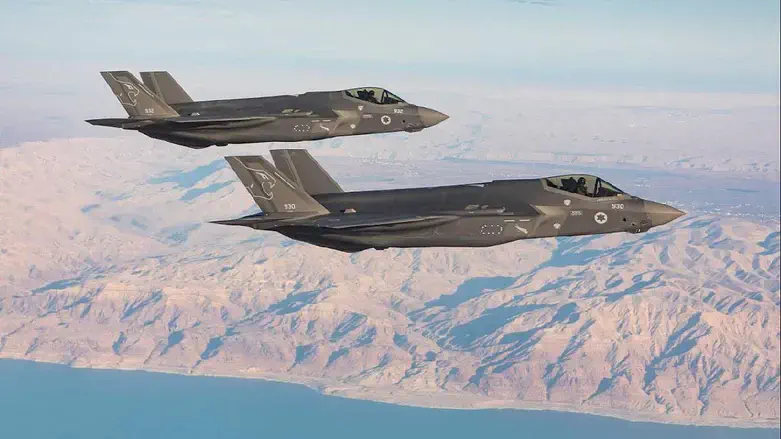 Israel National News1 day ago
IAF F-35 stealth fighters in Israeli airspaceIDF Spokesperson's Unit
The Israeli Air Force conducted a large-scale show of force near the Iranian border on Monday, Axios correspondent Barak Ravid reported.
According to the report, dozens of Israeli military aircraft participated in the sortie, which was conducted about 800 miles from Israel's borders.
Sources told Ravid that the operation was not unusual and that it served as both a training exercise and a method of "power projection" without a military strike. In addition, the sources stated that the US was informed of the operation ahead of time.
American sources speculated that the Israelis hoped the Iranians would fire at their planes, which would justify retaliatory strikes.
The Axios report follows an earlier report by the Financial Times that Israeli Prime Minister Benjamin Netanyahu ordered the Israel Defense Forces to prepare for a large-scale military strike against Iran, scheduled for the weekend of October 10, but the operation was halted following opposition from US President Donald Trump.
According to the report, the IDF had already begun preparing for a bombing campaign lasting several days, targeting nuclear facilities, power plants and other civilian infrastructure, alongside sites associated with the Iranian regime. The planned operation was expected to be even more extensive than the joint Israeli-American offensive launched in February.
The sources said the primary reason the operation did not proceed was Trump's opposition to restarting the war before the US midterm elections on November 3. The American president was reportedly concerned about the potential consequences of another military escalation for the economy and energy prices, at a time when he faces domestic political pressure.
Despite the postponement, Netanyahu and Trump have continued to threaten renewed military action against Iran. One source familiar with the discussions told the newspaper that the possibility of Israel and the United States resuming strikes in the coming weeks remains on the table.
"Either there will be a deal, or there will be an attack," the source said, explaining that the Trump administration is seeking an agreement with Iran over its nuclear program and control of the Strait of Hormuz as part of a broader arrangement to end the war.
 Israel National News1 day ago
Mark Levin, Ofer WinterYonatan Sindel/Flash90, REUTERS/Joshua Roberts
American conservative commentator Mark Levin attacked Amcha Yisrael Chairman Ofir Winter after the latter refused to withdraw the race for the Knesset, despite pressure from Prime Minister Benjamin Netanyahu and members of the current coalition.
Sharing a post on X that claimed that Winter boycotted the other members of the right-wing camp, Levin, a close friend of Prime Minister Netanyahu, wrote: "This saboteur Winter looks like a plant by the left wing. Or he’s the biggest dumb*** of all time."
In a subsequent post, he shared a post in which the author compared Winter to the terrorist who attempted to hijack and crash the FlyDubai flight to Tel Aviv, and claimed that Winter is attempting to destroy the right-wing bloc and build himself up from the ruins.
In the second post, Levin wrote: "Yep. Kamikaze candidates."
The criticism comes amid mounting pressure on Winter to withdraw from next week's Knesset elections over concerns that his party will fail to cross the electoral threshold, potentially costing the right-wing bloc enough votes to prevent it from forming the next government.
The pressure intensified following Blue and White chairman Benny Gantz's decision to withdraw from the race. Religious Zionist Party chairman Bezalel Smotrich, Communications Minister Shlomo Karhi, and Foreign Minister Gideon Sa'ar subsequently urged Winter and other right-wing candidates polling below the electoral threshold to follow Gantz's example.
On Tuesday, Prime Minister Benjamin Netanyahu and Smotrich met with Rabbi Eli Sadan, founder of the Bnei David pre-military academy and Winter's former rabbi, in an apparent effort to enlist his influence in persuading Winter to withdraw.
On Wednesday, Netanyahu publicly appealed to Winter to withdraw after dozens of bereaved families from the recent war published an open letter warning that votes for his party could jeopardize a right-wing victory.
"Ofer Winter, listen to the bereaved families, show responsibility and withdraw, for the sake of right-wing victory!" Netanyahu stated.
Later Wednesday, Smotrich offered Winter a ministerial position in the Defense Ministry from the Religious Zionist Party's anticipated allocation of government positions in exchange for withdrawing from the election. Under the proposal, Winter would oversee efforts to promote voluntary emigration from Gaza and the recruitment of haredim into military service and their integration into the workforce.
Winter rejected the offer and announced that Amcha Yisrael would remain in the race.
"Friends, you've got it all wrong. We didn't come here for a job, as you've become accustomed to doing. We came to bring change. We came to lead the way," he declared.
Winter also made clear that his party would not automatically support a future right-wing government, insisting that its backing would depend on commitments to legislation recognizing the status of those who serve in the military and to policies aimed at defeating the enemy and promoting voluntary emigration from Gaza.
"We are part of the right-wing camp," Winter emphasized. "There will be no blank check here. I said yes, and I said but. If they give, they'll receive. If they don't give, they won't receive."
At the same time, Winter pledged that his party would not participate in establishing a government with Yair Golan and dismissed warnings that Amcha Yisrael would fail to cross the electoral threshold.
"Don't believe the scare tactics. Don't believe the fake news and the blatant lies," he said, claiming that hundreds of thousands of undecided voters could support his party.
 Israel National News1 day ago
MacronREUTERS/MIKE SEGAR
Is Israel to blame again? French President Emmanuel Macron hinted that Prime Minister Benjamin Netanyahu and US President Donald Trump were exploiting the riots in France for political purposes ahead of the upcoming elections.
During a speech in Qatar, Macron referred to "leaders who are in the midst of election campaigns, whether here in the region or across the Atlantic, who are innocently spreading narratives that certain circles are clearly trying to promote," apparently referring to Netanyahu and Trump.
Macron added, "They are using our country for their political campaigns. And we don't need that. We already have our own difficulties to deal with."
The French president also charged that "information manipulation has led to comments that are both unacceptable and foolish from many people, including foreign leaders."
When asked whether he was referring to Donald Trump, Macron replied, "Among others."
Macron also claimed that some of the images circulated in the international media were actually fake AI-generated videos "depicting scenes that never actually took place in France."
"There were people who claimed that France had experienced an invasion by masses of immigrants and Islamists, a claim that is completely false," he said.
Netanyahu himself said in an interview with i24NEWS that France was facing an invasion of radical Islam.
President Trump also blamed immigration to France for the violent riots.
"When I look at France or Italy and see all the turmoil and hatred, it has nothing to do with the schools. It has to do with people entering these countries while hating the country. Close the borders and get the situation under control before it's too late."
 Israel National News1 day ago
Soup thrown at Mona Lisa painting in ParisReuters/CLP/ABACAPRESS.COM
Yishai Edberg is Im Tirtzu's Coordinator of Foreign Affairs and a student in the masters program in Government at Reichman University. He made aliyah from America in 2023, enlisted in the IDF and served in Gaza.
Paris is burning.
The City of Light is aflame with torched businesses, its monuments are covered in graffiti and garbage. The city that once declared the Rights of Man is now amassed by a lawless swarm of foreign youth who show no deference for neither rights nor men in their parade of orgiastic destruction.
The city of the Iron Lady has been exposed and humiliated, her virtue defiled by hordes who do not even know her name.
Truly, the forces of barbarism have triumphed over the forces of civilization in "Gay Paree" - or so it would seem.
For if a civilization cannot perform the task repelling such barbarians, perhaps the most basic function of civilization, how civilized was this civilization to begin with?
The medieval philosopher ibn Khaldun in his Muqaddimah argued that civilization is ultimately a fleeting, suicidal project. The basis of civilization, asabiyya or “social cohesion," at first an intense solidarity bound by harsh conditions, is ultimately eroded by the fruits of its own creation, debased in the warm bed of affluence into hyperindividualism, apathy, vanity, corruption, weakness, and failure.
Perhaps France is simply no exception.
If only there was another way.
To this end, I invite the good people of France and the good people of all nations who seek nothing more than dignity and welfare to “go up to the Mountain of G-d" (Micah 4:2): to look to Israel for such a model of sustainable civilization.
Israel is a unique, living model of a civilization that is enriched, not degraded by material abundance. The civilization created by the Jewish asabiyya, or areivut (mutual responsibility) in the Jewish tradition, is exceptional in its self-sustainability in spite of the country's prosperity.
Israel has a GDP per capita 36% greater than France, and yet when the barbarians were at our doorstep on October 7, Israel mustered a 120% reserve mobilization rate and continues to fight a war with a scope, scale, and intensity unparalleled in the modern world.
Ibn Khaldun’s conventional wisdom that prosperity corrupts the social foundations of civilization, so obvious on the streets of Paris, seems not to apply to the Jewish state.
The Jewish people are the wardens of the “Tree of Life" (Proverbs 3:18), from which we benefit greatly. Through both the depths of dispersion and persecution and the heights of abundance and prosperity, the Torah’s guidance enables us to continue to embrace national life.
It is for this reason Fredrich Nietzsche regarded Israel as “beyond all doubt the strongest, toughest, purest people" (Beyond Good and Evil, 185).
The State of Israel can provide the world with a unique civilization, social, political model that can sustain its own success, a new articulation of civilization, exceptional and unprecedented in history.
So to the good people of the many nations, I humbly offer Israel: “our mouths shall be filled with laughter, our tongues with songs of joy; then they shall say among the nations, G-d has made them great!" (Psalms 126:2).
 Israel National News1 day ago
APC, archiveOfer Zidon/FLASH90
An unusual incident in southern Lebanon nearly led to a diplomatic crisis between Israel and Lebanon, after the IDF accidentally struck a manned Lebanese Armed Forces vehicle during an attempt to destroy an Israeli robotic APC that had gone out of control.
Kan News revealed that the strikes were conducted adjacent to the Lebanese soldiers, but ended without injuries or damage.
The incident occurred last week near the village of Ras al-Biyada, in the western sector of southern Lebanon, where soldiers from the Netzah Yehuda Battalion are operating. An IDF robotic APC, which is operated remotely, was sent on a mission in the area. During the activity, a malfunction occurred and control over the vehicle was lost. The vehicle continued moving and came near an LAF installation.
The IDF decided to destroy the out-of-control APC and launched an aircraft that conducted several airstrikes.
The strikes hit the area around the vehicle which the IDF sought to destroy. However, it was later found that due to an error in identification, the aircraft targeted a manned vehicle belonging to the LAF, and not the Israeli unmanned APC as planned.
The incident comes at a sensitive time, amid the ceasefire and ongoing talks between Israel and Lebanon. According to the report, any harm to Lebanese soldiers could have triggered a serious diplomatic crisis between the two countries and even led to the suspension of the talks.
Responding to the report, the IDF Spokesperson confirmed that the incident was under investigation and emphasized that Israeli military operations in the area are not directed against the Lebanese Armed Forces. "The incident is known and is being investigated. We emphasize that IDF operations in the area are directed solely against the Hezbollah terrorist organization, and not against the Lebanese Armed Forces."
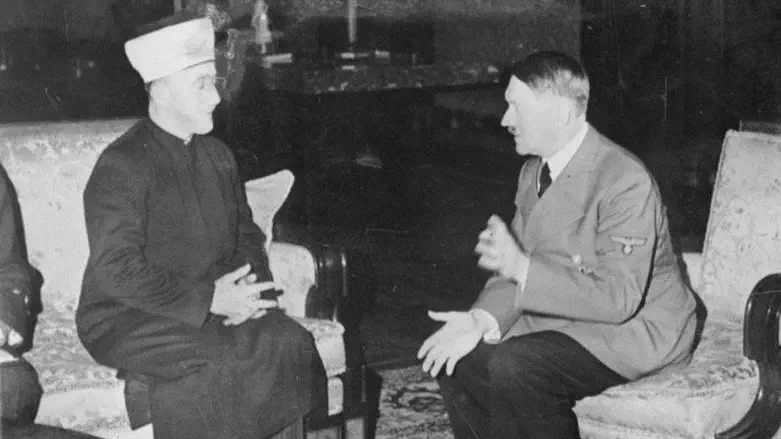 Israel National News1 day ago
Mufti Amin al Husseini und Adolf HitlerBundesarchiv, Bild 146-1987-004-09A / Heinrich Hoffmann / CC-BY-SA
Dr. Michael Krampner is a Jerusalem-based writer with a Ph.D. in Jewish history, and a retired American trial lawyer whose writings and book reviews primarily focus on Jewish history, historical warfare, judicial reform, and geopolitical critique.
Just two weeks ago the foreign secretary of Britain, Ed Milliband, announced sanctions against Israeli ‘settlements’ in Judea and Samaria because the location of those Jewish towns and villages prevent a ‘two state solution.’ Underlying his doltish decree was the even more foolish belief that the dispute between the Arabs who call themselves ‘Palestinians’ and Israel is about territory and that if those Arabs have a state of their own then there will be peace, Arabs and Israelis will live in harmony and all will be right with the world.
Perhaps Mr. Milliband actually believes the drivel he is spouting or perhaps he is pandering to the significant number of Islamic voters on which his Labour Party depends. In either case, he shows that he knows nothing about Israel, the Arabs, Islam and the Middle East.
Assuming that Mr. Milliband’s problem is his profound ignorance rather than malice, he would benefit tremendously from reading Dr. Yehuda Yemini’s new book It Was Never About Territory: Israel, Islam and What Really Stands in the Way of Peace in the Middle East, Ebook Pro Publishing, 2026 (available on Amazon).
Yemini, an expert in political psychology with a Ph.D. from Bar Ilan University and years of experience working with Arabs, has written an excellent history of Islamic doctrine and Arab attitudes towards Jews and how that doctrine and those attitudes have shaped the modern Middle East. Relying heavily on Arabic language documents, Yemini shows that Islamic belief and Arab attitudes of Islamo-supremacism, expansionism and superiority caused Moslems to create an apartheid and segregated social system at the creation of Islam in the seventh century. They classified Christians and Jews as dhimmis who could practice their religions as second class residents (never full citizens) so long as they abased themselves and agreed to be humiliated by the Moslem majority amongst whom they lived.
Early Islamic documents talk about the Jews in two ways: first as the Children of Israel who G-d chose and then, at a later period in Mohammed’s life as ‘The Jews’ who violated G-d’s laws and who were replaced as chosen people by Moslems. Through the first fourteen centuries of Islam the Jews were too small, weak and scattered to pose any threat to Islam or to Moslems’ self-image and most Islamic conflicts with the West were with Christians and Christianity.
Dealing with the modern period in Israel, since the 1880s, Yemini demonstrates that the Arabs have been waging war against the Jews since at least 1920 and that war has taken different shapes at different times. The Islamic war against the Jews was always motivated by Islamic doctrine that holds that Jews are repulsive and degraded and there cannot be a Jewish majority state anywhere, but especially not on land that once, for a while, was governed by Moslems.
The breakup of the Ottoman Turkish Empire after WWI led to the rise of Arab nationalism, but that nationalism did not ask for a separate state for ‘Palestine.’ It asked for attachment of what is now Israel to the newly created Kingdom of Syria. When that plan failed, the new leader of the Arabs in what is now Israel, Haj Amin al-Husseini, the murderous and genocidal Mufti of Jerusalem, began a campaign to expel or murder all the Jews in Israel, a campaign that continues today under the auspices of Hamas, Hezbollah and their allies and patrons, such as Iran, Qatar - and UNRWA.
Yemini notes that it did not have to be so. In the early days of the Mandate there was a faction of Arabs who opposed al-Husseini and who were in favor of living in peace with the Jews.
The Arab campaign began with sporadic Arab ‘resistance’ to the presence of Jews in Israel, usually fomented by the Mufti and his allies, in the form of murder, rape and robbery sprees of Arabs against Jews. These occurred in 1919 in the Galilee; in 1920, the so-called Navi Musa murder and rape riots of Arabs against Jews in Jerusalem, and; notably again in 1921 when Arabs went on a five day murder, rape and robbery spree against Jews in Jerusalem, Jaffa, Peta Tikvah, Hadera, Safed and elsewhere incited by the Mufti and his allies.
In August of 1929 the Mufti called for attacks on the Jewish community of Hebron and Jerusalem. In Hebron sixty-seven Jews were killed, ‘women were raped and hacked to pieces.’ In the Arab riots in Safed that year eighteen Jews were murdered and eighty injured. During the Arab revolt against the British and the Jews from 1936 to 1939 al-Husseini continued his ruthless program of attacking Jews and of eliminating enemies. He is reported to have ordered the murder of as many as eight thousand of his Arab political opponents. Hundreds of Jews were also murdered.
During WWII, the Mufti, the father of today’s Arab war against Israel and the Jews, spent four years in Germany working for the Nazis making propaganda for the Arab world. He encouraged the murder of Jews in Europe and urged the Germans to conquer British Palestine so that they could then murder all the Jews there. In a typical radio broadcast to the Arab world from Germany, al-Husseini proclaimed ‘Oh sons of Arabia. Stand up as one and fight for your sacred rights. Kill as many Jews as you can find. It pleases Allah and history and our religion. It saves our dignity. Allah is with you.’
What makes Yemini’s book particularly valuable is that he is always aware of the theological and ideological basis for the Islamic war against the Jews and Israel. He quotes liberally from the Islamic sources and shows that Islamic theology is an important part of Arab politics. Even the so-called secular Arabs live in a culture, an environment, permeated with a sneering disdain for Jews and disgust at the idea that Jews should have self-determination in their own land, especially when that land was once ruled by Moslems -- although it was never ruled by the Arabs of Israel but always by some foreign Islamic power like the Ottoman Turks.
It is a ‘misconception that there were two parallel struggles against the State of Israel, secular-nationalist and religious.’ Says Yemini. The West has been unwilling to look at what the charters of Hamas, Hezbollah and other Jihadi groups say. Those documents say that theirs is a religious struggle against the Jews to rid the land of Jews. ‘Not respecting what Muslim leaders say or write, dismissing them out of hand or providing a moderate interpretation has always been the West’s Achilles heel…’ Yemini warns.
Yemini takes the reader through the modern history of the Arab wars against Israel, those conducted by Arab nations in 1948, 1956, 1967 and 1973 and in between, and then when those wars did not succeed, the terror campaigns including the murder of Israeli athletes at the 1972 Olympics, the hijacking and bombing of planes and the bombing of civilian spaces in Israel such as restaurants and schools, and the murder of families and school children in Israel in the ’intifadas.’ This is all, of course, long before October 7, 2023.
Yemini also attributes the failures of attempts at peace between the Arabs and Israel to Islamic ideology. The Arabs have never been able to make a deal to allow Israel to live in peace in its own borders because their ideology and theology prohibit it. Yemini quotes important Islamic sources that say that the person who makes peace with Israel is a traitor to Islam. That, of course, was why a group of Egyptian President Sadat’s army officers murdered him: they thought him a traitor to Islam for making peace.
It was also why, when the vicious Yasser Arafat was negotiating at Camp David in the Clinton years, he told the West he wanted a Palestinian state but at the very same time he told the Arab world in Arabic that the point of the so-called ‘two-state solution’ was to carve up Israel piece by piece, section by section, to recover all of it for the Arabs and Islam. Arafat never did complete a final peace deal with Israel, even when he was offered 98% of what he asked for, because then he would have had to give up the Jihad against Israel.
That clearly is also the long-term position taken by Arafat’s corrupt, dishonest and blood-soaked, Soviet-trained successor Mahmoud Abbas, currently in the twentieth year of his four year term as dictator-president of the Palestinian Authority. The Palestinian Authority, by the way, is recognized by many countries, including Milliband’s Britain, as the government of ‘Palestine.’
Yemini adds his insights about political psychology to this well-documented history of Islamic ideology and theology regarding Jews and his thorough history of the Arab wars against the Jews. He points out for instance that the Arabs who call themselves ‘palestinians’ are continually encouraged and incited in their culture and in their society and by Islamists in other places, even places that have no Jews but share Islamic ideology. He discusses the Islamic propaganda and rhetoric that asserts that the little Jewish people are somehow a threat to Islam and to Islam’s holy places (the same propaganda the Mufti disseminated in the 1920s, 1930s and 1940s) as if Israel’s seven and a half million Jews could really do injury to the world’s one billion eight hundred million Moslems.
Yemini discusses Arab rhetoric and also analyzes Arab behavior in psychological terms that explain why they must continue the Forever War against Israel by any means, whether they are murdering Jewish children or constantly lying about their motives and about Israel and Jews. This part of the book is also enlightening especially for the psychologically minded. It fits together well with Yemini’s explanation of Islamic and Arab doctrine.
In a sense, Ed Milliband is not unusual for a Western politician. His ignorance, or pretense of ignorance to disguise his malice, is common in Western politicians. Such people like to appear as if they are doing something important when all they are doing is repeating the same foolish mistakes that have been made many times before. (See France under Macron).They pretend that they believe that somehow swapping little pieces of land will cause the end of the conflict perpetuated by Arabs who are ideologically dedicated to wiping Israel off the map and killing Jews.
People like Milliband don’t understand that peace between Arabs and Israel requires that the Arab leadership and ultimately Arab culture adopt a different ideological and theological stance toward Israel and the Jews. Currently the Arabs are still on the genocidal path laid out for them by al-Husseini, the Mufti. This is the project that Milliband and other European politicians support even if they are too stupid to realize it.
Yemini: It was never about terrritoryRochel Sylvetsky
 Israel National News1 day ago
US Treasury DepartmentiStock
The US Department of the Treasury announced a new round of sanctions targeting an international law firm, maritime companies, and shipping vessels involved in facilitating Iranian trade, as part of its ongoing Operation Economic Outcast campaign against the Iranian regime.
Among those sanctioned is Karnakis and Karnakis, a law firm operating in Panama and Greece that the Treasury says has spent years helping establish corporate structures used by shipping companies transporting Iranian oil, petrochemicals, and steel worth hundreds of millions of dollars.
"Whether you are conducting illegal oil transfers at sea or sitting in the corner office of a law firm, if you are supporting the Iranian regime, we will find you and sanction you," Treasury Secretary Scott Bessent declared.
"Iran's facilitators must make a choice: Either you are with us or against us. We know who you are, we know what you're doing, and we will continue to take action."
According to Treasury, Karnakis and Karnakis registered companies that served as owners of vessels operating in Iran's shadow fleet, helping conceal the identities of those ultimately controlling the ships.
The firm was responsible for establishing several previously sanctioned shipping companies, including Skyros Maritime and Trading, Corfu Maritime and Trading, and Elias Shipping and Trading Group.
One of those companies, Elias Shipping, owned the vessel RAMONA 1 and operated as a front for the Syrian Al-Qatirji Company, which Treasury identified as a major financial conduit for Iran's Islamic Revolutionary Guard Corps-Quds Force (IRGC-QF). The company facilitated sales of millions of barrels of Iranian oil that benefited the IRGC-QF and the Houthis.
Treasury also identified Karnakis and Karnakis as an important corporate services provider for Iranian liquefied petroleum gas magnate Seyed Asadoollah Emamjomeh, whose shipping operations have transported Iranian energy products valued at hundreds of millions of dollars.
The sanctions extend to the firm's owners, Sofianos Karnakis Kosmas and Konstantinos Karnakis Kosmas, as well as Pedro Ortega Jones, Roberto Ortega Jones, and Ioanis Karnakis Kosmas. Treasury says firm personnel held official positions in registered shipping companies to disguise their actual beneficial ownership.
The latest designations also include Roxette Maritime Shipping and Trading, a Panama- and Greece-based company operating cargo vessels involved in transporting Iranian-origin goods. Seven ships associated with Roxette, including ANEMOS, GLORIS, PRIDE, DESTINY, FLAMINGO 1, HARMONY, and PRINCE, were identified as blocked property.
Separately, Treasury sanctioned Singapore-based Amigoz Singapore PTE. Ltd. and Dubai-based Whales Shipping Line LLC for their involvement in Iranian maritime operations.
Amigoz allegedly provided services to vessels and businesses associated with Iran's sanctions-evasion networks, including shipping interests linked to Mohammad Hossein Shamkhani. Whales, meanwhile, acted as an agent for a previously sanctioned company involved in purchasing Iranian petrochemicals worth tens of millions of dollars. Two vessels owned by Whales, WHALES DIAMOND and WHALES PEARL, were also designated as blocked property.
In a related financial investigation, Treasury's Financial Crimes Enforcement Network (FinCEN) is working with European authorities, including in Greece, to examine a Greek bank's possible connections to Iran and its proxies. The agency has issued its first administrative subpoena under a provision of the Bank Secrecy Act and requested information concerning banks' dealings with sanctioned Iranian financial institutions.
Operation Economic Outcast, launched by Bessent in August, seeks to dismantle the financial networks allowing Tehran to sell sanctioned commodities and move the proceeds internationally. The operation involves coordination with the European Union, the United Kingdom, Gulf partners, and other governments.
Under the newly announced measures, US-based assets belonging to the designated parties are frozen, while Americans and entities operating within US jurisdiction are generally prohibited from conducting transactions involving their blocked property unless authorized or exempt.
Treasury also warned that foreign financial institutions conducting significant transactions on behalf of sanctioned parties could face secondary sanctions, including restrictions on their access to the US banking system.
 Israel National News1 day ago
עופר וינטרצילום: דוברות
Amcha Yisrael party chairman Ofer Winter rejected an offer Wednesday evening from Religious Zionist Party chairman Bezalel Smotrich to withdraw from the Knesset race in exchange for a ministerial position in the Defense Ministry.
In a statement, Winter made clear that his party would continue running in the elections, accused figures within the right-wing camp of attempting to exert heavy pressure on him and his associates, and declared that he would not automatically agree to support a future government, even if it were composed of right-wing parties.
"We are part of the right-wing camp," Winter emphasized, but immediately clarified that his political affiliation does not constitute an unconditional commitment to support any party.
"There will be no blank check here. I said yes, and I said but. If they give, they'll receive. If they don't give, they won't receive."
His remarks followed Smotrich's public offer, in which he announced that he was prepared to allocate Winter a ministerial position in the Defense Ministry from the quota of positions that the Religious Zionist Party would demand during coalition negotiations.
The proposal included responsibility for establishing a directorate to promote voluntary emigration from Gaza and another directorate to oversee haredi military recruitment and integration into the workforce, in exchange for the Amcha Yisrael party withdrawing from the election race.
Winter rejected the proposal, making clear that, as far as he was concerned, entering politics was not about securing a government appointment but about bringing change to the leadership's approach and the country's priorities.
"I heard Smotrich, who previously falsely claimed that he had offered me the top spot in his party, offering me another position this evening, in a government that hasn't even been formed yet," Winter said.
"Friends, you've got it all wrong. We didn't come here for a job, as you've become accustomed to doing. We came to bring change. We came to lead the way."
According to Winter, Amcha Yisrael's goal in running for the Knesset is to provide representation for right-wing voters who do not see themselves reflected in the existing parties, both because of political boycotts between parties that define themselves as right-wing and because of the conduct of the outgoing coalition.
"We entered the political arena to offer a leadership alternative to a huge right-wing public that refuses to accept that it has only two options," he said.
Winter argued that some parties that identify as right-wing boycott other elements within the camp, while the parties of the outgoing coalition, he claimed, surrender to political interests and the distribution of positions at the public's expense.
The Amcha Yisrael chairman explained that his party seeks to focus on the needs of reservists, combat soldiers, young people, and residents of Israel's peripheral regions.
He claimed that since announcing his entry into politics and presenting his demands, he has faced attacks from figures belonging specifically to the right-wing camp.
"From the moment we said that we deserve more - for those who serve, for young people, for soldiers, for the periphery - we were subjected to ugly and unimaginable attacks, primarily from within our own camp," he claimed.
Winter went on to make serious allegations regarding measures that he said had been taken against his party's candidates and their families.
Among other things, he alleged harassment of candidates and their children, the use of private investigators, pressure on rabbis, and even the performance of a Pulsa Denura curse ritual against a mother who lost a child in Israel's war.
According to Winter, the conduct he described reflects the political culture his party seeks to change.
"The politics of yesterday. The kind of politics that people are fleeing from, and because of which good, decent people stay away from the political arena. We will not surrender to it," he declared.
Winter laid out explicit demands as conditions for his party's support for the next government.
The first is the advancement of a law establishing the status of those who serve, which he said is intended to support combat soldiers and change the country's priorities.
"If they give us a law recognizing the status of those who serve, one that takes care of our soldiers and changes the country's priorities, they will receive our support. If they don't, they won't," he clarified.
Another demand concerns Israel's policy in the Gaza Strip.
Winter declared that his party would also condition its support on being given the opportunity to lead measures aimed at defeating the enemy and promoting voluntary emigration from Gaza.
"If they allow us to lead the effort to achieve victory and promote voluntary emigration in Gaza, they will receive our support. If they don't, they won't. It's very simple," he said.
Addressing possible coalition arrangements after the elections, Winter made clear that his party would not participate in forming a government with Yair Golan.
"We are people of our word. We will not take our votes and establish a government with Yair Golan. That will never happen," he pledged.
At the same time, he criticized the possibility of a right-wing government dependent on the haredi parties and their leadership, presenting Amcha Yisrael as an alternative that would enable the formation of a government with different priorities.
"When we are strong, there will be no Golan-Abbas government. When we are strong, there will be no Netanyahu government dependent on Goldknopf and the political operatives."
Later in his speech, the Amcha Yisrael chairman also addressed concerns that his party might fail to cross the electoral threshold, an issue at the center of calls for him to withdraw.
"Don't believe the scare tactics. Don't believe the fake news and the blatant lies," he said.
"In recent days, we have felt the public awakening. Hundreds of thousands of undecided voters who now have someone to vote for, and hundreds of thousands more who are afraid because of the scare tactics they are hearing."
 Israel National News1 day ago
רונן ברצילום: Chaim Goldberg/Flash90
Larry Ramer is a jounalist specializing in business news, who has worked for a number of major Israeli media outlets including Globes.
Seeking to blame Prime Minister Benjamin Netanyahu for failing to prevent the October 7 attacks, Ronen Bar, the former Shin Bet director, has alleged that Netanyahu received many warnings suggesting that war with Hamas was imminent.
Little noticed, however, has been the fact that Bar’s allegations make his own conduct on the night before October 7, when he was essentially managing the country’s security, look even more inexcusable and grossly negligent. Any warnings would necessarily be passed on to Netanyahu by the Shabak.
Put another way, the more media claim that Israel was warned about October 7, the more horrible Bar’s failure to take significant action on the night before the slaughter becomes. And crucially, what most Israelis don’t seem to know is that the former director was hired not by Netanyahu, but by former Prime Minister Naftali Bennett.
The truth, however, is that Netanyahu was never warned about an invasion by Hamas, even though young soldiers stationed near the border feared that such an attack was coming based solely on developments they physically saw on the Gaza side of the border. In fact, a few weeks before the tragedy, an elite military intelligence unit specifically predicted that an invasion could occur, but Netanyahu had no way of knowing that.
Given these points, it’s clear that Ronen Bar, Aharon Haliva - who was the head of military intelligence on October 7 - and then Chief of Staff Herzi Halevi, should have known that an invasion was possible and should have told the prime minister that such an attack could be on the way.
In light of their failure to do so, along with Bar’s decision not to take significant action on the night before the slaughter and the IDF’s very poor response to the invasion, it’s clear that these three men, not Netanyahu, were primarily responsible for Israel’s failure to predict and respond properly to October 7.
Importantly, Haliva and Halevi were promoted to the general staff by the current leading opposition candidate for prime minister, Gadi Eizenkot, while Halevi was appointed chief of general staff by the “government of change."
Bar’s Failures on the Night Before October 7
In early 2024, it was reported that “hundreds of terrorists in the Gaza Strip (had) activated Israeli SIM cards in their phones" shortly before the invasion. (Later, the agency claimed that "Jonly" 45 such cards had been activated) In the Shin Bet’s own report, it was revealed that “At 1:00 a.m., hours before the attack, the (Shin Bet) reported Hamas was conducting emergency preparedness," JNS stated.
Despite these ominous signs, Bar’s own assertions that Israel had received multiple warnings in 2023 of an impending attack, and the fact that in 2018 and 2022 Israel had worried that it could be invaded by Hamas, the former Shin Bet head who was managing security on the night before October 7 failed to send soldiers to the border and failed to warn surrounding communities that an attack could be imminent.
Also critically, the director did not tell the police or the IDF to cancel events in the area. Hence the Nova party.
And finally, as has been widely reported, he did not ensure that Netanyahu was woken up. When Netanyahu was told, he took immediate action.
The Failure to Predict an Invasion
Returning to the issue of Netanyahu’s culpability, none of the warnings that the prime minister reportedly received before October 7 suggested that Hamas might invade Israel.
Indeed, even 15 minutes before the onslaught began, the prime minister’s military secretary told him that there were no “previous warnings" about an attack. Providing further evidence of the lack of general awareness about a potential invasion, as late as 3:55 am, the “security establishment" did not even appear to be concerned about Hamas’ activities on the border.
In the year before October 7, Netanyahu reportedly did receive warnings that a war or attacks involving Hamas could occur. But during all of the multiple, previous wars that Israel had fought with Hamas, the terror group had attacked Israel primarily by firing missiles at its cities.
Consequently, it was natural and even logical for Netanyahu to believe, absent contrary information from the Shabak, that Hamas would rely on the same tactic again in the next conflict.
Why Bar, Haleva and Halevi Should Have Known Weeks Before October 7 That an Invasion Could Occur
“For months" before October 7, IDF “lookouts" on the border “warned that they had seen unusual training and other actions taking place next to the border," The Jerusalem Post reported in November 2023. According to one such soldier, they even talked about the Hamas terrorists who were coming to the border potentially attacking Israel one day.
Around the same time, a noncommissioned officer (NCO) in the top IDF intel group, called Unit 8200, was suggesting that Hamas’ exercises could be important. Moreover, the division’s commander was briefed on the NCO’s warnings and, most critically, a summary of the NCO’s assertions was sent to Halevi, the former IDF chief of staff, the head of the Gaza Division’s intelligence unit, Aryeh Amidror, stated. And finally, on September 19, 2023, Unit 8200 officially warned that Hamas was training for a major invasion of Israel.
So even though young IDF soldiers saw that an invasion could be imminent just by looking at the border, Bar, whose agency was tasked with figuring out what Hamas was going to do and presumably had access to elite equipment and spies, had no idea that a ground attack was coming.
Similarly, Haleva and Halevi also appear to have had no clue about a potential invasion by Hamas terrorists, despite the fact that soldiers under their command were warning that such an event could occur, while Halevi reportedly received a direct message stating that Hamas’ exercises were worrisome. And if there was a prevailing "conceptsia" that Hamas was deterred, it should have been discarded immediately upon their receiving those warnings.
The IDF’s Delayed Response on October 7
A relatively small number of IDF soldiers were at the front. 90 minutes after the invasion was launched, it was reported that “between 7 and 8 a.m. there were 34 areas under attack, but [the IDF had reached] only 11 of them." Ultimately, soldiers were not deployed at all of these sites until 4 PM.
And crucially, large numbers of troops did not reach the vicinity of the Nova massacre until 11:35 am, around five hours after the invasion began, and the Israeli Air Force (IAF) did not bomb the border region on a large scale until 9:30 AM. Finally, the IAF did not seem to have had a major presence early on at Nova or in most communities that were under attack.
Halevi and, to a lesser extent, former Defense Minister Yoav Gallant, have to bear the lion’s share of responsibility for the IDF’s abysmal overall response - the heroic soldiers and reservists who rushed to the area without receiving orders to do so were not sent there by Halevi and Gallant.
The Bottom Line on Responsibility for October 7
In modern governments, leaders are not expected to pore over satellite pictures or interview spies and then reach their own conclusions. Instead, they rely on professionals to assess the raw intelligence, reach accurate or at least plausible conclusions, and present them with those concepts. Netanyahu was not given any warnings about a potential invasion, thus he cannot be faulted for failing to prepare Israel for such a scenario.
Similarly, the chief of general staff (primarily) and the defense minister (secondarily), not the prime minister, are supposed to manage the logistical aspects of the army’s response to an emergency.
Since Bennett and Eizenkot hired or promoted Bar, Haliva and Halevi, who were all grossly negligent before and/or during the attack, Bennett and Eizenkot have meaningful responsibility for October 7 and the three men they appointed should bear the brunt of it.
 Israel National News1 day ago
Anti-Israel protesters in MilanFrancesco Enriquez, Sipa USA via Reuters Connect
Rafael Turiel, the Chairman of the Mizrachi Movement branch in Milan, Italy, spoke with Arutz Sheva-Israel National News about the riots that have moved from France and other European nations to his city.
According to Turiel, while the Jewish community continues its daily routine and threats against it have not increased in recent days, the atmosphere on the streets of Europe has changed significantly since the October 7th Massacre.
"I think it's like that everywhere in Europe," he says, referring to the need for caution when visibly displaying Jewish symbols. "I was in Prague two weeks ago, and there too I heard that a week earlier there were pro-Palestinians in the ghetto. It's a spirit that is passing throughout Europe."
Turiel discusses the wave of riots that have reached Milan, as they continue to rage through France, Belgium, Albania, and other countries. He says that while there are similarities between the riots in the different countries, they are not totally identical. "It's similar to France, in my opinion, but not exactly the same thing," he explains. "Here they are younger than what I see in Paris or France."
Despite the harsh scenes from the streets, Turiel differentiates between these riots and the purely anti-Israel protests that are held in the city. He stresses that not every violent protest or riot in Italy stems from hostility towards Israel, and they are sometimes driven by local issues connected to the leadership and the education system.
"Last week, 5,000 people protested against Israel and Zionism in Milan," he recounts. "I don't think that what happened on Saturday and Sunday in Milan was against Israel. That was against the government, against the situation in schools. There are all different reasons, and maybe a bit against Israel, but that isn't the main thing."
He sees this differentiation as important, yet no less concerning. Turiel believes that even in protests that stem from local issues, there is sometimes a visible presence of unqualified support for the Palestinian cause. He says this is a trend that is expanding. He says that this is a growing trend.
He also points to the role of the media and political figures in exacerbating the atmosphere. He argues that portraying Israel as a country committing genocide, while downplaying the fact that it was the victim of a terrorist massacre, contributes to growing hostility toward Israel. According to him, this hostility does not necessarily remain confined to criticism of Israeli policies but also affects attitudes toward Jewish communities.
One of the most prominent signs of this change, he says, is the expansion of boycotts against Israelis. Turiel describes opposition to purchasing Israeli products, welcoming tourists from Israel, and collaborating with Israeli academics.
Alongside the boycotts and demonstrations, he also mentions more serious incidents, including the assault of a rabbi in Milan. However, he emphasizes that there has been no dramatic change in security arrangements at Jewish community institutions in recent days. According to him, police protection around synagogues and the Jewish school has been a familiar reality for years.
"We live cautiously," he says. "As usual, we have police stationed outside the synagogues and the Jewish school. We have been living this way for years."
Even when asked directly whether Jews are currently afraid to walk through the streets of Milan, his answer is not unequivocal. According to Turiel, there is no general sense of fear that prevents people from going about their daily lives, but there is a constant awareness of the possibility of confrontations and changes in the public atmosphere.
The word "still" recurs throughout his remarks. Turiel seeks to clarify that, as of now, there has been no drastic deterioration in the Jewish community's security situation, but he does not ignore the developments he sees around him.
"The feeling is that something is growing more and more," he says. "In the newspapers, in politics, in the streets."
For him, the issue is not merely one violent incident or another, but also the sense of freedom Jews have to live openly according to their identity. The possibility that a Jew might prefer to conceal his kippah to avoid confrontation is, in his view, part of the reality that has developed in Europe.
 Israel National News1 day ago
חרישצילום: Nati Shohat/FLASH90
Rabbi Yehoshua Felberg is the Rabbi of Kehillat Derech Eretz in Harish and teaches at Midreshet Torat Chessed. His community is one of 42 celebrating Shabbat Aliyah this week. Find your nearest participating community at https://yiisrael.com/aliyah/
Making Aliyah is a momentous decision. Feeling at home in Israel often happens through much smaller moments: finding someone to sit beside in shul, having a friend to call when a child is struggling at school, or being asked to contribute something to the community. Alongside the great ideals that bring us here, these everyday relationships help us put down roots.
At Kehillat Derech Eretz in Harish, this is central to our purpose. Our community brings together English-speaking olim and native Israelis, with a shared commitment to Torah, Am Yisrael, Eretz Yisrael and Derech Eretz. We want to help people build friendships, grow in their Jewish lives and participate fully in Israeli society. A familiar language and a welcoming community can give people the confidence to take those next steps.
As an Oleh from Britain myself, I feel deeply the privilege of building a Jewish home in Israel. That privilege sits alongside the very real demands of Aliyah: learning a language, finding work, supporting children through unfamiliar schools and missing family overseas. Celebrating Aliyah means recognizing the faith and determination involved, including the quiet perseverance that continues years after arrival.
It also means appreciating what Olim bring. Each person arrives with experiences, abilities and traditions that can enrich our shared life. A community grows when people have opportunities to teach, volunteer, take responsibility and help shape its future. Someone who arrives needing support may soon be the person offering it to the next family.
Our Shabbat Aliyah program reflects this understanding. We will begin with a special Friday-night Oneg at the shul at 9pm, making time to enjoy Shabbat together and deepen the friendships on which community depends. Our special Shabbat Dvar Torah will focus on Aliyah and Olim, reflecting on the significance of making our home in Israel and our responsibility towards those who join us here.
Then, at 3.30pm, we will gather for a “Sweet Aliyah" celebration: Aliyah-inspired desserts and an opportunity to mingle. We hope it will help people get to know someone new and appreciate a little more of the journeys that have brought us together.
Shabbat Aliyah also gives us an opportunity to say thank you. Thank you to those who have chosen to build their lives here, and to those who help make that choice sustainable through friendship, practical help and patience.
For us, the celebration carries a responsibility into the weeks that follow: to notice the unfamiliar face, extend the invitation and make room for another person’s contribution. Our hope is that every oleh in our community feels the same clear message: we are glad you are here, your presence matters, and you have a part in building our shared home.
YI Shabbat AlliyaCourtesy
 Israel National News1 day ago
Traveling the desertiStock
The Danger of Hero Worship
Parshat Lech Lecha recounts the emergence of our first Patriarch and Matriarch, Abraham and Sarah. All told, the Jewish people have three Fathers and four Mothers, a situation unique in the annals of history.
Most religions and political, intellectual, and social movements trace themselves back to a single founder. However, as great as Abraham was, he occupies a position that is shared by others: his wife, Sarah, and his sons Isaac and Jacob and their wives.
There are important lessons contained here. Most significantly, it is not good to attribute too much greatness to a human being. Judaism is leery about hero worship, especially in the spiritual realm. There is a very thin line between legitimate respect and excessive reverence.
Why have so many crossed that line to deify humans, a tendency which has brought great harm to Mankind? It is because man’s religious instincts often lead him astray. People are not comfortable with an abstract deity who cannot be compared to anything we are familiar with in our own sphere of existence.
They are searching for “Superman," a figure who is like us, but infinitely greater in power and magnitude. One can’t help but be amazed at the irony: God created us in His image, but we are not at peace with that and seek to recreate Him in our puny likeness.
Sarah: An Independent Voice
Judaism does not establish role models who are exclusively male. Abraham was joined by his wife, Sarah, whose participation in their “movement" was absolutely consequential. The Torah depicts how these two figures interacted.
Sarah Imeinu (Our Mother) was an independent thinker who had prophetic insight. It was her bold idea for Abraham to marry the slave girl, Hagar, to bear a child who would perpetuate his religious movement.
Yet, after the birth of Isaac, she noticed the jealous disdain of Hagar’s son, Ishmael, and decided it was absolutely essential that he be banished from Abraham’s house. Sarah advocated this action, even though it was extremely displeasing to Abraham. These two wise and discerning spouses disputed over this, although neither of them would impose their will on the other.
Hashem decided the outcome by instructing Abraham, “Listen to the voice of Sarah in all that she tells you" (Genesis 21:12), meaning that, in this department of human behavior, her insight is superior to yours.
This message was communicated to Abraham alone, who accepted the painful reality and sent Hagar and Ishmael on their way. Acknowledging the truth and eschewing ego is a paramount component of the Abrahamic tradition.
The founders of our religion are three generations of men and women who were absolutely committed to its ideals of wisdom, compassion, and truth. We do not believe in people, but only in Hashem. It is not the impulses and “visions" of charismatic characters that we live by, but only by the wisdom of Hashem, which is revealed in His Torah.
Abraham’s Journey-and Ours
Parashat Lech Lecha describes the origin of the Jewish mission to spread God’s religion throughout the world. Hashem commanded Abraham to “Depart from your land, birthplace, and father’s house to the Land I will show you" (Genesis 12:1).
Abraham’s willingness to abandon his family ties and familiar relationships is considered a great act of courage and faith. We do not necessarily appreciate the full magnitude of this gesture.
To do so, we should ask whether we would be able to make a similar journey. For we find ourselves in almost the same position as our forefather.
Eretz Yisrael (The Land of Israel) is available to us, but many of us choose to remain in a country that is not our own. The journey today in an airplane, with all amenities provided, gets us there in less than a day, but it is one that many are reluctant to make.
We can’t pull ourselves away from our birthplace and “father’s home." We simply have it too good here. We can’t separate from our social attachments and luxuries and immigrate to “the Land I will show you."
Rashi explains that Hashem mentioned “land, birthplace, and father’s house" to increase Abraham’s reward for each enumeration. However, Hashem immediately says that He will make Abraham into a great nation and magnify his name.
The Meaning of Divine Reward
This was quite a promise. So wouldn’t that constitute a compelling incentive and detract from the greatness of his willingness to leave his home? Wouldn’t our decision to make aliyah (move to Israel) be much easier if we knew that great rewards awaited us there?
We need to comprehend the nature of Abraham. He harbored no desire for personal glory. He served Hashem purely out of love and a natural desire to make Him known throughout the world.
Hashem’s promise that, through Abraham, “all the nations of the world would be blessed" (Genesis 12:3), did not appeal to Abraham’s ego. It meant that Hashem had selected him to be the medium through which the Divine plan would come to fruition on Earth. However, it did not imply a life of ease or glory. Soon after arriving in Canaan, in fact, there was a severe famine and Abraham was forced to travel to Egypt. There his life was endangered, and he had to say that Sarah was his sister in order to save himself.
Hashem places many challenges before those who seek to serve Him. Certainly the rewards are great, but they do not come quickly or easily. Nor are they the kind that motivate people to wait on long lines to purchase lottery tickets.
Abraham and Sarah and all the other great Torah heroes who have graced our history essentially sacrificed the ordinary satisfactions of life to be partners with Hashem in the great mission of sanctifying His name in the world. This is the essence of Abraham’s journey. Whoever is motivated by his spirit can embark on it at any time.
Leadership Without Ego
The Presidential election of 2016 comes to mind in this regard. I found it amazing that neither candidate was a youngster (they were both about 70) and yet displayed almost superhuman energy in pursuit of the office.
For over a year and a half they worked around the clock, holding extremely draining meetings, rallies, interviews, and debates. Not to mention the constant stream of crises and dilemmas that are inevitable in all such endeavors. Both displayed tremendous energy and stamina. What was their secret?
I do not mean this in a bad way, but both candidates were and are extremely ambitious and ego-driven, with an almost insatiable desire for power. I have no problem with that, as long as they put the energy generated by these motives to positive use, to benefit America.
There are enormous differences between these types of leaders and those who have been the shepherds of the Jewish people. The Patriarchs and Matriarchs were modest people who had absolutely no desire for personal adulation.
Moshe Rabbeinu was the most humble of men and pleaded with Hashem to be excused from leading the greatest mission in history. He had to be coerced into becoming the King of the Jews. To this day, Judaism views the desire for power as a serious flaw that should make us suspicious of all who cultivate it.
It behooves us to be grateful to Hashem for allowing us to be graced with the most noble role models throughout our glorious history. May we be inspired to study their unique accomplishments and the virtues they cultivated which made them possible.
And may their wisdom and moral perfection continue to illuminate the world through us, their fortunate descendants.
Questions? Comments? Mitch Rosner • WhatsApp: 054-426-3419 • [email protected]
 Israel National News1 day ago
Miki ZoharAvshalom Sassoni/Flash90
Culture and Sports Minister Miki Zohar voiced strong opposition Wednesday to the imposition of personal sanctions on members of the haredi community, comparing their treatment to the period of the Inquisition and the expulsion of the Jews from Spain.
"I am always opposed to personally targeting members of the haredi community, because in my view, this is persecution of a Jewish community that studies Torah and believes its life depends on Torah study. I am against this," Zohar declared during an interview with Kan Reshet Bet.
He added, "I think this reminds me of the dark days of the Inquisition during the period of the expulsion of the Jews from Spain."
Zohar's remarks come amid growing tensions surrounding the military draft issue, one day after approximately 50 young Chabad Hasidim returning to Israel from a stay in New York were detained at the airport on suspicion of draft evasion.
The incident, in which some of the young men were released while others were handed over to military authorities, reignited the public debate over enforcement of mandatory military service and the arrest of yeshiva students.
Prime Minister Benjamin Netanyahu also addressed the issue yesterday during an interview with the Kol Barama radio station.
Netanyahu expressed opposition to the arrests of yeshiva students, arguing that such measures undermine efforts to promote the integration and recruitment of haredim into the IDF through dialogue rather than coercion.
At the same time, the Prime Minister emphasized that young men who are not engaged in Torah studies are obligated to enlist. He expressed hope that the military draft law could be passed before the formation of the next government or, alternatively, at the beginning of the new term.
Netanyahu's remarks did not go unanswered in the political arena, drawing sharp reactions from opposition leaders Gadi Eisenkot, Naftali Bennett, and Avigdor Liberman.
All three strongly criticized his fundamental position on the arrests of draft evaders, accusing him of completely capitulating to the demands of the haredi parties at the expense of equality in sharing the burden of military service.
 Israel National News1 day ago
Rabbi Moshe SternbuchChaim Goldberg/Flash90
Ahead of the Knesset elections, the leaders of the Eda Haredit's Badatz (rabbinical court) in Jerusalem issued an official statement unequivocally calling on those who support their position to refrain from voting.
In the document, the hardline haredi leadership reiterated its consistent historical opposition to participation in the governing institutions of the State of Israel.
At the beginning of the letter, the rabbis clarified their halachic position: "We have already faithfully made known the Torah's position regarding elections to the ruling Knesset, and it is forbidden to participate in Knesset elections in the Holy Land."
According to the rabbis, the directive is based on rulings issued by leading rabbinic authorities of previous generations: "We act as the emissaries of the great sages of earlier generations, of blessed memory, who prohibited participation in these elections."
Later in the document, the rabbis used harsh language to condemn the very existence of the elections and the parliamentary activities of haredi representatives who serve in the Knesset.
According to the rabbis, participation brings no benefit but instead entails "the grave sin of desecrating God's name" and joining forces with those who do not follow the ways of the Torah.
The letter also noted that Knesset members are required to swear allegiance to the laws of the state, which the signatories claim contradict Torah law.
It further cited the historical prohibition against women's participation in elections, as previously established by prominent rabbis such as Rabbi Meir Simcha and Rabbi Chaim Ozer Grodzinski.
The Badatz rabbis concluded with an explicit warning to voters: "Anyone who participates in these elections lends a hand to evildoers and must be concerned about bearing responsibility for the consequences of his participation... Do not associate with a wicked person, even for the sake of Torah."
 Israel National News1 day ago
military prisonIDF spokesperson
Dozens of haredi protesters gathered Wednesday evening outside the police station in Kfar Saba to protest the arrest of a yeshiva student who was transferred to military police custody after authorities discovered that he was classified as a military deserter.
The protesters arrived following calls to prevent the transfer, but despite the demonstration, the draft dodger was removed from the station and handed over to the military.
At the same time as the protest outside the police station, additional demonstrations began to be organized in the area of Highway 4 near Ra'anana.
The incident began after a student at the Torah B'Tifarta yeshiva was involved in a traffic incident, following which he was asked to report to the Kfar Saba police station.
During a check of his personal details, authorities discovered that he was listed in their systems as a deserter from military service. As a result, they decided to detain him and transfer him to the Military Police Criminal Investigation Division (MPCID).
During the afternoon, as news of the arrest and the intention to transfer him to military custody spread, dozens of protesters began gathering outside the station and attempted to block vehicles from leaving.
Despite their efforts, the transfer was carried out as planned.
Legal representation in the case has been entrusted to attorney Shlomo Hadad, who is handling the matter on behalf of community representatives.
 Israel National News1 day ago
Albanian parliamentBeit Yisrael
A wave of public protests sweeping across Europe in recent weeks has reached Albania, where anti-government demonstrations have taken place in recent days.
The unrest follows demonstrations in several European countries, including France and Italy, where protests over the rising cost of living have been accompanied by incidents of vandalism and looting.
Although the demonstrations in Albania have not directly targeted the Jewish community, extremist rhetoric on social media has raised concerns about the safety of Jewish institutions.
Several individuals have published explicit calls to attack Jewish sites, particularly the country's central synagogue, prompting heightened vigilance within the community.
Despite the threats, Albania's Chief Rabbi and Chabad emissary, Rabbi Yoel Kaplan, has sought to reassure community members and calm concerns.
In an official statement, Rabbi Kaplan emphasized that Albanians are a peaceful people and expressed confidence that the local population would not tolerate attacks against the synagogue or any attempt to disrupt Jewish communal life.
His message reflects the longstanding historical relationship between the Albanian people and the Jewish community.
During the Holocaust, Albanian citizens sheltered and protected Jews, guided by the traditional code of honor known as "Besa," which emphasizes keeping one's word and protecting those in need.
Community leaders expressed confidence that both the Albanian authorities and the general public would continue to stand alongside the Jewish community and prevent extremists from translating online threats into acts of violence.
 Israel National News1 day ago
A 33-year-old man has been charged with assaulting three Orthodox Jewish women in London's Stamford Hill neighborhood, including a mother who was pushing her baby daughter in a stroller when she was allegedly attacked.
Abdisamad Siad, who has no permanent address, appeared before Highbury Corner Magistrates' Court, where he denied three charges of assault by beating. He was ordered to remain in custody.
According to the account presented in court, the first victim was struck across the face at approximately 1:30 p.m. on Monday on Clapton Common in Hackney. Six minutes later, another Jewish woman, accompanied by her infant daughter in a stroller, was allegedly punched twice in the face.
A third woman was reportedly hit between three and four times before the attacker fled the scene. All three complainants belong to the local Orthodox Jewish community.
As previously reported, the Jewish neighborhood security organization Shomrim responded to the initial attack and witnessed another assault shortly afterward. The organization subsequently released security camera footage appearing to show a man approaching a woman and striking her twice.
Shomrim previously stated that the victims believed they had been deliberately targeted because of their Jewish identity.
In addition to the three assault charges, Siad faces a separate charge of grievous bodily harm with intent in connection with an unrelated incident involving another woman.
The court scheduled a provisional trial for December 11 at Stratford Magistrates' Court.
Following Monday's attacks, the Metropolitan Police deployed additional patrols in the area and began coordinating with Jewish community representatives to address residents' security concerns.
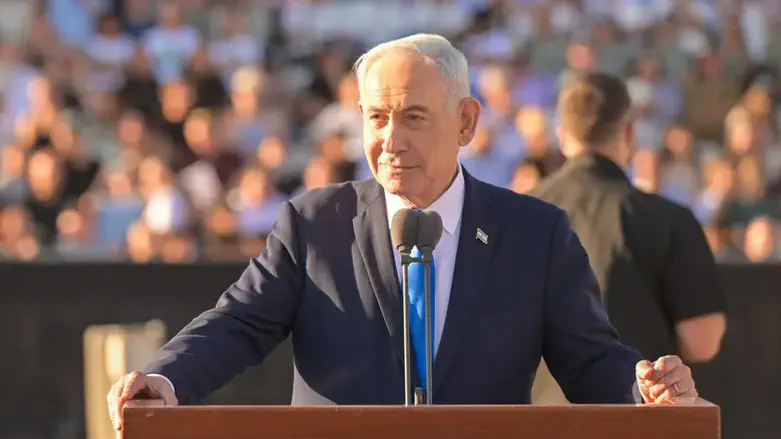 Israel National News1 day ago
Netanyahu during the graduationKobi Gideon/GPO
Prime Minister Benjamin Netanyahu, Defense Minister Israel Katz, and IDF Chief of Staff LTG Eyal Zamir addressed the graduates of the IDF Officer's Training School on Wednesday, delivering warnings to Israel's enemies and outlining the military's responsibilities amid continued security threats.
In his address, the Prime Minister discussed Iran's leadership and the direction it is taking the country.
"Iran is trying again to develop the bombs of death. Mojtaba Khamenei decided to follow in his father's path, and he pulled the pin," Netanyahu stated.
Netanyahu took an unequivocal stance on the way Israel will contend with the Iranian threat: "There is only one way to remove this threat: toppling the regime in Iran."
Defense Minister Katz expounded on the current security situation and argued that in recent days, Israel has noticed attempts by Iran and its proxies to advance attacks ahead of the elections.
"In recent days we have identified attempts by our enemies, led by Iran and its proxies, to advance attacks that will affect the results of the elections in Israel," Katz stated.
According to Katz, "The Iranian regime is at its weakest point ever, and we see that this weakness could bring it to take the most extreme actions, even against the State of Israel."
Addressing the regime, he stressed: "We see your attempts, we are prepared to foil them and are ready to hit you hard," and added, "If Iran attacks Israel, Iran will burn."
Katz clarified that his warning was valid for attacks after the elections as well: "Anyone who attacks us, before or after the elections, and anyone who harms IDF soldiers or Israeli civilians, will pay the heaviest price."
In addition to addressing Iran, Katz outlined Israel's position on the continued IDF presence in the security zones in Lebanon, Syria, and the Gaza Strip.
He said that last week he visited Lebanon and met with commanders and soldiers, both active-duty and reservists, operating in the security zones in Lebanon and Syria. He explained that their mission is to protect residents of the Galilee and the Golan Heights from threats posed by jihadist forces.
"As the Prime Minister and I have made clear: Israel will not withdraw from the security zones in Lebanon, Syria, and Gaza," Katz said.
The Defense Minister went on to issue a detailed warning to Hezbollah, making clear that if the organization joins an Iranian attack against Israel, the IDF will act to expand the security zone in southern Lebanon.
According to Katz, such an operation would involve incorporating additional territory in the Nabatieh and Litani areas into a permanent Israeli-controlled security zone. He said the IDF is preparing for a ground maneuver that would enable it to implement the plan.
"If the Hezbollah terrorist organization chooses to join Iran in an attack against Israel, it will suffer extremely severe blows," he said.
Katz added that in such a scenario, "Additional territory in southern Lebanon, in the Nabatieh and Litani areas, will become part of Israel's permanent security zone, and the IDF is prepared to carry out the ground maneuver necessary to ensure this."
The Defense Minister also outlined the scale of the planned civilian evacuation under the scenario he described. He said the entire Shiite population in the area extending to the Awali and Zahrani lines would be evacuated northward to enable the IDF to strike terrorist infrastructure and push the drone threat away from communities in northern Israel.
He also warned that "the Dahieh suburb in Beirut will also be evacuated, and its terrorist infrastructure will be struck, and more than one million Shiites will become displaced persons in Lebanon."
The Defense Minister then issued a personal threat against Hezbollah Secretary-General Naim Qassem, comparing his path to that of his predecessor, Hassan Nasrallah, who was eliminated by Israel.
"Just as Nasrallah devastated the Shiite community in Lebanon until he was eliminated, Naim Qassem could bring about its complete destruction, until he too is eliminated," Katz declared.
In the final part of his remarks, Katz addressed the situation in the Gaza Strip and IDF operations in the security zones under Israeli control.
According to figures presented by the Defense Minister, the IDF currently controls a security zone covering nearly 70% of the Gaza Strip. He said the area has been cleared of residents and terrorist infrastructure in order to protect Israeli communities.
Katz added that IDF forces continue to operate daily against terrorists attempting to carry out attacks against soldiers, as well as individuals who participated in the October 7th Massacre.
Regarding those involved in the attack, the Defense Minister claimed that 4,000 have already been eliminated and made clear that Israel intends to continue pursuing the remaining perpetrators.
"Four thousand of them have already been eliminated, and the remaining two thousand will be eliminated as well, wherever they may be," Katz said.
Chief of Staff Eyal Zamir also addressed the continued pursuit of the October 7th terrorists, declaring that the IDF would prevent Israel's enemies from rebuilding their military capabilities.
"We will not allow our enemies to rebuild their capabilities or raise their heads again. We will continue to act against enemies and threats, thwarting them as they emerge. Even now, the IDF maintains a high level of readiness across multiple fronts for any attempt by the enemy to harm us," Zamir stated.
The Chief of Staff revealed that two days earlier, IDF forces had eliminated a Nukhba terrorist involved in the abduction and murder of Shani Louk during the October 7th Massacre.
"The elimination of this despicable terrorist is part of an ongoing, uncompromising campaign to eliminate all those who participated in the October 7th Massacre," Zamir said.
"All those who infiltrated, murdered, and massacred our children and families, and violated our women, will meet the same fate."
Zamir described the pursuit of the perpetrators as both an operational responsibility and a moral obligation, invoking the biblical verse: "I pursued my enemies and overtook them; I did not turn back until they were destroyed."
Addressing the graduating officers, Zamir drew a parallel between their service and the IDF's Operation Yoav during the War of Independence in 1948. He recalled how Israeli forces broke through to the isolated Negev, captured Be'er Sheva on October 22, and helped secure the future of the newly established state.
"Then, as now, throughout the three years of war that erupted following the failures of October 7th, courage, self-sacrifice, and the decisions made by commanders have shaped the outcome of the campaign and the future of the State of Israel," he said.
He told the graduates that many of them had arrived at the officers' course directly from the battlefield after fighting on multiple fronts.
"Today, as you receive your officer ranks, you assume the greatest responsibility of all: to lead our troops, make complex and courageous decisions on the battlefield, defend our country, lead the IDF to victory, and defeat our enemies," Zamir declared.
"You must serve as an example to those under your command, demonstrating personal integrity, professionalism, and moral leadership."
The Chief of Staff also paid tribute to fallen IDF soldiers, including LTC Dor Ben Simhon, commander of the 52nd Battalion, who was killed in combat in Lebanon alongside three soldiers from his tank crew: SSG Yoav Klein, SSG Liav Kababia, and SSG Naveh Habshush.
Addressing Ben Simhon's brother, 2nd LT Eitan, who was among the graduating officers, Zamir spoke of the family's loss and the responsibility of carrying forward his brother's legacy.
"You, the IDF's newest officers, are the wheat growing again, emerging from the ranks of our troops and embodying the promise of our continued existence in our homeland," he said, referring to the song "The Wheat Grows Again," associated with Kibbutz Beit HaShita, where Ben Simhon grew up.
Zamir also mentioned First LT Adi Sharvit and cadet Eliya Eldar, who were seriously wounded in Lebanon, wishing them a full recovery and pledging continued support for them and their families.
In another part of his address, the Chief of Staff emphasized the importance of preserving the IDF's unity and its nonpartisan character.
"The mission of defending the State of Israel is among the highest callings and greatest duties a person can undertake. It is a responsibility we all share, greater than any disagreement," Zamir stated.
"The IDF is the people's army. Its strength lies not only in its military capabilities, but also in the impartiality and nonpartisan, state-oriented character of our actions, which are essential to maintaining unity within our ranks."
He called on the new officers to maintain unity among their soldiers and remain committed to their shared mission.
"You must unite your troops around this shared mission and remember that unity within the IDF is essential to its strength. This is true today, and it must remain true tomorrow."
Concluding his remarks, Zamir urged the graduates to return to their units and lead their soldiers with courage and wisdom.
"I trust you. Together, we will achieve security and victory. The people of Israel are proud of you," he told them.
 Israel National News1 day ago
Bezalel SmotrichYonatan Sindel/Flash90
Religious Zionist Party chairman and Minister Bezalel Smotrich delivered a special statement Wednesday afternoon in which he presented a political offer to Ofer Winter, chairman of the Amcha Yisrael party, aimed at persuading him to withdraw from the Knesset race.
Smotrich announced that he was prepared to allocate Winter a ministerial position in the Defense Ministry from the quota of positions his party would demand during coalition negotiations, granting him responsibility for two major areas: promoting voluntary emigration from the Gaza Strip and recruiting haredim into the military and integrating them into the workforce.
The proposal comes amid concerns within the Religious Zionist Party about losing votes to parties that fail to cross the electoral threshold.
The minister argued that Winter's continued candidacy jeopardizes the right-wing camp's chances of victory and urged him to accept the offer so that he could remain involved in public service without running in the elections.
"I will give up a ministerial position allocated to my party for you if you withdraw and do not endanger the right," Smotrich declared.
At the beginning of his remarks, the minister addressed Winter personally, praising his military service and public career and emphasizing that he considers him a partner in the national camp's core values.
"Ofer, my brother, you are a good man. A principled leader and a brave commander with many achievements to your credit, and you represent an important voice in Israeli public life," he said.
"We all remember the 1992 elections. Good people, full of good intentions, who split the camp, threw votes into the trash, and brought upon us the accursed Oslo Accords. Thirty years later, we are still licking the bleeding wounds of that disaster."
Smotrich went on to warn that votes cast for parties that fail to cross the electoral threshold in the current elections could also affect the distribution of Knesset seats between the political blocs.
"The votes wasted below the electoral threshold will make the difference between victory and defeat in the elections. The national camp cannot afford to repeat the mistakes of the past."
Smotrich recalled that he had previously offered Winter a place on the Religious Zionist Party's electoral list.
"Before the candidate lists were finalized, I offered you a full and genuine partnership, a respectable place on the list, and the opportunity to run together based on shared values," he said. "That was the right path then, and it is the right path today."
Addressing polling figures, Smotrich argued that the Amcha Yisrael party is not expected to cross the electoral threshold, although Winter, he said, possesses other polls suggesting a different outcome.
Smotrich recalled Naftali Bennett's failure to cross the electoral threshold in the 2019 elections and the Tehiya party's candidacy in the 1992 elections, arguing that internal polls do not guarantee success at the ballot box.
According to Smotrich, Winter should not abandon his public ambitions but should instead find another way to fulfill them.
"Ofer, I do not expect you to withdraw from public service and go off to pursue your private interests. The people of Israel need you in positions of action and influence, and I know how deeply the desire to act and serve burns within you," he said.
As part of his detailed proposal, Smotrich pledged to demand a ministerial position in the Defense Ministry for Winter, at the expense of the positions and powers allocated to the Religious Zionist Party under future coalition agreements.
"I will place at your disposal the political power that Religious Zionism will have after the elections, and I will demand for you, as part of the coalition negotiations, at the expense of the positions and powers to which we will be entitled according to the allocation formula that is determined, the position of minister in the Defense Ministry," he declared.
The first area Smotrich seeks to place under Winter's responsibility is the promotion of voluntary emigration from the Gaza Strip.
Under the proposal, a dedicated directorate would be established under the designated minister to coordinate the activities of the government and security agencies involved in the issue.
Smotrich proposed granting the directorate statutory powers, a budget, and authorized staffing positions so that it could work with the Foreign Ministry, Mossad, Shin Bet, Coordinator of Government Activities in the Territories (COGAT), National Security Council, and IDF.
"The mission of voluntary emigration from Gaza is undoubtedly the most central and important mission for deciding the campaign and completing the victory that we are all working to achieve," the minister said.
The second area covered by the proposal concerns the recruitment of haredim into the military and their integration into society and employment.
Smotrich proposes establishing a directorate under Winter's responsibility that would focus on adapting military service frameworks to the haredi community and developing additional programs to prepare recruits for service and support them afterward.
According to the plan he presented, the directorate would receive the authority and resources necessary to adapt the military system to the needs of haredi recruits, establish pre-military frameworks, including preparatory academies and hesder yeshivas, and develop institutions in border and peripheral regions.
In addition, the proposed directorate would be responsible for establishing support and job-placement mechanisms for graduates of these programs who wish to enter the workforce.
Smotrich compared the proposed model to the Settlement Administration in the Defense Ministry, presenting it as an example of how authority and resources can be concentrated in a specific area.
"Just as we did with the Settlement Administration in the Defense Ministry, through which we brought about an unprecedented revolution in Judea and Samaria, so too will we place at your disposal, in a professional and effective manner, all the tools and powers needed to ensure the success of the mission," he said.
Toward the end of his statement, Smotrich once again addressed Winter personally, emphasizing that the purpose of the proposal, according to him, was not to remove Winter from public life but to enable him to exert influence through an executive position.
"Ofer, my brother, you were and remain a fierce warrior for the people of Israel. You did not enter politics for a seat, but to strengthen Israel's security and the values of the national camp. I am offering you a genuine partnership."
"Ofer, together, only together, can we succeed. I call on you from here: Let us demonstrate national responsibility and prevent another failure like that of 1992."
 Israel National News1 day ago
Ofer Winterצילום: Chaim Goldberg
Amcha Yisrael Party Chairman Ofer Winter said in an interview with Channel 12 on Wednesday that he is having second thoughts about his decision to announce at the beginning of the campaign that he would only recommend Benjamin Netanyahu as Prime Minister.
"Sometimes I consider whether it's correct or not, but it's not relevant. I am a man of truth and part of the nationalist camp. Even if they slander us, I'm not going to say now that I'll go to the other side. It may not have been correct to say at the beginning," Winter stated.
Amid the campaign to pressure Winter to withdraw from the race, Religious Zionist Chairman Minister Bezalel Smotrich is expected to make an announcement at 6:00 pm.
There are assessments that Smotrich plans to offer Winter one of the Religious Zionist Party's ministerial positions in the next government if he withdraws.
Winter's remarks come shortly after Prime Minister Netanyahu called him to withdraw from the race for the 26th Knesset after dozens of bereaved families from the recent war published a letter urging him to withdraw as well.
"Ofer Winter, listen to the bereaved families, show responsibility and withdraw, for the sake of right-wing victory!" Netanyahu stated.
Netanyahu's statement comes just six days before election day, amid concerns in the pro-Netanyahu bloc that Winter's party will not pass the electoral threshold, leading to a loss of votes that could swing the election in the bloc's favor.
Earlier in the day, dozens of families who lost their loved ones in the recent war published an open letter in which they urged Winter to withdraw his candidacy.
The families expressed fear that Winter running alone in the elections would waste votes and hurt the pro-Netanyahu bloc's chances of forming the next government.
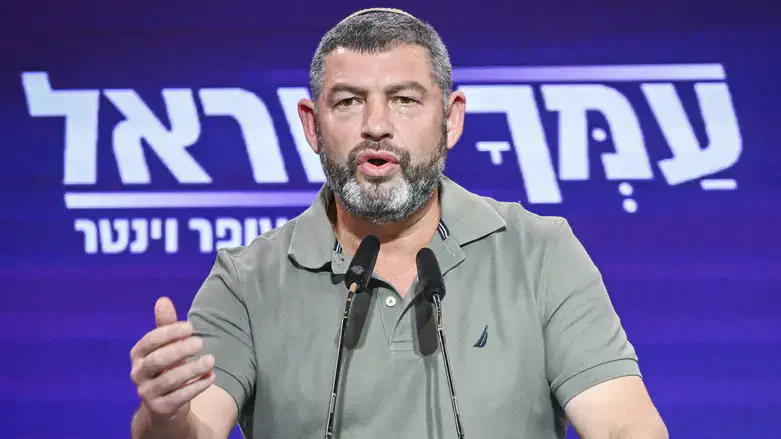 Israel National News1 day ago
עופר וינטרצילום: Avshalom Sassoni/Flash90
Prime Minister Benjamin Netanyahu on Wednesday called on Amcha Yisrael Party Chairman Ofer Winter to withdraw from the race for the 26th Knesset after dozens of bereaved families from the recent war published a letter urging him to withdraw as well.
"Ofer Winter, listen to the bereaved families, show responsibility and withdraw, for the sake of right-wing victory!" Netanyahu stated.
A short time later, Winter told Almog Boker on Channel 12: "It may have been a mistake to announce at the beginning of the campaign that we would only recommend Netanyahu for prime minister."
Netanyahu's statement comes just six days before election day, amid concerns in the pro-Netanyahu bloc that Winter's party will not pass the electoral threshold, leading to a loss of votes that could swing the election in the bloc's favor.
Earlier in the day, dozens of families who lost their loved ones in the recent war published an open letter in which they urged Winter to withdraw his candidacy.
The families expressed fear that Winter running alone in the elections would waste votes and hurt the pro-Netanyahu bloc's chances of forming the next government.
The families opened the letter by addressing the war and the military achievements made on the various fronts, emphasizing the heavy personal price they have paid: "For the past three years, the State of Israel has been engaged in a difficult war on multiple fronts. Thanks to our heroic soldiers, the Israeli government, and the spirit of the people, we have achieved significant accomplishments in Gaza, Lebanon, Syria, and Iran. These achievements came at a terrible cost in blood. Our loved ones went into heroic battles and never returned. Nevertheless, the campaign is still underway, and much work remains ahead of us."
According to the signatories, "These elections are critical, critical for the settlement enterprise, the judicial system, and security. Figures on the left have repeatedly declared publicly that they will pursue withdrawals and agreements with the enemy. They will erase all the achievements of the war. In these elections, every vote matters, every vote is critical."
The families then address Winter directly, arguing that according to the polls, his party is failing to cross the electoral threshold. "Ofer, you are not crossing the electoral threshold in a single poll. To cross it, you need to secure approximately 170,000 votes, and you are very, very far from that. We, bereaved families, call on you: Ofer, do not endanger Israel's security. Do not be responsible for bringing about a left-wing government that will harm security and the war effort. Ofer, take responsibility and withdraw from the race today," the letter states.
The appeal comes amid growing pressure within the right-wing camp on smaller parties, including Amcha Yisrael, to withdraw from the race in order to prevent a situation in which large numbers of votes fail to translate into Knesset seats.
In their letter, the families seek to emphasize that, from their perspective, this is not merely a political question but also a security issue concerning the country's future and the continuation of the policies pursued by the government during the war.
מכתב המשפחותצילום: ללא קרדיט
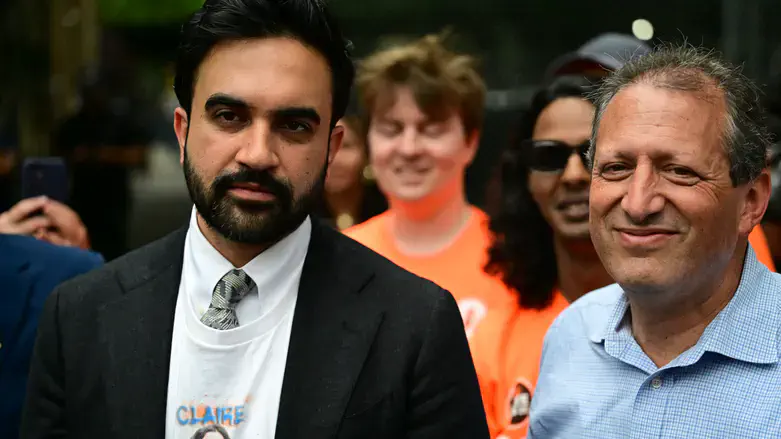 Israel National News1 day ago
Zohran Mamdani and Brad Lander (R)Kyle Mazza/Sipa USA via Reuters Connect
Brad Lander, the far-left Democratic nominee for New York's 10th Congressional District and former New York City comptroller, was detained Wednesday by Israeli security forces while participating in an uncoordinated olive harvest alongside Palestinian Arab farmers in Judea and Samaria.
"I’ve been detained by the IDF, along with a group of rabbis & volunteers. We were simply harvesting olives in a grove near Nehalim in the West Bank," Lander wrote on social media.
"The occupation is a crime under international law. Harvesting olives isn’t a crime under any law I know," he added.
While the Palestinian issue is highly important to Lander, he failed to get the name of the Palestinian town where he volunteered correct. Nehalim is a Jewish moshav in central Israel, rather than a community in Judea and Samaria. He was most likely referring to Nahalin, an Arab village near Bethlehem, where the incident reportedly occurred. And Israel's administation in Judea and Samaria is not against international law and in accordance with the Oslo Accords.
According to the military, the landowner and dozens of accompanying individuals arrived at the location without arranging the harvest in advance, as required before the start of the olive harvest season.
Due to the security risks associated with an uncoordinated harvest near an Israeli community, IDF soldiers, Border Police personnel, and Judea and Samaria District Police officers were dispatched to the scene and detained those present.
The IDF emphasized that prior coordination is essential for maintaining public order and ensuring the safety of everyone in the area.
The landowner was informed of the requirement to coordinate the harvest and was provided with the relevant contact details to arrange access to his land on another date.
The military stressed that properly coordinated olive harvesting is taking place throughout Judea and Samaria. Approximately 100 authorized harvests have already been conducted this season, producing dozens of tons of olives under security arrangements provided by Israeli forces, without any unusual incidents.
The IDF further clarified that access to areas designated for coordinated harvesting is restricted to the harvesters themselves and that entry is permitted exclusively for agricultural work.
Security forces remain committed to facilitating the harvest while maintaining public safety and carrying out their ongoing defensive and counterterrorism operations, the military said.
According to the left-wing organization Rabbis for Human Rights, Lander was among approximately 90 activists, including Israeli volunteers and visiting American non-Orthodox rabbis, who accompanied Arab farmers during Wednesday's harvest.
The organization claimed that the farmers had been unable to reach their olive groves since the October 7, 2023, massacre.
Approximately two hours after the group began working, IDF soldiers, police officers, and Border Police personnel arrived and declared the area a closed military zone for 24 hours, according to the activists.
Rabbis for Human Rights stated that participants agreed to leave the area as instructed but were nevertheless detained while security personnel checked their identification documents and photographed passports.
The foreign participants and Israeli volunteers were subsequently separated and transported in different vehicles for further processing.
Former Israeli Deputy Attorney General Yehoshua Schoffman, who was among those detained, described the incident in a social media post.
"I was just told that I am being detained on suspicion of harvesting olives. On the way to a police station," Schoffman wrote.
He said that dozens of Israelis and American rabbis had participated in the activity and that the group immediately complied when instructed to stop harvesting.
"There was no confrontation whatsoever with settlers or with the security forces," he emphasized.
Lander was taken to a police station in Beitar Illit and subsequently released under caution. Other foreign activists were reportedly transported to Camp Etzion, near Bethlehem. The precise length of Lander's detention was not specified.
Earlier this week, Lander announced that he was participating in the "Protect the Harvest" initiative, which brings Israeli and foreign activists to accompany Palestinian Arab farmers during the olive harvest.
He said the initiative was intended to assist farmers, draw attention to Israeli control of Judea and Samaria, and oppose what he described as violence and displacement affecting Palestinian Arab communities.
Olive harvests in Judea and Samaria have also been exploited to carry out attacks on Jewish residents. Last Friday, Palestinian Arab rioters near al-Mughayyir and Abu Falah in the Binyamin Region hurled rocks, fired fireworks, and set fire to Jewish-owned agricultural land, leaving several Israelis lightly injured. The Binyamin Regional Council accused the rioters of exploiting the harvest to provoke violent confrontations with Jewish farmers.
Earlier in the month, the Council reported that three Palestinian Arabs participating in an olive harvest near Maoz Tzur attacked an Israeli farmer, injuring his head and allegedly attempting to seize his firearm. The Council warned that the olive harvest was being used as cover for attacks against Jewish residents and demanded stronger security measures.
Democrats MK Gilad Kariv criticized the detention, calling on senior IDF commanders to stop employing closed military zone orders against olive-harvesting activities. He also contacted Foreign Minister Gideon Sa'ar, drawing attention to the involvement of American political figures.
Rabbis for Human Rights Acting Executive Director Anton Goodman likewise condemned the security forces' actions, arguing that the volunteers had been engaged in peaceful agricultural work before being ordered to leave.
New York City Mayor Zohran Mamdani commented: "Today, Brad Lander, rabbis, and other New Yorkers accompanied Palestinian farmers during the olive harvest. For that, they were detained by the Israeli government. Harvesting olives is not illegal. The occupation is."
Mamdani stated that he was thankful that Lander was released, but claimed that "other New Yorkers remain detained, and they must be released immediately."
According to Mamdani, "The same Israeli government detaining them has committed a horrific genocide against Palestinians, killing more than 74,000 people over the last few years alone. The detention of these New Yorkers must end. The occupation must end. The genocide must end."
 Israel National News1 day ago
Moti Leitner (L) and Benjamin Netanyahu (R)Chaim Goldberg/Flash90
Prime Minister Benjamin Netanyahu met shortly after midnight with Moti Leitner, chairman of the Haredi Public Party, and asked him to consider withdrawing his party from the elections for the 26th Knesset, scheduled for next Tuesday.
The meeting took place in Petah Tikva at the request of the Prime Minister's Office, amid concerns within Likud that Leitner's party will fail to cross the electoral threshold, resulting in wasted votes that could hurt the right-wing bloc's chances of forming a government.
Leitner, for his part, has not ruled out withdrawing from the race but has set conditions for such a move.
As part of negotiations held in recent days between Likud campaign officials and Leitner and his representatives, several proposals have been raised to facilitate the party's withdrawal while addressing its demands.
Among the possibilities discussed were a joint press conference by Netanyahu and Leitner announcing the withdrawal, as well as appointing Leitner as a government coordinator for haredi affairs in the next government.
However, Leitner is demanding that any agreement also receive the backing of the haredi parties, fearing that after the government is formed, they could subsequently block the implementation of commitments made to him.
During the late-night meeting, Leitner made clear to Netanyahu that there was no point in discussing practical steps until an agreement had been reached with the haredi parties.
Leitner argued that promises from the Prime Minister alone would not be sufficient as long as the haredi parties refused to commit to supporting the measures and reforms Netanyahu had pledged to advance for the Haredi Public.
Negotiations between the sides are ongoing. At this stage, no agreement has been reached on the Haredi Public Party's withdrawal from the race.
 Israel National News1 day ago
חילוץ דרמטי של התינוק מהרכבדוברות המשטרה
A toddler who was left inside a locked vehicle in the parking lot of the Yavne train station was rescued by police officers after his mother realized that she had left him in the car while she was already in Tel Aviv.
The incident began when the mother called the police emergency hotline and reported that she had forgotten her son in her vehicle at the Yavne train station parking lot.
"I need someone to get there and break into the car," the mother told the police dispatcher. She was in Tel Aviv at the time and was unable to return to the vehicle herself.
Following the report, officers from the Yavne Police Station in the Shfela District were dispatched to the scene and began searching the parking lot for the vehicle.
Shortly afterward, the officers located the car and spotted the toddler inside. He appeared to be in distress, and his face was red.
The officers acted immediately, smashing one of the vehicle's windows and quickly rescuing the toddler.
Following the rescue, the child was taken for a medical examination, and police reported that he was in good condition.
Police emphasized that the officers' swift response had prevented a tragedy and once again urged parents to carefully check their vehicles at the end of every journey to ensure that no children had been left inside.
Police also stressed that toddlers and children must never be left unattended in a vehicle, even for a short period, because of the immediate danger to their lives.
 Israel National News1 day ago
Olive harvest (illustrative)Nasser Ishtayeh/Flash90
Two foreign activists, a father and son, were arrested during an unauthorized olive harvest near the village of At-Tuwani in the Hebron Hills.
Following the incident, the Population and Immigration Authority decided to deport the two from Israel later that evening and bar them from entering the country in the future.
The incident occurred amid joint preparations by the Judea and Samaria Police District and the IDF for the olive harvest season, aimed at maintaining public order and preventing clashes in the area.
According to a police statement, officers from the Hebron Police Station and troops from the Judea Brigade were deployed in the area following a call to hold an olive harvest that had not been coordinated or approved in advance. The police noted that this activity was carried out with the encouragement of the Al-Haq organization, which is defined as a terror group.
Police noted that discussions had already been held with village residents the previous day in an effort to prevent the unauthorized activity.
Despite the warnings, several Palestinian Arabs arrived at the site accompanied by the two foreign activists and began harvesting olives.
When Hebron police officers arrived, the participants began fleeing toward a designated military firing zone, where entry is prohibited.
Officers arrested the two foreign activists, a father and son, on suspicion of illegally entering a military firing zone and what police described as their identification with the organization.
The two were taken to the Hebron Police Station for questioning and subsequently jailed.
On Wednesday morning, they were transferred to the Population and Immigration Authority for a hearing. Following the hearing, authorities decided to deport both activists from Israel b evening and prohibit them from entering the country in the future.
The Judea and Samaria Police District stressed that they will continue working in cooperation with the IDF and other law enforcement authorities to prevent disruptions of order and violent incidents during the olive harvest season.
Police added that activities of this kind could lead to confrontations and escalation on the ground, emphasizing that they would pursue legal action against those involved in violations of the law, including through the deportation of foreign nationals.
 Israel National News1 day ago
Itamar Ben GvirAvshalom Sassoni/Flash90
Tensions within the right-wing camp are mounting ahead of the elections for the 26th Knesset. The Likud party issued a strongly worded statement Wednesday against National Security Minister and Otzma Yehudit chairman Itamar Ben Gvir, accusing him of attacking Prime Minister Benjamin Netanyahu and damaging the right-wing bloc's chances of winning the elections.
In its statement, Likud made clear that Ben Gvir is considered a senior partner in the current government and that the party intends to include him in the next government as well, provided the right-wing bloc wins the elections.
"Ben Gvir is a senior minister in our government, and he will be one in the next government as well, but only if the left-wing and Arab-party bloc does not win," the statement said.
Likud then attacked Ben Gvir, accusing him of using the "Push" Instagram account to launch attacks against Netanyahu. Likud claimed that the account is a propaganda page associated with Ben Gvir.
"It is regrettable that Ben Gvir is shooting at his own side and fabricating blatant lies against Likud and the Prime Minister. He is using his private propaganda page on Instagram, 'Push,' to attack the Prime Minister with crude and blatant lies," the party claimed.
Likud added that the account's activities benefit its political rivals, including Gadi Eisenkot, Avigdor Liberman, and Yair Golan.
"This page is doing everything it can to ensure that the bloc of Eisenkot, Liberman, Yair Golan, and the Arab parties wins," the statement said.
Likud called on Ben Gvir to put an end to the publications against the Prime Minister and also criticized him for focusing his attacks on Likud rather than other parties running in the elections.
"We call on Ben Gvir to instruct his propaganda page, 'Push,' to stop working toward a victory for the left and the Arab parties in the elections," the party stated.
It added: "Ben Gvir is attacking the right and Likud instead of attacking the left, and Winter, Zelekha, and Noam, who are wasting precious right-wing votes."
At the conclusion of its statement, Likud called on right-wing voters to support the party, arguing that only a vote for Likud would guarantee a Netanyahu-led government in which Ben Gvir would continue to hold a senior position.
In response to Likud's statement, Otzma Yehudit issued a strongly worded statement of its own, emphasizing its commitment to Netanyahu while accusing his party of undermining Ben Gvir.
"We love Prime Minister Netanyahu, we are 100% committed to him, and we are the ones who prevented his removal when his colleagues in Likud were plotting a putsch against him," the party stated.
Otzma Yehudit rejected the accusation that Ben Gvir was the one damaging unity within the right-wing camp and presented a series of claims that, according to the party, demonstrate Likud's intention to establish a government without him.
"Likud is the one shooting at its own side. Here are the facts," the response stated.
The party claimed that Netanyahu had declared that Ben Gvir would not continue serving as National Security Minister in the next term.
It also cited an interview given last week by Israeli Ambassador to the United States Yechiel Leiter to CNN, in which he said that the next government would be a unity government without Ben Gvir.
In addition, Otzma Yehudit claimed that the Prime Minister's Office had conveyed messages to European countries indicating that Ben Gvir would not be part of the next government.
The party also pointed to statements by Miki Zohar, Eli Goldschmidt, and Yaakov Bardugo regarding the possibility of forming a government with Eisenkot, as well as messages in Likud's official election campaign about establishing a broad government.
At the conclusion of its response, Otzma Yehudit expressed disappointment over Likud's attack and argued that the party should clarify its coalition intentions to the public.
"Likud's attack against us is painful. But if Likud has decided to throw Ben Gvir aside and form a government with Eisenkot, it would be appropriate for Likud to openly stand behind its decision instead of blaming the victim."
 Israel National News1 day ago
Changing the clock (illustrative)iStock
Israel will switch from daylight saving time to standard time on the night between Saturday and Sunday.
At 2:00 a.m. on Sunday morning, Israel's clocks will be turned back one hour to 1:00 a.m., giving Israelis an extra hour of sleep.
The change means the sun will rise earlier according to the clock, but it will also set earlier, bringing darkness earlier in the afternoon.
The transition takes place in accordance with Israel's Time Determination Law, which was amended in 2013 and stipulates that the country switches to standard time on the last Sunday of October. Daylight saving time will return on the last Friday of March 2027.
Dr. Oleg Popov, Head of Time and Frequency Measurements at the Ministry of Economy and Industry, explained that the purpose of the transition is not to give the public an additional hour of sleep, but to align daily activities with daylight hours.
During the summer, daylight saving time allows people to enjoy an additional hour of daylight in the evening. In winter, however, turning the clocks back allows many people to begin their day when it is already light outside.
The Economy Ministry also pointed to the relationship between the seasons and the body's biological clock: During winter, when daylight hours become shorter, the body's secretion of melatonin, a hormone that helps regulate the sleep-wake cycle, may change. Reduced exposure to daylight can cause some people to feel more tired and sleepy.
Serotonin, a chemical in the body involved in regulating mood, is also affected by mechanisms associated with light exposure. As a result, some people may experience a decline in mood during periods with less sunlight.
On most smartphones and computers, the switch to standard time takes place automatically, provided the device is set to update the time automatically and is configured for Israel's time zone.
Clocks that do not update automatically must be turned back one hour manually.
 Israel National News1 day ago
Avichai MandelblitChaim Goldberg/Flash90
Former Attorney General Avichai Mandelblit testified Wednesday that he suspected police leaks were intended to pressure him to expand investigations into Prime Minister Benjamin Netanyahu, as the fourth day of his testimony in Netanyahu’s trial focused on alleged irregularities in the early stages of the investigations.
During questioning by Netanyahu’s defense attorney, Amit Hadad, Mandelblit addressed claims that police conducted investigative activities before obtaining his authorization, that investigators maintained improper ties with journalist Ben Caspit, and that potential conflicts of interest involving a senior police investigator were not brought to his attention. One of the central issues was the timing of investigative activity in Case 1000, which concerned allegations involving gifts received by Netanyahu.
Hadad presented evidence that Mandelblit did not authorize an initial examination of the case until June 26, 2016, while police had already taken an extensive statement from Caspit in April of that year. Asked about the discrepancy, Mandelblit acknowledged that the statement had been taken “without authorization." Hadad then asked whether police could use a journalist to gather information, conduct investigative activities and record people without prior approval from the attorney general.
“An investigator is not supposed to use a journalist as his proxy to investigate," Mandelblit responded, distinguishing between independent journalistic work and a situation in which police direct a journalist to carry out investigative tasks. "I had a feeling that instead of the police investigating, he was replacing the police. And that was something uncomfortable."
The testimony followed allegations presented earlier in the proceedings that senior police officer Eran Kamin had maintained contact with Caspit and asked him to gather information about Netanyahu. Mandelblit said he had not been informed of such activities. The former attorney general also addressed suspected leaks from closed meetings involving law enforcement officials. He acknowledged that he had suspected information was being passed to the media from within both the police and the State Attorney’s Office.
Asked whether such publications might have been intended to pressure him into expanding the investigations against Netanyahu, Mandelblit answered, “Yes," adding that such actions were intended to exert pressure. He also confirmed that he had held a planned background conversation with journalist Dana Weiss, accompanied by his spokesman, to explain the decision-making process at the time. A subsequent report became known as the “Mandelblit version."
Another major focus of the questioning was the conduct of senior police investigator Avi Rotenberg, who had carried out investigative work and prepared summaries in the cases involving Netanyahu. Hadad raised the issue of Rotenberg’s reported romantic relationship with Judy Shalom Nir-Mozes, the sister of Yedioth Ahronoth publisher Arnon “Noni" Mozes, who was involved in Case 2000.
The defense attorney presented a record of a conversation from June 2016 indicating that then-head of Lahav 433, Roni Ritman, had been informed of the relationship. Hadad asked whether Mandelblit should also have been notified, given the potential conflict of interest. Mandelblit agreed that he should have been informed.
The questioning also addressed an examination by the Police Internal Investigations Department into Rotenberg. According to material presented by the defense, the examination was halted toward the end of 2017 with the agreement of senior prosecution officials, including then-State Attorney Shai Nitzan and Momi Lamberg. Hadad questioned how senior officials could have known about the matter while the investigations into Netanyahu were underway without informing the attorney general. Mandelblit replied that he did not remember such an incident.
He was also asked about allegations raised by Ritman during proceedings before the Police Internal Investigations Department, in which Ritman claimed Netanyahu had acted against him through a fabricated accusation. Mandelblit confirmed that those claims had not been brought to his attention.
 Israel National News1 day ago
The new smuggling methodRegavim
A new smuggling method along the Israel-Jordan border is raising concerns among residents of the Arava region.
Smuggling networks have begun using helium balloons to carry drug shipments weighing dozens of kilograms in an attempt to bypass detection and jamming systems designed to counter drones.
On Sunday, an unusual shipment of drugs weighing approximately 100 kilograms landed in the agricultural fields of Moshav Ein Yahav. It is suspected that the shipment was intended to travel from Israel into Jordanian territory.
Residents who discovered the cargo in the morning expressed concern about the security implications of the incident, noting that the weight was comparable to that of an armed individual carrying equipment.
They said the ability to transport such a heavy load through the air near the border raises questions about the capacity to detect and prevent similar smuggling attempts in the future.
In recent years, drones have become one of the primary tools used by smuggling networks along Israel's borders with Egypt and Jordan. These networks operate two-way smuggling routes, transporting drugs from Israel into neighboring countries while bringing weapons into Israel in the opposite direction.
Israel's defense establishment has intensified efforts to thwart these operations, including deploying specialized drone detection and jamming systems. Legislative measures have also been advanced to impose stricter penalties for cross-border smuggling.
However, smugglers have begun looking for alternative methods that do not depend on drones or continuous wireless communication.
One emerging method involves using helium balloons to carry cargo with the help of air currents. Authorities suspect that smugglers exploit weather conditions to move packages toward the border, using tracking devices and timed release mechanisms.
Unlike drones, balloons traveling passively do not require continuous communication with an operator, meaning electronic jamming systems designed to counter drones are not necessarily effective against them.
The new method does not guarantee that shipments will reach their intended destinations. Several balloons carrying packages of hashish have fallen in communities and kibbutzes in the Arava, including one shipment that landed in the Hai-Bar Nature Reserve in Yotvata.
A police official estimated that the fallen shipments had cost the smuggling networks merchandise worth millions of shekels.
At the same time, these incidents highlight the lack of precise control over the cargo's flight path and the potential dangers posed when shipments land in civilian areas.
The Regavim movement warned that the threat extends beyond drug smuggling, arguing that the ability to transport heavy payloads across the border could also be exploited by hostile elements in the future.
Yehuda Kapach, Regavim's Southern District Director, said: "The ability to transport cargo across the border creates a serious strategic risk. Smuggling networks operate in direct connection with hostile elements, and the infrastructure currently used for drugs can immediately be exploited to transport explosives and advanced weapons. Focusing solely on thwarting the technological means, whether a drone, an ATV, or a helium balloon, will not stop an industry that generates tens of billions of shekels."
"The necessary response requires addressing the root of the problem: those driving the crime, the lack of enforcement, and the lack of governance," Kapach said.
He also called for enforcement efforts to focus on the heads of criminal organizations and their sources of funding through financial investigations and asset seizures, alongside an increased military and police presence in the Negev and border regions.
In addition, Kapach demanded tougher penalties for smuggling offenses, including mandatory minimum sentences, and a broader security approach to smuggling along the borders with Egypt, Jordan, and in Judea and Samaria.
He argued that all smuggling incidents in these areas should be treated as security-related events, allowing the Shin Bet to use its intelligence and operational capabilities against the networks.
The Regavim movement emphasized that the incident in Ein Yahav demonstrates the need to address not only the smuggling methods themselves but also the networks behind them and the potential security threats arising from their activities.
 Israel National News1 day ago
Daycare (illustrative)iStock
A 40-year-old employee at a private daycare center in the city of Ariel was arrested Monday night on suspicion of child abuse.
The suspect, a resident of Samaria, was arrested after police investigators examined the facility's security camera footage and discovered substantial preliminary evidence supporting the allegations against her.
The investigation began following a report recently received by the Ariel Police Station raising suspicions about the conduct of one of the daycare center's employees.
As part of the investigation, police obtained a court order allowing them to collect footage recorded by the security cameras installed at the daycare center. Investigators reviewed the recordings to examine the allegations raised in the initial complaint.
According to police, an examination of the footage uncovered substantial preliminary findings that strengthened suspicions of abuse of a vulnerable person. Based on these findings, investigators decided to arrest the employee and bring her in for questioning.
The arrest was carried out Monday night, after which the suspect was taken to the police station and questioned regarding the allegations against her.
Following the interrogation, the employee was placed in custody.
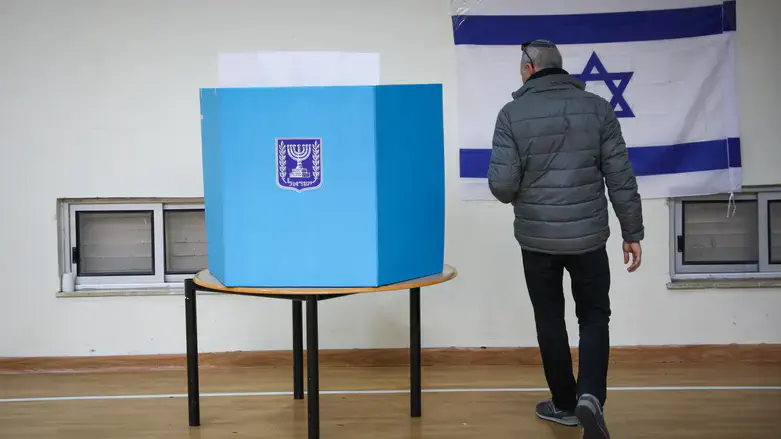 Israel National News1 day ago
Voting, illustrationOlivier Fitoussi/Flash90
As Israel prepares for the 26th Knesset elections, the IDF has issued new guidance clarifying that hesder yeshiva students who have completed their active military service remain subject to restrictions on political activity while in their study period. The guidelines, signed by IDF Elections Officer Col. Vered Ben Yehuda, address students serving under the hesder framework who have entered unpaid service during which they return to yeshiva studies but retain their military status.
The IDF emphasized that while participation in the democratic process is important, military service requires special restrictions on political involvement. “The right to participate in elections is a cornerstone of the democratic system. However, the unique nature of military service necessitates certain restrictions on the political activity of military personnel."
The guidelines clarify that hesder students remain subject to the same rules of discipline and conduct as other active-duty soldiers. Returning to yeshiva studies does not exempt them from military regulations governing partisan and political activity.
Military orders prohibit activities of a partisan or political nature on military bases and at military facilities. Soldiers are also prohibited from publicly expressing positions on partisan, political, military or diplomatic issues. These restrictions apply to social media as well as public appearances. The IDF stressed that the rules remain in force throughout the year and must be observed particularly carefully during election season.
However, the guidelines also distinguish between permitted political participation and prohibited political activity. Soldiers may belong to a political party and attend party meetings or rallies as members of the audience, provided they are not wearing their uniforms and the party is legally registered in Israel and does not promote objectives that undermine the state's existence or the value of military service.
Active participation in political events remains prohibited. Soldiers may not address party gatherings, serve in any official capacity at such events or take an active role in election campaigning. The letter also addresses voting procedures, clarifying that soldiers may vote either at the civilian polling station where they are registered or at a military polling station.
The IDF warned that voting more than once is strictly prohibited, emphasizing that double voting violates the principle of equality and constitutes an offense under the law.
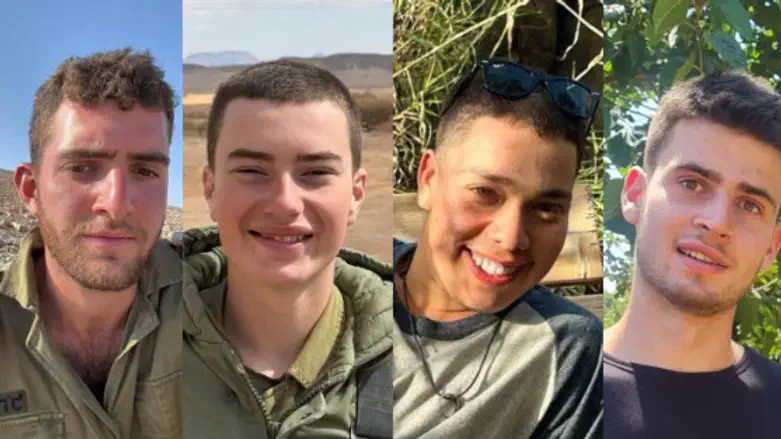 Israel National News1 day ago
The four IDF soldiers killed by the terroristIDF spokesperson
The IDF and ISA on Wednesday announced that earlier this week, they eliminated a terrorist who was responsible for helping plan the attack in which four IDF soldiers were killed.
On Sunday, the IDF and ISA eliminated the terrorist Musa Abd Muhammad Hamouda in an airstrike in the Gaza City area.
Hamouda was a Nukhba terrorist in Hamas' military wing and took part in planning the explosive device attack that killed four soldiers from the 52nd Battalion’s tank crew on September 8, 2025. During the attack, the terrorists threw an explosive device into a tank that was standing outside the shelter, which caught fire. As a result, the tank's crew members - Lieutenant Matan Abramovitz, Sergeant Amit Aryeh Regev, Staff Sergeant Uri Lemad, and Sergeant Gadi Cotal - were killed and one other soldier was wounded.
Hamouda's elimination marks a significant milestone for the 162nd Division in holding accountable those responsible for the deaths of its soldiers. The soldiers fell while serving under the division’s command during Operation Gideon’s Chariots, and the 215th Fire Brigade, which operates under the same division, has now eliminated the terrorist responsible for their deaths.
Throughout the war, the terrorist repeatedly carried out terrorist activity against IDF troops in the Gaza Strip and targeted IDF troops.
More recently, Hamouda advanced terror attacks against IDF troops and Israeli civilians and operated to restore the terrorist organization’s military capabilities, in systematic violation of the ceasefire. The terrorist was eliminated in an aerial strike to remove the threat he posed.
The IDF also stressed that "prior to the strike, steps were taken to mitigate harm to civilians, including the use of precision munitions and aerial surveillance."
The security forces under the Southern Command remain deployed in the area in accordance with the ceasefire agreement, and will continue to operate to remove any threat, the military added.
The eliminated Hamas terroristIDF spokesperson
 Israel National News1 day ago
UncertaintyRabbi Ezaqui
This week’s Torah portion, Lech Lecha, carries Abraham into the unknown and offers a quiet lesson about how we see the world and how that seeing shapes it. To get there, I want to start with a riddle, move through a law about lost objects, and end with the physics laboratory.
Almost everyone has heard the question: if a tree falls in a forest and no one is there to hear it, does it make a sound? Philosophers have debated it for centuries. Curiously, Jewish law offers its own answer. In certain legal contexts, if no one has become aware of an event, then, for practical purposes, it has not yet happened. Awareness is not a bystander to reality. In some cases, it is part of what makes the event real.
The Torah obligates us to return lost property to its owner, but there is an exception. If the owner has despaired of ever recovering the item and has mentally severed ownership, the finder may keep it. The Hebrew word for this despair is yeush. Consider a dollar bill, identical to every other, lost in a crowded place. Its owner will almost certainly give up hope at once, and whoever finds it may keep it.
Here the law becomes subtle. Maimonides rules that if a person drops a dollar or a quarter and does not know it fell from his pocket, he has not despaired of it. This is true even if the object has no identifying mark. He will surely despair the moment he discovers the loss, but until then he has not. The finder may not take the item until the owner becomes aware of the loss and gives up hope.
Think about what this means. The money is objectively gone. It lies on the pavement, in no one's hands. Yet in the eyes of the law, it is still fully owned because the owner has not yet turned his attention to the loss and declared it lost. Something is not despaired of, and therefore not lost, until the person gives it his attention and his surrender. In Jewish law, loss is not merely a physical fact. It is a state of mind.
The Hebrew word yeush, meaning despair, has a numerical value of 317. Eliezer, Abraham’s servant, appears in this week’s portion as Abraham rescues his nephew Lot, who had been taken captive. The Torah says Abraham pursued the captors with 318 men, and our Sages teach that this “army" was actually Eliezer alone, a single servant whose name equals 318. Eliezer is derived from Eli ezer, “my God is help."
The difference between despair and divine help is exactly one. Eliezer begins with the letter aleph, which has a value of 1. That single extra unit transforms the entire word. One small sliver of added faith lifts a person above despondency and despair. A man standing at 317 has given up. Add one - the Aleph, the awareness that God’s help is present - and he stands at 318, ready to defeat armies. The distance between hopelessness and victory is not a vast gulf. It is a single step, a single shift in outlook.
Modern physics points in a similar direction. In quantum mechanics, a particle such as an electron does not exist as a tiny solid ball with a definite location before measurement. Instead, it is described by a wave function, a spread of possibilities, a superposition of potential states. When a measurement is made, that spread of possibilities resolves into a single definite outcome. The wave of potential becomes an actual particle in an actual place. This is what physicists call the collapse of the wave function, and the “measurement problem" of exactly what this means remains one of the deepest unresolved questions in science.
Physicists debate how to interpret it, and we should be careful not to overstate what the equations say. “Observation" in the laboratory means a physical interaction with an instrument, not necessarily a conscious mind. Even so, the central lesson is undeniable and well tested: measuring does not merely record a finished reality. It actually takes part in forming the result.
Heisenberg’s uncertainty principle shows that we cannot observe a system without disturbing it. Experiments such as the double-slit experiment show that the very same electron behaves as a wave or a particle, depending on how we choose to look at it. The physicist John Wheeler, who spent his career on these questions, spoke of a “participatory universe," one in which the observer helps bring reality into being.
The perspective with which we measure and look at things affects and shapes what we see. This is science, not mysticism. What the Torah’s law of lost objects expresses in the language of human attention, physics discovers in the language of particles.
We are not God. We do not control the weather, the markets, or the fate of nations. But we have been given a specific domain of power, the ability to choose where our attention rests and how we interpret what happens to us. God gave us free choice so that we would use it to shape the outcome.
The Lubavitcher Rebbe, Rabbi Menachem Mendel Schneerson, taught this principle repeatedly. If we do not give our fears attention, they do not become real in our lives. Even the superstitions mentioned in the holy books, he would say, have no hold over us if we refuse to give them importance. This is the same principle as the law of the lost dollar: what we have not granted our attention has not truly been surrendered.
The other side of the coin is equally true. As the saying goes, where focus goes, energy flows. If we dwell on our fears, we give them substance. If we dwell on despair, we give it a home. The law tells us that even something with every potential to be lost, to be gone, to be a cause for despair, is not truly lost until we give it that status.
And the Torah portion goes further. If we elevate our perspective and add just one more unit of effort, the faith in God hinted at in the name Eliezer, we can transform 317 into 318, turning defeat into victory.
Here is the takeaway.
Each of us faces moments when something slips away: a job, a relationship, a dream, our confidence. In those moments, we face a choice. We can look at the loss and declare it final, adding it to the account of despair. Or we can raise our perspective by a single unit, remember that we are never alone, and hold on to the possibility that the story is not finished.
Jewish law holds that as long as we do not despair, the object remains ours. Quantum physics holds that how we observe shapes what we see. Our Sages hold that one letter, one unit of faith, separates the despairing man from the redeemer of captives. These three voices, law, science, and tradition, speak in harmony.
We have tremendous strength and agency in how we view our lives. Let us not waste them on fear and despair. Let us use them for what is positive and constructive, adding that one small aleph to every situation, and discover how much of reality responds when we do.
www.rabbishlomoezagui.com
 Israel National News1 day ago
Interview with Barbara Hines
Arutz Sheva - Israel National News spoke with German-born artist Barbara Hines who has opened "Jerusalem in My Soul," her first solo exhibition in Israel from October 15th - 21st December, 2026, at the Moshe Castel Museum of Jewish Israeli Art, in Maaleh Adumim.
"Jerusalem in My Soul" is an exploration of her deep love and connection to Zion after a long spiritual journey from Christianity, through Hinduism, Sufism and Buddhism that took a sharp turn when she discovered her parents had hidden their Jewish identity to evade the Nazis.
Barbara Hines’ entire life, religion and identity changed after a phone call between her son and mother. While studying at one of London’s most prestigious Church of England schools, young Trevor had decided to convert to Judaism. He called to tell his elderly German grandmother, who casually replied: "That’s interesting dear, because my mother and grandmother were Jewish."
Unbeknownst to Barbara, her father had been dismissed from the Luftwaffe after they discovered his mother was Jewish, and her mother had saved and hid him throughout the war; both were Jews who hid in plain sight as German Christians.
After the war, they could no longer bear to look at their peers and moved to Australia, where she was raised as a Christian. Her parents maintained their secret for fear of another Holocaust.
While her art originally focused on nature and beauty, it began to evolve with her personal story taking on Biblical, Zionist, and Israel-related themes. As she became more religiously observant, her connection to the Holy Land increased too, so much so that she began to mix earth from Israel into her paint to imbue it with extra meaning.
Over the years, she has exhibited around the world, including at the Holocaust Museum Houston, the Museum of Biblical Art in Dallas, the Aspen Institute in Colorado, the Dr. Bernard Heller Museum at Hebrew Union College in New York, and the Jerusalem Biennale.
After her husband, Gerald Hines, passed away in August 2020, Barbara decided she wanted to fulfill a lifelong dream of moving to Israel. Eventually, she was introduced to Rabbi Dr. Natan Ophir, whom she married on May 29, 2026. Their very first date was at the Castel Museum of Jewish Israeli Art. Not only did Barbara and Natan find love that day, but she was also offered her first solo exhibition in Israel. With the opening of "Jerusalem in My Soul" on October 15, 2026, Barbara’s life journey home came full circle, overlooking the majestic hills of Jerusalem.
