

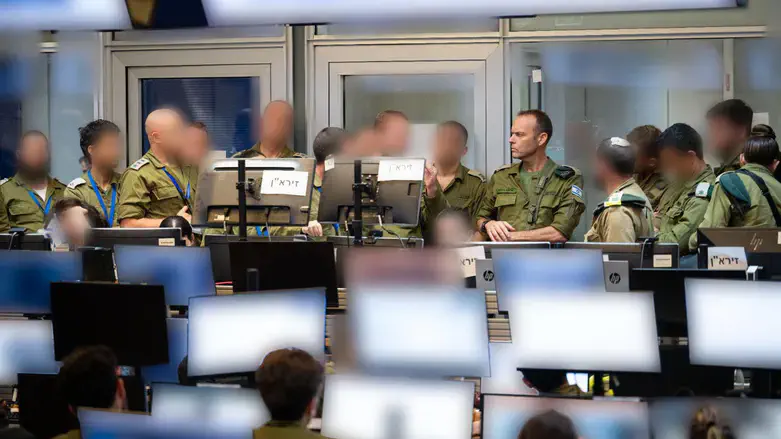
Following the failures exposed by the October 7 attack, the IDF has launched a major reform of its Military Intelligence Directorate (AMAN), including doubling the number of intelligence officers at the battalion level, establishing forward intelligence units, and dramatically reducing the time between target detection and engagement.
The profound changes in intelligence operations since October 7 are part of a broader transformation in the IDF's overall operational doctrine that has taken place during the war, particularly in the field of military intelligence.
The reform is being led by AMAN's Field Intelligence Department, which has assumed responsibility for developing and strengthening the IDF's tactical intelligence capabilities in both wartime and routine operations.
According to a report in Yedioth Ahronoth, the centerpiece of the reform is the creation of forward intelligence centers embedded directly with maneuvering forces. These centers provide frontline units with continuously updated real-time intelligence.
To implement the new vision, the IDF has carried out a broad restructuring of its personnel. The number of intelligence officers assigned to each battalion has been doubled, while maneuvering brigades have been reinforced with dedicated intelligence specialists in human intelligence (HUMINT), visual intelligence (VISINT), signals intelligence (SIGINT), and open-source intelligence (OSINT).
The enormous volume of information now flowing to frontline units has also created the challenge of information overload. The new system is designed to ensure that intelligence reaches commanders only after it has been processed, analyzed, and distilled, enabling rapid decision-making under fire without overwhelming them with raw data.
At the same time, the department is introducing new technological systems that significantly shorten the time between identifying a target and directing fire against it-a capability considered critical in modern combat. The rapid integration of AMAN with maneuvering combat teams has already led to substantial improvements in the effectiveness of proactive offensive operations conducted by the IDF.
However, Military Intelligence officials acknowledge that the ultimate test will not come when the IDF is setting the pace of operations, but rather in its ability to respond to the next strategic surprise. Under the shadow of the intelligence failure of October 7, AMAN officials say that technological upgrades and expanded battlefield capabilities alone are insufficient; what is required is a fundamental change in mindset.
The directorate's primary objective is to eliminate the institutional overconfidence that in the past led senior intelligence officials to ignore-or at times even dismiss-clear and accurate warnings from personnel in the field, including surveillance soldiers and junior intelligence officers.
The upheaval within the directorate has underscored that preventing the next intelligence failure will depend on humility, constant skepticism, and a genuine willingness to listen to those who challenge prevailing assumptions, even when they are junior soldiers with relatively low ranks.