
 Israel National News
US deploying dozens more aerial refuelers to Israel amid escalating Iran tensions
Jul 17, 2026·3 min read
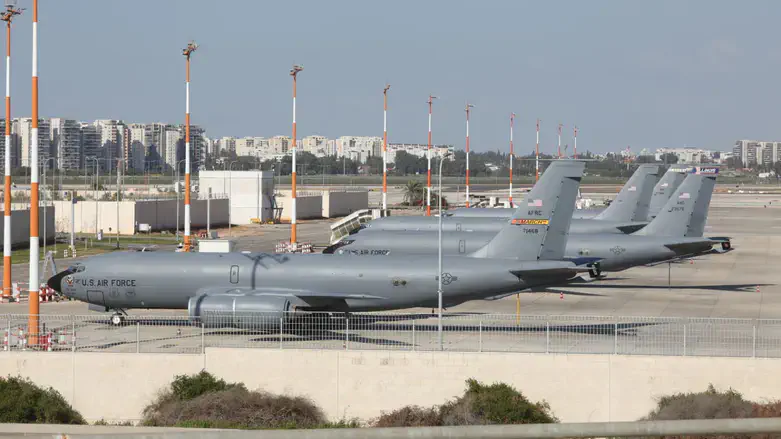
Washington has informed Israeli officials that it plans to deploy dozens of additional aerial refueling aircraft to the country as President Donald Trump reviews options for an expanded military campaign against Tehran, according to a Friday report by Axios.
The notification follows a White House Situation Room briefing where the administration evaluated broader strategic plans that go significantly beyond recent operations focused around the Strait of Hormuz. Potential targets currently under review include Iranian civil power grids, deeper strikes on nuclear infrastructure to further entrench enriched uranium stockpiles, and targeting a suspected underground location at Pickaxe Mountain, according to the report by Barak Ravid.
While no final directive has been issued, American and Israeli sources indicate an expanded offensive could be authorized within days. The objective remains pressuring the regime into reopening vital maritime shipping lanes in the Strait of Hormuz and accepting US nuclear terms.
The potential expansion comes after five consecutive days of US air operations. American aircraft recently hit seven bridges surrounding Bandar Abbas - a primary logistical hub for the Islamic Revolutionary Guard Corps (IRGC) - disrupting supply routes across the region. Concurrently, Iranian forces have intensified strikes targeting American positions across Kuwait, Iraq, Bahrain, Qatar, and Jordan, while the IRGC claimed a strike on an abandoned US installation in Syria.
The US military presently maintains approximately 30 refuelers at Ben Gurion International Airport and another 30 at Ramon Air Base in southern Israel. The incoming aircraft would restore American refueling capabilities in the country to levels maintained at the onset of the conflict. According to Axios, US Central Command favors operating out of Ben Gurion Airport due to superior infrastructure and security compared to other regional facilities that face higher vulnerability to Iranian fire.
The military footprint at Ben Gurion Airport has generated political friction in Jerusalem. While the heavy presence of tanker planes caused minimal disruption when Israeli airspace was previously shut down, normal summer travel has resumed. Transportation Minister Miri Regev has advocated for capping or relocating the US aircraft to prevent widespread commercial flight cancellations - a scenario that could carry heavy political costs ahead of upcoming elections.
However, Israel's Defense Ministry and military leadership have opposed moving the aircraft, citing operational necessities. With Washington formally requesting full accommodation for the incoming fleet, Prime Minister Benjamin Netanyahu is expected to make the final determination.
(Arutz Sheva-Israel National News' North American desk is keeping you updated until the start of Shabbat in New York. The time posted automatically on all Israel National News articles, however, is Israeli time.)