

 Jewish Breaking News
Trump Halted New Iran Strikes After Gulf Allies Warned of Retaliation as U.S. Missile Defenses Ran Low, CNN Reports
President Donald Trump backed away from a planned new wave of strikes against Iran after Gulf allies warned that Tehran could retaliate against their energy infrastructure and overwhelm already strained regional air defenses, according to CNN.
The concerns reportedly came during Trump’s conversations with Middle Eastern leaders, who feared that another major American escalation could trigger Iranian missile and drone attacks against oil fields, refineries, export terminals and other critical facilities. Trump subsequently instructed Defense Secretary Pete Hegseth to stand down for now, although the proposed strikes have not been removed from consideration.
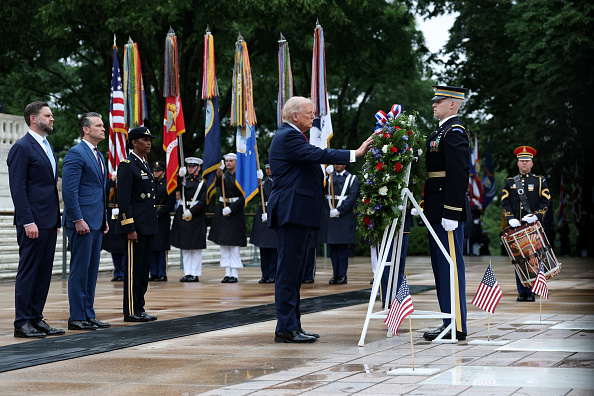
The warnings were reportedly reinforced by increasingly severe shortages inside the U.S. military itself. CNN cited two sources familiar with a recent inventory assessment who said American forces have expended nearly 80% of the country’s THAAD missile interceptors and approximately half of its Patriot interceptors since the Iran war began.
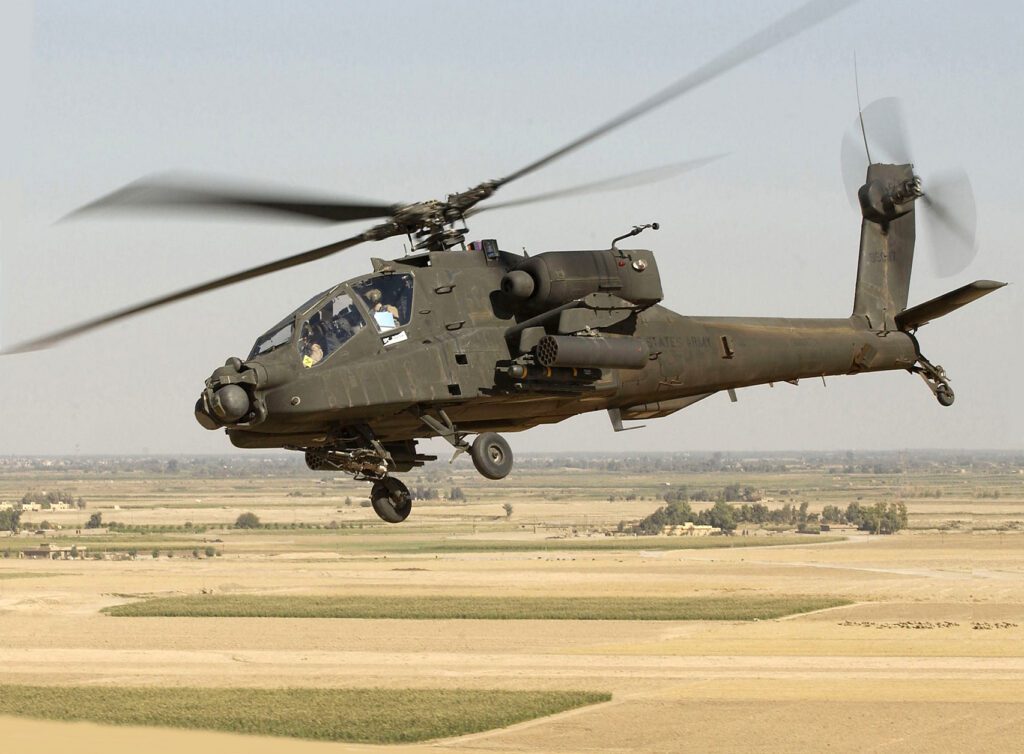
A U.S. Army AH-64D Longbow Apache, 1st Battalion, 101st Aviation Regiment, Fort Campbell Ky., provides ground forces with air support from Forward Operating Base Speicher Iraq, Oct. 21, 2005, during Operation Iraqi Freedom. (U.S. Air Force photo by Tech. Sgt. Andy Dunaway) (Released)
The 1st Battalion, 101st Aviation Regiment, the “Expect No Mercy” Battalion, is the premier attack helicopter battalion in the United States Army. Its lethal fleet of 24 Ah-64D Longbow Apaches is currently conducting combat operations in Northern Iraq, caring on a long tradition of excellence among Army Aviation.
1-101st first gained notoriety during Operation Desert Storm in 1991, when it fired the first shots of the Gulf War during Operation Normandy, destroying key Iraqi radar sites and creating a safe corridor for US aircraft to commence the air campaign. The battalion again proved itself during Operation Iraqi Freedom in 2003-2004, conducting several mobile strike deep attacks during major combat operations followed by eight months of quick reaction force (QRF), reconnaissance, and VIP security missions during stability and support operations (SASO). After a rigorous 19 months of training and maintenance back at Fort Campbell, Kentucky, the “Expect No Mercy” battalion deployed to Iraq for its second OIF tour.
Since arriving in Iraq, the battalion has conducted an aggressive Relief-in-Place/Transfer-of-Authority (REP/TOA) with 8-229th Aviation Regiment from Fort Knox, Kentucky. The battalion is on track to fly over 1000 combat hours in October, and is already making an impact on operations in Iraq. Initial combat missions involved teams of two “No Mercy” aircraft along with one 8-229th aircraft conducting local area orientations (LAO) to familiarize aircrews with the environment, geography, and unity on the ground. By no means was an LAO an administrative mission though: while on orientations, aircrews participated in numerous reconnaissance
THAAD and Patriot batteries form a central part of the defenses protecting American bases and Gulf allies from Iranian ballistic missiles. Even countries with advanced defensive networks could struggle to protect military installations, population centers and sprawling energy facilities simultaneously during sustained Iranian salvos.
The Pentagon has not publicly confirmed CNN’s numbers. However, separate reporting points to a serious and rapidly growing shortage. Reuters reported that the U.S. has used virtually all of its available ATACMS and Precision Strike Missiles, while military officials have repeatedly warned that stocks of defensive interceptors are also falling. The Pentagon maintains that American forces still have the capabilities required to carry out any mission ordered by the president.

Independent estimates differ from CNN’s figures. The Center for Strategic and International Studies recently estimated that Patriot inventories had fallen below 1,000 interceptors and THAAD stocks to roughly 250. Reuters cited a CSIS assessment estimating that approximately 65% of Patriot interceptors had been expended and THAAD inventories had declined by at least 38%. The differences may reflect separate intelligence assessments, inventory definitions or more recent battlefield usage.
Trump has publicly acknowledged that appeals from Saudi Arabia, Qatar and the United Arab Emirates weighed heavily in his decision to hold off. Gulf leaders warned that an expanding confrontation could bring devastating Iranian retaliation and further damage global energy markets.
The decision represents a tactical pause rather than a definitive end to the military option. Washington is allowing regional diplomacy more time, but the planned strikes could be revived if negotiations fail or Iran launches additional attacks.