Matzav
Related stories

 Vos Iz Neias2 hours ago
 Israel National News3 hours ago
 Jewish Breaking News4 hours ago
 Yeshiva World News5 hours agoMatzav10 minutes ago
The IDF on Thursday released a sweeping dossier identifying 170 Gazans killed during the war who were portrayed internationally as journalists or media workers but who, according to Israeli military intelligence, also served in the military wings of Hamas, Palestinian Islamic Jihad and other terrorist organizations.
The newly released figures provide a detailed breakdown of the military’s findings: 118 of the 170 were members of Hamas’s military wing, 49 were affiliated with Palestinian Islamic Jihad, two belonged to the Popular Resistance Committees and one was a member of the Mujahideen Brigades.
The IDF further said that 17 of the individuals on the list crossed into Israeli territory during the Hamas-led October 7, 2023 massacre.
Following what the military described as an extensive investigation, the IDF published the identities of all 170 individuals together with information about their terrorist affiliations and operational positions. The evidence includes photographs, internal documents produced by the terrorist organizations and materials recovered by Israeli forces during operations inside Gaza.
The list includes individuals who, in their media capacities, worked for or contributed material to prominent international news organizations, including Reuters, CNN, the BBC, AFP, the Associated Press, Le Monde and ABC Australia. The IDF’s allegations concern the individuals’ simultaneous affiliations with terrorist organizations and do not establish that the news organizations themselves knew of those alleged affiliations.
According to the military, the 170 individuals held a wide variety of positions inside the terrorist groups, including commanders, snipers, trainers and propaganda operatives.
Among those identified by the IDF is Asem Adli Ahmed al-Barsh, who was described as a journalist for Palestinian Al-Rai Radio but whom Israel identifies as a Hamas operative. Reporters Without Borders included Barsh in a December 2023 complaint to the International Criminal Court concerning journalists killed in Gaza.
Another individual on the Israeli list, Mohammed Mahmoud Abdel Aziz Abu Sharia, was identified by the IDF as a Palestinian Islamic Jihad sniper while also reportedly working for the Palestinian Shams News Agency. His name was later included by Reporters Without Borders in a memorial honoring journalists killed between June 2024 and June 2025.
The IDF also identified Mohammed Manhal Ahmed Abu Armana as a Hamas operative who commanded the propaganda department of the terror group’s Rafah Brigade. Abu Armana’s death had previously been publicly condemned by UNESCO, which described him in connection with his work as a journalist.
Several of the names released Thursday have also appeared in the Committee to Protect Journalists’ database tracking journalists and media workers killed during the Gaza war. The CPJ has previously removed some individuals from its casualty database after information emerged establishing that they were members of terrorist organizations.
The IDF said the newly published material challenges repeated allegations from international organizations and news outlets that Israeli forces have intentionally targeted journalists during the war. The military maintains that such accusations have often been made without verified evidence establishing that the individuals were targeted because of their journalistic work.
According to the IDF, in a number of cases Hamas or other terrorist organizations themselves publicly acknowledged the deceased individuals as members of their ranks, despite the same people subsequently being presented internationally solely as journalists or civilian media personnel.
The IDF stated that the newly released information demonstrates a discrepancy between international portrayals of those killed and their actual activities within terrorist organizations.
The military further maintained that the findings provide evidence supporting its position that it does not deliberately or systematically target journalists, but instead conducts operations against terrorist organizations and their operatives in accordance with international law.
To accompany the disclosure, the IDF created a special online database called “The Press Files,” containing names and photographs of the individuals, their alleged terrorist organizations and military positions, identification information and supporting intelligence that the military says can be publicly disclosed.
The massive release came only hours after the IDF initially publicized ten cases of Gazans who had been described as journalists following their deaths but whom Israeli intelligence identified as Hamas or Islamic Jihad operatives. The military said some of those ten had participated directly in the October 7 invasion of Israel and indicated at the time that a much larger disclosure was coming.
Among the cases highlighted in the initial release was Hassan Aslih, a prominent Gaza photographer whose work had been used by major international news organizations, including CNN and the Associated Press. The IDF has accused Aslih of having ties to Hamas and participating in the October 7 invasion.
The military’s broader disclosure followed the killing Wednesday of Muhammad Abd al-Aziz Muhammad Nagar in an Israeli strike in the southern Gaza Strip. The IDF identified Nagar as a member of Hamas’s military wing who crossed into Israel during the October 7 massacre.
Following Nagar’s death, Palestinian reports described him as a journalist and presenter associated with Radio Quran. The IDF said those descriptions omitted what it says was his membership in Hamas’s military wing.
According to the Israeli military, Nagar had remained operationally active and was recently involved in planning attacks against Israeli troops and civilians. He was also allegedly participating in efforts to rebuild Hamas’s military capabilities, activity the IDF said constituted a systematic violation of the ceasefire agreement.
The IDF said it took steps before striking Nagar to reduce the danger to civilians, including employing precision weaponry and conducting aerial surveillance.
Southern Command forces remain deployed in the area under the terms of the ceasefire, the military said, and will continue acting against threats it considers immediate.
Related stories
Vos Iz Neias2 hours agoIsrael National News3 hours agoJewish Breaking News4 hours agoYeshiva World News5 hours ago Vos Iz Neias
Related stories
 Jewish Breaking News1 day ago
 Matzav1 day ago
 Cleveland Jewish News1 day ago
 Israel National News2 days agoVos Iz Neias36 minutes ago
NASHVILLE (VINnews) — Conservative commentator Ben Shapiro mocked Mayor Zohran Mamdani’s newly released strategy to combat antisemitism, comparing the mayor’s pledge to a promise by O.J. Simpson to find the person responsible for the murders of Nicole Brown Simpson and Ronald Goldman.
“Zohran Mamdani has a new plan to fight anti-Semitism. Which is basically OJ Simpson pledging to track down the real killer,” Shapiro wrote on X, attaching a segment from his Daily Wire program.
Mamdani, the city’s first Muslim mayor, on Tuesday released what City Hall called New York’s first comprehensive municipal strategy against antisemitism. The report of more than 30 pages lays out spending on hate-crime prevention, synagogue security, Holocaust education and Jewish cultural institutions. It does not adopt a formal definition of antisemitism and largely avoids the mayor’s long-running dispute with critics over Israel.
Jewish New Yorkers are about 12% of the city’s population but account for roughly half of reported hate-crime victims, the administration said. Police figures cited by Jewish outlets showed anti-Jewish incidents up 8.5% in the first seven months of 2026, with Jewish victims in 57% of reported hate crimes.
The plan directs $6.4 million to the Partners Against the Hate grant program for community groups that work on prevention and survivor support, including the Jewish Community Relations Council, and $1 million for physical security at synagogues and other houses of worship. It also sets aside $2 million to finish the Queens Holocaust memorial and $2.5 million for the Center for New Jewish Culture in central Brooklyn. City Hall said hate-crime prevention funding has risen sharply from the prior year and that an interagency security working group disbanded in 2024 has been revived.
“Antisemitism has no place in New York City,” Mamdani said in a statement with the report. In a video announcing the strategy, he said Jewish New Yorkers “deserve to be safe, celebrated and protected” and should “feel cherished and celebrated in the most Jewish city in America.”
The rollout came days after Israeli Prime Minister Benjamin Netanyahu, speaking at the United Nations, called Mamdani “the antisemitic mayor of New York.” Mamdani has accused Israel of genocide in Gaza, skipped the city’s annual Israel parade in June and, on his first day in office, revoked an executive order by former Mayor Eric Adams that had adopted the International Holocaust Remembrance Alliance definition of antisemitism. That definition treats some forms of anti-Zionism as antisemitic. The new report says the city can fight antisemitism without adopting a definition.
Israel’s consul general in New York, Ofir Akunis, has said Mamdani’s language about Israel endangers Jewish New Yorkers. Rabbi Rick Jacobs, president of the Union for Reform Judaism, has praised parts of the security and education plan while urging the mayor to drop harsh anti-Israel rhetoric that, Jacobs said, fuels attacks on Jews.
Shapiro, an Orthodox Jew and co-founder of The Daily Wire, has been among the mayor’s sharpest national critics. His post framed the strategy as an investigation led by the person critics already hold responsible for the climate it is meant to address.
Related stories
Jewish Breaking News1 day agoMatzav1 day agoCleveland Jewish News1 day agoIsrael National News2 days ago Matzav
Related stories
 Yeshiva World News1 hour ago
 Israel National News2 hours agoCleveland Jewish News10 hours ago
 Israel National News20 hours agoMatzav41 minutes ago
British counterterrorism police have arrested a dual British-Iranian citizen as investigators probe an alleged terrorist plot targeting RAF Fairford, the strategically important British airbase used by the U.S. military for operations against Iran. The arrest comes after British Prime Minister Andy Burnham said there are “strong indications” that Iran played a role in the incident.
The 27-year-old suspect was taken into custody Thursday afternoon in Westminster, London, on suspicion of preparing acts of terrorism. His arrest is the sixth made in connection with the investigation, which began after five men were detained near RAF Fairford in Gloucestershire early Sunday morning.
Police also questioned a 26-year-old British citizen under caution as part of the expanding investigation, although he was not arrested. Counterterrorism officers searched two properties in Westminster as investigators continued attempting to establish whether the alleged plot had connections to a foreign government.
The original five suspects, British men in their 20s from London, were arrested after police received a report shortly before 1 a.m. Sunday concerning three suspicious vans near the military installation. A local resident had spotted unusual activity involving the vehicles and men near the base and contacted authorities.
Armed police descended on the area and detained the five men, initially under Britain’s Explosives Act and subsequently on suspicion of preparing an act of terrorism. A massive security operation followed, with approximately 85 households evacuated, a 400-meter cordon established and military bomb-disposal specialists brought in to examine the vans.
Although initial reports raised fears that the vehicles contained explosive devices, subsequent examinations found no explosives. Petrol was discovered inside the vans, however, and authorities are continuing to investigate what the men intended to do with the vehicles and their contents. The five original suspects were released on police bail Monday while remaining under investigation.
The possible Iranian connection has become an increasingly significant focus of the investigation following the arrest of the dual British-Iranian citizen.
Senior national coordinator for counter terrorism policing for the Metropolitan Police Vicki Evan stated: “We’re looking at all possible angles – including possible foreign state involvement.”
British authorities have stressed that the investigation remains open and that investigators have not publicly established precisely what role, if any, the Iranian government or its agents may have played.
Burnham, however, went considerably further Wednesday, publicly revealing that British authorities have information pointing toward possible Iranian involvement.
“There are strong indications that Iran played a part in what happened over the weekend at RAF Fairford, but of course it remains an ongoing, complex, and serious police investigation,” Burnham told BBC News. “And of course, we are working closely with our colleagues in the United States of America. So it’s ongoing.”
The prime minister said he convened the government’s Cobra emergency committee while he was in Liverpool and stressed that British authorities were treating the case at the highest levels.
“We are on top of it in every possible way imaginable,” he said.
“We will say more in due course, but we can confirm our belief that we believe Iran to have played a part,” he added. Asked why he believed Iran was involved, Burnham said, “Well I can’t go into all of those details, but obviously I wouldn’t say it lightly.”
The case has also drawn direct attention from Washington because of RAF Fairford’s role as a major operating location for the United States Air Force. American bombers based at Fairford have been used in operations connected to the conflict with Iran, making the installation an especially sensitive potential target.
President Donald Trump said following the original arrests that British and American authorities had been working together and that the suspects had been seeking to cause “big damage.” The president also indicated that U.S. authorities had been involved in investigating the group.
The Iran angle is particularly significant because Tehran had previously warned that military installations being used for attacks against Iranian territory could be regarded as targets. In July, Iran’s Islamic Revolutionary Guard Corps specifically drew attention to RAF Fairford’s use by American bombers and warned Britain over bases used in operations against Iran.
Iran has strongly denied involvement in the Fairford incident. Tehran summoned British Ambassador Hugo Shorter after Burnham’s remarks, with Iranian officials denouncing the British accusations and criticizing Britain for allowing its territory and military facilities to be used for American and Israeli operations against Iran.
The arrest of the dual British-Iranian suspect nevertheless adds a significant new dimension to an investigation that initially centered on the five men apprehended in the Gloucestershire countryside.
Those five suspects, all London residents in their 20s, were detained after a woman driving home spotted the suspicious vehicles and men near Whelford, close to RAF Fairford. The report triggered the rapid deployment of armed police and bomb-disposal teams and led to the evacuation of dozens of nearby homes.
Counterterrorism investigators are now working with American authorities to determine exactly what was being planned, whether the suspects were acting on behalf of anyone else, and whether the alleged operation was connected to Iran. For now, British officials have publicly pointed to evidence suggesting an Iranian role, while police continue to describe foreign-state involvement as one of several lines of investigation.
Related stories
Yeshiva World News1 hour agoIsrael National News2 hours agoCleveland Jewish News10 hours agoIsrael National News20 hours ago
 JBizNews55 minutes ago
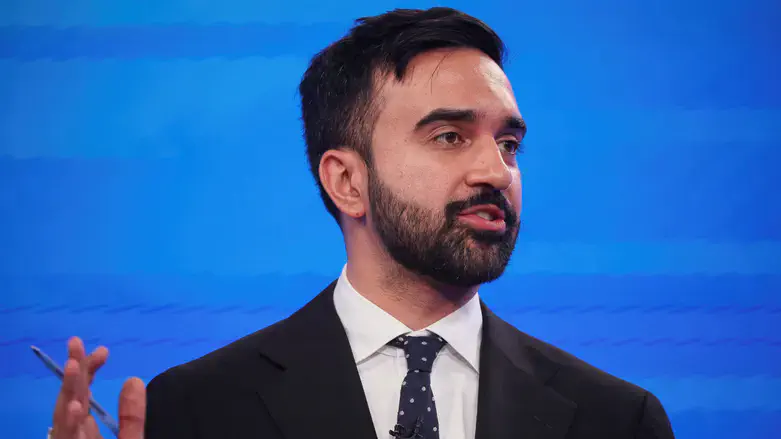
After President Donald Trump imposed a new series of import bans on certain Canadian goods that became effective Tuesday, American consumers and small business owners in particular could bear the brunt of the impact, investment advisor Karan Ramchandani told Fox News Digital in an exclusive interview.
“The small and mid-business owners — specifically those who have businesses around the U.S. and Canada border — should be worried,” Ramchandani, the managing director for capital markets at investment firm Post Oak Group, told Fox News Digital.
Amid an increasingly volatile trade war, Trump imposed additional import controls on approximately $1 billion in Canadian goods that cover dairy products, alcohol and certain automobiles.
This selection of products alone could lead to increased inflation, but they could also spur an inflationary reaction because of downstream production impacts, Ramchandani explained.
“The moment it hits production, hits factories and lumber, and, for example, automobiles, it’s a problem which will hit the consumer because prices will go up. Prices are always initially absorbed by the producer, by the manufacturer when tariffs come up. But if it doesn’t stabilize, then it eventually gets passed on to the consumer,” Ramchandani said.
“A majority of these goods were already under tariffs, so it’s not that they are new goods under tariffs.
“But when you apply the same tariffs, which are happening on Jan. 1 on automobiles, steel,and lumber — and those areas which directly hit the factories and production — that will directly impact the economy long-term.”
He also revealed there is another potential unintended consequence of the saga due to Trump’s decision not to participate in the automatic renewal of the United States-Mexico-Canada Agreement (USMCA).
“Capital is lying on the corner because you cannot make large, long-term investment deals — let’s say, for example, moving a plant from Canada to the U.S. … You cannot do that unless your trade policy is stable. Right now, the USMCA is being questioned every year,” Ramchandani said.
“The U.S. has refused to renew, which means it is still in place, but now every year it will be reviewed, whereas, initially, when you renew the agreement, it was renewed every 16 years.
“From one side, you want businesses to invest in the U.S. and, let’s say, build a plant. But from the other side, when you question USMCA, ‘Why would somebody build a plant and invest a billion dollars into the country when the policy doesn’t support it,’ that’s the whole question, right? It’s not a favorable time right now to invest.”
Ultimately, Ramchandani said the impact of the trade war could push investors, supply chains — and Canada — down other avenues.
“I think supply chains will be rerouted eventually,” Ramchandani predicted. “The small players will take a longer time and may take a hit to their business temporarily, but they need to reroute revenue to other countries and other places, find different ways of supply chain and procure cheaper materials from other countries.
“Eventually, it’s going to be export/import outside of Canada and the U.S. basically. That’s the only way economies will stabilize themselves, like Canada is already doing.”
Canada, Ramchandani explained, has already decreased its share of exports going to the U.S. from 76% in 2024, according to the Royal Bank of Canada, to less than 33% today.
“This is a new development in the last one to 1½ years, which is a big sign that capital is moving between Europe, Canada and other countries,” Ramchandani told Fox News Digital.
Canadian Prime Minister Mark Carney has already met with European Union officials after failed negotiations with the U.S. and worked out a deal to increase bilateral trade volumes between the two bodies by 80%.
FOX Business contacted the White House and the Office of the Canadian Prime Minister for further comment.
 Yeshiva World News
Related stories
 Jewish Breaking News1 hour ago
 Vos Iz Neias1 hour ago
 Yeshiva World News2 hours ago
 Yeshiva World News3 hours agoYeshiva World News56 minutes ago
President Isaac Herzog has announced that he intends to recommend four Israelis for the Presidential Award for Civilian Heroism after they helped prevent a catastrophe aboard a Flydubai flight from Dubai to Israel.
Herzog spoke Wednesday with Yaniv Hayoun, Dr. Shota Musayev, Zvika Manes and Asaf Rajuan, praising their courage and quick thinking during the terrifying incident.
“You put yourselves at risk to save others and prevented a terrible disaster,” Herzog told them. “I am proud of you, and I thank you on behalf of the State of Israel.”
The emergency unfolded after one pilot stabbed the other and the aircraft began plummeting. The wounded Indian captain, Smit Machchhar, fought the attacker and managed to open the cockpit door. Passenger Tali Manes raised the alarm after realizing something was wrong.
Hayoun, Zvika Manes and Rajuan rushed to the cockpit and helped overpower the attacker. Hayoun also helped steady the aircraft’s controls.
Once the attacker was subdued, Dr. Musayev provided emergency treatment to the seriously wounded captain, helping stabilize him until the aircraft made an emergency landing in Saudi Arabia.
Herzog said he would bring the passengers’ actions before the award’s advisory committee and recommend that they receive the honor. He also praised Captain Machchhar, saying his determination helped make it possible to subdue the attacker and save lives.
Dr. Musayev emphasized that the passengers’ survival reflected a collective effort.
“It wasn’t only my heroism. Everyone who was there and came near the cockpit was part of it. We were all heroes,” he told Herzog, describing how passengers supported one another both aboard the aircraft and after arriving in Saudi Arabia.
During his conversation with Zvika Manes, Herzog asked him to convey his appreciation to Tali for being the first to raise the alarm.
Rajuan described the response as instinctive, driven by the need “to survive, to save the family, the people, and the children.” Hayoun expressed relief that the ordeal was behind them and thanked Herzog for the warm reception.
The Presidential Award for Civilian Heroism was established by Herzog during the war to recognize people who demonstrate exceptional courage while risking their lives to save others. Recipients are selected following an advisory committee’s review and recommendation.
(YWN World Headquarters – NYC)
Related stories
Jewish Breaking News1 hour agoVos Iz Neias1 hour agoYeshiva World News2 hours agoYeshiva World News3 hours ago Matzav
Related stories
Jewish Breaking News1 hour ago Israel National News1 hour agoVos Iz Neias1 hour agoYeshiva World News2 hours agoMatzav1 hour ago
President Donald Trump said Thursday that information reaching the United States indicates that the Omani co-pilot accused of trying to bring down Flydubai Flight FZ1073 may have ties to Iran, warning that Tehran would face a severe response if investigators establish that it was involved in the attempted attack.
Trump’s comments represent the strongest public indication yet from Washington that investigators are examining a possible Iranian connection to the extraordinary midair attack aboard the Dubai-to-Israel flight, although authorities have not announced a definitive finding tying Tehran to the incident.
Asked directly whether the Omani co-pilot who allegedly attacked the captain and attempted to crash the aircraft was connected to Iran, Trump said, “I would say the answer based on what I’m hearing is yes, but we’re working on it now.”
When Trump was then asked whether the United States would retaliate if evidence ultimately showed that Iran was responsible, the president issued an unequivocal warning: “They’ll be hit very hard. Don’t worry about it, you just ask them.
Trump went on to portray Iran as badly weakened economically and militarily following months of confrontation with the United States and its allies.
Trump added: “Iran now has 301% inflation, their money is valueless, their economy is gone, they have no military, they have no anti-aircraft, they have very little going, and we control the Strait (of Hormuz). We took out more oil in the past two days than any time in the history of this strait.”
The president’s remarks came as an international investigation intensified into what unfolded aboard FZ1073, a Flydubai Boeing 737 MAX 8 carrying 174 people from Dubai to Tel Aviv on Wednesday.
The co-pilot, an Omani national whose name has not been publicly released, allegedly attacked Indian captain Smit Machchhar inside the cockpit, stabbing him before attempting to send the aircraft into a catastrophic dive. Flight-tracking data showed the plane plunging more than 14,000 feet in less than 30 seconds during the crisis.
Despite suffering serious injuries, Machchhar managed to unlock the cockpit door, allowing passengers and other crew members to intervene. The alleged attacker was overpowered and restrained, while reserve crew members aboard the aircraft helped regain control of the plane.
The aircraft subsequently diverted to Tabuk, Saudi Arabia, where it landed safely. The co-pilot was taken into custody, while Machchhar was hospitalized and reported to be in stable condition. Israeli and Indian officials have hailed the captain’s actions as instrumental in preventing what could have been a mass-casualty disaster.
The United Arab Emirates has opened a formal investigation into the incident, including whether the attack was connected to terrorist activity or involved advance planning. Saudi authorities are also participating in the investigation, while Israeli intelligence agencies are examining the attacker’s background and possible connections.
Israeli officials have said preliminary information indicates that the co-pilot had undergone Islamist radicalization and intended to bring down the aircraft. Reports have also raised questions over how an Omani national was cleared to serve as a pilot on a flight bound for Israel, given that Oman does not maintain diplomatic relations with the Jewish state.
A fellow Flydubai pilot reportedly described the co-pilot as a relatively new employee who had displayed unusually intense religious behavior, including praying frequently and refusing to shake hands with women. Those accounts are among the pieces of information investigators are examining as they attempt to reconstruct the attacker’s background and determine whether he acted independently or had outside assistance.
Prime Minister Bibi Netanyahu, speaking earlier in an interview with Fox News, said investigators were specifically examining whether others were involved and whether the attack could ultimately lead back to Iran.
“We will get to the bottom of this. We will investigate whether the pilot had accomplices and whether Iran was behind him. I think we will know very soon,” Netanyahu said.
At the same time, no conclusive evidence publicly establishing Iranian direction of the attack has yet been released. Israeli President Isaac Herzog said earlier Thursday that it remained too early to determine whether Tehran was connected to the incident, while UAE authorities have said their investigation is continuing.
The emerging Iran question dramatically raises the stakes surrounding an incident that already came within seconds of becoming one of the deadliest aviation attacks involving Israelis in decades. What began as an investigation into the actions of a single co-pilot is now expanding into a broader inquiry into possible radicalization, security failures, accomplices and foreign involvement — with Trump making clear that confirmation of an Iranian role could bring serious consequences.
Related stories
Jewish Breaking News1 hour agoIsrael National News1 hour agoVos Iz Neias1 hour agoYeshiva World News2 hours ago Yeshiva World News1 hour ago
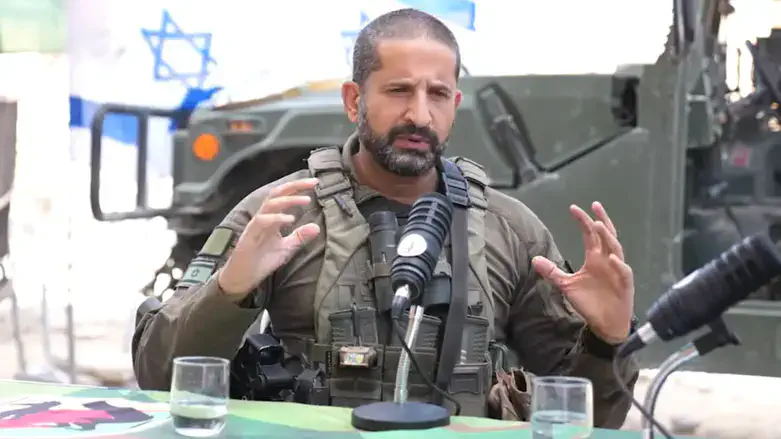
Gaza Division Commander Brig. Gen. Liron Betito says the IDF now controls 63% of the Gaza Strip and has established nearly 40 new outposts, giving Israeli forces a significant operational advantage as they continue dismantling Hamas’ remaining capabilities.
Speaking on an IDF podcast, Betito, who commanded the Givati Brigade on October 7, described a forward defense strategy that places Israeli soldiers between Gaza and the border communities.
“The communities are behind us, and first and foremost, IDF soldiers are positioned forward,” he said.
Betito said Israeli control over Gaza’s crossings has restricted Hamas’ ability to bring in supplies and weapons. Troops are conducting ongoing operations to eliminate terrorists, seize weapons and deny the terror organization freedom of action.
He also described extensive drilling operations to locate remaining tunnels. According to Betito, the IDF has destroyed almost all of Hamas’ underground infrastructure, but additional underground structures remain. Forces are drilling at closely spaced intervals and using technology to identify and map them.
“Hamas is in a very, very difficult situation,” he said.
The commander said the war has devastated Hamas’ military leadership, with the heads of its military wing, all brigade commanders and most battalion commanders eliminated over the course of the fighting. Replacement commanders have also been targeted, including recently eliminated commanders of the Rafah and Khan Yunis brigades.
Betito expressed optimism about the recovery of Gaza border communities, saying 90% of residents who lived there on October 7 have returned. He said kibbutzim and many moshavim are expanding as new families move into the area.
At the same time, he stressed that the military’s failure on October 7 and the trauma suffered by residents must remain firmly in view. Betito said he periodically stops at memorial sites, including the Nova massacre site, to remember the victims and maintain vigilance.
Discussing operations while hostages were held in Gaza, Betito described the restrictions their presence placed on troops’ movements and use of firepower.
He recalled an operation during the first month of the war in which his forces waited several days near a location holding living hostages, hoping for an opportunity to rescue them. Shortly before the first hostage agreement, he withdrew his troops despite being only a few hundred meters from a captive family.
Betito said the decision was deeply difficult but ultimately protected the hostages from the danger a rescue attempt would have posed. Looking back, he said he was proud of that judgment and described bringing the hostages home during such a difficult period as an extraordinary achievement.
(YWN World Headquarters – NYC)
 Vos Iz Neias
Related stories
 Vos Iz Neias2 months ago
 Vos Iz Neias6 months ago
 Vos Iz Neias7 months ago
 Vos Iz Neias7 months agoVos Iz Neias1 hour ago
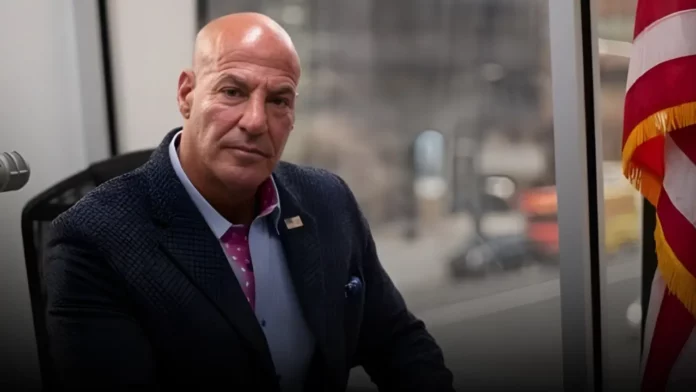
BROOKLYN (VINnews) — Radio host Sid Rosenberg sharply criticized Satmar community figures Thursday after Mayor Zohran Mamdani was presented with a mezuzah during a Chol Hamoed Sukkos gathering in Williamsburg.
The backlash followed a social media post by Satmar askan Rabbi Moishe Indig, executive vice president of the Jewish Community Council of Williamsburg and publisher of Der Blatt. Indig wrote that Mamdani joined community leaders, federal, state and city elected officials, and law enforcement leaders at the sukkah of Rabbi Shalom Landau “to celebrate the festive holiday of Sukkos.” He said a mezuzah was presented to the mayor “as a blessing for divine protection for all New Yorkers.”
Rosenberg, host of “Sid & Friends in the Morning” on 77 WABC, replied on X that those involved were “an embarrassment to any decent Jew.” He asked whether a mezuzah had also been given for Mamdani’s wife, Rama Duwaji, used profanity, and alleged that Duwaji had liked images tied to the murder and rape of Jews. He called the community’s dealings with the mayor an “unholy relationship” and referred to Mamdani as a “terrorist.”
The Indig post drew heavy engagement, including more than 200 replies, with many users condemning the mezuzah presentation and questioning Satmar outreach to the mayor. Others argued that community leaders have little choice but to maintain a working relationship with City Hall on policing, housing and religious accommodations.
Published reports in March said Duwaji, a Syrian American artist, liked Instagram posts that celebrated or defended the Hamas-led attack of Oct. 7, 2023, including material that treated accounts of sexual violence that day as a hoax. Mamdani has described his wife as a private person. Rosenberg’s post went further than those reports, asserting that she liked graphic images of Jewish victims.
Mamdani, the city’s first Muslim mayor, has been a persistent target of Rosenberg, who earlier this year called him an “America-hating, Jew-hating, Radical Islam cockroach,” later said the wording was over the top, and has continued to attack the mayor’s record on Israel and antisemitism. Jewish groups have criticized Mamdani for his past reluctance to condemn the slogan “globalize the intifada.”
The Williamsburg stop was part of a broader Sukkos schedule. The Williamsburg JCC welcomed the mayor the same day and said he took part in a kinyan with a gartel connected to public sukkahs on city property. Separately, Mamdani visited sukkahs in Crown Heights, where reception was mixed.
Satmar leaders, who are non-Zionist and have long prioritized local government relations over Israel policy, hosted Mamdani in Williamsburg during the 2025 campaign as well. Indig and Landau had not publicly responded to Rosenberg as of Thursday afternoon. City Hall also had not commented on the mezuzah presentation.
The exchange has widened an online argument over how far Satmar askanim should go in engaging a mayor many Jews regard as hostile to Israel and to Jewish security.
Related stories
Vos Iz Neias2 months agoVos Iz Neias6 months agoVos Iz Neias7 months agoVos Iz Neias7 months ago Matzav
Related stories
Cleveland Jewish News5 hours ago Matzav21 days ago
 The Lakewood Scoop22 days agoMatzav1 hour ago
Agudath Israel of America welcomes the release today of the regulations for the Education Freedom Tax Credit (also known as the Federal Scholarship Tax Credit) by the Department of the Treasury. Today’s announcement is great news for American families and provides the necessary clarity to allow states and scholarship organizations to implement the tax credit in time for its launch in January 2027.
The EFTC allows individual taxpayers to contribute to a nonprofit scholarship granting organization (SGO) and receive a dollar-for-dollar tax credit of up to $1700 per taxpayer. The SGO then pools the funds and distributes scholarships to eligible students for a wide range of K-12 educational expenses including tuition to attend a Jewish or other nonpublic school. Eligible uses also include special education services, academic tutoring, and other expenses for public, private, charter, and homeschool students. Treasury estimates that 96% of children in participating states would be eligible to receive scholarship funds.
The 2027 rule satisfactorily answers many of the questions raised in comment letters and meetings by Agudath Israel and its coalition partners, but perhaps none more important than the definition of “each taxpayer.” The new regulation clarifies that a married couple filing jointly may each donate $1700 and receive a combined $3400 tax credit. This decision alone significantly increases the number of additional students receiving scholarships!
“Agudath Israel thanks the many senior officials and staff across the Trump Administration who listened to the concerns of stakeholders and worked collaboratively with each other to produce regulations that will help millions of students across the country,” said Rabbi A. D. Motzen, Agudath Israel of America’s national director of government affairs. “We now urge the remaining 20 governors to opt in as soon as possible and for all sates to move forward in approving scholarship granting organizations that will provide educational opportunities for eligible students.”
Related stories
Cleveland Jewish News5 hours agoMatzav21 days agoThe Lakewood Scoop22 days ago Matzav
Related stories
 Vos Iz Neias7 hours ago
 Yeshiva World News7 hours ago
 Israel National News8 hours ago
 Matzav1 day agoMatzav1 hour ago
President Donald Trump said he does not believe Israeli Prime Minister Binyomin Netanyahu received advance warnings from Egypt or the United Arab Emirates about the October 7 Hamas massacre, weighing in on reports that have become an issue in Israel ahead of the country’s elections.
In an extensive interview with TIME conducted at the White House on Sept. 28 and published Thursday, Trump was asked about reports alleging that Arab leaders had warned Netanyahu about a possible Hamas attack before October 7, 2023.
“I heard that today for the first time,” Trump said when asked about the claims.
The reports have received renewed attention following allegations that senior Egyptian and Emirati officials conveyed concerns to Netanyahu or other Israeli officials in the months and days preceding the massacre.
When the interviewer specifically told Trump that Egypt and the UAE had reportedly warned Netanyahu, the president rejected the idea that Netanyahu knew an attack was coming and failed to act.
“I don’t think so. I think, you know, I think if he would have known, he would have done something about it. Certainly, he would have had people at least alert. You know, he’s not going to forget about it. That was a terrible day. Oh, you have people on the radical left that denied it ever happened, which is pretty bad.”
Trump’s comments come amid a continuing controversy in Israel over what Netanyahu and senior security officials knew before the Hamas invasion, which left approximately 1,200 people dead and saw roughly 250 people abducted into Gaza.
Recent reports have alleged that then-Egyptian intelligence chief Abbas Kamel issued several warnings about deteriorating conditions in Gaza before the attack. One report said Kamel personally traveled to Israel in late September 2023, less than two weeks before the massacre, to communicate Egyptian concerns.
Another report alleged that Kamel telephoned Netanyahu just days before October 7 after earlier Egyptian warnings had failed to prompt a significant Israeli response.
Those reports have generally characterized the alleged Egyptian warnings as concerns that Hamas or Gaza was moving toward a major escalation, rather than intelligence specifying the date, precise scope or operational details of the October 7 assault.
Separate reports have alleged that UAE President Sheikh Mohamed bin Zayed Al Nahyan contacted Netanyahu in September 2023 and warned that Hamas leader Yahya Sinwar was preparing a major operation.
Netanyahu has forcefully denied receiving such an advance warning from the UAE, with his office declaring, “No warning was given to the Prime Minister from the United Arab Emirates before October 7.”
Netanyahu has also threatened legal action over the allegations and has accused those promoting the claims of attempting to influence Israel’s election.
The issue has taken on particular significance because of longstanding questions surrounding the catastrophic intelligence and security failures that allowed thousands of Hamas-led terrorists to breach Israel’s border on October 7 and overrun communities and military positions across southern Israel.
While multiple Israeli military and intelligence investigations have documented serious failures before the attack, the specific claims that Netanyahu personally received warnings from Egypt and the UAE remain disputed.
Trump was also questioned extensively by TIME about Netanyahu’s political future as Israelis prepare to vote.
Asked whether he believes Israelis should give Netanyahu another term as prime minister, Trump declined to directly endorse him.
“Well, I can only say that I’m not involved in politics anymore,” Trump responded.
Trump then turned to his own record on Israel, discussing the support his administrations have provided to the Jewish state and his popularity among Israelis.
When the interviewer again pressed him on whether Netanyahu should receive another term, Trump again avoided directly answering the electoral question and instead emphasized his commitment to protecting Israel and preventing Iran from obtaining nuclear weapons.
“No, my primary thing-I do want to help them defend Israel. My thing that I mention all the time is Iran cannot have a nuclear power because they are crazy and you can’t let crazy people have nuclear weapons,” he said.
The interview took place amid continuing regional tensions involving Iran, which Trump has repeatedly identified as one of the most serious threats facing Israel and the broader Middle East.
Trump was also asked about Gadi Eisenkot, the former IDF chief of staff and current chairman of the Yashar party, who is challenging Netanyahu in Israel’s election.
The interviewer asked whether the United States might be able to work more effectively with Eisenkot if he were to defeat Netanyahu.
“Well, I don’t know. I don’t hear bad things about him,” Trump replied.
After the interviewer characterized Eisenkot as the leading opposition candidate, Trump pointed to Netanyahu’s history of surviving political challenges.
“Well, people have written off Bibi many, many times, just like they’ve written off me many, many times. I wouldn’t underestimate Bibi.”
Trump’s remarks stopped short of an endorsement of either candidate. While expressing confidence that Netanyahu would have acted had he possessed advance knowledge of the October 7 attack, Trump repeatedly declined to say whether Israelis should return Netanyahu to office for another term.
The controversy over the alleged pre-October 7 warnings has become an increasingly prominent issue in the Israeli election campaign. Netanyahu’s opponents have cited the reports while renewing demands for an independent state commission of inquiry into the failures surrounding the massacre, while Netanyahu and his allies have challenged the allegations and accused political opponents of attempting to assign responsibility to the prime minister.
Netanyahu has maintained that he was not given actionable intelligence indicating that Hamas was preparing the massive invasion that unfolded on October 7.
Trump, for his part, said he does not believe Netanyahu knowingly disregarded an advance warning of the impending massacre.
On Netanyahu’s political future, Trump declined to tell Israelis how they should vote, while observing that Netanyahu has survived repeated political challenges in the past.
Related stories
Vos Iz Neias7 hours agoYeshiva World News7 hours agoIsrael National News8 hours agoMatzav1 day ago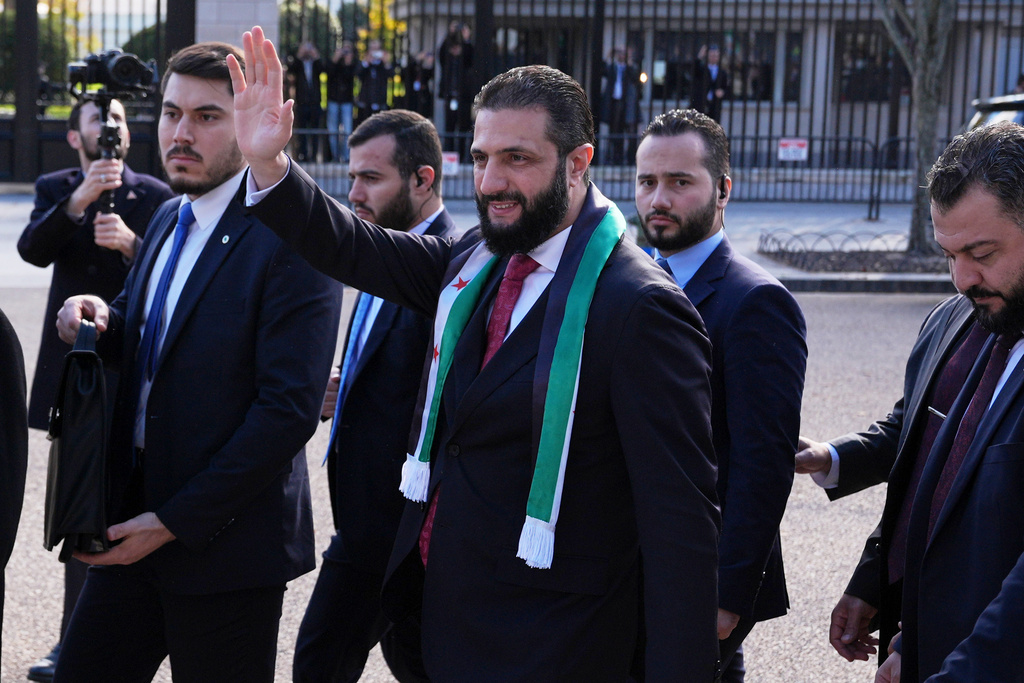 Yeshiva World News
Related stories
Yeshiva World News1 hour agoRepresentatives of Syria’s government and Hezbollah held secret talks in Turkey last month in an effort to ease tensions, according to officials and sources familiar with the meeting.
The discussions, described as the first known face-to-face talks between the sides, were arranged at the invitation of Turkish security and intelligence agencies. Hezbollah representatives met with officials from Syria’s intelligence services and Foreign Ministry.
Relations have been strained since the ouster of former Syrian President Bashar al-Assad, whom Hezbollah supported militarily for years during Syria’s civil war. Syria’s new government has accused the terror organization of continuing to move weapons through Syrian territory.
According to a Syrian official, both sides agreed that they held no hostility toward each other. Damascus also assured Hezbollah that it would not intervene militarily in Lebanon to disarm the group.
In return, Syrian officials asked Hezbollah to help halt cross-border smuggling and dismantle its remaining sleeper cells in Syria, particularly in the south.
The official said Hezbollah did not directly answer those requests but pledged not to interfere in Syria’s internal affairs.
The report comes after Syrian authorities announced Tuesday that they had captured a Hezbollah cell allegedly preparing to launch rockets from southern Syria. Hezbollah denied the accusation.
(YWN World Headquarters – NYC)
 JBizNews1 hour ago
California business owners need the confidence and ability to reinvest in the state’s economy, according to real estate mogul Mauricio Umansky, who argued that “bringing business back to California is critical” as voters weigh competing visions for the state’s future.
The Agency founder and CEO joined FOX Business’ Stuart Varney on “Varney & Co.” to discuss the Golden State’s economic challenges and the 2026 gubernatorial race between Democrat Xavier Becerra and Republican Steve Hilton.
Affordability and the business climate have become major issues in California, where high housing costs continue to put pressure on residents and businesses. Research from the Public Policy Institute of California has also found that company headquarters leaving the state often relocate to places with lower taxes and less regulation.
“You know, I think what matters is… creating affordable housing. I think that’s critical in our world and that keeps the economy growing. I think bringing business back to California is critical. And that’s really what we need to focus on right now,” Umansky said.
Hilton has campaigned on cutting taxes and regulations, while Becerra has proposed declaring the housing shortage a state of emergency and directing state agencies to prioritize housing production and affordability if elected governor.
Umansky said business owners need greater confidence that they will be able to reinvest in California and its economy, while acknowledging that changes would take time.
“None of this stuff gets fixed overnight, right? But we need to start taking baby steps,” he said.
The real estate executive also raised concerns about policies presented by Los Angeles mayoral candidate Nithya Raman, a member of the Democratic Socialists of America, saying he believes her policies could make it more difficult for businesses to invest in California.
“As a business owner… I’m concerned about the policies that she’ll [Nithya Raman] put into effect and will bring on to us. I mean… Enough is enough. We need to start… Motivating people. It’s enough time to just start giving free rides to everybody… That’s not a good thing for any business owner. I am concerned about her policies and… Making it harder to invest and reinvesting in a state that I absolutely love,” Umansky said.
 Matzav
Related stories
Jewish Breaking News1 hour agoYeshiva World News2 hours agoYeshiva World News3 hours ago Matzav3 hours agoMatzav2 hours ago
[Full video below.] Israeli Prime Minister Binyomin Netanyahu said Israel will take part in the investigation of the Flydubai co-pilot accused of stabbing the captain and trying to bring down an Israel-bound passenger jet, while cautioning that it remains too early to determine whether Iran played any role in the attack.
In an interview with CBS Evening News anchor Tony Dokoupil following Wednesday’s extraordinary incident, Netanyahu offered new details about what Israeli officials believe happened aboard Flydubai Flight FZ1073 and praised the passengers and crew members whose actions helped save the 174 people aboard.
“I don’t think it was a hijacking,” Netanyahu said.
Rather, Netanyahu said the evidence available thus far suggests that the attacker was attempting to destroy the aircraft rather than seize control of it and take it somewhere else.
“I think it looks like a suicide attempt simply because of what this hero Yaniv described when he went in,” Netanyahu said, referring to Israeli passenger Yaniv Hayun, who entered the cockpit and helped overpower the attacking co-pilot.
Netanyahu said Hayun’s account of what he encountered inside the cockpit was particularly significant.
“This guy was trying to jam the equipment between the two flight seats, the pilot seats,” Netanyahu said. “He wasn’t sitting in the pilot seat trying to stabilize the plane, he was trying to jam the equipment.”
WATCH:
{Matzav.com}
Related stories
Jewish Breaking News1 hour agoYeshiva World News2 hours agoYeshiva World News3 hours agoMatzav3 hours ago Yeshiva World News
Related stories

 COLlive2 hours ago
 JBizNews7 hours ago
 Yeshiva World News7 hours ago
 Belaaz9 hours agoYeshiva World News2 hours ago
El Al, Arkia and Israir are preparing to operate special rescue flights from Dubai to Tel Aviv beginning Friday, subject to approval from the Shin Bet and the Transportation Ministry’s security division.
The flights will bring home Israelis stranded following the incident aboard a Flydubai flight to Israel. More than 10,000 Israelis are reportedly stuck in Dubai or in other destinations from which they had planned to return through Dubai.
Tickets are priced at $249. Under security restrictions, passengers will not be permitted to check luggage, with only limited cabin baggage allowed.
The Israeli airlines’ aircraft will fly to the United Arab Emirates without passengers before collecting travelers for the return flights to Israel. Registration will be available through the airlines’ websites.
Two El Al flights reportedly filled immediately after booking opened. The operation marks the airline’s first special rescue flight program from Dubai in eight months.
The flights follow efforts to reach an agreement on additional security arrangements at the airport. Israel had previously sought to send screening equipment to the UAE on the Shin Bet’s recommendation, but Emirati authorities rejected the proposal.
Following the Flydubai incident, the Emiratis are reportedly prepared to allow Shin Bet representatives to come to the airport to oversee passenger security procedures.
Once the required approvals are received, El Al said flights will be available for booking through its website and travel agents. The airline said it would continue working to expand its flight schedule and help as many Israelis as possible return home safely.
(YWN World Headquarters – NYC)
Related stories
COLlive2 hours agoJBizNews7 hours agoYeshiva World News7 hours agoBelaaz9 hours ago Yeshiva World News
Related stories
 Matzav4 hours ago
 Vos Iz Neias6 hours ago
 Israel National News6 hours ago
 Israel National News6 hours agoYeshiva World News3 hours ago
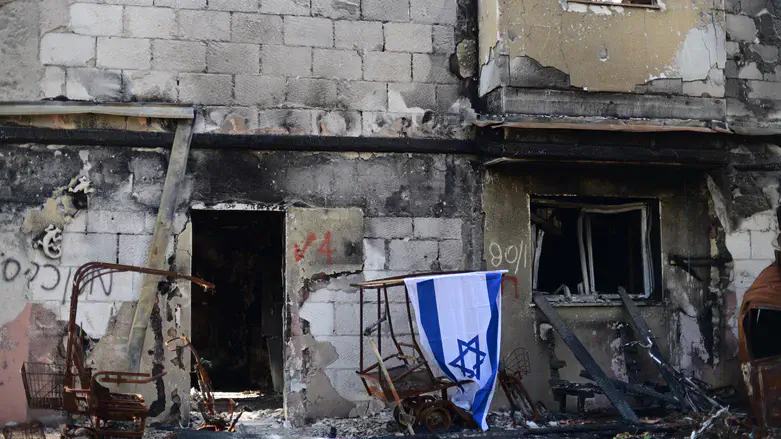
The IDF announced Thursday that it eliminated two terrorists who infiltrated Israel during the October 7 massacre, including a Hamas commander involved in kidnapping six Israelis from Kibbutz Be’eri.
Muhammad Jamal Mahmoud Abu Al-Shaar, a cell commander in Hamas’ military wing, was eliminated Tuesday in Gaza City. According to the IDF, he participated in abducting Sharon Hertzman-Avigdori, Noam Avigdori, Adi Shoham, Nave Shoham, Yahel Shoham and Shoshan Haran.
In a separate strike Tuesday in Jabalia, the military eliminated Palestinian Islamic Jihad commander Musab Abd al-Jalil Saqib Balbisi, who also infiltrated Israel during the massacre.
The IDF said both men had recently worked to advance attacks against Israeli troops and civilians, violating the ceasefire. Precise munitions and aerial surveillance were used to reduce the risk to civilians.
The military also reported eliminating 70 terrorists during September, including three brigade commanders, two battalion commanders and nine company commanders. Seventeen were involved in the October 7 invasion, kidnappings or holding hostages.
(YWN World Headquarters – NYC)
Related stories
Matzav4 hours agoVos Iz Neias6 hours agoIsrael National News6 hours agoIsrael National News6 hours ago Vos Iz Neias3 hours ago
NEW YORK (VINnews) — A co-founder of the parental-rights group Moms for Liberty is urging parents to look past the songs and speech lessons on Ms. Rachel’s toddler videos and pay attention to the political activism now attached to one of the largest platforms in children’s entertainment.
Tina Descovich told Fox News Digital that Rachel Griffin Accurso, the educator known as Ms. Rachel, is “using her leadership role for political activism.” Descovich pointed to Accurso’s public advocacy on the war in Gaza, the detention of immigrant children, and LGBTQ issues, and said parents who trust the channel with young children may not realize how far those views extend.
Accurso’s YouTube channel, built around early-language songs and routines for infants and toddlers, has more than 21 million followers, with millions more on Instagram and TikTok. Descovich said Accurso appears to believe she can separate personal politics from her influence over toddlers, even as parents turn to her because they trust her with their children.
“Parents turn to her to teach their children potentially to be kind and be a good citizen and love your neighbor,” Descovich said. She added that introducing what she called gender ideology to children as young as 2, 3 and 4 “is not something parents are expecting or want to put in front of their kids at such a young age.”
The sharpest criticism has centered on Accurso’s posts about Gaza. In December, the watchdog group StopAntisemitism named her a finalist for its 2025 “Antisemite of the Year” designation, accusing her of promoting messaging aligned with Hamas. Other Jewish organizations have defended or supported her advocacy for Palestinian children. Descovich said the programs should open with a warning that Accurso had been nominated for that designation, so parents would know before placing her in front of toddlers.
Accurso has rejected accusations of antisemitism and has said she is speaking for children. She is an ambassador for the Palestine Children’s Relief Fund and, in September, said she would match a $1 million pledge by rapper Macklemore to Palestinian aid groups, urging “every wealthy white celebrity” to do the same and to speak out against what she has called a genocide. She has also said celebrities who have stayed silent on Gaza would “probably” speak if the children “were white.”
In a Guardian interview, Accurso said she was not interested in working with “privileged” people who remain silent about civilians in Gaza, while making an exception for those who could lose their livelihood by speaking out. “I feel like maybe if we all said something, the genocide would stop,” she said. Campaign Against Antisemitism called the distinction an exclusionary political test that failed to account for people, including Jewish colleagues, who hold different views of the war.
Her activism has not been limited to Gaza. In June, Accurso visited Delaney Hall, an immigration detention facility in Newark, N.J., and met with lawmakers to press for an end to the detention of immigrant children. She has described families there as terrorized by immigration enforcement.
Descovich contrasted the channel with the children’s television parents think they are choosing. “They absolutely should not be manipulated or sideswiped by thinking they’re putting their child in front of Mr. Rogers when they’re really getting a political radical like Ms. Rachel,” she said. Accurso has previously defended speaking out by pointing to Fred Rogers’ own record of addressing public issues on a children’s program. Fox News Digital reported that it sought comment from Accurso and did not include a response.
The dispute leaves parents with a practical question the Moms for Liberty co-founder put at the center of her warning: whether a children’s entertainer’s activism should matter when families decide what their toddlers watch.
 Yeshiva World News
Related stories

 Yeshiva World News2 days ago
 Matzav3 days ago
 Yeshiva World News5 days agoYeshiva World News3 hours ago
Iran is preparing plans for a dramatically expanded military response if the United States launches another major attack against the Islamic Republic, with American interests around the world and countries assisting Washington potentially targeted, according to a Reuters report citing senior Iranian officials.
Three senior Iranian officials and another source familiar with security discussions told Reuters that Tehran’s military leadership is preparing for a response that would extend well beyond Iranian territory and the immediate Middle East.
According to the report, Iranian officials have decided that another response would not be merely symbolic and are considering a significantly expanded list of potential targets, including U.S. interests outside the Middle East and countries that provide logistical or military assistance to American operations.
The discussions have reportedly intensified since Iranian President Masoud Pezeshkian returned from last week’s United Nations General Assembly in New York.
Two senior Iranian officials told Reuters that operational instructions have already been passed to Iranian-backed groups in Lebanon, Yemen and Iraq, ordering them to prepare for the possibility of a coordinated multi-front response.
The preparations reportedly envision potential operations stretching “from the Strait of Hormuz to American assets and interests in the region and beyond.”
Hamid Reza Azizi, a senior Iran researcher at the International Crisis Group, told Reuters that Tehran remains uncertain whether President Donald Trump would order a broad military campaign or more limited strikes against Iranian nuclear facilities.
However, Azizi said Iran appears determined to respond more aggressively than it has previously.
“They appear determined to escalate in hopes of re-establishing the deterrence equation,” he said.
At the same time, Tehran has continued attempting to maintain diplomatic channels as it struggles under mounting economic pressure, including restrictions that have severely affected its ability to export oil.
According to the report, Iran recently submitted a proposal through Qatari mediators calling for a seven-day ceasefire and the reopening of the Strait of Hormuz. In exchange, Tehran sought relief from restrictions on its ports, access to at least $12 billion in frozen Iranian funds and exemptions from oil sanctions.
President Trump rejected the proposal, according to the report, while Washington continues to demand that any broader agreement address Iran’s nuclear program. Tehran has rejected demands that it dismantle the program.
Alex Vatanka, director of the Iran program at the Middle East Institute, said continued economic pressure could further destabilize the regime and increase the danger of military escalation.
Iranian leaders are also reportedly concerned about renewed domestic unrest as the country faces severe economic difficulties.
The regime has intensified its crackdown ahead of the anniversary of major protests that erupted amid the economic crisis. According to reports by the United Nations and Amnesty International cited in the report, thousands have been detained amid allegations of torture and a sharp increase in executions.
(YWN World Headquarters – NYC)
Related stories
Yeshiva World News2 days agoMatzav3 days agoYeshiva World News5 days ago JBizNews3 hours ago
The NASA SpaceX Crew-13 mission launched to the International Space Station on Thursday from Cape Canaveral Space Force Station in Florida.
The crew onboard the mission utilizing SpaceX’s Falcon 9 rocket and Dragon spacecraft are NASA astronauts Jessica Watkins, Luke Delaney, CSA (Canadian Space Agency) astronaut Joshua Kutryk and Roscosmos cosmonaut Sergey Teteryantnikov.
“During their time on the orbiting laboratory, the crew will conduct new research to prepare for human exploration beyond low-Earth orbit and to benefit humanity on Earth,” SpaceX said.
“The Dragon spacecraft supporting this mission previously flew the Ax-4 mission to and from the space station. This will be the third flight for the first stage supporting this mission, which previously launched Crew-12 and one Starlink mission,” according to SpaceX. “Following stage separation, Falcon 9’s first stage will land on Landing Zone 40 (LZ-40) at Cape Canaveral Space Force Station.”
NASA said on its website that “during its mission, Crew-13 will investigate practical questions about how to keep crews healthier, grow food reliably in space, and validate the technologies need for deep‑space missions.”
“For over 25 years, people have continuously lived and worked aboard the International Space Station, advancing scientific knowledge and demonstrating new technologies that help prepare for human exploration of the Moon and Mars. NASA’s SpaceX Crew-13 crew members are set to join this long legacy, conducting science aboard the orbiting laboratory to advance research for exploration and deliver benefits for all humanity,” it continued.
“The crew will use the microgravity environment of the space station to produce human stem cell-derived tissues, which can be used to support personalized medicine, disease modeling, and future pharmaceutical screening for conditions like heart disease and Parkinson’s disease,” NASA added.
“Crew members also study individual factors linked to blood flow abnormalities in space and testing a new inflight diagnostic device to monitor astronaut health,” the agency also said. “They also will explore crop production for future long duration missions by installing a new, mostly autonomous plant growth facility and growing crops in plant pillows at a location of their choice throughout the space station.”
SpaceX said, “Falcon 9 is a reusable, two-stage rocket designed and manufactured by SpaceX for the reliable and safe transport of people and payloads into Earth orbit and beyond.
“Falcon 9 is the world’s first orbital class reusable rocket. Reusability allows SpaceX to refly the most expensive parts of the rocket, which in turn drives down the cost of space access,” SpaceX added.
 Matzav3 hours ago
President Donald Trump drew cheers at a White House Hispanic Heritage Month celebration Wednesday after joking that “only a Hispanic” could survive a fall from the construction site of the massive new White House ballroom.
The remark came as Trump addressed guests in the East Room during the first White House Hispanic Heritage Month celebration of his second administration. During nearly an hour of remarks, the president invited attendees to get a first look at the floor of the ballroom now under construction.
“There’s a tunnel going to what I think will be the greatest ballroom ever built. It’s also a tremendous military complex with a drone port on top,” Trump said.
Trump then cautioned the crowd about venturing onto the unfinished construction site, noting the potentially dangerous drop surrounding portions of the project.
“You literally will be the first group ever to enter the premises. So be very careful. Don’t fall over the edge, because it’s a long way down,” he continued.
Trump then delivered the line that quickly attracted attention following the event.
“And only a Hispanic could survive that fall,” the president added, receiving cheers from attendees. “So, I’m not overly worried.”
The celebration was held in the East Room and featured Secretary of State Marco Rubio, the highest-ranking Hispanic official in the federal government. Rubio joined Trump during the event and addressed those in attendance.
The White House did not hold a comparable Hispanic Heritage Month gathering in 2025, although Trump issued an official proclamation marking the observance. In that proclamation, Trump praised Hispanic Americans for their contributions to the country and highlighted their commitment to faith, family and freedom.
National Hispanic Heritage Month runs annually from Sept. 15 through Oct. 15.
Trump’s remarks came at a politically significant moment for Republicans, who are seeking to retain the substantial gains Trump made among Hispanic voters in the 2024 presidential election as the Nov. 3 midterms approach.
Recent polling has indicated that some of those gains have eroded. Surveys of Hispanic voters have shown increased dissatisfaction over economic issues and other concerns, adding importance to Republican efforts to maintain the support Trump received from Hispanic voters in 2024.
Trump used Wednesday’s event to appeal directly to Hispanic voters ahead of the midterms while arguing that his administration’s economic accomplishments have not been communicated effectively enough to the public.
The ballroom itself has become one of the most visible construction projects undertaken at the White House during Trump’s second term. The sprawling project is intended to provide the White House with a permanent venue capable of accommodating large state dinners, receptions and other major events that previously required temporary structures.
 Yeshiva World News
Related stories
 Israel National News11 hours ago
 Yeshiva World News1 month ago
 Yeshiva World News1 month ago
 Yeshiva World News1 month agoYeshiva World News3 hours ago
An Israeli man approximately 26 years old from the Yerushalayim area drowned after falling from a watercraft while vacationing with friends in Norway.
According to ZAKA, the young man was missing for several hours before he was found dead.
ZAKA’s International Division is coordinating with Norwegian authorities to secure the release of his body and arrange its transfer to Israel for kevurah.
Baruch Nidam, director of the division, said the team began working immediately upon receiving the report to ensure kavod hameis and facilitate the arrangements for the levaya and kevurah in Israel.
(YWN World Headquarters – NYC)
Related stories
Israel National News11 hours agoYeshiva World News1 month agoYeshiva World News1 month agoYeshiva World News1 month ago Vos Iz Neias
Related stories
Vos Iz Neias3 hours agoNEW YORK (AP) — Americans spent more than $160 billion last year using buy now, pay later plans, according to research published by Federal Reserve economists.
Experts say they’re increasingly seeing people use the plans for everyday expenses like groceries, bills, transportation and, sometimes rent.
“It has been very hard out there for a lot of people,” said Sara Rathner, NerdWallet’s credit card expert. “It’s a tough job market, and it’s a rough economy, and the cost of the things that we buy every day has been going up, in some cases more than people’s incomes.”
Pay-in-four plans, which generally allow consumers to pay for purchases in four installments over six weeks, accounted for about half of the $160 billion in buy now, pay later spending last year, according to the study. Use of those plans has increased nearly 80% since 2023.
The rest of the plans were either longer- or shorter-term loans.
How consumers are using buy now pay later
When Elizabeth Brown first used buy now, pay later, she had just started living by herself and was earning a salary that made it hard to afford basic expenses. She would buy groceries and, once she got her paycheck, pay for them through buy now, pay later. Six years later, things haven’t changed much.
“I used buy now, pay later so I can have the furniture I need. I have groceries in my fridge because of it. I don’t necessarily feel shameful for using it because at the end it’s very beneficial to me at this point of my life,” said Brown, 26, of Columbia, South Carolina, who works as a clinical service member at an optical store.
Buy now, pay later products have evolved. Rent now, pay later services are one form, which break rent into multiple payments.
“It isn’t really just a convenience element anymore; it really is becoming a cash flow challenge,” said Mark Elliott, chief customer officer at Happen Bank, a financial services company formerly known as Lending Club.
Jordan Williams, 28, first used buy now, pay later to get concert tickets to Hozier. Then, when she experienced financial hardship after her daughter was born, she started leaning on it to pay for some of her groceries.
“There’s just not a lot of resources, and that makes me angry because this shouldn’t be something I have to do,” said Williams, a lecturer and content creator from Greensboro, North Carolina. “We should be able to just afford groceries. I feel angry and then I feel embarrassed.”
For a long time, Williams felt ashamed about having to use buy now, pay later for basic expenses. She now feels less alone after talking with other people who also have debt.
If you’re going to use buy now, pay later plans, here are some expert recommendations:
Read the fine print
The most well-known buy now, pay later product is pay-in-four, where you can pay back what you owe in four payments, one every two weeks, with a 0% annual percentage rate, or APR. However, not every buy now, pay later loan has the same terms. Before you commit to buying something using buy now, pay later, Ed deHaan, a professor at the Stanford Graduate School of Business, recommends that you read your contract carefully.
“So-called buy now, pay later products are popping up that are not good deals at all,” deHaan said. “Some of them charge hefty fees, both upfront and if you miss a payment.”
In general, if you miss a buy now, pay later payment, you can face fees, interest or the possibility of being banned from using the services in the future.
Know how it impacts your credit score
In the past, buy now, pay later loans didn’t impact your credit score, but that has changed. Buy now, pay later agencies now report credit lending activity to one of the three major credit bureaus, Equifax, Experian and TransUnion.
“Entering into a buy now, pay later plan for now isn’t going to affect your credit in any way, but missing a payment can, so that’s where you really want to be careful,” Rathner said.
Credit reporting depends on the company and its policies. For example, both Affirm and Klarna report to Experian and TransUnion. Afterpay does not report to any credit bureau.
Only borrow what you can pay back
Before purchasing something with buy now, pay later, deHaan recommends pausing to consider whether it’s an amount you can pay back.
“The general advice for credit is that it’s very easy to spend and hard to pay off,” deHaan said. “And most of us, many of us, are not good at making good predictions about what we will be able to pay in the future.”
When using buy now, pay later, Brown set herself a limit of $100 a month across payments, and she avoids signing up for payments every two weeks and instead chooses the monthly payment options.
Avoid stacking plans
As with credit cards, you can sign up for multiple buy now, pay later plans. These loans can quickly balloon until they become unmanageable. If you don’t want to risk snowballing into debt, avoid stacking buy-now, pay later loans, said Carla Sanchez-Adams, senior attorney at the National Consumer Law Center.
“Avoid multiple purchases because then it gets really hard to track, especially if they’re with different companies,” Sanchez-Adams said.
If you have to utilize multiple loans, make sure you keep track of the payment amounts and dates so you avoid late fees, she added.
Seek out additional resources
Looking into additional resources such as food banks, SNAP or hardship help programs in your area can be helpful, Rathner said.
“If you are stretched thin for affording food and going into debt to do so, it could be time to seek out additional help,” she said. “So this is hopefully less of a struggle for you and your family while you’re going through this difficult time.”
Seek help from a nonprofit credit counseling agency
If you’ve reached a point where you have too many buy now, pay later loans and maybe some credit card debt too, it might be time to seek help from a credit counseling agency. Two well-known resources for finding nonprofit credit counseling agencies are the National Foundation for Credit Counseling and the Financial Counseling Association of America. Both can help you connect with certified agencies and counselors.
“You have financial stress, you have work stress, you have family stress,” Rathner said. “Get help with the financial stress because that can help you feel more in control of this area of your life. And it can help take one step at a time toward paying down your debts and feeling more in control.”
 JBizNews3 hours ago
The Federal Reserve’s costly renovation project will have a new manager as Fed Chair Kevin Warsh has tasked the General Services Administration (GSA) with managing the completion of the project.
On Wednesday, the Fed’s Office of Inspector General released a report which found that while there was no administrative misconduct in the management of the more than $2 billion project, mistakes were made that have contributed to significant cost overruns and delays.
Inflation contributed to those cost increases, as well as unanticipated project needs, while lapses in project management and contracting practices exposed the central bank to the cost overruns in renovating the Federal Reserve headquarters.
The cost of the renovation of the Marriner S. Eccles and 1951 Constitution Avenue NW buildings as approved by the Fed’s board surged from $1.317 billion in February 2020 to $2.381 billion in December 2024. Meanwhile, the timeline for completing the project slipped from the original estimate of the second quarter of 2024 to the end of 2027.
GSA Administrator Edward Forst said in a statement provided exclusively to FOX Business that “GSA fully supports Chairman Kevin Warsh’s efforts to bring greater accountability, cost discipline, and effective project management to major renovation work across Federal Reserve facilities.”
“As the federal government’s primary real estate and building management agency, GSA will work closely with the Chairman and bring its expertise in construction, project management, and federal real estate to get these projects back on track,” Forst said.
“Together, we will focus on delivering better value for taxpayers and ensuring the Federal Reserve’s facilities are positioned to better serve the American people,” the GSA administrator added.
Fed Chair Kevin Warsh said in a letter dated Sept. 29 which accompanied the IG report that shortly after he was sworn into his role as chairman he was “briefed on the renovations and learned of the ongoing challenges that have hindered their progress.”
The chairman said that he sought the advice of Forst and the GSA in early August given their experience in managing large-scale construction and managing federal workspaces.
Warsh’s letter dated Sept. 29 said that, effective immediately, GSA will serve as the project executive for the renovation and report to the Fed, explaining that “we will ensure that the balance of the project is managed to the highest standards and is finished promptly.”
He added that the Fed will take a number of steps recommended by the IG in concert with GSA, such as setting a guaranteed maximum price for the project, setting fixed metrics for the budget and schedule, reviewing contracts for services not received and establishing internal controls for future projects.
Warsh also noted that he has known Forst for some years and has confidence in his expertise, which also includes private sector experience in handling large-scale construction projects.
A senior administration official told FOX Business that GSA brings a “really talented team of people who have spent decades managing large scale construction projects and projects of this magnitude.”
The official added that key priorities going forward are for the Fed and GSA to work together to figure out how to get the project completed quickly without any further delays, as well as to determine ways in which they can save costs when possible to be good stewards of taxpayer funds.
Warsh’s letter didn’t address claims of misconduct that have been levied by critics of the project, including President Donald Trump, who on Wednesday threatened to sue former Fed Chair Jerome Powell and called for his resignation in the wake of the report.
Powell, who currently serves as a member of the Fed’s Board of Governors, served as chairman during the period in which the project began and encountered challenges.
Related stories
 Vos Iz Neias
Related stories
 Jewish Breaking News2 hours ago
 JBizNews6 hours ago
 Yeshiva World News7 hours ago
 Yeshiva World News7 hours agoVos Iz Neias3 hours ago
JERUSALEM (VINnews) — National Security Minister Itamar Ben-Gvir said Thursday he will press Israel’s security cabinet to seek the extradition of a flydubai co-pilot held in Saudi Arabia after an alleged attempt to crash a Tel Aviv-bound jet.
Ben-Gvir, a member of the cabinet, said he would urge the Justice Ministry and diplomatic officials to use every available channel to bring the suspect to Israel for questioning and prosecution.
“Anyone who planned to crash a plane and murder 180 Israelis must be extradited to Israel and pay the heaviest price here,” Ben-Gvir said in a statement from his office. “We cannot be satisfied with the fact that the disaster was prevented through abundant divine mercy and thanks to our heroic passengers.”
He added: “Our security doctrine must be clear: Anyone who tries to murder or harm Israelis, the State of Israel will pursue them and settle the score with them anywhere in the world.”
The demand follows Wednesday’s emergency aboard flydubai Flight FZ1073 from Dubai to Tel Aviv. Israeli officials said the co-pilot stabbed the captain, Indian national Smit Machchhar, and tried to bring the Boeing 737 down. The aircraft dropped thousands of feet in under a minute before passengers and crew forced their way into the cockpit, overpowered the attacker and helped a second pair of pilots on board land the jet at Tabuk in northwestern Saudi Arabia.
Prime Minister Benjamin Netanyahu said all passengers were safe, praised Machchhar for opening the cockpit door while wounded, and said Saudi authorities had arrested the attacker and were questioning him. Netanyahu said Machchhar’s actions helped save 174 people. Defense Minister Israel Katz called the episode an attempted jihadist attack that was stopped by Israeli passengers.
Israeli officials have described the suspect as an Omani national. His name has not been released, and his motive remains under investigation. Flydubai has said an altercation occurred on the flight deck and that the cause is being formally investigated. The airline later suspended flights to and from Israel.
Any extradition request would face steep obstacles. Israel and Saudi Arabia have no formal diplomatic relations, and the suspect is in Saudi custody. Netanyahu has said Israel is in contact with the relevant authorities. Transportation Minister Miri Regev has called for tighter screening of pilots on routes to Israel, and Netanyahu has ordered identity and security checks on crews flying into the country.
Ben-Gvir had already labeled the attacker a terrorist on Wednesday, writing that the episode was a reminder that “terror is an evil that must never be met with any agreement other than defeating it.”
Passengers reached Ben-Gurion Airport later Wednesday on a replacement aircraft. Several described a violent struggle in the cockpit and credited Machchhar and fellow travelers with preventing a crash.
Related stories
Jewish Breaking News2 hours agoJBizNews6 hours agoYeshiva World News7 hours agoYeshiva World News7 hours ago JBizNews
Related stories
 Vos Iz Neias4 hours ago
 JBizNews7 days agoJBizNews28 days ago
 Vos Iz Neias1 month agoJBizNews3 hours ago
Mortgage rates rose to the highest level since November 2023, mortgage buyer Freddie Mac said Thursday.
Freddie Mac’s latest Primary Mortgage Market Survey, released Thursday, showed the average rate on the benchmark 30-year fixed mortgage rose to 7.28% from last week’s reading of 7.03%.
The average rate on a 30-year loan was 6.34% a year ago.
“With mortgage rates on their current trajectory, the housing market continues to be supported by favorable economic conditions,” said Sam Khater, Freddie Mac’s chief economist.
The average rate on a 15-year fixed mortgage climbed to 6.6% from last week’s reading of 6.42%.
Mortgage rates are affected by several factors, including the Federal Reserve and geopolitics. Though mortgage rates are not directly affected by the Fed’s interest rate decisions, they closely track the 10-year Treasury yield. The 10-year yield hovered around 5.23% as of Thursday afternoon.
Related stories
Vos Iz Neias4 hours agoJBizNews7 days agoJBizNews28 days agoVos Iz Neias1 month ago Matzav
Related stories
 Vos Iz Neias2 days ago
 Cleveland Jewish News2 days ago
 Vos Iz Neias7 days agoYeshiva World News7 days agoMatzav4 hours ago
The White House is again preventing CNN from carrying out its scheduled role in the television press pool covering President Donald Trump, despite a federal judge’s temporary order restoring access to CNN and two other news organizations barred by the administration earlier this month.
CNN had been scheduled to provide television pool coverage Thursday as Trump travels to Texas and Oklahoma, but the network was omitted from the pool guidance distributed by the White House on Wednesday evening. No substitute television pool camera is expected to accompany the president on the trip.
The latest move comes less than a week after U.S. District Judge Timothy Kelly, a Trump appointee, issued a 14-day temporary restraining order requiring the administration to restore White House credentials to CNN, MS NOW and Politico while their legal challenge proceeds. That order is currently scheduled to remain in effect through Oct. 8.
The White House did not immediately comment on the decision to exclude CNN from Thursday’s pool assignment.
The dispute began Sept. 18, when Trump announced that CNN, MS NOW and Politico would be barred from the White House, accusing the three organizations of publishing “fake news” and arguing that their reporting posed national security concerns. Reporters from the organizations were denied entry to White House grounds beginning the following day.
Trump defended the action at the time, writing, “The White House is not instituting an assault on the Free Press, something which I cherish. It is instituting an assault on the FAKE NEWS, something that has grown like Cancer in our beloved United States of America.”
The ban prompted a sharp response from news organizations and the White House Correspondents’ Association. It also led to an unusual show of solidarity among the five television networks that traditionally rotate responsibility for providing pooled video coverage of the president: CNN, Fox News, ABC, NBC and CBS.
The networks temporarily suspended their presidential television pool operation rather than replace CNN when it was CNN’s scheduled turn. Other forms of pooled coverage continued.
CNN, MS NOW and Politico then filed suit against the administration, arguing that they had been targeted because of their reporting and that the White House had violated both their First Amendment rights and their Fifth Amendment right to due process.
During a hearing on the case, Kelly pointed to longstanding federal court precedent requiring the government to provide due process before revoking a journalist’s White House access.
Two days later, Kelly granted temporary relief to the three organizations and ordered their credentials restored. The judge concluded that the outlets were likely to prevail on their due-process claim, finding that their journalists had not received adequate notice or an opportunity to respond before their credentials were taken away.
The ruling did not finally resolve the broader First Amendment dispute over whether the administration’s actions amounted to unconstitutional viewpoint discrimination. That question remains part of the ongoing litigation.
CNN, MS NOW and Politico subsequently returned to the White House grounds, but the restoration of their credentials did not end the battle over CNN’s role in the television pool.
Tensions erupted again over the weekend when Trump traveled to Tennessee for a college football game. CNN was scheduled to serve as the television pool outlet that day, but the network was not permitted to send its journalists aboard Air Force One.
That incident helped prompt the three news organizations to return to court this week seeking a preliminary injunction that would keep the administration from reinstating its ban while the lawsuit is litigated.
In their latest court filing, attorneys for CNN, MS NOW and Politico accused the White House of applying its restrictions selectively even after Kelly’s order.
“The White House’s words and actions leave little doubt that it will immediately reinstitute a complete ban of CNN, MS NOW, and POLITICO if allowed the opportunity.”
The organizations are asking Kelly to preserve the access they had before Trump announced the ban, rather than allow the temporary restraining order to expire Oct. 8 while the larger case remains unresolved.
CNN also argued that the administration has been granting access to Trump and his daily activities “unpredictably and inconsistently,” causing continuing harm to its ability to cover the president.
The original lawsuit alleges that Trump’s decision constituted viewpoint discrimination, arguing that the administration punished the organizations because it objected to the substance and tone of their reporting.
The White House has taken a different position, maintaining that access to the president and White House grounds is a privilege rather than an unrestricted right and that the administration retains authority over who is permitted into sensitive areas.
Attorney General Todd Blanche defended that position over the weekend, saying, “When it comes to the White House, it is the people’s house. It is a privilege, and not a right, to be there.”
The legal fight also comes against the backdrop of a significant change Trump made to White House media operations during his second administration. In 2025, the White House took control of selecting members of the presidential press pool away from the White House Correspondents’ Association, giving the administration greater authority over which organizations receive coveted access to smaller presidential events.
The traditional five-network television rotation initially continued despite that change, making the dispute over CNN particularly significant for the television pool system.
The administration is now required to respond to the news organizations’ latest court filing by Friday, setting up another round in the rapidly escalating legal battle over who gets to cover the president — and under what conditions.
Related stories
Vos Iz Neias2 days agoCleveland Jewish News2 days agoVos Iz Neias7 days agoYeshiva World News7 days ago Vos Iz Neias
Related stories
Vos Iz Neias4 hours agoNEW YORK (AP) — The Trump administration would require U.S. taxpayers to disclose their citizenship and work authorization status to the IRS as part of a proposed change to the annual tax form that nearly all workers file each year.
Administration officials argue the new requirement will help the federal government crack down on illegal immigrants collecting federal benefits they are not eligible for, potentially saving taxpayers up to $2 billion. But taxpayer and privacy advocates say the data could be used to help find and deport illegal immigrants.
“It could be used as an immigration enforcement tool and that is probably the reason why they are doing this,” said David Bier, director of immigration studies at the libertarian-leaning Cato Institute.
Most Americans will see it as a new checkbox that gives the government even more information on taxpayers. But those living in the country illegally face a more complicated choice: Declare on a tax return that they are not authorized to live in the U.S. or lie on the return, which is a felony. Some may stop filing their taxes altogether.
“It’s dragging the IRS into this administration’s immigration policies,” said Nina Olson, executive director for the Center for Taxpayer Rights.
The IRS posted its draft 1040 form for 2026 in late August. It includes the question, “At the time you file your return, are you, and your spouse if filing jointly, a U.S. citizen, U.S. national, or an alien lawfully authorized to work in the U.S.?” There are “Yes” or “No” checkboxes for both the filer and their spouse. A draft of a second form, known as Schedule 3-A used to claim refundable tax credits, asks a similar question.
The questions are not optional. Every tax filer must certify under penalty of law their immigration or citizenship status to the IRS to file their return.
The Treasury Department says the new question is meant to keep illegal immigrants from taking advantage of refundable tax credits, such as the Earned Income Tax Credit or the Additional Child Tax Credit. These are credits for which low- and middle income workers and families may qualify that often result in a refund back to the taxpayer.
In a statement, a Treasury Department official said the information will be “subject to a variety of privacy, disclosure and other legal protections.” The statement did not say whether the information will be shared with immigration enforcement agencies.
Despite not being authorized to live and work in the U.S., illegal immigrants do pay taxes. A 2024 report by the National Taxpayer Advocate found 3.8 million tax returns where a taxpayer used an Individual Tax Identification Number, or ITIN. While an ITIN can be issued for a variety of purposes, undocumented workers who cannot obtain a Social Security number are among those who use them.
IRS data show that taxpayers who filed those nearly 4 million returns paid $14.4 billion in income taxes and $6.5 billion in Social Security and Medicare taxes.
A valid Social Security Number, not an ITIN, is required to qualify for the Earned Income Tax Credit. The IRS checks Social Security Numbers against Social Security Administration records for each claim of the EITC.
Because of this process, Olson said she believes the new proposal is unnecessary.
“Your citizenship or residency status is not information the IRS needs to process a return. It’s not even information the IRS needs to process these tax credits,” she said. “The IRS already has Social Security data on taxpayers, as well as ITIN information. It already has what it needs to process a return.”
Immigrants lacking permanent legal status are generally not eligible for federal benefits after Congress overhauled federal welfare programs in the mid-1990s. A tax filer needs to be a U.S. citizen or a green card holder to claim the EITC or CTC, with some limited exceptions.
But some immigrants in the U.S. who presently qualify for some of these credits would not under the new policy. This would include people covered under the Obama-era Deferred Action for Childhood Arrivals, those with temporary protected status and temporary workers in the country under H1-B visas.
The Trump administration argues in its proposal that the Personal Responsibility and Work Opportunity Reconciliation Act, the law that governs who is eligible for benefit programs, should be applied to refundable tax credits as well. The research paper published this week estimates that 671,000 people, including 309,000 children, will lose the Earned Income Tax Credit under this policy. Another roughly 1.1 million people, including 574,000 children, will lose the Additional Child Tax Credit.
Most of the children that would lose eligibility to these credits are U.S. citizens, according to these researchers at Boston University, Columbia University and the Institute on Taxation and Economic Policy, because one or more of their parents’ citizenship or immigration status.
The Trump administration has tried to use the IRS to implement its immigration policies before. Last year, the Treasury Department agreed to share confidential taxpayer information of immigrants with U.S. Immigration and Customs Enforcement for the purpose of identifying and deporting people illegally in the country.
The data-sharing agreement was halted by a federal judge, which found that it violated federal taxpayer privacy laws, and the halt remains in effect as the case works its way through the courts. However, before it was stopped, it was found that the IRS had already turned over the addresses of 47,000 people to ICE.
 JBizNews4 hours ago
New York City is seeking a design team to lead the $1 billion reconstruction of Coney Island’s iconic Riegelmann Boardwalk. The city’s Economic Development Corporation and Department of Parks on Wednesday released a request for qualifications (RFQ) seeking a “progressive design-build team” to oversee the full reconstruction of the landmarked boardwalk, a project first announced in December. The project will reconstruct the 2.7-mile boardwalk, replace utilities and structural piles, and elevate portions of it.
Riegelmann Boardwalk reconstruction area, West 37th Street to Brighton 15th Street. Credit: NYC Parks.
At 102 years old, the Riegelmann Boardwalk shows clear signs of deterioration, as accumulated sand, water, and weeds have caused its wooden decking to rot. Many sections have uplifted decking and loose screws, requiring daily maintenance by carpenters. The approach has proven unsustainable, as ongoing repairs have addressed only about 1 percent of the boardwalk.
Underneath the boardwalk, cracked support beams and concrete piles are visible, while large gaps in many areas allow sand and water to flow into the surrounding neighborhood.
Carried out in multiple phases over several years, the reconstruction project would repair all piles, pile caps, and the decking system while incorporating flood-resilience measures to protect Coney Island and Brighton Beach, including raising certain sections of the boardwalk.
Accessibility is also a central part of the project. In partnership with NYCEDC, NYC Parks will create new access points by converting outdated street-end entrances, some of which are not up to code, into ADA-compliant ramps and plazas.
The project also includes renovating more than a dozen buildings along the boardwalk, including lifeguard quarters, public bathrooms, shade pavilions, and a garage. It complements the separate $42 million renovation of the Abe Stark Sports Center, which will upgrade the ice-skating facility and create a new entrance and signage along the boardwalk.
“We’re excited to kick off the process of rebuilding the iconic Riegelmann Boardwalk, with an approach that brings the city, designers, builders, and the Coney Island community to the table from day one to shape this vision together,” Anthony Shorris, president and CEO of NYCEDC, said.
Previous boardwalk reconstruction efforts followed Hurricane Sandy in 2012, when a five-block section was rebuilt using plastic and concrete. Parks is currently reconstructing another three blocks between West 24th and West 27th Streets, as 6sqft previously reported.
Under the progressive design-build model, the city selects a single team to handle both design and construction. The approach allows the design to evolve in collaboration with the city and community, while costs and the project schedule are refined as the design advances.
Qualified teams are encouraged to demonstrate experience of delivering large-scale, complex waterfront infrastructure. After reviewing, NYCEDC will issue a request for proposals to a shortlist of qualified teams this winter, with a team expected to be selected in spring 2027.
NYCEDC will host an optional hybrid informational session on Friday, October 9, at 10 a.m. on the 14th floor of One Liberty Plaza in the Financial District and online. Those interested in attending should RSVP by Wednesday, October 7, at 5 p.m.
RELATED:
The post $1B reconstruction of Coney Island boardwalk moves forward first appeared on 6sqft.
 JBizNews
Related stories
JBizNews4 hours agoAntisemitism watchdogs reported that online conspiracy theories accusing Israel of orchestrating a false flag operation began circulating on social media just over an hour after an attempted terrorist attack aboard an Israel-bound flydubai flight on Wednesday.
The incident began at 1:21 AM ET when a Boeing 737 MAX 8 flying from Dubai to Tel Aviv with 174 passengers transmitted emergency distress signals after one of the pilots allegedly stabbed the second pilot and attempted to crash the aircraft. Passengers and crew intervened to subdue the attacker before the plane diverted safely to Tabuk, Saudi Arabia.
According to a monitoring report from the Combat Antisemitism Movement (CAM) Antisemitism Research Center (ARC), the first post declaring the event an Israeli false flag appeared on X just 67 minutes after the emergency signal.
“What’s striking here isn’t just the volume; it’s the speed,” said ARC Research Associate Oliver Marks.
“67 minutes is all it took for the near-downing of a commercial airliner by a terrorist pilot to become fodder for antisemitic conspiracy theorists across the globe. It’s clear this isn’t a narrative that forms in response to an incident. Rather, it’s part of a script that already exists, sitting ready for use whenever opportunities arise.”
The ARC study tracked 4,136 posts containing the phrase “false flag” over a 12-hour monitoring period, identifying 2,963 hostile posts that blamed Israel, the Mossad, Prime Minister Benjamin Netanyahu, Zionists, or Jews for the incident. Conspiracy content escalated rapidly from the initial post, reaching 100 posts by 3:07 AM ET, 500 posts by 5:42 AM ET, 1,000 posts by 7:35 AM ET, and 2,000 posts by 9:36 AM ET, with volume continuing to rise until collection ended at 10:43 AM ET.
About 72% of all tracked false flag posts promoted these conspiracy theories, rising the 82% in the final hour. Peak hourly volume occurred between 9:00 AM and 10:00 AM ET, recording 623 posts.
Examples documented in the report included social media posts alleging that Netanyahu staged the event to cancel elections or distract from criminal charges, alongside posts explicitly drawing comparisons to September 11 and claiming the incident was an Israeli false flag operation akin to October 7.
The ARC study’s concluding assessment noted, “The pattern mirrors the influence operations that hostile states, Russia foremost among them, use to destabilize Western societies: sowing social division, exploiting breaking news events, and portraying Israel and Jews as the ‘hidden hand’ behind them.”
CyberWell also responded to the proliferation of false flag narratives spreading online following the attack.
CyberWell Founder and CEO Tal-Or Cohen Montemayor said, “Today’s horrific attack aboard a flydubai flight from the UAE to Israel is an ugly reminder of how quickly online antisemitism can distort the facts of an unfolding event. After a co-pilot allegedly stabbed the second pilot and attempted to take control of the aircraft, Israeli passengers helped restrain him and keep the injured pilot alive before the plane diverted safely to Saudi Arabia.”
Cohen Montemayor added, “As news of the incident spread, ‘false flag’ claims quickly emerged on social media, alleging that Israelis had hijacked the plane or staged the attack. These claims reflect a broader pattern of conspiratorial self-victimization, an antisemitic conspiracy that falsely accuses Jews or Israelis of orchestrating attacks against themselves to manipulate public opinion. It is a contemporary expression of Jew-hatred and a form of misinformation aimed at spreading hatred, distrust, and disgust toward Jews.”
Cohen Montemayor stated, “Platforms and LLMs cannot rely on poisoned knowledge sources or automated systems that fail to recognize these rapidly evolving forms of antisemitic conspiracy. They need real-time expertise from organizations like CyberWell that can identify emerging narratives, understand the context behind them, and help platforms respond effectively.”
“‘False flag’ conspiracy theories are particularly corrosive because they do more than deny an attack,” Cohen Montemayor concluded.
“They recast victims as perpetrators and can perpetuate violence by fueling hatred and encouraging further violence against Jews.”
Read more about Combat Antisemitism Movement’s report here.
 Vos Iz Neias
Related stories
 Matzav1 month ago
 Matzav1 month ago
 Vos Iz Neias1 month ago
 Vos Iz Neias1 month agoVos Iz Neias4 hours ago
WASHINGTON (AP) — A judge in the nation’s capital agreed on Thursday to permanently dismiss a criminal case charging a former Olympian with vandalizing the Lincoln Memorial Reflecting Pool, a move that could prevent federal prosecutors from reviving the case under political pressure from President Donald Trump.
D.C. Superior Court Judge Todd Edelman ordered the dismissal of David Hearn’s case with “prejudice,” which would block U.S. Attorney Jeanine Pirro’s office from refiling the felony charge against him. The judge ruled nearly a month after hearing attorneys’ arguments.
Hearn’s lawyers say Trump administration officials have continued to falsely accuse the Maryland resident of vandalizing the reflecting pool despite Pirro’s decision to drop the case on July 31. Trump responded by saying Pirro “choked” and “folded like an umbrella.”
Edelman said the case presents “exceptional circumstances” that warrant dismissing the case permanently. He agreed with defense attorneys that the government “shot first and asked questions later” by charging Hearn in a “a lightning-fast indictment process.”
“While the government wishes to hold open the possibility of the development of evidence that would support a future prosecution, its own representations make plain that such a possibility is theoretical at best, and more likely, is simply fanciful,” the judge wrote.
Permanently dismissing the case protects Hearn from prosecutors electing to revive the case under political pressure from Trump, the judge said.
“Although the prosecutors assigned to this case have deemed it meritless, the President of the United States has repeatedly disparaged them and pressured them to change course,” Edelman wrote.
In a court filing in July, Pirro said new evidence produced by the Interior Department showed Hearn wasn’t responsible for damage to the pool’s lining. Pirro’s office attributed the damage instead to a botched installation by a contractor as well as a rush to complete the project in time for this summer’s America 250 celebration in Washington.
Pirro’s admission was an embarrassing setback for the White House. Interior Secretary Doug Burgum has backed Trump’s claims that vandals damaged the pool.
Hearn has said he was on a bike ride on June 19 when he reached in to examine the pool’s newly peeled coating and briefly touched a chunk attached to the side of the pool. But he said he obeyed a park worker’s command to let go of it.
Hearn was charged with one count of property destruction, which carries a maximum prison sentence of 10 years. His lawyers questioned whether prosecutors properly presented the grand jury with adequate evidence to support the charge and the amount of damage alleged by the government.
Hearn, 67, of Bethesda, Maryland, competed in three Summer Olympics, earning his best finish, ninth, at the 1996 Atlanta Olympic Games, the U.S. Olympic and Paralympic Committee says on its website.
Trump, a Republican, appointed Pirro, a former Fox News host, to serve as the top federal prosecutor for the District of Columbia. Edelman was nominated to the bench by Democratic President Barack Obama.
Hearn’s attorneys said the ruling is “a victory for the rule of law and for an innocent American seeking justice” and allows Hearn to “move forward with his life as he deserves.”
“This administration chose to pursue an unjust prosecution against Mr. Hearn. It should not get repeated chances to wield the power of criminal prosecution against someone who should never have been prosecuted,” the lawyers said in a statement.
Related stories
Matzav1 month agoMatzav1 month agoVos Iz Neias1 month agoVos Iz Neias1 month ago Vos Iz Neias
Related stories
 JBizNews9 days ago
 Vos Iz Neias11 days ago
 Matzav1 month ago
 JBizNews1 month agoVos Iz Neias4 hours ago
WASHINGTON (AP) — Americans are deeply frustrated with President Donald Trump’s handling of the economy and rising prices, with most panning his performance and blaming his policies as higher costs threaten his party’s chances in November.
A new poll from The Associated Press-NORC Center for Public Affairs Research finds that only 17% of U.S. adults approve of the Republican president’s handling of the cost of living. Just 26% approve of his handling of the economy overall, marking a new low.
A majority, 65%, of U.S. adults now blame Trump’s policies for persistently high costs more than factors outside of his control, signaling growing weariness over his aggressive use of tariffs and continued unhappiness with the war with Iran.
The dismal numbers come just weeks before midterm elections that will determine whether Republicans maintain control of Congress and while Trump is hitting the campaign trail with an aggressive schedule of rallies. But Trump — who has asked voters to pretend that he is on the ballot as he tries to bolster turnout — remains deeply unpopular, with even many Republicans faulting him for failing to deliver on promised relief.
“I was hoping it would be better or different, but it’s not really good,” said Robert Gault, 66, a retired factory worker from Bradford, Pennsylvania, who describes himself as a Republican.
“Our president, I thought, was going to help the country, and so far he has not really seemed to have done that with the economy or in general. He’s not really done what I was hoping he would,” said Gault. “He said, ‘Make America Great Again.’ And I have not seen him do that.”
Costs drag on Trump as the economic pain keeps coming
Over the last few months, Americans have grown more worried about being able to afford basics like groceries and gas. About half of U.S. adults now say they are “extremely” or “very” concerned about being able to fill their tanks, up from 39% in July. About half are also highly concerned about being able to afford food.
Prices are “extremely exorbitant. Just the cost of everything is going up as a result of fuel,” said Pedro Sanchez, 52, of Perris, California, who voted for Trump and works in law enforcement. “I used to have a lot more disposable income. I don’t have that any more. It’s gotten eaten up because of all these increases in the cost of everything.”
Trump’s current approval on the economy is a 14 percentage point drop from March 2025, just after he took office for the second time. His struggles on the issue mark a significant departure from his first term, when the economy was often a point of strength.
Trump spent much of the 2024 campaign hammering President Joe Biden and Vice President Kamala Harris, Democrats, on inflation and promising to lower prices. Now, there’s widespread disappointment with his performance. About 7 in 10 Americans say Trump’s handling of the cost of living has been “worse than expected.” That includes roughly half of Republicans, who are also broadly concerned about being able to afford groceries and gas.
“Groceries are just like kind of out of control. It seems like everything is going up,” said Bethany Lnenicka, 41, who operates a small farm in Fairfax, Iowa. “It’s just one thing and the next week it’s another thing. It’s just insane. And of course your income doesn’t go up.”
A political independent who typically votes Republican and has voted for Trump three times, Lnenicka said she had hoped his second term would be more like his first.
“I just do not feel like it has gotten a lot better,” she said.
About 6 in 10 Republicans disapprove of Trump’s handling of the cost of living, according to the new poll, up from about half in April.
“It definitely doesn’t feel like we have trended in the right direction,” agreed Kristen Slaven, 41, a mental health therapist who lives in Gluckstadt, Mississippi, and typically votes Republican. She said Trump is focused on the wrong things.
“Obviously wars don’t help. When they’re necessary, I understand. But our focus on renaming bodies of water and pieces of land, that’s just stupid to me when people can’t feed their family,” she said.
“I had hoped that it would be better,” Slaven added.
Some Republicans are still willing to cut Trump some slack
Despite their frustration, most Republicans, 67%, say factors outside of Trump’s control are more to blame for high prices.
“I think inflation is a very difficult thing to tackle,” said Fred Naumann, 51, a Republican and longtime Trump supporter who lives in Green Bay, Wisconsin.
Though he would like to see interest rates come down, Naumann, who works in the automotive industry, supports tariffs and the war with Iran, believing it was necessary.
Overall, however, most Americans, 69%, continue to say the war has not been worth fighting, up slightly from 64% in July. Only 28% approve of how Trump is handling Iran.
Americans are also unhappy with Trump’s trade wars. Only about 3 in 10 U.S. adults approve of how he is handling trade negotiations with other countries, down from about 4 in 10 in March. And 64% say he has “gone too far” on imposing new tariffs on other countries, up from 58% in January.
Overall, the picture is not better. Only about 3 in 10 Americans approve of how Trump is handling his job as president. And about 6 in 10 say the country as a whole is “much” or “somewhat” worse off than when he began his second term.
The issue on which Trump maintains relative strength is border security, with about half of Americans saying they approve of his performance.
Trump faces more blame than Biden did
Trump’s low grade on the economy rivals Biden’s 28% approval rating in June 2022, when there was record-high inflation during the COVID-19 pandemic.
But Americans were less likely to blame Biden in the lead-up to that year’s midterm elections, a sharp contrast with the solid majority who hold Trump responsible now. In October 2022, 44% of Americans said Biden’s policies were responsible for high prices, while 55% blamed factors outside of his control.
Sanchez, a Republican who voted for Trump, blames him, at least in part.
“I think he has a lot to do with it. This war in Iran, the tariffs that he’s placing on other countries, obviously are affecting us. Those two things are things he’s been directly involved in that directly affect the economy,” he said. “I think with Biden, a lot of the stuff was outside of his control. It was all the COVID and how that affected everything else. I don’t think that there was much that he could have done.”
He had high hopes for Trump’s return. Now, things seem worse than under Biden.
Related stories
JBizNews9 days agoVos Iz Neias11 days agoMatzav1 month agoJBizNews1 month ago Yeshiva World News
Related stories
Yeshiva World News4 hours agoU.S. Ambassador to Israel Mike Huckabee paid an official Sukkos visit Thursday to the home of Sephardic Chief Rabbi and Rishon LeTzion HaGaon HaRav Dovid Yosef, joined by Ashkenazi Chief Rabbi HaGaon HaRav Kalman Meir Ber.
The meeting was held in a warm atmosphere and focused on strengthening ties between the United States and Israel, combating antisemitism, and protecting Jewish communities around the world.
During the meeting, the Chief Rabbis expressed their appreciation to President Donald Trump for what they described as his steadfast support for Israel and the Jewish people, calling him a “true friend” and “one of the righteous among the nations.”
The Rabbanim also thanked Ambassador Huckabee for his work on behalf of the U.S.-Israel relationship and his efforts to strengthen cooperation between Washington and Yerushalayim.
A significant portion of the discussion focused on the worldwide rise in antisemitism and attacks targeting Jews. The Chief Rabbis praised efforts by the U.S. administration to combat antisemitism and stressed the importance of continued cooperation to protect Jewish communities in the Diaspora.
The participants also discussed initiatives to bring together prominent religious leaders from around the world to encourage tolerance, strengthen interfaith dialogue and combat religious hatred.
Huckabee said following the meeting that it had been an honor to meet the Chief Rabbis during Sukkos.
“It was a great honor for me to meet with Israel’s Chief Rabbis, the Rishon LeTzion and Chief Rabbi of Israel, Rabbi David Yosef, and the Chief Rabbi of Israel, Rabbi Kalman Ber, during the days of Sukkos,” Huckabee said.
“I reiterated the United States’ commitment to preserving Jewish heritage and thanked the Chief Rabbis for their leadership and their work in guiding Jewish life,” he added.
(YWN World Headquarters – NYC)
 The Lakewood Scoop4 hours ago
 Matzav
Related stories
Matzav5 hours agoYehonatan Ovadia, a 35-year-old Israeli citizen and father of five associated with Satmar, remains in federal immigration custody in New York and could be deported to Israel after U.S. authorities declined to extend his legal status, citing his involvement in a 2023 protest during which an Israeli flag was torn down from the Ramapo Town Hall.
Ovadia, who came to the United States in 2022 on a religious-worker visa, was taken into custody by immigration agents in August after appearing at immigration court in Manhattan.
At a hearing Wednesday, an immigration judge declined to release him on bond. Dozens of chassidim came to the courthouse to show support for Ovadia as his attorneys continued their effort to secure his release and challenge the government’s handling of the case.
The immigration proceedings stem from a protest held in Ramapo, New York, in November 2023, approximately a month after an Israeli flag had been placed outside the town hall following the October 7 massacre.
Ovadia and several other anti-Zionist chassidim attended the demonstration to protest the municipality’s display of the Israeli flag. Surveillance footage showed members of the group removing the flag and cutting it with scissors.
Ovadia has maintained that he did not personally remove or damage the flag. He has said that another man was responsible and that he objected to what was being done and attempted to leave the scene.
Ramapo police arrested Ovadia and another man following the incident. Ovadia was initially charged with criminal mischief, petit larceny and conspiracy, with the charges classified as hate crimes.
The hate-crime charges were subsequently dropped. In February 2024, Ovadia pleaded guilty to the much lesser violation of disorderly conduct and paid a $200 fine along with an additional $125 charge.
Ovadia has said that his decision to accept the disorderly-conduct disposition was largely practical rather than an admission that he had torn down the flag.
“I said, ‘You know, I don’t have power, I’m out of money, I have no time, I am a teacher, I need to teach students every day,’” he recalled. “‘Let’s end this with disorderly conduct.’”
Ovadia’s immigration difficulties emerged later. His religious-worker status was due to expire in November 2025, and Congregation Bnai Yoel in Orange County sponsored an application seeking to allow him to continue his religious work in the United States.
U.S. Citizenship and Immigration Services ultimately reached an unusual split determination. The agency found that Ovadia remained qualified to perform the religious work for which the application had been submitted and did not find him inadmissible because of a “conviction or commission of a crime involving moral turpitude.”
However, immigration officials refused, as a matter of discretion, to grant him an extension allowing him to remain in the United States.
Government documents cited the circumstances of the Ramapo incident, including the charges that had ultimately been dropped, his disorderly-conduct violation and police records indicating that he declined to identify other individuals involved in the protest.
Once his existing status expired without an approved extension of stay, Ovadia was left without lawful immigration status and became subject to removal proceedings.
His attorneys have filed a lengthy federal lawsuit seeking his release, arguing that the government’s actions improperly punish Ovadia for his political and religious beliefs and conflate anti-Zionism with antisemitism.
Attorney Eric Lee has stressed that Ovadia’s opposition to the State of Israel is rooted in his religious worldview, saying that labeling his client antisemitic because of those beliefs is absurd.
Ovadia has participated in a number of anti-Israel demonstrations in New York and New Jersey together with other anti-Zionist chassidim. His attorneys maintain that such demonstrations constitute protected political and religious expression and do not establish that he engaged in violence.
The Department of Homeland Security has rejected the suggestion that Ovadia is being detained merely because of his views.
“In violation of our nation’s laws, he overstayed his welcome and refused to depart,” a Department of Homeland Security spokesperson said. “He will receive due process and remain in ICE custody pending the outcome of his immigration proceedings.”
DHS has also said that permission for a foreign citizen to remain in the United States is a privilege and maintained that the administration has legal authority to act against noncitizens it believes advocate violence, support terrorist activity, harass Jews or steal property.
Ovadia and his attorneys dispute that description of his conduct.
Speaking by telephone from immigration detention, Ovadia explained his participation in the original Ramapo demonstration by saying, “We demonstrated for Gaza and for Palestinian rights, to show the world that true Judaism wants peace. We wanted to express our opinion legally and peacefully.”
One of Ovadia’s attorneys said at Wednesday’s hearing that the government has designated Israel as the country to which it would seek to deport him if a final removal order is issued.
The timing of any possible deportation remains unclear, however, as Ovadia’s lawyers continue challenging his detention and immigration case through the courts.
{Matzav.com}
 Vos Iz Neias5 hours ago
New York (VINNEWS/Rabbi Yair Hoffman) Many frum businesses depend on online reviews. A caterer, a sheitel macher, a contractor, or a seforim store can rise or fall on its rating. Since October 21, 2024, federal regulations have governed how those reviews may be obtained. The question for the Torah-observant business owner is whether these rules are binding only as civil law, or whether they also carry halachic force under the principle of dina d’malchusa dina, “the law of the kingdom is the law.”
The Six Laws
The Federal Trade Commission’s rule on consumer reviews appears in Title 16 of the Code of Federal Regulations, Part 465. Its main requirements are as follows.
The Principle of Dina D’Malchusa Dina
Shmuel states the principle in four places in the Gemara: in Nedarim 28a, in Gittin 10b, in Bava Kamma 113a, and in Bava Basra 54b. The Rishonim offer several explanations for why secular law binds a Jew.
The Rashbam, in his commentary on Bava Basra 54b (s.v. v’ha’amar Shmuel), explains that the residents of a country willingly accept the king’s laws. Those laws therefore have the force of an agreement among the people. The Rambam, in Hilchos Gezeilah V’Aveidah 5:18, gives a similar reason. The people of the land have accepted the king as their ruler and agreed to be his subjects, and so his laws bind them. The Ran, commenting on Nedarim 28a, offers another reason: the land belongs to the king, and he may set conditions for those who live in it.
The Rambam, in Hilchos Gezeilah V’Aveidah 5:14, also sets an important condition. A law is valid as dina d’malchusa only if it applies equally to all citizens. A decree aimed at one person or one group is not law but robbery. The Shulchan Aruch codifies this in Choshen Mishpat 369:8.
The Poskim disagree about how far the principle extends. The Rema, in Choshen Mishpat 369:11, cites one view limiting dina d’malchusa to matters of the government’s own interest, such as taxes. He then cites a broader view that includes laws the government enacts for the benefit of the people of the country. The Shach, in Choshen Mishpat 73:39, adds a significant limit. Dina d’malchusa does not override the Torah’s own monetary laws in disputes between Jews; otherwise all of Choshen Mishpat would be replaced.
The practical rule that emerges is this. Government regulations that apply to everyone, serve the public good, and do not contradict a specific Torah law are binding under dina d’malchusa.
Dina D’Malchusa in Kinyanim and Commerce
The principle has always applied to commerce and acquisitions. The Mishnah in Gittin 10b validates documents of sale and debt issued by non-Jewish courts, and the Gemara there explains that the reason is dina d’malchusa dina. Similarly, the Gemara in Bava Basra 54b–55a discusses the Persian law that land is acquired only by deed, and Shmuel applies his principle there as well.
A related concept is situmta, the merchants’ mark. The Gemara in Bava Metzia 74a rules that where merchants customarily complete a sale with such a mark, the sale is binding. Commercial custom can thus create a valid kinyan. The Chasam Sofer, in his Teshuvos on Choshen Mishpat, siman 66, discusses how this principle of commercial custom extends to the established practices of the marketplace.
The regulation of commerce is therefore not at the edges of dina d’malchusa. It is at its center. The government sets the rules by which buying and selling take place, and halacha recognizes those rules.
Application to the Review Rules
The FTC rules would seem to fall squarely within dina d’malchusa. They meet every condition the Poskim set.
They regulate commerce. A review is written to persuade a future buyer to make a purchase. Rules governing reviews are rules governing the sale itself, the very area where Shmuel’s principle is most firmly established in Gittin 10b and Bava Basra 54b.
They apply equally to everyone. The rules bind every business in the country, Jewish or not, large or small. This satisfies the condition the Rambam sets in Hilchos Gezeilah 5:14 and the Shulchan Aruch in Choshen Mishpat 369:8.
They benefit the public. Consumer protection is a clear example of a law enacted “for the benefit of the people of the country,” in the language of the broader view cited by the Rema in Choshen Mishpat 369:11. Even under the narrower view the Rema cites, it is hard to argue that a rule protecting every buyer from deception is a private matter.
They do not conflict with Torah law. The limitation of the Shach in Choshen Mishpat 73:39 does not apply here, because the Torah itself prohibits the conduct these rules forbid. The Gemara in Chullin 94a prohibits geneivas da’as, creating a false impression in another person’s mind, and applies this to non-Jews as well as Jews. The Rambam, in Hilchos Mechirah 18:1, rules that it is forbidden to deceive people in buying and selling, and the Shulchan Aruch codifies this in Choshen Mishpat 228:6. The Torah also commands in Shemos 23:7, “Midvar sheker tirchak,” “Distance yourself from falsehood.” The Tosefta in Bava Kamma 7:3 lists goneiv da’as habriyos, one who deceives people, as the first of seven kinds of thieves.
Each scenario in the federal rule therefore carries a double prohibition. Paying for a five-star review, which Section 465.3 forbids, creates a false impression that the rating reflects free opinion. Posting fictitious reviews, which Section 465.2 forbids, is outright sheker. An employee’s wife praising her husband’s business without disclosure, which Section 465.4 addresses, misleads the reader about her impartiality. Halacha forbids all of these on its own terms. Dina d’malchusa adds a second, independent obligation to obey the law of the land.
There is a further consideration. A frum business caught buying fake reviews, with penalties reported in the news, creates a chillul Hashem. The Gemara in Yoma 86a teaches that a person who studies Torah and deals honestly in business sanctifies Hashem’s Name, and that one who does the opposite brings about the reverse.
Conclusion
The FTC’s review rules regulate commercial transactions, apply to all citizens equally, serve the public, and reinforce rather than contradict the Torah’s own prohibitions on deception. By the criteria of Shmuel, the Rashbam, the Rambam, the Shulchan Aruch, and the Rema, they would seem to be binding as dina d’malchusa dina. The practical guidance is simple. Ask every customer for an honest review. Never tie a reward to praise. Never buy reviews in bulk. Make sure relatives and employees disclose who they are. Specific questions should be brought to one’s own Rav.
The author can be reached at [email protected]
 Matzav5 hours ago
A seemingly small request by Rav Dov Landau before Sukkos revealed the extraordinary care with which the Rosh Yeshiva approaches even the finest details of halacha.
Ahead of Yom Tov, R’ Shaya Dickstein visited the homes of leading Gedolei Yisroel to present them with exceptionally beautiful esrogim grown in orchards he owns in Morocco.
When he arrived at the home of Rav Dov Landau, the Rosh Yeshiva carefully examined the esrog and asked his son to inspect its quality as well.
After looking it over, Rav Landau made an unusual request: he asked R’ Shaya to formally transfer ownership of the esrog to him through a proper kinyan.
Those present were puzzled.
This year, the first day of Sukkos fell on Shabbos. As a result, the mitzvah of taking the arba minim was not performed that day, and the Torah requirement of “lachem” — that the daled minim belong to the person taking them — would seemingly not apply in the usual way.
Why, then, was Rav Landau particular that the esrog become his personal property?
The Rosh Yeshiva immediately explained the reason.
A number of distinguished American bochurim learn in Slabodka Yeshiva and observe a second day of Yom Tov in accordance with the practice of those who live outside Eretz Yisroel.
For those bochurim, Sunday was their first day on which they would actually perform the mitzvah of arba minim, and the requirement of “lachem” therefore applied fully to them.
The American bochurim traditionally come to the Rosh Yeshiva’s sukkah to use his arba minim. Rav Landau therefore wanted to ensure that the esrog was legally and halachically his, so that he would be able to properly transfer ownership to each of them for the mitzvah.
R’ Shaya immediately carried out the kinyan, formally transferring the esrog to Rav Landau.
Rav Landau then performed a hagbahah on the esrog, completing the acquisition.
That was the esrog subsequently used by the American bochurim of Slabodka Yeshiva when they performed the mitzvah of arba minim on their second day of Yom Tov.
What initially appeared to be an unnecessary technicality was, in fact, a carefully considered effort by the Rosh Yeshiva to ensure that the bochurim could fulfill the mitzvah in the most proper manner possible.
{Matzav.com}
 Vos Iz Neias6 hours ago
LOS ANGELES (AP) – A medical helicopter transporting a patient crashed off Catalina Island near Los Angeles, killing two people and leaving two hospitalized, authorities said Thursday.
Rescuers continued searching Thursday for a fifth person who was aboard the aircraft and went missing after the Wednesday night crash.
The Coast Guard, area firefighters and divers with the Los Angeles County Sheriff’s Department were among emergency personnel who worked through the night, Coast Guard Capt. Stacey Crecy said at a news conference.
“We’re still doing an active search for the person who’s missing and then in addition to that, the divers and the remote operated vehicle are going to get a look at more of the wreckage and hopefully if there’s a sunken fuselage … we’re hoping to get a better picture of that this morning,” Crecy said.
The cause of the crash was not immediately clear. Crecy said the helicopter went down shortly after takeoff and hit the water a short distance from the island.
Authorities were working on identifying the victims, she said.
“We believe that the medical aircraft was transporting a person off the island for additional medical care on the mainland,” Crecy said, adding she did not have more information on the transport or the patient.
First responders were called to the crash shortly before 8 p.m. Wednesday and pulled four people from the water. Two were pronounced dead at the scene and two were brought in stable condition to hospitals on the mainland, the Los Angeles County Fire Department said.
Firefighters on the island were able to get to the scene quickly by boat, Crecy said.
The National Transportation Safety Board said it is investigating and identified the helicopter as a Eurocopter EC-135-P2.
Authorities said the helicopter was submerged in 240 feet (73 meters) of water off Catalina, which is located about 22 miles (35 kilometers) off the mainland of Los Angeles County.
The helicopter was believed to be operated by REACH Air Medical Services of Sacramento, California, KTLA-TV reported. A spokesperson for its parent company, Global Medical Response, told the station that it was aware of the accident and was gathering information.
Global Medical Response did not immediately return a message seeking comment Thursday morning.
 The Lakewood Scoop
Related stories
 The Lakewood Scoop2 days ago
 The Lakewood Scoop7 days ago
 The Lakewood Scoop7 days ago
 The Lakewood Scoop8 days ago
Related stories
The Lakewood Scoop2 days agoThe Lakewood Scoop7 days agoThe Lakewood Scoop7 days agoThe Lakewood Scoop8 days ago Matzav
Related stories
Matzav6 hours agoA major fire tore through a nursing facility in Bnei Brak shortly after midnight, forcing the evacuation of approximately 40 elderly residents and leaving dozens injured, including two men who were hospitalized in serious and unstable condition with significant burns.
The blaze broke out in a first-floor room at the Mishkenot Vatikim Nursing Center on Rav Amram Gaon Street, an eight-story facility housing elderly and nursing-care residents.
Firefighters from Bnei Brak and Ramat Gan rushed to the scene and began battling the flames while conducting extensive searches throughout the building for residents who may have been trapped.
Several residents were located inside the burning area itself and were carried to safety by firefighters.
In all, 24 people were transported to hospitals. Two men, ages 65 and approximately 80, suffered second-degree burns and were listed in serious and unstable condition. They were sedated and placed on ventilators before being evacuated to Sheba Medical Center at Tel Hashomer.
Four additional residents were hospitalized in moderate condition, while 18 others were listed in light condition, most of them suffering from smoke inhalation.
The wounded were distributed among Sheba Medical Center, Beilinson Hospital, Ichilov Hospital and Mayanei Hayeshua Medical Center.
Magen David Adom received the initial report shortly after midnight, prompting a large-scale emergency response that included ambulances, intensive-care units and rapid-response vehicles.
MDA paramedics Yissachar Weiss and Tal Sagi described the scene as extremely difficult, with large numbers of emergency personnel treating residents as they were brought out of the building.
“This was a very difficult scene. We arrived with large forces that included rapid-response vehicles, ambulances and MDA intensive-care units. We provided medical treatment to a large number of injured people, including two men in serious and unstable condition who were sedated and ventilated and had burns to their upper bodies, four people in moderate condition and 18 in light condition, and we evacuated them to hospitals.”
Hatzalah volunteers Chizki Bloch and Shlomo Wolf said they encountered an active fire upon arriving and immediately began assisting residents caught near the burning room, including providing respiratory support to those affected by smoke.
United Hatzalah volunteers Akiva Kaufman, Meilech Honig and Daniel Yefune said the rescue operation was particularly difficult because many of the residents were unable to leave the building without assistance due to their age and physical condition.
“This was a fire in a nursing home housing dozens of elderly nursing-care residents. We assisted in evacuating residents who had difficulty escaping on their own because of their age and physical condition, and we provided initial treatment to victims suffering from smoke inhalation and burns of varying severity. Large firefighting forces operated at the scene to rescue those trapped and bring the fire under control.”
United Hatzalah ambulance drivers Elchanan Marciano, Yosef Baruchim, Adiel Pinchas, Yosef Chaim Tubul and Yehuda Vidavsky positioned stretchers near the building and received residents as they were brought out by firefighters.
“We spread out with stretchers near the scene and received the residents who were evacuated from the burning building. We provided them with initial treatment and transported some of them to hospitals for further care, with their conditions listed as light.”
Efi Feldman, head of United Hatzalah’s Bnei Brak branch, said dozens of volunteers left their homes during Yom Tov and in the middle of the night to assist with the emergency.
“As the largest medical organization in the city, with dozens of volunteers spread throughout Bnei Brak who know the area well, we were dispatched with reinforced forces as soon as the report was received. The nursing home’s location in a densely populated residential area and the concern that many people could be trapped required a rapid and extensive response. Dozens of volunteers left their homes during the holiday and in the middle of the night to assist with the rescue, treatment and evacuation. I thank all the volunteers and ambulance crews who left their families and mobilized to save lives.”
After firefighters brought the main blaze under control, crews continued searching the building to ensure that no additional residents remained trapped.
A fire investigator was called to the scene to determine what caused the blaze.
{Matzav.com}
 JBizNews
Related stories
JBizNews6 days ago JBizNews8 days ago
 JBizNews24 days agoJBizNews27 days agoJBizNews6 hours ago
JBizNews U.S. Market Opening Recap — September 30, 2026 | 10:00 A.M. ET
Wall Street opened higher Wednesday after the Federal Reserve’s preferred inflation gauge came in cooler than expected, giving investors their clearest reason in days to believe another interest-rate increase in October may not be necessary.
The Dow Jones Industrial Average opened at 51,424.84, up 74.9 points, or 0.15%. The S&P 500 opened at 7,688.99, up 18.1 points, or 0.24%, while the Nasdaq Composite opened at 26,892.80, up 95.3 points, or 0.36%.
The morning’s economic reports delivered an unusual combination: inflation was softer than feared, hiring was stronger than expected, consumer spending surged, economic growth was revised sharply higher — and the trade deficit widened considerably.
The most important number was inflation. The Personal Consumption Expenditures Price Index rose 0.3% in August, below economists’ 0.4% forecast. Annual PCE inflation held at 3.4%. Core PCE, which strips out food and energy and is closely watched by the Federal Reserve, rose 0.2% for the month and 3.0% from a year earlier. Both July’s headline and core readings were revised lower.
That was enough to materially change interest-rate expectations. Markets now assign only about a 37% probability of another Fed rate increase in October, down from roughly 45% immediately before the PCE report and far below the roughly 70% probability investors were pricing earlier this week.
But consumers are hardly shutting their wallets. Consumer spending surged 0.9% in August, following a downwardly revised 0.1% increase in July. That matters because household spending represents more than two-thirds of U.S. economic activity. Americans may be deeply pessimistic about inflation and borrowing costs, but so far they continue to spend.
The labor market also came in stronger than expected. ADP reported that private employers added 90,000 jobs in September, up from a downwardly revised 36,000 in August and ahead of economists’ forecast for 70,000. Friday’s much more important government employment report is expected to show about 90,000 total jobs added and unemployment holding near 4.1%.
The growth numbers were even stronger.
The Commerce Department revised second-quarter GDP growth up to a 2.2% annualized rate from the previously reported 1.5%. Economists had expected no revision. Consumer spending was upgraded to a strong 3.8% growth rate, while business equipment investment remained in double digits, driven in part by the enormous expansion of AI infrastructure.
A measure that strips out trade, inventories and government spending showed private domestic demand growing at a 4.6% annualized pace, while Gross Domestic Income rose at a revised 2.6% rate. In other words, Wednesday’s data does not describe an economy slipping toward recession. It describes an economy growing faster than previously thought while inflation is showing just enough improvement to give the Fed room to wait.
The weaker part of the morning came from trade. The U.S. goods trade deficit widened 11.5% in August to $132.6 billion, far above the roughly $115 billion economists expected. Goods imports jumped $17.4 billion to $336.1 billion, including a 16.6% surge in industrial supplies and a 4% increase in capital goods as businesses continued spending heavily on AI infrastructure.
Goods exports rose as well, but not nearly enough to keep pace. Trade has now subtracted from U.S. economic growth for three consecutive quarters. Inventories could cushion some of that drag, with wholesale stocks rising 0.7% and retail inventories increasing 0.3% in August.
The bond market reacted immediately to the softer inflation reading. The 10-year Treasury yield slipped toward roughly 5.21%, retreating from Tuesday’s multidecade highs, while the 30-year yield also moved lower. Yields remain exceptionally high, but even a modest retreat matters for mortgages, corporate financing and technology-stock valuations.
Oil remains volatile. The expiring November Brent contract was trading around $103 a barrel, while the more actively traded December contract was closer to $96 and West Texas Intermediate hovered near $90. Middle East exports have been recovering, but uncertainty over Iran and U.S. sanctions continues to keep an unusually large geopolitical premium in energy markets.
Several individual stocks are making significant moves.
Boeing rose roughly 2.5% to 3% after winning a $20 billion U.S. Navy contract to develop the next-generation F/A-XX stealth fighter, beating Northrop Grumman. The program could ultimately grow to hundreds of billions of dollars as production expands, making it Boeing’s second major sixth-generation fighter win after its F-47 contract for the Air Force. Northrop Grumman shares fell roughly 3.5%.
Hewlett Packard Enterprise jumped more than 5% after raising its long-term networking growth outlook and announcing a $1.2 billion order from cloud provider Vultr for AMD-powered server racks. The deal is another reminder that AI spending is moving well beyond Nvidia chips into networking, servers, storage, cooling and data-center infrastructure.
Robinhood rose about 5% after announcing plans for round-the-clock weekend trading in selected U.S. stocks, along with AI-powered trading agents, perpetual futures and new earnings-related prediction products. The brokerage is pushing aggressively toward a market in which retail investors can trade almost continuously rather than only during traditional exchange hours.
On the downside, Cal-Maine Foods fell roughly 7% to 8% after quarterly sales dropped about 40% as egg prices retreated sharply from previous highs. Conagra slipped roughly 4.5% despite beating profit and revenue estimates as volumes fell 2.1% and management warned that inflation-weary consumers are increasingly trading down to cheaper private-label products.
The biggest corporate event still ahead comes after the closing bell.
Micron Technology reports earnings Wednesday afternoon, giving investors another important test of the AI spending boom. Memory chips have become a critical bottleneck for AI systems, and Micron has been one of the market’s biggest beneficiaries as demand for high-bandwidth memory dramatically exceeds available supply.
Investors should watch three things through the remainder of Wednesday.
First is the 10-year Treasury yield. If cooler PCE inflation keeps the yield moving away from this week’s 5.29% high, technology and other rate-sensitive stocks could gain additional breathing room.
Second is the Fed. Inflation is still well above the central bank’s 2% target, but Wednesday’s data has changed the immediate calculation. With core inflation softer than expected and New York Fed President John Williams saying there is “no urgency” for another increase, October is no longer looking like an automatic rate hike.
Third is Micron after the bell. A strong outlook would reinforce the argument that the enormous AI capital-spending cycle remains intact. Any sign that memory demand, pricing or customer commitments are slowing would have implications far beyond Micron.
Wednesday morning’s economic picture comes down to a surprisingly favorable combination for Wall Street:
Inflation was softer than expected. Hiring was stronger than expected. Consumer spending surged. And GDP was revised sharply higher.
For now, investors are getting something they rarely receive at the same time: stronger growth without a worse inflation surprise.
That is why stocks opened higher.
JBizNews Desk | New York
© JBizNews.com. All rights reserved. This article is original reporting by JBizNews Desk. Unauthorized reproduction or redistribution is strictly prohibited.
Related stories
JBizNews6 days agoJBizNews8 days agoJBizNews24 days agoJBizNews27 days ago Vos Iz Neias
Related stories
 Cleveland Jewish News8 hours ago
 Matzav2 months ago
 Vos Iz Neias2 months agoVos Iz Neias6 hours ago
WASHINGTON (AP) — A pro-Israel Democratic advocacy group on Thursday released a framework intended to help the party better articulate its vision for the U.S. relationship with Israel, an issue that has deeply fractured Democrats this year and could lead to further divisions heading into the next presidential campaign.
Democratic Majority for Israel is calling on the party to continue providing security and military assistance to the country while supporting a negotiated path to statehood for both Israelis and Palestinians and a future for Gaza that doesn’t include Hamas.
It notably does not insist on unyielding support for Israel, acknowledging that “Israel’s security does not require support for every decision made by an Israeli government.” The document also calls on Israel to “act decisively against settler threats, intimidation, and violence.”
The framework is being released at a sensitive moment for Democrats following a primary season in which voters from New York to Michigan embraced candidates who backed positions including ending military aid to Israel. If Democrats retake control of the U.S. House or Senate in next month’s elections, these candidates could play a significant role in shaping the debate over America’s posture toward Israel.
The issue could also play prominently in the early stages of the next presidential campaign, which could begin shortly after the midterms.
Democratic Majority for Israel’s chief executive, Brian Romick, said his goal is to provide a “helpful guide for our mainstream Democratic candidates on how to engage with a complicated issue.”
“It’s important to remind Democrats and Americans that there’s value in the U.S.-Israel relationship,” he said. “We thought it was important to kind of lay out a forward-looking vision.”
The question is whether such a framework will go very far in shaping the views of Democrats, who are increasingly skeptical of Israel.
About 58% of Democrats said the U.S. is “too supportive” of the Israelis, according to a June survey by The Associated Press-NORC Center for Public Affairs Research, up from 45% in January 2024. Roughly half of Democrats believe that Israel has committed genocide against Palestinians during the war with Hamas, an accusation Israel rejects.
Former Obama administration chief of staff Rahm Emanuel, who has argued Democrats need to return to the political center ahead of launching a potential presidential bid, went to Israel in July and delivered a blistering speech warning the country was at risk of becoming a “territorial pariah.” He specifically called out Prime Minister Benjamin Netanyahu, who has closely aligned himself with President Donald Trump, a Republican.
Emanuel, who’s also a former congressman, Chicago mayor and U.S. ambassador, blamed Netanyahu for driving Israel to a “dead end,” emboldened by poor decisions from American leaders.
The framework from Democratic Majority for Israel takes a less strident view on Netanyahu, who faces another election this month. “Support for Israel,” the group argued, “transcends any one Israeli government.”
The group took a similarly long view on military and security assistance for Israel, arguing it shouldn’t be stopped now even as it acknowledged the possibility of change in the future.
“Over time, and by mutual agreement, today’s partnership should be capable of evolving beyond the traditional assistance framework toward an increasingly reciprocal relationship centered on joint investment, innovation, and technological advantage,” the framework reads. “The objective should be to build the partnership both countries will need to confront the threats and seize the opportunities of the coming decades.”
Daniel Shapiro, the former U.S. ambassador to Israel under President Barack Obama, acknowledged “strong, passionate views” on the issue.
“Clearly, not everyone will agree with every aspect” of the framework, he said. “But I think there’s a lot there that many Democrats would find speaks to them.”
Related stories
Cleveland Jewish News8 hours agoMatzav2 months agoVos Iz Neias2 months ago
 Matzav
Related stories
Matzav8 days ago Vos Iz Neias21 days ago
 Matzav21 days ago
 Belaaz21 days agoMatzav6 hours ago
The Trump administration has begun sending $500 refund checks to more than 950,000 Americans enrolled in Obamacare plans, returning roughly half a billion dollars that the White House says was collected through excessive fees imposed during the Biden administration.
The payments are being distributed by the Treasury Department to eligible residents of 30 states that rely on HealthCare.gov, the federally operated Affordable Care Act insurance marketplace. The recipients have already been identified by the federal government, meaning Americans do not need to file an application or submit a claim to receive the money.
The refunds are being issued on a per-person basis, meaning households with more than one eligible enrollee can receive multiple $500 checks. The program primarily covers consumers who purchased insurance through the federal marketplace without receiving federal premium assistance and therefore bore the full cost of their premiums.
The White House says the money comes from a surplus accumulated through HealthCare.gov “user fees,” which are charged to insurance companies participating in the federal exchange and ultimately incorporated into premium costs. The administration maintains that the fees collected during the Biden years substantially exceeded what was necessary to operate the federal marketplace.
“For years, the Biden administration overcharged you to fund the operation of HealthCare.gov,” President Trump wrote in a letter being mailed with the payments. “That money belongs to hard-working Americans, not the Government, and now I’m returning it to you!”
According to the White House, more than $500 million accumulated from the fees without being used for the benefit of the consumers who ultimately paid them. The administration announced the refund initiative earlier in September, saying it would return the excess collections directly to Americans rather than retain the money within the federal government.
The user fees ordinarily finance the operation of the federal insurance marketplace, including its technological infrastructure, customer-service operations and enrollment-related activities. The administration has argued that previous fee levels generated more revenue than was required for those purposes.
For 2026, the federal marketplace user fee had been set at 2.5% of monthly premiums. The Trump administration has since finalized a lower rate of 1.9% for 2027, saying the reduction is part of a broader effort to lower costs associated with plans sold through the federal exchange.
The $500 refunds are available only in states that use the federally facilitated exchange. Those states include Alabama, Alaska, Arizona, Arkansas, Delaware, Florida, Hawaii, Indiana, Iowa, Kansas, Louisiana, Michigan, Mississippi, Missouri, Montana, Nebraska, New Hampshire, North Carolina, North Dakota, Ohio, Oklahoma, Oregon, South Carolina, South Dakota, Tennessee, Texas, Utah, West Virginia, Wisconsin and Wyoming.
Residents of states operating their own independent ACA marketplaces are not included in the federal refund program.
The checks are arriving just weeks before the Nov. 3 midterm elections, as healthcare expenses and the broader cost of living remain major issues in congressional races around the country.
“You have paid into this flawed System, and now you are finally getting something back,” Trump wrote in the letter.
The payments are separate from another proposal Trump has discussed: $5,000 “Trump dividend” payments that he has described as a “reward for people” for enduring Biden-era economic policies. Unlike that proposal, the $500 Obamacare refunds are already being distributed to a predetermined group of eligible recipients.
The refund rollout comes as the administration is also pursuing a wider crackdown on what it describes as fraud and improper enrollment in the federal Obamacare marketplace.
Vice President JD Vance announced last week that the administration expects to recover approximately $2.2 billion in taxpayer-funded subsidies connected to unauthorized enrollments.
CMS said its effort has resulted in the cancellation of approximately 315,000 unauthorized enrollments covering more than 760,000 people. The agency has also created a federal exchange anti-fraud coordination group bringing together officials from CMS and the Department of Health and Human Services to pursue suspected improper enrollment and questionable activity by insurance agents and brokers.
Vance said the Biden administration had loosened eligibility procedures without putting sufficient verification safeguards in place, while brokers simultaneously had financial incentives to bring additional customers into ACA plans.
“You have a system where, on the one hand, brokers are paid money to feed patients into the system, while on the other hand, the government isn’t even checking whether the people enrolled are actually eligible for the program. What do you have? Of course — rampant, rampant fraud,” he said.
The administration says its response includes removing people it believes were improperly enrolled while subjecting hundreds of thousands of additional cases to further eligibility reviews.
“The second thing that we’re going to do is we’re going to do some additional verification. We expect that most of these people are fraudulently enrolled, but we’re going to do some additional verification on about 419,000 people,” he said. “We’re going to make sure that they’re, first of all, legal residents of the United States of America, and second of all, we’re going to make sure that they actually meet the income threshold requirements in order to receive these Obamacare benefits.”
CMS has said its broader strategy is aimed at preventing questionable enrollments before they occur, canceling confirmed unauthorized coverage already on the books, and stepping up enforcement against agents and brokers who violate federal marketplace rules.
“To put into context the amount of money that we’re stopping from going to fraudsters today — $2.2 billion — the average American child receives about $4,000 in healthcare benefits every single year,” Vance added. “That means that we are saving 550,000 American children’s worth of healthcare that was going to fraudsters and now will go to the essential services for which it was meant to go.”
{Matzav.com}
Related stories
Matzav8 days agoVos Iz Neias21 days agoMatzav21 days agoBelaaz21 days ago Vos Iz Neias6 hours ago
NEW YORK — Spike Lee was restrained by security at Yankee Stadium on Wednesday night after a confrontation with a fan who reportedly taunted the filmmaker about Palestine before Game 2 of the Yankees-Red Sox playoff series.
JUST NOW: Spike Lee has to be held back from going after a fan while dining pregame at Yankee Stadium.
The fan was filming Spike eating and asked him how he felt about Palestine, according to people closer to them at the table. pic.twitter.com/Lg1vFtiRed
— Andy Slater (@AndySlater) September 30, 2026
Lee was in the Legends Suite before the game when the encounter unfolded. According to people cited by Fox Sports reporter Andy Slater, the fan was filming Lee while questioning him about his views on Palestine.
The New York Post reported that the confrontation escalated when the fan, while seeking a selfie, asked Lee to say, “— Palestine.” Lee became angry and moved toward the fan before several people intervened.
Video circulating online showed Lee being held back by multiple people as he attempted to confront the man.
“Why’d you come over to me?” Lee could be heard saying as people restrained him.
A man in a blue jacket was also seen pointing toward a nearby table and telling someone, “You’ve gotta go. You’ve gotta go.”
The fan was eventually removed from the area, according to the Post.
Lee remained at the stadium and watched the game despite the confrontation.
The incident came months after Lee drew attention for his public display of Palestinian imagery during NBA All-Star Weekend in February.
Lee attended the All-Star Game wearing a keffiyeh-patterned sweater and carrying a bag featuring Palestinian flag imagery and pins. The appearance drew criticism because Israeli-born Portland Trail Blazers player Deni Avdija was participating in the game as the first Israeli selected to an NBA All-Star Game.
Lee later addressed the controversy, saying his clothing was intended to express his concern for Palestinian children and civilians and his belief in human dignity. He said it was not intended as hostility toward Jewish people or to support violence against anyone.
The Yankees defeated the Red Sox 9-2 on Wednesday, sweeping the two-game American League Wild Card Series and advancing to the Division Series.
Lee, 69, is an Oscar-winning filmmaker best known for movies including “Do the Right Thing,” “Malcolm X,” “Jungle Fever” and “BlacKkKlansman.” He has been one of the most recognizable celebrity fans at Yankee Stadium for decades and is also a longtime New York Knicks superfan.
A Brooklyn native, Lee has remained closely connected to New York sports and is frequently seen at Yankees and Knicks games. He has also been an outspoken public figure on political and social issues throughout his career.
Lee attended Game 1 of the Yankees-Red Sox series Tuesday with his daughter, Satchel, before returning to Yankee Stadium for Wednesday night’s game.
 Yeshiva World News
Related stories
 JBizNews14 hours ago
 Vos Iz Neias17 hours ago
 Matzav9 days agoYeshiva World News9 days agoYeshiva World News6 hours ago
Secretary of State Marco Rubio ordered Iranian Foreign Minister Abbas Araghchi and his delegation to leave New York immediately after U.S.-Iran diplomatic efforts reached an impasse, according to U.S. officials — an extraordinary diplomatic rebuke issued just days after the United Nations General Assembly.
The directive was first reported by Axios and subsequently confirmed by two U.S. officials to The Associated Press.
The Trump administration had granted Araghchi, Iranian President Masoud Pezeshkian and other Iranian officials visas to attend the annual U.N. gathering in Manhattan despite the ongoing war between the two countries. Their movements while in the United States were subject to severe restrictions.
Pezeshkian departed New York shortly after his address to the General Assembly, but Araghchi remained behind as diplomatic efforts continued through intermediaries.
The discussions focused on several of the most consequential issues in the conflict, including reopening the Strait of Hormuz, bringing the war to an end and potentially restarting negotiations over Iran’s nuclear program.
According to the AP, little progress was made during weekend discussions involving Iranian officials and Qatari mediators. By Monday, Rubio had apparently had enough.
One U.S. official told Axios that Rubio concluded the Iranian delegation had “overstayed their welcome,” noting that the General Assembly’s high-level meetings had already concluded. The U.S. mission to the United Nations subsequently informed Iran’s mission that Araghchi and his delegation were required to leave New York immediately.
Araghchi and his delegation departed New York in the early hours of Tuesday.
Iran, however, strongly disputed the American account and denied that its delegation had been thrown out of the country.
“The Iranian delegation left New York on Monday evening, in accordance with the schedule that had also been communicated to the U.S. Department of State in advance on September 17,” Iran’s U.N. delegation said.
“Having achieved nothing, the State Department has resorted to propagating baseless and worthless news.”
(YWN World Headquarters – NYC)
Related stories
JBizNews14 hours agoVos Iz Neias17 hours agoMatzav9 days agoYeshiva World News9 days ago JBizNews
Related stories
 Matzav18 hours ago
 Matzav21 hours ago
 Matzav23 hours agoJBizNews6 hours ago
President Donald Trump praised Boeing and its 737 MAX after a FlyDubai jet survived a dramatic plunge during an apparent attempt to crash the Israel-bound aircraft with more than 170 people aboard.
Trump congratulated the U.S. aerospace giant Thursday, singling out the aircraft’s ability to withstand the extreme forces it encountered during the midair emergency.
“Congratulations to the GREAT Boeing Company for producing a plane, the 737 Max, that was able to withstand G Forces and Strain far beyond what it was designed and expected to do,” Trump wrote on Truth Social.
“It was an amazing show of precise and powerful structural planning and design. It is about time that The Boeing Company, which builds, by far, the finest commercial airliners in the sky, was given credit for this airplane’s incredible ‘genius!’ To Kelly Ortberg, and all of his officers and associates at Boeing, congratulations on a job well done!!!”
Trump’s praise came after FlyDubai Flight FZ1073, a Boeing 737 MAX 8 traveling from Dubai to Tel Aviv, plunged nearly 14,000 feet in less than 30 seconds Wednesday as a violent attack unfolded in the cockpit.
Israeli officials said the co-pilot attacked the captain in an apparent attempt to crash the aircraft. The wounded captain managed to unlock the cockpit door, allowing passengers to subdue the attacker before reserve crew members aboard the flight took control and landed the plane safely in Tabuk, Saudi Arabia. Passengers have been praised for intervening as the aircraft rapidly lost altitude.
All passengers were safe and accounted for following the emergency landing. Both pilots were hospitalized after sustaining injuries, according to Tabuk airport officials.
FlyDubai has said the underlying reasons for the incident remain unknown and cautioned against “premature speculation.” The United Arab Emirates launched an investigation Thursday to determine the circumstances and motives, including whether the incident was connected to terrorist activity or involved prior planning or direction.
Netanyahu and Indian Prime Minister Narendra Modi have praised the flight’s captain, Indian national Smit Machchhar, for his actions during the emergency.
Netanyahu told Fox News that Machchhar had apparently been stabbed or struck with an axe by the other pilot and had bled profusely.
Reuters contributed to this report.
Related stories
Matzav18 hours agoMatzav21 hours agoMatzav23 hours ago JBizNews7 hours ago
Private employment in the U.S. was up by 90,000 jobs in September, according to the latest release from payroll services giant ADP.
ADP’s monthly employment update showed a rebound after a three-month slowdown. The most roles (55,000) were added in the education and healthcare sector. Leisure and hospitality added another 22,000 roles, while manufacturing and construction added 17,000 and 15,000, respectively.
The latter industries have proved consistently strong as America’s AI infrastructure buildout continues. Indeed, leaders in the trade are concerned by the volumes of labor the sector is currently trying to operate with.
Earlier this week, Ed Brady, the president and CEO of the Home Builders Institute (HBI), said younger people need to be more aware of the opportunities in the sector, saying skilled blue-collar roles with six-figure salaries attached were sitting empty.
“We’re losing more than we’re bringing into the industry. So this problem is going to be accentuated even before it is improved,” Brady told Fox Business. “We need to educate our young people. We need to educate parents, educators and legislators that these are six-figure jobs. These people that are coming out of high school making $30 an hour have [the] opportunity to own their own business.”
With skilled labor harder to come by, wage growth in these sectors is also growing ahead of other industries. A New York Fed wage inflation report published earlier this year found that most, but not all, industries have seen a synchronized decline in wage growth since October 2022, with the notable exceptions of public administration, mining, and construction.
The pay premium the sector now demands has caught the attention of policymakers. Chicago Federal Reserve President Austan Goolsbee told Fortune in September that he is watching construction roles in particular for signs of overheating and causing inflation in the rest of the economy.
“I would characterize the expansion of the data centers as very hot, but largely shoving other parts of the economy down,” he explained. “The rise has been stepping on others—they’re competing for the resources. When I’m touring around the Seventh District, people [are] saying: ‘We’re having to scale back our plans because getting construction workers is too expensive, you can’t get HVAC,’ etc.
“That implies a sector rebalance, that is different from an aggregate overheating, [but] that said, we’re not far from that turning into aggregate overheating.”
Dr. Nela Richardson, chief economist at ADP, told Fortune that she wasn’t seeing enough evidence of wage overheating in the data to be alarmed about the wider macroeconomy, but said she was “watchful.”
Responding to a question from Fortune during a press call yesterday, Dr. Richardson explained: “This is very different than in the recovery from the pandemic, where all the price pressure almost was coming from consumer-facing industries because it took so much to get those workers back in the door. That’s where you saw the price pressure.
“What we’re seeing now is more structural. This is not just AI, this is demographics. This is the need and the demand for skilled labor for quote unquote blue-collar jobs, but blue-collar jobs that are highly skilled, and that’s where we’re seeing the demand strong and the supply short, so whether this is enough to tilt the balance of the labor market into a wage spiral, I do not think so.”
Dr. Richardson also highlighted a factor that is difficult to quantify: The sacrifices potential employees would be willing to make to enter these skilled, labor-intensive trades.
She said: “Manufacturing jobs are not like white-collar jobs for many reasons, but one is the prevalence of shift work: First, second, third shift. Like steel manufacturers that operate 24 hours a day. So the struggle here is not just finding workers, it’s finding the workers who will work the second or third shift.”
“For manufacturers, that is a big part of the hiring equation that we don’t always incorporate in our macro sense, so some of this is coming from work sentiment: ‘I don’t want to work second shift, or I can’t because I have a family or other kinds of pressures.’ So it’s a manufacturing hiring spree that is limited by worker sentiment and preferences about timing of work, not just working in those fields as well.”
This story was originally featured on Fortune.com
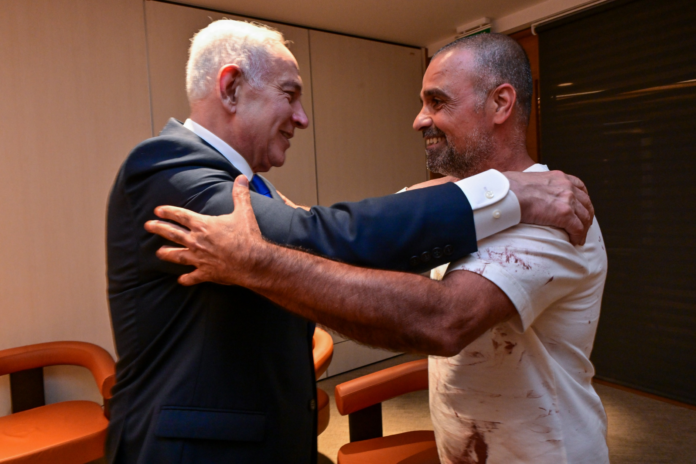 Vos Iz Neias
Related stories
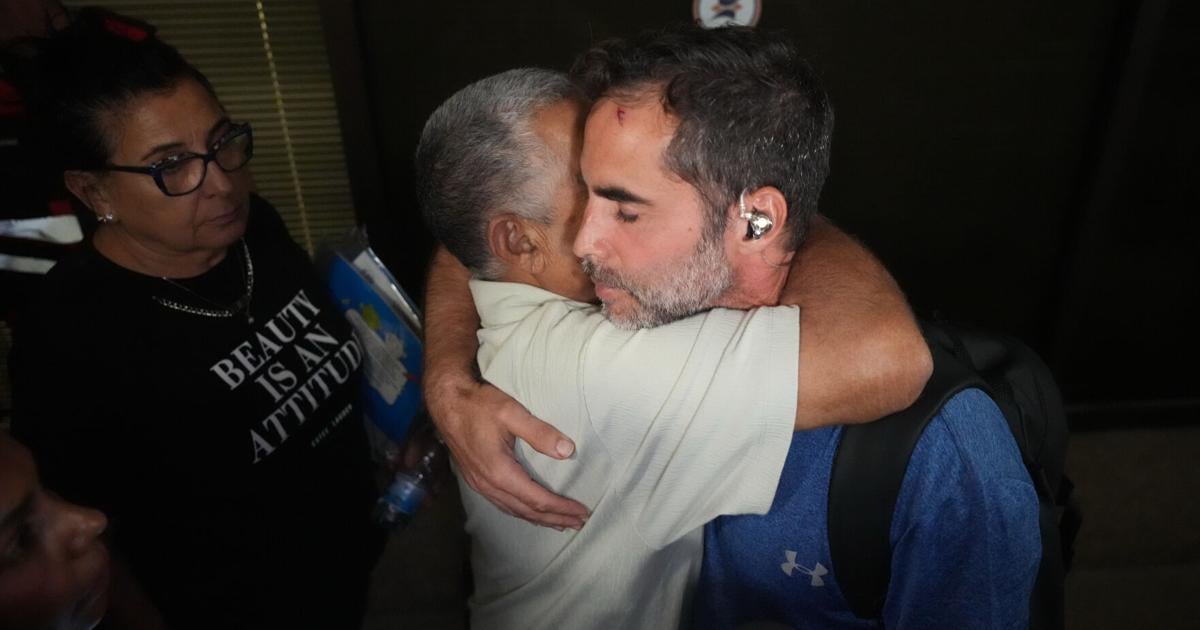 Cleveland Jewish News8 hours ago
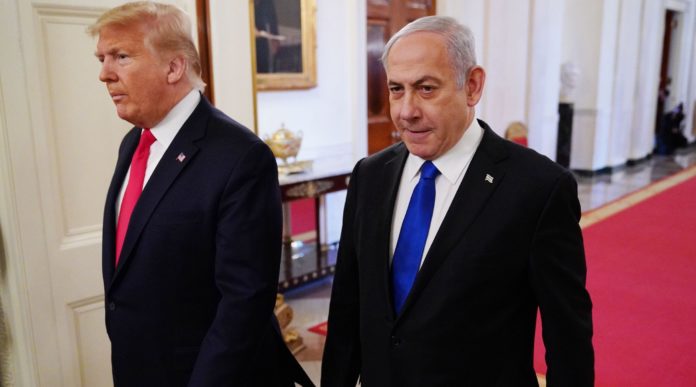 Vos Iz Neias8 hours ago
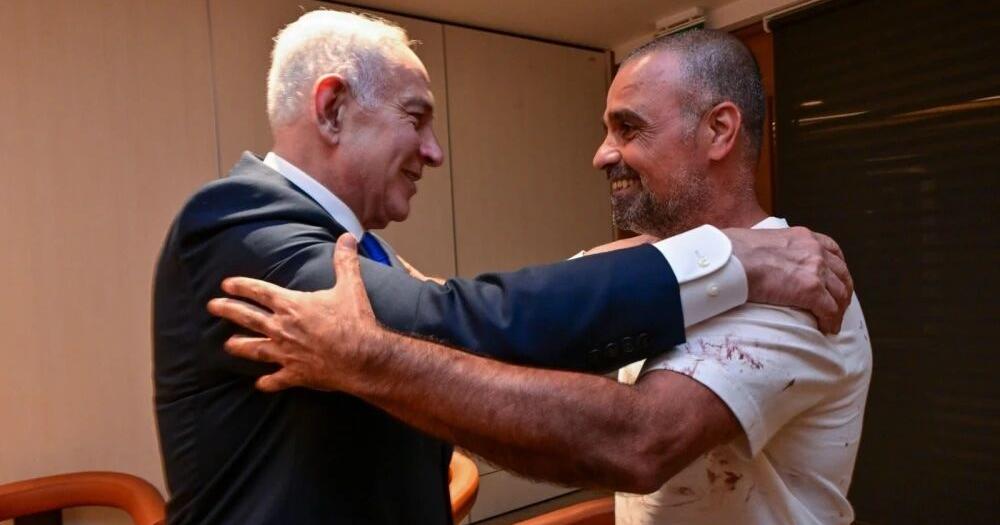 Cleveland Jewish News14 hours ago
 5 Towns Central17 hours agoVos Iz Neias7 hours ago
JERUSALEM (VINnews) — Israeli Prime Minister Benjamin Netanyahu is putting in a word for the plumbing business of Yaniv Hayun, the passenger hailed as a hero after helping subdue an alleged attacker aboard a Flydubai flight.
Netanyahu posted a screenshot Thursday of Hayun’s business profile on the Israeli service-review website Midrag, writing: “Yaniv Hayun is a hero who saved many lives. He can help you too, I highly recommend!”
יניב חיון הוא גיבור שהציל חיים רבים. הוא יכול לעזור גם לכם, אני ממליץ בחום! pic.twitter.com/AuLEmi5AdC
— Benjamin Netanyahu – בנימין נתניהו (@netanyahu) October 1, 2026
The unusual endorsement comes one day after Netanyahu met Hayun at Ben Gurion Airport following the passenger’s return to Israel.
During their conversation, Netanyahu asked Hayun what he does for a living. Hayun replied that he is a plumber.
Hayun had just arrived after helping other passengers overpower the co-pilot of Flydubai Flight FZ1073, who allegedly attacked the captain and took control of the aircraft as it plunged sharply.
Hayun told Netanyahu that after helping restrain the attacker, he returned to the cockpit and pulled back on the aircraft’s controls to help stabilize the plane.
When Netanyahu asked how he knew what to do, Hayun replied that he watches “Air Crash Investigation,” a television program about aviation disasters.
Hayun’s Midrag profile lists an overall rating of 9.93 based on 107 verified customer reviews.
The prime minister’s post quickly drew attention online, turning an extraordinary story of heroism into an equally unusual business endorsement.
Related stories
Cleveland Jewish News8 hours agoVos Iz Neias8 hours agoCleveland Jewish News14 hours ago5 Towns Central17 hours ago Matzav
Related stories
 Yeshiva World News22 hours ago
 CrownHeights.info1 day ago
 Vos Iz Neias1 day agoCleveland Jewish News1 day agoMatzav7 hours ago
New York City Mayor Zohran Mamdani spent Sukkos making a series of high-profile appearances in Orthodox Jewish communities across Brooklyn, visiting sukkahs in Crown Heights and Williamsburg and meeting with prominent Chabad and Satmar figures as his administration continued its outreach to Jewish New Yorkers.
Mamdani’s Sukkos rounds began Tuesday night in Crown Heights, where he visited the sukkah of Devorah Halberstam, the longtime Jewish communal activist whose son Ari Halberstam was murdered in the 1994 Brooklyn Bridge terror attack.
Halberstam has for years hosted elected officials, law-enforcement leaders and community figures during Sukkos, and Mamdani’s appearance placed him alongside a number of other prominent New York officials and Jewish communal personalities.
Among those present were Gov. Kathy Hochul, NYPD Commissioner Jessica Tisch and City Council Speaker Julie Menin.
The visit came shortly after Mamdani’s administration unveiled a citywide strategy aimed at combating antisemitism, adding particular significance to his appearance in one of New York’s most prominent Jewish neighborhoods.
Mamdani then visited the sukkah of R’ Yaacov Behrman, a Crown Heights community activist and Chabad media liaison.
Behrman later emphasized that he had hosted Mamdani in a personal capacity and not on behalf of Chabad as an institution.
“He was in the neighborhood for an event, and my family and I hosted him afterward in our sukkah to share some of the beauty and meaning of the holiday,” Behrman said.
According to Behrman, the conversation focused on Sukkos, family and the meaning of the sukkah. His children also explained the concept of the ushpizin to the mayor.
“We blessed the mayor that he should be a uniter and bring New Yorkers together,” Behrman said.
Mamdani also visited the sukkah of Brad Lander, the former New York City comptroller and one of Mamdani’s most visible Jewish political allies.
The mayor’s Crown Heights appearances drew mixed reactions. Some people welcomed him, while others heckled him and accused him of antisemitism, reflecting the deep divisions that remain within the Jewish community over his positions and rhetoric concerning Israel.
A day later, on Wednesday, Mamdani traveled to Williamsburg, where he visited the sukkah of R’ Saul Perelstein and met with leaders associated with the Satmar community’s Reb Zalman Leib faction.
Mamdani was greeted there by United Jewish Organizations of Williamsburg and North Brooklyn President R’ David Niederman.
Also participating were longtime community figure R’ Abe Friedman, Williamsburg Shomrim coordinator Yanky Itzkowitz, and representatives of local mosdos and communal organizations.
The Williamsburg meeting focused on issues affecting local residents and the broader Orthodox Jewish community, continuing a relationship Mamdani has cultivated with several Satmar leaders over the course of his rise in city politics.
Earlier in the week, he also participated in a Sukkos food-distribution event with R’ Shlomo Nisanov, a leader in Queens’ Bukharian Jewish community.
{Matzav.com}
Related stories
Yeshiva World News22 hours agoCrownHeights.info1 day agoVos Iz Neias1 day agoCleveland Jewish News1 day ago Yeshiva World News
Related stories
Cleveland Jewish News2 days ago Vos Iz Neias2 days ago
 Israel National News2 days ago
 Yeshiva World News8 days agoYeshiva World News7 hours ago
All nine High Court justices hearing the case against Balad chairman Sami Abu Shehadeh unanimously urged him Thursday to withdraw his candidacy from the upcoming Knesset election, with Supreme Court President Isaac Amit telling him directly that a majority of the nine-justice panel supports upholding his disqualification. The Times of Israel reports.
“There is a majority for your disqualification,” Amit told Abu Shehadeh during the hearing in Yerushalayim. “We recommend that Abu Shehadeh withdraw from the race.” The unanimous recommendation gives the Balad chairman the opportunity to leave the race voluntarily rather than await a formal ruling on his candidacy.
At the center of the case is an article Abu Shehadeh published on October 8, 2023, just one day after Hamas terrorists invaded southern Israel and carried out the October 7 massacre. In the article, Abu Shehadeh described the Hamas assault as an “important historic event” militarily, politically and strategically.
The Central Elections Committee voted last week to disqualify Abu Shehadeh over the article. Attorney General Gali Baharav-Miara has argued that the article constituted support for armed struggle against Israel, with the effort to disqualify Abu Shehadeh drawing broad support from both sides of Israel’s political divide.
Abu Shehadeh expressed regret over the article during Thursday’s High Court hearing and denied that he supports armed struggle. He has argued that his writings should not be interpreted as support for the October 7 atrocities.
National Security Minister Itamar Ben Gvir, whose Otzma Yehudit party filed the petition seeking Abu Shehadeh’s disqualification and who personally argued the case before the court, blasted the proposal to allow Abu Shehadeh to withdraw voluntarily.
“He should not be given the opportunity to withdraw. There should be a ruling,” Ben Gvir told the court.
While all nine justices joined in recommending that Abu Shehadeh end his candidacy, Amit specified that a majority of the panel supports formally upholding the Central Elections Committee’s decision to bar him from the election.
(YWN World Headquarters – NYC)
Related stories
Cleveland Jewish News2 days agoVos Iz Neias2 days agoIsrael National News2 days agoYeshiva World News8 days ago Yeshiva World News7 hours ago
Prominent Australian Jewish philanthropists Stephen and Carol Moss have been identified as passengers aboard the Flydubai flight on which an alleged terror attack was thwarted Wednesday, adding another remarkable detail to the dramatic incident that nearly ended in catastrophe.
The Sydney couple were among the passengers aboard the Dubai-to-Israel flight when an Omani first officer allegedly attacked and stabbed the Indian captain inside the cockpit.
Their presence aboard the flight was reported by Australian media, and Australian Foreign Minister Penny Wong subsequently confirmed that at least two Australian citizens aboard the aircraft were safe.
“Thank you to the heroes who thwarted the attack and helped bring passengers to safety,” Wong said. “We are thinking of those injured and hope for their full recovery.”
Stephen and Carol Moss are prominent figures in Sydney’s Jewish community and are well known for their philanthropy and substantial business fortune.
The couple previously owned what was at the time considered Australia’s most expensive home, a sprawling Scottish-style estate in Sydney’s eastern suburbs that they sold in 2022 for approximately $130 million.
Another luxury property owned by the family, the Edgewater estate in the exclusive Sydney suburb of Point Piper, was sold in 2020 for approximately $95 million. The property had reportedly been purchased in 1985 for just $5 million.
The Moss family fortune traces back to Katies, the iconic Australian women’s fashion chain founded in 1956 by Stephen’s father, Holocaust survivor Sam Moss.
Sam Moss survived Auschwitz before rebuilding his life in Australia and establishing the retail empire that would eventually become one of the country’s recognizable fashion brands. He passed away in 2016 at the age of 90.
Beyond their business success, the Moss family became major supporters of Jewish communal and educational institutions.
Stephen and Carol Moss have been recognized for their substantial support of Jewish schools in Australia as well as Tel Aviv University. In 1990, the university awarded Sam Moss an honorary doctorate in recognition of his contributions.
(YWN World Headquarters – NYC)
 Vos Iz Neias
Related stories
Matzav18 hours ago Matzav19 hours ago
 Matzav1 day ago
 Yeshiva World News1 day agoVos Iz Neias7 hours ago
JERUSALEM (VINnews) — When a Flydubai flight from Dubai to Tel Aviv descended thousands of feet in a matter of seconds on Wednesday, passengers faced a situation in which there was little time to understand what was happening.
According to passenger accounts, the crisis began when the co-pilot allegedly attacked the captain in the cockpit. The aircraft entered a steep descent before the injured captain managed to open the cockpit door. Passengers and other pilots then intervened, restraining the attacker, while additional pilots took control of the aircraft and eventually landed it safely in Tabuk, Saudi Arabia.
One Israeli passenger, identified in Israeli media as Yaniv Hayoun, described entering the cockpit and helping overpower the attacker. Another passenger, Zvika Manes, said passengers who were called forward did not hesitate to intervene. The incident has since prompted questions about what causes people to act during an extreme emergency rather than waiting for instructions.
Israeli behavioral psychologist Dr. Liraz Margalit argues that the answer may lie partly in the powerful influence of ordinary routines.
A famous example comes from the 1979 fire at a Woolworths department store in Manchester, Britain, in which 10 people died. Accounts of the disaster have been used in research into how people respond when an apparently ordinary environment suddenly becomes dangerous. The fire produced highly toxic smoke from burning polyurethane foam, and 11 people ultimately died.
The broader lesson from disaster psychology is that people do not necessarily respond to danger by immediately running away. Instead, they may initially continue behaving according to the social script associated with the place they are in.
In a restaurant, people eat. In a store, they shop. On an airplane, they expect the crew to manage the situation.
That tendency is related to what psychologists call normalcy bias: the tendency to interpret alarming information through the framework of ordinary events and underestimate the possibility or seriousness of a disaster. Research into fire evacuation has found that ambiguous warning signs can contribute to delays in leaving a building.
A systematic review of 83 studies on disaster evacuation likewise found that risk perception is an important factor in determining whether people evacuate, while having an evacuation plan and previous evacuation experience can also influence behavior.
The phenomenon does not mean that people simply become passive during emergencies. Once the danger becomes unmistakable, behavior can change rapidly. The Flydubai passengers were confronted with several unusually strong signals: screaming, a violent struggle in the cockpit and an aircraft undergoing a dramatic descent. Reports indicate that some passengers moved toward the cockpit and physically intervened.
The incident also highlights another important factor in emergency behavior: social cues. People frequently look to those around them to determine whether a situation really requires action. If everyone else remains calm, an individual may hesitate. Conversely, seeing another person move toward danger can make intervention seem both necessary and socially acceptable.
The Israeli response has generated particular attention because the passengers who intervened did not simply wait for an official evacuation order. President Isaac Herzog has since recommended that four Israelis who helped save the flight receive the Presidential Medal of Civilian Valor, praising their courage and quick action.
Margalit’s argument goes further, suggesting that characteristics often associated with Israeli culture, such as informality toward authority, initiative and a willingness to intervene, which can be loosely defined as Chutzpah, may encourage people to act rather than wait for instructions. Such cultural explanations, however, are difficult to establish scientifically, and emergency behavior varies greatly between individuals and situations.
What the research does establish is that the instinct to remain within a familiar routine during a crisis is widespread. Psychologists have studied normalcy bias in disasters for decades, including research by Israeli psychologists Haim Omer and Nahman Alon, who described normalcy bias as a tendency to underestimate the probability or extent of disruption during a disaster.
The Flydubai incident therefore offers a striking real-world example of two very different emergency responses: the instinct to wait for authority and the decision to take immediate action. In an aircraft moving thousands of feet downward in seconds, there may be no time to wait for certainty. Sometimes, the most important decision is recognizing that the normal rules no longer apply.
Related stories
Matzav18 hours agoMatzav19 hours agoMatzav1 day agoYeshiva World News1 day ago Vos Iz Neias
Related stories
 COLlive9 hours ago
 Israel National News15 hours agoMatzav18 hours ago
 COLlive18 hours agoVos Iz Neias7 hours ago
JERUSALEM (VINnews) — A special prayer of thanks was recited at the Western Wall on Thursday after tens of thousands gathered at the holy site following the dramatic rescue of 174 passengers aboard a Flydubai flight whose co-pilot allegedly tried to crash the plane.
IMG_1533
Rabbi Shmuel Rabinovitch, rabbi of the Western Wall and the holy sites, called on the massive crowd to recite “Mizmor LeTodah,” Psalm 100, as an expression of gratitude for the lives saved.
“We saw a great miracle,” Rabinovitch told the worshippers before leading the recitation. “If the Temple were standing, we would be standing today and offering a thanksgiving offering — thanking Hashem for the great miracle.”
The prayer followed the traditional Birkat Kohanim ceremony held during Chol Hamoed Sukkot, which drew tens of thousands of worshippers to the Western Wall plaza. The gathering included the traditional priestly blessing, followed by prayers for the safety of Israeli soldiers and security forces, the recovery of the wounded, unity and the security of Israel.
The special prayer came one day after Flydubai Flight FZ1073, traveling from Dubai to Tel Aviv, narrowly avoided disaster after the co-pilot allegedly stabbed the captain and sent the aircraft into a steep descent of nearly 14,000 feet in less than 30 seconds.
Despite his injuries, the captain managed to open the cockpit door, allowing passengers and crew members to enter and overpower the co-pilot. Two off-duty Flydubai pilots who were aboard the aircraft then helped take control and land the plane safely in Tabuk, Saudi Arabia.
The 174 passengers later continued their journey to Israel on a replacement Flydubai aircraft, arriving at Ben Gurion Airport more than 10 hours after the ordeal began. Israeli passengers described the rescue as a miracle and praised those who entered the cockpit to stop the attacker.
Rabbi Rabinovitch invoked the significance of the moment as the crowd gathered at the site closest to the location of the ancient Temple.
“Here, at the place closest to the Temple, let us all say together: ‘Give thanks to Hashem, for He is good, for His kindness endures forever,’” he said.
The incident also prompted Israel’s Chief Rabbi Kalman Bar and a group of rabbis and yeshiva heads to recite “Mizmor LeTodah” in a separate gathering, thanking Hashem for what Rabbi Bar described as a miraculous rescue.
The Flydubai passengers had been traveling on a route regularly used by Israelis between Dubai and Tel Aviv. Israeli officials said the motive behind the co-pilot’s actions remained under investigation.
The dramatic episode ended without a mass-casualty disaster, with passengers and crew members credited with preventing what could have been a catastrophic crash.
Related stories
COLlive9 hours agoIsrael National News15 hours agoMatzav18 hours agoCOLlive18 hours ago Matzav
Related stories
Matzav7 hours agoHagaon Rav Dov Landau, Slabodka rosh yeshiva, came out sharply against efforts to persuade members of the chareidi tzibbur to boycott the upcoming Knesset elections, warning that those encouraging Yidden not to vote are acting out of “either wickedness or foolishness.”
The Rosh Yeshiva addressed the issue during a closed meeting in Bnei Brak with representatives of Degel HaTorah, amid attempts by some elements on the fringes of the chareidi community to convince voters to stay home on Election Day, whether as a protest or because of ideological opposition to participation in Israeli elections.
Rav Landau made clear that he firmly rejects such a course and believes the chareidi public must participate in the election in order to protect the interests of the olam haTorah and the broader frum community.
“Woe to anyone who incites people not to go to the elections, woe to him – and I do not want to continue,” Rav Landau told those present emphatically, adding that anyone promoting such a position is acting out of “either wickedness or foolishness.”
The comments highlight the position of the gedolim, who have long regarded participation in elections as an essential means of maintaining political representation and protecting the needs of yeshivos, kollelim, bnei Torah, mosdos and chareidi families.
The controversy comes as Degel HaTorah prepares for the upcoming election amid significant internal changes within the party and a broader debate over how the chareidi tzibbur should respond to the ongoing battles over the draft, funding for yeshivos and the status of the olam haTorah.
Rav Landau has repeatedly taken a firm line against efforts to draft bnei yeshivos, making clear that opposition to the draft does not mean withdrawing from the political arena altogether.
{Matzav.com}
 JBizNews7 hours ago
Egyptian police arrested six journalists from a fact-checking and investigative media outlet, accusing them of spreading misinformation on behalf of the banned Muslim Brotherhood, which the publication denied.
The arrests comprised the entire newsroom of Matsaddash, a digital platform that has operated since 2018, according to the Egyptian Initiative for Personal Rights (EIPR), which is providing the journalists with legal representation.
According to the EIPR, plainclothes security personnel had started raiding the journalists’ homes on Monday evening and confiscated electronic devices.
In a statement disclosing the arrests, the interior ministry accused the site of being managed from abroad as “part of the terrorist Muslim Brotherhood’s media apparatus” with the help of Brotherhood “elements” inside the country.
Matsaddash denied that it was affiliated with the Brotherhood. In a statement, it pointed to reports that it had issued corrections to what it described as misinformation published by Brotherhood-affiliated media outlets.
Egypt banned the Muslim Brotherhood as a terrorist group in 2013, the year the army overthrew President Mohamed Mursi, a Brotherhood member who was democratically elected.
Egyptian journalists and activists have frequently been arrested on charges of spreading false news and rumors, and many independent outlets say they struggle to operate under restrictive conditions.
According to the Committee to Protect Journalists, 19 journalists are currently detained in Egypt.
Egypt’s State Information Service, which liaises with foreign media on behalf of state agencies, did not immediately respond to a request for comment.
 JBizNews7 hours ago
China’s economic activity in the Syrian market accelerated sharply in 2026, with Syrian imports from China rising significantly as hundreds of millions of dollars in new Chinese-linked industrial investments began to emerge.
The value of Syrian imports from China reached approximately $669.9 million during the first six months of 2026, exceeding in just half a year the total value of Chinese exports to Syria throughout 2025, which stood at about $668 million.
In 2024, total Syrian-Chinese trade was worth about $389 million, including approximately $386 million in Chinese exports to Syria, compared with only around $3 million in Syrian exports to China.
In 2025, Chinese exports to Syria rose to $668.1 million, an increase of roughly 73% compared with 2024, while Syrian exports to the Chinese market fell to just $1.26 million, highlighting a wide trade imbalance in China’s favor.
Among the goods seeing increased Syrian demand are iron, machinery, equipment, vehicles, and materials used in infrastructure and construction projects, as the country sees growing activity related to reconstruction, factory rehabilitation, and public works.
Cooperation between the two countries now extends well beyond trade.
In the Hassia Industrial City in Homs province, preparations are underway for five projects with an estimated combined value of around $500 million, involving White Room Holding, represented by Asas, the Chinese company Zhong, and the management of the industrial city.
These projects are expected to cover approximately 500 dunams and include a steel rolling facility, a ceramics factory, a construction materials plant, an asphalt plant, and a stone quarry.
Among the most notable deals announced during the 63rd Damascus International Fair in September were projects addressing Syria’s reconstruction and infrastructure needs. The investment plans are part of a broader series of recent commercial initiatives between the two countries.
In July, the Federation of Syrian Chambers of Commerce and the Syrian-Chinese Business Council signed a memorandum of understanding aimed at expanding trade and investment cooperation, encouraging joint business forums, exchanging economic information, supporting partnerships, and promoting technology transfer.
In June, the two sides also launched the “Syrian International Smart Industrial Cities” platform, designed to connect Syrian industrial cities with Chinese partners and draw on Chinese expertise in technology, manufacturing, and industrial training.
The latest figures indicate that China is rapidly reemerging as a major supplier of goods and equipment to the Syrian market. The next phase will show whether that trade growth can develop into long-term industrial investment and actual local production inside Syria.
At the same time, the large imbalance in bilateral trade remains one of the defining features of the relationship, with Syria importing hundreds of millions of dollars in Chinese goods while its exports to China remain extremely limited.
If the announced projects in Hassia move from agreements into implementation, they could mark a significant shift in the economic relationship between the two countries from one dominated by Chinese imports to one that also includes manufacturing, technology transfer, and direct investment inside Syria.
 Belaaz
Related stories
 Yeshiva World News13 days ago
 Matzav14 days ago
 Yeshiva World News2 months ago
 Matzav3 months agoBelaaz7 hours ago
The Supreme Court on Thursday authorized the release of the identity of a senior Israeli military intelligence officer believed to have played a significant role in the intelligence failures preceding Hamas’s October 7, 2023, attack on Israel.
The officer was identified as Lt. Col. Aryeh Amidror, who served as the Gaza Division’s intelligence chief. The division is responsible for the Gaza Strip and the surrounding border area, and Amidror held the position both before and during the October 7 assault.
In the days leading up to the attack, Amidror reportedly rejected detailed intelligence warnings from a female noncommissioned officer who had identified indications of an impending Hamas offensive. He reportedly characterized her assessment as “completely imaginary.”
In November 2025, IDF Chief of Staff Lt. Gen. Eyal Zamir removed several senior military officers from their positions over their involvement in the failures surrounding October 7. Amidror was among those dismissed.
However, Amidror was not formally discharged from military service until last month, following a lengthy legal effort to challenge his removal. He also pursued legal action to prevent his name from being publicly identified, despite the fact that his identity had already circulated widely online.
Amidror’s father, retired general and former national security adviser Yaakov Amidror, has frequently appeared on Israeli television discussing national security issues without revealing his son’s connection to the October 7 failures. He had also previously expressed opposition to establishing a state commission of inquiry into the events.
Unlike several other senior IDF commanders who resigned after acknowledging their responsibility for the intelligence and operational failures, Amidror did not voluntarily step down or publicly accept responsibility. Instead, he remained in his position as Gaza Division intelligence chief until the conclusion of his scheduled tenure.
Following that assignment, he was selected for a position within the Military Intelligence Directorate’s Unit 9900, which focuses on visual intelligence, commonly known as VISINT. However, in January 2025, the military suspended the planned appointment after a radio report brought attention to the controversial decision.
In the period immediately preceding October 7, Amidror dismissed warnings from a noncommissioned officer serving in the IDF’s signals intelligence Unit 8200. The officer had repeatedly raised concerns that Hamas possessed a detailed and actionable plan to launch an attack against Israel.
The NCO, identified publicly as “Vav” — the first Hebrew letter of her name — sent an urgent email to several military officers, including Amidror, warning of the impending danger. In her message, she wrote that “the sword is coming,” and urged officials to “warn the people” before it was too late.
Her warning came after Unit 8200 circulated an intelligence assessment on September 19, less than three weeks before the October 7 massacre. The report warned that Hamas was conducting preparations for a major invasion of Israeli territory.
The document provided a detailed breakdown of Hamas’s operational plans, describing training exercises conducted by the group’s elite forces. These exercises included simulated raids on Israeli communities and military installations. Hamas operatives had also reportedly studied procedures for capturing Israeli soldiers and civilians, transporting them into Gaza, and determining the circumstances under which hostages could be killed.
The operational blueprint, known as the Jericho Wall plan, had initially been presented to intelligence officials in a 40-page document more than a year before the October 7 attack.
After officials appeared to disregard the September 19 intelligence assessment, “Vav” sent another warning explaining the significance of the training exercises. She wrote that “the training shows us that the ‘Jericho Wall’ plan is an operative, practiced plan, meaning that Hamas already has forces that have practiced these outlines and know how to implement when the order comes.”
The email also cautioned that the apparent proximity of Hamas’s planned operation meant Israeli intelligence might no longer have sufficient time to stop an attack before it began. Rather than relying solely on preventing the assault, Vav urged officials to start “formulating plans for dealing with the incident, should it actually happen, in order to reduce the damage.”
Amidror responded to her warning with a dismissive assessment, writing that “the described scenario is completely imaginary.”
Less than three weeks later, Hamas carried out the very type of operation described in the intelligence warnings. On October 7, 2023, thousands of Hamas-led terrorists breached the Gaza border and attacked communities and military positions throughout southern Israel. Approximately 1,200 people were murdered, and 251 others were abducted and taken into Gaza.
The intelligence failures were not limited to the written warnings from Unit 8200. In the months preceding the assault, Amidror was also reportedly among the officials who disregarded information provided by IDF surveillance soldiers monitoring Hamas activity along the Gaza border.
At least three months before the attack, female surveillance soldiers stationed at the Nahal Oz military base began reporting unusual developments along the border, which was approximately one kilometer from their position.
Their reports described Hamas operatives repeatedly conducting training exercises, digging into the ground and installing explosives near the border fence. The soldiers also identified patterns of activity that they considered unusual and potentially dangerous.
According to the soldiers’ accounts, despite repeatedly reporting these developments to their commanders and other relevant officials, their warnings did not result in meaningful action.
Related stories
Yeshiva World News13 days agoMatzav14 days agoYeshiva World News2 months agoMatzav3 months ago Vos Iz Neias7 hours ago
NEW YORK (VINnews) — The world’s oceans are warming at an alarming rate, with rising sea levels, increasing acidity and widespread damage to marine ecosystems showing that the oceans are undergoing profound long-term changes, according to a major new report by more than 100 international scientists.
The 10th edition of the Copernicus Ocean State Report, released Wednesday, draws on more than four decades of observations from satellites, buoys and other sensors. Scientists warn that the changes already underway are occurring faster than many societies are prepared to handle.
The oceans absorb roughly 90% of the excess heat trapped in the Earth’s climate system by human greenhouse-gas emissions. In 2025 alone, they absorbed an estimated 23 zettajoules of additional heat, equivalent to the energy of about 12 Hiroshima-sized atomic bombs every second throughout the year. The 2025 increase marked the ninth consecutive year in which global ocean heat content reached a record high.
“The ocean is transforming before our eyes: warming, rising seas and ecosystem degradation are interconnected signs of significant and long-term change,” said Pierre Bahurel, director-general of Mercator Ocean International, which produces the report through the European Union’s Copernicus Marine Service.
The consequences are already being seen around the world. Global sea levels rose by about 3.8 millimeters per year between 1999 and 2025, but the rate increased to approximately 4.2 millimeters per year between 2012 and 2025. Rising temperatures contribute to this through both the expansion of warmer seawater and the melting of glaciers and ice sheets.
The ocean is also becoming more acidic. Its acidity increased by about 17% between 1985 and 2025, threatening organisms such as corals and shell-forming marine animals whose skeletons and shells become more difficult to build and maintain under increasingly acidic conditions.
Marine heatwaves are another growing concern. The Mediterranean and Black seas experienced exceptionally intense heatwaves, with temperatures in some areas more than 4.6 degrees Celsius above normal in 2024. Scientists say such prolonged warming can disrupt marine ecosystems, fisheries and the distribution of species.
The impact on coral reefs has also become increasingly severe. A separate component of the 2026 ocean assessment found that 84.4% of the world’s coral reefs experienced heat stress severe enough to cause bleaching between January 2023 and September 2025. Coral reefs support at least a quarter of marine species and provide food, coastal protection and livelihoods for hundreds of millions of people.
The polar regions are showing some of the clearest consequences. Arctic sea ice declined by roughly 490,000 square kilometers per decade between 1979 and 2025—an area approximately the size of Spain. In Antarctica, exceptionally low sea-ice levels have already affected wildlife. In 2022, four of five monitored emperor penguin colonies experienced total breeding failure after sea ice broke up before chicks were able to survive independently.
The Mediterranean is also experiencing sustained warming. Research included in the Copernicus report found that the Mediterranean has warmed by about 0.32°C per decade, contributing to increasingly frequent marine heatwaves.
Karina von Schuckmann, one of the report’s leading scientists, warned that the changes are particularly serious for island nations and coastal communities.
“For island states, ocean change is not a distant environmental issue; it is an immediate economic, development and security challenge,” she said.
The scientists emphasize that the findings are not based on isolated weather events but on long-term measurements showing broad changes across the global ocean. They say continued monitoring and improved forecasting will be essential for governments and coastal communities trying to prepare for rising seas, extreme marine heat, ecosystem disruption and other consequences of a rapidly changing ocean.
 Belaaz
Related stories
Belaaz8 hours ago(The Jerusalem Post) – A new financial assessment of Hezbollah’s military operations estimates that the organization obtained approximately $157 million in weapons and military equipment during 2024. The findings, released Thursday by the Israeli Center for Research of Terror Financing (CENTEF), indicate that roughly $129 million of that amount came directly from Iran in the form of weapons supplied without payment. Hezbollah covered the remaining $28 million through its own purchases.
The findings appear in a report called Hezbollah Financial Statements, which launches a broader research project examining how the organization finances its activities. Upcoming installments are expected to investigate its media operations, compensation and assistance for wounded fighters, and the costs associated with maintaining its military infrastructure.
Rather than examining Hezbollah solely as a military organization, CENTEF approached the investigation from a financial perspective. Its researchers sought to establish how much the group spends, where its resources originate, and how sustainable its military operations would be if Iranian assistance were substantially reduced.
The analysis also explores alternatives to costly military operations by identifying financial and logistical vulnerabilities. Disrupting essential supply networks, the researchers suggest, could place pressure on Hezbollah without the civilian consequences that can accompany extensive airstrikes in Lebanon.
CENTEF CEO Sharon Gal told The Jerusalem Post that understanding Hezbollah’s financial structure in the same way analysts examine a commercial enterprise could help government officials identify the supply chains most important to its operations. Those findings could then help establish targeted pressure points against Hezbollah and other organizations backed by Iran.
Public access to Hezbollah’s financial information planned
Researcher Marc Cohen told the Post that CENTEF is working on an interactive resource that would allow members of the public to explore Hezbollah’s financial information. The project is intended to make the organization’s economic activities easier to understand and highlight the financial consequences of its operations for Lebanon.
The weapons assessment covers a broad range of military assets, including rockets, ballistic and cruise missiles, drones, anti-tank weapons, air-defense equipment, ammunition, launch systems, naval capabilities, and materials used to manufacture improvised explosive devices.
The report distinguishes between equipment financed directly by Iran and purchases made with Hezbollah’s own funds. The latter category consists primarily of rifles and other small arms, ammunition, drone parts, dual-use technology, and equipment obtained through international purchasing networks.
Because the organization does not disclose its procurement activities, CENTEF could not establish its acquisitions by examining actual purchase orders. Instead, researchers constructed estimates using three separate sources of information: Hezbollah’s historical expansion, Iran’s weapons-production and delivery capacity, and international cost comparisons for military equipment and personnel.
One important benchmark was the growth of Hezbollah’s rocket inventory. Estimates published by the Center for Strategic and International Studies place its arsenal at approximately 15,000 rockets in 2006, compared with an estimated 150,000 by 2024. That represents an average expansion of approximately 7,500 rockets annually over the 18-year period.
However, researchers cautioned that replenishment did not necessarily occur at the same rate every year. Damage to supply routes and manufacturing capabilities during the 2024 conflict likely affected the organization’s ability to replace its weapons. CENTEF consequently estimates that Hezbollah obtained approximately 4,500 to 6,500 rockets and missiles during that year.
A separate part of the investigation examined how much Iran could realistically supply. Tehran must divide its weapons production between its own military and several regional partners, while also dealing with the logistical difficulties involved in transporting advanced systems.
Iran’s estimated production capacity ranges from 50 to 240 ballistic missiles each month, alongside approximately 1,800 to 3,000 attack drones annually. These limitations help establish the maximum quantities that could potentially have been transferred to Hezbollah.
By assigning estimated values to the weapons in Hezbollah’s inventory, CENTEF sought to measure the financial contribution provided by Iran. The analysis also illustrates the difficulty Hezbollah would face attempting to finance an equivalent arsenal independently.
Rockets and missiles account for major Iranian assistance
Hezbollah’s rocket inventory contains several Iranian-designed systems, as well as weapons originating in Syria. Among its shorter-range options are the familiar 122mm Katyusha rockets, alongside the heavier Falaq-1 and Falaq-2 systems, which carry 240mm and 333mm warheads. The organization also possesses the larger Burkan rocket, designed to carry a substantial warhead.
Public pricing information is available for relatively few of these weapons. A Katyusha rocket is estimated to cost approximately $300, while a Burkan is valued at around $400. Based on open-source intelligence, CENTEF calculates that Hezbollah acquired approximately 4,000 Katyushas, 400 Falaq rockets, and 120 Burkan rockets during 2024.
Another portion of its inventory consists of Fajr rockets. The Fajr-3 carries a 45-kilogram warhead and has a diameter of 240mm. The larger Fajr-5 measures 333mm and includes a GPS-guided version designated the Fajr-5C. Researchers estimate that approximately 600 rockets from this family entered Hezbollah’s arsenal during 2024, with individual prices ranging from $2,000 to $10,000.
More sophisticated systems include the Zelzal-2 and the Fateh-110/M-600. An individual Zelzal-2 is valued at approximately $25,000, while the Fateh-110/M-600 has an estimated price of $110,000, according to JINSA. The latter can also receive a GPS guidance package costing an additional $5,000 to $10,000.
The availability of these weapons was restricted by Iran’s need to supply multiple recipients and the repeated interruptions affecting the route into Lebanon. CENTEF’s estimates therefore place Hezbollah’s 2024 acquisitions at approximately 60 Zelzal rockets, 40 Fateh-110/M-600 missiles, and 150 guidance kits.
The report also identifies Iran’s Paveh cruise missile as part of the broader weapons inventory. With an estimated range of 700 to 2,000 kilometers and a comparatively high price, researchers believe Hezbollah received only about 12 during 2024.
Anti-tank weapons constitute another significant component of the group’s military capabilities. CENTEF notes that these systems were responsible for approximately 20% of Hezbollah’s attacks against Israel following October 8, 2023. Their financial value may also make them the largest weapons category in the organization’s inventory.
The Russian-designed Kornet, which reaches Hezbollah through Syria, is estimated to cost approximately $26,000 per missile. Iran produces the Dehlavieh, a reverse-engineered version of the system, at an estimated cost of $12,000 to $15,000.
Other anti-tank weapons identified in Hezbollah’s arsenal include Iranian Almas missiles, older Konkurs and Metis systems, and RPG-29 launchers. CENTEF estimates that the group obtained approximately 700 Kornet rounds, 500 Dehlavieh rounds, 500 Almas missiles, and 400 Konkurs and Metis missiles during 2024, in addition to approximately 30 launchers.
Less expensive anti-armor capabilities are provided by the RPG-7. A reusable launcher costs approximately $350, while its ammunition generally sells for between $100 and $500 per round. The researchers estimate that Hezbollah acquired around 800 launchers and 15,000 rounds during the year, with some ammunition coming from illicit markets.
Drone acquisitions and air-defense capabilities
Unmanned aircraft also feature prominently in the report’s assessment. Hezbollah’s inventory includes Iranian Mirsad-1 and Ababil-T drones, as well as smaller Shahed-101-class loitering weapons.
The estimated price of a loitering munition ranges from $20,000 to $40,000. Commercial drones and first-person-view quadcopters are considerably cheaper, with prices generally falling between $1,000 and $15,000.
CENTEF estimates that Hezbollah added approximately 300 Mirsad and Ababil drones combined to its inventory in 2024. Its other acquisitions included around 200 loitering munitions, 400 commercial and FPV drones, and several reconnaissance aircraft.
The group’s air-defense equipment includes man-portable air-defense systems, commonly known as MANPADS. Depending on the model, these weapons can cost anywhere from approximately $5,000 to $100,000 each. Researchers also believe Iran transferred 358 loitering surface-to-air missiles to Hezbollah.
Small arms, ammunition and explosives add to the financial picture
Not all of Hezbollah’s military investments involve expensive guided weapons. Its conventional arsenal includes AKM and AK-103 rifles, PKM and DShK machine guns, and SVD sniper rifles.
Based on the research estimates, the organization acquired approximately 5,000 rifles, 900 crew-operated weapons, 80 mortar tubes, 15,000 mortar shells, and 8 million rounds of ammunition during 2024.
The report also considers the cost of improvised explosive devices. Since these weapons can be manufactured locally in Lebanon using comparatively inexpensive materials, researchers estimate that Hezbollah invested in approximately 2,000 IEDs.
Hezbollah’s media and civilian spending under investigation
CENTEF’s investigation extends beyond weapons procurement. Researchers are collecting information about the organization’s civilian operations, including charitable programs that assist residents of southern Lebanon who have been displaced during conflicts involving Hezbollah.
The organization’s media operations are another major area of expenditure. Although the researchers have not completed their full assessment, their preliminary calculations indicate that Hezbollah spent approximately $26 million to $28 million on media activities in 2024.
Al-Manar, Hezbollah’s television network, represented a substantial portion of that budget, with estimated annual expenses of $16.5 million to $17.2 million.
CENTEF’s broader objective is to combine these figures into a comprehensive assessment of Hezbollah’s financial operations. By examining its weapons purchases, Iranian contributions, media expenses, and civilian activities together, researchers hope to identify how dependent the organization is on outside assistance and which financial and logistical networks are essential to sustaining its operations.
 Vos Iz Neias
Related stories
Vos Iz Neias8 hours agoNEW YORK (VINnews) — A Tennessee execution went awry Wednesday night after death row inmate Christa Pike remained alive despite receiving two doses of the lethal-injection drug pentobarbital, prompting her transfer to a hospital and a suspension of the state’s remaining executions for 2026.
Pike, 50, was scheduled to become the first woman executed by Tennessee in more than 200 years. Witnesses reported that she continued breathing after the injections and that sounds including gasping and snoring could be heard from the execution chamber. She was subsequently taken to an off-site medical facility.
The Tennessee Department of Correction confirmed that Pike had been transported to a medical facility, but did not provide details about her medical condition. The department said it had followed the state’s approved execution protocol and that the drug used had consistently been effective in previous executions.
Pike’s attorneys said the state had “failed to carry out a lawful execution” and filed emergency legal motions following the incident. They argued that the failed procedure raised additional constitutional concerns about cruel and unusual punishment.
The incident came after an extraordinary series of court decisions earlier Wednesday. The Sixth U.S. Circuit Court of Appeals had temporarily halted the execution shortly before it was scheduled to take place, allowing time to consider claims that Pike’s history of childhood sexual abuse and mental illness had not been adequately considered.
The U.S. Supreme Court later lifted the stay, allowing Tennessee to proceed. Justices Sonia Sotomayor, Elena Kagan and Ketanji Brown Jackson dissented, arguing that the lower court should have been allowed to consider Pike’s claims before the state carried out the execution. The Supreme Court’s docket shows that it denied Pike’s application for a stay on September 29.
Pike was sentenced to death for the 1995 murder of 19-year-old Colleen Slemmer at a Job Corps training center in Knoxville. Pike was 18 at the time. Prosecutors said she and her boyfriend lured Slemmer into a wooded area, where she was beaten and killed. A pentagram was carved into Slemmer’s body, a detail that drew national attention during the 1990s “satanic panic.”
Pike has acknowledged responsibility for the killing, but her attorneys argued that her age, severe childhood abuse and mental-health problems should have resulted in a lesser sentence. They also raised concerns about Tennessee’s lethal-injection protocol and the potential for unnecessary suffering. Governor Bill Lee rejected her request for clemency on September 28.
Pike’s case was unusual even before Wednesday’s events. She was the only woman on Tennessee’s death row and, according to the Death Penalty Information Center, would have been the first person executed by Tennessee in the modern era for a crime committed at age 18, 19 or 20. The center notes that only 18 women have been executed in the United States since the death penalty was reinstated in 1976.
The failed execution also comes after another unsuccessful execution attempt in Tennessee earlier this year, according to the Associated Press. Following Wednesday’s incident, Governor Lee suspended all remaining executions in Tennessee for the rest of 2026 and ordered an independent review of the state’s execution procedures.
The case now raises a further legal question: whether and under what circumstances Tennessee could attempt to execute Pike again. Her attorneys are seeking court intervention following the failed procedure, while the state has not announced a new execution date.
 Matzav
Related stories
 Vos Iz Neias16 hours ago
 Israel National News17 hours agoCleveland Jewish News1 day ago
 Vos Iz Neias9 days agoMatzav8 hours ago
Michigan’s U.S. Senate race is virtually deadlocked, with Democrat Abdul El-Sayed holding a one-point advantage over Republican Mike Rogers among likely voters in a new Fox News poll, 50% to 49%. The gap is within the survey’s margin of error.
Among registered voters, El-Sayed leads Rogers 51% to 48%, reversing an August Fox News result in which Rogers held a 51% to 47% advantage.
El-Sayed’s supporters also appear somewhat firmer in their choice. Eighty-seven percent say they are certain they will support him, compared with 80% of Rogers’ backers. Overall, 15% of voters say they could still change their minds before Election Day.
The poll found significant concerns surrounding both candidates. Thirty-nine percent of voters said they are extremely concerned that Rogers is too closely aligned with President Donald Trump, while 36% said they are extremely concerned that El-Sayed is too liberal.
The candidates also post similar favorability numbers, with 47% viewing El-Sayed favorably and 44% saying the same of Rogers.
El-Sayed performs especially well among women, Black voters, college graduates and voters under 45, while Rogers is stronger among men, rural voters, White evangelical Christians, married voters and White voters without college degrees.
Both candidates have consolidated most of their respective party bases. Rogers receives the support of 95% of Republicans, including 99% of MAGA Republicans and 88% of non-MAGA Republicans. El-Sayed has the backing of 93% of Democrats, including 98% of DSA Democrats and 90% of other Democrats.
Independents narrowly favor El-Sayed.
When voters were asked which party they would prefer to control the Senate, Democrats held a 52% to 47% advantage.
Still, some voters who backed El-Sayed’s Democratic primary opponent, Rep. Haley Stevens, have not moved behind him. Eleven percent of likely voters who supported Stevens in the primary now say they intend to vote for Rogers.
Economic issues remain a major factor in the contest. The cost of living ranks among the most important concerns for Michigan voters, while immigration is another issue producing a sharp divide between supporters of the two candidates.
El-Sayed narrowly defeated Stevens in the Democratic primary after a contentious campaign in which Israel emerged as one of the clearest areas of disagreement.
El-Sayed has repeatedly attacked Israel’s conduct in Gaza and has opposed unconditional U.S. military assistance to Israel.
In a recent television interview, he described Israel’s military actions as “bloodthirsty” and accused Israeli leaders of genocide.
In another interview, El-Sayed acknowledged that Hamas had committed war crimes while continuing to accuse the Israeli government of grave wrongdoing.
He has also repeatedly declined to directly say whether Israel has a right to exist when pressed on the issue, instead arguing that Israel already exists and redirecting the discussion toward U.S. policy and Palestinian rights.
In another interview, El-Sayed described Israel’s leadership as “as evil as Hamas.”
El-Sayed has also faced criticism over remarks he made following the March attack on Temple Israel in West Bloomfield Township near Detroit.
Authorities said the attacker rammed a vehicle into the synagogue complex in an assault that investigators later said was inspired by Hezbollah. The attacker died at the scene.
El-Sayed condemned the attack and antisemitism, but while discussing the circumstances surrounding it, he also said that “violence is a cycle” and that “hurt people hurt people.”
Critics argued that those remarks could be interpreted as offering an explanation or justification for the attack.
El-Sayed later apologized to members of the Michigan Democratic Jewish Caucus, acknowledging that his comments had been inappropriate in the immediate aftermath of the assault and stressing that there was no justification for terrorism.
The Fox News survey was conducted in late September among more than 1,200 registered Michigan voters, including more than 1,000 likely voters. The margin of error among likely voters is approximately three percentage points, leaving the El-Sayed-Rogers contest statistically tied.
Related stories
Vos Iz Neias16 hours agoIsrael National News17 hours agoCleveland Jewish News1 day agoVos Iz Neias9 days ago Matzav9 hours ago
Residents of the Jerusalem Estates at the Schneller complex in Yerushalayim were issued a sharp warning on Wednesday after a late-night party with loud outdoor music triggered numerous complaints and repeated attempts to summon police.
In a notice addressed to homeowners and renters, the building management and Vaad Habayit said the disturbance continued late into the night and affected a large number of residents throughout the complex.
According to the notice, police were contacted repeatedly over the noise, but officers were unable to respond because of the unusually high volume of complaints being handled over Sukkos.
The complex’s security guards also approached the party on multiple occasions and asked that the music be shut off, the notice said, but those requests were not honored.
Management appealed to residents, tenants and guests to show greater consideration for their neighbors, noting that many residents are elderly and that numerous families have young children who need to sleep.
The issue was especially acute because of Sukkos, the notice said, when many residents are sleeping outdoors in their sukkahs and are therefore even more exposed to late-night noise.
“Loud music continuing into the early hours makes it extremely difficult for others to rest in their own homes and sukkahs,” the notice stated.
The management subsequently imposed a clear cutoff, asking that there be no music after midnight, especially in outdoor areas, including balconies, sukkahs, gardens and other spaces where sound could disturb neighboring residents.
“We all share this community, and a little consideration goes a long way,” the notice said, urging residents to make sure that family members, tenants and guests are also aware of the quiet-hour rules.
{Matzav.com}
 JBizNews9 hours ago
America’s skilled trades shortage has major employers sounding the alarm as companies face mounting demand for workers needed to build, maintain and power the country’s infrastructure.
mikeroweWORKS Foundation CEO Mike Rowe joined FOX Business’ Stuart Varney on “Varney & Co.” to discuss the widening skilled labor gap, the impact of artificial intelligence and the growing push to steer more Americans toward trade careers.
A new national report from the Alliance for America’s Skilled Trades found the U.S. is expected to face roughly 1.7 million skilled trades job openings each year through 2035, while training programs are producing only about 55 workers for every 100 needed.
Rowe cautioned that the shortage is not identical across every occupation or state, but said the broader problem is showing up throughout the trades.
“So what you’re seeing across dozens and dozens of trades are shortages that are more or less universal. But individually, trade to trade, state to state, there’s variance,” Rowe said.
For Rowe, the urgency is increasingly evident in conversations with corporate leaders.
“Every week I get a call, either from a CEO of some big company or some consequential industry. And they’re freaking out. This workforce thing is the problem of the decade, and it’s not gonna go away until we come at it from a different angle,” he said.
At the same time, Rowe said attitudes toward the trades appear to be changing, driven by the rising cost of four-year degrees and concerns about how AI could reshape the job market.
“Just through my foundation alone, the demand is up 10x over the same time a year ago,” Rowe said. “So something has definitely changed out there in the ether, and I suspect AI has a lot to do with it.”
 Vos Iz Neias9 hours ago
JERUSALEM (VINnews) — A disciplinary appeals panel at the Hebrew University of Jerusalem has rejected an appeal by mathematics professor Karim Alexander Adiprasito, upholding his conviction for sexually harassing and committing indecent acts against a doctoral student whom he supervised.
The case has drawn renewed attention because the student, Johanna Christina Steinmayer, died by apparent suicide after giving evidence in the disciplinary proceedings but before the case had been fully concluded. The ruling stated that the panel was not aware of evidence establishing a direct connection between her death and the complaint.
According to the disciplinary proceedings, Steinmayer came to Israel in 2018, at the age of 21, to pursue research in the Hebrew University’s Faculty of Mathematics and Natural Sciences. Her professional relationship with Adiprasito deteriorated toward the end of 2020.
The disciplinary court found that after criticizing her academic work, Adiprasito began offering her increased assistance and speaking with her on a daily basis. The court concluded that he subsequently developed an inappropriate relationship with the student, who was heavily dependent on him both academically and financially.
Much of the conduct described in the case took place during trips to academic conferences abroad. During a conference in Paris in February 2021, Adiprasito allegedly touched Steinmayer and offered her massages. On another trip later that year, she was told that she would have a separate room, but discovered upon arrival that the accommodation contained only one bed.
During the proceedings, Adiprasito acknowledged that he and Steinmayer had shared a bed approximately 60 times. He reportedly argued that such behavior occurred between friends. The disciplinary court rejected his characterization of the relationship and found that Steinmayer had become emotionally dependent on him and was placed in an impossible position because of his authority over her academic future. The court also rejected his argument that Steinmayer was an unsuccessful academic and that his conduct had been intended to advance her research.
Adiprasito was convicted of several disciplinary offenses, including sexual harassment, indecent acts and repeated sexually oriented remarks. He was also found to have abused his position as her doctoral supervisor. However, the court did not uphold every allegation against him, including an allegation of retaliation following her rejection of a romantic relationship, for which it found insufficient evidence.
The original disciplinary court ordered Adiprasito to pay compensation equivalent to two gross monthly salaries to Steinmayer. The appeals panel left the sentence unchanged, while explicitly noting that it considered the punishment relatively lenient given the seriousness of the conduct. The panel explained that neither the university nor the complainant had appealed specifically against the severity of the sentence.
The case also took years to resolve. Steinmayer filed her complaint with the university’s sexual-harassment commissioner in September 2023, after years of working under Adiprasito. The disciplinary conviction was handed down in December 2025, and the appeals process continued afterward.
Friends of Steinmayer have criticized what they describe as prolonged proceedings and accused the university system of failing to move quickly enough while she repeatedly asked for more frequent hearings.
The Hebrew University said it had acted in accordance with Israel’s law on prevention of sexual harassment and that the proceedings sought to protect both the complainant and the defendant’s right to a fair hearing. The university said it was particularly concerned about attempts to delay the proceedings and has established a team to examine whether disciplinary cases involving sexual harassment can be handled more quickly and efficiently.
The university also expressed sorrow over Steinmayer’s death and said she had lived to see the first-instance ruling accept her account in full. It declined to provide further details, citing the family’s request that her identity remain confidential.
Adiprasito is a German mathematician who was appointed at the Hebrew University in 2015 and promoted to full professor in 2018. He became internationally known for his work in discrete geometry and combinatorics and received several major awards, including the European Prize in Combinatorics and the 2020 Prize of the European Mathematical Society.
He is no longer affiliated with the Hebrew University. University records now list him as a former faculty member, while academic sources identify him with the Institut de Mathématiques de Jussieu at Sorbonne Université in France.
The case has raised broader questions about the power imbalance between doctoral supervisors and students, the handling of sexual-harassment complaints within universities, and whether disciplinary sanctions are sufficient when a professor is found to have abused his authority over a vulnerable student.
 Vos Iz Neias
Related stories
Vos Iz Neias9 hours agoNew York (VINNEWS/Rabbi Yair Hoffman) It happened this week and 56 years ago – to the month!
On Wednesday, the 19th of Tishrei 5787, which was September 30th, 2026, in the middle of Chol HaMoed Sukkos. The flight was FZ1073, flying from Dubai to Tel Aviv. There were 174 people on board. The co-pilot attacked the captain in an apparent attempt to seize control of the Boeing 737 MAX 8. The jet dropped thousands of feet in altitude. The co-pilot is reported to be from Oman. One passenger described the plunge as the wildest roller coaster imaginable. The electricity, the entertainment system and the air conditioning all shut down, and anyone who was standing in the aisle or walking to the bathroom was thrown to the floor.
The captain, Smit Machchhar of India, had been stabbed. Even though he was seriously wounded, he fought back and opened the cockpit door so that passengers and crew could overpower the attacker.
The first man through that door was not a pilot, a soldier or a police officer. He was a plumber. Yaniv Hayoun told Prime Minister Netanyahu that he put the attacker in a chokehold, dragged him out of the cockpit, and then went back in and grabbed the plane’s controls. He pulled back on the controls while another passenger and a crew member subdued the attacker. He was joined by a dentist, Dr. Shota Musaev, who helped restrain the attacker and then treated the wounded pilot, and by Tzvika Manes and Assaf Rajuan. Tzvika Manes was traveling with his wife and young daughter.
The dentist said the captain had lost a massive amount of blood and that a few more moments would have cost his life. Afterward, a second pair of flydubai pilots who were traveling on board took the controls and landed the plane safely in Tabuk, Saudi Arabia. All 174 passengers survived, bh.
President Trump praised the plumber for helping regain control of the jet even though he had never flown a plane. Prime Minister Netanyahu called Yaniv Hayoun a hero who deserved “a global medal of honor.” The passengers who rushed the cockpit later said they did it because they knew their families were on that plane, and if they had not gone in, nobody would have survived.
These heroic actions have a remarkable corollary in the past.
They happened 56 years ago as well. Then too, an airplane full of Jews was targeted in midair. Then too, the plane went into a terrifying plunge of thousands of feet. Then too, a crew member lay wounded and bleeding, and a dentist on board was the one asked to help. And then too, there were people who refused to stand idly by the blood of their brothers.
It was the fifth of Elul, 5730, which was September 6th, 1970. This was a time when evil people first began to use guns and explosives to threaten human lives, hundreds of innocent human lives. It was the time when people first began to blow up airplanes.
On September 6th of 1970, four planes were hijacked. The planes were flown to an abandoned British airfield in Jordan. Rabbi Yitzchak Hutner zt”l and his daughter, Rebbitzne David a”h were on one of those planes.
But there was another plane that evil people had planned to hijack. It was El Al Flight 219. What follows is a description of three events that took place on that flight, and an expression of gratitude, Hakaras Hatov, to Captain Uri Bar Lev, about whom no book was ever written, no documentary ever made, and no movie ever produced.
El Al Flight 219 originated at Ben Gurion Airport, flying to Amsterdam and then on to New York. The new crew, including its captain, Uri Bar Lev, took over from Amsterdam to New York.
Also boarding that flight were two suspicious people, Leila Khaled and Patrick Arguello, flying under assumed names.
Soon after takeoff, Uri Bar Lev and his co-pilot got word that two terrorists were hijacking the plane. They locked the door to the cockpit. The terrorists had shot and gravely wounded an El Al flight attendant. They put a gun to the head of a stewardess and told her to tell the pilots that if they did not open the door, they would shoot her in the temple.
Bar Lev had a plan. Years earlier, a Boeing trainer had told him that the new 707 had the versatility of a real fighter plane. Bar Lev, who flew for the Israeli air force, then asked him if the 707 was capable of “climbing and diving” maneuvers. The instructor said, “Yes, but don’t go over negative 2 G.”
Bar Lev had to save the stewardess and all of the passengers who were about to be hijacked. He had enough altitude to put the plane in a steep dive. The aircraft plummeted 3,300 meters in under 60 seconds. His passengers would be in for the ride of their lives, but they were all seated and strapped in.
On the other hand, a terrorist does not strap himself in, nor does he or she sit down. They would be too easily overpowered. As Uri Bar Lev knew would happen, Arguello and Khaled were thrown to the floor by the G forces.
Bar Lev, who had stowed one of the Israeli security force (Shabak) sky marshals in the cockpit because of his suspicions, instructed him to go out the moment he leveled off. Both that sky marshal and the second Shabak sky marshal, who was in the back, came forward and shot Arguello dead. Khaled was subdued.
His superiors in Israel were aware of the other hijackings but did not tell Bar Lev. They instructed him to fly immediately back to Israel. But one of the stewards was injured. Bar Lev looked at him and saw that he was a very pale white. The steward said, “Uri, mah yikreh li? Uri, what will be with me?”
A doctor on board told Captain Bar Lev that the steward would be fine. Captain Bar Lev asked the doctor about his specialty. He answered that he was a dentist. Uri Bar Lev then disobeyed the orders of his superiors and radioed London’s Heathrow Airport, requesting permission for an emergency landing.
It was granted.
When this author told Uri of the Mishnah in Sanhedrin that says, “Whoever saves one life…”, the captain, although completely secular, finished the Mishnah by himself. He related that his zaideh was a Rav in Ukraine and Poland.
But back on the plane, he knew that there would be an investigation, because there was the matter of Arguello’s dead body. Three months earlier, an Israeli sky marshal had killed a terrorist in France and was placed in jail. Captain Uri Bar Lev radioed another El Al pilot and, in coded Hebrew, worked out that the two Shabak men would leave through the luggage compartment and enter the same compartment on another airplane. Tickets were issued to the two Shabak men, and they became regular passengers on the second plane.
In the meantime, the steward, Shlomo Videl, was taken to the hospital in London and survived.
What happened to Captain Uri Bar Lev? The Israeli government was not happy with him for disobeying instructions. There were hearings and inquiries, but Bar Lev stood his ground.
What is the chain of command in such an event? Is the captain in charge of the safety of his passengers? Or does the Shabak retain authority? Ultimately, it was resolved that the captain is in charge, but there were repercussions to his career.
This author believes that from a halachic perspective, Captain Uri Bar Lev did everything right. He was a true hero in every sense of the word. El Al and Shabak did not see things the same way. Captain Bar Lev retired three and a half years later.
The terrorist Leila Khaled spearheaded the hijacking movement that culminated in what we know as the post-9/11 world we live in today. Every time we take off our shoes and belts and take our laptops out of their cases before we board a flight, we must thank Leila Khaled. Indeed, a sycophantic, adulatory movie was made about her, while the Pidyon Shvuyim hero, Captain Uri Bar Lev, remains obscure.
The administration of El Al and Prime Minister Netanyahu should perhaps consider looking into this matter and correcting this half-century-old wrong. The world has gone mad and is morally bankrupt. We need true heroes, and Captain Uri Bar Lev is an unsung hero.
What were his three separate actions that day? He saved a planeload of people from becoming hostages, which is pidyon shvuyim in its most pristine form. He saved the Shabak sky marshals, which is more pidyon shvuyim. And he saved the steward, Shlomo Videl, from death. In each of these three actions he fulfilled the Rambam’s eight mitzvos in Pidyon Shvuyim (8 times 3 = 24):
Pidyon Shvuyim isn’t just paying a ransom. We see from the ge’ulah in Egypt that the verb pidyon also refers to physically taking captives out. We can redeem hostages physically, as Captain Uri Bar Lev did. May the IDF succeed in doing so for the hostages of the Simchat Torah massacre.
The author can be reached at [email protected]
 Vos Iz Neias10 hours ago
New York (VINNEWS/Rabbi Yair Hoffman) What is up with everyone beating those Hoshanos tomorrow- on Hoshana Rabbah? The answer takes us on a trip through Jewish history and our emunah in our Mesorah. It commemorates the idea of Halacha l’Moshe miSinai.
When the Beis HaMikdash stood, the aravah (willow) was taken all seven days of Sukkos. The mitzvah is not written in the Torah; it is a halachah l’Moshe miSinai (Sukkah 44a). Large willow branches were stood up beside the mizbeach, and the people circled it once each day and seven times on the seventh day (Sukkah 45a). The Rambam (Hilchos Lulav 7:20–22) writes that on the seventh day the aravah even pushed aside Shabbos, to publicize that it is a true mitzvah. That is why the day is also called “Yom Aravah.”
After the Churban, the aravah has no Torah basis outside the Mikdash (Sukkah 44a). The Nevi’im therefore established a custom to take it only on the seventh day, as a zecher laMikdash. Because it is a custom and not a formal takanah, no berachah is recited.
Waving or Beating?
The Gemara (44b) says of Rabbi Elazar bar Tzadok, “chavit v’la barich,” “he struck and did not make a berachah.” Rashi, the Tur and the Ran understand “chavit” as waving. Rav Tzemach Gaon explains that the aravah is beaten on the ground: its leaf is shaped like lips, and beating it in the dust brings atonement, as the pasuk says, “Let him put his mouth in the dust; perhaps there is hope” (Eichah 3:29). The Rambam (7:22) writes that one strikes it on the ground or on a utensil two or three times. The Rosh and Tur write twice.
The Arizal taught that the aravah is never taken together with the lulav, so that the gevuros (forces of judgment) are not stirred up during the time of chassadim (Sha’ar HaKavanos, Sukkos, Derush 8). This became the universal practice, as ruled by the Rama, the Mishnah Berurah (664:15), the Chida (Birkei Yosef 664:2) and the Ben Ish Chai.
Ashkenazic and Sephardic Customs
Both communities agree on the basics. The aravah is taken by itself, with no berachah. Whatever disqualifies the aravah of the lulav disqualifies this one (Rama 664:4). The branches should be tied together (Mishnah Berurah 664:17; Birkei Yosef 664:4). The used aravos may not be stepped on (Shulchan Aruch 664:8), and they are later burned for a mitzvah. The details differ:
Topic
Ashkenazic custom
Sephardic custom
Waving
Wave the aravah first, then beat it (Rama, out of concern for Rashi’s view).
Only beat it; no waving (Arizal).
Number of branches
One leaf is enough by law (Shulchan Aruch 664:4); the Rama adds that it is unbecoming; the Mishnah Berurah (664:17) recommends three. Many Ashkenazim also take five, following the Arizal.
Five, for the five gevuros (Arizal, Sha’ar HaKavanos).
When
Beaten in shul, at the end of the Hoshanos.
Older custom: after all of Mussaf, on the way out of shul. Beis El custom: right after the hakafos that follow Shacharis.
Where
On the ground or on a utensil (Rambam; Shulchan Aruch 664:4); the Magen Avraham (664:7) says specifically on the ground.
Only on natural ground, not on a paved floor (Ben Ish Chai; Kaf HaChaim 664:50); some allow a plastered wall or spread dirt.
Words and kavanos
No special texts are required by the Rama or the Mishnah Berurah.
L’Shem Yichud, the “minhag Nevi’im” text, the words “chavit v’la barich,” and kabbalistic kavanos for each of five strikes.
Nishmas
Not said (the Rama rules Nishmas is not said on Hoshana Rabbah).
Nishmas is said after Mussaf, with the Aron open, without Hashem’s Name.
Women
Women also beat the aravah.
Women are exempt and should not do it (Ben Ish Chai).
Burning
Hoshanos burned in the matzah oven; lulav burned at biur chametz (Rama 664:9).
Ben Ish Chai: the reverse; the aravah burns the chametz, and the lulav heats the matzah oven.
How Many Branches
The Gemara records a dispute between Rav Nachman, who requires three twigs, and Rav Sheshes, who allows one leaf on one twig. Rav Hai Gaon rules like Rav Sheshes but advises following Rav Nachman, since a single leaf is unbecoming. The Maharash of Tirna took seven, for the seven Hoshanos, and the Arizal taught five. Each branch should be at least three tefachim long. One may use an aravah that someone else already used, as long as it is still fit (Shevet HaLevi 2:58).
When to Beat
The Geonim and Rishonim (Rosh, Tur, Roke’ach and others) placed the aravah at Mussaf and the lulav at Shacharis. The Beis Yosef explains that this keeps the two mitzvos apart and publicizes the aravah. Most Sephardic communities beat it on natural ground after Mussaf as they left shul, a practice recorded in Eretz Yisrael, Syria, Turkey, Egypt and Baghdad. The kabbalists of Beis El in Yerushalayim beat it right after the hakafos that follow Shacharis, before the Torah reading. Those who go outside at that point must not leave the Sefer Torah alone in the shul; some members of the congregation should stay with it.
How to Beat (Sephardic Order)
Hold the bundle in the right hand and say the L’Shem Yichud, which comes from the Chemdas Yamim and was edited by the Chida (Kaf Achas 17). Strike the ground five times, raising the hand before each strike, and say “chavit v’la barich.” According to the Chemdas Yamim and the Ben Ish Chai, each strike corresponds to one of the five final letters, Mem-Nun-Tzadi-Pei-Chaf, which hint at the five gevuros.
In both communities, the branches should remain kosher until the last strike (Ben Ish Chai). The Chayei Adam (152:13) writes that beating until all the leaves fall off is “a custom of children, out of joy.”
Where to Beat
The Zohar and Rabbi Chaim Vital say the aravah is struck on the ground, bringing the judgments down to Malchus, called “karka olam.” The Ben Ish Chai and the Kaf HaChaim therefore exclude floors paved with stone or wood. Rabbi Eliyahu Mani (Michtav Me’Eliyahu 63) reports that at Beis El and in Chevron they struck a plastered wall that stood on the ground. The Nesivei Am (664) allows spreading dirt on the shul floor.
Nishmas (Sephardic Custom)
After Mussaf, the Aron is opened and the congregation says Nishmas joyfully, without Hashem’s Name. The source is Minhagei Beis El and the Nahar Mitzrayim, who warns against saying the Name out of habit. The common text ends at “umei’olam ve’ad olam Atah Kel.” Afterward the congregation accepts, bli neder, to say it again next year (Siddur Kavanos HaRashash). Some suggest this is a segulah for long life.
Segulos
The Menoras HaMaor writes that the aravah of Hoshana Rabbah protects those traveling on dangerous roads. The Chemdas Yamim calls it a protection for the home. The Kaf HaChaim (664:59) cites the Mahari Fichdel that placing the aravos under the bed protects against fear and bad dreams. It is therefore good to keep a few aravos at home rather than burning them all.
There is also a custom for a pregnant woman to bite off the pitam of the esrog on Hoshana Rabbah, without eating it, since the esrog is muktzeh until nightfall. She then says a tefillah for an easy birth and gives tzedakah. Her husband should give her the esrog and read the tefillah for her to repeat word by word.
The author can be reached at [email protected]
Vos Iz Neias10 hours agoFamily getting up: Shacharis: 7:30 am Mincha: 6:05 pm Maariv: 6:30 pm Mincha /Maariv 6:05PM
 Yeshiva World News
Related stories
 Matzav17 hours ago
 Matzav22 hours ago
 Yeshiva World News1 day agoYeshiva World News1 day agoYeshiva World News11 hours ago
Media outlets across the Gulf offered sharply different coverage Thursday morning of the dramatic incident aboard Flydubai Flight FZ1073, with newspapers in Oman remaining virtually silent while major outlets in the United Arab Emirates and Saudi Arabia prominently covered the ordeal and its aftermath.
The silence in Oman was particularly notable because the co-pilot accused of carrying out the attack is an Omani citizen.
Rather than report on the incident, Omani media focused heavily on the visit of UAE National Security Adviser Sheikh Tahnoun bin Zayed Al Nahyan and his meeting with Sultan Haitham bin Tariq.
The contrast was striking in the neighboring United Arab Emirates, where the incident involving the Flydubai flight and its Israeli passengers received prominent coverage.
English-language newspapers Khaleej Times and The National carried reports on the incident, while the Arabic-language Al Emarat Al Youm relied heavily on statements issued by Flydubai and focused on the replacement flight crew that assumed control and brought the ordeal to a safe conclusion.
Al Ittihad, meanwhile, prominently reported on a telephone conversation between UAE Foreign Minister Sheikh Abdullah bin Zayed and Israeli Foreign Minister Gideon Sa’ar, during which the Emirati minister inquired about the condition and welfare of the passengers.
Saudi media focused largely on what occurred after the aircraft was diverted to Tabuk, emphasizing the humanitarian assistance provided to the Israeli passengers while they were on Saudi soil.
Asharq Al-Awsat reported that Tabuk airport provided assistance “in accordance with international conventions,” while noting that the full circumstances and motive behind the incident remained under investigation.
Saudi newspaper Al Riyadh reported the story under a headline announcing the conclusion of the incident involving Flight FZ1073 and the departure of the passengers for Israel. The newspaper cited Flydubai as saying that the complete circumstances and motives behind the incident had not yet been established and were the subject of an official investigation.
(YWN World Headquarters – NYC)
Related stories
Matzav17 hours agoMatzav22 hours agoYeshiva World News1 day agoYeshiva World News1 day ago JBizNews
Related stories
JBizNews13 hours agoActor Mark Ruffalo blasted the outcome of the long-running fight over Paramount’s $110 billion acquisition of Warner Bros. Discovery after a federal judge cleared the Hollywood megadeal to move forward Wednesday.
Ruffalo, who had been one of the most vocal Hollywood opponents of the merger, called the outcome “incredibly disappointing.”
“This merger will stifle creativity, weaken free speech, and cost people their jobs – it is a bad deal for this country and should never have been approved,” Ruffalo wrote in a post on X.
“This is an incredibly disappointing outcome for the hundreds of thousands of us who stood up to block it, but it’s also not the end,” he continued. “This grassroots movement isn’t going to fade away and neither is our resolve. This was never about just one merger: this was about fighting back against corrupt oligarch billionaires trampling the interests of everyday people to line their own pockets.”
“We’re still in that fight,” he added. “Join us.”
A federal judge on Wednesday issued an order allowing Paramount to close its acquisition of Warner Bros. Discovery, clearing the way for the historic Hollywood merger to move forward.
U.S. District Judge Araceli Martínez-Olguín called the deal a “reasonable factual and legal resolution” while rejecting objections seeking broader restrictions.
The order came after Paramount and a California-led coalition of 12 state attorneys general, which had sued to block the acquisition, reached a settlement.
California Attorney General Rob Bonta, who led the coalition, previously said the combined company made an “enforceable commitment to significantly increase domestic production.”
Under the settlement, the company committed to releasing at least 30 movies annually in each of the first two years, followed by 32 movies per year over the next three years. At least four films each year must be independent releases.
Paramount also agreed to spend at least an additional $1.5 billion on U.S. film production over five years compared with its 2025 spending levels, according to Bonta’s office.
Paramount and Warner Bros. Discovery are expected to close the deal Oct. 6, according to Reuters.
Just days before the settlement was announced, Ruffalo had publicly pressured Bonta not to settle.
“Don’t you dare @AGRobBonta, do not cave,” Ruffalo posted on X.
In July, the states sued to block the deal, arguing it would reduce competition and give the combined company excessive market power in film distribution and basic cable programming. The settlement announced Sept. 21 resolved those claims, according to Bonta’s office.
FOX Business’ Brian Flood and Reuters contributed to this report.
 JBizNews
Related stories
JBizNews13 hours agoAn artificial intelligence research firm said on Wednesday that AI agents tried to hack into a Canadian government website, casting the effort as a failed hacking attempt, while Canada said there were no indications its systems were compromised.
AI research firm Transluce said the attempts exhibited tactics “consistent with prior observed agent activity that we have attributed to OpenAI in a similar timeframe.” But it added that it was not confidently attributing these attempts to OpenAI.
The agents attempted to access Library and Archives Canada on May 28 and June 9, Transluce said in a blog post. Transluce said it disclosed the action to the Canadian government on Monday.
The Canadian Center for Cyber Security said on Tuesday it was aware of reports of suspected AI agent activity. “There is no indication that government systems have been compromised at this time,” it said in a statement.
“We do not confidently attribute these attempts to OpenAI, but they exhibit tactics consistent with prior observed agent activity that we have attributed to OpenAI in a similar timeframe,” Transluce said.
OpenAI said it was “aware of reports of OpenAI models attempting to access publicly available information from Canadian government websites.” A spokesperson said OpenAI was reviewing the reported findings and had provided an initial briefing to Canadian officials conducting the government’s review.
The world’s leading AI companies have warned of the risks posed by AI to humanity, appealing for governments to work together to manage the increasingly powerful technology. Governments around the world have struggled to keep pace with rapid advances in AI.
Free online service arquivo.pt, the national Portuguese web archive that is operated by the Portuguese Foundation for Science and Technology, captured 899 requests hitting the “collection-search” service of the Library and Archives Canada, including a series of apparently failed rudimentary hacking attempts, on May 28 and June 9, Transluce said.
Several recent breaches globally by rogue AI agents have alarmed governments and companies.
Last week, Australia said an OpenAI agent breached a government health data portal in June, gaining unauthorized access to files, in what was the first known instance of an AI agent hacking into a government website.
OpenAI apologized on Tuesday for the hacking of the Australian government website by the rogue AI agent.