
 Jewish Breaking News
Jerusalem Approves 30-Story Tower Near Paris Square, Clearing Way to Demolish Iconic 1960s Landmark
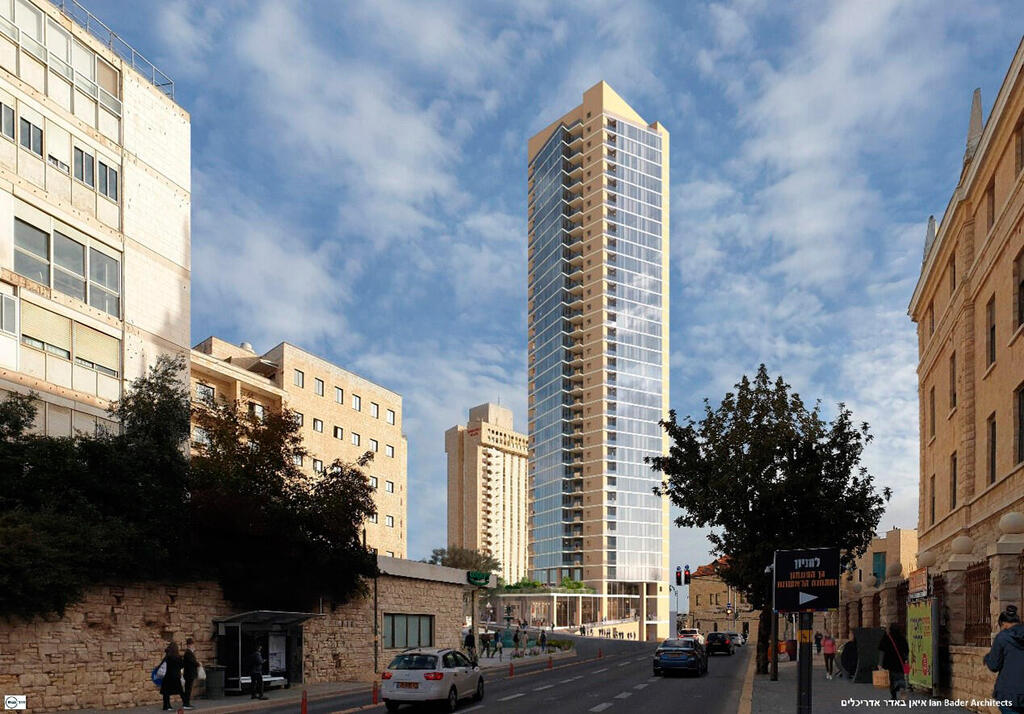
Jerusalem’s skyline is set for a major transformation after planning authorities approved a 30-story mixed-use tower at one of the capital’s most prominent intersections, clearing the way for the demolition of the well-known Beit Amir building near Paris Square.
The Jerusalem District Planning and Building Committee rejected objections to the project and approved the Agron Tower, planned for the corner of Agron and King George streets, beside Independence Park and along Jerusalem’s expanding light-rail network. The project will include 110 apartments, 114 hotel rooms, two floors of commercial space and an additional floor designated for public facilities.

The development will replace Beit Amir, also widely known as “Shufersal Agron,” a distinctive modernist building designed by celebrated Israel Prize-winning architect David Resnick. Built in the 1960s, the structure became a recognizable, if controversial, part of central Jerusalem’s architectural landscape. Its proposed demolition has generated years of debate between preservation advocates and supporters of substantially denser construction in the heart of the city.
There is also an unusual architectural connection between the old and new buildings. The tower is being designed by New York architect Ian Bader together with Anat Eilon and Baruch Resnick, the son of the architect who designed Beit Amir. Earlier planning discussions called for elements of the original building’s architectural language to be reflected in its replacement rather than simply erased.

The project reflects a much broader transformation underway across Jerusalem, where planners are increasingly concentrating high-density residential, hotel and commercial developments around major public transportation corridors. Officials said the Agron project’s combination of uses is intended to increase activity in the area and strengthen Jerusalem’s city center.
For a location already surrounded by some of Jerusalem’s most recognizable streets and landmarks, the change will be difficult to miss: a low-rise piece of the city’s 20th-century architectural history is set to give way to a 30-story tower overlooking one of the capital’s busiest central corridors.