
 Yeshiva World News
IRAN ADAPTS: Tehran Pierces U.S. Defenses As American Interceptor Stockpiles Dwindle
Iran has sharply improved the way it attacks American forces, combining drones and maneuvering missiles to overwhelm U.S. air-defense systems while the Pentagon burns through increasingly scarce interceptor stockpiles, a shift highlighted by the deadly Iranian strike that killed three U.S. soldiers in Jordan last month, The New York Times reports.
During five days of attacks on three U.S. bases in Jordan, Iran launched repeated waves of drones and missiles, including advanced weapons capable of changing course in flight. The attacks forced American forces to expend large numbers of Patriot interceptors in an effort to protect the bases. On the fifth day, one Iranian missile penetrated the defenses and struck prefabricated housing at a base on July 17, killing three U.S. soldiers and wounding more than 100 people. The Pentagon later acknowledged that scores of other troops were injured and several aircraft were damaged during attacks in Jordan that week.
Secretary of State Marco Rubio later acknowledged how close the defenses came to stopping the fatal strike. “We shot down almost all the missiles,” he said. “One leaked through.”
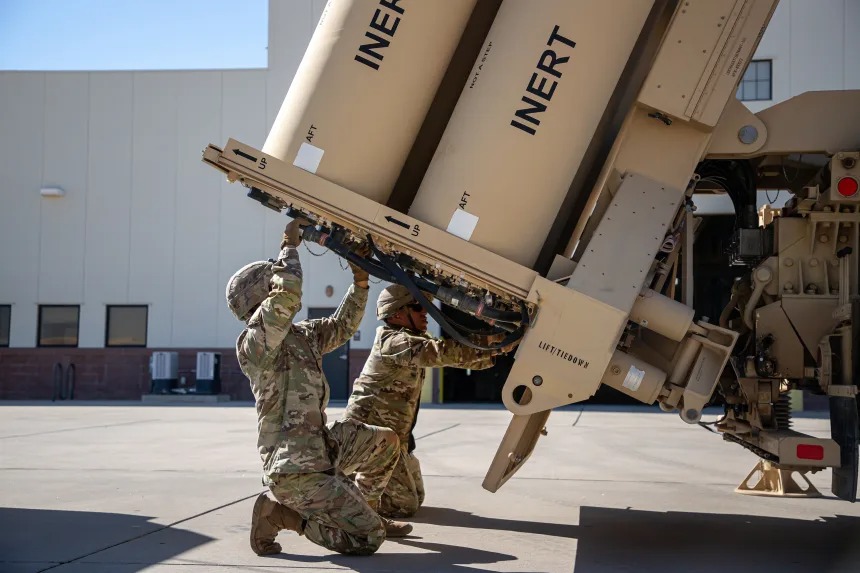
The attacks exposed a growing problem for the Pentagon: Iran has become more effective at finding ways around U.S. defenses at the same time American interceptor inventories are being rapidly depleted. The Pentagon has fired more than 1,500 Patriot interceptors during the war and has fewer than 1,700 remaining, according to people briefed on the sensitive stockpile levels. The United States produced only about 400 Patriot interceptors during all of 2025.
On one particularly intense day last month, U.S. forces across the Middle East fired roughly 50 Patriot interceptors, according to two American officials. Each interceptor costs approximately $6 million.
U.S. officials believe Iran has closely studied the war in Ukraine, where Russia has used combinations of ballistic missiles, cruise missiles and drones to strain Ukrainian air defenses. Tehran has adopted similar tactics, mixing different types of threats and forcing American defensive systems to respond simultaneously.
The Jordan attack targeted Muwaffaq Salti Air Base in Azraq, a Jordanian military installation increasingly used by the U.S. Air Force and serving as a major hub for dozens of aircraft and several thousand service members. Many American troops previously stationed in Kuwait, Bahrain, Qatar and the United Arab Emirates have relocated to Jordan during the conflict because bases there are farther from Iran and had been considered less vulnerable to Iranian drone and ballistic-missile attacks.
Following the July 17 strike, U.S. commanders strengthened air defenses in Jordan and elsewhere in the region. American military specialists who have studied Russian drone and missile attacks in Ukraine have also been working with U.S. Central Command for months, sharing lessons from that conflict. Two of the three American soldiers killed in Jordan belonged to air-defense units based in Germany that had been deployed as part of that effort.
Iran’s ability to adapt was demonstrated earlier in the war as well. In April, Iran shot down an American F-15E fighter jet over southern Iran using a shoulder-fired surface-to-air missile. Both the pilot and weapons systems officer ejected. The pilot was rescued quickly, while the weapons systems officer remained missing for nearly two days, hiding from Iranian security forces before being recovered by U.S. Special Operations forces.
American officials later concluded that Iran had used a swarm of drones to help locate the F-15E and provide Iranian commanders with three critical pieces of targeting information: the aircraft’s GPS position, speed and direction. The fighter’s crew said its countermeasures provided only about half a second of warning before the roughly $60 million aircraft was struck.
The Pentagon had initially portrayed Iran’s missile capabilities as badly damaged. Defense Secretary Pete Hegseth said on April 8 that Tehran’s missile program had been “functionally destroyed,” with launchers and missiles severely depleted. But many Iranian launchers were stored inside vast underground facilities. After U.S. and Israeli forces heavily bombed those sites during the first five weeks of fighting, Iran eventually dug out many of the launchers and resumed attacks.
That renewed capability has allowed Tehran to continue threatening American forces and has helped bring shipping through the Strait of Hormuz to a near standstill.
The dwindling supply of American interceptors has also become a factor in broader regional calculations. In late July, President Donald Trump asked Hegseth about diminishing U.S. weapons stockpiles. The Pentagon has publicly denied that it faces a shortage, saying claims of American munition shortages are false.
Two weeks ago, Trump canceled planned bombing raids against Iran after the leaders of Saudi Arabia, the United Arab Emirates and Qatar urged him to pursue diplomacy instead. During a telephone conversation, Saudi Crown Prince Mohammed bin Salman warned Trump that major U.S. strikes could prompt Tehran to attack energy facilities and other critical infrastructure across Saudi Arabia and neighboring states.
With American interceptor supplies under pressure and Iran having demonstrated that it can penetrate even heavily defended facilities, a Saudi official said the possibility of serious damage could no longer be dismissed, prompting Mohammed bin Salman to push Trump toward de-escalation.
Iran has continued evolving its tactics even during pauses in the fighting. The entry of Yemen’s Houthi militia into the war last month was viewed by analysts as another effort to force the United States and its allies to defend against attacks coming from multiple directions simultaneously.
Meanwhile, Iran continues to protect some of its most valuable assets deep underground. International inspectors believe portions of its nuclear program are being stored inside a heavily fortified complex in central Iran that the United States refers to as Pickaxe Mountain, buried more than 300 feet beneath a mountain. Iranian troops and senior leaders have also dispersed to hideouts across the country, further complicating American targeting efforts.
The result is a war in which Iran has increasingly learned how to exploit the limitations of U.S. defenses while forcing Washington to expend expensive and difficult-to-replace interceptors at a pace American production has struggled to match.
(YWN World Headquarters – NYC)