
 JBizNews
India Orders Refiners to Build Bigger LPG Buffer After Hormuz Disruptions Expose Supply Risk
India is ordering its oil industry to dramatically increase the amount of cooking gas it can produce at home, a major energy-security shift after disruptions around the Strait of Hormuz exposed how vulnerable the country remains to imported fuel.
Under an Aug. 13 government order, state-run and private refiners have been assigned the capacity to produce as much as 63,810 metric tons of liquefied petroleum gas a day when supplies are constrained.
That is significant because India currently consumes roughly 91,000 tons of LPG each day. The new production ceiling could therefore cover about 70% of daily demand domestically during an emergency.
India produced only about 35,900 tons a day domestically during the fiscal year ended March 2026, meaning the new targets would require refiners to be capable of pushing output far above normal levels when needed.
The government is also requiring companies to strengthen storage and transportation infrastructure so the additional LPG can actually reach consumers during a disruption.
The largest assignment goes to Reliance Industries, whose Jamnagar refining operation could be required to produce as much as 18,000 tons a day.
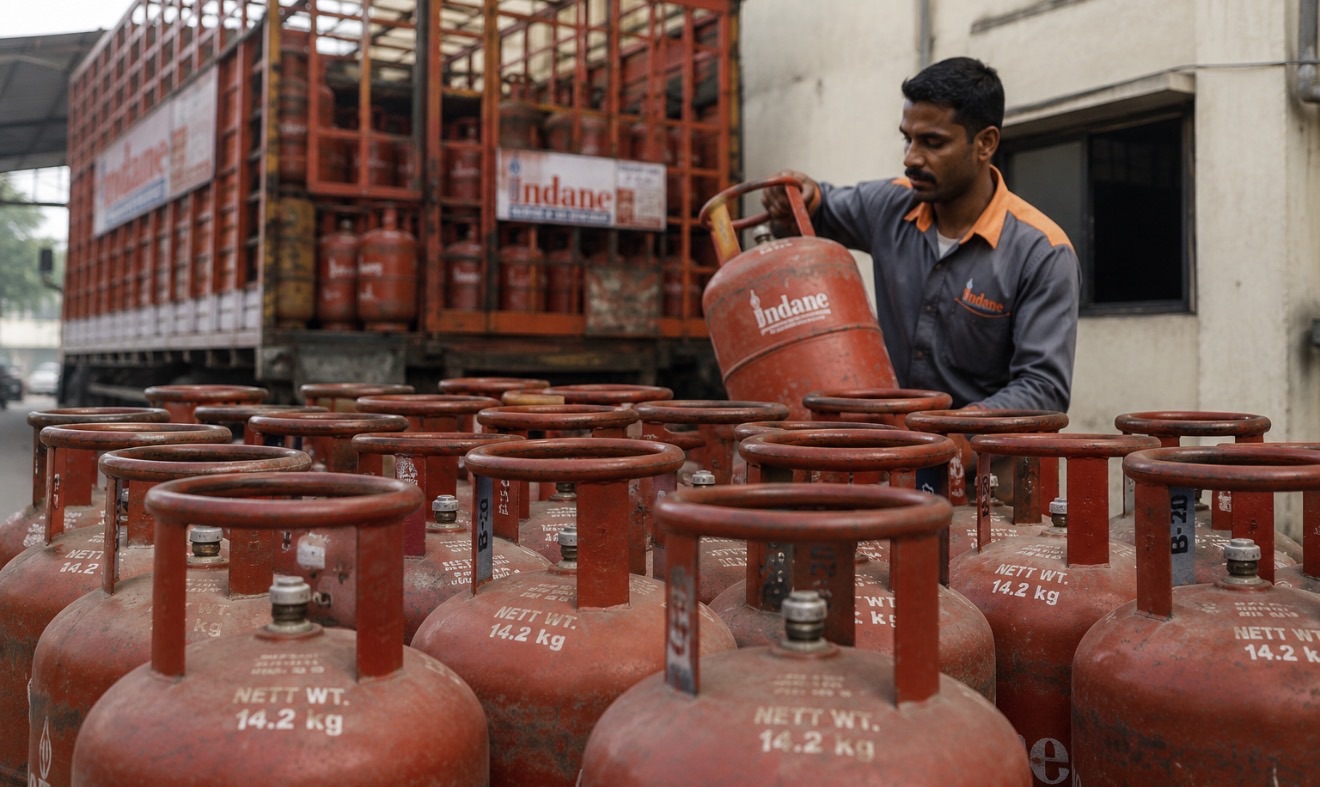
For India, LPG is not a niche petroleum product.
It is the cooking fuel used by hundreds of millions of households, restaurants and businesses. India consumed about 33.2 million metric tons during the 2025-26 fiscal year, while domestic production totaled only about 13.1 million tons.
Imports filled most of the gap.
And before the latest Middle East disruptions, roughly 90% of India’s imported LPG came from the Middle East, leaving the country heavily exposed to shipping through and around the Strait of Hormuz.
That vulnerability became impossible to ignore earlier this year when conflict involving Iran disrupted Gulf shipping and produced India’s worst LPG shortage in years.
The government was forced to take emergency measures, including redirecting fuel supplies and asking refiners to maximize domestic LPG production.
India has since moved aggressively to diversify.
State refiners are planning to obtain as much as 25% of the country’s LPG imports from the United States in 2027, while crude buyers have also sought supplies from Africa, Latin America and other routes that avoid Hormuz.
The latest order goes one step further.
Instead of relying only on finding alternative foreign suppliers after a crisis begins, India is trying to build enough domestic production capacity to absorb a much larger portion of demand itself.
That could have consequences across global energy markets.
If Indian refiners divert more refinery output toward LPG, it can affect the amount of other petroleum products they produce. Higher domestic LPG output could also reduce India’s need for some Middle Eastern cargoes while increasing competition for alternative supplies from the United States and elsewhere.
India is separately considering an even larger strategic-fuel programme that would create dedicated national reserves for LPG and liquefied natural gas for the first time.
The proposed plan could eventually cost about $42 billion and include enough LPG storage to cover roughly six weeks of demand.
Taken together, the policies show how the Strait of Hormuz crisis is beginning to permanently reshape energy planning far beyond the Middle East.
Countries that once optimized their supply chains around the cheapest available fuel are increasingly asking a different question:
What does it cost if that fuel suddenly cannot arrive at all?
For India, the answer is now leading to more domestic production, larger reserves and a more geographically diverse supply chain.
The new LPG targets are therefore not simply an emergency response.
They are an acknowledgment that energy security now requires paying for spare capacity before the next crisis arrives.
JBizNews Desk | New Delhi
© JBizNews.com All Rights Reserved. Reproduction or distribution without written permission is prohibited.