
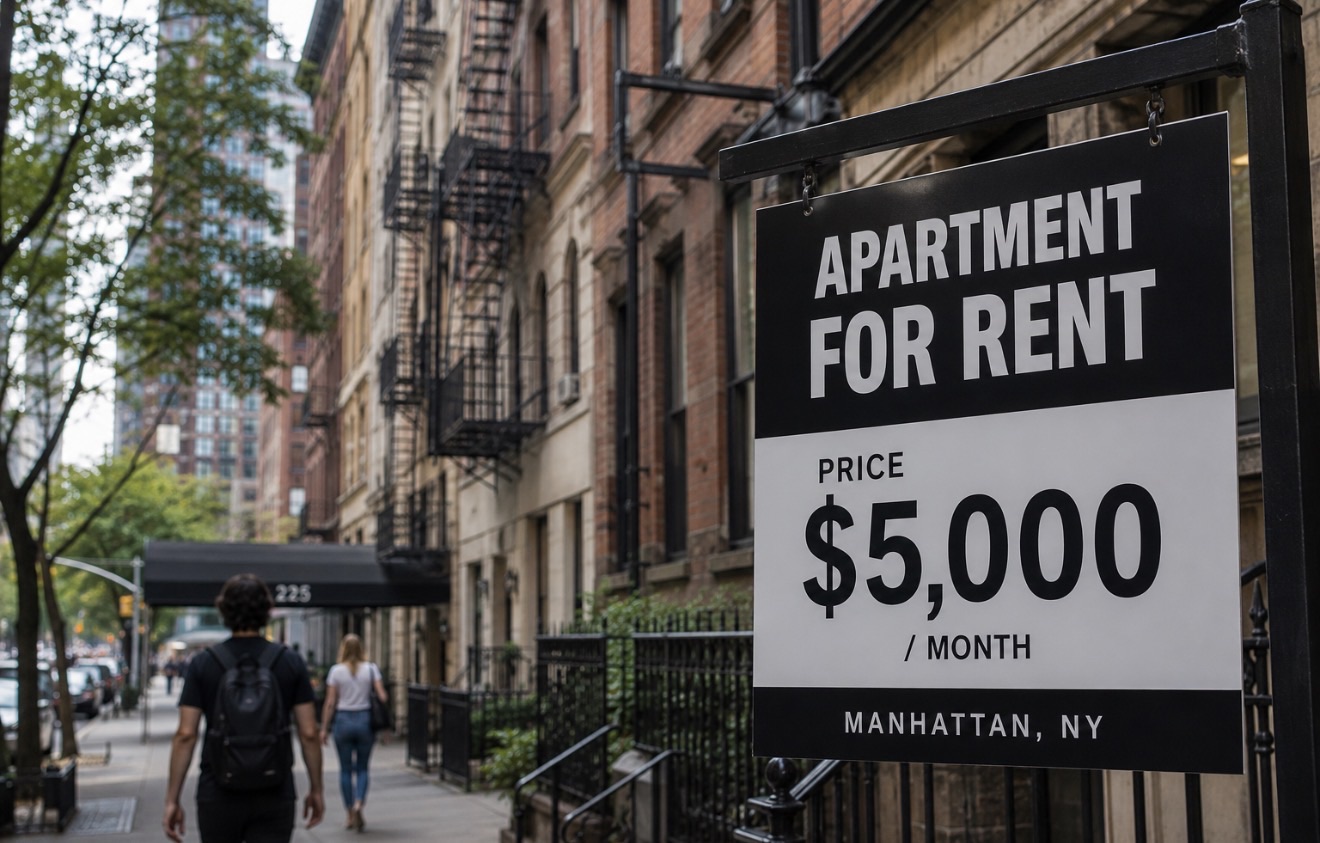

The median rent on a new Manhattan lease hit $5,000 in July, the highest figure ever recorded, and the reason is not that New Yorkers suddenly got richer. It is that there is almost nothing to rent.
The median on new market-rate leases signed last month rose 6.4% from a year earlier, according to appraiser Miller Samuel and The Real Deal — roughly double the 3.2% annual increase in shelter costs nationwide reported by the Bureau of Labor Statistics. The average Manhattan rent reached $6,306 and the average price per square foot passed $101, both records as well.
Listings fell 39% in July. Manhattan’s record-setting streak began in February 2025, and inventory has been nearly cut in half over the past year and a half.
The mechanism is a chain that starts in the sales market. High mortgage rates make buying expensive, so households who would normally purchase a first apartment stay in their rentals instead. Those units never come back onto the market. Fewer vacancies means fewer listings, and the listings that do appear draw more applicants than there are apartments. Landlords price accordingly.
“The growth rate of the median is double the rate of inflation,” said appraiser Jonathan Miller, who called the odds of the trend continuing high, and attributed much of the pressure to would-be buyers staying put in rental units.
The squeeze shows up in transaction counts as clearly as in prices. Only about 6,000 new leases were signed in Manhattan in July, down 20% from a year earlier. Brooklyn’s roughly 3,000 new leases were down by nearly a third, and Brooklyn set records across all three measures too, with a median of $4,500 — up 17% year over year. Falling volume alongside rising prices is the signature of a supply problem rather than a demand boom: fewer deals are getting done because there is less to rent, not because more people are competing.
Apartments are also moving faster. Days on market for vacant units fell roughly 30% from a year earlier, to about 36 days in Manhattan and 37 in Brooklyn, with well-priced listings disappearing almost as soon as they post, according to Corcoran’s Gary Malin.
Set the number against income and the arithmetic explains the political temperature. A $5,000 median works out to $60,000 a year, against a median household income in the city of roughly $87,640 — meaning the typical household would spend something close to seven of every ten dollars it earns before taxes on rent at the median. The standard affordability benchmark is three in ten. The gap is why the market rate is effectively out of reach for the median New York household, and why the tenants paying it skew heavily toward finance, tech and dual-income professionals.
Mayor Zohran Mamdani has capped rents for tenants in stabilized apartments, but the roughly two-thirds of the housing stock outside that system continues to climb. Some in the industry argue landlords who own buildings containing both regulated and market-rate units raise the unregulated rents to offset the freeze on the regulated ones — a claim advanced by real estate interests and disputed by tenant advocates, and one the July data can neither confirm nor refute on its own.
The FARE Act, which bars landlords from passing broker fees to tenants who did not hire the broker, passed its one-year mark in June, and its effect on rents remains contested among brokers, lawmakers and housing advocates. The argument is that fees once charged upfront have simply been folded into monthly rent.
Rents in the city normally rise through the summer moving season and flatten in the fall. Miller said he is not confident that happens this year, pointing to expectations that mortgage rates rise further — driven by tariffs, higher energy and transportation costs tied to the Iran war, and a new Federal Reserve chair signaling rates may need to go up. Higher mortgage rates keep more would-be buyers renting, which keeps supply tight, which keeps rents climbing. The loop reinforces itself.
For employers, that is the number worth watching. Manhattan rent is now a fixed cost in every hiring conversation the city’s businesses have, and it is rising at twice the national pace for housing.
JBizNews Desk | New York
© JBizNews.com All Rights Reserved. Reproduction or distribution without written permission is prohibited.