
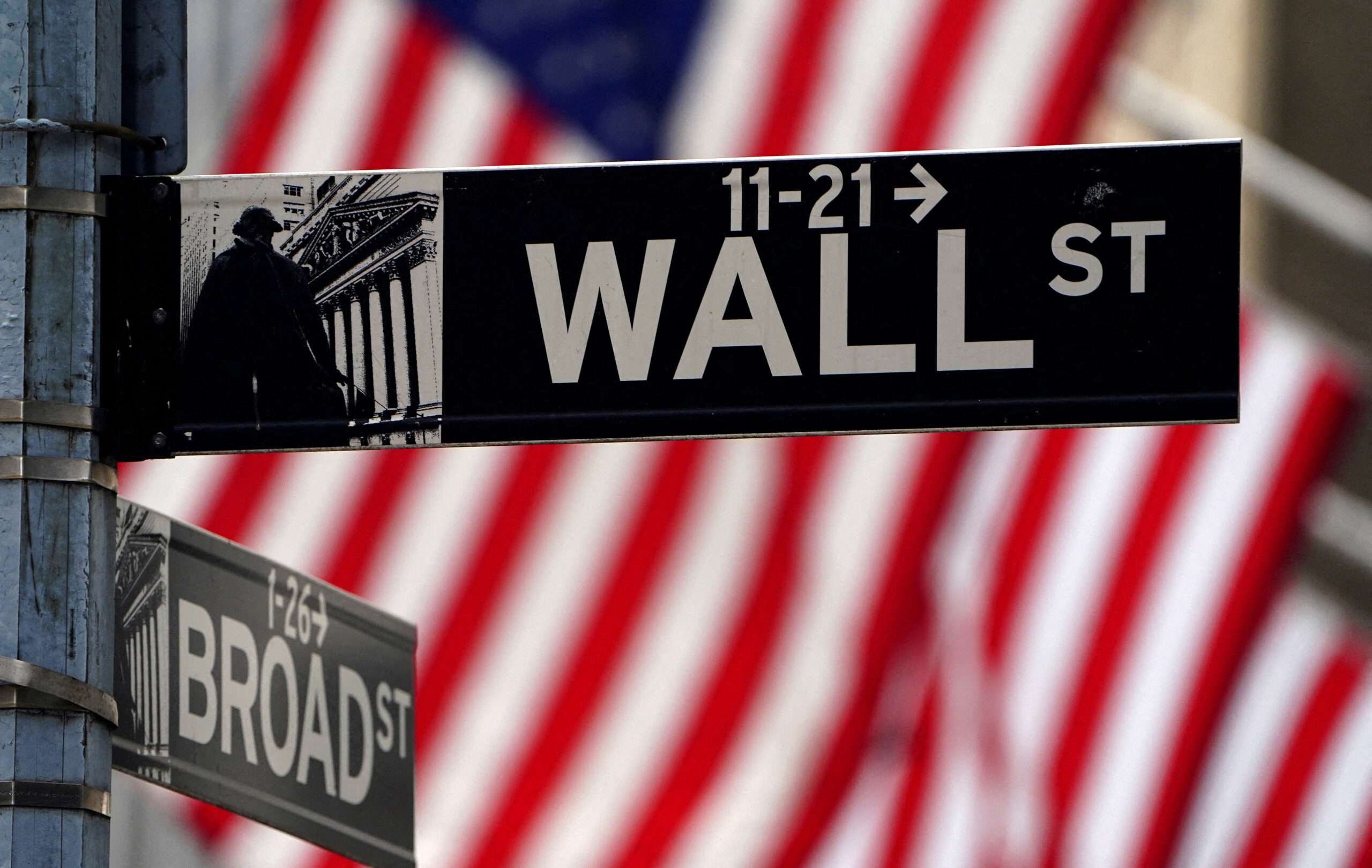

Wall Street broke its three-day losing streak Wednesday, but the modest index gains concealed a much bigger day underneath the market.
Moderna delivered a breakthrough late-stage result for its personalized melanoma vaccine, Treasury intervened to calm long-term bond markets, Federal Reserve officials showed a stronger willingness to raise interest rates, and several major developments demonstrated how quickly AI computing is becoming an industry with its own chips, energy infrastructure and financial markets.
Markets — Stocks Recover as Treasury Calms the Bond Market
The S&P 500 gained 0.24% to close at 7,709.91. The Dow Jones Industrial Average rose 123.94 points, or 0.23%, to 53,467.34, while the Nasdaq Composite added 0.15% to finish at 26,331.09.
The rebound came after the Treasury Department said it would at least double the maximum size of certain buybacks involving longer-term government debt, from $2 billion to $4 billion per operation.
The move targeted the 10-to-20-year and 20-to-30-year portions of the Treasury market, where rising yields had been increasing borrowing costs and placing pressure on expensive technology stocks.
The 30-year Treasury yield, which had touched its highest level since 2007, retreated toward 5.20%. The 10-year yield fell to roughly 4.66%.
Technology stocks remained uneasy despite the broader recovery. Marvell Technology gained about 8% following an expanded agreement with Google, while Broadcom fell approximately 5% as investors reconsidered competition in custom AI chips.
Estée Lauder jumped following a stronger-than-expected profit forecast. La-Z-Boy, meanwhile, entered Wednesday under heavy pressure after dropping roughly 16% in Tuesday’s after-hours trading following an unexpected quarterly loss and weak sales outlook.
Medicine & Markets — Moderna Soars After Melanoma Vaccine Breakthrough
The day’s most dramatic corporate development came from Moderna and Merck, whose personalized mRNA cancer vaccine succeeded in a late-stage melanoma trial.
Moderna shares surged roughly 177%, adding tens of billions of dollars to the vaccine maker’s market value. Merck rose more than 10%, becoming one of the Dow’s strongest contributors, while BioNTech, Novavax and other biotechnology companies also advanced.
The treatment, known as intismeran autogene, is designed individually for each patient by analyzing the genetic mutations in that person’s tumor. The resulting vaccine trains the immune system to recognize cancer cells carrying those mutations.
When combined with Merck’s Keytruda, the treatment reduced the risk of melanoma returning or spreading among high-risk patients following surgery. The Phase 3 results represent an important validation of personalized mRNA technology outside infectious diseases.
The commercial implications are substantial. Moderna has been searching for a major source of growth beyond its declining COVID-19 vaccine business, while Merck needs new products capable of extending its cancer franchise as Keytruda approaches the loss of key patent protections.
The results sent the S&P 500 healthcare sector to a record high and transformed one clinical trial into one of the year’s most consequential biotechnology events.
Federal Reserve — Another Rate Increase Remains Possible
Minutes from the Federal Reserve’s July meeting showed substantially greater concern about inflation than markets had anticipated.
The Fed held its benchmark rate at 3.50% to 3.75% by a 9–3 vote. Beth Hammack, Neel Kashkari and Lorie Logan favored an immediate quarter-point increase, while several additional policymakers also supported tighter policy during the discussion.
More importantly, “many” participants believed additional tightening would probably become necessary if inflation failed to move toward the Fed’s 2% target.
That matters directly to businesses waiting for cheaper financing.
Even if the Fed leaves rates unchanged in September, the minutes weakened expectations that meaningful rate cuts are approaching. Commercial mortgages, equipment loans, business credit and consumer financing could remain expensive longer than many companies anticipated.
AI Chips — Google Gives Marvell a Major Seat at the Table
Google expanded its relationship with Marvell Technology, agreeing to work with the chipmaker on specialized hardware connected to Google’s Tensor Processing Units.
The arrangement covers AI inference accelerators, storage controllers, networking components and near-memory computing products.
Marvell also issued Google a warrant giving it the right to purchase as many as 58.97 million shares at $206.58 each. The aggregate exercise price would be approximately $12.2 billion, although much of the warrant will vest only if purchasing and revenue targets are reached through 2033.
The larger business story is supplier diversification.
Google does not want the expansion of its AI infrastructure dependent on a single custom-chip partner. The same logic that has long shaped automobile and semiconductor supply chains is now moving deeper into AI: hyperscalers increasingly want multiple suppliers capable of designing processors, networking chips, storage controllers and specialized accelerators.
The agreement does not remove Broadcom, Google’s established custom-chip partner, but it gives Marvell a significantly larger position in Google’s supply chain.
AI Economics — Computing Power Is Becoming Something Companies May Hedge
The Commodity Futures Trading Commission asked for public comment on derivatives tied to computing power, an early regulatory step toward treating AI compute as a tradable commodity.
The agency is examining compute cash markets, liquidity, manipulation risks, customer protections and perpetual compute futures.
The concept is similar to how airlines hedge fuel or manufacturers lock in future prices for metals and currencies. For AI companies, computing capacity is becoming a raw material whose cost and availability can determine whether a product is profitable.
If GPU access or data-center capacity becomes scarce and prices fluctuate sharply, derivatives could eventually allow companies to secure future computing costs rather than remaining fully exposed to the spot market.
AI infrastructure is beginning to resemble an actual commodity market.
Technology Deals — Stripe Buys Its Way Deeper Into AI
Stripe agreed to acquire OpenRouter, a platform that allows developers to access and route requests among hundreds of AI models through a single interface.
Stripe did not disclose the price. Earlier reporting valued the transaction above $7 billion, while another report placed it at approximately $8 billion.
OpenRouter says it supports more than 400 AI models, processes over 10 trillion tokens daily and serves more than 10 million developers and businesses.
Stripe built its business by becoming the financial infrastructure beneath internet commerce. OpenRouter gives it a position within the operational and financial infrastructure supporting AI consumption.
As companies increasingly pay for artificial intelligence by the token rather than by the traditional software seat, routing, measuring and billing for those tokens could become a major business of its own.
Energy & Manufacturing — EV Battery Factories Find a New Customer in AI
LG Energy Solution is shifting a growing portion of its North American production from electric-vehicle batteries toward large energy-storage systems.
The pivot reflects two forces moving in opposite directions: electric-vehicle growth has developed more slowly than battery manufacturers expected, while electricity demand from AI data centers is accelerating.
By the end of this year, five of LG Energy’s eight North American factories are expected to manufacture energy-storage batteries or be preparing to do so. Its Lansing, Michigan, facility will produce cells for both energy-storage systems and electric vehicles and is expected to supply batteries connected to Tesla’s storage business.
The shift shows how the AI boom is spreading far beyond Silicon Valley.
Data centers require chips, but they also need enormous quantities of electricity, backup power, transformers, cooling equipment, batteries, generators and transmission infrastructure. Factories originally built for the EV boom are now finding a second customer in the AI power boom.
Business Costs — Productivity Absorbs Part of the Tariff Hit
Research from the Federal Reserve Bank of Boston offered an important explanation for why tariffs have not pushed consumer inflation as high as some forecasts anticipated.
Researchers found that industries confronting larger tariff-related costs also experienced stronger labor-productivity growth. Companies maintained output while reducing labor hours, allowing them to absorb part of the increase rather than immediately passing the full expense to customers.
The researchers estimated that tariffs—whose average rate increased from approximately 2.5% before President Trump’s return to about 10%—combined with productivity conditions to add roughly half a percentage point to core personal-consumption-expenditures inflation.
The findings do not mean tariffs carried no consumer cost. Other Federal Reserve research has found substantial tariff pass-through, and the Boston Fed acknowledged that additional forces have kept inflation above the central bank’s target.
For business owners, however, the lesson is significant: productivity is increasingly becoming the difference between absorbing higher input costs and raising prices.
Technology & Regulation — Meta Faces Its Biggest Child-Safety Test Yet
A major federal trial against Meta entered its second day Wednesday, with former Meta engineering director and Instagram safety consultant Arturo Bejar testifying that the company placed growth and engagement ahead of protections for younger users.
California, Colorado, Kentucky and New Jersey accuse Meta of designing Facebook and Instagram to encourage harmful use among minors. Those states and 25 others also allege that the company improperly collected and used personal information belonging to children under 13.
The trial is expected to last six weeks, and Mark Zuckerberg is expected to testify. Meta denies the allegations and says it has invested heavily in protections for teenagers and younger users.
The stakes extend beyond potential damages.
A ruling requiring changes to Facebook or Instagram’s design, age verification, advertising or recommendation systems could alter the economics of two of the world’s largest digital-advertising platforms.
Banking — Signature Bank Investors Get Another Chance in Court
A federal appeals court revived shareholder litigation arising from Signature Bank’s 2023 collapse, rejecting the Federal Deposit Insurance Corporation’s argument that investors lost their right to pursue securities-fraud claims when the agency became the bank’s receiver.
Investors accuse seven former Signature executives and directors, along with former auditor KPMG, of misrepresenting the bank’s liquidity risks and risk-management practices before its failure.
The appeals court ruled only that shareholders retained the right to bring their claims. It did not decide whether the fraud allegations were valid, and the case will now return to federal district court for further proceedings.
The decision could matter beyond Signature by preserving shareholders’ ability to pursue executives, directors and auditors after future bank failures instead of leaving every potential claim exclusively with federal regulators.
What to Watch Thursday
Walmart is the largest corporate event Thursday morning. The retailer will release quarterly results before the market opens, followed by its investor call at 8 a.m. Eastern.
With recent retail data showing pressure on discretionary spending, Walmart will provide one of the clearest readings on whether American households are trading down, reducing purchases or shifting more of their spending toward lower-priced retailers.
Weekly jobless claims and the Philadelphia Fed manufacturing survey arrive at 8:30 a.m. Eastern. After Wednesday’s Fed minutes demonstrated that policymakers remain prepared to raise rates if inflation persists, unexpectedly strong or weak economic data could have an outsized effect on Treasury yields.
Alibaba and Deere also report Thursday. Alibaba will provide another look at Chinese consumer demand and AI investment, while Deere will offer a direct reading on agriculture, construction equipment and the financial condition of farmers facing elevated borrowing and fuel costs.
Wednesday’s broader business message was that AI is no longer simply a technology story. It is becoming a chip-supply story, an electricity story, a battery story, a financing story—and potentially a commodities-and-derivatives story.
At the same time, the Federal Reserve is reminding businesses that the cost of financing that investment may remain high.
JBizNews Desk | Wall Street
© JBizNews.com All Rights Reserved. Reproduction or distribution without written permission is prohibited.