
 Vos Iz Neias
US Military Runs Covert Operation to Keep Oil Flowing Through Strait Of Hormuz
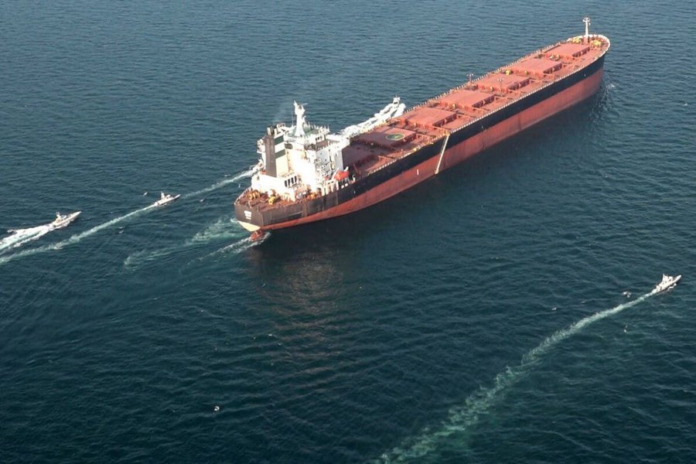
TEHRAN (VINnews) — The U.S. military has been conducting a covert operation in recent weeks to keep oil tankers moving through the Strait of Hormuz despite the threat of Iranian attacks, establishing a protected southern shipping corridor along Oman’s coast, according to a report by Israeli journalist Barak Ravid.
Under the operation, approximately 15 to 20 tankers are reportedly passing through the southern section of the strategic waterway each night. The U.S. military is coordinating the movements and providing aerial protection as the vessels enter and leave the Persian Gulf.
The development was also reported by other international media. Axios reported that the U.S. military has been overseeing the movement of empty tankers into the Gulf, where they load oil before being escorted safely back through the Strait. The operation is designed to maintain energy exports despite the ongoing conflict with Iran.
The Strait of Hormuz is one of the world’s most important energy chokepoints, connecting the Persian Gulf with the Gulf of Oman and the Indian Ocean. Any prolonged disruption to shipping through the waterway can have major consequences for global energy supplies and prices.
According to the latest reports, roughly 10 million barrels of oil per day are currently moving through the strait, around half the volume transported before the war. Bloomberg previously reported that U.S. military support had helped raise commercial oil flows through Hormuz to more than 10 million barrels per day.
The operation relies on carefully scheduled movements. According to the reports, large groups of tankers transit the southern corridor at night, while another convoy enters the Gulf during a separate time window.
The strategy minimizes the amount of time commercial vessels are exposed to potential Iranian attacks while allowing U.S. forces to concentrate their protection around the convoys.
American fighter aircraft operate over the shipping lanes, providing protection against Iranian drones and cruise missiles. The air-defense component has become particularly important as Iran has attempted to disrupt maritime traffic by launching weapons toward areas where it believes tankers are operating.
The southern route is particularly significant because it runs closer to Omani waters and farther from Iran’s coastline. Oman and the International Maritime Organization previously established guidelines for a southern corridor for commercial vessels, with shipping data showing significant use of the route. S&P Global reported in June that 42% of vessels transiting the strait were using the Oman-managed corridor.
Iran, however, has objected to the route. The Islamic Revolutionary Guard Corps warned vessels against using the southern corridor, calling the alternative route dangerous and unacceptable.
One of the factors reportedly making the operation possible is the damage inflicted on Iranian radar and maritime surveillance systems during recent U.S. strikes.
The damage has reportedly reduced Iran’s ability to continuously track shipping movements through the strait. Although Iranian forces have restored some radar systems and continue to collect intelligence using Revolutionary Guard fast boats and observers, their ability to maintain a comprehensive picture of maritime traffic has been significantly weakened.
That makes precise attacks on tankers more difficult. Instead of knowing exactly where individual ships are located, Iranian forces may have to launch drones or cruise missiles toward areas where they believe the vessels are likely to be traveling.
The threat nevertheless remains serious. Several commercial vessels have already been attacked or damaged during the conflict, while U.S. forces have intercepted numerous Iranian drones and missiles.
The broader American strategy has been documented previously by Reuters, which reported in June that the U.S. military was overseeing covert ship-to-ship oil transfers and using aircraft, waterborne drones and helicopters to help guide tanker convoys. The transfers took place near Fujairah in the United Arab Emirates and near Oman’s port of Sohar.
The Guardian, citing Lloyd’s List, also reported that U.S. forces had been conducting “overwatch operations” using autonomous vehicles, aircraft and drones to support tanker movements through the southern part of the strait. Some vessels have reportedly switched off their Automatic Identification System transmitters to make their movements more difficult to track.
The stakes extend far beyond the immediate military confrontation. Before the war, approximately 15 million barrels of crude oil and 5.5 million barrels of refined petroleum products passed through the Strait of Hormuz each day, according to shipping data cited by The National.
Maintaining even partial traffic therefore provides a crucial outlet for Gulf producers while reducing pressure on global energy markets. A complete closure, by contrast, could trigger a major disruption in oil supplies and send prices sharply higher.
The current U.S.-backed corridor has effectively become an important wartime energy artery. Reuters has described the broader effort as an American-supervised operation designed to keep Gulf energy exports flowing despite the security risks.
For now, tankers continue to move through the southern corridor in carefully coordinated windows, supported by U.S. military surveillance and air power.
The central question is whether Washington can maintain the route for an extended period, and whether Iran will be able to restore enough of its surveillance network to identify and target the convoys more effectively.