
 Matzav
Senate Targets ‘Fraudster Families’ After Clans Allegedly Looted $50 Million From Taxpayers
WASHINGTON — A sprawling series of fraud schemes involving relatives working together to siphon millions of dollars from federal programs has prompted Sen. Joni Ernst to push legislation aimed at preventing the families of convicted fraudsters from continuing to collect government money.
The Iowa Republican’s effort was fueled in part by the extraordinary case of a California family that stole $18 million in COVID-19 relief funds and used the proceeds to bankroll an extravagant lifestyle that included luxury real estate, diamonds and a Harley-Davidson motorcycle.
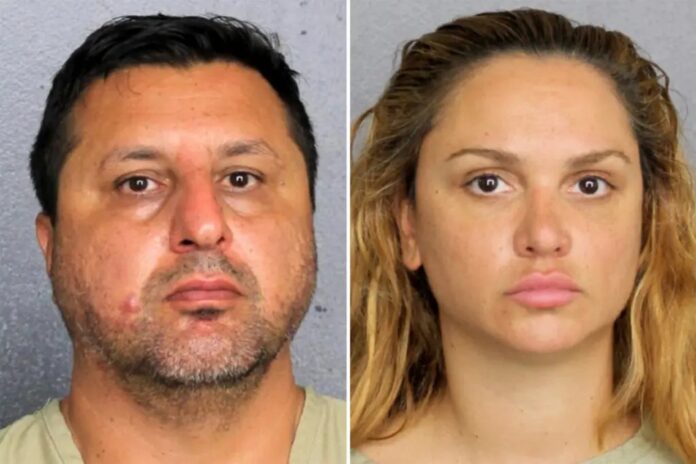
At the center of that operation were Richard Ayvazyan and his wife, Marietta Terabelian. After the pair were convicted on fraud charges, they removed their electronic monitoring bracelets, left their three children behind with a farewell note and fled the United States. Their run from authorities eventually ended when they were apprehended in Montenegro.
Federal authorities identified Ayvazyan as the leader of the massive COVID relief operation, while Terabelian was among the relatives who participated in the scheme.
The stunning case later caught the attention of Ernst, who has headed the Senate DOGE Caucus and is now seeking to shut off federal assistance to what she calls “fraud families.”
Her proposed No Cash for Cohabitating Kins of Crooks Act would prevent people residing with convicted criminals or fraudsters who have been barred from receiving certain federal funds from obtaining those benefits themselves. The restrictions would apply to federal grants, loans, subawards and reimbursements.
The proposal contains exceptions intended to protect spouses who maintain separate residences from the convicted individual, as well as victims of domestic abuse.
“Committing fraud is literally all relative for these families of felons,” Ernst told The Post. “My latest investigation found schemes sprouting from family trees across the country, with kin teaming up to rip off taxpayers to the tune of $50 million.”
Ernst, who is retiring from the Senate, spotlighted 15 families accused or convicted of participating in such schemes as part of her August Squeal Award, a monthly initiative she uses to call attention to government fraud, waste and abuse. She labeled the collection of alleged family scammers a “shady bunch.”
Heading Ernst’s compilation was the California COVID relief case involving Ayvazyan and his relatives.
Following their capture in Montenegro, Ayvazyan and Terabelian were returned to face their sentences. Ayvazyan is serving 17 years in prison, while Terabelian received a six-year term.
The husband-and-wife team did not act alone. Authorities said they worked with Tamara Dadyan, Ayvazyan’s sister-in-law and a onetime Los Angeles-area real estate broker, along with her husband, Artur Ayvazyan.
Prosecutors said members of the group used identities stolen from foreign exchange students, elderly individuals and people who had died to fraudulently obtain $18 million in pandemic relief money. The operation unraveled, and convictions followed in 2021.
During sentencing, the judge overseeing the case excoriated Ayvazyan as a “cold-hearted fraudster” who “views fraud as an achievement.”
Ernst’s examples extend well beyond California. She also pointed to convictions involving members of a Minnesota family tied to the notorious $250 million Feeding Our Future fraud scandal. Gandi Yusuf Mohamed and five relatives were accused of stealing more than $10 million through the Federal Child Nutrition Program.
The federal money was supposed to provide food for 5 million children in need. The case also generated a political controversy after one member of the Mohamed family was revealed to have met with Minnesota Attorney General Keith Ellison, an encounter that subsequently drew attention from Republican members of Congress.
Another family featured in Ernst’s investigation was the Edwards family, which was living in Florida when members allegedly created a fraudulent family ministry and sought approximately $6 million through the Small Business Administration’s Paycheck Protection Program during the COVID pandemic.
The application was allegedly approved by an elderly accountant who was said to be suffering from dementia. Instead of $6 million, the operation received roughly $8.4 million after the Edwards family claimed its organization employed more than 500 people. Most family members were never charged, including patriarch Evan Edwards, a pastor who was ultimately found incompetent to stand trial.
His son, Josh Edwards, did face punishment and was sentenced earlier this year to four years and three months in federal prison.
Ernst also drew attention to four sisters she branded “grifting grandmothers,” who obtained approximately $11.5 million from the Department of Agriculture by submitting roughly 200 fraudulent applications for agricultural assistance.
Authorities said the sisters spent their ill-gotten money on expensive vehicles, homes worth six figures and other purchases. Federal investigators later concluded that the women “in most cases, had not even attempted to farm.” Prosecutors subsequently brought approximately 115 fraud charges against them.
The senator’s investigation further included a Washington state case in which members of one family allegedly posed as caregivers and collected $1.1 million from a Department of Veterans Affairs program. At the heart of the fraud was Kelly Lee-Carroll, who represented herself as partially paralyzed and unable to walk while arranging for her sister and son to act as her caregivers.
The scheme eventually resulted in prison time. Lee-Carroll was sentenced to 17 months behind bars, while her son received a 14-month sentence.
Altogether, Ernst’s office says the 15 “fraudster families” highlighted in its investigation were responsible for approximately $50 million in stolen funds. The No Cash for Cohabitating Kins of Crooks Act is the latest measure the senator has introduced as part of her broader campaign against fraud, waste and abuse involving taxpayer money.
“Their next scam-ily reunion will be in the slammer,” Ernst further chided.