 Jewish Breaking News
Iran’s Strikes Inflicted Billions in Damage on U.S. Spy Network, Hitting CIA Sites and Missile-Defense Radars
Iran’s missile and drone campaign against the United States inflicted billions of dollars in damage on American intelligence facilities and highly sensitive surveillance equipment across the Middle East, according to a new report that reveals a previously hidden cost of the Iran war.
NBC News, citing four people with knowledge of the damage, reported that the destruction suffered by the CIA and other U.S. intelligence agencies was unprecedented in scale. Congress has been forced to direct money toward repairing or replacing damaged infrastructure, while some of the affected equipment was jointly operated by the intelligence community and U.S. military.

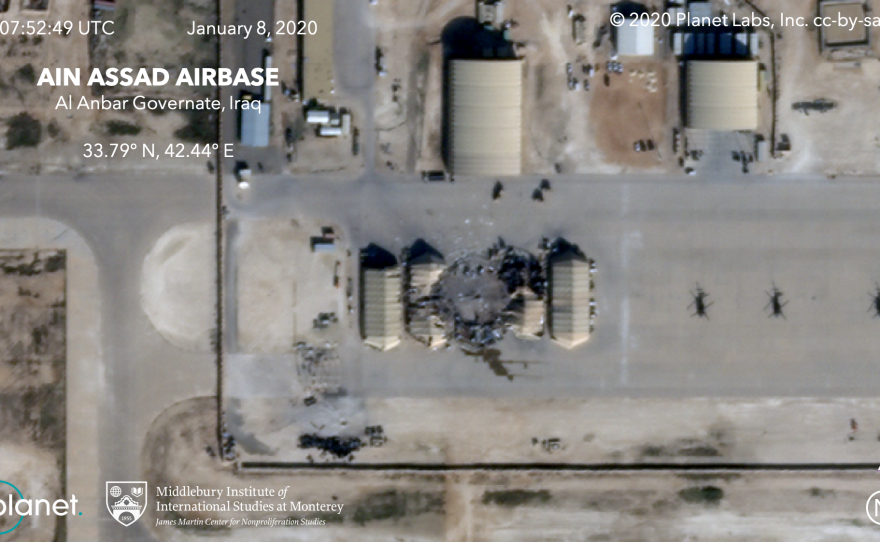
Among the sites struck was a CIA station inside the U.S. Embassy in Riyadh, one of Washington’s most important intelligence hubs in the Gulf, as well as a separate intelligence facility in eastern Iraq. Iran also hit radar, communications and surveillance systems spread across the region.
The Riyadh strike was particularly striking. Two drones hit the U.S. Embassy complex, with one reaching the area housing the CIA station. No CIA personnel were reported wounded. U.S. and Saudi officials publicly acknowledged the attack on the embassy at the time but did not initially disclose that the intelligence station had been hit. Reuters reported that there was no indication at the time that the CIA office itself had been deliberately selected as the target.
The accuracy of several Iranian attacks later triggered another sensitive question inside Western intelligence circles: whether Tehran had outside help. Reuters reported that analysts examined whether Russia may have supplied targeting information or improved technology for Iranian drones used against CIA-linked facilities. One intelligence assessment reportedly pointed to Russian-enhanced navigation technology, although no definitive public conclusion has been reached that Moscow directed the attacks.

EAST CHINA SEA (Dec. 6, 2010) The aircraft carrier USS George Washington (CVN 76) transits the East China Sea. George Washington is participating in Keen Sword 2010 with the Japanese Maritime Self-Defense Force through Dec. 10. (U.S. Navy photo by Mass Communication Specialist 3rd Class Casey H. Kyhl/Released)
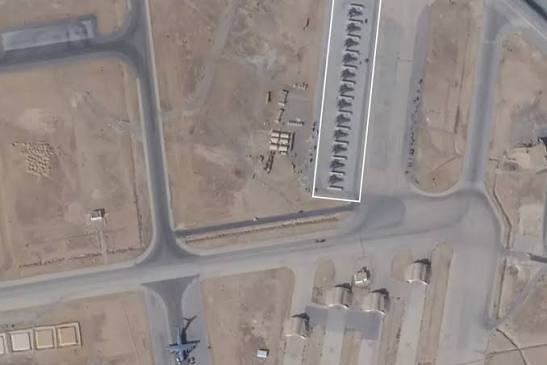
Iran also succeeded in damaging some of the expensive sensors underpinning the region’s U.S.-led missile-defense network. A U.S. official confirmed the destruction of an AN/TPY-2 radar in Jordan, a system associated with THAAD missile defense and valued in the hundreds of millions of dollars. Satellite imagery and other analysis documented additional strikes against radar installations in Qatar, Bahrain, Kuwait, Saudi Arabia and the UAE. ABC News found at least 10 U.S. or allied radar sites had been struck during the early phase of the conflict.
The damage adds another layer to the enormous cost of the war. CSIS previously estimated U.S. war costs at roughly $34 billion to $42 billion, including billions in equipment losses, damage and the enormous consumption of precision weapons. More recent CSIS analysis found that U.S. inventories of critical Patriot and THAAD interceptors have been heavily depleted, creating concerns not only about another round against Iran but about American readiness for a simultaneous crisis involving China, Russia or North Korea.

Still, Iran’s ability to land painful blows did not prevent U.S. and allied forces from continuing major operations. CSIS assessed that air defenses achieved high interception rates and that the Iranian attacks, despite causing casualties and extensive damage, failed to significantly disrupt coalition operations. What they did expose was a vulnerability Washington can no longer ignore: fixed intelligence stations, radars and command infrastructure that once operated as relatively protected rear-area assets are now well within the reach of Iran’s missiles and drones.
The result is likely to force a broader reassessment of how the United States protects and disperses some of its most sensitive intelligence and missile-defense infrastructure across the Middle East, even as Washington rebuilds equipment that may cost billions to replace.