
 Vos Iz Neias
Bessent Accuses Warren Of Misunderstanding Treasury’s Yen Intervention
WASHINGTON (VINnews) — Treasury Secretary Scott Bessent on Friday accused Sen. Elizabeth Warren of misunderstanding a recent U.S. intervention in the Japanese yen, saying the Massachusetts Democrat wrongly treated a currency purchase as a loan that Japan would have to repay.
Bessent posted the remarks on X after releasing a letter dated Thursday that answered Warren’s Aug. 13 request for details on the Treasury Department’s use of the Exchange Stabilization Fund to buy yen. The fund is a Treasury reserve used at times to stabilize currency markets.
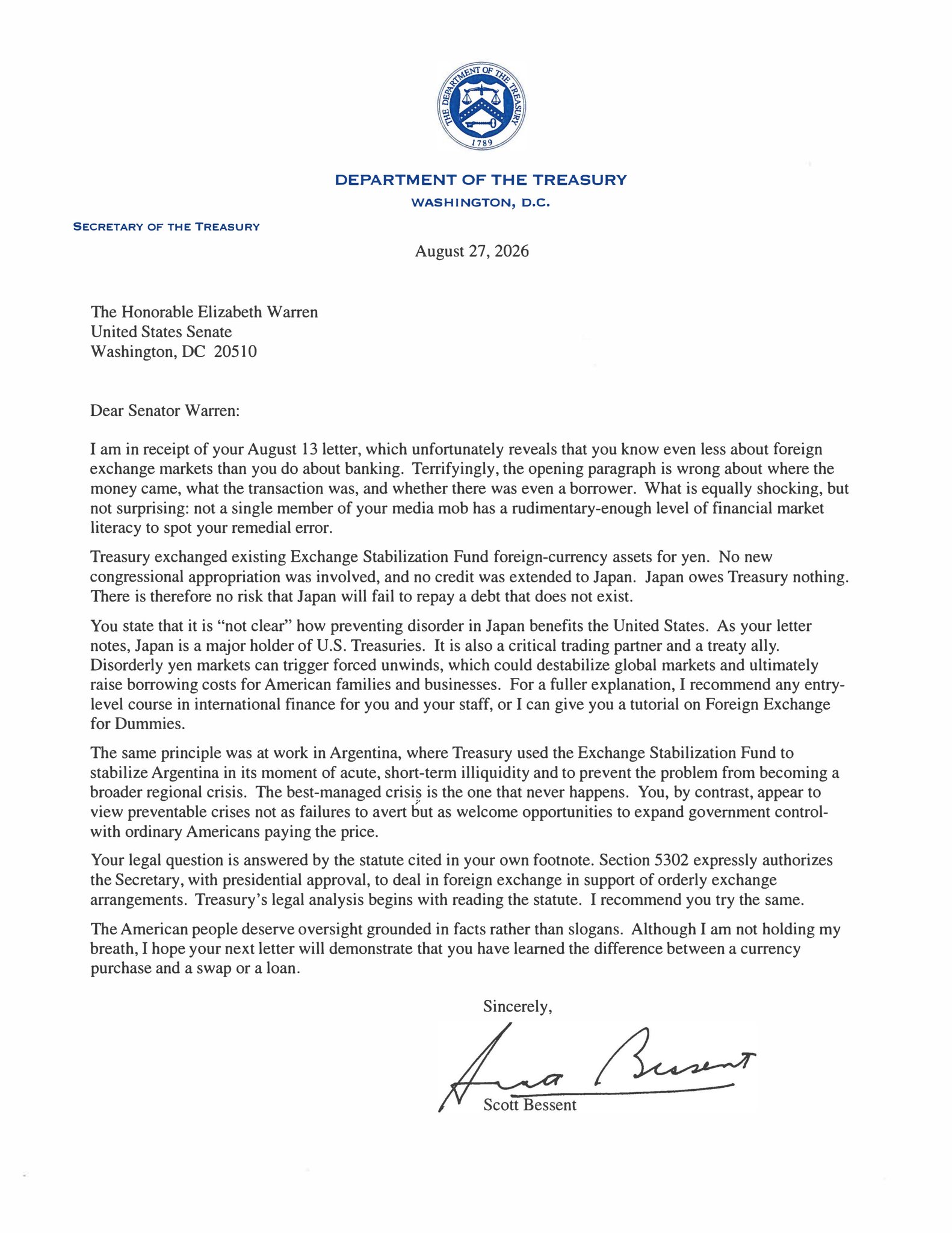
“In her latest sciolistic letter to me, @SenWarren made it clear that she knows even less about foreign exchange markets than she does about banking,” Bessent wrote. He said no member of what he called the “media mob” had spotted what he described as a basic error.
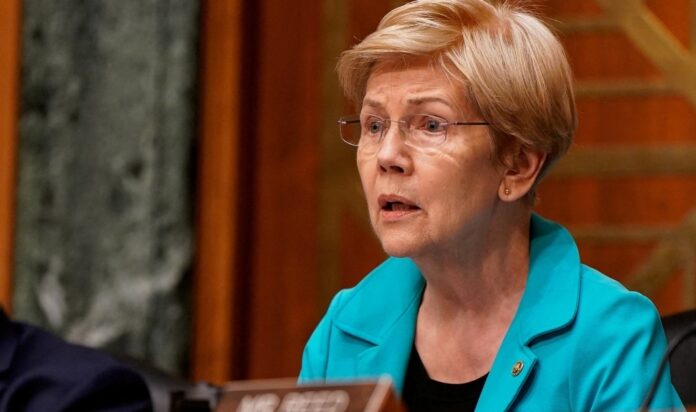
Warren, the ranking Democrat on the Senate Banking Committee, had written that American taxpayers “would ultimately bear the cost if Japan were unable to repay” the Treasury. She asked Bessent to justify the intervention and disclose how much was spent after the yen fell in late July to its weakest level against the dollar in about 40 years.
In his reply, Bessent said that premise was wrong.
“Treasury exchanged existing Exchange Stabilization Fund foreign-currency assets for yen,” he wrote. “No new congressional appropriation was involved, and no credit was extended to Japan. Japan owes Treasury nothing. There is therefore no risk that Japan will fail to repay a debt that does not exist.”
He said Warren’s opening paragraph was incorrect “about where the money came from, what the transaction was, and whether there was even a borrower.”
The United States and Japan confirmed a coordinated intervention around July 31, the first joint operation to support the yen since the late 1990s. Reporting at the time said the Federal Reserve Bank of New York, acting for Treasury, sold euros and used the proceeds to buy yen through Wall Street banks. A photograph of Bessent’s notepad at a Cabinet meeting showed a note to buy $5 billion to $10 billion of yen. Treasury has not publicly confirmed the size of the operation.
Warren said the yen jumped after the intervention but later gave back about half of those gains. She also said neither Treasury nor the Fed notified the European Central Bank in advance that euros would be sold to fund the yen purchases, a break from long-standing coordination among Western central banks. She compared the episode to last year’s $20 billion Exchange Stabilization Fund arrangement with Argentina, which she has called a taxpayer-backed bailout.
Bessent rejected that comparison as a misunderstanding of the instruments involved. He said the Argentina operation used the fund to address “acute, short-term illiquidity” and prevent a broader crisis. On Japan, he said disorderly yen markets can force unwinds that destabilize global markets and raise borrowing costs for U.S. families and businesses.
Japan is a major holder of U.S. Treasurys, a key trading partner and a treaty ally, he wrote. “Under @POTUS, the United States delivers for America’s trusted partners,” he added in the X post, referring to President Donald Trump.
Bessent said Section 5302 of federal law authorizes the Treasury secretary, with presidential approval, to deal in foreign exchange to support orderly exchange arrangements. He told Warren he hoped her next letter would show she understands “the difference between a currency purchase and a swap or a loan.”
Warren’s office did not immediately issue a public response to the Thursday letter or Friday post. In her original letter, she asked for written answers by Friday.