

 Jewish Breaking News
Israel Moves to Build One of World’s Largest Desalination Plants, Producing Over 1 Billion Liters of Water a Day
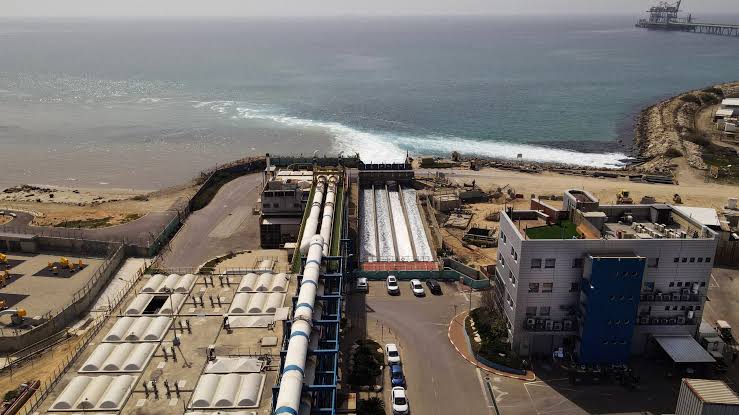
Israel has launched the international selection process for a massive seawater desalination plant near Netanya that could become one of the largest facilities of its kind in the world.
The Emek Hefer plant is designed to produce up to 400 million cubic meters of desalinated water annually. That is more than one billion liters every day and roughly equal to 40% of Israel’s current annual freshwater consumption by households and industry. The facility will use seawater reverse osmosis, pushing Mediterranean water through specialized membranes to remove salt and other impurities.
The proposed plant will occupy approximately 200 dunams, or 20 hectares, inside the Emek Hefer Industrial Zone. The site is located roughly two kilometers inland, between Routes 2 and 4, with an infrastructure corridor running toward the Mediterranean coast north of Mikhmoret.

Seawater will be carried inland for treatment before the finished water is transferred to a reservoir and pumping station operated by Mekorot. From there, it will enter Israel’s national water network. The tender also allows for construction of a natural gas-powered station capable of generating up to 300 megawatts to meet the enormous electricity demands of the desalination process.
Despite the government’s announcement, construction is not yet beginning. Israel has opened the pre-qualification phase, during which international and Israeli groups must demonstrate extensive financial, engineering, construction and water-treatment experience. Only approved candidates will be allowed to compete in the final tender.
Under the proposed build-operate-transfer arrangement, the winning private consortium will finance, design and construct the project before operating it for nearly 25 years. The facility will then be transferred to the state at no cost. Israel will purchase the desalinated water throughout the concession, while retaining the option to bring the plant online in stages as demand increases.
The project represents the next major step in Israel’s transformation from a water-scarce country into a global desalination power. Desalinated seawater already supplies approximately 80% of Israel’s potable water, but rapid population growth, declining natural water resources and the possibility of prolonged droughts are forcing the country to expand again. The government is preparing to raise national desalination capacity to two billion cubic meters annually by 2050.
The new plant could also reshape Israel’s water relationship with Jordan. Tender documents say the additional capacity may support the proposed Prosperity Blue arrangement, which could increase Israeli water sales to Jordan by as much as 200 million cubic meters annually. However, the government stressed that the regional initiative is separate from the desalination project and that the plant will proceed regardless of whether the agreement advances.
The plan is already facing fierce local opposition. Emek Hefer officials argue that the state doubled the proposed facility from its original 200-million-cubic-meter design before planning authorities completed their review of objections. The regional council says the power station, reservoirs and extensive pipeline network could damage agricultural and open land and place major infrastructure close to local communities.
Council head Galit Shaul has demanded that the tender be frozen until the statutory planning process is completed and has raised the possibility of legal action. Government officials maintain that preliminary tender work must advance because of the project’s complexity and say the final design will reflect decisions made by the National Infrastructure Committee. Professional estimates place construction costs at roughly NIS 5 billion to NIS 6 billion, with the project potentially taking about seven years to complete.
Once operational, the Emek Hefer facility would become a central pillar of Israel’s long-term water security, producing enough water to serve millions of people while creating a larger buffer against drought, population growth and disruptions to natural supplies. Before that happens, however, Israel must clear the planning battle, select an international consortium and finalize the project’s energy and environmental footprint.
