
 Vos Iz Neias
School Principal’s Quick Thinking Saved 900 Students From Nepal Flood Disaster
NEPAL (VINnews) — A Nepalese school principal is being hailed for his quick thinking after he evacuated around 900 students just 10 minutes before a devastating flash flood swept through the school and surrounding area, potentially preventing a mass-casualty disaster.
Rajendra Dawadi, headteacher of Tribhuvan Trishuli Secondary School in Nepal’s Nuwakot district, received four separate warnings about the approaching flood within just a few minutes at around 9:10 a.m. local time.
Among those warnings was a report from a parent who had arrived at the school to collect his daughter after hearing that a massive flood was approaching. Dawadi told the BBC that the combination of the calls convinced him that he could not afford to wait for further confirmation.
He immediately ordered the students to evacuate to higher ground and instructed buses carrying students to turn around and leave the area. “If we didn’t make a quick decision, if it were 10 minutes later, we all, including the students and me, wouldn’t be able to speak to you today,” Dawadi told the BBC.
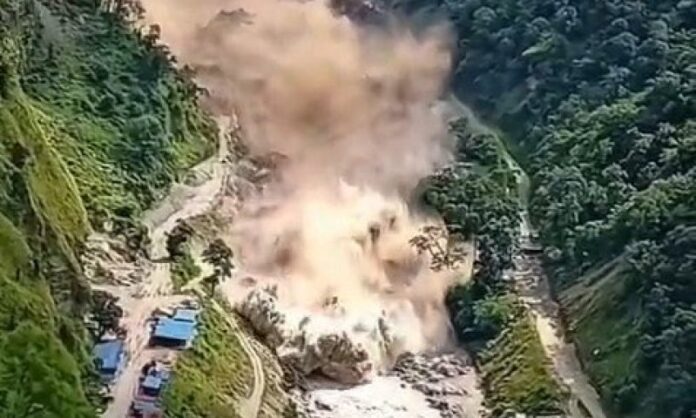
The decision proved critical. The floodwaters surged through the area with extraordinary speed, destroying buildings and sweeping away the nearby Trishuli market. The school itself was subsequently buried under mud and debris.
The terrifying videos of flood in nepal😢 It looks more dangerous 😔😔😭 pray for 🇳🇵🙏🕉️ #timure #rasuwa #flood #climatechange #disaster pic.twitter.com/X0tOfuVvSz
— Bimal Tiwari (@bmmmlll8) August 29, 2026
Dawadi said a hostel building located only about 100 meters from the river was engulfed almost immediately after the students had been evacuated.
The school has more than 1,600 students in total. Around 900 were at the school and directly evacuated when the warnings arrived, while buses carrying other students were ordered to turn around before reaching the danger zone.
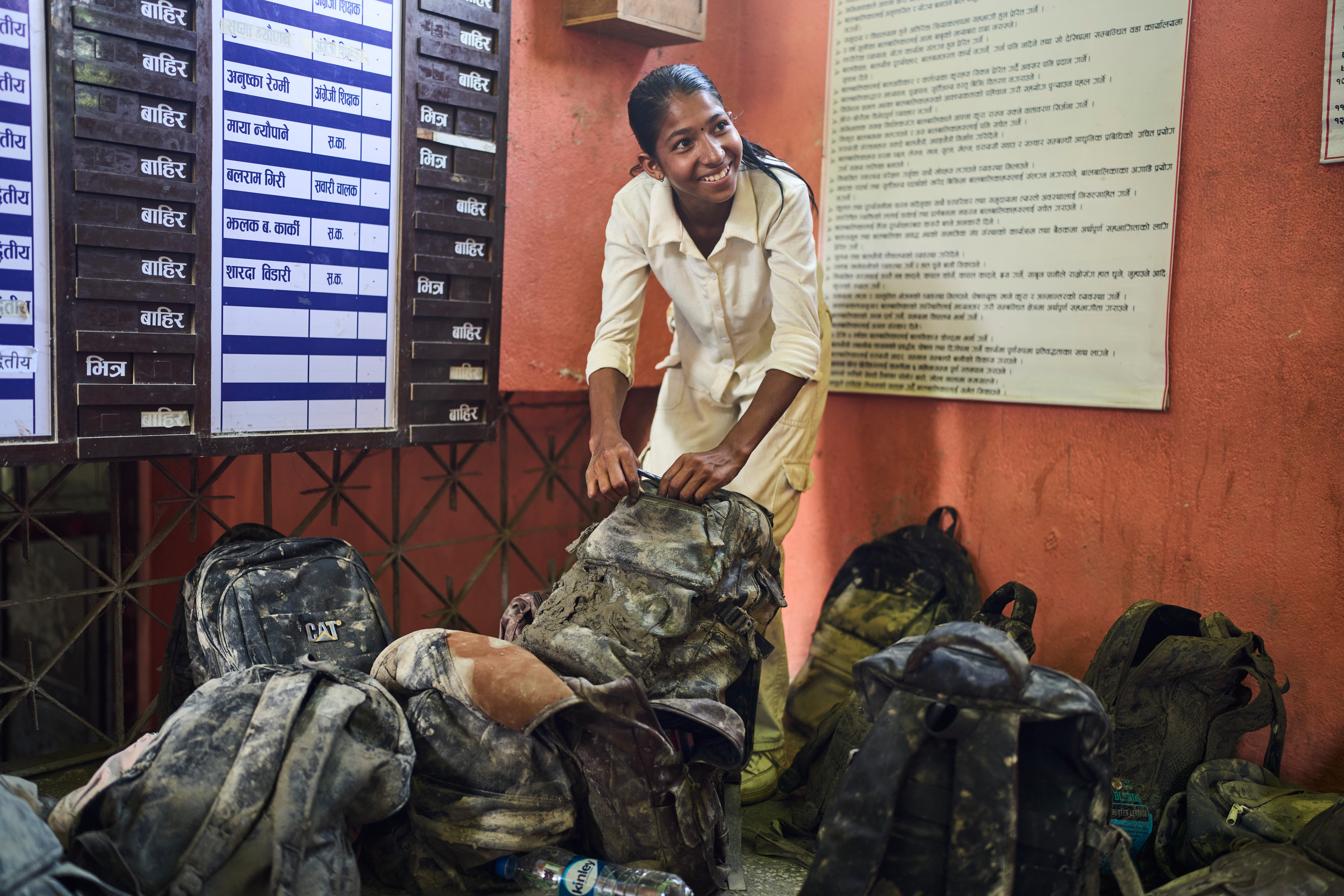
The scale of the destruction has since become clear in images from the area, with much of the school campus buried beneath a vast layer of gray mud and debris.
Among those who narrowly escaped was 16-year-old student Yunisha Amatya. She recalled running with her classmates toward higher ground as the flood approached, describing how the nearby market was swept away before their eyes.
“We survived by just 10 seconds,” she told the BBC. Yunisha said the students rushed along a narrow, muddy route behind the school toward safety. She recalled that the ground was slippery and that students were pushing and jostling as they desperately tried to reach higher ground.
“If there was no grip in my shoes I would have fallen,” she said, adding that people who attempted to escape by another route were apparently swept away.
Her family endured hours of anguish after losing contact with her. Yunisha’s mother, Sabina Kumari Shrestha, repeatedly tried calling her daughter and her husband after hearing that the flood had struck. When she eventually learned that Yunisha had reached safety, the family was still unable to reunite with her immediately.
Yunisha and other students remained stranded for two nights after roads were cut off by the disaster. She was eventually evacuated by helicopter, along with Dawadi, to their home village across the river.
The flooding was part of a catastrophic disaster that struck parts of Nepal and Tibet, with enormous volumes of water, mud, rock and debris surging through valleys. Recent reports have described the disaster as being linked to a major geological event in the Himalayas, with a glacier or mountainside collapse contributing to the sudden release of water and debris.
Hundreds of people have been killed and thousands remain missing, while rescue teams have been working across devastated communities. The disaster has also severely damaged infrastructure and hydropower facilities in the region.
The destruction has extended to schools across the affected areas. The Guardian reported that dozens of schools were damaged or destroyed, affecting thousands of children.
For Dawadi, the decisive moment came when he had to choose between waiting for certainty and acting on incomplete but increasingly urgent information. The four warnings he received came from different people within minutes of one another, including reports that floodwaters had already swept through an upstream settlement.
The arrival of a parent at the school was particularly significant. “Parents don’t rush without a strong reason,” Dawadi recalled, explaining that the parent’s decision to come and retrieve his daughter convinced him that the threat was genuine.
Dawadi’s actions have since been widely praised as an example of how rapid decision-making can save lives during a natural disaster. He has also suggested that improved early-warning systems could give communities more time to react. Sirens and other systems capable of immediately alerting residents, he said, could make an important difference when floods arrive with almost no warning.
In this case, however, it was a handful of urgent phone calls, and a school principal willing to act immediately, that gave hundreds of children the precious minutes they needed to escape. As the flood destroyed the school they had been sitting in only moments earlier, the students were already on higher ground.
Dawadi’s decision may have turned what could have been one of the disaster’s worst tragedies into a remarkable story of survival.