
 Vos Iz Neias
Israeli Antibiotic Gel Helps 8 Of 10 Diabetic Patients Avoid Amputation In Jerusalem Pilot
JERUSALEM (VINnews) — An Israeli-developed antibiotic gel helped eight of 10 diabetic patients who were candidates for foot amputation avoid the procedure in a small clinical pilot at Shaare Zedek Medical Center, according to the company behind the technology.
GentaGel, an Israeli biotech firm, developed a biodegradable polymer that releases antibiotics directly at the infection site for up to 60 days. The pilot enrolled 10 patients with severe infected diabetic foot ulcers and bone infections who faced amputation or surgical removal of infected bone.
Eight patients recovered without amputation. Researchers also observed wound closure and bone regrowth in those patients.
The findings are preliminary. GentaGel said it is advancing additional studies in Israel and the United States and pursuing a regulatory pathway with the U.S. Food and Drug Administration.
Diabetic foot infections are often hard to treat. Severe cases can lead to repeated surgery, long hospital stays and amputation.
Standard antibiotics are usually given by mouth or intravenously, so only a portion of the dose reaches the infected tissue. GentaGel is designed to keep a high local concentration of antibiotic at the site while limiting exposure elsewhere in the body.
The pilot was conducted with Shaare Zedek through Madait, the hospital’s innovation arm. Dr. Mati Nof, director of the Foot and Ankle Surgery Unit and the study’s principal investigator, said the trial tested whether the treatment could help heal infected bone.
“Based on the findings from the pilot with 10 patients, I became convinced that there is real potential to heal infected bone without the need for amputation,” Nof said.
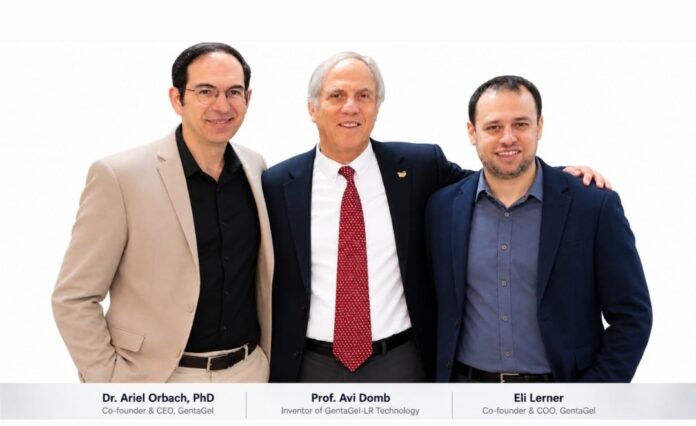
The technology was invented by Prof. Avi Domb of the Hebrew University of Jerusalem, a specialist in controlled drug-delivery systems. GentaGel is led by co-founder and CEO Dr. Ariel Orbach and co-founder and COO Eli Lerner.
The company said severe localized infections carry a large medical and economic burden and estimated U.S. treatment costs at more than $20 billion a year. It said the 10-patient results do not by themselves prove how the treatment would perform in a larger population. Follow-up studies are expected to provide more data.