

 Jewish Breaking News
US Warns Americans Across Middle East to Brace for Sudden Escalation as Iran Fighting Reignites
The United States has reissued a sweeping security alert for Americans across the Middle East, warning that renewed fighting with Iran could trigger sudden escalation, flight cancellations, airspace closures and wider travel disruptions.
Versions of the warning were distributed by U.S. missions in Jerusalem, Amman, Doha, Abu Dhabi, Riyadh, Baghdad, Beirut, Kuwait City, Muscat and the virtual U.S. Embassy for Iran. Americans already in the region were urged to exercise heightened vigilance, while travelers were told to closely monitor airport and airline operations.

The latest alert is not an evacuation order. Unlike a more urgent warning issued last month, which advised Americans to consider leaving if tensions worsened, the new guidance focuses on preparedness rather than departure. In Israel, citizens were also advised to identify their nearest protected space and keep food, water, medicine and other essential supplies available.
The timing is critical. U.S. Central Command announced that American forces had completed a new wave of strikes against Iran’s Islamic Revolutionary Guard Corps, hitting air-defense sites, radar systems, maritime facilities, mine-laying capabilities and communications infrastructure. CENTCOM said the operation followed attempted IRGC attacks against commercial shipping in the Strait of Hormuz and American service members deployed to the region. More than 50,000 U.S. troops are currently operating across the Middle East.
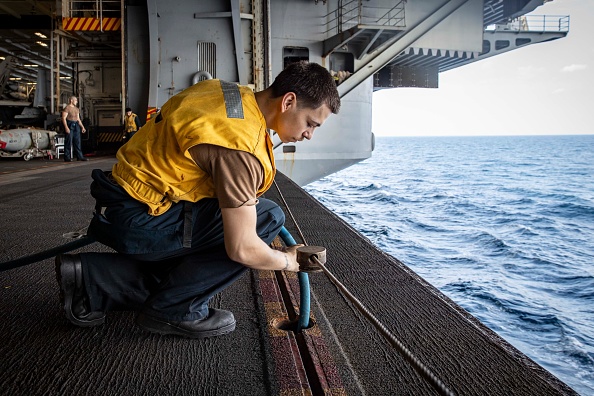
Iran responded by launching ballistic missiles and drones toward U.S.-linked targets in the region, forcing Jordanian air defenses into action and raising fears that countries hosting American forces could again be pulled directly into the conflict. The exchange ended roughly a month without major military action between Washington and Tehran.
Washington’s warning extends beyond military installations and the immediate battlefield. The State Department said Iran and groups aligned with Tehran may target American interests overseas, including diplomatic facilities, businesses and other institutions associated with the United States. The alert does not identify a specific imminent plot, but cautions that locations previously untouched by the conflict should not be assumed safe.

For Americans in Israel, the practical message is readiness rather than panic: follow Home Front Command instructions, know the nearest shelter and do not assume a scheduled flight will operate if missile fire forces abrupt airspace restrictions. Travelers were also urged to confirm flights directly with their airlines and enroll in the State Department’s Smart Traveler Enrollment Program for emergency notices.
Much of the wording appeared in earlier U.S. warnings, meaning the language itself does not prove Washington has intelligence of a specific incoming attack. The important change is the moment in which it was reissued. American strikes have resumed, Iran is retaliating across borders, and U.S. forces say they remain prepared for additional operations. The fragile regional calm has once again become vulnerable to a rapid and unpredictable breakdown.