
 Matzav
Avi Ravina On Degel HaTorah Upheaval: “We Still Have Long Days of Farewell Ahead”
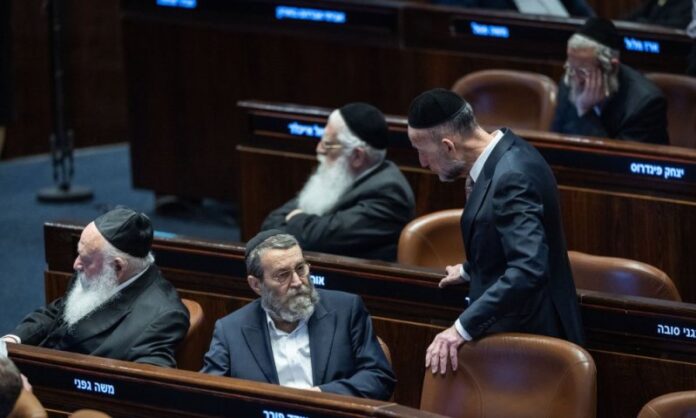
Degel HaTorah is heading toward a sweeping generational change following the decision that veteran MKs Moshe Gafni and Uri Maklev will not return to the party’s Knesset slate, with several new names now emerging as likely candidates to replace them.
Political commentator Avi Ravina said the dramatic development has reverberated well beyond the Chareidi political world, largely because of the stature and lengthy careers of the two outgoing lawmakers.
“At the end of the day, we are talking about two MKs who are not merely veterans,” Ravina said, noting that Gafni has for decades been closely identified with Degel HaTorah’s leadership, while Maklev has earned a reputation as one of the party’s most active public servants.
According to Ravina, efforts continued until the last moment to reverse the decision, but those attempts were unsuccessful.
“But this decision is final; it is the decision of the Gedolei Yisroel,” he said.
Ravina also outlined what he said is the emerging composition of Degel HaTorah’s new slate, while cautioning that the lineup has not yet been finalized.
MK Yaakov Asher is expected to take the top position in Degel HaTorah, followed by MK Yitzchok Pindrus in the second slot. Rav Moshe Rosenthal, director of the Bnei Brak Municipality’s Education Department and a close associate of the home of Rav Dov Landau, is currently being mentioned for the third position.
The fourth slot remains less certain. Ravina said the leading name currently under consideration is Rav Yehuda Weissfish, chairman of Ichud Bnei HaYeshivos and a close associate of Rav Moshe Hillel Hirsch.
Another possibility considered for that position was Rav Gedalia Silman, deputy mayor of Bnei Brak. Ravina said, however, that Silman currently prefers to remain involved in municipal government rather than move to the national political arena.
For the fifth position, Ravina said David Zaltz, deputy mayor of Beitar Illit and a former chief of staff to Yaakov Asher, could be selected.
“That is what is currently being said in the circles of the rabbonim and Gedolei Yisroel ahead of the official approval and submission of the lists,” Ravina said.
He stressed that the lineup remains tentative and could still change. According to Ravina, the final slate could be approved and formally submitted within the coming day, ahead of the deadline for filing Knesset candidate lists.
A significant portion of Ravina’s analysis focused on the manner in which Gafni and Maklev were informed that their decades-long tenure on the slate was coming to an end.
While the eventual outcome may have become increasingly foreseeable, Ravina argued that the transition could have been handled in a more gradual and dignified fashion.
“It should have been gradual and with much greater discretion,” he said.
Ravina said considerable pressure had been exerted in recent weeks by those surrounding Gafni and Maklev in an effort to prevent their replacement. Now that the decision has been made, however, he said the focus should shift toward allowing both men to conclude their lengthy service with the respect they deserve.
“What has been done cannot be undone, but it is still possible to continue showing respect and to try to repair things,” Ravina said.
He described Gafni and Maklev as “two significant figures in Israeli politics in general, and certainly within Degel HaTorah.”
Ravina said their departure is unlikely to be absorbed overnight, predicting an extended period in which the party and its constituency come to terms with the end of their lengthy political careers.
“We still have long days of farewell ahead of us with these two,” he said.
He pointed to the extensive experience both accumulated over decades and their contributions to Chareidi political representation. Their departure, he said, places Degel HaTorah in the midst of a generational transition, as veteran representatives give way to figures who may be well known in local Chareidi public life but have little or no significant parliamentary experience.
Toward the end of the discussion, Ravina addressed developments in other Israeli parties, including the alliance between Yoaz Hendel and Yaron Zelekha, as well as the fortunes of parties and politicians that have made the issue of drafting bnei yeshivos a central part of their political campaigns.
Ravina sharply criticized those who, in his view, built their political identities largely around opposition to the Chareidi position on the draft, arguing that some ultimately paid an electoral price for doing so.
“These are parties that were less capable of saying what they were for; they only knew how to say what they were against and whom they opposed,” it was said during the discussion.
Ravina added that, from the perspective of the Chareidi parties, the priority heading into the coming election should now be strengthening their own representation rather than continuing to battle political rivals whose strength has already diminished.
{Matzav.com}