
 Jewish Breaking News
CAN DOGS SMELL CANCER? Israeli Co-Founded Startup Reports 90% Success Rate
An India-based, Israeli co-founded startup called Dognosis is on the cusp of a major breakthrough in cancer screening tests: using dogs to detect seven major cancers instead of invasive testing, with up to a 90 percent success rate.
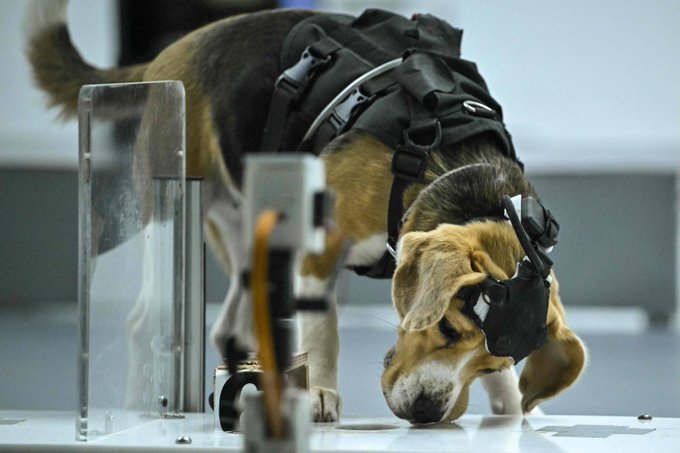
The research uses AI, as the dogs are fitted with 3D-printed helmets and harnesses packed with sensors, which send data about the dogs’ brain activity, respiration, and body language for the AI to analyze.
“In an hour, they can do thousands of sniffs,” co-founder Akash Kulgod, 26, told AFP. “Each sniff can evaluate a sample.”
Early detection can substantially improve cancer survival rates, but most patients are tested only after they start experiencing symptoms. This method would be fast and affordable, providing mass screenings to find potential cases for further testing. The research shows that illness changes the body’s chemistry, releasing odors that can be picked up by dogs, which have about 30 million scent receptors compared with humans’ 5 million.
During the test, the patients do not need to interact with the dogs. Instead, they breathe into a cotton mask for 10 minutes, which is then sealed and sent to a lab for a trained dog to sniff.
The Journal of Clinical Oncology published a recent Dognosis study of 1,500 participants across six hospitals in Karnataka state, which achieved a 90 percent success rate for seven major types of cancer.
“The study is promising, as an early signal,” said Santhosh Kumar Devadas, head of oncology at Ramaiah Memorial Hospital, who was not involved in the study. “But they need to do the study with a much larger group before we make any definitive conclusions.”
Itamar Bitan, 28, who worked for four years in an Israeli special forces canine unit, said the dogs are trained to detect specific odors using “positive reinforcement.”
“Some of the dogs run directly to the feeder expecting rewards, some dogs freeze, some dogs will scratch the sample with excitement,” Bitan said.
“But as long as the machine that learns how the dogs react to the sample is very consistent … we don’t really mind.”
The company hopes to launch next year, which will make it the third such company in the world.