
 Matzav
AP Refuses to Adopt Trump’s ‘Lake America’ Name, Sticking With Lake Ontario
The Associated Press said Wednesday that it will continue referring to Lake Ontario by its centuries-old name, declining to adopt President Donald Trump’s new “Lake America” designation as its standard terminology despite an executive order directing the U.S. government to make the change.
Under new guidance issued by the international news organization, AP journalists will continue using Lake Ontario in news coverage while mentioning Trump’s chosen name when it is relevant to the story.
“The Associated Press will refer to Lake Ontario by its original name, including the name Trump has chosen when relevant,” the AP said. “As a global news agency that disseminates news around the world, the AP must ensure that place names and geography are recognizable to broad audiences.”
The decision sets up another dispute between the Trump administration and the AP over geographic terminology, following a similar confrontation last year over the president’s decision to rename the Gulf of Mexico the “Gulf of America.”
Trump signed an executive order on August 27 directing the Interior Department, working with the U.S. Board on Geographic Names, to change the federal designation of Lake Ontario to “Lake America.” The order calls for the Geographic Names Information System to be updated and directs federal agencies to use the new designation in government maps, documents and communications.
The order applies to U.S. federal government usage. Because Lake Ontario is shared by the United States and Canada, Trump’s directive does not compel Canada to recognize the new name.
This is not the first time the AP has declined to fully adopt a geographic name change ordered by Trump.
In 2025, the news organization continued using “Gulf of Mexico” as its standard international reference after Trump directed the federal government to rename it the “Gulf of America.” That disagreement ultimately led the White House to restrict AP journalists’ access to certain presidential events.
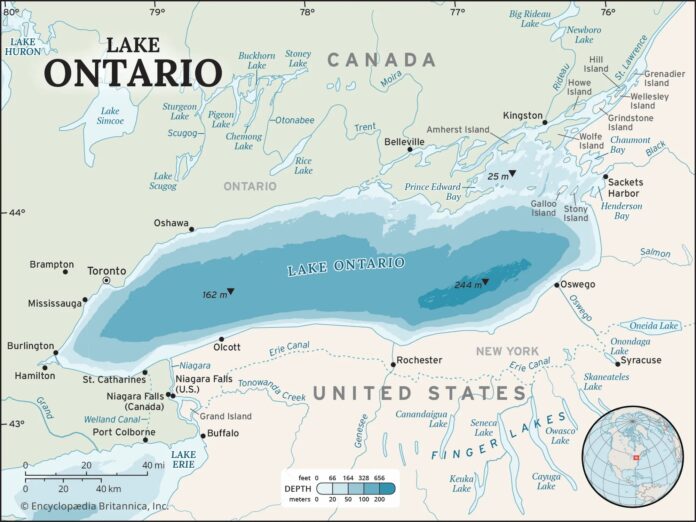
Lake Ontario straddles the border between New York and the Canadian province of Ontario and is one of the five Great Lakes. Its traditional name long predates the founding of both the United States and modern Canada.
The name is derived from an Indigenous word, commonly traced to the Huron language. The province of Ontario, established at Canadian Confederation in 1867, itself took its name from the lake.
Trump said when signing the order that the change was intended to recognize the United States’ role in protecting and supporting commerce on the Great Lakes. The executive order specifically cited the U.S. Coast Guard’s icebreaking operations and the importance of the waterway to the American economy.
“And this is official, effective immediately,” Trump said at the signing.
Canadian officials immediately rejected the new designation, maintaining that the lake will remain Lake Ontario in Canada.
Prime Minister Mark Carney emphasized that the name is more than four centuries old and predates both Canadian Confederation and the U.S. Declaration of Independence.
“We know that America is changing. Their trading relationships, their foreign policies, their national monuments, their hydronyms,” Carney wrote. “Canadians also know that naming reality means calling it Lake Ontario — then, now and always.”
Ontario Premier Doug Ford similarly rejected the change.
“It’s Lake Ontario to Canadians and the rest of the world. Now and forever,” Ford said.
Major technology companies, however, have begun reflecting the new U.S. government designation on their mapping services.
Apple Maps changed the lake’s label to Lake America for users in the United States, while users in Canada continued seeing Lake Ontario. Google Maps similarly implemented the U.S. designation for American users while retaining the traditional name for Canadian users.
MapQuest has taken a different approach, opting to retain familiar geographic terminology for its users.
“We took the same approach we did with the Gulf of Mexico: be part of the conversation, and give people an app that keeps the names they’re familiar with,” MapQuest general manager Doug Berger said.
The AP’s handling of Lake Ontario also differs from its approach to another Trump-directed geographic name change: Mount McKinley.
Trump ordered the Alaska mountain’s federal name changed from Denali back to Mount McKinley shortly after returning to the White House in January 2025. The AP adopted Mount McKinley because the mountain lies entirely within the United States, where the federal government has authority over the official federal geographic designation.
The Lake Ontario dispute is more complicated because the body of water forms part of the international boundary between the United States and Canada, with each country free to use its own terminology.
Trump’s Lake America order came amid a sharp deterioration in relations between Washington and Ottawa, particularly over trade. The United States and Canada have imposed new trade restrictions against one another following the collapse of negotiations in August.
The president has said the renaming is intended to honor American contributions to the Great Lakes rather than convey a particular geopolitical message. At the signing, however, he also criticized Canada’s trade and defense policies.
“Canada’s been ripping us off for a long time,” Trump said.
“We love the people of Canada,” he added. “I don’t think their representatives do, an appropriate job. Maybe they’ll change. I really don’t know. It doesn’t make much difference.”
For the AP, however, the traditional name will remain the default. Its reporters will continue writing “Lake Ontario,” while noting “Lake America” when Trump’s federal designation is pertinent to the story.
{Matzav.com}