
 Matzav
No Shofar on First Day of Rosh Hashanah? Chief Rabbi Rav Kalman Ber Explains Why There Is No Reason to Fear
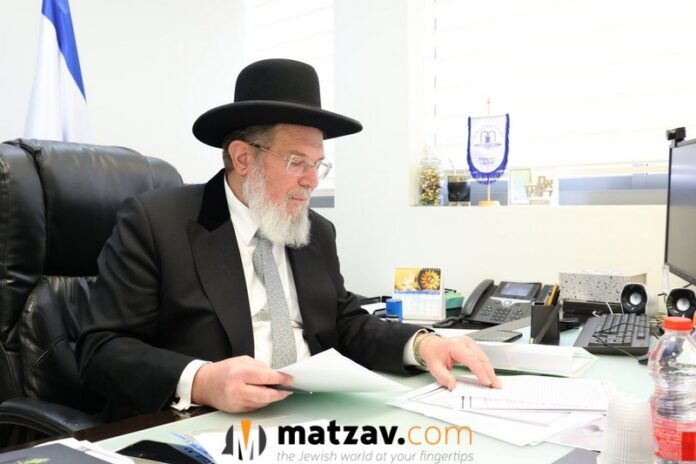
With Rosh Hashanah falling on Shabbos this year, Israel’s Chief Rabbi, Rav Kalman Ber, has issued a special letter offering practical halachic guidance for the Yom Tov while addressing concerns over the fact that the shofar will not be sounded on the first day of Rosh Hashanah.
In his letter, Rav Ber cites the well-known statement of Chazal: “Any year in which the shofar is not sounded at its beginning will experience troubles at its end.”
At first glance, the statement could cause particular concern in a year such as this one, when the first day of Rosh Hashanah falls on Shabbos and the shofar is therefore not blown.
Rav Ber, however, stresses that there is no reason for concern. He notes that the Baal Halachos Gedolos, as cited by Tosafos in Maseches Rosh Hashanah, explains that the statement of Chazal does not apply when the shofar is not blown because of the sanctity of Shabbos.
The chief rabbi also cites the Aruch LaNer, who noted that while Jewish history has indeed seen difficult years in which Rosh Hashanah fell on Shabbos, some of the most momentous and positive events in Jewish history also occurred during such years.
Among them, Rav Ber noted, were the year in which the sin of the Golden Calf was forgiven, the year in which the Mishkan was erected, and the year in which the Jewish people entered Eretz Yisroel.
The explanation, Rav Ber writes, is that when the shofar cannot serve as the advocate for Klal Yisroel, Shabbos itself becomes their advocate.
That merit, however, comes with a responsibility: The protective power of Shabbos depends upon the Jewish people properly respecting and observing its sanctity.
Rav Ber therefore called for a particular strengthening this year in kavod Shabbos and shemiras Shabbos, both in private life and in the public sphere, so that the merit of Shabbos will stand on behalf of Klal Yisroel on the Yom Hadin.
Beyond his words of encouragement, Rav Ber’s letter provides a detailed overview of the practical halachos that apply when Rosh Hashanah begins on Shabbos.
The shofar is not sounded on the first day, and in davening, the words Zichron Teruah are recited. Rav Ber also noted that attention should be paid to the other changes in the nusach hatefillah that result from the first day coinciding with Shabbos.
Regarding Avinu Malkeinu, Rav Ber noted that there are differing minhagim concerning its recitation when Rosh Hashanah falls on Shabbos.
Similarly, with regard to Tashlich, many have the custom to postpone its recitation until the second day of Rosh Hashanah.
Rav Ber also reminded the public that no preparations may be made on the first day of Rosh Hashanah for the second day.
Preparations for the second night may therefore begin only after tzeis hakochavim, and after reciting Vatodi’einu during Maariv or saying Baruch Hamavdil bein kodesh l’kodesh.
On the second night, Kiddush and Havdalah are combined according to the order known as Yaknehaz. No bracha is recited over besamim.
Rav Ber further noted that on the second day, a Shehecheyanu is recited over the blowing of the shofar even by those whose usual custom is not to recite Shehecheyanu over the shofar on the second day of Rosh Hashanah.
Rav Ber concluded his letter by wishing Klal Yisroel a kesivah vachasimah tovah and expressing his hope that the merit of Shabbos will stand on behalf of the Jewish people on the Yom Hadin.
{Matzav.com}