
 JBizNews
Israel’s education system is failing the students who will shape its future - editorial
Anyone who has lived in Israel over the past few years can attest to the constant volatility, uncertainty, and stress that we have been living through.
We are in constant survival mode, especially since October 7, 2023, and that state of being can crack even the best of us. With budgets logically earmarked in a top-heavy fashion toward defense and security, other vital resources and issues are suffering from a lack of attention and proper budgeting.
Yet we must promote, finance, and treat education as if Israel were in the middle of a peaceful oasis. It’s the primary realm, besides security, that ensures our future. Based on results published this week, we’re failing in education security.
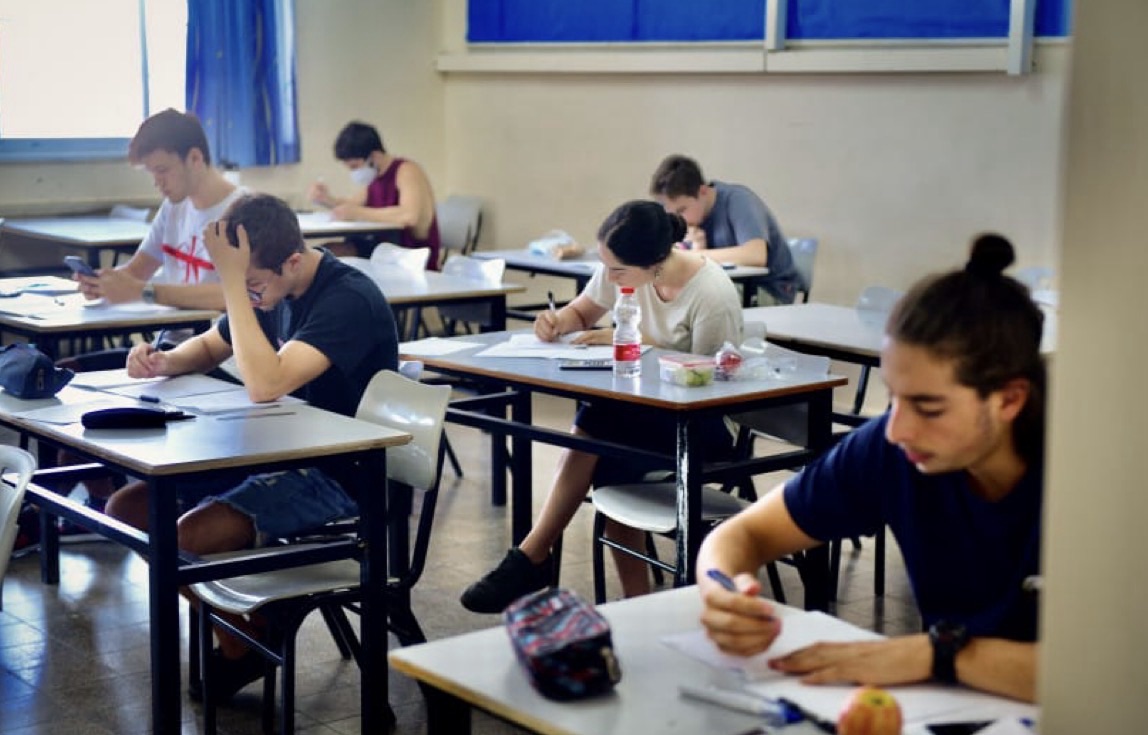
Israel suffered a dramatic collapse in the 2025 PISA exam, which assesses 15-year-old students’ performance in mathematics, reading, and science. In all three subjects, Israel recorded its lowest-ever scores, significantly below those in the previous exam, held in 2022.
Israel’s average score across the three subjects fell by 29 points, the second-sharpest decline among the 75 countries and economies tested, after Latvia.

Israel’s divided school system is failing its future
Israel’s mathematics score fell to 433 points, down 25 points from 458 in 2022, the second-sharpest decline worldwide after Malta. Israel’s science score fell to 442 points, down 23 points from 465 in 2022 and the third-sharpest decline worldwide.
The steepest decline was in reading. Israel’s score fell to 436 points, down 38 points from 474 in 2022 and the second-sharpest decline worldwide, after Latvia.
Of course, those results must be seen in the context of the upheaval the country – and the nation’s students – have faced over the last three years. Education Minister Yoav Kisch did just that, attempting to put a positive spin on the results.
“After nearly a year and a half of war, the evacuation of communities, and deep disruptions to the continuity of learning, I believe these results demonstrate the extraordinary resilience of Israel’s education system,” Kisch said. “Israel maintained its ranking in reading and science compared with 2018, and in math it dropped just one place.”
The Education Ministry also attributed the low scores to the chaotic disruptions to regular learning schedules forced on the education system by the war.
But as valid as war excuses may be, there’s an underlying factor to the scores that can’t be ignored. The education system desperately needs reform.
In 2025, 23% of all first-graders were Arabic speakers, and 25% were haredim (ultra-Orthodox). Israel’s Arabic-speaking students scored below many Third World countries – including below six of the seven Arab countries that participated in the PISA exam. Nearly all of the haredi students in Israel do not even study the material and, as a result, are not even tested.
According to Prof. Dan Ben-David, president and founder of the Shoresh Institution for Socioeconomic Research, the bottom line is that about half of Israel’s children – among them haredim, Arab Israelis, and those living in Israel’s geographic and socioeconomic peripheries – are receiving a third-world level education.
“And as if that were not enough, these children belong to the fastest-growing segments of the population. When they eventually constitute half, and later a majority, of Israel’s adult population, they will not be able to maintain a first-world economy,” Ben-David told The Jerusalem Post.
Ben-David’s solution is to dismantle the four separate education streams that currently function in Israel (state, state religious, haredi, and Arab) and replace them with a new, single education system for all.
“The basic tenets of such an overhaul need to include a significant upgrade of the compulsory, identical, core curriculum (allowing the remaining curriculum to reflect local parental preferences). Funding should be only for fully compliant schools, with complete cessation of funding for all others,” he proposed.
Ben-David’s proposal is worth considering, but even if it’s too ambitious, education must take a prominent spot at the table of any future government.
As we head to next month’s election, every party will try to convince the electorate that it has the answer to the country’s pressing issues. They’ll talk about security and the economy. But just as important is what their plans are for the future.
Just as defense is paramount to securing a thriving future for Israel, education is vital to the well-being and continued success of the Jewish state. Brushing the issue aside because we’re fighting for our survival is not an option.