
 Vos Iz Neias
More Than 60 Charedi Draft Evaders Arrested At Israeli Border Crossings Ahead of Uman Pilgrimage
JERUSALEM (VINnews) — More than 60 people classified as military deserters have been arrested at Israeli border crossings since Sunday, many of them charedi men attempting to travel to Uman, Ukraine, for the Rosh Hashanah pilgrimage, according to Israeli media reports.
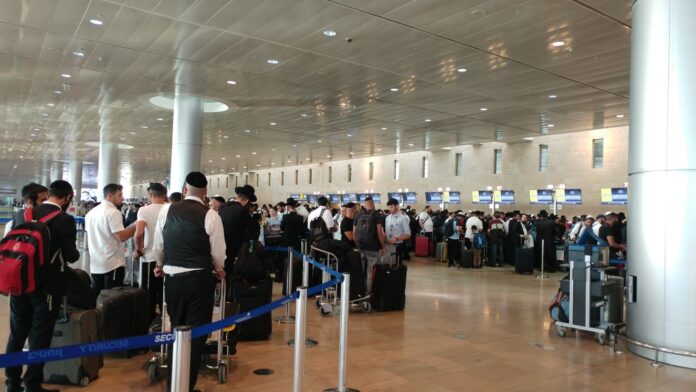
Most of the arrests took place at Ben Gurion Airport, while additional arrests were reported at the Taba border crossing with Egypt, as Israeli authorities stepped up enforcement ahead of the annual pilgrimage to the grave of Rabbi Nachman of Breslov.
The IDF confirmed that dozens of deserters had been arrested at border crossings in recent days but declined to provide an exact number or a breakdown of the detainees. The military said the enforcement operation is part of its routine cooperation with the Population and Immigration Authority and that its deployment is adjusted according to intelligence and situational assessments. The IDF stressed that men who are subject to military service can still regularize their status and report for service.
The arrests come after authorities began increasing checks at exit points earlier this month. On Sept. 2, six charedi men were detained at Ben Gurion after attempting to leave Israel. The Israel Airports Authority said two were stopped in Terminal 1 and four in Terminal 3, after which officials determined that they were subject to active military orders preventing them from leaving the country.
The enforcement has also affected flights. Several flights from Ben Gurion, including flights to Krakow and Budapest, were reportedly delayed Wednesday after deserters were detained while their luggage had already been loaded onto aircraft. Security personnel had to locate and inspect the luggage before the flights could depart.
The arrests have created growing concern within the Breslov Hasidic community, which sends tens of thousands of worshippers to Uman each year for Rosh Hashanah. More than 40,000 pilgrims traveled to Uman for the holiday last year, according to Ukrainian immigration authorities cited by JNS.
Breslov rabbis have warned young men who face arrest not to travel to Ben Gurion in an attempt to reach Ukraine. Community organizations have also warned that the risk is not limited to the airport and that attempting to leave through a land crossing could result in arrest.
Some travelers have reportedly explored alternative routes through Egypt or Jordan, hoping to avoid the intensified checks at Ben Gurion. Authorities, however, have also increased enforcement at land crossings.
The Population and Immigration Authority has said it processes passengers flagged in its system as subject to exit restrictions. When the restriction is based on a military order, the IDF is called to the scene and determines whether an arrest should be made.
A technological change introduced earlier this year also allows authorities to identify people subject to exit restrictions during the check-in process, including when check-in is performed online, according to Walla.
The crackdown is part of a broader Israeli campaign to enforce military service requirements among charedi men. The issue has become increasingly contentious as the government and courts have grappled with the end of longstanding exemptions for yeshiva students.
A Knesset committee reviewing enforcement policies reported that the IDF had issued 24,000 summonses in one period to men from a pool of roughly 80,000 potential recruits, but only 1,200 reported to begin the required process. The military has described existing sanctions as limited and has been expanding enforcement measures.
For the Breslov community, however, the enforcement has taken on particular significance because of the religious importance attached to spending Rosh Hashanah in Uman.Some community members have even discussed the possibility of holding Rosh Hashanah prayers in military prison if large numbers of young men are arrested.
The heightened enforcement is expected to continue through the peak travel period. Rosh Hashanah begins Friday evening, Sept. 11, and continues through Sunday, Sept. 13.